Step off the train in Osaka, and you’ll feel it instantly. It’s not the roar of the JR loop line or the chatter of a thousand conversations hitting you at once. It’s a hum. A constant, whirring, kinetic energy at street level. This is the sound of the bicycle, the `charinko`, the true lifeblood of this city. In Tokyo, life is vertical, a journey between subway stations and skyscrapers. In Osaka, life is horizontal. It’s a sprawling, flat expanse of neighborhoods connected by a web of human-powered transport. The bicycle isn’t a hobby here; it’s a vital organ, the primary way people conquer the short distances between home, the station, the supermarket, and the local izakaya. It’s the ultimate expression of Osaka pragmatism: faster than walking, cheaper than the train, and more agile than any car. But embracing this two-wheeled freedom means stepping into an urban ecosystem with its own unwritten laws, its own peculiar dangers, and its own unique rhythm. To ride a bike in Osaka is to learn a complex dance, a tango of agility and awareness. Before you join the performance, you need to understand the three core movements: the chaos of the sidewalk, the puzzle of parking, and the constant, lingering threat of theft. This is the reality of commuting on two wheels in the merchant city.
Embracing Osaka’s multifaceted street culture involves not only mastering its bicycle ballet but also exploring the vibrant soul of Super Tamade that pulses through the city’s hidden corners.
The Sidewalk Ballet: Where Rules Bend and Reality Bites
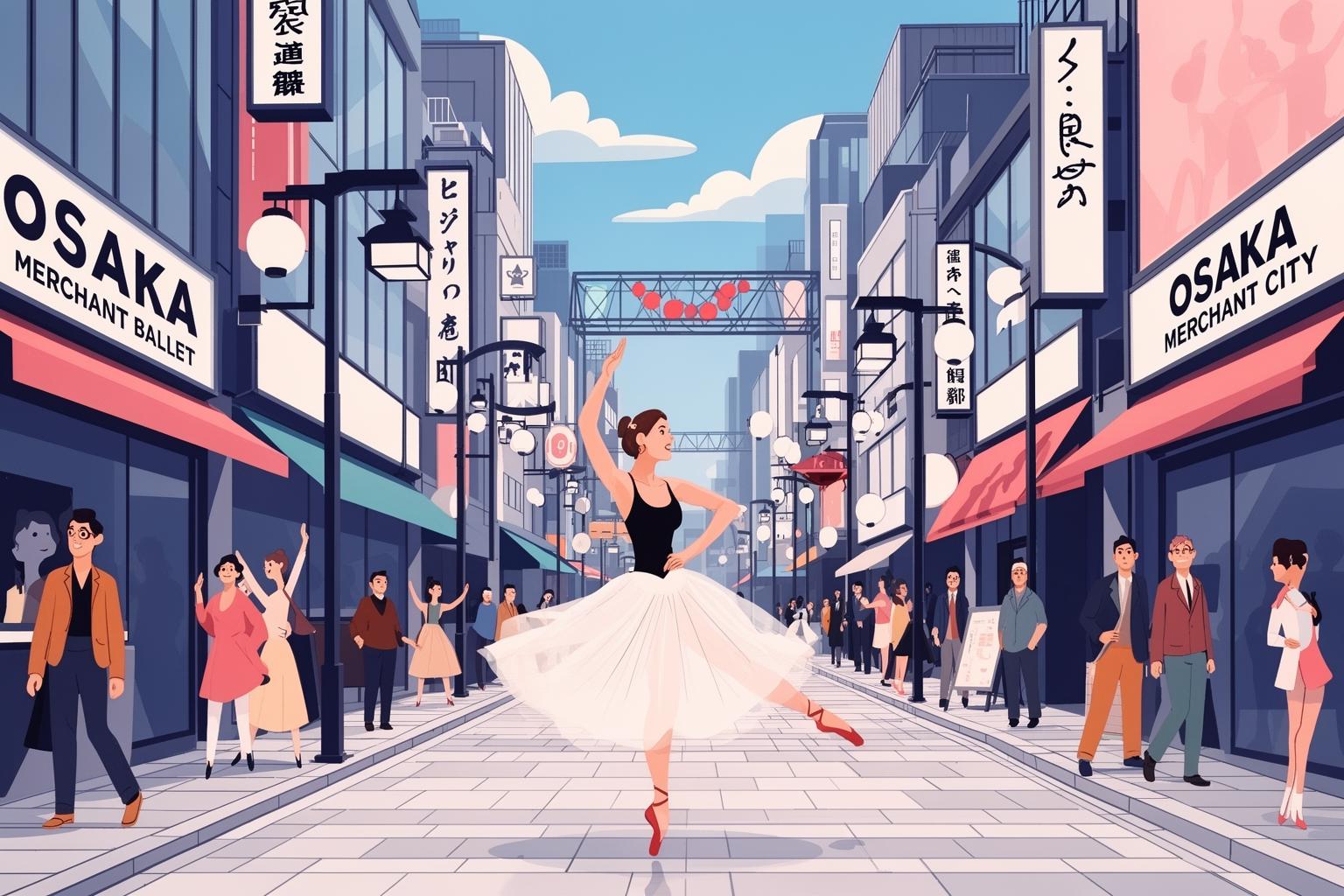
Your first ride in Osaka will be a baptism by fire. You’ll notice signs with pictograms clearly depicting a bicycle crossed out with a big red ‘X’ over the sidewalk. You’ll read the official rules stating that bicycles, as light vehicles, must stay on the left side of the road with cars. Then you will glance at the sidewalk and see a stream of cyclists—students in uniforms, mothers with two kids strapped into their mamachari, salarymen in suits, and elderly grandmas—all flowing past you. Then, looking at the road, a narrow channel of aggressive taxis, rumbling trucks, and impatient delivery vans, you’ll come to understand. The rules are an ideal; the sidewalk is the reality.
The Unspoken Rule: Pedestrians First, Theoretically
The fundamental truth about cycling in Osaka is that you will be riding on the sidewalk. Everyone does it, and the police mostly turn a blind eye unless you are riding with extreme recklessness. But this shared space operates under a delicate, unspoken social contract. It’s a fast-paced, high-context performance where you must anticipate everyone’s movements around you. The official law may be a distant memory, but an unwritten hierarchy is strictly upheld. At the top are the elderly, who move with unpredictable gaits and hold the highest social priority. You give them a wide, respectful berth, no questions asked. Next are mothers with children, steering their mamachari chariots with intense focus that demands your deference. They are the queens of this domain. Then come the general pedestrians, followed at the bottom by you, the cyclist. Your task is to weave, to anticipate, to be the water that flows around the rocks. A sharp, polite ring of your bell is acceptable to signal your approach from behind, but a series of angry, insistent dings is a grave social faux pas. It’s an announcement of your presence, not a demand for others to move aside. This is the first lesson in Osaka pragmatism: the system works not due to rigid rules but because of a collective, unspoken agreement to be aware and make it function.
The Hierarchy of the Pavement
Mastering this sidewalk ballet demands a level of situational awareness far beyond a leisurely park ride. You are not just dodging people; you are navigating a complex urban obstacle course. Someone might suddenly stop to look at a shop window. A door could swing open, releasing a laughing group of friends. A delivery driver on an electric-assist bike, loaded with ramen, will zip by you with terrifying silence and speed. You must learn to read the subtle body language cues—a slight turn of the head, a hesitation in a step—that hint at a person’s next move. This sharply contrasts with Tokyo, where a stronger sense of public order usually prevails, and cycling feels more regulated and less entwined in pedestrian chaos. In Osaka, the boundary between pedestrian and cyclist blurs, creating a more fluid but also more demanding environment. Riding through a covered `shotengai` shopping arcade during peak hours is the ultimate test. It’s a sensory overload of sights, sounds, and smells, with people and bikes flowing in every direction. Surviving here requires syncing with the city’s rhythm, becoming part of the collective flow rather than fighting it. It’s stressful, yes, but also the most genuine way to feel the city’s pulse.
The Smartphone Zombies and Other Modern Hazards
Layered on top of traditional obstacles are the modern ones. The most dangerous is the `aruki sumaho`—people walking while absorbed in their smartphones. They are unpredictable, unresponsive, and a constant hazard. They will drift into your path without warning, their entire world confined to a five-inch screen. You must learn to spot them from a distance and give them an even wider berth than anyone else. They are black holes of attention in the urban galaxy. Then there are tourists, understandably lost, who will stop abruptly in the middle of crowded pathways to check a map or take a photo. You learn patience. You learn to recognize the look of confused bewilderment that precedes a sudden stop. This constant state of high alert is draining, but it also sharpens your senses. It forces you to be present, fully engaged with your surroundings. This is the essence of navigating Osaka. It’s a city that won’t let you switch off. It demands your participation and awareness, and in return, it rewards you with an unfiltered, ground-level view of its vibrant, chaotic life.
The Parking Puzzle: Finding a Home for Your Ride
Your journey doesn’t end once you arrive at your destination. In Osaka, it simply transitions into a new, more frustrating phase: parking. At first glance, it looks straightforward. Bikes are everywhere—neatly lined up in designated racks, yes, but also chained to guardrails, clustered around signposts, and tucked away in forgotten corners of public squares. The natural temptation is to adopt the local attitude of `ma, ee ka`—”ah, it’s probably fine”—and lock your bike to the nearest metal pole. This would be a serious mistake. Osaka’s relationship with bicycle parking is like a Jekyll and Hyde story. In some areas, it’s a lawless free-for-all, while in others, it’s a ruthlessly efficient system of removal and impoundment.
“Here is Fine” vs. The Impound Truck
That sea of illegally parked bikes might give you a false sense of security. But look more closely. Some of those bikes may sport a paper warning tag—an ugly splash of yellow or orange strapped to the handlebars. This is the first sign of trouble. It means the area is a designated no-parking zone, and the cleanup crew has already been through. If the owner doesn’t move the bike, the next visit will be from the dreaded silver truck. These trucks are the grim reapers of the cycling world. Workers quickly and unemotionally cut cheap locks, load the bikes onto the truck, and haul them off to a distant impound lot. The rules about where you can and cannot park are often unclear. Major train stations like Umeda, Namba, and Tennoji are enforcement hotspots. The areas immediately around these stations are almost always no-parking zones. However, just a few blocks away, the rules seem to disappear. A spot that is safe one week could be cleared out the next. This seeming inconsistency isn’t random; it reflects the city’s ongoing attempt to balance convenience with order. For residents, it’s a constant game of risk assessment. Locals develop a sixth sense for it, but for newcomers, it remains a source of ongoing anxiety.
Deciphering the Paid Parking System
The only way to be sure your bike will be waiting when you return is to use a paid `churinjo`. These come in various forms. Some are vast, underground spaces where an attendant guides you to a spot. Others are simple outdoor lots with metal racks. The most common form you’ll encounter for short-term parking has a locking mechanism. You roll your front wheel into a metal clamp, and after a few moments, a bar rises and locks it in place. To release your bike, you enter your spot number into a central payment machine. Pricing is usually commuter- and shopper-friendly: the first 60-120 minutes may be free, followed by a charge of 100 or 150 yen for the next 8, 12, or 24 hours. The systems can be confusing at first. Some require you to take a ticket, others don’t. Some have payment machines right on site; others are a short walk away. The practical advice is simple: always allow an extra five minutes to find parking. Before heading to a new cafe or shop, check the area on a map for the `駐` symbol, which indicates parking. Be ready for lots to be full and the likelihood of having to circle around looking for another. It’s a frustrating but essential part of the routine.
The Apartment Dilemma
The parking challenge doesn’t stop at your destination — it extends to your own home. When renting an apartment, never assume bicycle parking is included. Many buildings, especially newer ones, have a limited number of spots. You often must pay a small monthly fee (perhaps 200-500 yen) and may even have to enter a lottery just to secure a spot. The apartment’s designated bike area is a microcosm of Japanese society’s struggle with shared space. It’s likely to be a chaotic mix of shiny new road bikes, rusty mamacharis that haven’t moved in years, and everything else in between. Every day, you’ll have to wrestle your bike in and out of this tangled metal puzzle. This is the unglamorous reality behind the convenience of cycling—a system of trade-offs where the freedom of riding is balanced by the hassle of parking.
The Shadow of Theft: Protecting Your Prized Possession
A common myth about Japan portrays it as so safe that you can leave your wallet on a café table and return hours later to find it untouched. While this often holds true for lost items, it falls apart when it comes to bicycles. In Osaka, bicycle theft is not just a risk but a statistical certainty. It is the city’s most frequent crime, a persistent, low-level threat that requires active vigilance. To believe otherwise is naïve. The practical, sometimes cynical Osaka mindset fully grasps this reality. A bike is a tool, but it is also an anonymous, easily transportable, and quickly resold object. Its theft is often a crime of opportunity rather than malice, but the outcome remains the same: you’re left to walk home.
Your Defense Arsenal: Registration and a Damn Good Lock
When purchasing a bicycle in Japan, whether new or used, the first step is to complete the `jitensha bouhan touroku`, or bicycle crime prevention registration. This mandatory procedure costs around 600 yen. The shop will handle the paperwork, and you will receive a small, durable orange or blue sticker with a unique registration number to place on your bike’s frame. This sticker is your most important form of defense, linking your physical bicycle to you in a national police database. Do not leave the shop without it. Equally crucial is your lock. The flimsy built-in ring lock found on most mamachari bikes is a mild deterrent, not a security measure; a determined thief can easily break it within seconds using simple tools. You must invest in a sturdy, high-quality lock, such as a thick chain lock or a solid U-lock at a minimum. The goal is not just to secure the wheel but to apply the `chikyu rokku`, or “earth lock”—locking your bike’s frame to an immovable object like a strong railing or a designated bike rack. This prevents thieves from simply picking up and carrying your bike away for later theft. This two-step defense—registration and a robust lock—is your only genuine protection.
What Happens When It’s Stolen
Despite taking precautions, theft can still occur. Returning to the spot where you left your bike, you may find only an empty space. The first step is to visit the nearest `koban` (police box) and file a `higai todoke`, a theft report. Here, your registration number is essential. The officer will ask for it along with your name, address, and bike details. They will be polite and professional, but you should keep your expectations realistic. The police will not send detectives to canvass the neighborhood. Your report will be entered into the system, marking the usual end of active investigation. Recovery depends largely on chance. If the police stop someone on a suspicious bike, they check the registration number. If an abandoned bike is found, it is cross-checked against the stolen bike database. This is why registration is critical; without it, even if your bike is recovered, there’s no way to prove ownership. Reclaiming your bike can take weeks or months, or it may never happen. The process reflects a bureaucratic acceptance of the problem—it is simply a fact of life in a big city, and the system is designed to handle the aftermath rather than provide a reassuring resolution.
The Osaka Cyclist’s Mindset: Pragmatism on Two Wheels

Understanding the chaos on the sidewalks, the parking challenges, and the constant threat of theft reveals something essential about the Osaka character. It is a mindset shaped by commerce, valuing efficiency, adaptability, and street smarts. The way people ride their bikes here perfectly captures the city’s spirit. It’s less about strict rule-following and more about embracing the spirit of a shared social contract. It’s a culture of negotiation rather than rigid control.
Efficiency Over Elegance
An Osaka cyclist weaving through pedestrians on the sidewalk does so for the same reason a shopkeeper rounds a price down—to achieve the most efficient outcome. The goal is simply to get from Point A to Point B. The road is slow and risky; the sidewalk is quicker and more direct. So long as it’s done with awareness and no harm is caused, the system functions effectively. This contrasts sharply with the Tokyo mindset, which often favors order and strict adherence to procedures. In Osaka, results often outweigh process. People bend rules when a more practical solution presents itself. This isn’t anarchy; it’s collective, unspoken problem-solving. To outsiders, it may seem chaotic and aggressive, but for those in tune with the rhythm, it’s a highly efficient, self-regulating system.
A Community of Silent Negotiation
That sidewalk ballet isn’t a series of selfish, isolated actions. It’s a collective dance. It works because everyone takes part in a silent negotiation for space. A subtle body lean, a moment of eye contact, a tiny shift in speed—all these are the words of a conversation happening thousands of times a minute on crowded streets. You learn to trust others to notice you and make their own small adjustments. This high-context, nonverbal communication lies at the heart of Osaka’s merchant culture. It’s about reading the situation, grasping the other person’s intent, and finding mutually beneficial outcomes without lengthy talks or rulebooks. To ride a bike here is to learn that language.
Final Thoughts for the Aspiring Osaka Cyclist
Choosing to commute by bicycle in Osaka is to accept the city’s advanced difficulty mode. It’s not a relaxed or scenic ride. It’s an active, engaging, and sometimes frustrating dive into the city’s essence. Your success depends on adaptability. Stay vigilant. Be assertive but not aggressive. Understand that written rules are merely guidelines, while unwritten hierarchies are absolute. Register your bike, buy a lock strong enough to secure a small ship, and accept that parking will always be a minor challenge. If you manage all this, you’ll gain the most intimate and efficient way to explore this remarkable city. You’ll find tiny shrines hidden between apartment blocks, smell the grilling takoyaki from street vendors invisible from train windows, and experience the changing energy of neighborhoods from block to block. You won’t just live in Osaka; you’ll become part of its relentless, rhythmic, and beautiful flow.