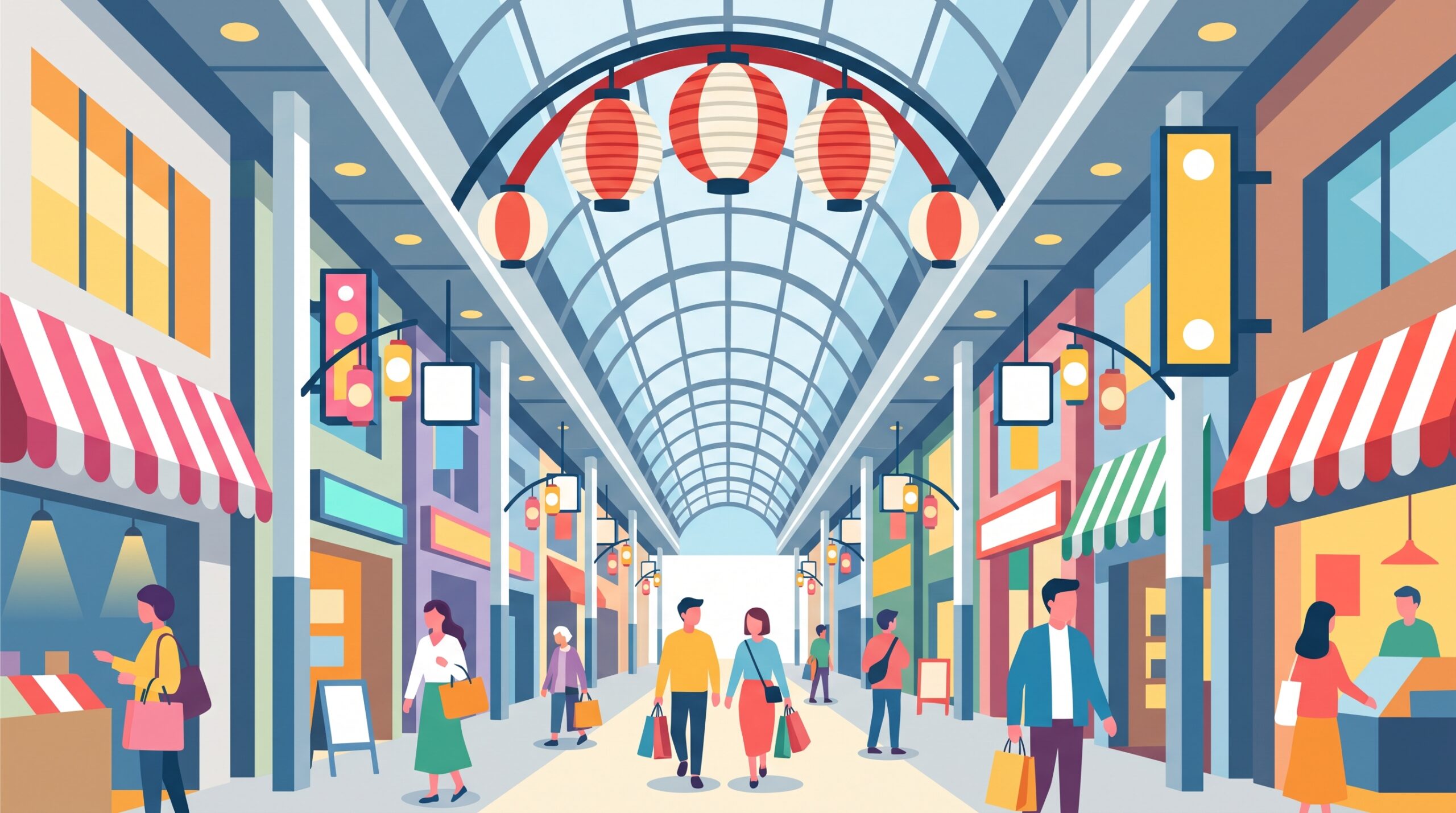
The rain in Osaka changes the geometry of the city. When the skies over the Kansai region turn a bruised purple and the heavy, humid downpours of early summer begin to fall, the streets do not empty. Instead, the lifeblood of the city simply shifts its current. The people vanish from the exposed intersections and the broad, wet boulevards, funneling themselves into the glowing, subterranean-feeling tunnels of the Shotengai. These are the covered shopping arcades of Japan. But to call an Osaka Shotengai a mere shopping arcade is to fundamentally misunderstand the architecture of local life in this city. A Shotengai is not a mall. A Shotengai is not a retail district. A Shotengai is the collective living room of the neighborhood. It is the communal lung through which the city breathes, gossips, haggles, and survives.
Tokyo hides its life behind closed doors. If you walk through the residential neighborhoods of Tokyo, you are struck by the quiet, the pristine walls, the unspoken agreement that public space is a transit zone, not a dwelling place. Tokyo is a city of vertical ambition and private perfection. Osaka, by contrast, is a city of horizontal sprawl and public imperfection. The people here do not have the luxury, nor the desire, to keep their lives hidden. The apartments are small. The walls are thin. The summer heat is oppressive. And so, the residents of Osaka push their lives out into the street. The Shotengai, with its high polycarbonate roof shielding the neighborhood from the rain and the harsh sun, becomes the ultimate extension of the private home. It is where the elderly come to seek the comfort of human voices, where the children run on their way back from school, where the local politicians stand on milk crates with megaphones, and where the daily drama of commerce and community plays out under a canopy of fluorescent lights and faded promotional banners.
If you want to understand how Osaka functions, you cannot just look at the neon lights of Dotonbori or the towering glass facades of Umeda. Those places are the armor the city wears for the outside world. The Shotengai is the soft underbelly. It is the kitchen, the dining room, and the parlor. To walk down a covered arcade in Osaka is to read the diary of a neighborhood. You can tell the economic health of a district by the ratio of independent butchers to chain pharmacies. You can hear the shifting demographics in the dialect spoken by the teenagers outside the convenience store. You can smell the history of the block in the deep-fryer oil of a croquette stand that has not changed its recipe since the post-war reconstruction era. This is not a polished tourist experience. It is raw, unfiltered urban existence. It is loud. It is cluttered. It is profoundly, undeniably human.
Foreign residents often move to Japan with a preconceived notion of Japanese politeness, characterized by quiet restraint, distant bows, and a rigid adherence to unspoken rules. Then they arrive in Osaka, step into a local Shotengai, and experience profound cultural whiplash. Here, bicycles weave dangerously through crowded pedestrian lanes, their bells ringing with impatient rhythm. Old women in unapologetically loud leopard-print shirts haggle over the price of daikon radishes with a volume that would be considered scandalous in Kyoto. Shopkeepers yell out their welcomes not with the refined, high-pitched “Irasshaimase” of a Tokyo department store, but with the guttural, rhythmic “Maido!” of the Kansai merchant class. It can feel chaotic. It can feel overwhelming. But if you learn to read the rhythm of this space, you realize that this chaos is entirely choreographed. It is a complex social dance built on a foundation of mutual reliance and aggressive warmth.
To live in Osaka is to belong to a Shotengai. You learn which vegetable stand has the best tomatoes on a Tuesday. You learn the exact time the local supermarket discounts its bento boxes. You learn to recognize the specific pitch of the tofu vendor’s voice. You stop being a stranger and become a regular, and in Osaka, being a regular is the highest form of social currency. The roof over the street changes everything. It encloses the sound, trapping the laughter and the hawking of wares. It blocks out the sky, creating a liminal space that is neither fully indoors nor fully outdoors. It is an architectural embrace. This article is not a guide on where to buy the cheapest souvenirs. It is an explanation of the psychological and physical space that defines daily life in Japan’s most vibrant city. Welcome to the living room of Osaka.
What is a Shotengai? Japan’s Covered Shopping Streets
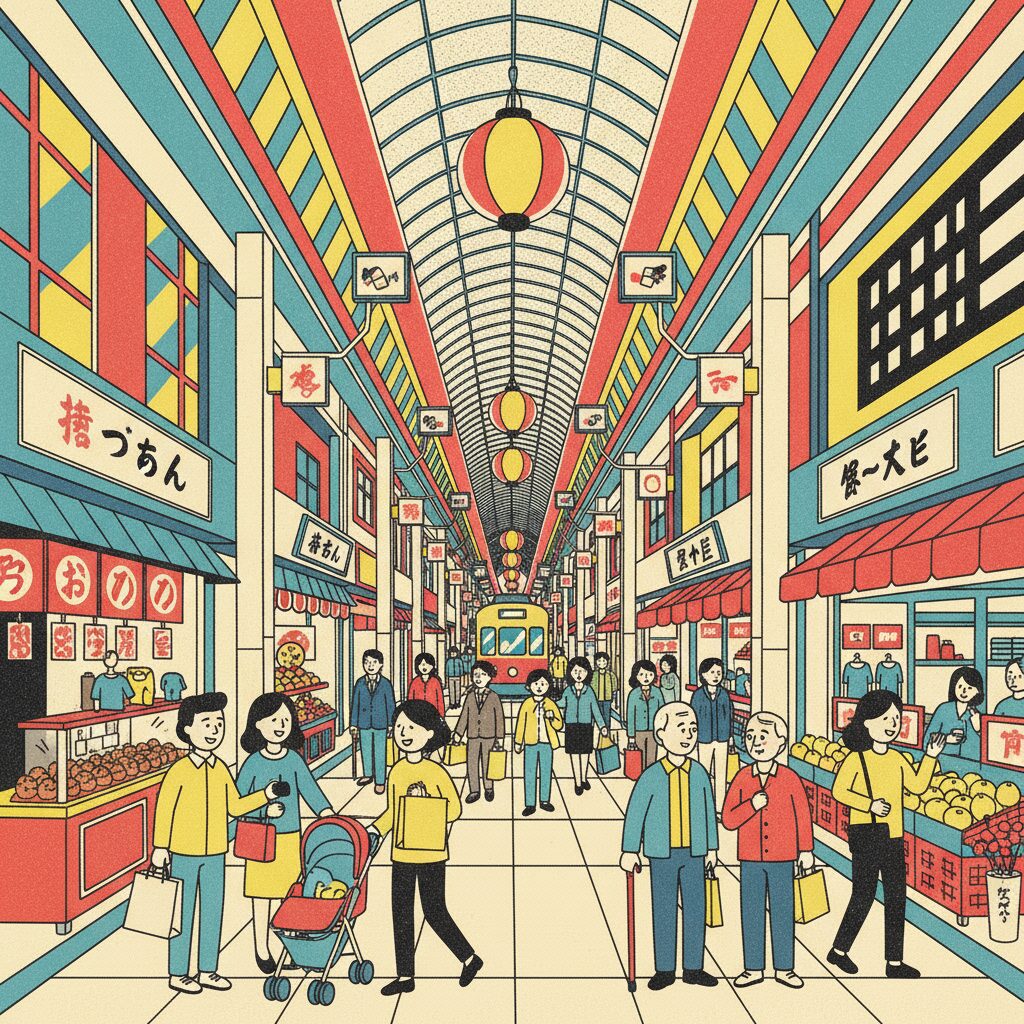
To truly understand the essence of the Shotengai, one must first deconstruct the Western notion of the shopping mall. The modern mall is a corporate invention, designed from the top down by developers and overseen by a single central authority. It is an artificial environment, climate-controlled to a uniform temperature, filled with carefully measured background music, curated to maximize consumer spending while discouraging lingering. A mall functions as a machine for extracting capital. In contrast, a Shotengai is an organic entity. It develops from the bottom up. It is not owned by a corporation, but is instead a coalition of independent property owners—a street that, at some point, chose to install a roof to shield customers from the elements, creating a union bound by shared purpose.
The history of Japanese shopping streets reaches back centuries to markets that blossomed around major temples and shrines. However, the covered Shotengai as we recognize it today largely emerged in the post-war period. After the devastation of World War II, black markets arose amidst the war-torn urban centers, especially near major train hubs like Umeda and Tennoji. As Japan’s rapid economic growth took off in the 1950s and 1960s, these informal markets became more formalized. Merchants joined forces to establish a Shotengai Kumiai, or shopping street association. They pooled resources to pave dirt roads, install street lighting, and ultimately build the grand, soaring arcades that now define the scene. The roof became a symbol of modernization—a promise to shoppers that they could visit rain or shine, under scorching summer heat or freezing winter winds, and remain protected.
Yet, the architectural addition of the roof did more than simply shield from weather. It fundamentally changed the space’s psychology. Walking down an open street, you move as a traveler through public territory, staying alert. But stepping under the canopy of a Shotengai produces an immediate acoustic shift. The ambient noise of traffic fades, replaced by sounds unique to the arcade: the clacking of wooden geta sandals, the hum of refrigeration units, the distinct, tinny calls of a public address system playing instrumental covers of Showa-era pop songs or the local neighborhood anthem. The roof instills a sense of interiority. You feel as if you’ve entered a building, even though the air isn’t climate-controlled and the ground remains public asphalt.
This sense of interiority encourages different behavior. People slow down. They linger. They pause mid-walkway to chat with neighbors, treating the public street with the casual familiarity one might have in their own hallway. The line between private shop space and public street space blurs. Greengrocers push wooden crates of seasonal vegetables far into the pedestrian lane, effectively claiming the pavement. Clothing stores drape discounted shirts on racks that brush against passersby’s shoulders. The space is in constant negotiation and flux. It is a vibrant, chaotic friction that sharply contrasts with the sterile, tightly regulated environments of modern commercial developments. The Shotengai remains one of the few places in contemporary Japan where rigid personal boundaries relax—and it is precisely this blurring that deepens the sense of community connection.
Why Osaka is the Ultimate City for Shotengai Exploring
Covered shopping streets exist in every prefecture in Japan, from the snowy regions of Hokkaido to the humid islands of Okinawa, but Osaka stands as the undisputed spiritual capital of the Shotengai. To understand why, one must consider the foundational mythology of the city. Tokyo was constructed by the samurai class, centered around Edo Castle—a city marked by rigid hierarchies, strict protocols, and an intense focus on outward appearances and polite distance. In contrast, Osaka was built by merchants and historically served as the hub of the rice trade, a port city where commoners wielded real economic power. In Osaka, business acumen mattered more than pedigree, fostering a culture that is famously egalitarian, practical, and fiercely resistant to pretension.
The Osaka mindset is embodied by the concept of “Akindo”—the merchant spirit. An Akindo wastes no time on unnecessary formalities that might hinder a good deal or relationship. This philosophy is reflected in the city’s physical space. The Shotengai is the ultimate embodiment of the Akindo spirit, designed for maximum commercial interaction and free from the intimidating, hushed environment of upscale department stores. In an Osaka Shotengai, the social contract permits you to be loud, inquisitive, and quite concerned about prices. The greeting “Maido,” commonly used in Osaka, roughly translates to “Thank you for your continuous patronage,” but it is casually employed as a hello, a goodbye, or a general acknowledgment of shared existence, implying an ongoing relationship. When a shopkeeper in Osaka says “Maido,” they are not just expressing gratitude for today’s purchase; they are weaving you into the fabric of their daily commerce.
Additionally, Osaka is renowned for the concept of “Kuidaore,” meaning “eating oneself into ruin.” The city’s obsession with food is not about refined, Michelin-starred tasting menus enjoyed in silent reverence. Instead, it centers on accessible, visceral, deeply satisfying street food and local diners. The Shotengai serves as the primary artery for Kuidaore, housing standing udon bars, Takoyaki stands actively turning batter in cast-iron molds, and butchers selling freshly fried minced meat cutlets (menchi katsu) to hungry students on their way home. The architecture of the covered arcade perfectly suits this culinary culture, shielding food stalls from the wind and trapping the scents of dashi broth, grilling soy sauce, and fried oil under the roof, creating an irresistible olfactory gauntlet. The dense concentration of culinary options packed shoulder to shoulder fuels fierce competition, maintains exceptionally high quality, and keeps prices ruthlessly low to satisfy the discerning local clientele.
In Tokyo, wandering into a local residential shopping street might make you feel like an intruder in a quiet, closed ecosystem. The residents might regard a foreigner with mild, polite confusion. In contrast, Osaka, as a port city of trade, is accustomed to outsiders passing through and bringing new influences. When a foreigner enters an Osaka Shotengai, they are not treated as a fragile anomaly but rather as a potential customer and conversation partner. Local grandmothers won’t hesitate to point out if your shoelaces are untied or to offer unsolicited advice on the best cut of pork for dinner tonight. The barrier to entry in Osaka is delightfully low; the city does not require mastering its cultural nuances before participating. Instead, it simply asks that you show up, walk the street, and engage with the chaotic rhythm of its living room.
The Best Osaka Shotengai for Local Vibes and Food
To truly grasp the authentic spirit of Osaka, you must skip the dazzling downtown areas and venture into the neighborhoods where people live, sleep, and shop for their everyday groceries. The local Shotengai serves as a community health indicator. Some flourish with lively energy, while others gradually fall victim to the “shutter street” phenomenon, where aging shop owners close their stores without successors, leaving long rows of shuttered metal gates. The arcades that endure and prosper do so because they are intimately woven into residents’ daily lives. They are not designed for tourists, which is precisely why they are the most crucial places to visit if you want to truly understand the city.
Tenjinbashisuji Shopping Street: The Longest in Japan
Any conversation about Osaka’s covered shopping streets must start with the undisputed champion: Tenjinbashisuji. Extending an impressive 2.6 kilometers from north to south, this arcade is a marathon of urban anthropology. It spans three subway stations and is officially divided into six numbered sections (chome), though locals will tell you it feels like journeying through several different towns. Walking the whole length of Tenjinbashisuji is a rite of passage for anyone seeking to comprehend the vast scale of daily commerce in Japan’s second city. It is more than just a street; it is a linear ecosystem housing over 600 individual shops.
The street’s character changes noticeably as you travel along it. At the southern end, near the historic Osaka Tenmangu Shrine from which it takes its name, the ambiance is older and steeped in tradition. Here you’ll find shops offering Buddhist altars, traditional Japanese sweets, and vintage tea merchants, where the heavy aroma of roasting green tea leaves drifts over the walkway. The pace is leisurely. Elderly couples stroll arm-in-arm, stopping to chat with shopkeepers they’ve known for decades. This section retains a temple-town feel, a reminder that before becoming a modern commercial hub, this path was a pilgrimage route.
Moving northward into the central sections, the tempo intensifies. This is the core of the daily hustle. The street narrows a bit, and you see an increasing concentration of discount clothing stores, drugstores, and fiercely competitive supermarkets. Here you witness the true, unfiltered Osaka shopper in action. You’ll encounter the famous “Osaka Obachan”—the middle-aged and elderly women of the city, often dressed in vibrant animal prints or bright colors, who navigate the crowds with ruthless efficiency. They don’t browse; they hunt. They know the exact price of a cabbage at three different stores and will aggressively negotiate a discount if a fruit is slightly bruised. Watching an interaction between an Obachan and a local vegetable seller is like attending a masterclass in improvisational theater: there’s haggling, feigned outrage, loud laughter, and ultimately, a mutual respect born from a shared understanding of value.
At the northernmost end, near Tenjimbashisuji 6-chome station (affectionately called Ten-roku), the mood shifts to something grittier, deeply local, and intensely culinary. This area is filled with tiny, narrow standing bars, affordable sushi spots, and long queues at popular croquette stands. It’s rough around the edges, entirely unpretentious, and aggressively inexpensive. It’s where salarymen stop for a quick beer and a skewer of grilled chicken on their way home, sharing space with university students and local laborers. Tenjinbashisuji doesn’t cater to an idealized image of Japan; it caters to the biological and social needs of people living within about a mile’s radius of its roof.
Kuromon Ichiba Market: A Paradise for Street Food
Kuromon Ichiba Market reveals another, more complex aspect of the Osaka Shotengai experience. Historically known as “Osaka’s Kitchen,” Kuromon was the professional market where chefs bought their top-tier seafood, rare vegetables, and specialized ingredients. It was a chaotic, wet, ocean-scented corridor where the serious business of the city’s gastronomy took place at dawn. For decades, it was a fiercely local space, intimidating to outsiders—a place of rubber boots, sharp knives, and rapid-fire Kansai dialect bargaining wholesale prices.
Today, Kuromon Ichiba presents one of the most intriguing examples of urban transformation and the double-edged nature of global tourism. In the years before the pandemic, the market underwent a major shift. As international visitors discovered its exceptional food quality, vendors realized they could earn significantly higher profits by selling small, ready-to-eat portions directly to tourists instead of wholesale to local chefs. Giant tuna once sold whole to sushi restaurants began being sliced into premium fatty tuna (otoro) skewers, torch-seared on the spot, and sold for several thousand yen to eager travelers. Local tofu makers and vegetable stalls gradually gave way to high-end wagyu beef stands, sea urchin vendors, and souvenir shops.
For foreign residents trying to understand Osaka, Kuromon is a polarizing place. Many locals lament the gentrification and soaring prices, feeling their “kitchen” has been taken from them and turned into a Japanese culinary theme park. They call it a tourist trap, saying a local would never pay the exorbitant prices asked for a grilled scallop on a stick. Yet this tension reveals much about Osaka’s adaptability. Kuromon’s merchants made a pragmatic, Akindo-style business choice. They followed the money. The market remains vibrant, noisy, and incredibly tasty, even if it no longer serves as the daily grocery spot for nearby neighborhoods. Walking through Kuromon today is witnessing the clash between traditional local commerce and hyper-modern global tourism. It’s a masterclass in visual merchandising, where every stall is set up to create a photograph-worthy moment. Even if you don’t buy the premium skewers, simply walking the market offers an unmatched sensory education in Kansai cuisine’s raw ingredients and a glimpse into the vast bounty of Japan’s land and sea.
Senbayashi Shotengai: The Authentic Everyday Osaka
If you want the complete opposite of a tourist trap, to see the purest, most unfiltered version of daily Osaka life, take the Keihan railway line to Senbayashi. Senbayashi Shotengai is famously cheap, intensively local, and fiercely proud of its working-class heritage. It’s renowned in business circles as the birthplace of the Daiei supermarket chain, a pioneer in Japan’s discount retail, and that DNA of price-cutting and aggressive retail competition still pulses through the arcade.
Senbayashi isn’t traditionally beautiful. It lacks Kyoto market’s historical weight or downtown Osaka’s polished neon glow. Its signage is a chaotic mix of bold red handwritten price tags, neon yellow discount banners, and overflowing cardboard boxes. The soundtrack is a cacophony of recorded voices shouting daily specials, overlaid with the constant, alarming ringing of bicycle bells. Senbayashi’s bicycle culture is a phenomenon in itself. Despite signs urging riders to dismount, locals ride heavy “mamachari” (mother’s bicycles) straight through crowded pedestrian lanes with the precision of fighter pilots—balancing shopping bags on their handlebars, smoking cigarettes, and shouting greetings to the butcher all at once. To navigate Senbayashi on foot, you must learn to move smoothly with the traffic, step aside fluidly, and never halt abruptly mid-lane.
What makes Senbayashi key to understanding Osaka is its complete lack of performance. The people aren’t putting on a show. They’re simply trying to stretch their pensions, feed their families, and find moments of joy amid economic hardship. Here you’ll find incredible local foods: bakeries selling melon pan fresh from the oven, small delis with cheap side dishes (osozai) for dinner, and tiny cafes where elderly men spend hours smoking and reading horse racing papers. When a foreign resident shops in Senbayashi, the exoticism of living in Japan falls away. You’re no longer in the “land of the rising sun”; you’re part of a neighborhood where the top priority is that eggs are on sale for 198 yen today. It grounds you. It compels you to engage with the city not as a culture consumer, but as a resident sharing in the daily struggle and triumph of urban life.
The Best Osaka Shotengai for Clothing and Fashion
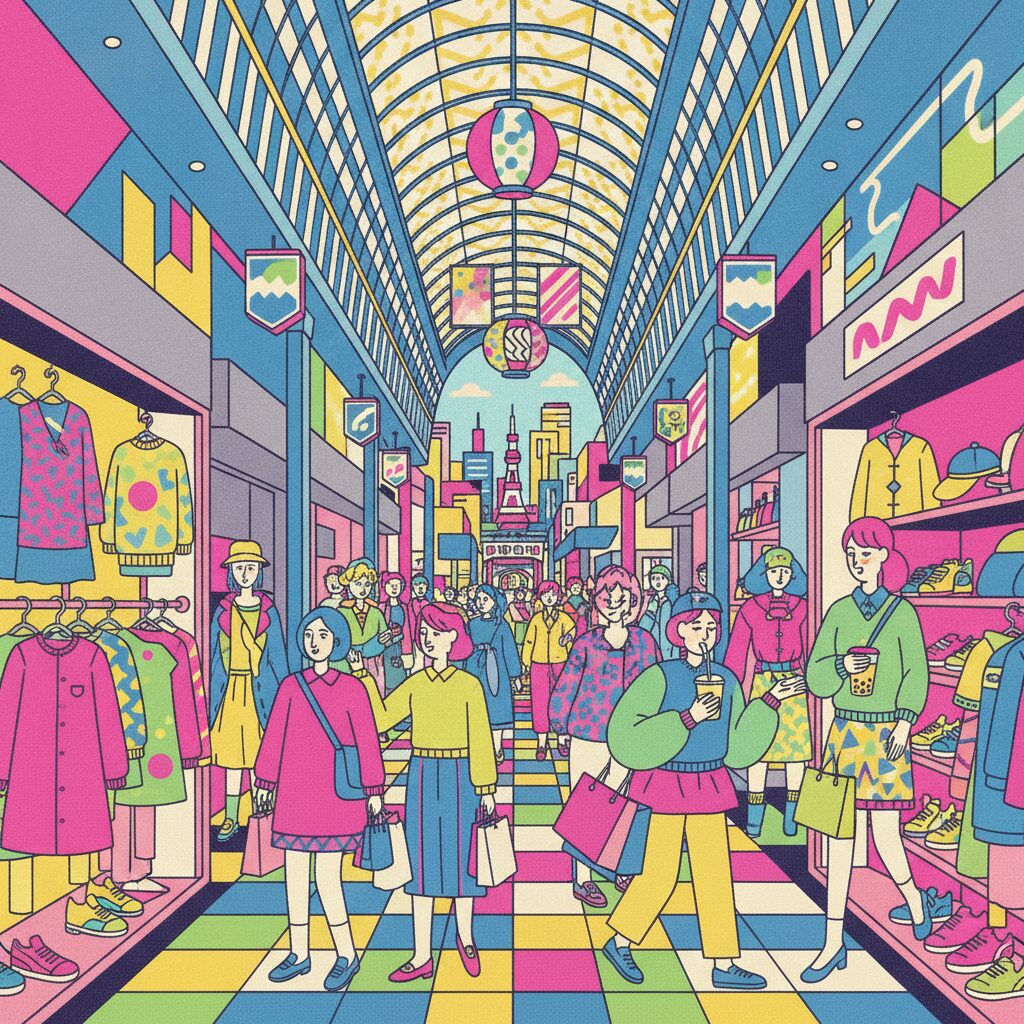
The function of the Shotengai extends beyond just food and daily groceries. In a sprawling, fashion-conscious city like Osaka, these covered arcades act as the main arteries for retail therapy, channeling millions of people through expansive corridors filled with clothing, cosmetics, and accessories. However, the operation of these fashion-centric arcades offers significant insight into the evolving nature of retail and demographic changes within the city.
Shinsaibashisuji Shopping Street: The Retail Hub
Shinsaibashisuji stands as the dazzling, hyper-commercial heart of Osaka’s arcade network. Running parallel to the main Midosuji boulevard, it serves as the chief pedestrian pathway linking the northern business district to the southern entertainment zones. For over three centuries, this street has been Osaka’s high-end retail center. In the Edo period, it was home to prestigious kimono merchants and traditional craft shops. Today, it is a canyon of global fast-fashion brands, large drugstores catering to inbound cosmetic buyers, and towering department stores.
To locals, Shinsaibashisuji is often met with a mix of necessity and reluctance. It is undeniably convenient, hosting every major brand imaginable, but the overwhelming crowds during weekends can be stifling. Foot traffic here is not a leisurely stroll; it is a relentless, directional tide. If you stop to check your phone, you’ll be bumped, jostled, and swept along by the flow. This is where you appreciate the remarkable tolerance for crowding required to live in a major Japanese city. People do not react angrily when bumped; they simply adjust their path and keep moving, performing a subtle micro-choreography of spatial awareness.
Yet, despite the dominance of global brands, traces of old Shinsaibashisuji persist if you know where to look. Nestled between massive fast-fashion outlets and brightly illuminated pharmacies, you might find a narrow shop selling exquisitely crafted traditional umbrellas, or a quiet, wood-paneled store specializing in high-grade green tea, managed by the same family for eight generations. These enduring legacy businesses are supported by the loyalty of long-term local customers who refuse to shop elsewhere. Shinsaibashisuji reveals the harsh realities of commercial real estate in Japan; only the strongest, most adaptable, or deeply rooted survive here. It is a place of intense visual stimulation, where lighting is designed to erase shadows, keeping consumers alert, awake, and ready to spend.
Ebisubashisuji Shopping Street: Trendy and Bustling
If Shinsaibashisuji represents the established corporate retail giant, its southern extension, Ebisubashisuji, is the wild, hormone-fueled realm of youth culture. Starting from the famous Ebisubashi Bridge (the iconic crossing over the Dotonbori canal featuring the Glico running man sign) and extending south toward Namba station, this arcade has a distinctly different energy and demographic. The air is filled with the scent of sweet crepes, cheap perfume, and fried food. Music blasting from storefronts is louder, faster, and more aggressively pop-oriented.
Ebisubashisuji is the place where Osaka’s teenagers and suburban youth gather to see and be seen. It is the epicenter of youth fashion trends, lined with stores offering inexpensive, highly stylized clothing, character goods, and countless purikura (photo sticker) arcades. For a foreign visitor, walking through this area is a crash course in Japanese youth subcultures, with shifting trends in makeup, hair color, and street fashion unfolding in real time.
Importantly, Ebisubashisuji also operates as a vast social theater. The bridge itself is famously known as a hotspot for “nanpa”—young men attempting to pick up young women. The arcade serves as the runway leading to this social stage. Here, the focus is less on intentional shopping and more about lingering, socializing, and soaking in the vibe. Security guards frequently ask groups of teens, politely but firmly, not to block the thoroughfare. It is loud, brightly lit, and overwhelming for anyone over twenty-five, but it remains a crucial part of the city’s social fabric, offering a safe, enclosed space where youth can carve out their own culture away from the quiet confines of their residential neighborhoods.
The Best Osaka Shotengai for Specialty Goods
Beyond general merchandise and food, Osaka’s legacy as a manufacturing and logistics center has given rise to highly specialized Shotengai. These are not casual browsing spots; rather, they are destination arcades where professionals and dedicated hobbyists acquire the precise tools of their trades. They showcase a practical side of Osaka’s character: a deep respect for utility, craftsmanship, and efficient work.
Sennichimae Doguyasuji Shopping Street: Kitchenware and Knives
If Osaka is Japan’s kitchen, Doguyasuji is the toolshed. Nestled within the dense maze of streets near Namba station, this short but densely packed arcade is fully devoted to culinary equipment. Doguyasuji is where the foundation of Osaka’s renowned food culture is built, bought, and sold. It’s not meant to be attractive; it’s designed for functionality. Shops spill out onto the street, forming chaotic piles of ceramic bowls, hefty cast-iron takoyaki pans, industrial-sized rice cookers, and endless stacks of disposable chopsticks.
For anyone fascinated by the mechanics of Japanese cooking, this street is eye-opening. Here you see the remarkable hyper-specialization of Japanese cuisine. There isn’t just one kind of knife; there’s a specific, hand-forged blade for slicing sashimi, a heavy cleaver for chopping fish bones, and a perfectly angled blade for peeling vegetables, all offered by serious, knowledgeable merchants who will sharpen the blade on a wet stone right before your eyes. You can also purchase the exact paper lanterns hung outside izakayas, plastic food replicas (sampuru) displayed in restaurant windows, and the large, colorful noren curtains chefs hang over their doors to signal they are open.
Doguyasuji reveals a local mindset rooted in respect for the physical labor of food preparation. The shopkeepers here do not tolerate ignorance lightly. Asking a foolish question about a premium knife could earn a curt, dismissive reply. But if you demonstrate genuine interest and respect for the craft, they’ll happily spend half an hour explaining the carbon content of the steel and how to maintain the handle. Doguyasuji is the backstage of the city’s glamorous dining scene. It’s gritty, metallic, and absolutely essential—a tangible expression of the working-class ethic that shaped Osaka’s gastronomic fame.
Karahori Shotengai: Retro Architecture and Artisan Cafes
For a very different atmosphere, leave the flat, neon-lit districts of Namba and Umeda and head east to the Uemachi Plateau. Here lies Karahori Shotengai, a covered street meandering through the uneven terrain of the hills. Karahori is a survivor. It’s among the few parts of central Osaka that largely escaped World War II firebombing. Consequently, the neighborhood surrounding the arcade is a maze of narrow, winding alleys and original pre-war “nagaya” (wooden row houses).
The Shotengai itself feels like a gateway to the Showa era. It lacks the frenetic, aggressive energy of Senbayashi or the polished commercialism of Shinsaibashi. The light filtering through the roof is softer, the walking pace slower, and the air carries scents of aged timber, roasted coffee, and incense. Karahori is undergoing a fascinating, gradual gentrification. Young creatives, architects, and chefs have recognized the incredible aesthetic value of the old nagaya houses and the arcade’s historic atmosphere. They’ve moved in, transforming abandoned storefronts into chic artisanal coffee roasters, independent bookstores, and hidden French bistros.
Importantly, this gentrification happens in dialogue with the old guard rather than simply displacing them. A sleek, minimalist natural wine bar might sit right next to a chaotic, seventy-year-old futon shop run by a grandmother who sits outside fanning herself in the summer heat. Hipsters and elders coexist in a delicate, respectful balance. For foreign residents, Karahori offers a glimpse of urban renewal that honors the community’s historical fabric. It serves as a living room for a more bohemian, tranquil side of Osaka, proving the city can embody deep stillness and historical reverence alongside its well-known chaos.
What to Eat and Buy in an Osaka Shotengai
Navigating the overwhelming variety of options in a local shopping street calls for a strategic approach. The key rule for shopping and eating in an Osaka arcade is to follow the locals, seek out the shortest lines (since locals dislike waiting), and adopt the mindset of enjoying food and purchases for immediate satisfaction rather than long-term value.
Must-Try Local Restaurants and Street Snacks
When it comes to dining, the Shotengai isn’t the place for a leisurely, multi-course meal. The food here is meant to be eaten quickly, affordably, and often while standing. The holy trinity of Osaka soul food—Takoyaki, Okonomiyaki, and Kushikatsu—can be found in nearly every major arcade, but the authentic local experience often lies in the more humble, everyday dishes.
Standing udon bars are essential to the commuter crowd. These tiny spots, frequently open to the street, serve bowls of hot, dashi-rich broth and thick noodles for less than the cost of a coffee. The etiquette here demands ruthless efficiency: order, pay in cash, slurp your noodles fast, place the bowl back on the counter, and leave. There’s no lingering or chatting—just the straightforward, transactional consumption of a flavorful, comforting meal.
Another staple within the local arcade is the butcher shop deli. Nearly every neighborhood butcher features a deep fryer in the front window. Here, you can purchase korokke (potato croquettes), menchi katsu (minced meat cutlets), and ham katsu (fried ham). These are classic after-school snacks for kids and inexpensive dinner additions for exhausted workers. The aroma of fryer oil blending with the damp arcade air is arguably one of the most nostalgic scents in modern Japan. Eating a freshly fried, piping hot croquette from a small paper bag while weaving through bicycles in a busy arcade is a transcendent, purely Osaka experience.
Traditional Japanese Souvenirs and Everyday Apparel
The retail focus in a local Shotengai centers on daily practicality rather than luxury gifts. If you want delicate, beautifully packaged traditional sweets, you head to a department store. For practical, durable goods, the Shotengai is the place to go.
One of the most fascinating cultural phenomena you can see and buy in these arcades is the clothing favored by older local women. The “Osaka Obachan” style is legendary throughout Japan, characterized by a complete rejection of the subdued, minimalist colors typical of Tokyo fashion. Instead, the racks in places like Senbayashi or Tenjinbashisuji burst with bright purples, neon pinks, and, most notably, animal prints. Leopard, tiger, zebra prints—if it exists in the wild, it’s printed on sweaters in Osaka.
This fashion choice is more than a quirk; it’s a profound sociological statement. In a society that pressures women to blend in, stay quiet, and fade into the background with age, the Osaka Obachan chooses visibility. The bold clothing declares presence, refuses to be ignored, and physically embodies the city’s loud, joyful, and resilient spirit. Buying a cheap leopard-print shirt in a local arcade isn’t just purchasing a souvenir; it’s acquiring a piece of the city’s rebellious, matriarchal armor. Additionally, the arcades are excellent for purchasing high-quality, practical daily items: beautifully dyed tenugui (cotton hand towels), sturdy ceramic bowls for everyday rice eating, and the comfortable, wide-fitting shoes preferred by people who walk miles daily on hard pavement.
Essential Tips for Visiting Osaka’s Shopping Streets
To truly appreciate Osaka’s living room, you must learn to follow the house rules. The Shotengai is a shared space, and its smooth functioning relies on everyone respecting a set of unwritten social contracts. Ignoring these rules will immediately label you as an outsider and, more importantly, disrupt the community’s delicate flow.
General Opening Hours to Plan Your Day
The tempo of the Shotengai is governed by the sun and the routines of the local housewife, not the late-night habits of tourists. Most local arcades operate strictly during the day. The morning routine starts around 9:00 AM, with the piercing screech of metal shutters being rolled up. Shopkeepers clean the pavement in front of their stores, arrange their displays, and get ready for the day. By 10:00 AM, the street is fully awake and open for business.
Peak hours occur late morning and again in the late afternoon, around 4:00 PM, when locals shop for fresh ingredients for the evening meal. This is when the arcades are at their busiest, loudest, and most crowded. However, the day ends surprisingly early. By 7:30 PM, the atmosphere changes. Discount stickers are placed on remaining bento boxes and raw fish, signaling the last rush of bargain hunters. By 8:00 PM, the metal shutters begin rolling down again, echoing through the now increasingly empty tunnels. By 9:00 PM, a local Shotengai is often completely deserted, transformed from a lively living room into a quiet, dimly lit corridor. If you plan to visit a neighborhood arcade, do not treat it like a nightlife spot. You must adjust your body clock to the domestic rhythm of the city.
Cash vs. Card: What to Bring
Despite Japan’s swift move toward digital payments and the widespread use of IC cards like ICOCA for transit, the local Shotengai remains proudly and stubbornly dependent on cash. The physical exchange of coins and bills is deeply rooted in Osaka’s merchant culture.
When purchasing fruit from a local vendor, the transaction is tactile—the clinking of heavy 500 yen coins into the plastic tray, the quick, practiced counting of change, the handing over of the receipt—these small interactions build trust. Many small, family-run businesses operate on narrow margins and refuse to lose a percentage of their profits to credit card processing fees. Additionally, cash facilitates the arcade’s beloved pastime: haggling. You can’t negotiate a discount on a bunch of green onions if paying by smartphone app. The tangibility of cash makes the value of goods feel real. Therefore, the most important rule for exploring a Shotengai is to visit a post office or convenience store ATM beforehand and fill your wallet with plenty of small bills and coins. Trying to pay for a 150-yen croquette with a credit card will cause confusion, frustration, and disrupt the local commercial flow.
Basic Etiquette While Walking and Eating
Lastly, the key to respecting and navigating the Shotengai is mastering spatial etiquette. A covered arcade is a high-traffic artery. The biggest social faux pas is stopping suddenly in the middle of the walkway to check your phone, take a photo, or consult a map. This is like slamming on the brakes on a busy highway. If you need to stop, you must smoothly drift to the edge of the pavement, pressing yourself against storefronts, out of the main flow of pedestrians and, importantly, out of the path of the silent, speeding bicycles.
Moreover, although street food culture is widespread, the rules around eating are strict. In many Western cities, walking while eating a sandwich is common. In Japan, “tabearuki” (eating while walking) is generally frowned upon as messy and disrespectful to the food. This rule is slightly relaxed in tourist-heavy areas like Dotonbori but remains strictly observed in local Shotengai. When you buy a skewer of meat, a croquette, or a piece of sweet bread, you don’t walk away eating it. Instead, you step aside to the stall’s edge, stand still, eat quickly, discard the wrapper in the vendor’s designated trash can, say a loud “Gochisousama deshita” (Thank you for the meal), and then continue walking.
By following these rules—moving with the flow, paying with cash, eating respectfully, and acknowledging the space as the community’s shared home—you stop being just a tourist. You become a temporary participant in Osaka’s grand, chaotic, deeply human living room. You begin to understand that this city doesn’t hide its heart in museums or quiet temples. It wears its heart on its sleeve, beneath the glowing polycarbonate roof of the Shotengai, waiting for you to step in and join the conversation.