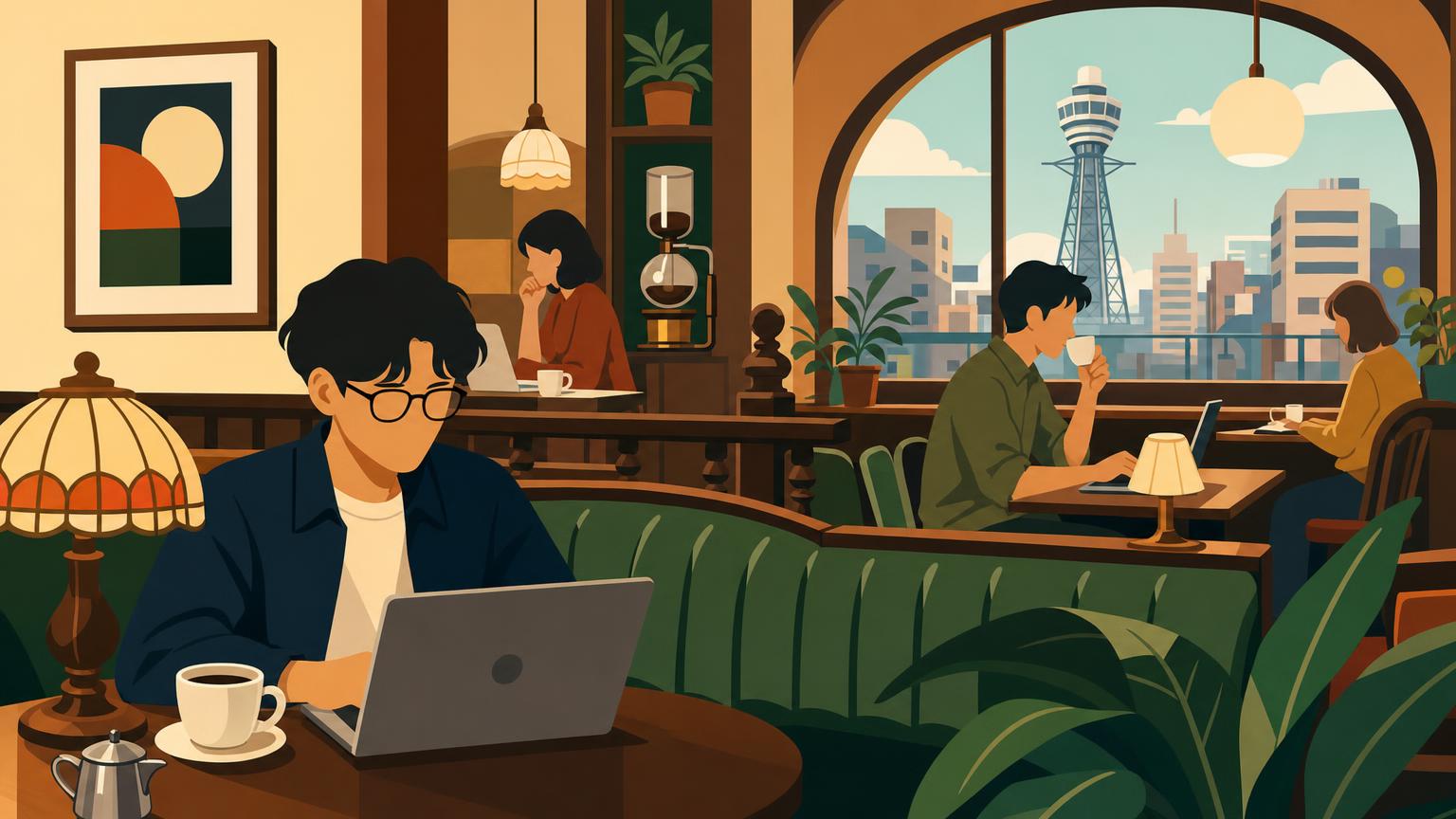
You push open a heavy, dark wooden door, and a tiny brass bell announces your arrival with a sharp, clear chime. Instantly, the neon chaos of Osaka fades away. You are enveloped in the rich, earthy scent of deeply roasted coffee beans mixed with the faint, nostalgic aroma of old tobacco. The lighting is dim, casting a warm amber glow over plush velvet seating and dark mahogany tables. Behind a polished wooden counter stands the master, dressed impeccably in a crisp white shirt, dark vest, and perhaps a bowtie. He moves with quiet precision, carefully tending to a bubbling siphon coffee maker. You have just stepped into an authentic Japanese kissaten, a relic of the Showa era that somehow feels perfectly preserved in time.
For foreigners moving to Japan or staying long-term, the search for a reliable workspace often leads to sterile, ultra-modern coworking hubs or loud international chain cafes. You might search online for the best places to study in Osaka or a dependable work cafe in Osaka, expecting rows of sleek white desks and blinding fluorescent lights. However, Osaka hides an entirely different tier of unofficial workspaces. Tucked away in the sprawling, labyrinthine underground malls of Umeda or hidden above the bustling, chaotic arcades of Namba, traditional kissaten serve a crucial role in the city’s daily rhythm. They are the original coworking spaces of Japan, utilized for decades by local businessmen, creatives, and independent merchants seeking a quiet refuge to read, negotiate, or simply think.
To truly understand daily life in Osaka, you must understand the cultural weight of these spaces. Osaka is famously a merchant city, a place driven by the spirit of the akindo, or traditional tradesman. The akindo spirit dictates that business must flow constantly. A static, empty shop is bad energy. Therefore, a customer who sits quietly, works diligently, and orders consistently is seen as a valuable contributor to the shop’s atmosphere, not a nuisance. While tourists often fixate on the city’s loud, colorful street food culture and boisterous nightlife, the real business of Osaka happens quietly, over thick ceramic cups of dark blend coffee.
In this article, we dive deep into how you can utilize these stunning retro spaces as a digital nomad or remote worker, while navigating the unspoken rules and profound social contracts that govern Osaka’s local culture. You will learn not just where to open your laptop, but how to read the room like a true local, blending productivity with a deep respect for a fading, beautiful slice of Japanese history.
The Appeal of Kissaten for Digital Nomads in Osaka
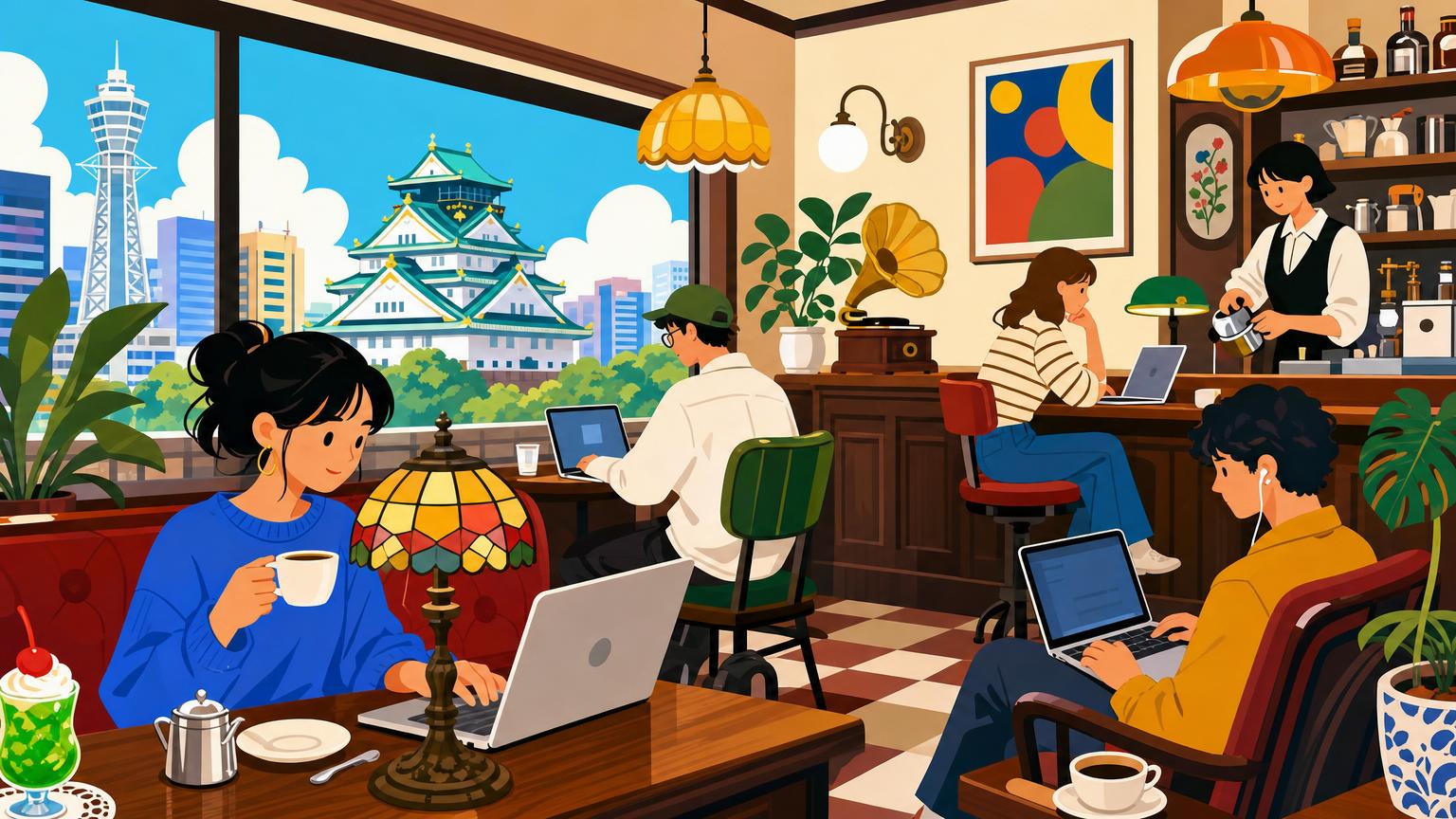
The idea of working from a cafe is not a new trend introduced by digital nomads. Long before Wi-Fi and ultra-slim laptops existed, Osaka’s kissaten served as the main off-site offices for the city’s hardworking workforce. To understand why a modern digital nomad might choose a fifty-year-old, dimly lit coffee shop over a bright, contemporary coworking space, one must consider the mindset of the city itself.
Osaka functions on a wavelength of practical comfort and human connection. Unlike Tokyo, where the atmosphere can often feel rigid, highly regulated, and ultra-modern, Osaka maintains a gritty, lived-in warmth. A kissaten acts as an anchor in this fast-moving city. It is a place where the street noise is softened by thick glass and gentle jazz, creating an environment designed around the idea of slow, intentional focus. Sitting in one of these cafes, you are not just finding a spot to answer emails; you are engaging in a decades-old urban tradition.
What Makes a Kissaten Different from a Regular Cafe?
A kissaten differs fundamentally from the typical coffee chains found worldwide. The term translates to a tea-drinking shop, but since the mid-1900s, coffee has been the sole focus. Kissaten serve dark, rich roasts, often brewed with siphons, flannel drips, or tall glass Dutch cold brew towers. You won’t encounter overly sweet seasonal frappuccinos or matcha lattes here. The menu is a nostalgic ode to a bygone era, offering items like vivid green melon soda floats, thick slices of buttered toast, and the classic Japanese interpretation of spaghetti Neapolitan served on a sizzling iron plate.
The key difference, however, is in the ownership and rhythm. A kissaten is nearly always independently owned and run by a master or mama-san. This individual is not a temporary shift worker following corporate guidelines; they embody the very spirit of the establishment. The master curates the physical environment, chooses the classical or jazz music playing, and carefully maintains the room’s delicate balance. Sitting in a kissaten means you are essentially a guest in their private living room. This relationship fosters an atmosphere of deep respect and quiet dignity, making it an ideal mental space for focused laptop work or reading.
Kissaten Etiquette: Can You Work on Your Laptop?
This is often where foreigners encounter confusion. Many traditional kissaten do not explicitly promote themselves as laptop-friendly cafes in Osaka. In fact, if you enter a prestigious kissaten in Tokyo intending to work for several hours, you may be politely but firmly asked to put away your computer or leave after finishing your first cup of coffee. Tokyo operates on strict, explicit rules: if an unwritten or written rule forbids laptops, there is no room for compromise. The city insists on conformity with the space’s designated purpose.
Osaka, on the other hand, follows a very different cultural rhythm. The city values human relationships, flexibility, and situational awareness—a social concept known as kuuki wo yomu, or “reading the air.” Can you work on your laptop in an Osaka kissaten? The honest answer is yes, but it depends entirely on your behavior and timing.
People in Osaka deeply respect the merchant spirit. They understand that an empty seat brings in no income, while a respectful customer who keeps spending is welcome. The unspoken rule is never to become a burden. If you visit during the hectic lunch rush from noon till 1:30 PM, you should close your laptop, eat quickly, and leave so the master can serve hungry local office workers. But if you arrive mid-afternoon on a quiet Tuesday, order a house blend coffee, and work quietly in a corner booth, the master will likely grant you peaceful solitude. The key is mutual respect and spatial awareness—you trade continued patronage for their sanctuary.
Best Laptop-Friendly Kissaten and Retro Cafes in Osaka
Finding the right spot means stepping away from the main neon-lit tourist routes and exploring the underground networks and narrow, winding side streets. Osaka’s architecture is uniquely layered, with entire miniature cities existing beneath major train stations. These aging districts are treasure troves for those looking for a reliable work cafe in Osaka with a strong retro vibe. Below are conceptual breakdowns of the classic environments you’ll encounter, inspired by the city’s most legendary spots.
The Underground Space Station – Mazura Style
Deep within the concrete maze of the Osaka Ekimae buildings in Umeda, massive retro cafes offer a surreal mix of Showa-era futurism and practical Osaka everyday life. Picture entering a vast room styled like a 1970s sci-fi lounge, complete with mirrored ceilings, circular velvet booths, and low-hanging spherical lights. The sheer size of the space swallows sound, producing a steady, soothing hum of quiet conversation that acts as the perfect white noise for focus.
This type of large retro cafe is perfect for laptop work. With abundant seating, you rarely take up valuable space from other patrons, allowing you to settle in for a few hours of guilt-free productivity. You’ll find local real estate agents spreading out floor plans alongside university students studying for entrance exams. It’s an unpretentious, very affordable, and deeply atmospheric place to get work done. The coffee is strong, service swift, and the environment infused with the persistent blue-collar spirit of the city.
Retro Elegance and Business Deals – King of Kings Vibe
Just steps away from the spacious retro lounges are intimate, luxurious kissaten designed for high-level negotiations, secret meetings, and quiet evening reflection. Featuring intricate stained glass windows, thick carpets, plush seating, and walls lined with gleaming bottles of vintage whiskey, these venues blur the line between daytime cafe and exclusive evening lounge.
Though lacking modern amenities like charging ports or ultra-fast internet, they provide something far more valuable to remote workers: absolute tranquility and aesthetic inspiration. The lighting is kept very dim, which significantly reduces eye strain and encourages tunnel vision on your glowing screen or notebook. This is not the place for loud Zoom calls or aggressive typing; rather, it’s a sacred space for writers, programmers seeking deep flow states, and creatives seeking inspiration. When you need to escape the sensory overload of modern Osaka, slipping into one of these elegant, dimly lit rooms feels like releasing a breath you didn’t realize you were holding.
Showa Grandeur – Jun Kissa American Style
In the heart of the bustling Minami district, amid giant glowing mechanical crab signs and crowds of tourists eating takoyaki, stand the grand dames of the kissaten world. These sprawling, multi-story palaces embody pure retro luxury, featuring enormous crystal chandeliers, sweeping spiral staircases, intricate floral carpets, and immaculate waitstaff in formal attire.
Working in a grand kissaten requires a specific approach. You’re unlikely to find public Wi-Fi here, and plugging your bulky charger into a wall socket is generally considered a major faux pas. This is the place to go when your laptop is fully charged and you need to focus on tasks that don’t require constant internet access. It’s perfect for drafting lengthy documents, editing photos, or outlining large projects. The surrounding grandeur elevates your mindset, making your work feel significant and important. As long as you respect the elegant atmosphere and order a beautifully crafted sweet alongside your expensive coffee, you can enjoy a highly productive session enveloped in pure Showa-era luxury.
Top Work Cafes and Self-Cafes in Osaka for Productivity
While traditional kissaten provide an unmatched atmosphere and a deep, grounding connection to local history, there are inevitable occasions when a digital nomad needs modern infrastructure. You might require high-speed internet to upload large files, unlimited power outlets to endure an eight-hour coding session, and a guaranteed space where you won’t feel an ounce of guilt for staying all day. To meet this growing modern demand, Osaka has fully embraced a new wave of hybrid workspaces that bridge the gap between a relaxing coffee shop and a highly functional corporate office.
The Rise of Self-Cafes in Japan
One of the most intriguing developments in Japan’s modern work culture is the rapid rise of self-cafes. If you actively look for a self cafe Osaka, you will find a uniquely Japanese solution to the urban coworking challenge. These are mostly unstaffed or minimally staffed cafes where you pay solely for time rather than premium coffee or food. Customers typically check in via a QR code on a smartphone app, pay a flat hourly fee, and gain instant access to high-speed Wi-Fi, ergonomic office seating, and unlimited hot and cold drinks from automated vending machines.
This model perfectly fits the hyper-focused, introverted productivity mindset. There is no pressure to interact with waitstaff, no lingering guilt about overstaying your welcome, and no ambiguity about the rules. Everyone in a self-cafe is there for one purpose only: to focus. It serves as the sterile, highly efficient counterpart to the warm, relational atmosphere of traditional kissaten. For foreign residents trying to navigate the often complex nuances of Japanese social etiquette, the self-cafe offers a perfectly frictionless, anxiety-free environment.
A Coworking Space with a Cafe Heart
For those who find automated self-cafes too sterile but traditional kissaten too limiting, hybrid coworking spaces offer the ideal middle ground. Work cafes in Osaka often feature beautiful warm wooden interiors, abundant natural light streaming through large windows, and the gentle, comforting hum of a high-end espresso machine run by a skilled barista.
These modern spaces are deliberately designed from the ground up for laptop warriors. Every seat includes a dedicated power outlet, Wi-Fi is robust enough to handle heavy video editing or massive international conference calls, and the layout actively encourages networking and collaboration. Unlike Tokyo’s coworking spaces, which can sometimes feel overly corporate, intense, and ruthlessly competitive, Osaka’s hybrid work cafes maintain a distinctly laid-back, friendly vibe. People are deeply focused on their screens, yet there is always a sense of warmth, perfectly reflecting the city’s inherent sociability and lack of pretension.
Professional Coworking with a Cafe Vibe in the Merchant Hub
The Sakaisuji Hommachi area has historically been Osaka’s merchant capital, the literal heart where massive textile companies and global trading houses first established headquarters decades ago. Today, it has seamlessly evolved into a thriving hub for tech startups, independent designers, and young entrepreneurs. Coworking spaces in this district often double as maker spaces or community hubs, creating a highly professional yet incredibly creative atmosphere.
Working in this district places you directly in the fast current of modern Osaka business. It is a fantastic way for foreign residents to quietly observe how the younger generation of Osaka professionals operates day to day. The traditional akindo spirit remains very much alive here, but it has been thoroughly updated for the digital age. Casual networking events, spontaneous brainstorming sessions over drip coffee, and a distinct lack of hierarchical pretension make these spaces invaluable for expats looking to actively integrate into the local business community rather than merely passing through.
Best Areas in Osaka for Finding Study and Work Spots
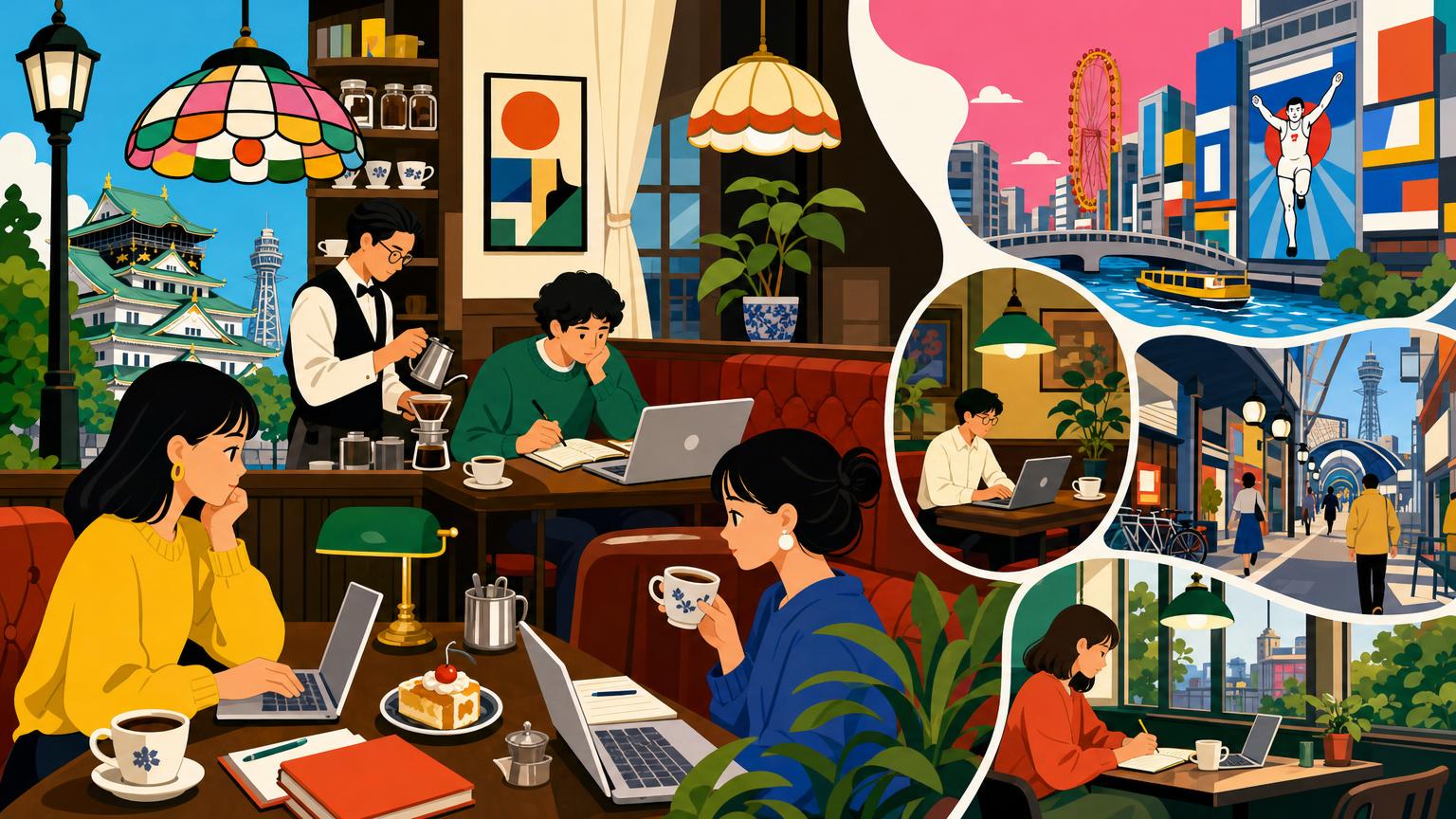
Osaka is an expansive, highly decentralized city, and the atmosphere of your workspace can vary greatly depending on the exact neighborhood you choose to settle into for the day. Understanding the unique character, history, and pace of each district is essential for finding the right environment that suits your individual working style.
Umeda and Kitahama
Umeda, situated in the northern part of the city, is the unquestioned hub of corporate Osaka. It is a dense, towering maze of high-rises interwoven with elevated train lines and anchored by the largest, most labyrinthine underground shopping network in the world. If you seek the gritty, unrefined retro charm of old underground kissaten, Umeda is unmatched. The massive concrete Ekimae buildings alone contain dozens of untouched Showa-era gems tucked away down narrow, fluorescent-lit corridors.
Just a short, quiet train ride away lies Kitahama, the city’s historic and highly prestigious financial district. Kitahama rests gracefully along the banks of the Tosabori River and features stunning, well-preserved heritage architecture from the early twentieth century. The vibe here is noticeably more relaxed, affluent, and refined. The area is known for its beautiful riverside cafes with open-air wooden terraces. For a digital nomad, setting up a laptop on a breezy terrace overlooking the flowing water, surrounded by century-old brick buildings, provides one of the most peaceful and inspiring work environments in the city. It feels worlds away from the neon chaos, easily making it one of the best places to study in Osaka when you need calm and focus.
Shinsaibashi and Namba
Heading south, you dive into the Minami district, which extensively covers Shinsaibashi and Namba. This is the Osaka that many know globally: incredibly loud, brightly illuminated by massive neon signs, densely crowded, and bursting with energy. Finding a quiet, focused workspace here can often seem like searching for a needle in a haystack, but that sharp contrast makes discovering hidden spots all the more rewarding.
In Namba, the key is to always look up or look down. The street level is completely overtaken by waves of tourists and aggressive shoppers, but if you explore the second floor of a narrow building or descend a steep staircase into a basement arcade, you’ll find fiercely resilient kissaten stubbornly holding their ground against the modern commercial flood. These enclosed spaces are richly atmospheric. Working intently in a dimly lit, smoke-tinged coffee shop while the muffled, chaotic sounds of Dotonbori’s street food vendors echo through the walls creates a uniquely thrilling backdrop for productivity. It is a constant reminder that you are living at the very heart of one of Asia’s most dynamic, unapologetic cities.
Tips for Remote Working in Japanese Coffee Shops
Successfully adapting to the local Osaka cafe work culture requires a blend of practical technical knowledge and a significant amount of cultural sensitivity. To ensure a seamless and productive experience while completely avoiding unintentionally offending a hardworking shop owner, it is essential to understand and adhere to the unspoken rules governing the Osaka cafe ecosystem.
Navigating Public Wi-Fi and Pocket Wi-Fi Needs
One of the most common and frustrating errors foreign remote workers make in Japan is assuming that every cafe provides fast, free, and easily accessible public Wi-Fi. While large international chains often do to accommodate tourists, independent kissaten rarely offer this. Moreover, even some modern local cafes have Wi-Fi that is painfully slow, frequently disconnects, or requires navigating complex Japanese login portals that don’t accept foreign phone numbers.
The practical Osaka solution is total self-reliance. If you intend to work regularly from traditional or less mainstream spots, renting or purchasing a pocket Wi-Fi device is absolutely essential. This ensures a secure and stable connection for your critical work and prevents putting excessive strain on the limited network resources of a small business. Additionally, be very mindful of power outlets. In many older, traditional establishments, outlets are reserved strictly for the shop’s own equipment, like vacuums or lamps. Plugging in your laptop charger or phone without explicit permission is considered presumptuous and rude. Always ask politely, or better yet, come fully prepared with a fully charged battery and a robust portable power bank.
Ordering Rules for Long Stays
The final and arguably most important lesson in navigating Osaka’s unofficial coworking spaces brings us back to the city’s fundamental merchant spirit. The relationship between a business owner and customer in Osaka is sacred and built entirely on fairness and mutual benefit. If you are using their physical space, consuming their electricity, and occupying a seat that could go to another paying customer, you must compensate them properly for that privilege.
The golden unwritten rule among local cafe workers is to order a new item approximately every ninety minutes you spend at a table. For example, if you sit down at ten in the morning and plan to work until two in the afternoon, a single cup of coffee is far from enough. You need to read the atmosphere continuously. When your ceramic cup has been empty for a while, signal the master and order a second coffee, or perhaps a slice of seasonal cake or a light egg sandwich.
People in Osaka are famously frugal in their personal lives, always seeking bargains or discounts, but they deeply dislike stinginess in business dealings and basic hospitality. By consistently ordering and demonstrating your awareness of their financial realities, you transform from a burdensome guest to a respected regular. The master will notice your quiet respect for their livelihood, eventually greeting you with a warm smile, offering complimentary ice water or a small snack, and treating you not just as a customer but as a welcome guest in their establishment. Mastering this delicate balance of mutual respect is the key to unlocking a rich, productive, and culturally immersive daily life in the wonderful city of Osaka.