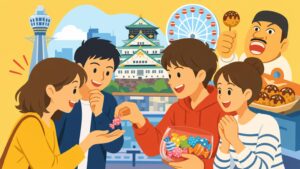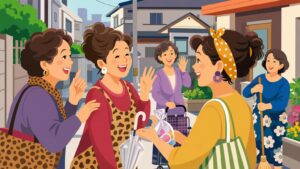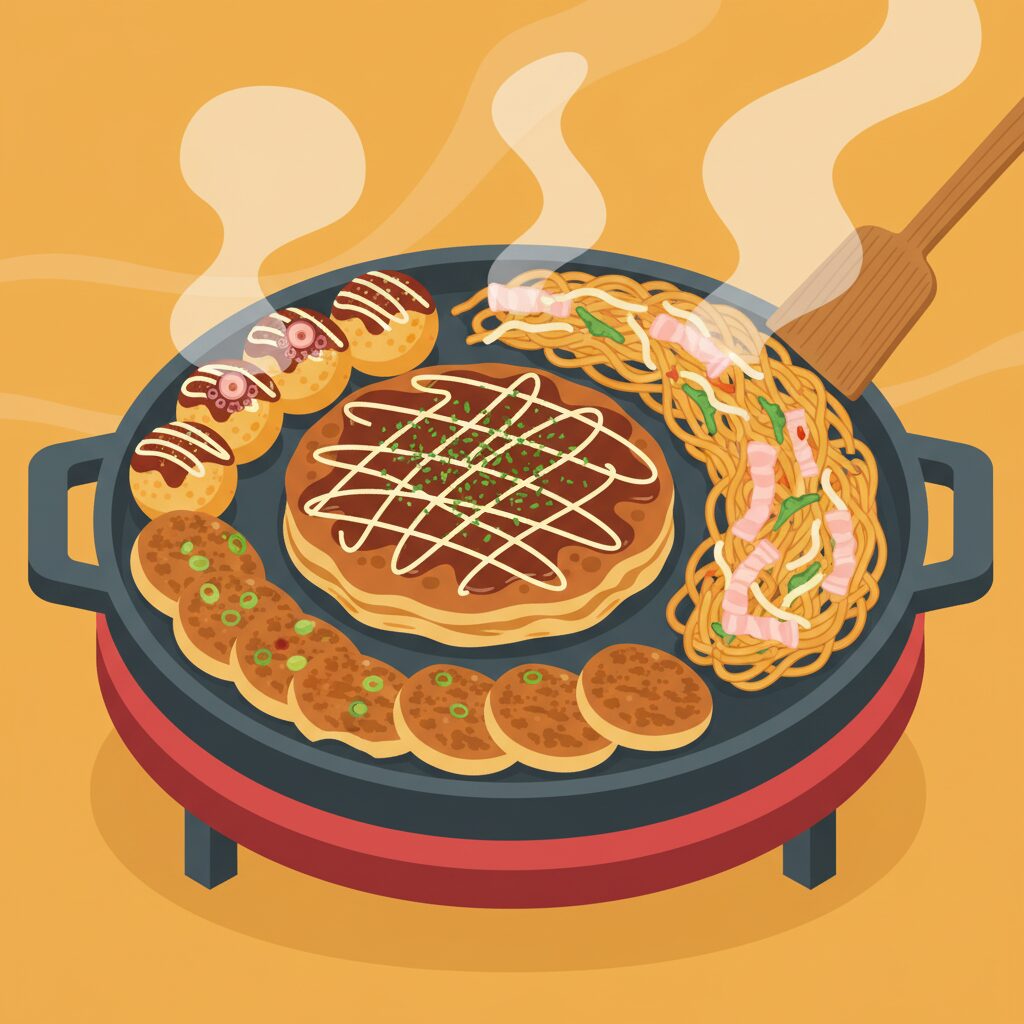
When you first move to Osaka, you notice them immediately. They’re on street corners, tucked into the echoing arcades of the shotengai, and clustered around train stations. I’m talking about the takoyaki stands, their red lanterns glowing like beacons, the air thick with the savory-sweet scent of batter and dashi. You see the masters at work, flipping those little dough balls with lightning-fast flicks of their metal picks. It’s easy to see this and think, “Ah, Osaka’s famous street food.” And you wouldn’t be wrong, but you’d only be seeing the tip of a very large, very delicious iceberg. From my perspective as a Tokyo native, where public life and private life often feel separated by a thick, formal wall, the true essence of Osaka’s culinary soul isn’t found at a street stall. It’s found inside the home, gathered around a portable electric griddle, in the beautiful, boisterous, and slightly chaotic ritual known as the ‘konamon’ party. This isn’t just about eating flour-based foods like takoyaki or okonomiyaki; it’s a fundamental pillar of social life here. It’s the mechanism through which friendships are forged, hierarchies are flattened, and the city’s true personality—pragmatic, boisterous, and deeply communal—is revealed. To understand the konamon home party is to get a direct line into the heart of what makes an Osakan tick. It’s a world away from the curated perfection of a Tokyo dinner party, and for anyone trying to navigate daily life here, it’s the most important invitation you’ll ever receive.
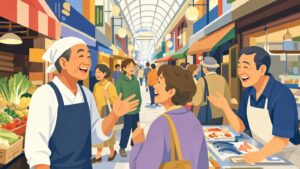
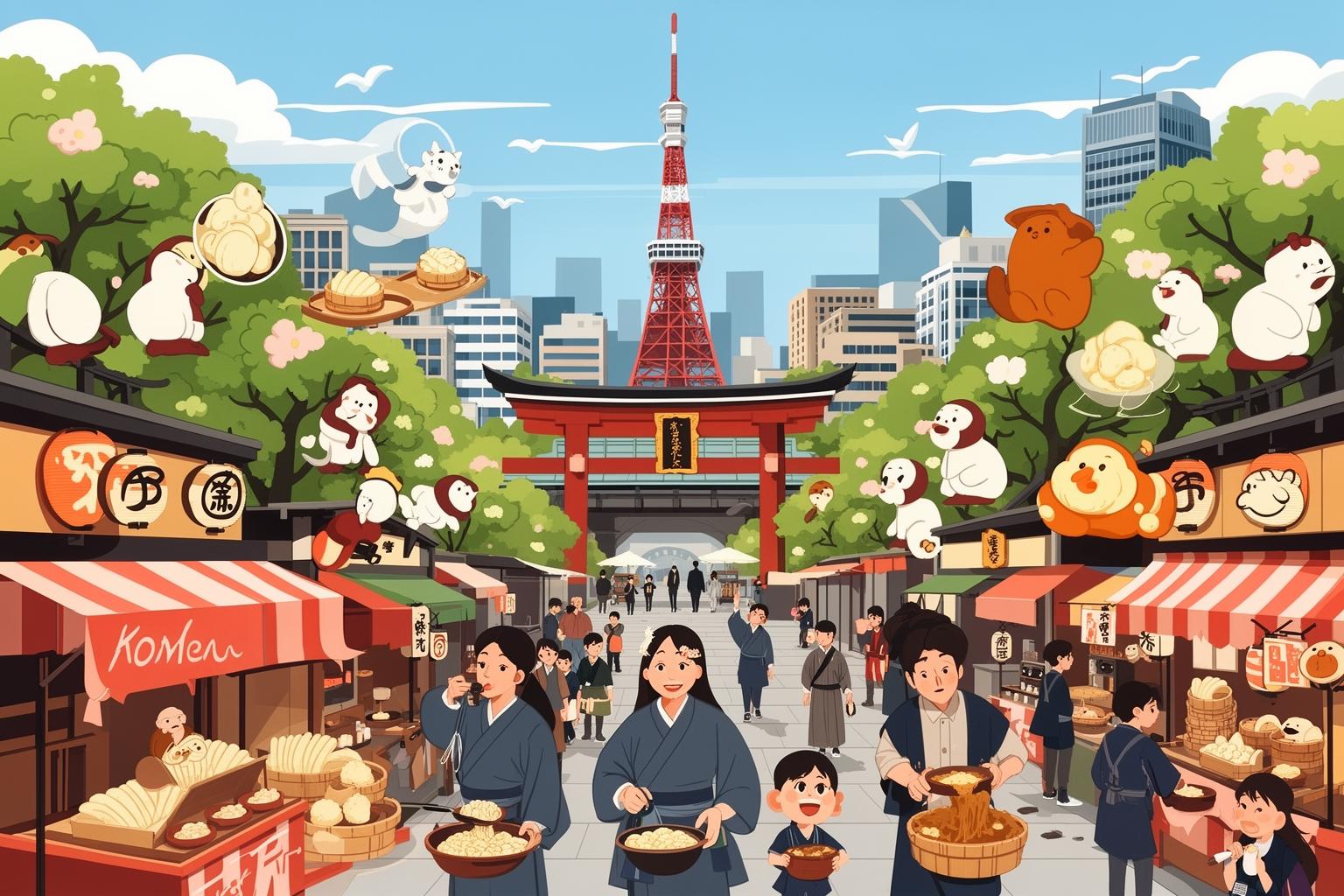
The energy of intimate konamon home parties is echoed in the vibrant, unscripted interactions found in Osaka’s shotengai culture, offering another window into the city’s unique social fabric.
What Even is ‘Konamon’ Culture? More Than Just Flour and Water
First, let’s clarify our terms. ‘Konamon’ literally means ‘flour things.’ It’s a broad, comforting umbrella term for a whole category of beloved Osaka staples. The stars of the show are, of course, takoyaki—those diced octopus-filled balls of batter—and okonomiyaki, the savory pancake often simplistically called ‘Japanese pizza.’ But the family is large and diverse, including negiyaki (a thinner, scallion-packed version of okonomiyaki), ippanyaki, and modern variations that resist easy classification. What ties them all together is their base: a simple batter of flour and water, enhanced by dashi stock, eggs, and heaps of cabbage or other ingredients. This isn’t haute cuisine. This is sustenance. And its essence is woven into Osaka’s history itself.
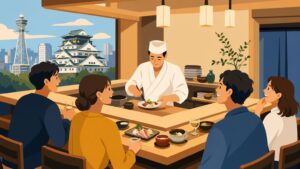
Osaka has always been known as ‘Tenka no Daidokoro,’ the Nation’s Kitchen. It was a city of merchants, commerce, and people who needed to eat well, eat cheap, and eat fast. Konamon culture perfectly embodies that spirit. It’s the height of ‘cos-pa’—cost performance. For just some flour, a few eggs, and a head of cabbage, you can feed a whole family and enjoy the process. This practical mindset contrasts sharply with Tokyo’s culinary scene, which often emphasizes refinement, expensive ingredients, and the quiet mastery of a stoic chef behind the counter. In Tokyo, you go out for sushi to admire the itamae’s art. In Osaka, you stay in for okonomiyaki to join the lively, messy making of dinner. It’s a philosophy ingrained in the household itself. Step into any electronics store in Osaka, and you’ll find an entire section devoted to hot plates and takoyaki griddles of all sizes. It’s not a specialty item; it’s a standard appliance, as essential as a rice cooker or microwave. That says it all: konamon isn’t just something you buy, it’s something you do.
The Invitation: “Uchi, Takoyaki Suru kedo Kuru?” (We’re doing takoyaki, wanna come?)
The gateway to this world is the invitation. If you come from a more formal culture, or even just from Tokyo, the Osaka invitation can feel disarmingly casual. It won’t be a call weeks ahead to arrange a formal dinner. Instead, it’s likely a text message on a Friday afternoon: “Uchi, tako-pa suru kedo, konbini de chu-hi katte konai?” (We’re having a takoyaki party at my place, wanna grab some canned cocktails at the conbini and come over?). The wording is crucial. It’s not “I am hosting a party.” It’s “We are doing takoyaki.” This suggests an activity, a group effort, rather than a service offered by a host.
Decoding the Casual Invite
This informality is not a sign of disrespect or poor organization but the very heart of Osaka’s social culture. It’s a low-pressure, high-reward invitation. The message is: “We’re already having this fun event, and it would be better if you joined us.” There are no lofty expectations; you don’t need to dress up or clear your entire evening. This spontaneity reflects a communication style that prioritizes directness and efficiency over layered politeness. In Tokyo, social gatherings often feel like carefully planned events, scheduled meticulously. In Osaka, they come across as natural extensions of everyday life. The home isn’t a spotless showroom reserved for special guests; it’s a lived-in space, a base of operations for a fun night. This casual invite also acts as a kind of test—it’s assessing your willingness to drop formalities and just show up, ready to take part.
What to Bring: The Unspoken Rules of Contribution
Asking “What should I bring?” will usually earn you the vague “Nandemo ee yo” (Anything’s fine). This is not a brush-off but a sincere response. The host has the essentials covered—batter, octopus, cabbage, sauces, and most importantly, the griddle. Your role as a guest is to add to the variety and the fun. This is Osaka’s take on ‘mochiyori,’ or potluck, where the focus is less on flaunting your cooking skills and more on collaborative contribution.
The unspoken guideline is to bring something easy to share that adds a new element to the gathering. The holy trinity of guest contributions includes drinks (a six-pack of beer or some canned chu-hi works well), snacks (a bag of potato chips to munch on while the first batch cooks), or—most importantly—extra toppings. This is where you can express your personality. Bringing a block of cheese to melt into the takoyaki is a classic move. Other expert-level contributions might be kimchi, mentaiko (spicy cod roe), mochi, or even unusual options like cocktail wieners or corn. The goal isn’t to bring a separate, complete dish but an ingredient to toss into the shared mix. It’s a symbolic gesture—you’re not just a consumer but a co-creator. It’s a beautifully simple system that shares cost and effort while maximizing group enjoyment—the merchant city’s philosophy applied to a Friday night.
The Main Event: A Symphony of Sizzling, Flipping, and Banter
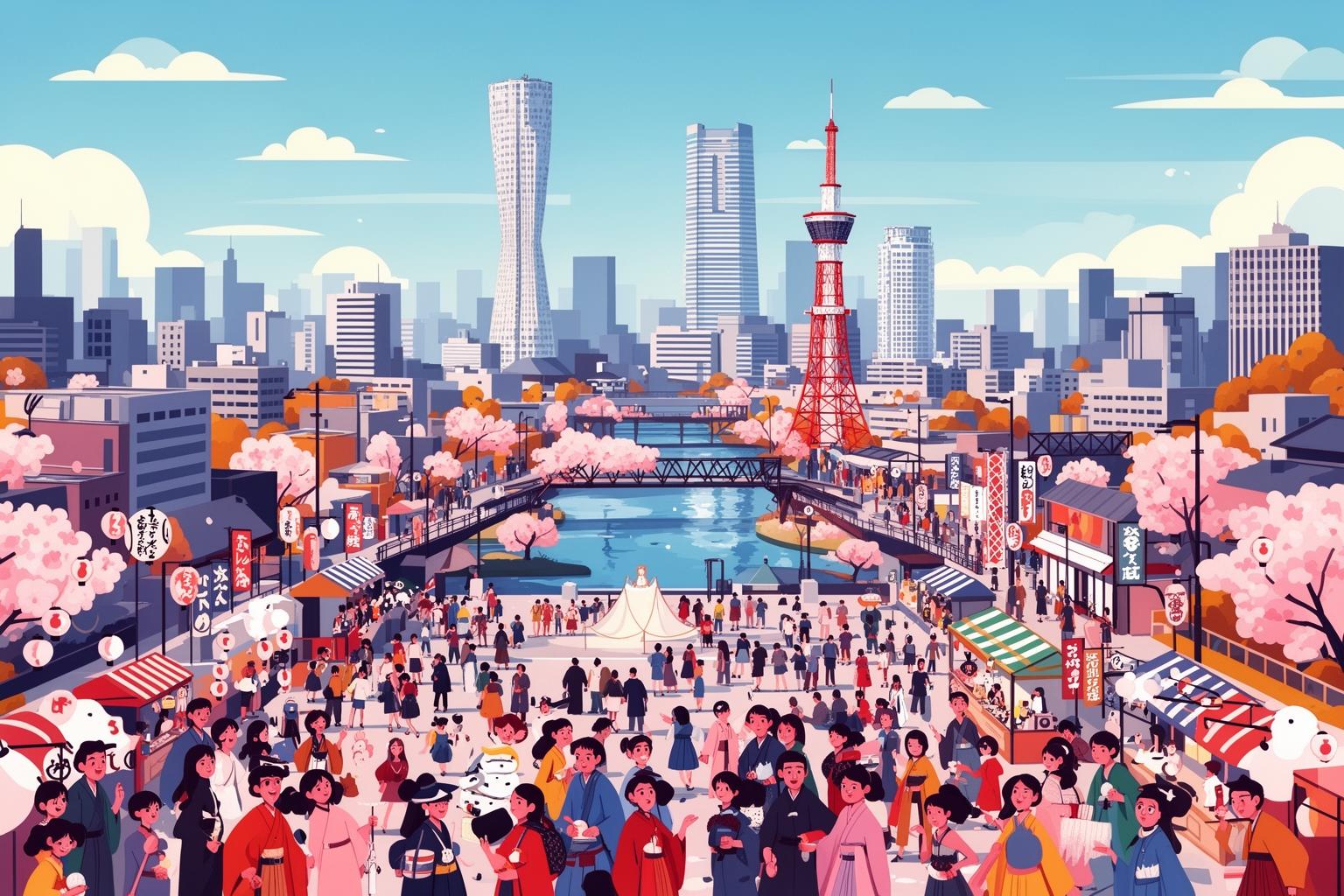
When you arrive, the party is likely already underway. The hot plate is sizzling at the center of the living room table, surrounded by bowls of ingredients and a pitcher filled with golden batter. This is where genuine cultural immersion begins. You’re not merely a guest to be entertained; you’re part of the crew.
The ‘My Rule’ Phenomenon: Every Family Has Its Own Recipe
One of the first things you’ll notice is the intense, passionate, and often humorous debate about the ‘correct’ way to make konamon. There isn’t one universally accepted recipe. Instead, there’s ‘uchi no aji’—my family’s unique flavor. Everyone has their own ‘My Rule’ (‘ore no ruuru’ or ‘uchi no ruuru’), which they defend with the zeal of a sports fan supporting their home team. These debates become a form of performance art. “You have to pour the batter first, then add the tenkasu (tempura scraps)! If you mix it in beforehand, they get soggy!” someone insists. Another responds, “Are you crazy? The secret is adding a bit of milk to the batter to make it creamier. My grandma swore by it.” These aren’t real arguments; they’re a critical form of Osaka communication. It’s about expressing identity and fierce local pride. In a culture that sometimes values conformity, the konamon griddle is a sacred stage for individualism. This contrasts sharply with many traditional Japanese arts, where strict adherence to form (‘kata’) is essential. With konamon, the form is flexible, personal, and endlessly debatable—which is exactly what makes it so enjoyable.
Participation is Mandatory (But Enjoyable)
You won’t be allowed to simply watch. A bamboo skewer, or ‘kushi,’ will be placed in your hand, and you’ll be assigned flipping duty. Your initial attempts will likely be a disaster, producing mangled, half-moon shapes instead of perfect spheres. That is expected—and intentional. Your failure becomes a chance to connect. Someone will laugh, shout “Heta ka!” (Are you that bad?!), and then lean over to demonstrate the proper wrist-flicking technique. At that moment, the host-guest divide disappears entirely. You’re equals, gathered around the griddle, participating in a collective skill challenge. This immediate, hands-on involvement is the ultimate icebreaker. It skips the need for polite, formal conversation and plunges you directly into a shared experience. In Tokyo, a host might labor in the kitchen to serve you a flawless meal. In Osaka, the host hands you a tool and invites you to join in the beautiful, imperfect process of making it together.
The Sound and Smell of Community
Close your eyes at a konamon party, and you can grasp Osaka through your other senses. The batter sizzling constantly on the hot iron. The rhythmic clack-clack-clack of dozens of skewers turning the takoyaki in their molds. Above it all, the sounds of people. It’s loud. There’s laughter, shouting, and a steady flow of playful insults and jokes. The air itself feels alive, thick with the aroma of dashi, savory sauce, mayonnaise, and aonori. It’s a multi-sensory experience, the direct opposite of the restrained silence of a formal Japanese meal. This isn’t a setting for hushed tones or careful etiquette. It’s a realm of vibrant, chaotic energy, and that energy pulses with the life of the city itself.
Beyond the Takoyaki: What the Party Really Reveals about Osaka
A konamon party is far more than just a casual gathering; it is a vibrant, living diorama of Osaka’s core cultural values. By paying close attention, you can learn everything you need to understand how the city functions.
Pragmatism and ‘Cos-pa’ as a Virtue
Let’s be straightforward: a konamon party is inexpensive. In Osaka, that’s a high compliment. The culture is deeply rooted in the savvy mindset of merchants who valued every yen. Spending money on needless formalities or pricey restaurant markups when a better, more enjoyable experience can be had at home is considered foolish. This isn’t about being cheap; it’s about being clever, practical, and resourceful. The aim is to maximize social enjoyment with minimal financial input. The pleasure comes from interaction, collaboration, and shared experience, not the cost of ingredients. This philosophy of ‘cos-pa’ touches every aspect of life in Osaka, from shopping habits to business deals. The konamon party is simply the most delicious and accessible expression of it.
The Art of the ‘Tsukkomi’: Conversation Around the Griddle
The lively, interactive nature of the party is the ideal training ground for Osaka’s distinctive style of conversational comedy. Cooking constantly generates small blunders and successes, which provide material for the ‘boke’ (the funny fool) and ‘tsukkomi’ (the sharp retort) dynamic central to Manzai comedy and everyday banter. When a friend clumsily drops a piece of octopus, that’s a ‘boke.’ The immediate, laughing response—”Nani yatten nen!” (What the hell are you doing!)—is the ‘tsukkomi.’ This can be jarring for outsiders, especially from Tokyo, who might see it as rude or aggressive. But it’s quite the opposite. The tsukkomi shows affection and engagement. It means, “I’m paying attention to you. I’m here with you now. Your mistake isn’t to be ignored out of politeness; it’s a chance for us to laugh together.” A silent, overly polite guest is far more awkward here than someone who messes up and gets playfully teased.
Breaking Down the ‘Uchi-Soto’ Barrier
Japanese culture is famously defined by ‘uchi-soto,’ the division between one’s ‘inside’ group (family, close colleagues) and ‘outside’ groups. For foreigners, gaining entry to the ‘uchi’ circle can be slow and difficult. The konamon party is Osaka’s brilliant, rapid shortcut. The moment you hold a skewer and start flipping batter, you cease to be ‘soto.’ The shared task, communal food, playful teasing, and informal atmosphere quickly dissolve social barriers. You’re not a guest being observed; you’re a teammate working toward a common goal: a plate of perfectly cooked takoyaki. This active, participatory inclusion is what people often mean when they say “Osaka people are friendly.” It’s not just passive warmth; it’s a deliberate effort to pull you into their circle, and the hot plate is their most effective tool.
Graduating to Okonomiyaki and Beyond
Though the takoyaki party, or ‘tako-pa,’ is the classic starting point, the realm of konamon parties runs deep. The next step is often the okonomiyaki party. It brings a slightly different rhythm. Instead of small, repetitive tasks, it involves crafting a larger, more personalized masterpiece. The debates grow more intense. Should the cabbage be chopped coarsely or finely? Do you mix the pork into the batter or lay it on top? The ultimate test is the ‘kaeshi,’ the dramatic mid-air flip of the pancake using two metal spatulas. A successful flip earns cheers and respect; a failed one, ending in a splattered mess, results in uproarious laughter and good-natured shame. It’s another act in the same play, reinforcing the values of participation, personal expression, and shared, chaotic joy.
A Tokyo Curator’s Final Take
Coming from Tokyo, where social gatherings often feel like performances of politeness, the raw, genuine humanity of an Osaka konamon party is endlessly captivating. A formal Tokyo event might focus on appreciating the perfection of a meal prepared for you. The emphasis is on the final product. In Osaka, however, the attention is entirely on the process. The food becomes almost secondary to the experience of making it together. The mess on the table, the slightly burnt creations from an inexperienced flipper, the loud debates over dashi-to-flour ratios—these aren’t imperfections. They are the occasion. They provide tangible proof of a good time.
If you live in Osaka, or are considering it, and you receive a casual, last-minute invitation, your response should be an enthusiastic ‘yes.’ Don’t stress about your flipping skills. Don’t worry about knowing the right things to say. Just bring a can of beer, maybe some cheese, and show up. What you’ll gain is not just a free meal, but a front-row seat to the soul of the city. You’ll realize that in Osaka, community isn’t built on quiet reverence or formal gestures. It’s created in the sizzle of a hot plate, the shared laughter over clumsy mistakes, and the simple, profound act of making something delicious together.