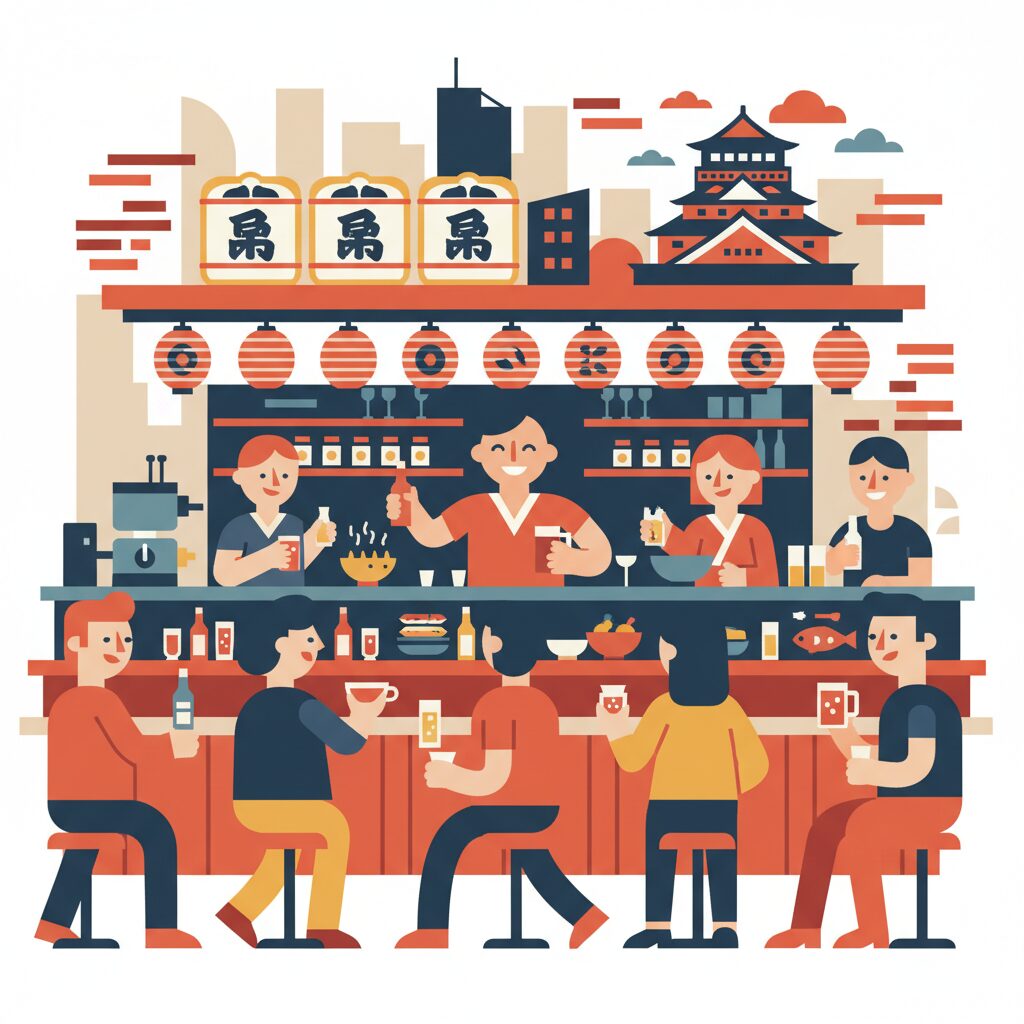
Walk through Osaka any evening after five, and you’ll see them. Tucked under train tracks in Umeda, spilling onto the covered arcades of Tenma, or squeezed between gleaming storefronts in Namba. They’re tiny, often no bigger than a generous walk-in closet, buzzing with a warm, amber light. Inside, people are packed shoulder-to-shoulder, glasses in hand, standing. There are no chairs, no tables, just a long wooden counter and a symphony of clinking glass, sizzling grills, and easy laughter. This is the world of tachinomi, or standing bars. For a newcomer to Osaka, the scene can be both intriguing and intimidating. Why would anyone choose to stand in a cramped space after a long day at work? It seems almost counterintuitive. But to dismiss the tachinomi as just a cheap place to grab a drink is to miss one of the most vital keys to unlocking the soul of this city. It’s not just a bar; it’s a cultural institution, a social engine, and the physical manifestation of the Osakan spirit: pragmatic, efficient, unpretentious, and deeply communal. Forget the polished, reservation-required cocktail lounges of Tokyo for a moment. To truly understand how Osaka works, you need to find a spot at the counter, order a highball, and learn the art of standing your ground.
Many who immerse themselves in Osaka’s pulsating nightlife also discover the city’s enduring kuidaore tradition that reveals how deeply food culture is woven into its social fabric.
What’s the Big Deal? Tachinomi as Osaka’s Living Room
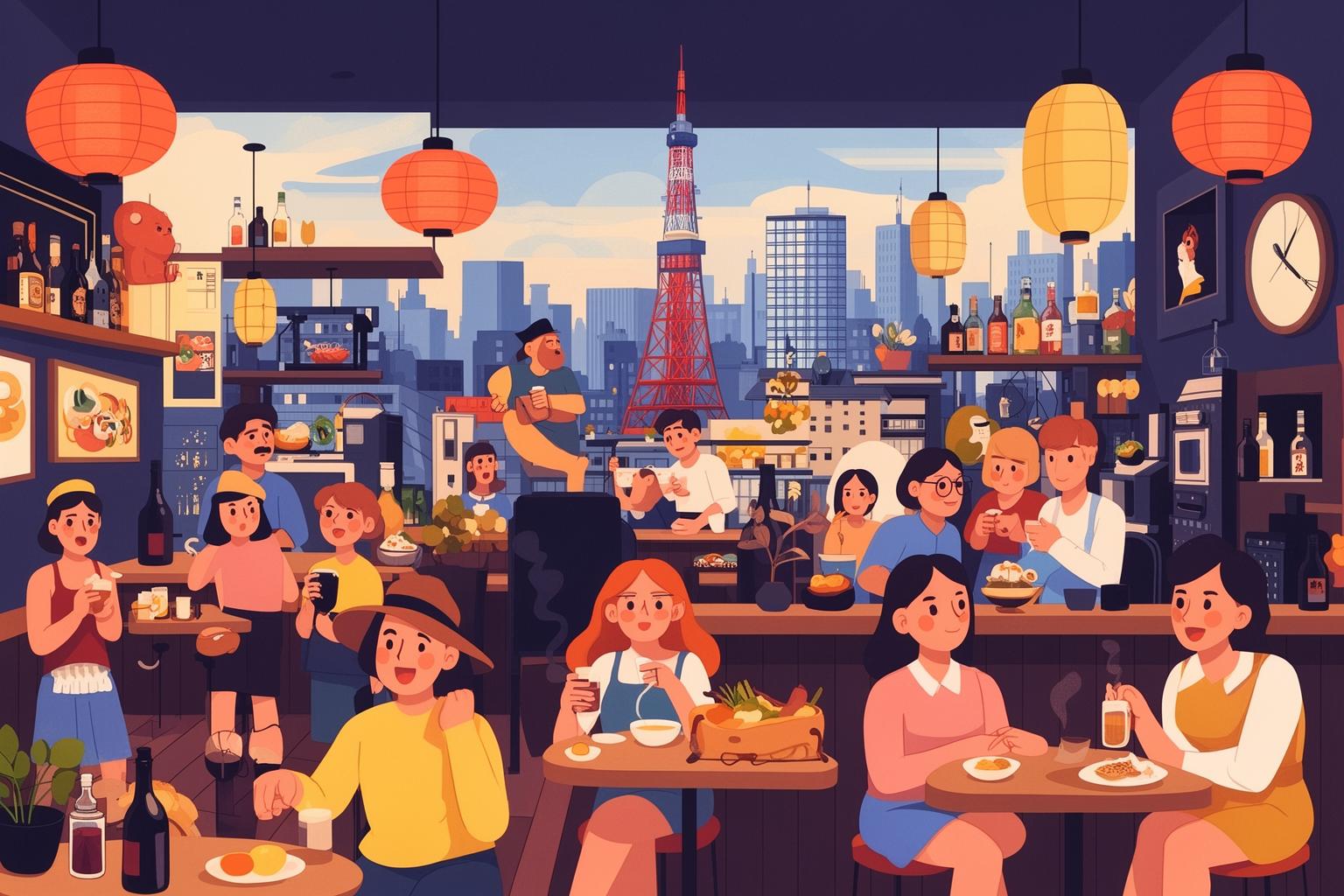
The philosophy behind tachinomi is elegantly straightforward: maximum enjoyment with minimal hassle. It’s a transaction, yet a profoundly human one. You’re there for a quick drink, a snack or two, and perhaps a brief chat before catching your train home. Unlike most sit-down izakaya, there’s no seating charge, known as otoshi or sekiryo. That small, obligatory appetizer you get in Tokyo? It’s mostly missing here. This isn’t a minor detail; it’s a clear statement of intent. You pay only for what you order, and nothing more. This directness is quintessentially Osaka.
This city was built by merchants, and that mercantile spirit is woven into everything. Time is money, and value is key. The tachinomi perfectly embodies this philosophy. Why spend two hours on dinner when all you need is a fifteen-minute reset? The standing setup encourages quick turnover, enabling the bar to keep prices surprisingly low while serving a constant stream of customers. Step inside, and you enter a realm of controlled chaos. The taisho, or owner, acts as conductor, juggling a flurry of orders, pouring drinks, and chatting with regulars simultaneously. Salarymen in sharp suits loosen their ties and stand alongside construction workers in their gear. Young couples heading to a movie grab a swift skewer. Solo drinkers, both men and women, enjoy a comfortable anonymity within the crowd. It’s a temporary, democratic space. Your job, your background—it all fades away at the counter. You are simply another person craving a cold beer and a hot plate of doteyaki. This isn’t just a bar; it’s the city’s communal decompression zone, its unofficial living room where everyone is welcome, as long as they don’t overstay or take up too much space.
The Unspoken Rules of the Standing Bar
While tachinomi may seem chaotic, they actually follow a subtle, unspoken code of conduct. Grasping these unwritten rules is what separates a smooth, enjoyable visit from feeling like an awkward outsider. This isn’t about strict formalities; it’s about mutual respect in a confined, shared environment.
Know Your Space
Your personal space extends roughly to the width of your shoulders—no more. Avoid spreading your elbows or spreading out your phone, wallet, and keys across the counter. Usually, there’s a shelf beneath the bar or hooks for your bag and coat—make use of them. The counter space is precious and reserved for food and drinks. When you need to move, do so with a subtle shuffle or a slight turn of the shoulder to let others pass. It’s a dance of close-quarters etiquette. This respect for shared space mirrors urban life in Japan but is heightened in a tachinomi. You’re part of a temporary, delicate ecosystem, and being mindful of your physical presence is your key to fitting in.
The Art of the Quick Order
Don’t stand at the counter staring blankly at the menu for minutes on end. The pace is brisk. It’s perfectly normal, even expected, to begin with the classic phrase “Toriaezu biiru” (とりあえずビール), meaning “Beer for now.” This gets a drink in your hand, helps you settle in, and buys you time to decide on food. The staff are busy, and being decisive is viewed as considerate rather than rude. Pointing at what someone else is having and saying “Are, kudasai” (That one, please) is also totally acceptable. Keep your orders simple and straightforward. This efficiency helps keep the flow smooth for everyone.
Cash is King
Many traditional tachinomi operate on a cash-on-delivery basis. You place your order and pay immediately. The bartender usually offers a small tray or bowl where you place your money, and they make change there. This system is known as kyasshu on (キャッシュオン). In other places, a running tab is kept—sometimes by stacking bottle caps in the tray—with payment settled at the end. Either way, have cash ready. Struggling with credit cards will slow things down and mark you as inexperienced. This system is brilliantly efficient—no splitting bills or waiting for checks. It’s a straightforward, no-fuss approach to transactions that’s quintessentially Osakan.
The Social Contract
This is where Osaka sets itself apart from Tokyo. While you stand close to strangers, striking up a conversation is not only possible but often welcomed. The bar’s atmosphere is your cue. If patrons are quietly enjoying their drinks, respect that silence. But more often, you’ll hear a gentle buzz of conversation. A simple remark to your neighbor like, “That looks delicious, what is it?” can break the ice. Locals are often curious about foreigners who visit these spots. Don’t be surprised if an elderly man starts talking about the Hanshin Tigers’ season prospects or a group of office workers asks where you’re from. It’s a fleeting community—you might share a laugh for a few minutes and never see them again. This transient, low-pressure friendliness is a defining trait of Osaka’s social scene.
Don’t Linger
The fundamental principle of tachinomi is its transient nature. It’s a quick stop, not a long stay. The aim is to have a drink or two, maybe some snacks, and move on within about 30 to 45 minutes. An hour is pushing it. Hanging around all evening is a major faux pas—considered uncool, or dasai. The graceful exit is part of the etiquette. By leaving, you make room for the next person waiting to unwind. Knowing when to go shows you’ve grasped the rhythm of the place. It’s a shared resource; your role is to use it briefly and then pass it on.
Tachinomi vs. Izakaya: A Tale of Two Cities (and Mindsets)
The contrast between a typical Osaka tachinomi and a standard Tokyo izakaya offers a perfect perspective on the cultural differences between Japan’s two largest metropolises. It’s a narrative of spontaneity versus planning, function versus form.
In Tokyo, going out for drinks is often a planned affair. You make a reservation and go with a specific group of colleagues or friends. The izakaya is likely a polished chain restaurant featuring semi-private booths or well-defined tables, creating intimate bubbles. You’ll almost certainly pay the aforementioned otoshi, a seating fee disguised as a small appetizer. The entire experience is structured, predictable, and designed for a longer, more settled gathering. It reflects the corporate, buttoned-up culture of the capital: orderly and refined.
Osaka’s tachinomi culture stands in direct contrast. It’s made for spontaneous drop-ins. No reservation is needed; you simply find a sliver of space at the counter. Many are fiercely independent, family-run spots, each with its own unique character and quirks. The atmosphere is open, communal, and occasionally a bit rough around the edges. The emphasis isn’t on aesthetics but on the essentials: good, inexpensive drinks and food, served quickly. This embodies the spirit of the merchant city. Why pay for a seat and a compulsory appetizer you didn’t order? Why wait for a table when you can be in and out in the time it takes to drink a beer? This pragmatic approach is often misunderstood by outsiders as coarse or unsophisticated. That’s a fundamental misjudgment. For Osakans, there is a profound sophistication in value, in stripping away the fluff to focus on what matters. The tachinomi isn’t a dive bar; it’s a masterclass in social and economic efficiency.
Decoding the Menu: What to Eat and Drink
Navigating a tachinomi menu can be an exciting adventure. The offerings are usually written on strips of paper (tanzaku) pasted on the walls, often in hurried calligraphy. However, a few classic dishes form the foundation of the culinary experience, all crafted to be delicious, affordable, and easy to eat while standing.
For drinks, the unquestioned starting point is nama biiru (draft beer). It’s cold, crisp, and cuts through the richness of the food. From there, the highball—whisky and soda—takes the lead. It’s light, refreshing, and endlessly drinkable. You’ll also encounter a variety of chuhai (shochu highballs with fruit flavors) and a selection of sake, often served brimming in a glass set inside a small wooden box, or masu. The prices will amaze you; a beer or highball for under 400 yen is common.
When it comes to food, you’re in for a treat. This is the home of what the Japanese call B-kyu gurume (B-class gourmet)—unpretentious yet incredibly tasty food.
Kushikatsu
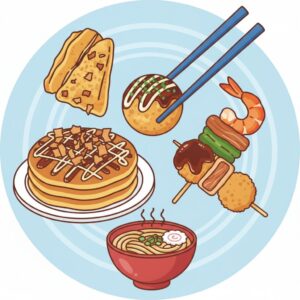
These skewers of meat, seafood, and vegetables are breaded in panko and deep-fried to golden perfection. They arrive hot and crispy, ready to be dipped into a communal pot of thin, savory tonkatsu sauce. This brings us to the most sacred rule of Osaka dining: NO DOUBLE-DIPPING. The sauce pot is shared by everyone at the counter. You dip your skewer once, and only once, when it is pristine. If you need more sauce, use the provided slice of cabbage to scoop it up and drizzle it onto your plate. Breaking this rule is the ultimate taboo.
Doteyaki
This is Osaka soul food in a bowl. It’s beef sinew slow-cooked for hours in a rich, sweet, and savory miso broth until it becomes melt-in-your-mouth tender. Topped with a sprinkle of green onions, it’s a deeply comforting dish that pairs perfectly with a strong drink.
Oden
Especially popular during the colder months, oden features various ingredients like daikon radish, boiled eggs, tofu cakes, and fish balls simmered in a delicate dashi broth. You point to what you want, and the taisho retrieves it from the simmering pot for you. It’s warm, subtle, and incredibly satisfying.
You’ll also find quick bites like potato salad (a surprisingly popular bar snack), simple sashimi, grilled fish, or pickled vegetables. Everything is designed for speed and flavor—a perfect accompaniment to the main event: the drink and the conversation.
Finding Your Spot: From Gritty Umeda Alleys to Hip Horie Corners
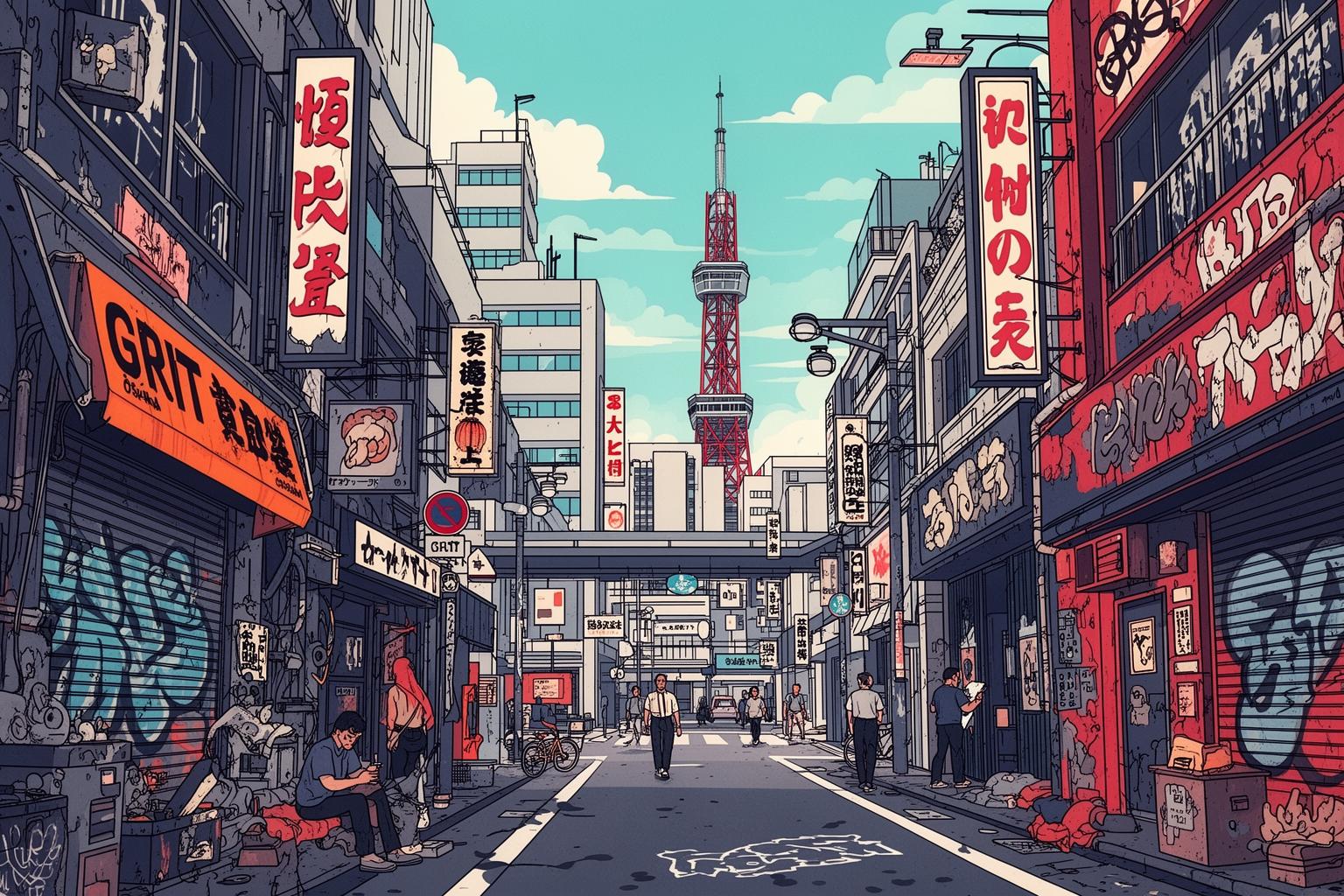
Just as Osaka is a city of varied neighborhoods, its tachinomi scene is far from uniform. The type of standing bar you encounter depends entirely on your location, each offering a unique glimpse into everyday life.
Beneath the JR loop line train tracks in Tenma and Kyobashi, or within the maze-like corridors of the Ekimae Buildings in Umeda, you’ll find the classic salaryman hotspots. These venues represent the core of the tradition. Often gritty, they are filled with the aroma of grilled food, the rumble of trains overhead, and the lively laughter of workers unwinding after a long day. The atmosphere is rich with history and the scent of fried dishes. This is the pure, unfiltered tachinomi experience—a direct window into the city’s working-class heart.
Next comes the modern iteration. In trendier areas like Shinsaibashi, Namba, or Horie, a new generation of tachinomi bars has appeared. These places might focus on craft beer, natural wine, or creative fusion cuisine. Their patrons are younger, comprising creatives, students, and couples. The design is more intentional—featuring minimalist concrete walls or inventive industrial décor. While the standing style remains, the ambiance is more curated. These bars demonstrate that tachinomi is not a bygone tradition but a versatile format that adapts to contemporary tastes while maintaining its essential values of accessibility and community.
Lastly, and perhaps most importantly, there is the neighborhood treasure. Explore any residential district, from the northern Osaka suburbs to the old-school southern neighborhoods, and you’ll discover a small, modest tachinomi run by an elderly couple. Here, the clientele consists entirely of locals. This is where neighborhood elders gather to debate baseball and where shop owners exchange gossip over a glass of shochu. These spots serve as genuine community hubs, places of deep local connection. Finding one and managing to order a drink feels like you’ve truly been woven into the fabric of the city.
The ‘Senbero’ Challenge: Can You Really Get Drunk for 1,000 Yen?
No conversation about tachinomi is complete without referencing the iconic concept of senbero. The term combines sen (千), meaning one thousand, with berobero (ベロベロ), meaning drunk or tipsy. The concept is straightforward: can you enjoy a pleasant buzz for just a single 1,000 yen coin? In the realm of Osaka tachinomi, the answer is a definite yes.
It’s a sort of game, a personal challenge that captures the Osakan passion for cost-performance. A typical senbero set might include two or three drinks and one or two small food items, all for a tidy ¥1,000. For example: a draft beer (¥350), a highball (¥300), and a plate of two kushikatsu skewers (¥250) totals ¥900. You’ve enjoyed two drinks, a snack, and still have change left. This isn’t about being cheap in a negative way. It’s about being clever, economical, and proud of getting the most value for your money. This mindset is often misunderstood by people from Tokyo or overseas. It’s not about poverty; it’s a philosophy. An Osakan will proudly share the amazing deal they discovered, the incredible meal they enjoyed for a small sum. This pride in financial savvy, in being shibui (渋い)—frugal in a stylish, admirable way—is a fundamental cultural trait, and the senbero stands as its ultimate expression in drinking culture.
Beyond the Beer: The Human Connection

Ultimately, if you spend enough time in Osaka’s standing bars, you come to see that it’s not really about the price or the speed. Those are simply the mechanisms that enable the true purpose. The real function of the tachinomi is human connection.
In a society that often feels rigid and hierarchical, the standing bar serves as a great equalizer. Inside those four walls, the boss is no different from the new hire, and the student no different from the retiree. For a brief, shining moment, social status is left at the door. Everyone is just people, sharing a small space, a drink, and a fleeting moment. I’ll never forget when an elderly man, noticing me struggle with a Japanese menu, took it upon himself to order for me, choosing his personal favorites and explaining each one. We didn’t speak much beyond that, but it was a small, powerful gesture of inclusion.
To understand Osaka, you need to understand why its people choose to stand. They stand because it’s efficient. They stand because it’s economical. But most of all, they stand because it brings them closer together. Amid the tight crowd and the shared task of balancing a drink and a plate, a unique, temporary community is created every night. The tachinomi is the city’s fast, pragmatic, and surprisingly warm heart, beating to a rhythm all its own. It’s where you’ll find the real Osaka, one standing-room-only bar at a time.