It’s a Monday morning ritual I’ve come to recognize. My colleagues, normally fueled by canned coffee and a deep, world-weary sigh, are buzzing. They’re not talking about the weekend’s Hanshin Tigers game or the latest gossip from Namba. They’re gathered around a desk, excitedly unwrapping treasures from plastic bags. But these aren’t designer goods from Shinsaibashi or quirky souvenirs from Den Den Town. It’s vegetables. Gnarled, muddy potatoes that look like they’ve been in a fistfight. Bunches of spinach so vibrant green they seem to hum with energy. Glossy, dark-purple eggplants shaped like miniature zeppelins. And they talk about them with the same reverence and passion another culture might reserve for fine art or vintage wine. “Look at the size of this shiitake!” one says, holding up a mushroom the size of his palm. “I got it in Nose. The flavor is unbelievable.”
For a newcomer who primarily experiences Osaka as a sprawling, glorious beast of concrete, steel, and neon, this was a puzzle. We live in a city famed for kuidaore—eating until you drop—a place with a restaurant, tachinomi, or takoyaki stand on literally every corner. Why on earth would anyone spend their precious weekend driving for an hour or more just to buy produce? The answer, I discovered, lies in a uniquely Japanese institution that Osakans have adopted with a particular fervor: the Michi-no-eki, or “roadside station.” But to see it as just a farmer’s market is to miss the point entirely. These places aren’t just stores; they’re cultural hubs, culinary playgrounds, and the clearest window you’ll ever find into the pragmatic, food-obsessed, and surprisingly nature-loving soul of the average Osaka resident. Forget the castle, put down the guidebook, and follow the stream of family minivans heading for the hills. This is where you find the real taste of the city.
For those enchanted by Osaka’s unique blend of tradition and modernity, a Midosuji line ride offers an insider’s glimpse into the city’s vibrant soul beyond its celebrated culinary scene.
The Gospel of “Shun”: Why a Supermarket Tomato Just Won’t Cut It
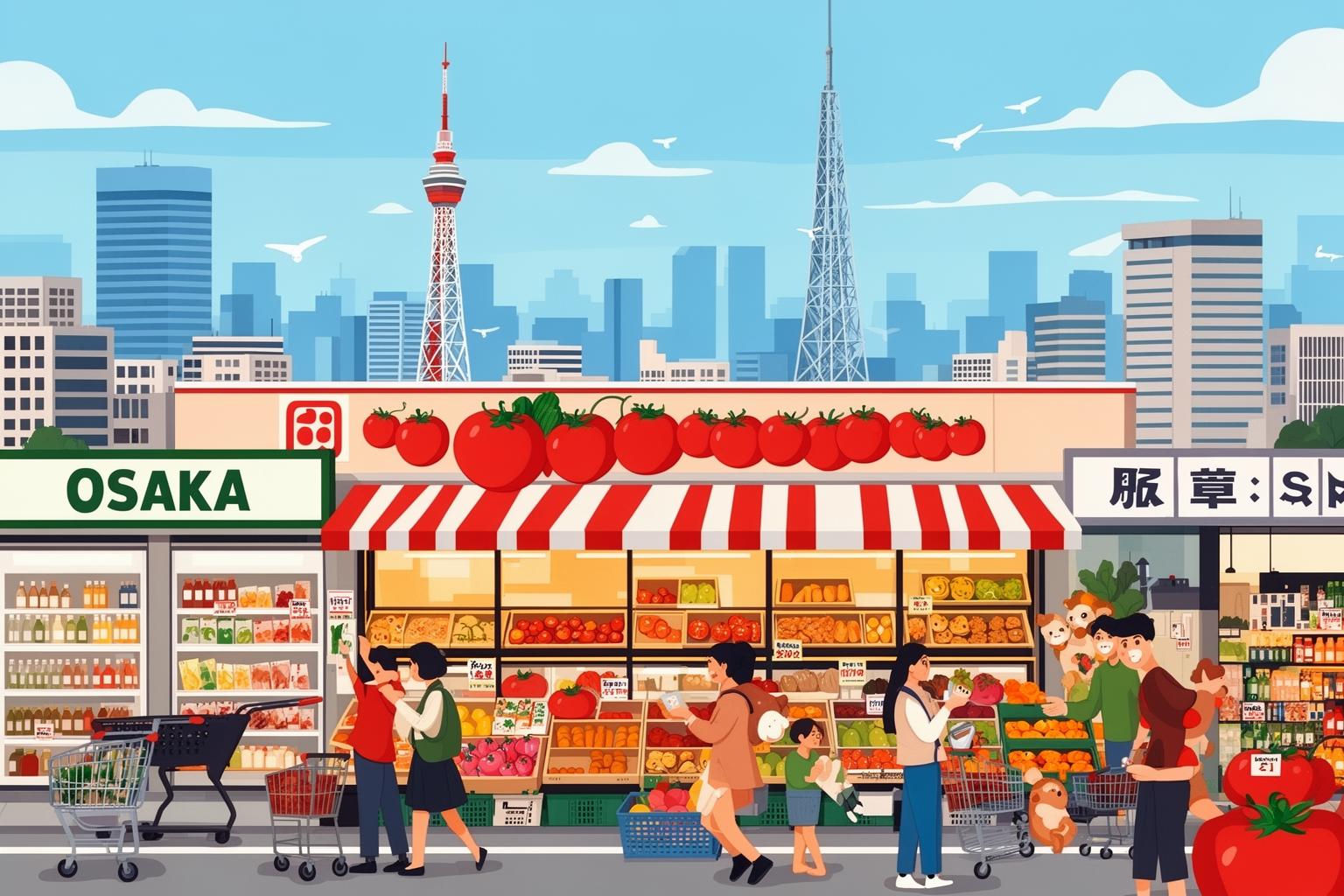
To grasp the magnetic appeal of the Michi-no-eki, you first need to understand the Japanese concept of shun (旬), which means an ingredient’s peak season. While people throughout Japan value seasonal eating, in Osaka it’s less a gentle appreciation and more a passionate, competitive pursuit. It’s about chasing the absolute height of flavor, and Osakans, known for their discerning palates, believe that peak is rarely found beneath the fluorescent lights of a city supermarket. A supermarket tomato is just a tomato—available year-round, perfectly round, and reliably bland. A Michi-no-eki tomato in late August, however, is a completely different breed. It feels heavy for its size, carries the scent of sunshine and earth even before you slice it, and bursts with a sweetness so intense it almost tastes like fruit. This is the prize. This is the entire purpose of the journey.
This obsession is connected to a core Osaka value: a deep-rooted love for honma no mon, or “the real thing.” There’s an inherent skepticism toward anything that looks too perfect, too polished, or overly marketed. A perfectly straight, uniformly green cucumber wrapped in plastic is met with suspicion. But a crooked one, showing a few scratches and a bit of soil still clinging to its skin, feels authentic. It tells a story of its origins. It feels genuine. This attitude extends far beyond fresh produce. Osakans often prefer a cramped, slightly gritty izakaya with outstanding food over a sleek, minimalist restaurant with a mediocre menu. They trust character over presentation. The Michi-no-eki embodies this philosophy in grocery form. The vegetables aren’t standardized products; they’re unique individuals, pulled from the earth mere hours before. The farmer’s name and often a smiling photo are proudly displayed on the bag, offering a personal guarantee of quality no corporate brand can match. This isn’t just shopping; it’s a transaction rooted in trust and a shared belief that true quality is rustic, not refined.
The Art of the Deal: Shopping as Osaka’s Favorite Pastime
In many cultures, grocery shopping is seen as a chore. In Osaka, however, kaimon (shopping) is elevated to a form of entertainment and a social ritual. This is evident in the city’s extensive shotengai—covered shopping arcades like Tenjinbashisuji—where shopkeepers and customers engage in animated exchanges, turning commerce into a performance centered as much on connection as on transaction. The Michi-no-eki embodies this spirit in a rural setting. Rather than a quiet, reflective experience, it is loud, bustling, and delightfully chaotic. Local grandmothers, or obachan, jostle for the best daikon radishes, their voices rising in a lively chorus of Kansai-ben as they debate various pickles. Families with young children weave through the aisles, the kids pleading for a sip of freshly squeezed mikan juice.
This sharply contrasts with the often more reserved consumer culture found in Tokyo. A Tokyoite might visit a chic, curated farmer’s market in Aoyama to purchase artisanal cheese and organic kale, an experience defined by aesthetics and quiet appreciation. The Osaka style is far more visceral and practical—part treasure hunt, part full-contact sport. Shoppers tap watermelons, sniff herbs, and hold bunches of greens up to the light with the discerning eye of a diamond dealer. And they converse freely. They ask strangers, “How are you going to cook this?” or consult the staff, often the farmers themselves, about which melon is sweetest. This open, direct communication is quintessentially Osaka. The aim is not only to buy food but also to gather information, exchange knowledge, and leave feeling you’ve secured the best ingredients, a great deal, and a memorable story. It’s the shotengai spirit revived among rice paddies, a vibrant celebration of community commerce where the price is just one aspect of the total value.
A Symphony of Soft-Serve and Tempura: The Michi-no-eki Menu
Let’s be honest. The promise of incredibly fresh vegetables is a strong draw, but it’s the immediate satisfaction from the hot food stalls that truly wins over many Osakans. No Michi-no-eki experience feels complete without indulging in its culinary treats. This is where the trip shifts from a simple grocery errand into a full-fledged foodie adventure, perfectly appealing to the city’s kuidaore spirit. The undisputed star of the Michi-no-eki is the local-flavored soft-serve ice cream. This isn’t your typical vanilla or chocolate. We’re talking about rich, creamy swirls infused with whatever the region is known for: sweet chestnut (kuri) soft-serve in the Nose mountains, tangy mikan in Kishiwada’s orchards, or even a savory-sweet black bean (kuromame) flavor that might sound unusual but is completely addictive. It’s a common and joyful sight to see a line of people—from toddlers to grandparents—happily enjoying ice cream cones at ten in the morning.
Beyond the ice cream, there’s an entire world of what Japan calls B-kyu Gurume, or “B-grade gourmet”—unpretentious, affordable, yet incredibly tasty food. The onigiri are made from locally grown rice, likely milled just that same week, filled with salty plums or grilled salmon, and they taste far better than convenience store versions. There are stalls offering crispy, golden korokke (croquettes) made from those lumpy, flavorful potatoes you spot in the produce section. You’ll find tempura stands frying seasonal vegetables—sweet pumpkin, tender lotus root, and delicate shiso leaves—served piping hot and crisp straight from the oil. This isn’t fancy cuisine. There are no foams, no artistic smears, no deconstructed dishes. It is simple, honest, and profoundly satisfying. It perfectly captures the Osaka food philosophy: you don’t need an expensive price or a fancy location to eat like royalty. All it takes are excellent ingredients, treated with care. A Michi-no-eki lunch, often enjoyed at a basic outdoor picnic table, is a pilgrimage for anyone who believes the best meals are rooted in authenticity rather than ambition.
Escaping the Concrete Embrace: The Journey is the Destination
Living in central Osaka is an electrifying experience, though it can also feel like an intense sensory overload. The city is a dense, vertical maze of interwoven train lines, rumbling subways, and concrete canyons that block out the sky. Despite its many charms, it can become claustrophobic. For this reason, the weekend drive to a Michi-no-eki serves as much as a psychological escape as it does a culinary adventure. The journey itself is a crucial part of the ritual, offering a gradual decompression from the pressures of urban life. You begin on the elevated Hanshin Expressway, navigating through a Blade Runner-like landscape of skyscrapers and apartment blocks. Then, you descend into the sprawling suburbs with their tiled roofs. Eventually, the buildings give way to open fields, the roads narrow, and you wind your way through bamboo groves and past terraced rice paddies climbing the mountainsides.
What often surprises foreigners is how accessible this rural beauty truly is. Osaka Prefecture is compact. Unlike the vast Kanto Plain around Tokyo, where escaping urban sprawl can feel like a multi-hour journey, in Osaka, you can travel from the city center to the heart of the countryside in well under an hour. This closeness fosters a different kind of connection with nature. It’s not a distant, idealized destination visited once a year; it’s the backyard. It’s a casual, integrated part of daily life. For many Osaka families, especially those in the suburbs, this weekend drive is a routine—a way to reset their senses, breathe cleaner air, and let their children play somewhere more expansive than a pocket park. It challenges the common misconception of Osaka as merely an industrial port city. The reality for many is a hybrid lifestyle, a constant and easy oscillation between the urban core and its green, fertile outskirts. The Michi-no-eki serves as the anchor for this way of life, the destination that makes the escape both meaningful and delicious.
Reading the Local Soul in a Radish

Ultimately, the modest Michi-no-eki provides a deeper understanding of Osaka’s character than any towering landmark or historic site. It serves as a living museum of local values, all expressed through a crate of freshly harvested tomatoes. It reflects the city’s strong pragmatism. Why do people make the trip? Because the quality is better and the price is often lower. It’s a straightforward, logical assessment of value that outweighs convenience every time. It reveals a strong preference for authenticity. Osakans trust what they can see, touch, and taste. A farmer with dirt under his fingernails is a more trustworthy source of quality than a polished marketing campaign. It highlights a culture centered on human connection. They don’t want to shop in a quiet, sterile environment. They seek the noise, the chatter, and the shared experience of a lively market. It’s a transaction, yes, but one rooted in community.
Perhaps most importantly, it underscores a love for a good story. Coming home from a Michi-no-eki with a bag of oddly shaped vegetables and a unique bottle of local sauce isn’t just about replenishing the pantry. It’s about claiming a trophy. It’s about having something to share, something to chat about on Monday morning at work. It’s a small adventure that enriches everyday life. So if you truly want to understand how Osaka operates, look beyond the dazzling lights of Dotonbori and the grand scale of Umeda. Follow the traffic out of the city on a Saturday morning. Find a roadside station crowded with cars, and simply watch. Notice the delight on someone’s face as they find the perfect ear of corn. Hear the lively bargaining over the price of pickles. Try the chestnut ice cream. There, in that noisy, unpretentious, and utterly delicious spot, you’ll discover the true, vibrant heart of Osaka.