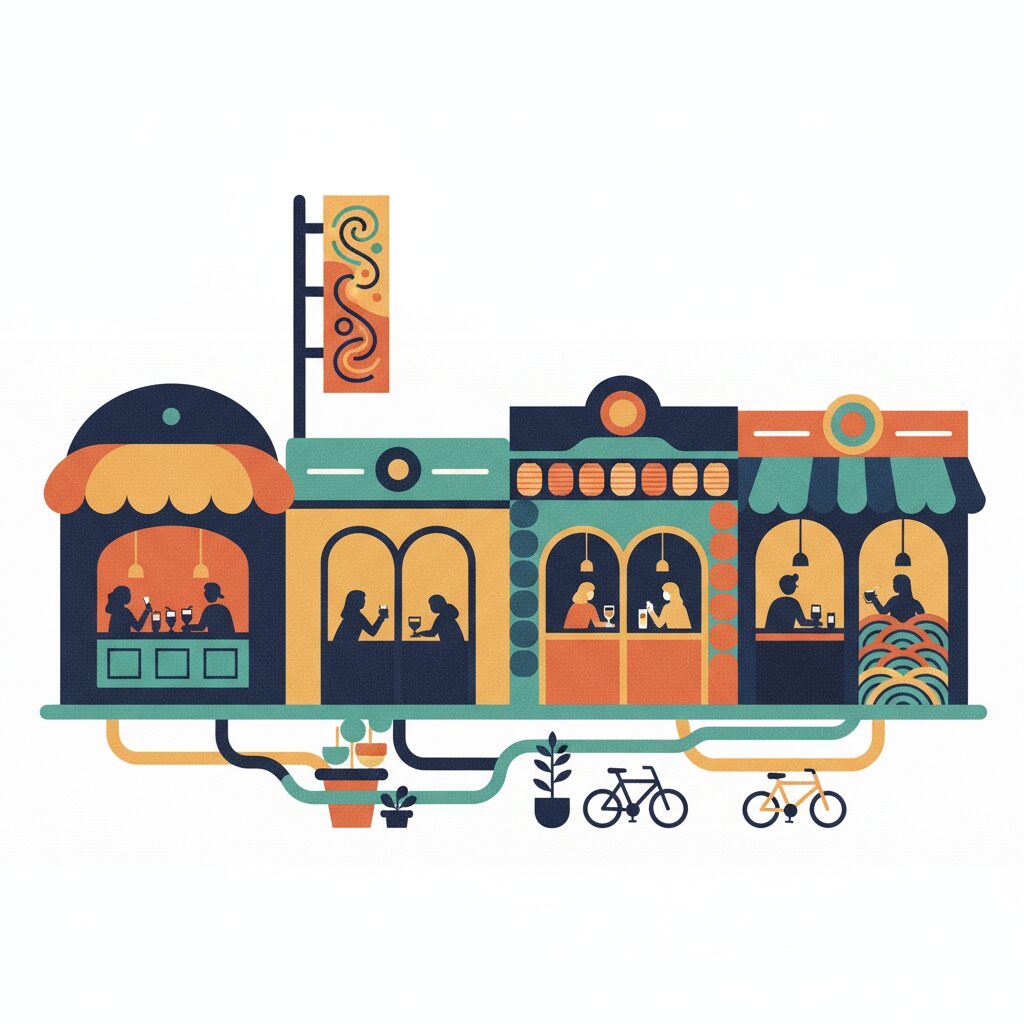
Walk down any major street in Osaka, from the neon-drenched canyons of Namba to the slightly grittier, business-first avenues of Umeda, and you’ll see them. They are the concrete shoulders hunched between gleaming new department stores and tidy convenience store facades. They are the seven, eight, maybe ten-story buildings, their faces a chaotic patchwork of sun-faded signs, strange logos, and darkened windows. This is the Zakkai Biru, the miscellaneous-use building, and to the uninitiated, it looks like a vertical slice of urban decay. The entrance is often a narrow, poorly lit staircase or a creaky, slow elevator that seems to groan in protest. The directory, if one exists, is a jumble of Japanese characters, some with peeling tape, others handwritten, listing businesses that sound impossibly vague: “Snack Yuri,” “Bar K,” “Office Tanaka.” Your first instinct, the one conditioned by years of Western urban logic, is to keep walking. That building looks, for lack of a better word, sketchy. It feels private, impenetrable, and definitely not for you.
But here’s the secret, the key that unlocks a deeper layer of life in this city: these buildings aren’t derelict, and they aren’t trying to scare you away. They are the beating heart of Osaka’s independent business culture. They are vertical neighborhoods, crammed with tiny, hyper-specific, and often brilliant bars, restaurants, and shops run by passionate individuals. To ignore the Zakkai Biru is to miss the very essence of Osaka’s scrappy, pragmatic, and relationship-driven soul. Learning to read their language, to push past that initial hesitation and ride that questionable elevator to the seventh floor, is how you stop being a tourist in Osaka and start actually living here. It’s a rite of passage. This isn’t about following a guide; it’s about cultivating a mindset, an urban explorer’s spirit that Osaka rewards like no other city in Japan. These buildings are a testament to a city that values substance over style, community over corporate polish, and a good time over pristine aesthetics. They are, in short, quintessentially Osaka.
Navigating these urban hideaways, you might also immerse yourself in the local culture by experiencing a morning kissaten ritual that captures Osaka’s spirit in its most authentic form.
What a Zakkai Biru Says About Osaka
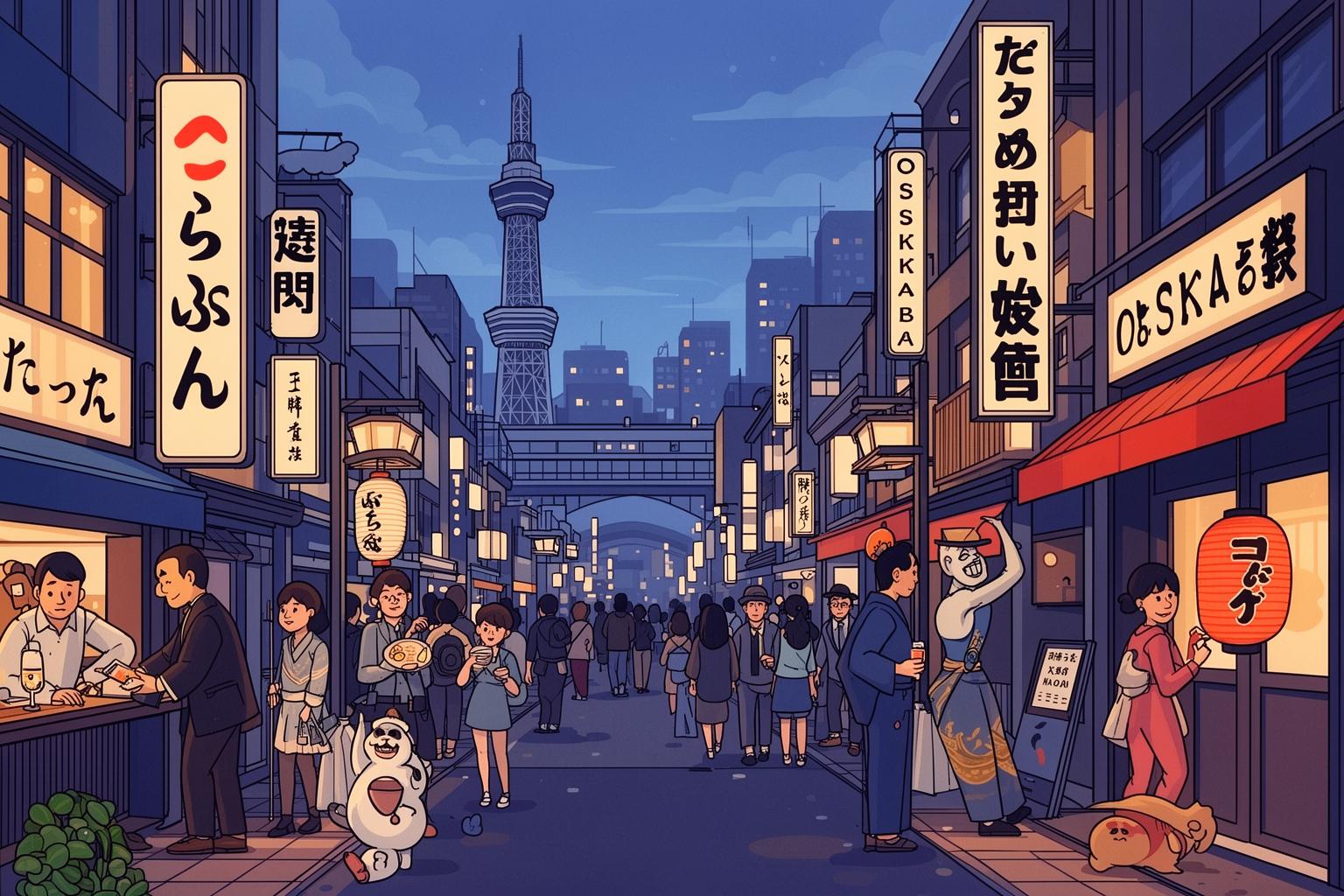
These buildings are not a mere accident of urban planning; they directly embody the city’s economic and cultural DNA. They narrate a story of pragmatism, resilience, and a deep-rooted skepticism toward anything overly polished or pretentious. While Tokyo constantly reinvents itself, demolishing the old to erect gleaming, uniform towers, Osaka tends to embrace things as they are. The city’s motto might as well be, “If it works, it works.” A Zakkai Biru from the 1970s, with its aging tiles and unreliable plumbing, holds just as much validity as a new skyscraper, so long as the businesses inside thrive. This mindset is essential to grasping daily life here.
Space, Scrappy Economics, and the Vertical City
At its heart, the Zakkai Biru is a response to a straightforward challenge: limited space combined with abundant ambition. Osaka has always been a merchant’s city, where fortunes were made not by samurai edicts but through savvy commerce. After the war, as Japan’s economy surged, small entrepreneurs needed places to operate. Land was costly, and prime street-level spots were beyond the reach of anyone without significant capital. The answer was to build upward. Developers erected these simple, no-frills concrete structures, subdivided into numerous tiny, affordable units.
This economic reasoning forged a distinctive urban landscape. A single building might contain a dental clinic, a small bar, a solo accounting office, a nail salon, and a fortune teller. Each floor forms a distinct world. This vertical density enabled a remarkable variety of small businesses to flourish, stacked atop one another. It’s a model born purely from practicality. Why spend money on a fancy ground-floor entrance when your customers are regulars who already know where to find you? Why prioritize aesthetics when you could invest in better whiskey or a top-notch sound system? This is the Osaka merchant spirit rendered in architecture: maximize returns, trim the excess, and concentrate on the quality of your actual product. It stands in sharp contrast to Tokyo, where brand image and street presence are crucial, often resulting in a more uniform, corporate-dominated environment.
The Anti-Curation Culture
Strolling through a trendy Tokyo area like Daikanyama, you sense meticulous curation. Every shop, café, and gallery fits into a specific, cohesive aesthetic. It’s beautiful, clean, and intentional. Osaka’s Zakkai Biru are the exact opposite. They are gloriously, unapologetically chaotic. You might find a grimy, sticker-plastered door leading to a punk rock dive bar right beside a spotless, minimalist design firm office. One floor might be devoted to “snacks”—small hostess bars—while the one above houses a quiet, contemplative jazz kissaten.
This absence of central planning is not a flaw; it’s a feature. It reflects a culture that celebrates fierce individualism. Each business owner carves out their own tiny kingdom, expressing their personality without concern for their neighbors’ activities. The building itself has no brand identity; it simply serves as a container for the vivid, clashing personalities within. This environment nurtures creativity and niche communities. You don’t open a bar in a Zakkai Biru to attract everyone. You open a bar that is a pure, undiluted expression of your own passion, whether it’s 1960s French pop, obscure horror movies, or a particular brand of Japanese whisky. You trust that your tribe—the people sharing your specific passion—will find you. This organic, bottom-up approach to community and commerce stands miles apart from Tokyo’s top-down, brand-managed urbanism.
The Unspoken Rules of Zakkai Biru Exploration
Visiting your first Zakkai Biru bar can feel like facing a social final exam you haven’t prepared for. The rules are different, the etiquette subtle, and the atmosphere unfamiliar. But grasping the underlying logic of the experience turns it from intimidating to deeply rewarding. It’s less about strict rules and more about understanding the social contract of these small, intimate spaces.
The Fear Factor: Reading the Signs (or Lack Thereof)
Let’s be honest: the first experience can be intimidating. You find yourself standing in a silent, fluorescent-lit hallway on the fifth floor. Every door is closed. There’s no music, no noise, no sign of life. Which door should you open? What if you choose the wrong one? Is this even a public space? This anxiety is normal. These places aren’t designed for casual, anonymous foot traffic. They operate on a unique wavelength, tuned to regulars and word-of-mouth.
However, there are hints for the attentive explorer. Look for the small A-frame sign (看板, kanban) on the street—that’s a clear invitation. As you walk the halls, listen for faint music or conversation. Look for a door left slightly open, letting a sliver of warm light into the hallway. Notice small details: a carefully tended plant, a string of lights, a neat doormat. These are signs of life, points that the owner cares about the space and welcomes guests. A totally dark, silent floor with no signs is probably best avoided. The aim isn’t to barge in, but to respectfully pick up on the subtle invitations these places offer. It’s a delicate balance of observation and courage.
The “Charge” System and Building Relationships
One major source of confusion for foreigners is the bill. You order two drinks, but the total seems unexpectedly high. You’ve encountered the charge system. This might be a seating fee (席料, sekiryō), a table charge, or included in the otōshi (お通し), a small appetizer you didn’t order but received anyway. The instinctive reaction can be feeling overcharged. But this reflects a fundamental misunderstanding of the business model.
These bars are tiny, often with fewer than ten seats. The owner, or “Master,” cannot make a living if customers occupy a valuable seat for hours nursing just a single 500 yen beer. The charge is essentially a cover fee for taking up space in an intimate, curated setting. You are paying for the Master’s time, the atmosphere, the music, and the overall experience. It filters for customers who intend to stay and appreciate the environment, rather than those seeking just the cheapest drink. Understanding this changes your view from consumer to patron. You’re not merely purchasing a product; you’re supporting a small, independent creator and their unique space. This key distinction is essential to appreciating Osaka’s bar culture—it’s about relationship, not volume.
The Role of the “Master” and the Counter Culture
In a Zakkai Biru bar, the person behind the counter is everything. They are the “Master” (マスター), a term that denotes respect and authority for the owner-operator. This isn’t just a bartender mixing drinks. The Master is the curator, host, DJ, conversationalist, and often a confidant to regulars. The entire bar—its decor, music, clientele, and spirit—is an extension of the Master’s personality.
Because of this, the social focus is always the counter. This is where you sit. Sitting at a back table is seen as antisocial and misses the essence of the experience. The counter is both a stage and a shared space. It breaks down barriers between strangers. You are there to engage, even if only through quiet observation and a polite nod. Talk with the Master. Ask about the music they’re playing. Compliment their choice of glassware. This shows respect and helps build rapport. The Master often acts as a social connector, introducing you to other patrons. “This is Kim-san,” they might say, “She’s a writer and loves classic anime.” Suddenly, you’re part of a conversation. The counter is where the magic happens—a collection of strangers momentarily becomes a fleeting community.
How to Find Your Perfect Zakkai Biru Bar
Knowing the theory is one thing; actually taking the plunge is quite another. The overwhelming number of choices can be paralyzing. Yet with the right approach, you can move beyond mere chance and intentionally discover places that will feel like a second home. The secret is to stop thinking like a tourist searching for the “best” bar and instead think like a local seeking their tribe.
The First Plunge: Conquering the Fear of “Ichi-gen-san Okotowari”
Many foreigners have heard of the dreaded concept of ichigen-san okotowari (一見さんお断り), meaning “first-time customers refused.” This practice is most famously linked to high-end restaurants and geisha houses in Kyoto, where an introduction is needed. The good news is that in Osaka, a city built on welcoming everyone for business, this custom is extremely rare in the bar scene. However, the feeling that you might not be welcome can still be very real.
The best way to overcome this fear is to look for clear signs of welcome. As mentioned, an A-frame sign on the sidewalk is your top green light. A bar with a website or an active social media presence is clearly open to new customers. When you’re in the building’s hallway, any bar with an open door or a window you can peek into is usually safe. Upon entering, a simple, friendly “Konbanwa” (Good evening) goes a long way. Make eye contact with the Master and smile. Osaka people generally appreciate when someone makes an effort. They respond to warmth and sincerity. Unlike in more reserved parts of Japan, a bit of friendly, slightly awkward confidence is an asset here. They respect hustle, even if it’s just the hustle of finding a cool place to drink.
Following the Theme: Music, Hobbies, and Niches
Your secret weapon in navigating the Zakkai Biru scene is the power of the niche. These bars are hardly ever generic; they are almost always themed around the Master’s particular passion. This is your search filter. Don’t just hunt for a “bar”; seek out your kind of bar.
Are you into 1980s heavy metal? There’s a bar in Shinsaibashi that plays nothing else, decorated with vintage concert posters. Do you love Showa-era kayōkyoku pop? Numerous tiny “snack” bars feature clientele and Masters singing karaoke to these tunes all night. Are you a film buff? You’ll find bars devoted to classic Hollywood, French New Wave, or Japanese horror. Bars exist for gamers, train enthusiasts, fans of the Hanshin Tigers baseball team, or those who want to drink rare Japanese gin. Finding these spots often requires some online sleuthing—searching in Japanese with terms like 「大阪、ロックバー」(Osaka, rock bar) or 「梅田、ゲームバー」(Umeda, game bar)—or simply spotting a clue on a sign. A logo resembling a vinyl record or a name referencing a favorite movie. Following these thematic breadcrumbs is the best way to find a place where you’ll enjoy the atmosphere and instantly share something in common with everyone else there.
A Personal Anecdote: My First Zakkai Biru Bar
I still recall my own trial by fire. Wandering through Nipponbashi, Osaka’s electronics and otaku district, I felt overwhelmed. I passed a particularly uninspiring Zakkai Biru, but a small, hand-drawn sign near the entrance featured a crude sketch of Totoro. Curiosity won over my fear. I took the elevator to the fourth floor and found a hallway smelling of stale cigarette smoke and mystery. One door bore a tiny, faded poster for the anime Akira taped to it. I could hear faint music inside. Taking a deep breath, I slid the door open and stepped in.
The space was tiny, maybe eight seats. Every wall was lined with shelves overflowing with manga, vintage robot toys, and cels from old anime. Three customers and the Master all stopped talking and stared at me. The silence felt endless. Finally, the Master, a woman in her 50s with bright pink hair, spoke. “Irashaimase,” she said neutrally. I took a seat at the counter, my heart racing. I fumbled out an order for a highball in clumsy Japanese. She set it down, then asked, “What’s your favorite Ghibli film?” It was a test. “Kiki’s Delivery Service,” I answered. She smiled, a genuine, warm smile. “Ah, a good choice.” That was it. The ice was broken. The man next to me started chatting about his favorite mecha anime, and soon the entire bar was debating the best soundtrack composer, Joe Hisaishi or Yoko Kanno. I entered a terrified stranger and left three hours later feeling like a regular. That bar became my spot, my first true foothold in the city. It taught me that the greatest risk wasn’t knocking on the wrong door, but never knocking at all.
The Zakkai Biru vs. Tokyo’s Golden Gai: A Tale of Two Cities
For many visitors to Japan, the quintessential tiny bar experience is Shinjuku’s Golden Gai in Tokyo. This famous, photogenic network of narrow alleys is filled with minuscule bars. It often serves as the first and only point of comparison people have, but when contrasted with Osaka’s Zakkai Biru, the fundamental differences between the two cities become clear.
Structure and Vibe
Golden Gai is a historical anomaly. It is a preserved, self-contained district from the post-war period, forming a horizontal maze of alleyways. It feels like a special attraction, a theme park of Showa-era nostalgia, standing out as an exception amid the modern Shinjuku that surrounds it. In contrast, Zakkai Biru bars are not confined to a special district. They are the norm, a utilitarian part of the urban fabric spread throughout the city, from major hubs to quiet suburban train stations. They are vertical rather than horizontal, offering a more practical solution to limited space.
The vibe differs as well. Due to its fame, Golden Gai has become firmly established on the tourist trail. While many bars maintain their local character, there is an undeniable element of performance—you visit to experience Golden Gai. The experience of Zakkai Biru, however, is not an attraction. You don’t go to “see the Zakkai Biru”; you go to a specific bar on the eighth floor of an unassuming building to meet friends and chat with the Master. It is woven into daily life, not a spectacle.
Commerce vs. Community
This difference leads to a key contrast in purpose. In many places, Golden Gai has adapted its business model to cater to a high-volume, transient, non-Japanese-speaking clientele. You’ll find English menus, cover charges clearly explained for tourists, and a faster turnover. It offers a brilliant experience but can feel more transactional.
Osaka’s Zakkai Biru bars, for the most part, have not made these adjustments. Their business approach is based on cultivating a core group of regulars who return week after week. The Master’s livelihood hinges on building genuine, long-term relationships, not on processing a nightly flow of tourists. This is why the experience may feel more opaque to outsiders; it is a community you need to join, not simply a product to purchase. This reflects the fundamental divergence between the cities. Tokyo is a global capital, skilled at packaging and presenting its culture for international consumption. Osaka is a merchant city less concerned with its external image. It lives its culture authentically and internally, and if you’re willing to make the effort to learn the local customs, you are welcomed not as a customer but as a neighbor.
Why This Matters for Living in Osaka
Understanding the Zakkai Biru is more than just an enjoyable way to find a drink—it’s a key to unlocking the social operating system of Osaka. Embracing these vertical neighborhoods can profoundly transform your experience of living here, shifting you from a foreign resident into a genuine local.
Finding Your “Third Place”
Sociologists emphasize the importance of the “third place”—a setting that is neither home (the first place) nor work (the second place). It serves as a crucial anchor for community life. In a city like Osaka, where apartments tend to be small and private social space is limited, the Zakkai Biru bar stands out as an ideal third place. For an expatriate, discovering your bar can be life-changing. It’s where you unwind after a long day. It’s where you practice conversational Japanese in a low-pressure setting. It’s where you receive honest, local recommendations for everything from dentists to ramen shops. It’s where you form a genuine, face-to-face social network that extends beyond your workplace or school. In a culture that can sometimes feel hard to penetrate, your Zakkai Biru bar becomes your entry point, your community hub.
The Essence of Osaka’s “Akinai” Spirit
These bars embody Osaka’s merchant spirit, known as akinai (商い), in its purest form. This concept goes beyond simple business; it’s a philosophy of commerce built on trust (信用, shin’yō), personal relationships, and mutual benefit. The Master of a tiny eight-seat bar is not a salaried worker of a large corporation but a small-business owner whose success or failure rests entirely on their own efforts. They thrive by cultivating a reputation for quality, personality, and fairness. Their customers are not mere numbers on a spreadsheet; they are the community that sustains them. When you become a regular, you enter into this centuries-old social contract. You support them with your business, and in exchange, they offer a space of welcome, comfort, and connection. Understanding this dynamic is essential to grasping how business and social life are deeply interwoven in Osaka.
Your Invitation to the Real City
So, the next time you walk past one of those slightly grimy, intimidating-looking buildings, try to see it in a new light. Don’t see a locked door; see a potential portal. Don’t see a confusing directory; see a menu of possibilities. That Zakkai Biru isn’t a barrier meant to keep you out. It’s a quiet, unpretentious invitation to explore a deeper, more authentic layer of the city. It’s a challenge to be brave, curious, and to engage with Osaka on its own terms. The reward isn’t just finding a great bar with fantastic cocktails or rare whisky. The real prize is the moment you slide open the door, the Master looks up, smiles, and says not “Irasshaimase” (Welcome), but “Okaeri” (Welcome back). In that moment, you’ll realize you’ve found more than just a bar—you’ve found a small piece of home.