
Walk down almost any gritty, well-lived-in neighborhood in Osaka, away from the polished gleam of Umeda’s department stores, and you’ll eventually see it. It hits your eyes before your brain can process what it is. A chaotic explosion of light, a pachinko parlor that decided to sell groceries. Blinking, strobing, retina-searing yellow and red neon signs promising unimaginable prices. A jingle, repetitive and hypnotic, spills out onto the street, pulling you in. This is Super Tamade. It’s not just a store. It’s an institution, a philosophy, a throbbing, fluorescent heart pumping the lifeblood of Osaka’s true character through the city’s veins. For anyone trying to understand what makes this city tick, what separates its mindset from the quiet order of Kyoto or the polished ambition of Tokyo, your education begins here, under the buzzing lights of a twenty-four-hour bargain temple.
To the uninitiated, Tamade is an assault on the senses. It feels loud, garish, and borderline chaotic. It’s the visual equivalent of an Osaka oba-chan talking a mile a minute, gesticulating wildly, and laughing from her belly. It’s easy to dismiss it as tacky or low-quality. But that’s the first mistake foreigners make. They see the surface and miss the profound truth underneath. Tamade isn’t about aesthetics; it’s about a deeply ingrained cultural value system. It’s a masterclass in the city’s merchant soul, a place where pragmatism isn’t just a virtue, it’s the only rule that matters. This is where you learn that in Osaka, value isn’t found in a pretty package. It’s found in the rock-bottom price scrawled in marker on a piece of cardboard, and the shared, knowing grin of the person next to you who got the same incredible deal.
For a deeper dive into the city’s pulsating rhythm, consider exploring the vibrant Osaka festival scene that breathes life into every neighborhood.
The Sensory Overload: Your Baptism by Fluorescent Light
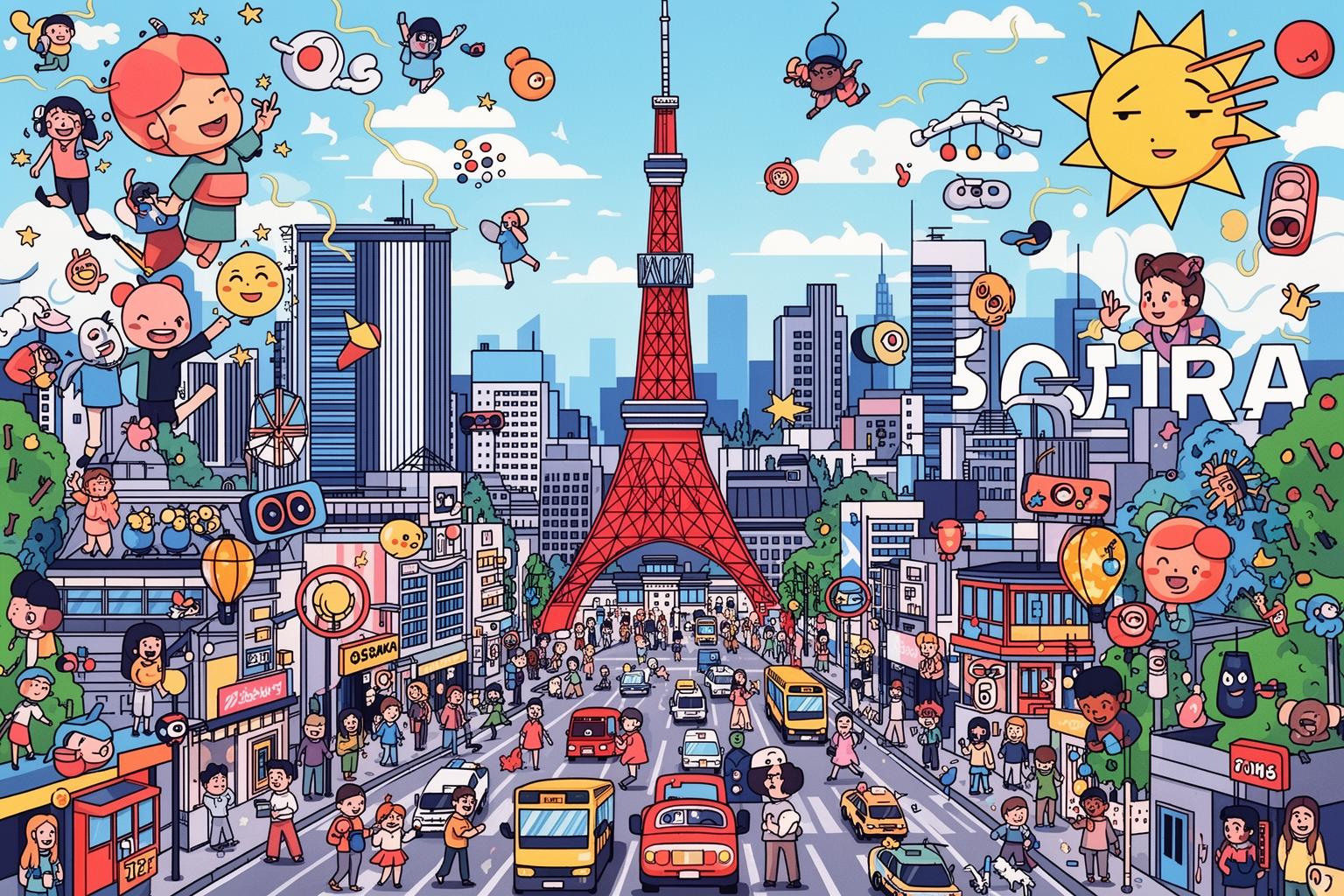
Your first visit to Tamade is a trial by fire. Forget the serene, minimalist style that characterizes much of Japanese design. Tamade follows a principle of maximum visual density. Outside, it’s a riot of neon signs, flashing bulbs, and giant, cartoonish sea creatures advertising fresh fish. It’s meant to catch your eye from a block away, shouting “CHEAP!” so loudly you can’t ignore it. It doesn’t invite you in; it challenges you to enter.
Inside, the assault continues. The lighting is flat, harsh, and relentlessly bright, making sure every price tag is visible. The aisles are narrow, often crowded with shoppers and cardboard boxes piled high with recently delivered goods. There’s no soothing background music. Instead, you hear the endlessly looping “Super Tamade” jingle, a maddeningly catchy tune that will follow you home and haunt your dreams. Over this is a constant barrage of announcements from staff, their voices warped by the cheap PA system, shouting the latest time-limited deals with the urgency of an air-raid siren. It’s a place of nonstop activity, of unyielding energy. It perfectly captures the Osaka spirit: loud, straightforward, and unapologetically itself.
The layout feels less like a planned retail space and more like an archaeological dig. You don’t browse at Tamade; you hunt. Mountains of daikon radishes sit next to boxes of instant noodles. The meat section is a sea of styrofoam trays under fluorescent lights, prices handwritten on brightly colored signs. There’s a clear absence of curation. The rule is simple: if it’s cheap and sells, it goes on the floor immediately. This chaos is intentional. It forces you to interact, to dig through, to feel like you’ve earned your bargain. A pristine, perfectly arranged shelf belongs to Tokyo. An overflowing bin where you might find a 100-yen cabbage is for Osaka.
The Gospel of Cheap: Understanding the ‘Yasui’ Obsession
At the heart of the Tamade experience lies one steadfast principle: price above everything else. This goes beyond a mere business model; it reflects a deeply ingrained cultural trait of Osaka. This is a city shaped by merchants, where the art of bargaining is part of its very fabric. Osakans don’t just enjoy a good deal—they thrive on it. Saving money isn’t viewed as stinginess, but rather as a mark of intelligence and ingenuity. Boasting about how little you paid for something holds far more social value than flaunting an expensive purchase.
The ¥1 Sale: A Commerce Ritual
Nothing illustrates this better than Tamade’s famous ¥1 sales. Yes, just one yen. The smallest unit of Japanese currency. These sales aren’t mere tales; they happen every day. The catch is straightforward: you first need to spend ¥1,000 to qualify for the one-yen item. It might be a can of coffee, a packet of tofu, or a single onion. The item itself hardly matters. What counts is the act of taking part.
This is pure retail theater, a game every shopper knows and eagerly plays. The ¥1 sale turns a routine grocery trip into a strategic challenge. It taps into the Osakan aversion to `son suru`, losing out or being shortchanged. The sensation of “winning” something for a single yen, even after a thousand yen purchase, delivers a psychological rush that’s deeply rewarding. It’s not merely about saving 99 yen on a coffee can. It’s about being a clever consumer and outsmarting the system. It’s a small, everyday triumph in life’s larger game, and Tamade is the arena where it unfolds.
‘Why Pay More?’: The Tamade Product Philosophy
The products lining Tamade’s shelves tell their own tale. You won’t find organic, free-range chicken from boutique farms in Nara. Artisanal bread or imported Italian olive oil are absent. Instead, the focus is on the plain, essential staples of daily life: inexpensive cuts of meat, staple vegetables, huge bags of rice, tofu, udon noodles, and eggs. The produce might be a little bruised or oddly shaped—items a more fastidious Tokyo supermarket might reject for cosmetic reasons. Tamade’s customers couldn’t care less. A misshapen carrot tastes the same and costs less. That’s all that matters.
Then there are the notorious prepared foods, the `sozai`. Bento boxes and sushi trays often sport colors you won’t find in nature. The fried section is a proud homage to brown food: croquettes, tempura, tonkatsu—all priced unbelievably low. Is it gourmet? Absolutely not. It’s fuel: an affordable, quick way to feed yourself or your family after a long day. It embodies a practical, no-nonsense approach to nourishment. In a city renowned for its culinary culture (`kuidaore`—eating until you drop), Tamade represents the flip side: the need to fill your stomach without emptying your wallet. It’s a quiet recognition that life isn’t always about takoyaki and okonomiyaki—sometimes it’s about a 250-yen bento that simply gets the job done.
More Than a Supermarket: A Social Mirror
To understand who shops at Tamade is to grasp the social fabric of Osaka. This is not a place for the wealthy or those concerned with appearances. The clientele is a raw, honest representation of the city’s working class. You’ll find elderly men and women carefully counting their coins, university students stocking up on instant ramen for the month, young families with children in tow, and blue-collar workers grabbing an affordable dinner on their way home. It serves as a great equalizer. Inside these walls, everyone shares the same goal. There is no judgment, no pretense.
A Community Hub for the Everyman
In Tokyo, your choice of supermarket can be a subtle status symbol. Shopping at Kinokuniya or Seijo Ishii reveals something about your lifestyle and income. In Osaka, proudly carrying Tamade’s iconic, retina-searingly yellow plastic bag is its own kind of status symbol. It signals, “I’m smart with my money. I’m practical. I’m not foolish enough to overpay for branding.” It’s an unspoken bond among shoppers, a shared identity grounded in a common-sense approach to life.
It also serves as a vital community lifeline. For many elderly residents on fixed incomes, Tamade isn’t just a place to buy food; it’s a way to sustain their independence. The low prices make it possible to get by. The 24-hour access provides a comforting sense of security. It’s a reliable, constant part of their daily routines, as essential as the post office or the local clinic.
The Unspoken Rules of the Tamade Jungle
Navigating the crowded aisles means adapting to a different set of social rules. The politeness found elsewhere in Japan is replaced by blunt efficiency. People move with purpose. There’s no leisurely browsing. You see what you want, grab it, and move on. Hesitation will cost you. If you spot the last pack of discounted pork belly, you don’t step back and politely wonder if someone else wants it. You take it. The person behind you would have done the same.
This isn’t rudeness; it’s an unspoken, shared understanding. Everyone is there for the deals, and often those deals are limited. The environment is fast-paced and competitive, but without malice. It mirrors the directness typical of Osaka communication. People don’t waste time with excessive pleasantries. They get straight to the point. The shopping cart ballet at Tamade is a physical expression of this mindset. Find your path, be decisive, and don’t block the flow. `Hayo, hayo!` Hurry, hurry! There are bargains to be had.
What Tamade Teaches You About Living in Osaka
Spending time in Tamade offers a more insightful education about the Osaka psyche than any textbook. It removes stereotypes and reveals the raw, functional essence of the city’s character. It teaches you to look beyond appearances and value the substance beneath.
Embracing Practicality Over Polish
Osaka prioritizes what works over what looks good, and Tamade is the perfect example of this mindset. It’s loud, chaotic, and far from polished, yet it excels at its primary mission: selling food as cheaply as possible. This approach reflects the broader lifestyle in Osaka—a city filled with small factories, independent shops, and savvy entrepreneurs focused on the bottom line, making deals, and offering affordable services. The elaborate rituals and aesthetic perfection often cherished elsewhere in Japan frequently take a backseat to straightforward, practical functionality.
This contrasts sharply with Tokyo’s emphasis on branding and presentation. In Tokyo, packaging can be as important as the product itself, and the buying experience is carefully curated to be smooth and enjoyable. Osaka’s take on `omotenashi` (hospitality) is less about perfectly wrapped gifts and more about a shopkeeper knocking a few yen off your bill while shouting a warm `Maido!` (Thanks for your continued patronage!). Tamade embodies this `Maido` culture fully.
The Art of the Deal is the Art of Life
Ultimately, Tamade teaches that life in Osaka is a negotiation—spotting opportunities, finding your angle, and maximizing value. This isn’t a cynical outlook; it’s a joyful one. There’s real pleasure and excitement in uncovering a great deal, a game anyone can play and win. This spirit fuels Osaka’s reputation for comedy, lively conversation, and vibrant energy. The city thrives on constant exchanges—of goods, words, and laughter.
To live and prosper here, you adopt this perspective. You learn to check the price per 100 grams, know the best sale days, and appreciate the charm of a 58-yen block of tofu. You come to see that a gaudy, neon-lit supermarket isn’t a sign of poor taste but a symbol of economic freedom for locals. Tamade may not be conventionally beautiful, but for those who grasp Osaka’s heart, it stands as a monument of profound, practical, and unapologetic glory.