Step into any supermarket in Osaka, and you’re met with a familiar, almost sacred silence. The produce is perfect, gleaming under fluorescent lights, each apple individually wrapped like a precious jewel. It’s clean, it’s efficient, and it’s completely anonymous. You could be in Tokyo, Sapporo, or Fukuoka, and the experience would be nearly identical. But this polished perfection, this quiet transactional dance, isn’t the whole story of how this city eats, shops, and lives. It’s not where you find the city’s pulse. For that, you have to venture out on a weekend morning, with a sturdy bag in one hand and a bit of courage in the other, into the sprawling, chaotic, and utterly captivating world of Osaka’s flea markets and farmers’ stalls. This is where the real city breathes, where the famous Osaka character isn’t a cliché but a living, breathing reality you can haggle with over the price of a vintage teacup. Forget the tourist guides for a moment. If you truly want to understand what makes Osaka tick—why it feels so different from the reserved elegance of Tokyo—the answer isn’t in a castle or a skyscraper. It’s in the gravel-strewn grounds of a temple market, amidst piles of second-hand treasures and the boisterous calls of vendors who’ve been doing this for generations.
Clearly beyond the weekend market chaos, Osaka also surprises with its quirky side, as evidenced by our guide on cheap drink strategies that reveals how to navigate the city’s famed 100-yen vending machines.
The Osaka Market Mindset: It’s Not Rude, It’s Rational

The first thing you need to adjust when you enter an Osaka market is your perception of Japanese politeness. The subtle, indirect communication you’ve come to know elsewhere in Japan is set aside here, replaced by something much more direct, efficient, and, once you get used to it, surprisingly warm. This pragmatism stems from a merchant culture that has shaped the city for centuries. It’s not rudeness; it’s a different kind of respect—one focused on getting straight to business, having a bit of fun, and making sure everyone leaves feeling they received a fair deal.
The Art of the “ナンボ?” (Nambo? – How much?)
In Tokyo, you might approach a vendor with a slight bow and politely ask, “Sumimasen, kore wa ikura desu ka?” (Excuse me, how much is this?). In an Osaka market, that whole formal routine is often reduced to two simple syllables: “Nambo?”. Point at the item, make eye contact, and ask. It’s not aggressive. It’s the local dialect and a sign you’re ready to engage on local terms. It cuts through the formalities and gets straight to the point, a trait Osakans highly appreciate. For newcomers, it can seem abrupt, almost confrontational. But watch the locals—it’s a smooth, natural exchange. The vendor responds with a price, and the negotiation begins. This directness is frequently misunderstood by foreigners and even other Japanese as coarse. The truth is it’s a form of efficiency. Why waste time on pleasantries when both parties already know the purpose? This mindset spills into daily life. People in Osaka tend to be more straightforward with their opinions and humor, valuing clear, honest interaction over carefully preserved harmony.
“これ、オマケしとくわ!” (Kore, omake shitoku wa! – I’ll throw this in for free!)
Once the price is agreed upon, you might experience another hallmark of Osaka market culture: the `omake`. This is the little extra, a gift from the vendor. It’s not a discount you demand; it’s a gesture freely given. Buy a bag of potatoes, and the grandma might slip in a few onions. Select three plates, and the old man might insist you take a fourth one along. This embodies the often-heard phrase “Osaka is friendly.” It’s not about constant smiling or endless bows. It’s about creating a connection, however brief, through a shared act of generosity. The `omake` says, “I see you, I appreciate your business, and here’s a little something to brighten your day.” It’s a human bond within a commercial exchange. This spirit of mutual benefit runs deep. In business and everyday life, there’s an unspoken understanding that exchanges should be fair and reciprocal, leaving both sides satisfied. It’s a practical warmth, not just a sentimental one.
Navigating the Flea Market Labyrinth: Shitennoji and Beyond
To truly understand the heart of Osaka’s market scene, you need to visit one of its vast, historic flea markets. These are not meticulously curated vintage fairs; instead, they are vibrant, chaotic collections of a city’s accumulated belongings, where treasures and trash coexist, and every stall shares its own story. They embody the city’s `mottainai` (waste not, want not) philosophy, along with a profound respect for items with a history.
Shitennoji Temple Market: Where History Meets Hoarding
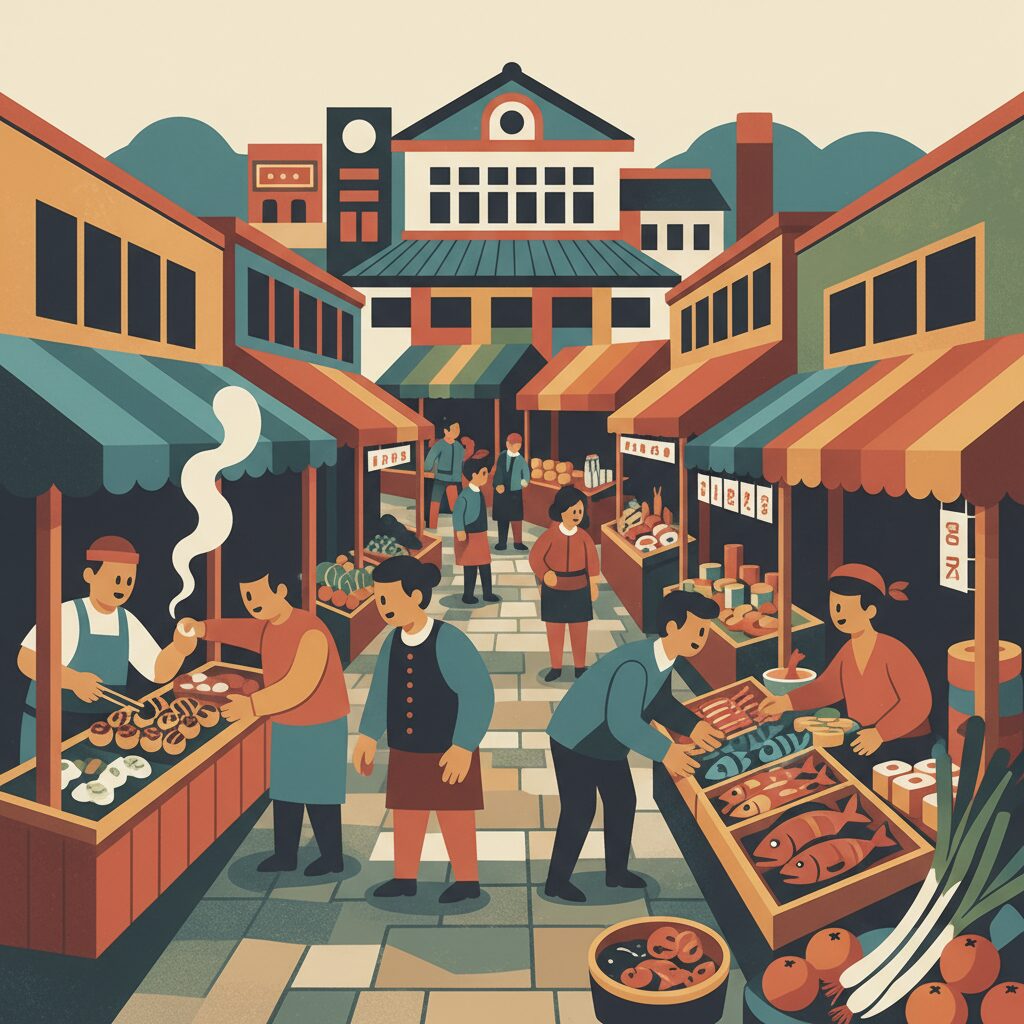
Held on the 21st and 22nd of each month on the grounds of one of Japan’s oldest temples, the Shitennoji market offers the quintessential Osaka experience. It’s a sensory feast. The aroma of takoyaki and grilled squid blends with the dusty scent of old wood and incense. Rows upon rows of vendors offer everything imaginable: rusty tools, elegant kimonos, chipped pottery, pre-war military memorabilia, stacks of old manga, and curious assortments of household items that seem to have been cleared out of multiple attics. This market highlights the contrast between Osaka and, for instance, Kyoto. While a Kyoto market might emphasize exquisite crafts and artisanal products, Shitennoji celebrates the everyday, the secondhand, the slightly worn but still functional. It reflects an Osaka mentality that values utility and narrative over flawless perfection. An Osakan will proudly share the story of the bargain they found on a sturdy old cabinet, whereas a Tokyoite might be more likely to discuss the minimalist design of a new purchase. It’s a culture that discovers beauty in practicality and durability, not just novelty and style.
Reading the Vendors: The Unspoken Cues
Engaging with vendors at a market like Shitennoji is a masterclass in social intuition. You can’t apply a one-size-fits-all approach. There’s the quiet, reserved grandpa surrounded by his lifetime collection of tools. He’s not here for conversation. He’ll state his price, and you either accept or walk away. Attempting to make small talk with him only wastes time. Then, a few stalls down, you might find a chatty `obachan` (auntie) eager to spend twenty minutes recounting the complete history of the tea set you’re admiring, including who owned it and how to care for it. The secret is to follow their lead. People in Osaka excel at reading the atmosphere (`kuuki wo yomu`) in a very practical way. It’s not silent conformity like in other parts of Japan; it’s about adjusting your communication style to achieve the best result. Be direct with the direct, and conversational with the conversational. Foreigners often err by applying a single “polite Japanese” approach to all interactions. In Osaka, social flexibility is the true key to connecting with people. It shows you’re attentive, engaged, and present — qualities that are deeply respected here.
The Farmers’ Market Fix: Fresh, Local, and Full of Conversation
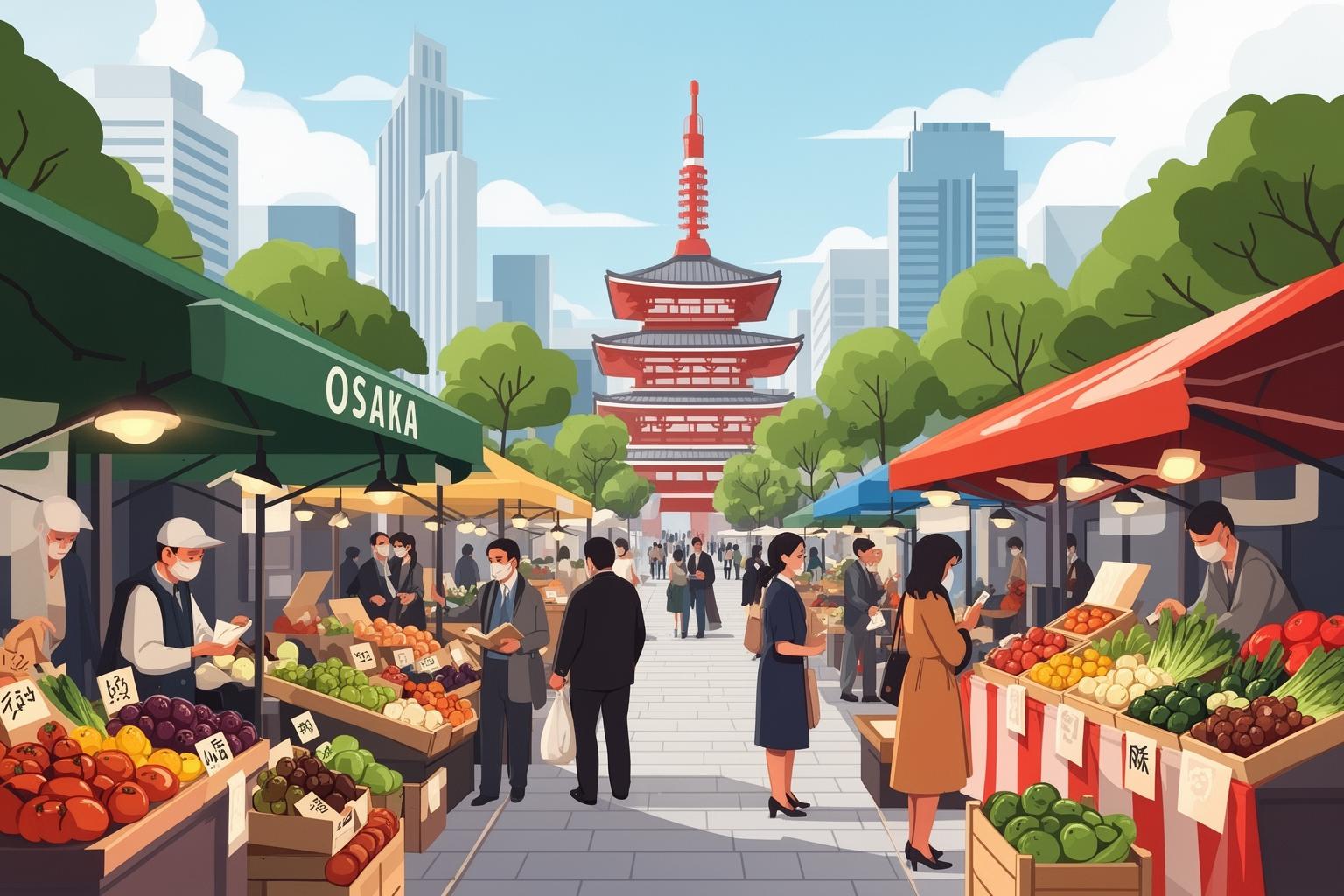
While flea markets unveil Osaka’s history, the farmers’ markets reveal its soul, which, as everyone knows, lies in its stomach. The city’s fame for `kuidaore` (eating until you drop) goes beyond just restaurant-hopping. It’s grounded in a genuine appreciation for quality ingredients, and there’s no better place to find them than straight from the people who cultivated them.
Beyond the Depachika: Why Local Produce Matters
Stroll through the basement food hall (`depachika`) of a luxury department store like Hankyu or Daimaru, and you’ll encounter melons priced higher than a steak dinner and strawberries meticulously arranged in gift boxes. It’s a stunning display of aesthetic perfection. Then visit a local farmers’ market. The carrots might still carry dirt, the cucumbers might be charmingly crooked, and the tomatoes come in all shapes and sizes. This is the contrast. The `depachika` showcases beauty; the farmers’ market offers flavor. Osaka’s food culture is fundamentally centered on taste and value. A local shopper will choose the ugly tomato without hesitation if the farmer assures them it’s the sweetest. This practicality is key to everyday life. It’s less about appearance and more about function, flavor, and worth. At these markets, you’re not just a buyer; you’re part of the food chain. You can ask the farmer how to prepare a peculiar vegetable, and you’ll receive a full recipe, complete with cooking tips passed down through generations.
The Nakanoshima Farmers’ Market: A Modern Twist on an Old Tradition
Not all markets are dusty and old-fashioned. The farmers’ market held in the picturesque Nakanoshima Rose Garden reflects the contemporary face of Osaka. It’s cleaner, more organized, and caters to young families, office workers, and food enthusiasts. Here you’ll find organic vegetables, artisanal bread, craft coffee, and gourmet food trucks. The atmosphere is less about intense haggling and more about community and lifestyle. People linger, chat with vendors they know by name, and let their children play on the grass. This highlights how Osaka’s market culture core values—direct connection with producers, quality focus, and a sense of community—are evolving and taking on new forms. It’s a reminder that living in Osaka isn’t about clinging to the past. The city is continually reinventing itself, blending its merchant-town practicality with modern sensibilities. It’s a place where you can appreciate the grit of an old-school market in the morning and a chic, eco-conscious one in the afternoon. This adaptability—this ability to retain its core identity while embracing the new—is what makes Osaka such a vibrant and livable city.
Practical Tips for the Aspiring Market-Goer
So, you’re ready to jump in. Beyond the cultural subtleties, there are some firm rules that will make your market experience smoother, more successful, and much more enjoyable. Think of this as your survival guide to the delightful chaos.
Cash is King (And Bring Small Change)
This cannot be emphasized enough. Most vendors at these markets operate on a cash-only basis. The sleek credit card machines of the city’s department stores are a distant concept here. Arriving with only a credit card or large bills is the top rookie mistake. You’ll be met with a polite but definite shake of the head. To do it properly, come equipped with a wallet full of 1,000-yen notes and a pocket full of 100-yen and 500-yen coins. Struggling to break a 10,000-yen note for a 300-yen bunch of spinach holds up the line and marks you as inexperienced. Quick, easy transactions are the grease that keeps the market running smoothly. This reliance on cash highlights the grassroots, person-to-person nature of these markets. It’s direct, immediate, and has no middleman.
Go Early, Go Late, or Go in the Middle?
Your market approach depends entirely on your objective. If you want the absolute best selection—the freshest fish, the finest vegetables, the rarest antiques—you need to arrive early. By early, I mean when vendors are still setting up. You’ll be competing with local restaurant chefs and dedicated collectors who know exactly what they want. The vibe is brisk and businesslike. If your aim is the thrill of bargaining and scoring a great deal, go late. In the final hour before closing, vendors are eager to sell off remaining stock rather than pack it up. This is when you’ll hear cries of “Mōkaran-de!” (I’m not making a profit!) as prices get slashed. It’s the ultimate expression of Osaka’s bargaining spirit. If you just want to browse, enjoy the atmosphere, and sample some street food, midday is perfect. It’s the busiest time, but also the most vibrant and festive.
Your “My Bag” is Your Best Friend
In Japan, bringing your own shopping bag is often called “my bag” (`mai baggu`). At a market, it’s more than just an eco-friendly choice; it’s a practical must. Most vendors will only offer flimsy plastic bags, which won’t hold a kilo of potatoes or a heavy piece of pottery. Arriving with a large, sturdy tote or even a small wheeled cart shows you’re a serious shopper. It signals that you came prepared. This simple act connects you with the local way of life. For many in Osaka, daily life doesn’t involve a weekly car trip to a big supermarket. Instead, it means walking or cycling to local shops and markets every few days. Being ready to carry your own purchases is just part of the local rhythm, a small but meaningful detail that separates a resident from a visitor.