
There’s a moment of quiet panic that can seize any non-Japanese diner in Osaka. It happens when you find yourself seated at a flawless hinoki cypress counter in an intimate, ten-seat kappo restaurant. Across from you, the master, the taisho, sharpens a blade that glides through fish with terrifying precision. The air is thick with the scent of grilling unagi and simmering dashi. You are about to embark on an omakase journey, a multi-course meal entirely in the chef’s hands. But there’s a problem. You can’t eat shellfish. Or you’re a vegetarian. Or you simply have a deep, unshakeable aversion to sea urchin. How do you broach this subject without causing offense, disrupting the harmony, and marking yourself as the difficult foreigner? In Tokyo, the silence might feel formal, the rules rigid. But you’re in Osaka, and the rules of engagement are refreshingly, fundamentally different. Here, the counter is not a barrier; it’s a bridge. Learning how to communicate your needs across it isn’t just about getting a meal you can safely enjoy; it’s a masterclass in the Osakan psyche—pragmatic, direct, and deeply rooted in a very human desire to see you leave happy. This isn’t about navigating a minefield of etiquette; it’s about starting a conversation.
This unconventional dining journey invites you to also explore the subtle charm of Osaka cafe culture, where relaxed atmospheres reveal yet another facet of the city’s vibrant culinary landscape.
The Kappo Counter: More Than Just a Seat
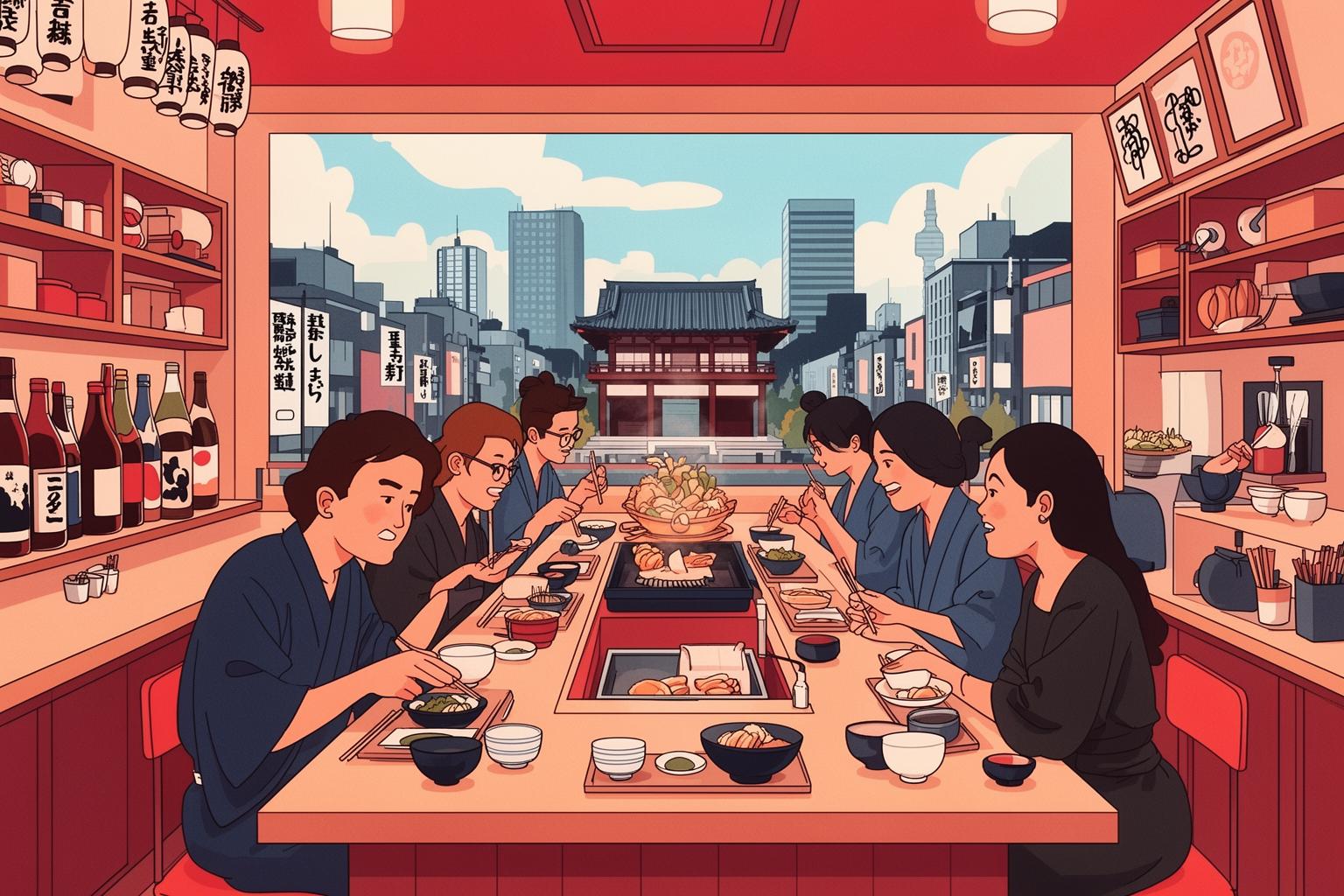
First, let’s break down the stage itself. The word kappo (割烹) is elegantly simple, made up of characters meaning “to cut” (割) and “to simmer/cook” (烹). It represents a cooking style that is immediate, fresh, and performed right before your eyes. This isn’t a kitchen concealed behind swinging doors. The chef’s hands, knives, and ingredients are all part of the experience. In many upscale Tokyo or Kyoto establishments, this performance is often delivered with monastic seriousness. The chef is a silent craftsman, and the guests are respectful observers. The counter can feel like the edge of a sacred space, one you wouldn’t dare disturb with a personal request.
Osaka breaks that script entirely. Here, the taisho is not just a chef; he’s the host of the party. The counter is his stage, yes, but he expects audience participation. He’s likely to be a character—boisterous, witty, and eager to chat. He wants to know where you’re from, what you think of the sake, and most importantly, if you’re enjoying yourself. This isn’t a distraction from his art; for many Osaka chefs, this lively interaction is part of the art. They feed off the energy of their guests. The clatter of plates, the sizzle of oil, the murmur of happy diners, and the lively banter form the restaurant’s heartbeat.
Foreigners often misinterpret this dynamic. Conditioned by notions of Japanese formality, they adopt a posture of quiet deference, worried that speaking up might be disrespectful. In Osaka, the opposite can be true. Silence can be taken as boredom or dissatisfaction. Engaging with the chef, asking questions, and yes, communicating your needs, shows you are an active participant, not merely a passive consumer. The direct line of communication isn’t a potential source of friction; it’s the restaurant’s greatest asset. It’s an invitation to connect, and you should wholeheartedly accept it.
“Nigate na Mono”: The Language of Likes and Dislikes
So, how do you start that conversation? While you can certainly use the English word “allergy,” knowing a few key Japanese phrases will turn the exchange from a clinical statement into a subtle, respectful dialogue. The most effective phrase in your toolkit is nigate na mono (苦手な物).
Literally, it translates to “things I am weak at” or “things I’m not good with.” This gentle and flexible expression encompasses everything from strong dislikes to mild intolerances. It lacks the sharp, urgent tone of arerugii (アレルギー, allergy). When you inform a chef you have an allergy, their focus immediately shifts to safety measures, cross-contamination, and liability. Saying something is nigate frames it as a personal preference instead. This small linguistic difference is key. It changes the tone from a demand to a personal detail shared between host and guest.
Crafting Your Message
Here’s how this works in practice. Rather than a blunt “No raw fish,” you might say, “Nama no sakana wa chotto nigate nan desu” (生の魚はちょっと苦手なんです), which means “I’m a little not good with raw fish.” The use of chotto (a little) and the softening nan desu at the end make it polite and somewhat apologetic, even though no apology is necessary. It serves as a cultural buffer, showing respect for their craft while noting a personal limitation.
If the issue is more serious, you need to be more explicit. The phrase taberarenai mono (食べられない物), meaning “things I cannot eat,” is a clearer step. For serious allergies, combine it with the word allergy itself.
For instance: “Kōkakurui arerugii ga arimasu node, ebi ya kani wa zettai ni taberaremasen.” (甲殻類アレルギーがありますので、エビやカニは絶対に食べられません。) This translates to “I have a shellfish allergy, so I absolutely cannot eat shrimp or crab.” The statement is clear, firm, and explains the reason, which any chef will immediately understand and respect.
Another very handy phrase is “~ o nuite itadakemasu ka?” (〜を抜いていただけますか?), meaning “Could you please leave out ~?” This is ideal for excluding single ingredients in a complex dish. For example, if a salad usually comes with cilantro but you dislike it, you can ask, “Pakuchii o nuite itadakemasu ka?“
The Osakan approach values efficiency and clarity. Though politeness is crucial, they prefer no beating around the bush. Presenting your information clearly and respectfully enables the chef to do what they do best: prepare something delicious for you. They can’t do that if they have to guess.
Timing is Everything: When and How to Communicate
This is the most crucial part, the one rule that cannot be altered. You must communicate your dietary restrictions at the time of booking—not when you arrive, and not when the first course is served, but at the time of booking.
To grasp why this is non-negotiable, you need to understand the economics and artistry of a kappo restaurant. The taisho likely went to the market at dawn to select the freshest ingredients for that day’s service. The menu isn’t fixed; it evolves with the seasons and the day’s catch. For a ten-seat restaurant, he has purchased and prepared ingredients for exactly ten guests. Every detail is carefully planned, from the dashi base simmering for hours to the specific fish aged for a particular dish.
Walking in and announcing a major restriction—such as vegetarianism or a seafood allergy—is like asking an orchestra to perform a different symphony just before the show starts. It’s not that the chef refuses to accommodate, but he may simply be unable to do so. He might lack the necessary alternative ingredients. This leads to waste, disrupts the smooth flow of service for other guests, and places great stress on a small team. In Osaka’s business culture, which values relationships and mutual respect (shinyou), this behavior is considered highly inconsiderate.
The Right Way to Do It
- When Booking by Phone: This is your best opportunity. Have your phrases prepared. If your Japanese isn’t strong, ask a Japanese-speaking friend or hotel concierge to make the call for you. State your name, the date of the reservation, and clearly explain your restrictions. Be as detailed as possible. Simply saying “vegetarian” is not enough. Specify: “No meat, no poultry, no fish. Is dashi made from bonito flakes used? Eggs and dairy are acceptable.” The more detail, the better.
- When Booking Online: Modern booking platforms are invaluable. Use the “special requests” or “dietary restrictions” box. Never leave it blank if you have any dietary concerns. Clearly write out your restrictions in both English and, if possible, simple Japanese. This creates a written record and allows the chef days, not minutes, to prepare.
- Reconfirm on Arrival: When you are seated, a brief, polite reminder is recommended. It shows you are conscientious. A simple phrase like “Yoyaku no toki ni o-tsutae shita, kai arerugii no mono desu.” (予約の時にお伝えした、貝アレルギーの者です), which means, “I’m the guest with the shellfish allergy mentioned at the time of booking,” is ideal. This is a confirmation, not a new request, and reassures both you and the chef.
The Osaka Chef’s Reaction: Pragmatism Over Pretense

Here lies the largest gap between foreign anxiety and Osakan reality. Many visitors, especially from Western cultures, worry that they will be perceived as picky or demanding, fearing their request might be seen as an insult to the chef’s carefully crafted omakase menu. They envision a stern, offended artist whose vision has been compromised.
This is rarely the case in Osaka. The typical Osaka taisho is, above all, a pragmatist. They are masters of their craft, but also small business owners in a city renowned for its discerning, value-conscious diners. Their primary goal is not to uphold some untouchable artistic ideal; it’s to serve exceptional food that satisfies the customer, builds a great reputation, and keeps patrons returning. A dietary restriction is not an insult; it’s a practical parameter. It’s a problem to be solved.
In fact, some chefs welcome the challenge. Being told “no shellfish” pushes them to get creative, to step away from their usual repertoire and invent something new on the spot. It’s an opportunity to showcase their skill and adaptability. I once dined with a friend who, upon being served a beautiful piece of grilled anago (sea eel), realized he couldn’t eat it. He had forgotten to mention it. It was an awkward moment. The chef, however, didn’t frown. He laughed heartily and said in a thick Kansai dialect, “Why didn’t you say so! No problem!” He quickly took the plate away and returned a few minutes later with a stunning dish of grilled Kamo-nasu eggplant with a rich miso glaze. He seemed genuinely pleased with his improvisation. That mix of professional pride and good-natured flexibility is pure Osaka.
This mindset stands in stark contrast to the more rigid formality you might find elsewhere. In Osaka, the human element—making a connection, ensuring genuine enjoyment—often takes precedence over strict adherence to a predetermined plan. They want to please you. All you need to do is provide them with the information they require to succeed.
Navigating the “Omakase” Minefield
The very idea of omakase (お任せ), meaning “I leave it up to you,” seems inherently at odds with having dietary restrictions. You are surrendering all control to the chef. How can you do that while also setting rules? The key is to realize that you are not taking over the process; you are merely defining the boundaries before the experience begins.
Consider it like commissioning a painting. When you inform the artist of your restrictions beforehand, you are not dictating what or how to paint. You are simply specifying the colors you prefer not to be used. You might say, “I’d like a landscape, but please avoid shades of red.” The artist still retains full creative freedom over the composition, subject, and technique, using all other colors at their disposal. The final artwork remains entirely theirs, a display of their skill, just adapted to your particular preferences.
An Osaka chef understands this intuitively. The trust involved in omakase is reciprocal. You trust them to craft a wonderful meal, and they trust you to provide essential information for doing so safely and effectively. By communicating your needs in advance, you fulfill your part of the agreement. You enable the omakase to happen in its purest form: a personalized culinary journey built on mutual trust and clear communication.
What Not to Do: The Cultural Faux Pas
While the spirit of Osaka is forgiving, there are certain behaviors universally regarded as poor etiquette. Avoiding these is simply a matter of showing respect for the chef’s craft and their establishment.
- The Surprise Announcement: As previously stressed, never, ever inform the staff you cannot eat a dish after it’s already been served. This is the single most disruptive action a guest can take. It leads to food waste, interrupts the kitchen’s flow, and places the chef in a very difficult position. It is viewed as the height of inconsideration.
- Vagueness is Your Enemy: Avoid being vague. Phrases like “I’m a bit vegetarian” or “I don’t usually eat seafood” are unhelpful. What exactly does that mean? Be clear. “I don’t eat red meat or poultry, but fish is fine.” “I cannot eat bivalves such as clams or oysters, but shrimp and crab are okay.” The chef is a professional, not a mind reader.
- Distinguishing Preference from Allergy: Be truthful. If you simply dislike cilantro, say it’s nigate. Don’t claim a cilantro allergy. In a food-aware city like Osaka, people take true allergies very seriously. Using the term loosely for a mere dislike diminishes its significance for those with life-threatening conditions. Osakans value directness and will respect you for being straightforward. They won’t be offended if you just don’t like something.
- Never Assume: Japanese cuisine often contains hidden ingredients. The most common is dashi, the fundamental stock in Japanese cooking, almost always made with katsuobushi (bonito fish flakes). Never assume soup or sauce is vegetarian unless you’ve explicitly confirmed it. Likewise, tempura batter frequently contains egg. If you have serious dietary restrictions, it’s always best to ask and confirm.
Mastering these small communication points will do more than just help you enjoy a great meal. It will earn you the chef’s respect. You will no longer be just another customer but become a knowledgeable guest who understands and honors the culture. In Osaka, that respect is always reciprocated, often with an extra-special dish or a shared glass of sake after the meal. In these moments, across the polished cypress counter, a simple dinner turns into a meaningful human connection—a true taste of life in this vibrant, straightforward city.