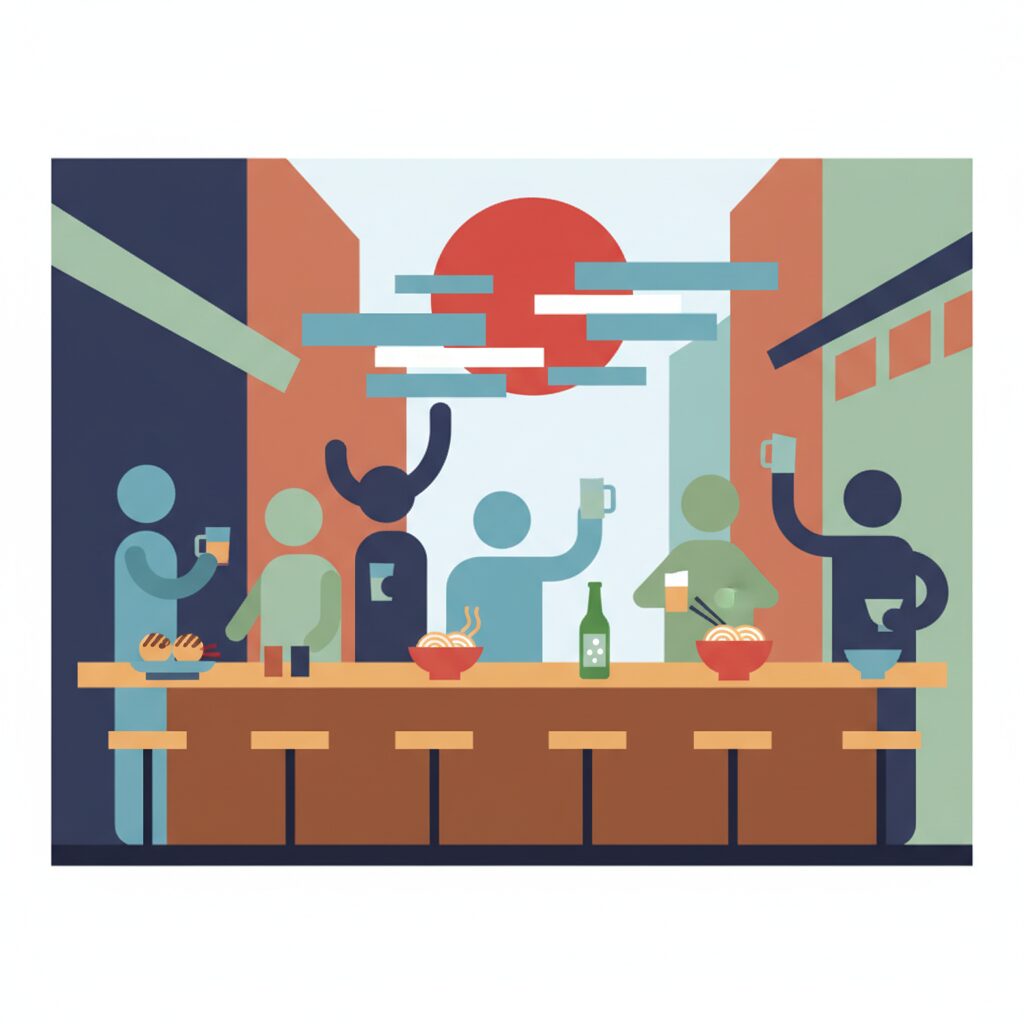
When I first moved to Osaka, I saw them everywhere, these little brightly-lit boxes of noise and steam tucked into station underpasses and crowded shotengai arcades. People, packed shoulder-to-shoulder, standing around high counters, laughing, eating, and drinking. My Tokyo friends had prepared me for a different Japan, but this was something else entirely. “What is this?” I’d wonder, peering in. “A party? A private event?” It wasn’t. It was just a Tuesday. This was my introduction to the world of tachinomi, or standing bars, the pulsating, democratic, and utterly essential core of Osaka’s social life. Forget quiet, contemplative sake bars or exclusive cocktail lounges for a moment. If you truly want to understand how this city breathes, how its people connect, and why it feels so fundamentally different from the polished reserve of Tokyo, you need to step inside, find a spare patch of counter, and order a highball. A tachinomi is not just a place to get a cheap drink; it’s a crash course in the Osakan philosophy of life: be practical, be open, and don’t waste time getting to the good part. It’s the living, breathing embodiment of the city’s spirit, and understanding it is the first step to feeling like you truly belong here.
For those looking to broaden their Osaka experience beyond the pulsating energy of tachinomi bars, discovering the advantages of the Kintetsu Express for planning a local weekend escape to Nara and Ise offers an exciting next step.
The Tachinomi Philosophy: More Than Just Standing Up
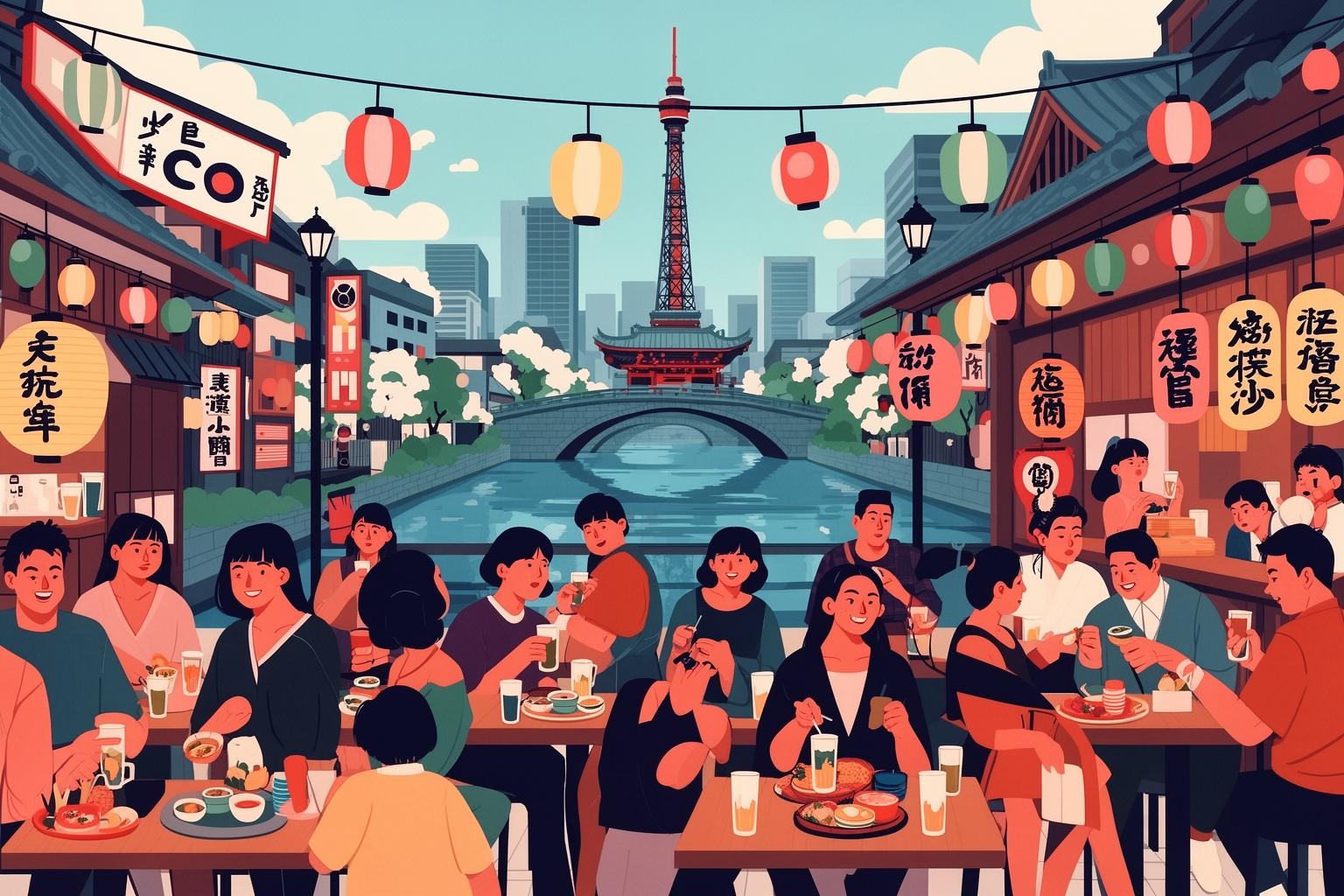
At first glance, the idea of a standing bar may seem unusual, possibly even uncomfortable. Why stand when you could sit? But that question misses the point entirely. The lack of chairs isn’t a flaw; it’s the defining feature. This design choice is deeply rooted in the Osakan mindset, which values efficiency, flow, and community over the formal comforts found elsewhere. It’s not about being cheap; it’s about being resourceful—maximizing your time, money, and social energy. Osakans are known for their pragmatism, often mistaken for being kechi (stingy), but it’s really about spotting value. Chairs take up space, encourage lingering, increase overhead, and ultimately raise your bill. By eliminating chairs, a tachinomi master can serve more customers, keep prices remarkably low, and cultivate a lively, energetic atmosphere. The entire experience is tailored for a quick, potent dose of after-work relaxation and connection, without the commitment of a full sit-down meal.
This design has a powerful social impact. Without tables and chairs creating physical and mental barriers, the whole bar becomes a shared space. The social layout is fluid. You’re not stuck in one conversation at one table all night. You can shift spots, lean into a new chat, or strike up a conversation with the person next to you who just ordered something tempting. This creates a dynamic human ecosystem always in motion. It’s the architectural opposite of a quiet, partitioned Tokyo izakaya where you might spend the evening talking only to your companions. Here, the barrier to social interaction is nearly nonexistent. The close quarters aren’t a downside; they fuel the entire experience. You’re literally rubbing shoulders with salarymen, shopkeepers, students, and grandparents. In this shared space, social hierarchies seem to dissolve. Everyone is simply a person, standing at the same counter, enjoying a cold beer and a hot plate of doteyaki. It’s a beautiful, unpretentious, and uniquely Osakan way of building community.
How to Tachinomi: An Unwritten Etiquette Guide
Entering a bustling tachinomi for the first time can be intimidating. The noise, the pace, the unspoken rules—it’s a sensory overload. But understanding the system is easier than you might think and reveals a beautifully efficient setup. Don’t linger at the door. The key is to confidently yet politely find your spot. Look along the counter for any gap, no matter how small. Catch the eye of the person next to you, offer a slight nod or a quiet sumimasen (excuse me), and slide in. People will naturally make room. This isn’t a place for dramatic entrances; it’s about smoothly blending into the existing flow.
Once you’ve claimed your spot, the next step involves money. Many traditional tachinomi work on a cash-on-delivery basis, often with a small tray or bowl on the counter in front of you. Proper etiquette is to place a 1,000 or 5,000 yen bill in the tray. When you order your beer and a plate of sashimi, the staff will take your order, bring your items, and deduct the cost from the cash in your tray, returning any change for your next round. It’s an ingenious, seamless system that keeps things moving. There’s no waiting for a bill at the end or splitting checks. Everything happens in real-time, right before your eyes. To outsiders, it might seem chaotic, but it’s a finely tuned machine built on trust and efficiency.
Beyond the practicalities, there’s a social contract at work. This is where the renowned Osaka friendliness shines through. Acknowledge the people around you. You don’t need to share your whole life story, but a simple konbanwa (good evening) to your new neighbors at the counter breaks the ice. Respect personal space. Keep your bag at your feet or on a hook, not on the valuable counter. And be open. The charm of the tachinomi lies in spontaneous interactions. If someone comments on your order or asks where you’re from, welcome it. Some of my most memorable Osaka conversations happened with complete strangers over a shared plate of fried chicken they insisted I try. This is the essence—a temporary, shared community. Finally, know when to move on. Tachinomi are meant for quick stops. They’re social recharging points, not final destinations. An hour, maybe two, is ideal. Have your drinks, enjoy the food and conversation, then exit gracefully, leaving space for the next person to join. This steady rotation keeps the energy lively and the experience fresh for everyone.
Tachinomi vs. Tokyo’s Nightlife: A Tale of Two Cities
Comparing the nightlife of Osaka and Tokyo is like contrasting jazz with classical music. Both are beautiful, yet their structures and rhythms differ greatly. Tokyo’s social scene often feels more curated and reserved. You meet friends at a particular izakaya, usually with a reservation, and the evening unfolds within the boundaries of your table and group. While enjoyable in its own way, it’s a more planned and segmented experience. Spontaneous interactions with strangers are uncommon and can sometimes be viewed as intrusive. The city’s energy is vast, but it’s often contained within millions of private social bubbles.
Osaka, experienced through its tachinomi culture, is the complete opposite. It’s a city of porous social boundaries. An evening out is rarely a single, planned occasion; it’s more of a journey, a hashigo-zake (bar-hopping) adventure. You might start at a tachinomi near the station for a quick beer, meet a few locals who suggest another nearby spot famous for its tempura, and end up three bars later singing karaoke with people whose names you’ve just learned. This is not an unusual night out in Osaka—it’s the norm. The tachinomi fuels this spontaneity. Its low cost, quick turnover, and open format make it the ideal launchpad for an unplanned evening. You can drop in alone without feeling out of place, because the expectation is that you’ll join the general buzz within minutes.
This fundamental difference highlights a core divergence in city mindsets. Tokyo social life tends to emphasize order, privacy, and curated experiences. Osaka’s social life flourishes on chaos, serendipity, and communal energy. I recall trying to explain this concept to a friend from Tokyo. He was puzzled. “But who do you talk to? What if no one talks to you? Isn’t it awkward?” In Osaka, these questions don’t compute. The default assumption is connection. The baseline is conversation. The awkwardness would come from standing silently in a corner, actively resisting the gravitational pull of the community around you. A tachinomi isn’t just a bar; it’s a public square, a stage for the daily performance of Osakan identity, where everyone is both audience and participant.
The Language of the Counter: Decoding Osaka Banter
The close-quarters setting of a tachinomi is the ideal breeding ground for the famous Osaka dialect, or Osaka-ben. This isn’t merely a different accent; it represents a distinct mode of communication. It’s quicker, more straightforward, and enriched with playful, teasing humor that can surprise those unfamiliar with it. Here, you’ll hear the true pulse of the city. Instead of the formal irasshaimase, the typical greeting might be a hearty “Maido!” (Thanks for your business!) from the owner, a phrase that feels more like welcoming a family friend than addressing a customer. Alternatively, you might catch the classic merchant phrase, “Moukari makka?” (“Are you makin’ money?”), a rhetorical question less about your finances and more an upbeat way to check in.
This forthrightness defines Osakan communication. People may ask questions that seem intrusive or too personal in other cultures or even other parts of Japan, such as “Where are you from? Why Osaka? Do you like it here? You’re tall!” This isn’t prying; it’s a conversational shortcut—an effective method to break down barriers and build rapport. A foreigner might initially see this as invasive, but it’s quite the opposite. It signals genuine interest and an invitation to join the dialogue. Staying quiet and reserved in a tachinomi can be taken as aloofness or unfriendliness. Engaging is valued and rewarded in this culture.
Humor is essential too. Banter, or tsukkomi, is elevated to an art form here. The bar master might tease a regular over their choice of tie, or a patron might jokingly grumble about the size of her drink. This ongoing, lighthearted exchange keeps the atmosphere lively. As a foreigner, you might find yourself the subject of some playful teasing. If someone jokes about your chopstick skills, the best response is to laugh along. It’s a sign of affection and inclusion. They’re not laughing at you; they’re laughing with you, welcoming you into the group. Learning to appreciate this fast-paced, witty, and warmly inclusive form of communication is just as essential as knowing how to order a beer. It’s the verbal currency of the tachinomi and the quickest way to feel less like a visitor and more like a local.
Finding Your Scene: From Gritty Salaryman Spots to Hipster Havens
One common misconception about tachinomi is that they all share the same traits: old, smoky, and exclusively frequented by older men in suits. While that traditional style certainly exists and has its own charm, the modern tachinomi scene in Osaka is remarkably diverse, mirroring the city’s many subcultures. Discovering the right spot is part of the fun, and your choice of location reveals a lot about which facet of Osaka life you wish to experience.
The Classic Hubs: Tenma and Kyobashi
For a quintessential, energetic tachinomi experience, head to the areas around Tenma or Kyobashi stations. The arcades and backstreets here form a dizzying maze of red lanterns and glowing signs, each leading to a bar filled with locals. This is the true heartland. The air is rich with the aroma of grilled skewers and simmering oden. The atmosphere hums with a constant cheerful buzz. These spots are unpretentious, incredibly affordable, and provide a direct glimpse into the soul of working-class Osaka. It’s an excellent place to practice your Japanese and engage in authentic, unfiltered interactions.
The Modern Twist: Ura Namba
Just behind Namba’s main entertainment district lies Ura Namba, which offers a more contemporary vibe. Here, you’ll find tachinomi that are a bit more stylish, appealing to a younger, more diverse crowd. Imagine standing wine bars with curated cheese plates, craft beer venues with rotating taps, and modern Japanese eateries serving inventive small dishes. The vibe remains lively and communal, but with a fresher, modern aesthetic. It’s an ideal introduction for those who might feel a bit daunted by the grittier, old-school bars.
The Deep Dive: Shinsekai
For a nostalgic journey, nowhere compares to Shinsekai. Nestled beneath the Tsutenkaku Tower, the tachinomi here seem frozen in time from the Showa era. They are gritty, deeply local, and unapologetically authentic. Here, you’ll find old-timers playing shogi and drinking cheap shochu from early afternoon on. While it can be intimidating for newcomers, those seeking the most unfiltered, nostalgic Osaka experience will find it indispensable. The rules of engagement remain the same, but the atmosphere is rich with history and character that is truly unique.
A Note for Solo Women
For women, the thought of walking alone into a crowded, male-dominated bar can be intimidating. However, Osaka’s tachinomi are surprisingly safe and welcoming for solo female patrons. In fact, it’s quite common to see women enjoying a quick drink and a snack on their own after work. The taisho (master) and regulars often display a friendly, almost protective attitude towards solo drinkers. Starting out in the brighter, busier spots in areas like Tenma or Ura Namba is a great approach. It’s one of the fastest and best ways to feel part of the local community.
Beyond the Buzz: Why Tachinomi Matters
After countless evenings spent leaning against worn wooden counters throughout the city, I’ve come to realize that tachinomi are much more than just an affordable way to spend an evening. They serve as the social engine of Osaka, the great equalizer in a society that can often be quite hierarchical. Within these small, standing-room-only spaces, titles and statuses seem to fade away. The company president may stand beside the part-time student, the construction worker next to the office clerk, all sharing the same space, the same food, the same experience. It’s a form of fleeting, everyday democracy.
These bars represent an essential “third place” for countless Osakans—that crucial space between the pressures of home and the demands of work. They are where connections are made, information is shared, and the stresses of the day are collectively relieved. To understand the tachinomi is to understand that the Osakan emphasis on kosupa (cost performance) is not just about money, but about life. It’s about deriving the maximum amount of joy, connection, and satisfaction from simple things. It’s about efficiency in creating happiness.
So when people use the cliché that “Osaka is friendly,” tachinomi serve as the proof. That friendliness isn’t some abstract, innate trait. It’s a skill, practiced and refined every night in bars all over the city. It’s the learned behavior of making space for a stranger, of offering a piece of your karaage, of starting a conversation with a simple “Where you from?” It’s a friendliness born of pragmatism and a genuine belief in the power of community. To live in Osaka and not embrace the tachinomi is to miss the essence of the city itself. So go ahead, find a doorway, take a deep breath, and step inside. Your city is waiting to meet you.