
You see them everywhere in Osaka. Long, covered streets teeming with a life that feels both chaotic and choreographed. They’re called shotengai, the covered shopping arcades that snake through residential neighborhoods like vital arteries. Your first encounter might be a sensory overload. The clatter of pachinko parlors bleeding into the butcher’s booming welcome, the sweet smell of roasted tea leaves mingling with the salty aroma of grilled eel, the sight of bicycles weaving through crowds with impossible grace. It’s a lot to take in. You might wonder if these are just old-fashioned tourist traps, relics of a bygone era, like a vinyl record in a world of streaming. But that’s where you’d be missing the point, the real story of Osaka.
These arcades aren’t stage sets. They are the living, breathing, and unapologetically loud heart of daily Osakan life. They are the community’s shared living room, its pantry, and its gossip corner all rolled into one. While Tokyo might revolve around the gleaming, efficient ecosystems of its massive train stations and subterranean malls, life in Osaka unfolds under the weathered roofs of these arcades. To understand how this city works, how its people connect, and why it feels so fundamentally different from the rest of Japan, you don’t need to climb a skyscraper. You need to walk the length of a shotengai, from the first morning shutters to the last call at a standing bar. It’s here that the city’s true rhythm reveals itself, a beat that’s practical, personal, and profoundly human.
Experience another side of Osaka’s vibrant energy by exploring the Osakan night out, where local culinary traditions perfectly complement the day’s shotengai buzz.
The Morning Pulse: Waking Up with the Arcade
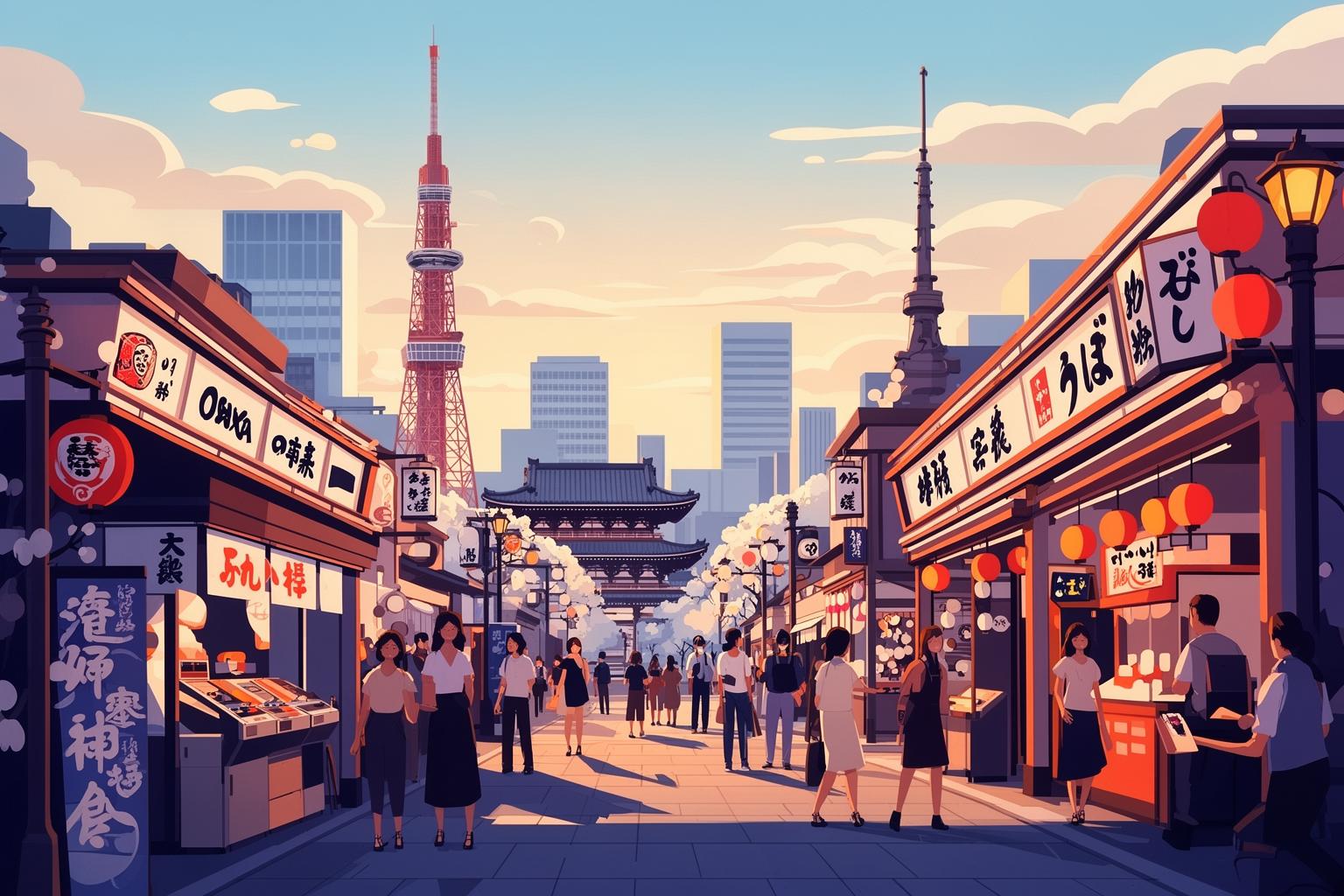
The day in the shotengai doesn’t begin with a quiet murmur; it starts with the metallic clatter of shutters. Around 9 a.m., a chorus of rolling metal shutters resonates along the covered street. It’s the neighborhood’s alarm clock. Immediately, the atmosphere shifts. The fresh, cool morning air quickly blends with the essential aromas of Japanese life: the earthy steam rising from the tofu maker’s vat, the warm, yeasty scent wafting from the local bakery, the sharp, savory hint of dashi stock simmering in a small udon shop. This is the first wave.
Shortly after, the regulars arrive. Elderly women with their personal shopping trolleys, affectionately known as “baba-carts,” embark on their daily journey. They move with practiced efficiency, their routes ingrained like muscle memory. They don’t just shop; they engage in a ritual of connection. They stop at the fishmonger, not only to examine the day’s catch but also to ask about his daughter’s piano recital. They visit the greengrocer, who knows they prefer their daikon radishes with plenty of leaves for pickling. There’s an exchange, a friendly banter that blends transaction with social interaction.
The Human Algorithm
This is the fundamental difference you sense immediately. A Tokyo supermarket is a temple of efficiency. You enter, scan, and leave. It’s clean, quiet, and impersonal. An Osaka shotengai is a haven of human-centered commerce. The vendors are the original algorithm. The butcher doesn’t just sell you pork; he notices you eyeing the loin and says, “Ah, making tonkatsu tonight? This cut is perfect, and I’ll add a little extra fat for flavor.” The woman selling pickled vegetables, or tsukemono, lets you sample three different kinds before buying, providing a running commentary on which pairs best with rice and which suits sake better.
This isn’t merely good customer service; it’s a social contract. You’re not just buying a product; you’re buying from a person. You’re supporting a family, and in return, you receive expertise, quality, and a sense of belonging. For a foreigner navigating life here, this can be eye-opening. In a society that can often feel reserved, the shotengai offers a direct connection to the community. Learn the shopkeeper’s name, and suddenly you’re no longer just another face in the crowd.
The Midday Hum: Lunch, Errands, and the Social Hour
As noon nears, the rhythm of the shotengai shifts into high gear. The pace quickens, and the volume rises. This is the second wave. Salarymen in crisp shirts rush out from nearby offices, heading straight for the stalls selling bento boxes for 500 yen. The variety is astonishing—grilled mackerel, chicken karaage, tempura—all heaped high and sold with a speed rivaling a stock exchange floor. The air thickens with the sizzle of oil as croquette stands ramp up, serving golden-fried pockets of potato and meat that are the unofficial fuel of Osaka.
But it’s not just about food. The shotengai is a full ecosystem for daily life. Need a key cut? There’s a tiny locksmith’s stall nestled between a fruit stand and a pharmacy. Watch battery died? An elderly man at a small desk can fix it in five minutes. Searching for cheap yet sturdy socks? A family-run clothing store has been offering them for fifty years. Everything needed for life’s practical demands is here, crammed into one walkable corridor. It’s the opposite of a mega-mall, where you must navigate multiple floors and long hallways. Here, life’s necessities are conveniently, chaotically, and accessibly intertwined.
The Symphony of the Street
Close your eyes and just listen. The soundscape is distinctly Osakan. You’ll hear the lively call of the vendors: “Irasshai! Irasshai! Yasui yo!” (Welcome! Welcome! It’s cheap!). It’s not a polite, monotone greeting; it’s a full-throated, rhythmic chant crafted to cut through the noise. You’ll catch the jingle of the lottery ticket seller’s bell, the rumble of a delivery scooter weaving carefully through pedestrian traffic, and above it all, the steady murmur of conversation. Neighbors bump into each other and pause for ten-minute chats right in the middle of the walkway, unaware of the disruption to foot traffic. No one gets upset. This is expected. The shotengai is a social space first and a commercial one second.
The Afternoon Shift: From School Bells to Dinner Prep
Around 3 p.m., the third wave arrives, and the shotengai’s demographic shifts entirely. The sound of school bells fades away, replaced by the high-pitched chatter and laughter of children. They flock to the arcade in small groups, school bags bouncing on their backs. Their destination is the dagashiya, the nostalgic candy stores offering a universe of quirky and delightful snacks at pocket-money prices. For a few hundred yen, they can stock up on sour candies, savory rice crackers, and chocolate cigarettes. This is their territory, their after-school ritual.
At the same time, another group starts to arrive: parents and homemakers on their second trip of the day. This visit is for dinner. They’re not buying raw ingredients now. They head to the sozai-ya, the delis that serve as the secret weapon of the Osakan household. These shops overflow with shiny trays of prepared side dishes: simmered pumpkin, hijiki seaweed salad, grilled fish, potato salad, and every kind of tempura you can imagine. This is where Osaka’s renowned pragmatism shines. Why cook everything from scratch when you can purchase delicious, home-style dishes made by professionals? It’s not about laziness; it’s smart time management. This philosophy is captured by the local saying: kechi ya nai, kashikoi dake—it’s not stinginess, just cleverness.
A Culture of Practicality
This mindset is often misunderstood. Some might view it as cutting corners, but in Osaka, it’s considered a skillful allocation of resources. The city was built by merchants who prized efficiency and a good deal above all else. That spirit endures in the shotengai. You find fresh, high-quality food without the pretension or price tag of a department store food hall. You can put together a multi-course, nutritious dinner for your family by visiting three different stalls in five minutes. The shotengai is the ultimate life hack for busy urbanites, an institution centered on making daily life easier, cheaper, and more delicious.
The Evening Cool Down: Strolls, Standing Bars, and Closing Shutters
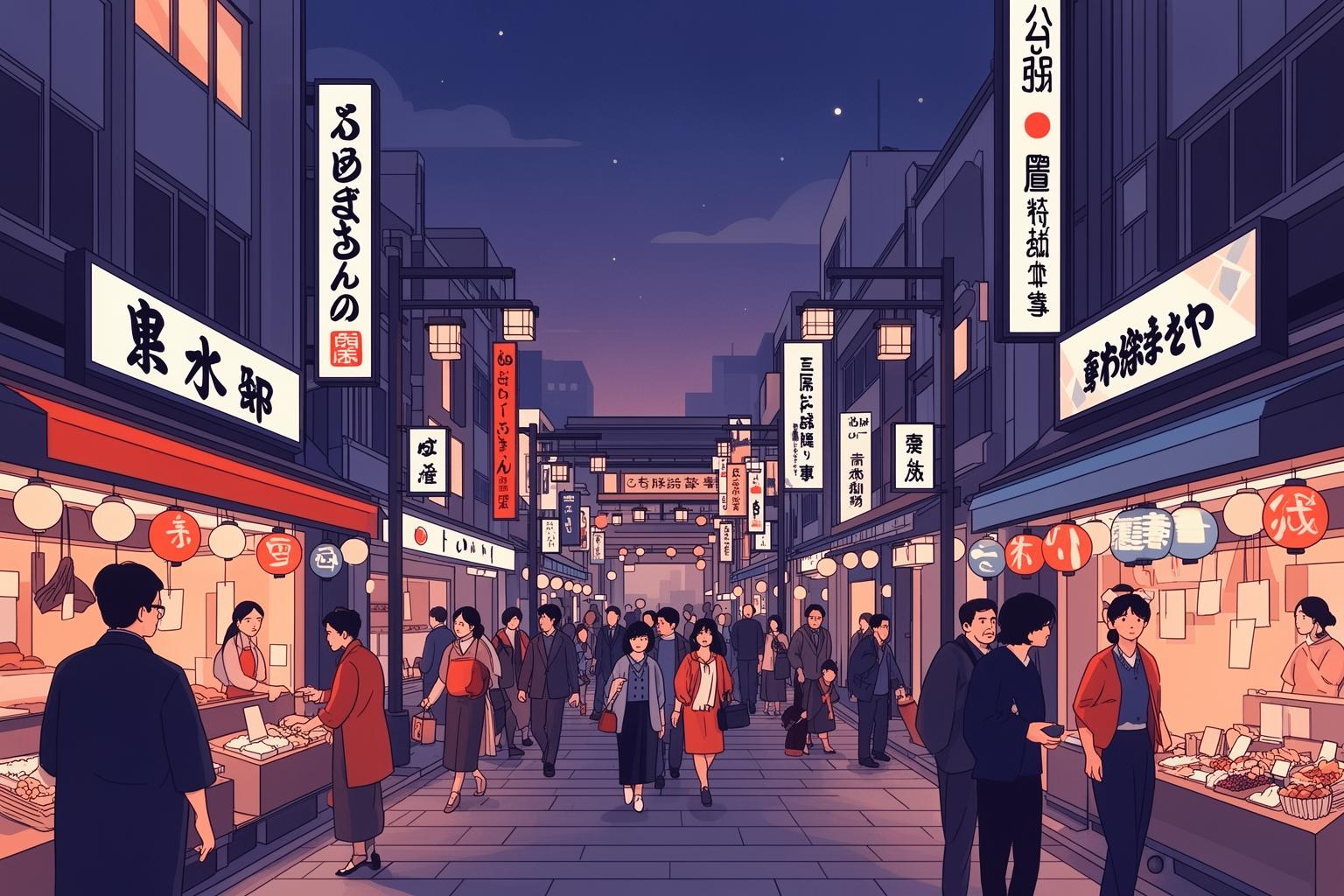
As dusk falls, the shotengai experiences its final transformation of the day. The bright, hectic energy of the afternoon mellows into a warmer, more intimate ambiance. The shutters of the greengrocers and butchers begin their metallic descent, marking the close of the business day. The crowds start to thin, and the cooler air carries the aroma of grilled yakitori and the subtle, sweet scent of sake from the small bars just beginning to open.
This is the fourth wave, the most relaxed of all. The arcade shifts from a marketplace to more of a promenade. Couples stroll hand-in-hand, office workers pause for a quick beer and chat at a tachinomi (standing bar), and elderly residents take their final walk before heading home. The tachinomi are unique spaces, often no larger than a walk-in closet, where strangers become friends over a few drinks and small plates. The barrier to entry is low—just walk in, order, and you’re part of the conversation. Here, unfiltered opinions and hearty laughter reveal the true local character.
The Arcade as a Sanctuary
Sheltered from rain and wind, the shotengai in the evening feels like a sanctuary. The harsh daytime lighting is replaced by the gentle glow of izakaya lanterns and warm shop window lights. It serves as a transitional space, a decompression chamber between the stresses of work and the calm of home. It’s a place to unwind, connect with the neighborhood on a more personal level, and remember that you belong to a community. Even as the last shutters close, the shotengai never seems completely asleep. It’s simply resting, gathering strength to do it all again tomorrow.
Beyond the Transaction: The Unspoken Rules of the Shotengai
To truly become part of shotengai life, you need to recognize that it’s guided by unspoken rules that value human connection over cold efficiency. It’s a dance, and mastering the steps is essential to feeling at home here.
The Currency of Greeting
The key rule is to acknowledge the vendors’ humanity. A simple “Konnichiwa” (Hello) when you approach a stall and “Arigatou gozaimasu” (Thank you) when you leave are the bare essentials. But to fully embrace the shotengai experience, you use the local currency. If you become a regular, the shopkeeper might greet you with a warm “Maido!” (a classic Osaka merchant greeting, roughly meaning “Thanks for your continued patronage”). Responding with a smile and an “Otsukaresama desu” (a versatile phrase acknowledging their hard work) transforms the entire relationship. You’ve shifted from customer to neighbor.
It’s a Conversation, Not an Order
Unlike a supermarket where you silently fill your cart, shopping in a shotengai is a conversation. Don’t simply point. Ask questions. “Kyou no osusume wa nan desu ka?” (What’s your recommendation today?). The vendor’s face will brighten. They’ll proudly explain which fish is freshest, which vegetables are in season, and the best way to prepare them. This interaction adds value. You’re not just buying food; you’re receiving generations of expertise for free.
Understanding the Osaka Style
Osaka people are straightforward. A shopkeeper might come across as gruff or loud compared to the ultra-polite staff in a Tokyo department store. Don’t confuse this with rudeness. It’s about efficiency and honesty. They’re not there to bow and scrape; they’re there to sell you quality goods at a fair price. The warmth is present but wrapped in a practical, no-nonsense attitude. Once they recognize you, that gruffness softens into familiar, teasing affection. They might joke about whether you’re buying too much or too little. This is a sign of acceptance. They see you.
Why the Shotengai Endures in Osaka
In many areas of Japan, shotengai are struggling, turning into “shutter streets” as populations age and younger generations gravitate toward large, impersonal shopping malls. However, in Osaka, they remain persistently vibrant and alive. Why? Because the shotengai is the living embodiment of the city’s spirit.
Osaka has always been a city of merchants, valuing pragmatism, community, and a good bargain. The shotengai is an ecosystem perfectly suited to this mindset. It nurtures close-knit communities where people look out for one another. It keeps money circulating within the local economy, supporting small family businesses rather than faceless corporations. It’s a deeply democratic space, open to everyone regardless of age or income.
Living in Osaka means rethinking your concept of urban life. It’s not about seeking the most convenient chain store. It’s about finding “your” tofu maker, “your” butcher, “your” vegetable stand. It’s about building a web of genuine, human relationships that anchor you to the neighborhood. The shotengai isn’t just a place to shop; it’s a daily affirmation that you belong to something greater than yourself. It’s the steady, dependable, and life-affirming heartbeat of Osaka.