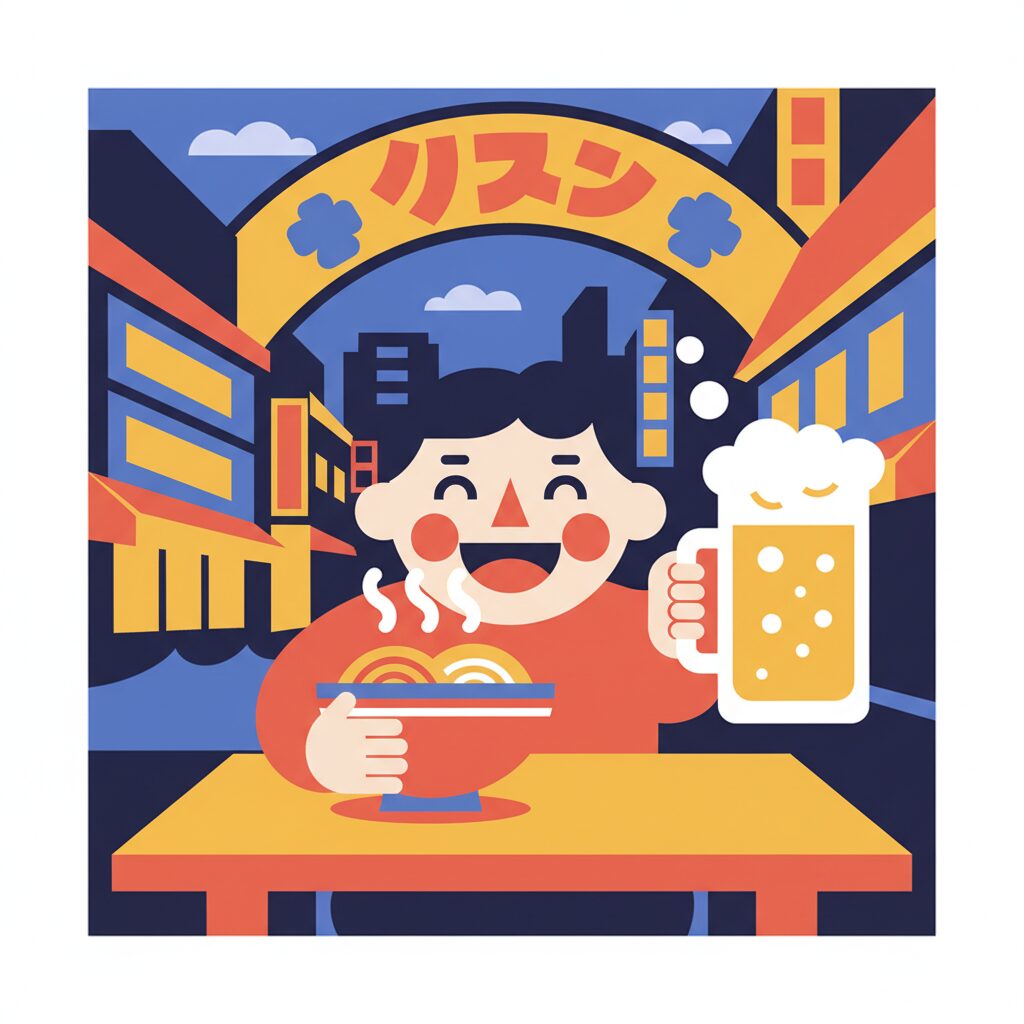
Alright, let’s talk about that moment. You know the one. The izakaya lights have dimmed, the last round of highballs has been drained, and a warm, fuzzy feeling has settled over your group. Laughter echoes down a Shotengai arcade, the neon signs of Dotonbori are starting to blur just a little, and the air is thick with the promise of one last adventure before heading home. In Tokyo, this moment is often a frantic dash, a quick slurp of tonkotsu ramen before catching the last Yamanote Line train. It’s efficient, it’s predictable, it’s… done. But here in Osaka? Oh, honey, the night is just getting started. This is the moment an Osakan turns to the group, a glint in their eye, and asks the most important question of the evening: “Sate, shime dou suru?” (Alright, what are we doing for the shime?)
For so many foreigners, the word “shime” is synonymous with ramen. It’s the default, the easy answer, the one you see in every travel guide. And sure, people here eat ramen. But to think that’s the end of the story is to fundamentally misunderstand Osaka. The shime, the final act of a night of drinking and eating, isn’t just a meal. It’s a ritual. It’s the closing argument in a delicious debate, a final, emphatic statement on what it means to live in Japan’s kitchen. It’s a cultural cornerstone built on the city’s unshakeable philosophy of kuidaore—to eat until you drop. Here, the end of the night isn’t about refueling for the commute home; it’s about creating one last, perfect food memory. It’s a complex, passionate, and wildly diverse world that says more about this city than any guidebook ever could. So, push that image of a simple noodle bowl aside. Let’s dive into the real, soulful, and sometimes surprising world of the Osakan shime.
In the midst of savoring every bite of the shime, you might also enjoy delving into Osaka boke and tsukkomi culture to uncover the city’s playful, offbeat humor that runs parallel to its culinary traditions.
What ‘Shime’ Really Means in Osaka
The word shime (締め) itself means “to close” or “to tighten.” Literally, it refers to the meal that ends the evening. But the nuance is key. In Tokyo, I always felt shime represented punctuation—a full stop at the end of a sentence. The night is done. Period. The emphasis is on wrapping things up, often hurried by the notoriously strict last train timetable. The aim is to eat something quickly and catch that train. The food serves a practical purpose.
In Osaka, however, shime feels more like an ellipsis… a lingering thought, suggesting the night continues. The evening doesn’t end simply because the bar closes. It concludes when the group collectively agrees they’ve reached peak culinary satisfaction. Missing the last train isn’t a disaster; it’s an opportunity. It means having more hours to seek out the perfect final dish without haste. The food is not an epilogue; it’s the last chapter. This subtle change in perspective transforms everything, turning a practical act into a passionate quest. Choosing the shime becomes a serious, high-stakes discussion. It reflects the group’s mood, the weather, the season, and above all, a profound respect for the art of eating well at any hour.
This is the kuidaore spirit at its purest. It’s not about extravagant, costly meals. It’s about the unyielding pursuit of deliciousness in every form, anytime. An Osakan’s appetite doesn’t clock out at midnight. If there’s a more perfect, more satisfying, more soul-nourishing dish available at 2 AM, they will find it. The shime embodies this passionate devotion to flavor.
Beyond the Bowl: The Osakan Shime Pantheon
So if it’s not always ramen, then what is it? Welcome to the pantheon of late-night Osakan cuisine. This isn’t a fixed menu; it’s a dynamic, evolving ecosystem of flavors, each with its own story and a devoted following. It’s a culinary world shaped by history, geography, and an insatiable appetite.
The Udon Underground: Kasu Udon’s Smoky Embrace
This is the one. If you want to experience the soul of South Osaka after dark, you seek out a tiny, steamy shop serving kasu udon. Forget everything you think you know about udon. This isn’t the clean, elegant bowl you find in department store restaurants. This is something far more primal and profound. The star ingredient is aburakasu, small, chewy nuggets of deep-fried beef intestine. Historically, it was a way to use every part of the animal—a testament to the Osakan spirit of mottainai (no waste). Yet through culinary alchemy, this humble ingredient transforms a simple bowl of noodles into a smoky, savory masterpiece.
The broth, usually a light, kelp-based dashi, absorbs the deep, rich, almost bacony flavor of the rehydrated kasu. The noodles are soft and yielding, the perfect carrier for the complex soup. Each bite is a journey: the initial salty warmth of the dashi, followed by the intense umami blast of the kasu, which has a texture that’s a delightful mix of chewy and tender. It’s hearty without being heavy, deeply satisfying in a way that settles the stomach and warms you from within. This isn’t a dish you’ll find in tourist brochures. It’s a local secret, a password into the city’s authentic food culture. Choosing kasu udon for your shime says you’re not just a visitor; you’re part of it.
The Rice Rebellion: Ochazuke and Zosui
At the other end of the spectrum lies the gentle, comforting world of rice. After a night of fried foods, rich sauces, and plenty of beer or sake, sometimes your body craves something simple and restorative. Enter ochazuke and zosui. These are the choices of the seasoned professional, the drinker who knows tomorrow morning will come eventually.
Ochazuke is elegance in simplicity: a bowl of pristine white rice topped with ingredients like grilled salmon flakes, tart umeboshi (pickled plum), or savory mentaiko (spicy cod roe), with hot green tea or a delicate dashi broth poured over. It’s light, rehydrating, and incredibly soothing — the culinary equivalent of a warm blanket. You’ll find izakayas that take their ochazuke seriously, offering an entire menu of toppings and priding themselves on the quality of their dashi. It’s a sophisticated shime that feels both cleansing and satisfying.
Zosui is its more rustic cousin, a savory rice porridge that speaks to Osaka’s practical heart. If your night included a nabe (hot pot), making zosui is the essential final step. The leftover broth, now enriched with the flavors of meats, seafood, and vegetables cooked in it, is used to gently simmer rice until it breaks down into a thick, delicious porridge, often tied together with a swirl of beaten egg. It’s the ultimate act of culinary recycling, transforming leftovers into a final, glorious dish. It’s a communal, comforting end to a shared meal, a true taste of home-style Osakan hospitality.
The Sweet Surrender: The Rise of the Shime Parfait
Now, for a complete twist. In recent years, a new contender has entered the shime arena, and it’s a game-changer: the shime parfait (締めのパフェ). Yes, a giant, elaborate ice cream parfait to close a night of savory indulgence. It might sound surprising, but think about it. After hours of salty, fried, and umami-rich flavors, your palate craves a reset. A blast of cold, sweet, fruity creaminess is the perfect counterpoint. This trend began in Hokkaido but has been wholeheartedly embraced by Osaka’s trend-conscious youth.
Stroll through Shinsaibashi or around Umeda late at night, and you’ll find chic cafes and dessert bars filled with groups of friends who have just come from an izakaya, happily diving into towering creations of glass and glory. We’re talking intricate layers of sponge cake, fresh fruit, homemade gelato, crunchy granola, delicate tuiles, and mountains of whipped cream. It’s a feast for the eyes and a thrilling shock to the system in the best way. This isn’t just a dessert; it’s a statement. It shows a shift in nightlife culture, where the night might end with a long, deep conversation over something beautiful and sweet rather than a quick, savory bite. It proves that Osaka’s food scene is constantly evolving, always ready to adopt and refine new ways to delight.
The Unexpected Champion: Takoyaki and Ikayaki
Never forget where you are. This is Osaka, the undisputed capital of konamon (flour-based culture). Sometimes, the perfect shime isn’t found in a restaurant at all. It’s from a street stall, served in a flimsy plastic boat, eaten standing on the sidewalk under the moonlight. Grabbing a fresh, scorching-hot plate of takoyaki on the way home is a quintessential Osaka experience.
What makes Osaka takoyaki magical is its texture. Unlike the uniformly cakey versions you might find elsewhere, the authentic local style is all about contrast: a thin, slightly crispy outer shell that yields to a molten, almost liquid, dashi-infused batter inside, encasing a tender piece of octopus. Topped with tangy brown sauce, a drizzle of Japanese mayo, a sprinkle of green aonori, and a flurry of dancing katsuobushi flakes, it’s an explosion of flavor and texture in every bite. It’s fast, affordable, ridiculously delicious, and a shime that connects you directly to the city’s street-level pulse. It’s an unpretentious, democratic choice that’s pure, unfiltered Osaka.
The Shime Mindset: Why It’s Different Here
Understanding the Osakan shime goes beyond merely knowing the menu. It involves grasping the underlying psychology and the unwritten rules that shape the end of the night. It offers insight into the Osakan character, which often contrasts sharply with that of its eastern rival, Tokyo.
It’s Not About the Last Train
This is perhaps the greatest difference. In Tokyo, the entire social tempo of the evening is governed by the looming last train. Meetings, dinners, and drinking parties are frequently planned backward from that final departure. The shime often falls victim to this logistical constraint. In Osaka, there’s a much more relaxed, almost defiant attitude toward public transport schedules. People willingly and knowingly choose to miss the last train if the conversation is engaging and another dish is tempting. The cost of a taxi home is weighed against the value of the experience, and more often than not, the experience prevails. This fosters a sense of freedom and spontaneity. The night flows naturally, culminating in a shime that feels intentional, not obligatory.
A Conversation, Not a Refuel
The shime is where genuine conversation unfolds. By this stage of the evening, formalities have faded. The tatemae (public facade) drops away, allowing the honne (true feelings) to emerge. Over a shared bowl of zosui or while enjoying takoyaki, colleagues turn into friends, and friends become family. The food serves as a social catalyst, providing a focal point that encourages more intimate and sincere dialogue. The discussion over what to eat for shime itself forms part of the bonding process. It’s a low-pressure negotiation that reveals people’s tastes, preferences, and personalities. The meal isn’t a quiet, solitary refueling; it’s a lively, communal, and deeply meaningful final act.
The Cost-Performance Obsession
To truly appreciate Osaka, you need to understand the idea of cospa, or cost-performance. Osakans are famously shrewd consumers. They despise paying high prices for mediocre quality. It’s not about being cheap; it’s about demanding value. A genuine Osakan takes great pride in discovering places described as “yasui noni, mecha umai” (cheap, but incredibly delicious). The shime is the ultimate proof of this principle. After a night spent on drinks and food, the final dish must provide maximum satisfaction at a reasonable cost. An 800-yen bowl of kasu udon that warms the soul or a 500-yen tray of takoyaki crafted with expert skill earns far more respect than a 2,000-yen bowl of mediocre, tourist-trap ramen. This relentless quest for value is embedded deeply in the city’s culture, making its late-night food scene one of the best and most affordable in the world.
How to Do Shime Like a Local

So, you’re ready to embrace the true shime culture. How do you do it right? It’s easier than you might think. First and foremost, trust the experts. If you’re with Osakan friends or colleagues, let them take the lead. When someone recommends a kasu udon spot tucked away in a Namba back alley, your response should be an enthusiastic “yes.” They’re offering you a window into their world.
Keep an open mind. Resist the temptation to stick with what’s familiar. If you’ve never tried ochazuke after drinking, give it a go. If the idea of a shime parfait sounds unusual, try it anyway. The diversity of shime is its greatest charm, and exploring it is a delicious way to deepen your connection to the city. Each choice reveals a different story about Osaka life.
Lastly, understand what the invitation truly means. When someone asks, “Shime dou suru?”, they’re not just checking if you’re hungry. They’re asking, “Do you want to keep this wonderful night going?” They’re inviting you to join a beloved local ritual, to share one more conversation, one more laugh, and one more perfect bite. Saying yes is about more than just food; it’s about accepting an invitation into the warm, generous, and endlessly flavorful heart of Osaka.
This is the authentic taste of the city. It’s not found in a Michelin guide or on a food blogger’s top ten list. It’s found in the steam rising from a bowl of udon at 3 AM, in shared laughter over a plate of takoyaki, in that final, perfect mouthful that brings a beautiful night to its satisfying close. The shime in Osaka is more than just the end of the night; it’s proof that in this city, the pursuit of deliciousness truly never sleeps.