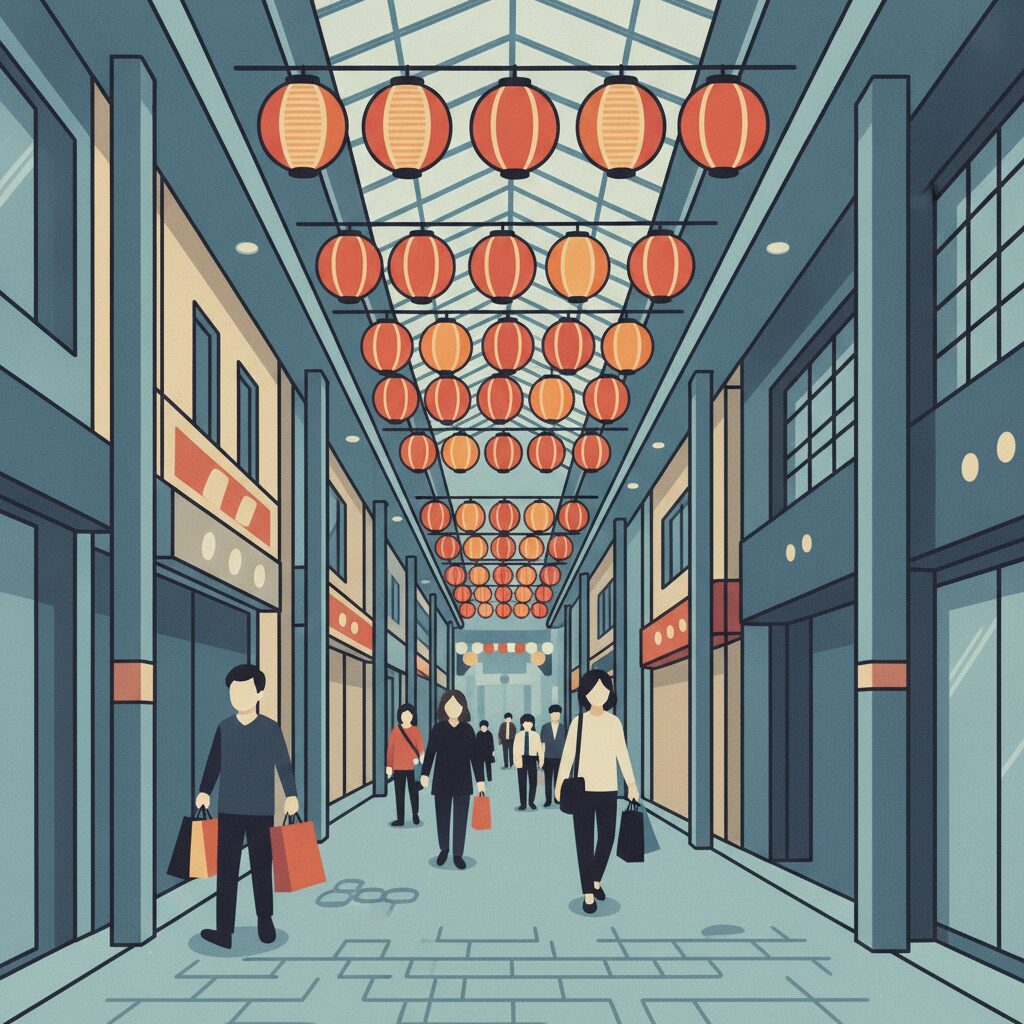
When you first arrive in Osaka, you see them everywhere. These long, covered streets, sometimes stretching for kilometers, strung with lanterns and buzzing with a chaotic energy. They’re called ‘shotengai,’ or shopping arcades. Your first instinct, especially if you’ve spent time in Tokyo, might be to categorize them as quaint, slightly old-fashioned markets—a place to grab some cheap vegetables or see a nostalgic slice of Japan. That’s not wrong, but it’s like describing an ocean by saying it’s wet. It misses the entire point. The shotengai isn’t just a place where commerce happens; it’s the stage upon which the daily drama of Osaka life unfolds. It’s a community center, a social safety net, and the most tangible expression of the city’s soul. To understand the shotengai is to begin to understand the unwritten social contract of Osaka, a city that prizes human connection over polished formality. It’s where you’ll see the core differences between life here and the meticulously curated efficiency of Tokyo. This isn’t about sightseeing; it’s about seeing how the city breathes.
Discovering the city’s dynamic lifestyle involves uncovering how its cozy cafés orchestrate a unique blend of work and leisure, as seen in Osaka kissaten culture.
The Unspoken Language of the Arcade
Step into a shining department store in Tokyo, and you’re greeted by a chorus of perfectly enunciated, almost robotic shouts of ‘Irasshaimase!’ (Welcome!). It’s polite, professional, and entirely impersonal. Now, visit a family-run fishmonger at the Kuromon Ichiba or a pickle stall in the Tenjinbashisuji Shotengai. The greeting you’ll most likely hear is a warm, familiar ‘Maido!’
This single word embodies a world of difference. ‘Maido,’ literally meaning ‘every time,’ is short for ‘Maido ooki ni,’ which translates to ‘Thank you for your continued patronage.’ It’s not a welcome to a stranger; rather, it’s an acknowledgment of an ongoing relationship. It says, ‘I see you, I remember you, and I appreciate your returning.’ This is the language at the heart of the shotengai. It’s a place built on repeat customers and familiar faces, not transient tourist transactions. Here, loyalty flows both ways.
The Art of the ‘Okan’ and the ‘Omake’
The guardians of this world are the shopkeepers themselves, often a husband-and-wife team or the formidable ‘okan’—the quintessential Osaka mom or auntie figure. The okan isn’t just a sales clerk; she’s a neighborhood institution. She’s the one who will notice you hesitating between two daikon radishes and voluntarily tell you which is better for oden and which is best grated. She’ll recall that you bought mackerel last week and ask how you prepared it. This isn’t a sales tactic; it’s genuine, heartfelt curiosity. It’s how community is woven, one ordinary conversation at a time.
This relationship is cemented by the charming tradition of ‘omake,’ meaning ‘a little extra.’ Buy three croquettes, and the okan might slip a fourth in your bag with a wink, saying, ‘This one’s on the house!’ Ask for 500 grams of minced pork, and the butcher will likely hand you 520 grams, wave it off, and say it’s close enough. Omake isn’t a discount. It’s a gesture—a tangible expression of the ‘Maido!’ greeting. It means, ‘I value our connection more than these few extra yen.’ Expecting omake at a sterile, pre-packaged Tokyo supermarket is unimaginable. In an Osaka shotengai, it’s the lubricant that keeps the social machinery running smoothly.
A Conversation, Not a Confrontation
Foreigners often hear that you can ‘haggle’ in Osaka and misunderstand the concept. They picture a tense negotiation like in a foreign bazaar. This is a deep misinterpretation of the culture. In the shotengai, it’s less about bargaining and more a playful, conversational dance. It’s a performance. You don’t demand a lower price; instead, you might say admiringly, ‘These strawberries are beautiful, but a bit beyond my budget today…’ This invites the shopkeeper to possibly offer a smaller box or suggest a cheaper variety.
The typical phrase is ‘Chotto makete?’ meaning ‘Can you give me a little discount?’ It’s asked with a smile, not a demand. The usual reply is a dramatic ‘Moukaran wa!’ meaning ‘I’m not making any profit!’ while likely already knocking a few yen off the price. This exchange is a form of communication. It’s about connection. The aim isn’t simply to save 50 yen; it’s to engage in a human interaction that reinforces your place in the neighborhood. Simply paying the sticker price and leaving can feel, in this context, oddly cold.
More Than a Market: The Shotengai as a Social Safety Net
In the vast anonymity of a megacity, the shotengai serves as a grounding point. It acts as an informal, low-tech system of surveillance and support for the community—something a 24-hour convenience store, despite its convenience, can never match.
The Neighborhood’s Eyes and Ears
The fruit seller knows which local children should be heading straight home from school and which ones tend to loiter. The tofu maker is aware that the elderly Mrs. Tanaka upstairs in the apartment buys her fresh tofu every morning precisely at 9 AM. If she doesn’t appear for two days, he doesn’t just lose a sale; he notices her absence. He might ask a neighbor or even knock on her door to make sure she’s okay. This isn’t nosiness; it reflects a deep-rooted sense of collective responsibility.
Living in Osaka, you quickly come to see your local shotengai as a map of your life. The shopkeepers become silent witnesses to your journey. They notice when you first move in, looking lost. They observe your first date, nervously buying flowers. They see you carrying groceries for two, and later, perhaps pushing a stroller. They might not know your name, but they recognize your face and your story. This fosters a powerful, unspoken sense of belonging and security that’s increasingly rare in modern urban life. In Tokyo, you might live in an apartment for years without ever speaking to your neighbors. In Osaka, the shotengai ensures you’re never truly invisible.
A Calendar for the Community
The shotengai also reflects the rhythm of the year in a way a supermarket calendar cannot. The entire arcade transforms with the seasons. In summer, colorful Tanabata streamers hang from the ceilings, and the air is filled with the scent of grilled squid from a festival stall. In autumn, signs advertising seasonal mushrooms and freshly harvested rice appear. In the hectic days leading up to New Year’s, the arcades swarm with people buying special ‘osechi’ ingredients, while vendors’ shouts reach a feverish pitch. These events aren’t designed for tourists—they are for the residents. They are shared experiences that unite the community, reminding everyone they are part of something bigger than their own household.
The Osaka vs. Tokyo Divide, Seen Through a Shopping Bag
The shotengai perhaps best exemplifies the fundamental philosophical differences between Osaka and Tokyo. It represents a clash between practicality and presentation, between the personable and the professional.
Practicality Over Polish
Shopping in many areas of Tokyo is an aesthetic experience. The food in a ‘depachika‘ (department store basement food hall) is displayed with the precision of fine jewelry. The lighting is perfect, the packaging is exquisite, and the prices reflect this. It’s about the joy of purchasing and the status of the brand.
Osaka’s shotengai culture runs on a different principle: ‘genkin shobai’ (cash business) and obtaining the best possible value for your money. The lighting is often harsh fluorescent tubes. Signs are handwritten, sometimes with errors. The displays are piled high and chaotic. It’s not visually appealing, but it is brutally effective. An Osaka shopper is less impressed by an elegant bag and more by getting an extra onion for free. This reflects the core of the Osaka mindset: deep-rooted pragmatism and an aversion to pretension. Why pay for fancy marketing when you can pay for more, and better, products? This attitude goes beyond shopping to how Osakans approach business and life overall: be direct, be fair, and don’t waste money on things that don’t matter.
Where Your Voice Matters More Than Your Status
In Tokyo, the customer is often regarded as ‘o-kyaku-sama,’ an honored guest, almost a deity. Service is impeccable, deferential, and maintains a respectful distance. You are served efficiently and flawlessly, but not necessarily engaged as an individual.
In an Osaka shotengai, you are expected to be an active participant, not a passive consumer. You are encouraged to speak up. You can ask, ‘Is this fish good for grilling today?’ and you’ll receive an honest, probably detailed, answer. Silence or withdrawal can be misread as aloofness or dissatisfaction. The interaction is human-to-human. The okan behind the counter sees you as an equal, another person just trying to make it through the day. This can be startling for those accustomed to the formal service culture elsewhere in Japan, but it is the foundation of Osaka’s famed ‘friendliness.’ It’s not superficial warmth; it’s a robust, sometimes loud, and deeply engaged friendliness that requires you to bring your own personality along.
How to Live the Shotengai Life
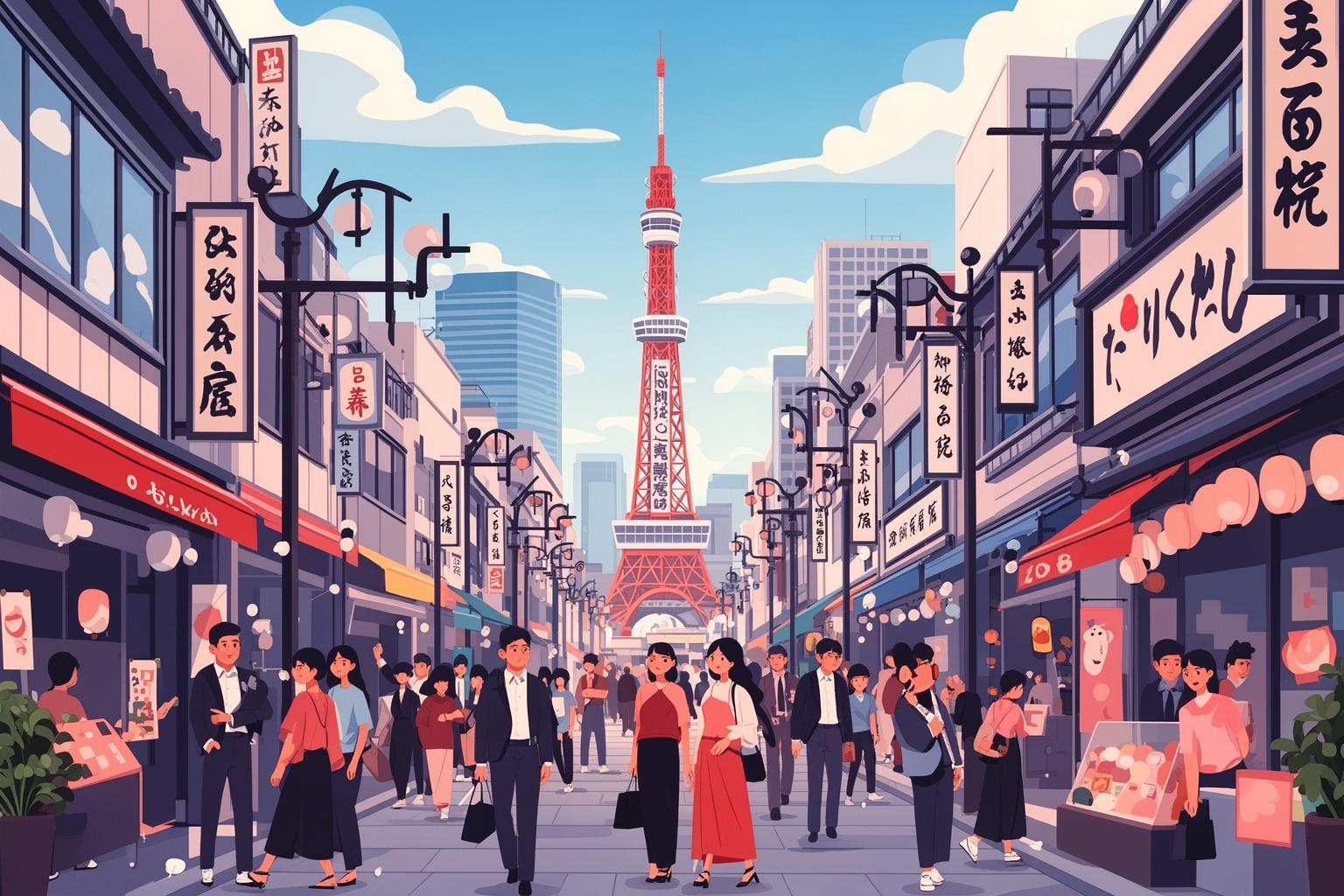
For any foreigner settling in Osaka, your local shotengai serves as your guide to the city’s culture. It’s a place to practice your Japanese, meet your neighbors, and start feeling like a resident rather than just a visitor.
Find Your Go-To Spots
Avoid doing all your shopping in one spot. The shotengai consists of various specialists. Make an effort to discover your butcher, your tofu vendor, your vegetable seller. Become a regular. Visit on the same day each week. Let them recognize your face. Initially, the exchanges may be brief, but over time, they will deepen. Soon, they’ll start setting aside a particularly good cut of meat for you or let you know when the sweetest tomatoes arrive. This is how you become part of the community. You create your own little village within the expanse of the city.
Embrace the Beautiful Chaos
The shotengai can feel overwhelming. Bicycles wind through the crowds, vendors shout, and there’s a constant flow of people. There’s an unwritten code of conduct. Typically, you keep to the left, but the main rule is to stay alert. Don’t stop abruptly in the middle of the pathway to check your phone. Keep moving with the flow. It’s not the orderly march of a Tokyo sidewalk; it’s a living, flowing river of people. You just need to learn how to swim with the current.
Ultimately, the shotengai is a microcosm of Osaka itself. It’s somewhat loud, a bit chaotic, and not always focused on appearances. But it’s full of life, deeply loyal, and holds a strong sense of community that is both practical and meaningful. It’s where you can buy a fish and, in the same moment, feel a little less alone in the world. And in a foreign country, that means more than any discount.