
Walk into any Osaka neighborhood, and you’ll find its beating heart: the shotengai. These covered shopping arcades are more than just a place to buy groceries; they’re the vibrant, noisy, and wonderfully chaotic arteries of daily life. For many foreigners, the idea of living in an apartment right above this bustling scene seems like the ultimate authentic experience. Imagine stepping out of your door and directly into a world of sizzling takoyaki, friendly vendors shouting greetings, and the smell of freshly baked bread. It’s a romantic picture, a photogenic slice of life that seems to promise total immersion in the local culture. But what’s the reality behind the retro signs and colorful banners? Is it a convenient urban dream or a sensory overload nightmare? Living in a shotengai isn’t just about location; it’s a full-on lifestyle choice, one that plugs you directly into the unique, unfiltered energy of Osaka. Before you sign that lease, let’s pull back the curtain and talk about the convenience, the community, and the clamor of calling a shopping arcade your home.
Exploring how everyday exchanges can be as vibrant as the shotengai itself, you might find that a closer look at Osaka’s local conversational style offers intriguing insights into this dynamic urban culture.
The Allure of the Arcade: Why Shotengai Living Seems Like a Dream
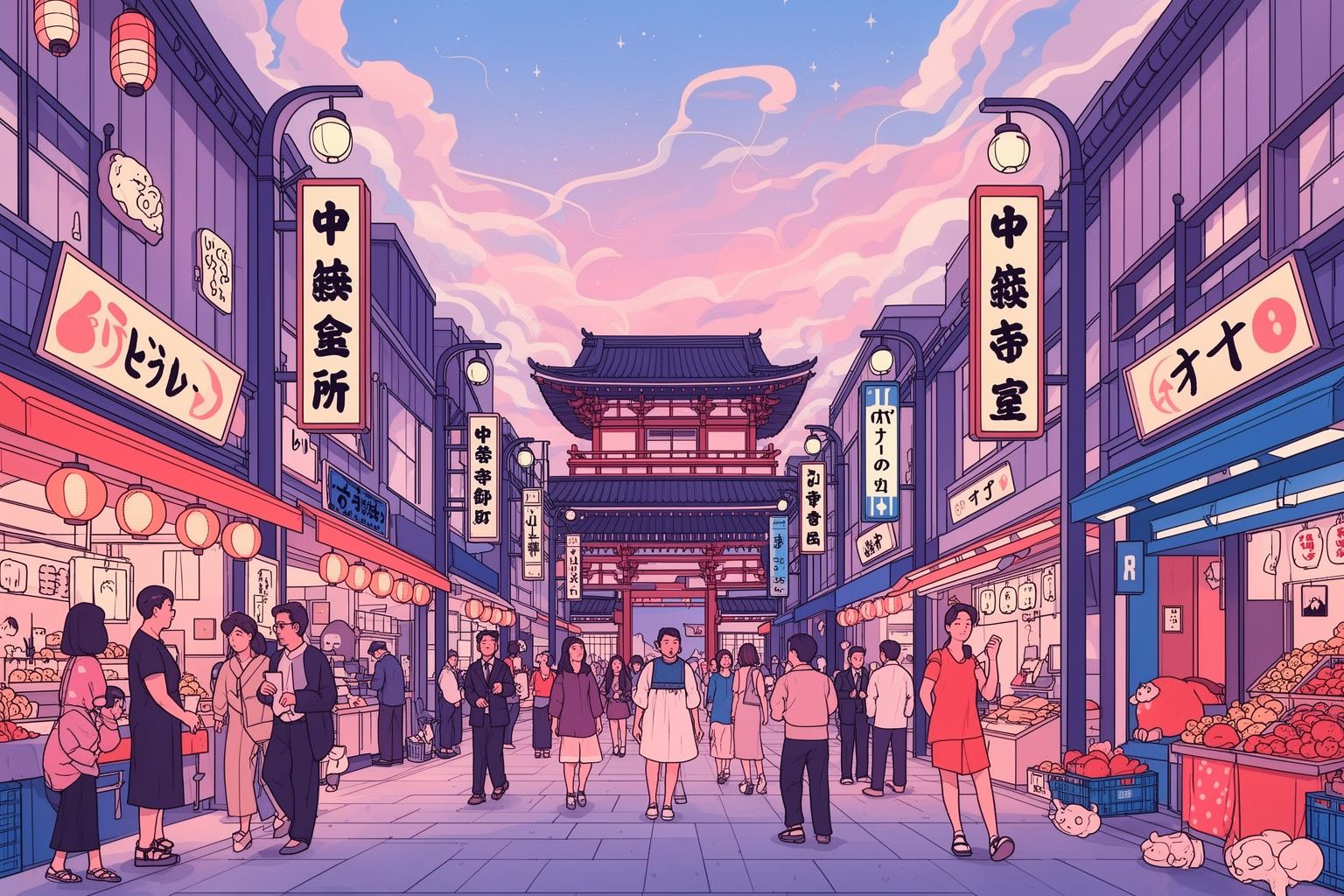
It’s easy to get caught up in the romance of it all. The allure of shotengai living is strong, tapping into a longing for a life that is both convenient and deeply connected to a real sense of place. It offers a refreshing contrast to the sterile, impersonal vibe of modern high-rises, providing a direct connection to the heart of the city.
Convenience on a Whole New Level
First and foremost, let’s focus on practicality, a value highly regarded by Osaka residents. Living in a shotengai represents the height of convenience. No more weekly grocery trips by car. Your everyday routine turns into a series of short, enjoyable walks. Need a daikon radish for dinner? The greengrocer is just thirty seconds away. Out of soy sauce? The small dry goods shop has you covered. Craving freshly fried croquettes for a snack? Just follow your nose. Your refrigerator essentially becomes the entire arcade.
This is especially true on rainy days, common during Japan’s typhoon season. While others struggle with flipped umbrellas in the wind, you’re strolling comfortably under the arcade’s protective roof, completely dry. This practical benefit reflects the Osakan mentality of avoiding unnecessary trouble. Why complicate life more than needed? Everything required for daily life—the butcher, the baker, the tofu maker, the drugstore, the 100-yen shop—is right at your doorstep. It simplifies your life in a way that feels both remarkably efficient and charmingly old-fashioned.
A Portal to Old-School Osaka
Beyond the obvious convenience, there’s the unmistakable nostalgic charm. Shotengai are living museums. They burst with sights, sounds, and smells that no modern supermarket can match. You have retro hand-painted signs, hanging plastic food models, the unique jingle of each store playing on repeat, and the rhythmic calls of vendors promoting their daily specials. It feels authentic, rich in texture, and deeply human.
This commitment to preserving local character is a source of pride for Osaka, often quietly contrasting with Tokyo’s endless cycle of demolition and rebuilding. While Tokyo has its share of charming shotengai, they sometimes feel more like tourist attractions. In Osaka, even the most famous arcades like Tenjinbashisuji remain fiercely focused on serving the local community first. Living there means you’re not merely watching this culture—you’re woven into its everyday life, a participant in its ongoing story.
Waking Up to Reality: The Not-So-Glamorous Side
That romanticized image of shotengai life? It’s real, but it only tells part of the story. The very elements that make the arcade lively and charming during the day can turn into sources of constant irritation when you’re trying to unwind at home. The reality check can be harsh, noisy, and sometimes, a bit smelly.
The Symphony of Sounds You Can’t Turn Off
Noise is unquestionably the biggest challenge. This isn’t the distant, ambient murmur of city traffic. It’s a close, invasive, and relentless mix of sounds. Your alarm clock might as well be the deafening clang of metal shop shutters rolling up at seven in the morning. If you work from home, your daily soundtrack will be a blend of cheerful store jingles, the high-pitched chatter of shoppers, and the butcher’s cleaver chopping on the block. It never really stops.
In the evening, as the shops shut and you’re hoping for quiet, the izakayas and bars start coming alive. You’ll hear laughter and loud conversations spilling onto the street. Then, in the early pre-dawn hours, delivery trucks arrive, their beeping reverse alarms and rumbling engines providing an unwelcome wake-up call. For light sleepers or anyone seeking a peaceful refuge, this constant noise assault can be overwhelming. You don’t just live near the action; you live inside the speaker.
The Aromatic Overload
Your nose is on the front line as well. The delicious aroma of grilled eel from the unagi shop is wonderful when you’re hungry, less so when it’s permanently woven into your freshly washed laundry hanging out to dry. The sensory experience is mixed. One moment, you enjoy the sweet fragrance of a bakery; the next, you’re hit by the pungent scent of the fishmonger’s morning delivery or the heavy, oily haze from a tempura restaurant.
These smells define the shotengai’s character, but they don’t respect boundaries. They drift through open windows and infiltrate your living space. What’s appetizing on the street can become overpowering when it’s the constant scent inside your apartment. You have to be ready for your home to smell like whatever the daily special happens to be downstairs.
Pests and Practicalities
Let’s be frank: where there’s a dense concentration of food businesses, pests follow. Cockroaches, or gokiburi, are a fact of life in Japan, but their presence can be more noticeable in the older buildings common in a shotengai. Meticulous cleaning helps, but it’s an uphill battle against the environment. Additionally, the buildings themselves tend to be older, often featuring quirky layouts, poor insulation, and occasional maintenance surprises. Garbage collection can also be quite public, with designated spots in the arcade that can get messy and attract crows. These aren’t insurmountable issues, but they are practical realities that contrast sharply with the pristine image many hold of life in Japan.
The Unspoken Contract: Becoming Part of the Community
Perhaps the biggest misconception foreigners have about living in a shotengai is the social aspect. You’re not merely renting an apartment; you’re implicitly agreeing to become part of a community. Anonymity, which is a luxury in most urban settings, simply doesn’t exist here. This aspect can be either the best or the worst part of the experience, depending entirely on your personality.
You’re Not Just a Renter, You’re a Neighbor
In a typical apartment building, you might never know your neighbors’ names. In a shotengai, the shopkeepers will recognize your face within a week. They’ll understand your routine, know what you like to buy, greet you every time you pass by, and notice when you don’t. You become a kao-najimi, a familiar face, which is an important form of social currency in Osaka.
This ongoing, low-level social interaction is key to the Osaka experience. The city is built on relationships, even casual ones. A quick chat with the fruit stand owner is more than just polite—it’s part of the transaction. For an introvert or anyone wanting to run errands quietly, this can feel overwhelming. But for those eager to practice Japanese and connect with locals, it offers a valuable opportunity.
The Osaka “Osekkai” Factor
This community spirit often appears as osekkai, a uniquely Japanese idea that roughly translates to being nosy or meddlesome, usually out of genuine concern. The elderly woman at the tea shop might ask if you’re eating enough vegetables. The butcher may inquire about your love life. This level of personal interest can feel intrusive to those from more individualistic cultures.
However, the osekkai culture also serves as a strong safety net. If you fall ill, someone will notice your absence and check on you. If you’re struggling with your groceries, someone will step in to help. It’s the village mentality adapted to an urban environment. Foreigners often mistake this for an invasion of privacy, but in Osaka, it’s a sign that you’ve been embraced. People care enough to be involved in your life. It’s a trade-off: you sacrifice some privacy but gain a support system.
Navigating the Local Rules
To be part of this ecosystem, you must follow its unwritten rules. There’s an expectation that you’ll support local shops. If shopkeepers see you frequently returning with bags from the large supermarket outside the arcade, it can be perceived as a minor betrayal. You’re also expected to engage, at least passively, in the arcade’s life—helping with festival decorations, keeping your storefront tidy, and generally being a responsible and visible member of the community. This demands a level of social involvement that goes far beyond just paying your rent on time.
Shotengai Showdown: How Osaka’s Arcades Differ
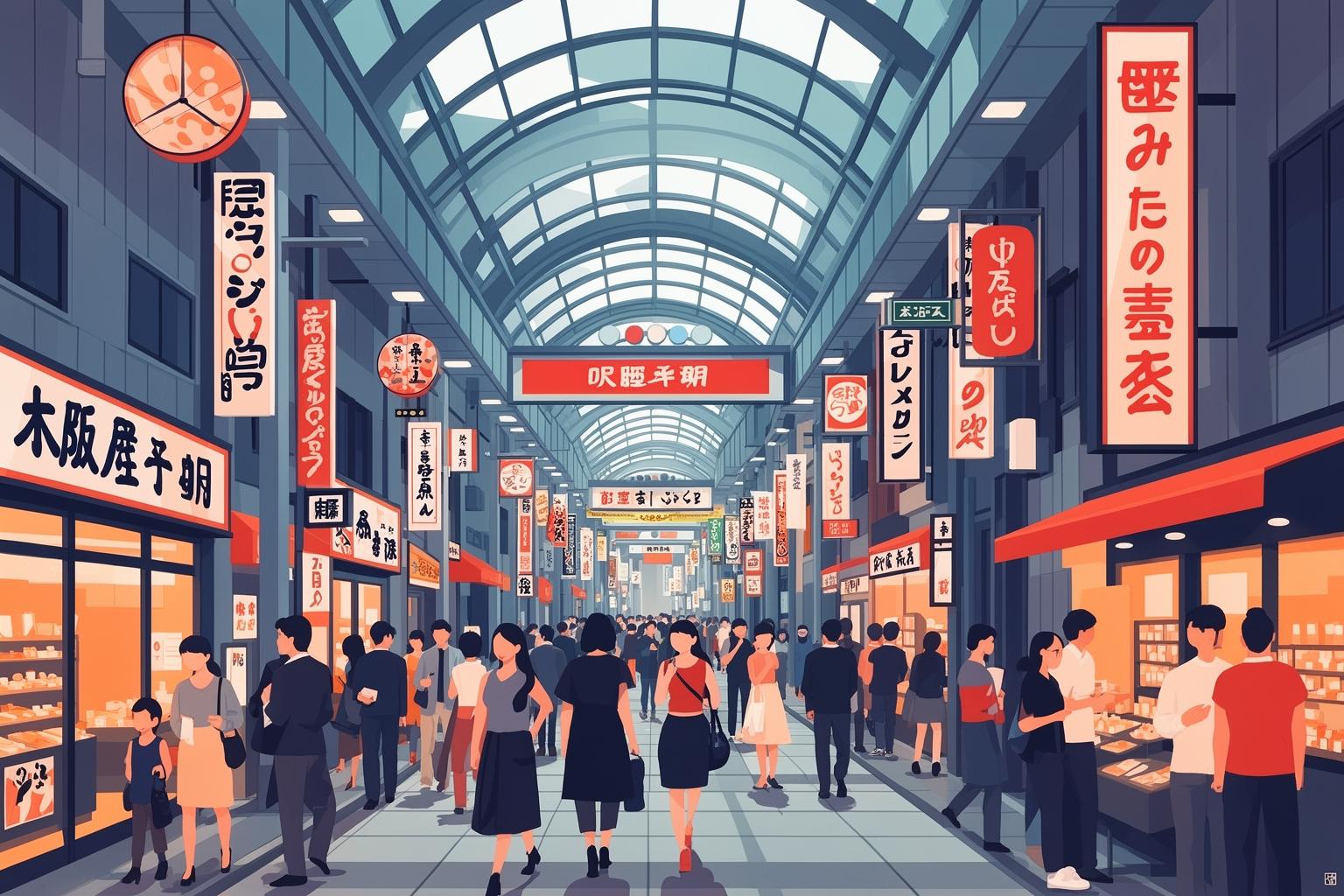
While shotengai can be found throughout Japan, those in Osaka have a unique character. They capture the city’s spirit as a merchant hub—pragmatic, lively, and unapologetically commercial. Grasping this distinction is essential to truly understanding Osaka itself.
Tokyo’s Polish vs. Osaka’s Grit
Many of Tokyo’s famous shotengai, such as Yanaka Ginza or Ameya Yokocho, carry a certain refinement. They tend to be cleaner, more orderly, and cater significantly to tourists seeking a nostalgic, old-Japan vibe. While charming, they can sometimes feel like carefully curated displays.
In contrast, Osaka’s shotengai thrive on the rawness of everyday life. They are noisier, more cluttered, and decidedly chaotic. The emphasis is squarely on akinai—conducting business. Prices are boldly handwritten on large signs, and the atmosphere is more assertive and transactional. This isn’t a staged performance for visitors; it’s the authentic, high-volume, low-margin economy of the city at work. It reflects Osaka’s legacy as Japan’s kitchen, a place where commerce is swift, straightforward, and personal.
The Human Element is Everything
At its core, an Osaka shotengai is defined by its people. The classic image of the friendly, quick-witted Osakan is vividly evident here. Shopkeepers engage in spirited banter with customers, haggling becomes entertainment, and the practice of omake—adding a little extra for free—is a common way to foster customer loyalty.
This dynamic is often misunderstood by foreigners regarding Osaka’s famed “friendliness.” It’s more than mere politeness; it’s an interactive, often transactional form of communication. The bond between shopkeeper and customer is personal and strong. They’ll remember you, tease you, and look out for you. In Tokyo, service tends to be impeccably polite yet distant. In Osaka, service is a conversation, a negotiation, a relationship. Living in a shotengai means being at the heart of this lively exchange every single day.
The Final Verdict: Is Shotengai Living Right for You?
So, after balancing the amazing convenience against the constant noise, and the warm sense of community against the loss of privacy, should you take the plunge? The answer depends entirely on what you’re seeking in your life in Osaka.
This lifestyle is ideal for someone who thrives on energy and human connection. If you’re an extrovert, a student of Japanese culture, or someone who dislikes the sterile quiet of a modern apartment, you might fall in love with shotengai living. If your idea of home is a place that feels vibrant and connected to the city’s rhythms, and you view constant interaction as a benefit rather than a drawback, then this is your urban haven. It’s for those who prioritize community over quiet and convenience over personal space.
On the other hand, you should definitely avoid it if you’re a light sleeper, work from home requiring deep focus, or highly value your privacy. If you need to unwind in a calm, quiet setting after a long day, the shotengai offers no refuge. It’s a place of ongoing stimulation. If the thought of making small talk every time you leave your door feels exhausting, or if you prefer the clean, predictable, and anonymous environment of a newer building, then shotengai life will likely be stressful and frustrating.
Choosing to live in a shotengai is more than just a housing choice. It’s an acceptance of a certain kind of chaos, a trade-off exchanging personal peace for lively community life. It’s a commitment to living openly, to being a familiar face in your neighborhood, and to experiencing Osaka in its most concentrated and unfiltered form. For the right person, it’s more than a place to live—it’s the only way to live.