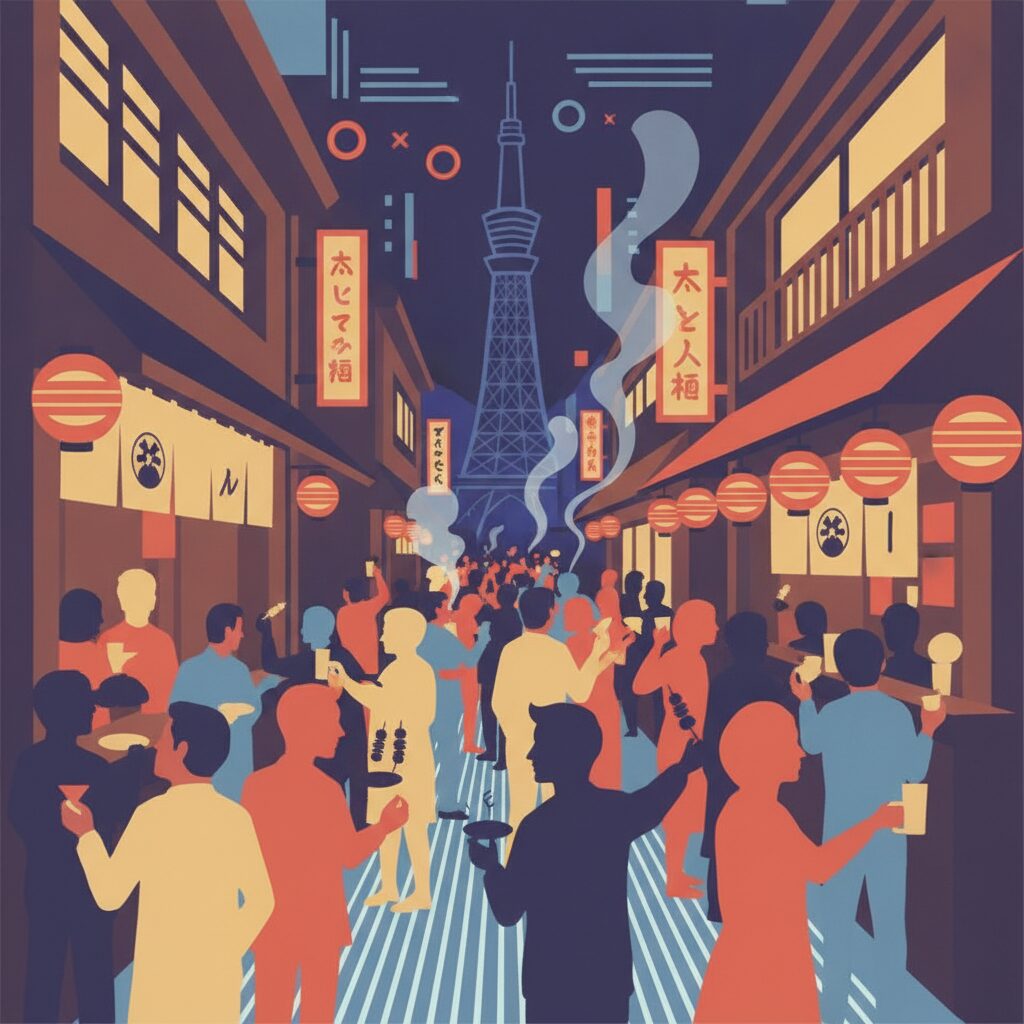
Walk down any covered shopping arcade in Osaka after five in the evening, past the bright lights of the drugstores and the clatter of the pachinko parlors, and you’ll feel a different kind of energy pulling at the edges of the crowd. It’s a low, warm hum of conversation, the clinking of glasses, the scent of grilled meat and simmering dashi broth. Peer through a fogged-up window or a parted noren curtain, and you’ll see it: a tiny room, packed with people standing shoulder-to-shoulder, drinking, eating, and laughing. This is the tachinomi, the standing bar, and it is far more than just a place to grab a cheap drink. It’s a living, breathing microcosm of Osaka’s soul, a place where the city’s core philosophies of pragmatism, value, and direct human connection are on full display. Forget the quiet, partitioned izakayas where conversations are hushed and interactions are carefully managed. The tachinomi is a social experiment in perpetual motion, a performance of community played out every night. To understand the tachinomi is to understand the rhythm of daily life in Osaka, a city that prizes efficiency but craves connection, that values a good deal but values a good story even more. It’s a world that can seem intimidating from the outside, a chaotic puzzle of unspoken rules. But once you understand the logic, stepping inside feels less like entering a bar and more like coming home. To begin your journey, orient yourself in a place where this culture thrives, the vibrant labyrinth of Tenma.
Dive deeper into Osaka’s vibrant culture by exploring the nuances of local humor that reveal the city’s unique blend of wit and everyday resilience.
Why Stand? The Philosophy of the Tachinomi
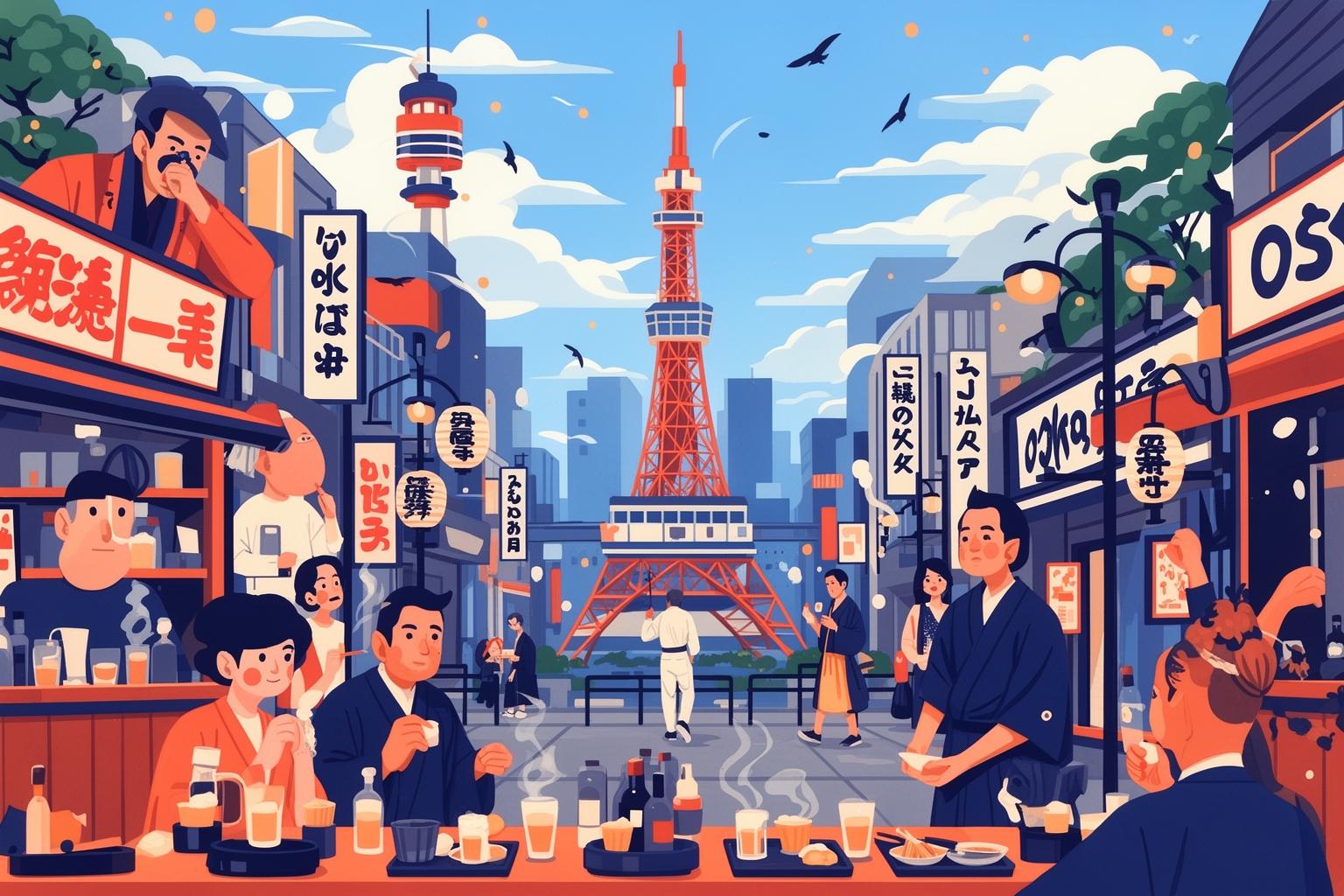
The first question that comes to mind is the most obvious: why would anyone choose to stand when they could sit? The answer goes straight to the core of the Osakan mindset. In Tokyo, an evening out is often a planned affair, with a reservation made and a specific destination to occupy for a set time. In Osaka, life is more fluid and spontaneous. The absence of chairs in a tachinomi isn’t just about saving costs, though it serves that purpose as well. It’s a deliberate design choice that promotes transience and movement. You’re not supposed to get comfortable; you’re meant to drop in, have a drink, enjoy some tasty food, chat with a neighbor, and then move on.
More Than Just No Chairs: The Osaka Mindset
Osaka thrives on the principle of hayai, yasui, umai—fast, cheap, and delicious. This isn’t merely a slogan for beef bowl chains; it’s a way of life. A tachinomi perfectly embodies this philosophy. The service is incredibly fast because the space is small and the staff are experts in efficiency. Prices are low because turnover is rapid. And the food is surprisingly and wonderfully delicious, as an Osakan won’t tolerate paying for something subpar, no matter how affordable. The concept of kospa, or cost performance, is paramount. An Osakan doesn’t want to be overcharged, but they also refuse to compromise on quality. A tachinomi balances these demands perfectly, providing a quick social reset after work, a pause before heading home. It’s a dynamic space where the crowd is constantly changing; the person you’re talking to now might be gone within fifteen minutes, replaced by someone new. This creates a low-pressure, high-energy social atmosphere that is distinctly Osaka.
The Economics of the Lean
From a business perspective—something Osakans, with their merchant city heritage, understand instinctively—removing chairs doubles or even triples the capacity of a small storefront. More customers cycling through translates into higher sales per square meter. This efficiency benefits the customer directly through remarkably low prices. A large beer might cost 400 yen, a highball 300 yen, and a plate of simmered beef tendon, or doteyaki, only 250 yen. This isn’t about being ‘cheap’ in a negative sense; it’s a mutual understanding between owner and customer. The owner offers outstanding value, and the customer honors the system by not overstaying. You drink, eat, enjoy, and then make way for the next guest. It’s a beautiful, unwritten social contract rooted in mutual benefit. This sharply contrasts with the table-charge culture common in many Tokyo venues, where you pay simply for sitting down. In an Osaka tachinomi, you pay only for what you consume—honestly, directly, and transparently.
The Unspoken Rules: Your Guide to Fitting In
Entering a crowded tachinomi for the first time can feel like merging onto a highway during rush hour. There are no hosts or waiting lists—just the crowd and the counter. Yet, within the chaos lies a logic, a set of unspoken rules that govern the space.
Entering the Space: Reading the Room
Your first step is with your eyes, not your feet. Pause at the entrance and scan the counter for gaps. Is there a small space between two people? Is someone gathering their things to leave? You’re searching for an opening in the human wall. Once you spot it, move with intention. Offer a slight nod to those you’ll be squeezing past and quietly say “sumimasen” (excuse me), then slide into your spot. It’s a subtle negotiation, a dance measured in millimeters. Confidence without aggression is key. Claim your space vertically—your territory is the width of your shoulders. Don’t spread your arms or place your bag on the counter; it belongs on the floor by your feet or, if you’re lucky, on one of the small hooks underneath. Make yourself compact, a respectful participant in the shared environment.
The Art of Ordering
After settling in, it’s time to order. The pace is brisk. Don’t expect a laminated menu with English translations. Often, the menu is handwritten on strips of paper pasted to the wall—a beautiful, chaotic mosaic of Japanese characters. If you can’t read it, don’t worry. Observe what your neighbors are eating. If something looks appealing, point and say “are, kudasai” (that one, please). Alternatively, ask the master for the “osusume,” the recommendation, which is often the best choice anyway. Being decisive is essential. When the staff makes eye contact, be ready—they’re juggling a dozen orders at once. A simple “Nama biru, hitotsu” (one draft beer) is an ideal start. Many tachinomi operate on a cash-on-delivery system known as kyasshu on. You’ll notice a small tray or basket in front of you. Place a 1000 yen or 5000 yen bill in it. When you order, the staff will take the exact amount and return your change immediately. This is the epitome of tachinomi efficiency—no waiting for the bill at the end, no complicated calculations. It keeps transactions swift and the pace flowing.
Personal Space is a Social Construct
In a tachinomi, the Western idea of personal space doesn’t exist. You’ll stand shoulder to shoulder, even back to back, with strangers. Your elbow might brush against the person next to you, and you’ll overhear every word of their conversation. This can feel overwhelming at first, but it’s precisely what fuels the social life of the tachinomi. This forced closeness is an icebreaker, quickly breaking down social barriers. It silently declares that for the next thirty minutes, you’re all part of a temporary, transient community. The physical proximity is a feature, not a flaw. It creates a sense of camaraderie and shared experience that you won’t find in a spacious, seated restaurant. It’s an embrace of the vibrant friction that defines city life.
The Social Scene: More Than Just a Drink
If you stand quietly at a tachinomi and only drink your beer, you’re missing the point. The alcohol serves simply as a social lubricant for the main attraction: conversation. The true product being offered here is human connection—fleeting, yet genuine.
The One-Meter Friendship
This is the charm of the tachinomi. Within the one-meter radius of your place at the counter, you are open to conversation, as is everyone else. An elderly man might lean over to ask where you’re from. A young couple might remark on the dish you ordered. An office worker could start venting about their boss, and you are expected to listen and empathize. This spontaneous interaction with strangers is the heartbeat of Osaka. It originates from the city’s history as a merchant center, where quickly building rapport and trust was vital for business. That skill has seeped into the social fabric. In Tokyo, initiating a conversation with a stranger at a bar can seem odd or even intrusive. In Osaka, it’s the norm. It’s not about being intrusive; it’s about recognizing a shared humanity. You might discover a local festival, receive a recommendation for a ramen spot, or find yourself engaged in a lively debate about the Hanshin Tigers baseball team. These are “one-meter friendships,” brief moments that brighten your day and then fade as people drift away, leaving you with a story to tell.
The Role of the Taisho (Master)
At the heart of this bustling social scene stands the taisho, the bar’s master. They are not just a cook and bartender; they are a conductor, therapist, and social director all rolled into one. They remember regular customers’ favorite drinks, know their stories, and skillfully manage the flow of the entire space. The taisho often acts as a connector, introducing one patron to another. They might say, “This person also enjoys that sake,” or “She’s visiting from your hometown.” They are the human hub linking all the spokes of the community. Watching a talented taisho at work is like watching a performance. With smooth efficiency, they take orders, pour drinks, prepare food, handle payment, and maintain several conversations simultaneously. They embody the ideal Osaka spirit: outwardly efficient and straightforward, yet filled with warmth and humor beneath the surface.
Knowing When to Leave
Just as important as knowing how to join in is knowing when to leave. A tachinomi is not a place to settle in for the night. The general guideline is to have two or three drinks and a few small plates. You should sense the rhythm of the spot. Once you’ve finished your last bite and sip, it’s time to go. Lingering over an empty glass is poor etiquette, as it takes up space someone else is waiting for. The departure is simple and graceful. If it’s a cash-on-delivery place, you gather your belongings and leave. Otherwise, catch the taisho’s eye and say “o-kaikei, onegaishimasu” (the check, please). As you head out, a hearty “gochisousama deshita” (thank you for the meal) is essential. It shows respect for the food, service, and experience. You slip quietly back into the night, leaving the spot you’ve warmed for the next guest to enjoy.
Beyond the Beer: Navigating Different Tachinomi Styles
While the fundamental principles remain unchanged, tachinomi is far from a monolith. The format has shown remarkable adaptability, evolving to cater to diverse tastes and neighborhoods while remaining true to its standing-room-only origins.
The Classic Showa-Era Dive
This represents the quintessential tachinomi. You’ll find them concentrated in gritty, atmospheric neighborhoods like Kyobashi, Tenma, and the districts around Shinsekai. The vibe is pure Showa-era nostalgia: worn wooden counters darkened by decades of spilled beer, hand-painted signs with peeling paint, and a small television in the corner always tuned to a baseball game or variety show. The air is heavy with the scent of cigarette smoke and simmering oden. The clientele tends to be older—day laborers, retired men, and local shop owners. The menu is simple and hearty: sashimi, grilled fish, fried skewers, and the ever-present doteyaki. These spots aren’t stylish, but they’re deeply authentic—community living rooms and repositories of local history and character.
The Modern Evolution: Wine, Sake, and Craft Beer
In trendier neighborhoods like Fukushima, Ura-Namba, and Kitashinchi, a new style of tachinomi has taken root. These standing bars cater to a new generation. They might focus on craft beer from across Japan, curated selections of natural wines, or premium sake paired with exquisite small plates. The decor is more contemporary, the lighting improved, and the crowd younger and more diverse. You’ll see young professionals, creatives, and couples on dates. Still, the core DNA remains intact. The space stays tight, the prices remain reasonable for the quality offered, and the atmosphere continues to encourage mingling and conversation. These modern tachinomi demonstrate that the standing bar concept is not a thing of the past but a flexible format thriving because it fulfills a basic urban need for affordable, high-quality, social experiences.
What Foreigners Often Get Wrong
Living in Osaka, I often hear fellow non-Japanese residents share a few common misconceptions about tachinomi. The first is that they’re merely cheap, dirty bars for old men. This completely misses the point. Tachinomi are about value and community, not just price. The food at many of these ‘dives’ often surpasses the quality of more expensive, tourist-focused restaurants. The second misconception is that the physical closeness feels uncomfortable or rude. It’s vital to see this as a social tool. The lack of space is exactly what makes conversation so easy and natural—it’s an invitation to connect. Finally, some perceive the service as brusque or impatient. This is a classic misunderstanding of cultural norms. The direct, fast-paced service is not rudeness; it’s a form of respect—respect for the customer’s time and for everyone else waiting. It’s a language of efficiency, and once you learn to understand it, you recognize it as a kind of grace.