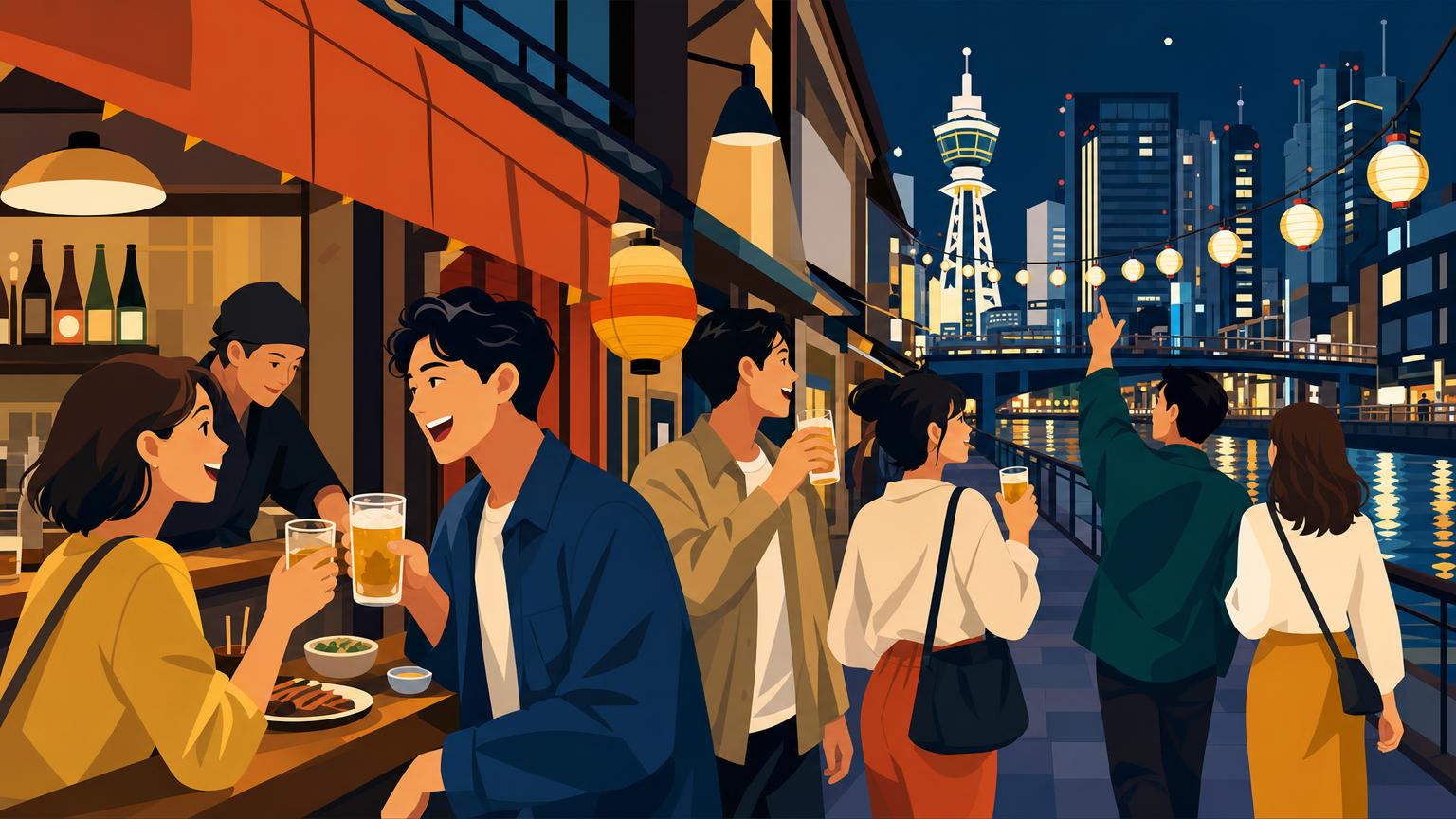
Step out of the sleek, hyper-modern train stations of Tokyo, and you might feel like you have arrived in a polished, untouchable future. Step out of the loop line at Kyobashi or Tenma in Osaka, and you realize you have arrived in the beating, unpolished, incredibly human heart of Japan. As a travel writer with a background in fashion and art, I have spent countless long vacations exploring street corners around the world, analyzing how cities breathe after the sun goes down. What I have found in Osaka is something entirely unique. This is a city that does not hide its flaws behind frosted glass. It embraces them, spills a drink on them, and laughs about them with a stranger.
Foreigners who move to Osaka or consider setting up their lives here often arrive with a suitcase full of preconceptions about Japanese culture. You read the guidebooks. You hear about the silent trains, the meticulous politeness, the rigid social hierarchies, and the concept of keeping your true feelings hidden away. Then you walk into a standing bar in Osaka, and someone you have never met bumps your shoulder, compliments your jacket, asks how much you paid for it, and offers you a skewer of grilled beef intestine. The cultural whiplash is real, and it is entirely by design. Osaka operates on a different frequency. This is a merchant city, built on trade, hustle, and the absolute necessity of reading the room and closing the deal. In Osaka, communication is currency, and nowhere is that currency exchanged more freely than during a night of hashigozake.
Hashigozake literally translates to ladder drinking. It is the fine art of bar hopping, but treating it simply as a pub crawl does a massive disservice to the cultural weight it carries. Climbing the ladder means moving from a brightly lit izakaya for your first beer, to a cramped standing bar for highballs and fried skewers, and finally to a dimly lit snack bar where an eccentric owner pours whiskey while someone sings a melancholy ballad on a retro karaoke machine. It is an exploration of space, sociology, and stamina. To understand hashigozake is to understand the very fabric of daily life in Osaka. This guide is not about pointing you to the most expensive cocktails or the most highly rated tourist spots. It is about equipping you with the mindset, the street smarts, and the cultural context to navigate the deep, authentic nightlife of Osaka like a true local.
Why Osaka is Japan’s Ultimate Bar Hopping Destination
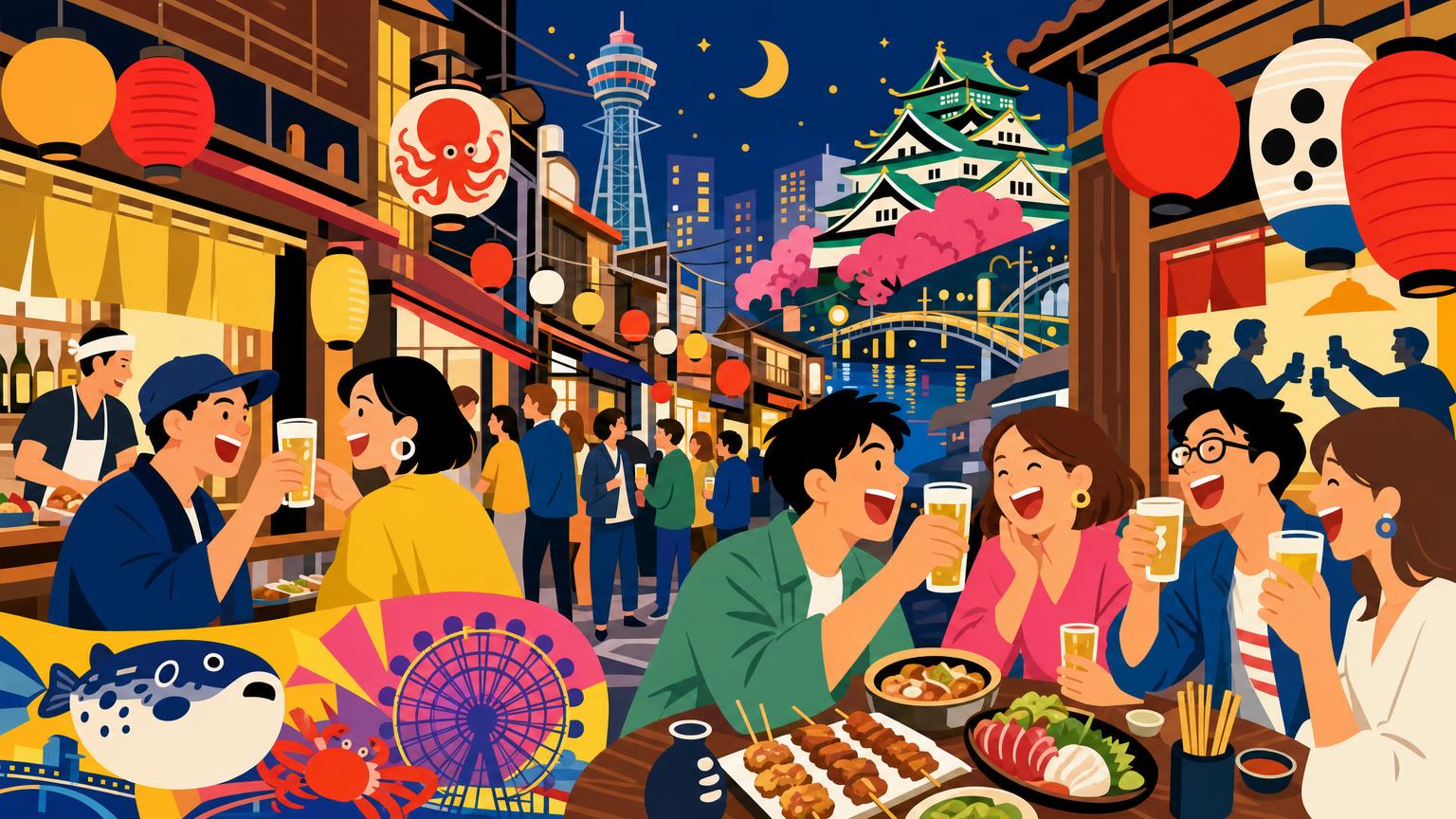
To understand why Osaka is widely regarded by locals as the epitome of Japanese drinking culture, you need to consider the psychology of its residents. Historically, Osaka, known as the nation’s kitchen, was a city of merchants rather than samurai. In a samurai city like Tokyo, status, rank, and maintaining a stoic demeanor were matters of survival. In a merchant city, however, a stoic facade means you sell nothing. You must be warm, humorous, and capable of breaking down barriers between yourself and the person across from you. This historical essence is deeply embedded in the contemporary nightlife scene.
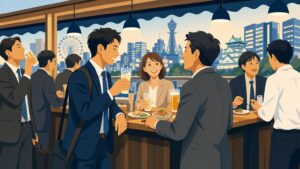
When you partake in hashigozake here, you join a remarkable social equalizer. The layout of Osaka’s drinking districts fosters this atmosphere. Venues are deliberately small, and spaces are incredibly cramped. You can’t avoid brushing elbows with the person beside you, which completely dissolves the personal bubble most Japanese carefully uphold during the day. This closeness compels interaction. It’s not unusual to see a local business executive in a tailored suit standing shoulder-to-shoulder with a broke university student and a foreign tourist, all sharing the same bottle of sake and laughing at the same awful joke told by the bartender.
Moreover, Osaka’s pricing model encourages movement. Unlike upscale lounges where you might linger for hours due to heavy seating charges, Osaka’s standing bars are built for quick turnover. You pop in, order a drink, eat a couple of kushikatsu skewers, pay your modest bill, and step back out into the neon-lit alley to find your next spot. This creates a vibrant, flowing energy throughout the streets. The entire city feels like one continuous, interconnected party with doors always open and an ongoing invitation to anyone willing to step inside.
Top Neighborhoods for Bar Hopping in Osaka
While tourist brochures immediately direct you to the iconic glowing Glico running man, the true essence of Osaka’s nightlife is found in the winding alleys just off the main streets. Each district boasts its own unique character, unspoken dress code, and distinct flavor of chaos.
Tenma: Deep Local Vibes and Retro Alleyways
Tenma is a masterpiece of organized chaos. Just one stop from the polished commercial center of Umeda, Tenma feels like stepping back into another era. This area is a sprawling network of narrow alleys branching off from the vast Tenjinbashisuji Shopping Street. What makes Tenma truly special is its raw, unvarnished authenticity. English menus are rare, and you won’t encounter the curated, Instagram-perfect aesthetics of modern Tokyo. Instead, lanterns light up plastic crates used as makeshift tables, the air thickens with the smoke of grilled chicken, and the Kansai dialect resonates off corrugated metal walls.
From the perspective of someone invested in the fusion of fashion and culture, Tenma is endlessly fascinating. The style here is fiercely utilitarian with a touch of vintage eccentricity. Older locals don baseball caps and worn workwear while sharing drinks with young creatives sporting thrifted oversized blazers and bold, clashing prints. There’s no pretension. My top tip for dressing in Tenma is to wear something you don’t mind smelling like charcoal and cigarette smoke the next day. Leave pristine designer bags at home, opt for a crossbody bag close to your chest, wear comfortable sneakers for standing on cement, and dress in layers to handle the swings between freezing alleys and sweltering, packed bars.
Kyobashi: The Working Class Heartbeat
If Tenma is a retro labyrinth, Kyobashi is the gritty, unapologetic engine room of Osaka. Traditionally a working-class area on the loop line’s east side, Kyobashi is renowned for its tachinomi, or standing bars. Drinking here begins long before dusk. It’s common to see night shift workers, retirees, and local characters knocking back cheap shochu as early as ten in the morning.
Kyobashi reveals much about the Osakan mindset. Value is paramount here. Fancy glassware and imported craft spirits hold little appeal; instead, people seek good food, strong drinks, and fair prices. The atmosphere is boisterous and refreshingly unpolished. To a foreigner, Kyobashi can initially feel intimidating due to its strong local vibe. Patrons look tough, bars appear weathered, and the ambiance is loud. Yet, this is where Osaka’s famed warmth shines brightest. Walk into a standing bar in Kyobashi, order a drink, and greet them with even one word in Japanese and a smile—the tough exterior melts immediately. You’ll likely be bought a drink, grilled about where you’re from, and offered a share of their food.
Ura-Namba: Authentic Izakayas and Standing Bars
Heading south, Ura-Namba—meaning hidden or behind Namba—has evolved over the past decade from a quiet, slightly rundown district into Osaka’s modern culinary hotspot. Ura-Namba elegantly bridges the gritty authenticity of Kyobashi and the youthful trendiness of the city center.
Bars here often hide behind nondescript entrances, up narrow staircases, or inside multi-story buildings that seem abandoned from outside. Ura-Namba is celebrated for its exceptional food quality. Standing bars serve dishes rivaling high-end restaurants, from carefully sourced sashimi to innovative Italian-Japanese fusion. This is the go-to neighborhood to impress someone with your local knowledge. It attracts local office workers and stylish young people who want top-quality food without formal dining tension. Exploring Ura-Namba requires a spirit of adventure, as the best venues seldom advertise loudly.
Amemura (American Village): Trendy Spots and Karaoke
Amemura is Osaka’s rebellious teenager. Known as the youth culture, streetwear, and imported fashion hub, its nightlife pulses with vibrant, restless energy. Daytime revolves around vintage clothing stores and record shops; by night, Amemura transforms into a playground of hip-hop clubs, quirky dive bars, and countless karaoke spots.
For expats or young travelers, Amemura is highly accessible. Thanks to its cultural ties to Western fashion and music, bar owners and patrons are well accustomed to international visitors. You’ll find reggae bars, punk rock venues, and art spaces doubling as drinking spots. Fashion here is aggressive, experimental, and loud. It’s the ideal place for hashigozake, if you’re aiming for a high-energy night culminating in belting out songs in a neon-lit karaoke room at 4 a.m.
Dotonbori and Shinsaibashi: Neon Lights and Lively Pubs
No Osaka nightlife guide is complete without Dotonbori and the neighboring Shinsaibashi area. This iconic scene is defined by giant mechanical crab signs, sprawling riverfronts, and crowds aplenty. While locals often avoid Dotonbori’s main tourist-filled streets for serious drinking, just one or two streets away, alleys hold hidden gems.
The key to navigating Dotonbori is filtering out the noise. Skip the massive, brightly lit restaurants with menu-touting hosts. Instead, seek out narrow alleys known as roji. Hozenji Yokocho is a prime example—a stone-paved alley that feels worlds apart from the neon chaos nearby. Here, you’ll find quiet, refined bars offering exceptional whiskey and delicate Japanese tapas. Shinsaibashi also has numerous multi-tenant buildings where taking an elevator to a random floor might reveal a tiny, specialized cocktail bar seating only five.
Finding the Best Foreigner-Friendly Bars in Osaka
A common concern for non-Japanese residents and visitors is the fear of entering a bar and being turned away. You may have heard stories about places with signs saying Japanese Only or receiving a cold reception upon stepping inside. It is important to understand the psychology behind this, as it is rarely motivated by malice or xenophobia. In most cases, a hesitant bar owner is simply anxious about the language barrier. They worry they won’t be able to explain the menu, understand dietary restrictions, or provide the high level of hospitality that Japanese culture expects if communication is difficult.
Osaka, however, is notably more welcoming than other cities. The secret to finding foreigner-friendly spots lies in spotting visual cues. Bars with glass fronts or open doors where patrons are visible tend to be much more laid-back than those hidden behind heavy wooden sliding doors. Look for English menus written on chalkboards outside. Even more important is bringing the right attitude. In Osaka, a bright smile, a cheerful konbanwa upon entering, and a willingness to use translation apps or point to other people’s food can make a huge difference. When you show that you are relaxed and eager to try, the owners will immediately feel at ease as well.
Organized Pub Crawl Tours vs DIY Bar Hopping
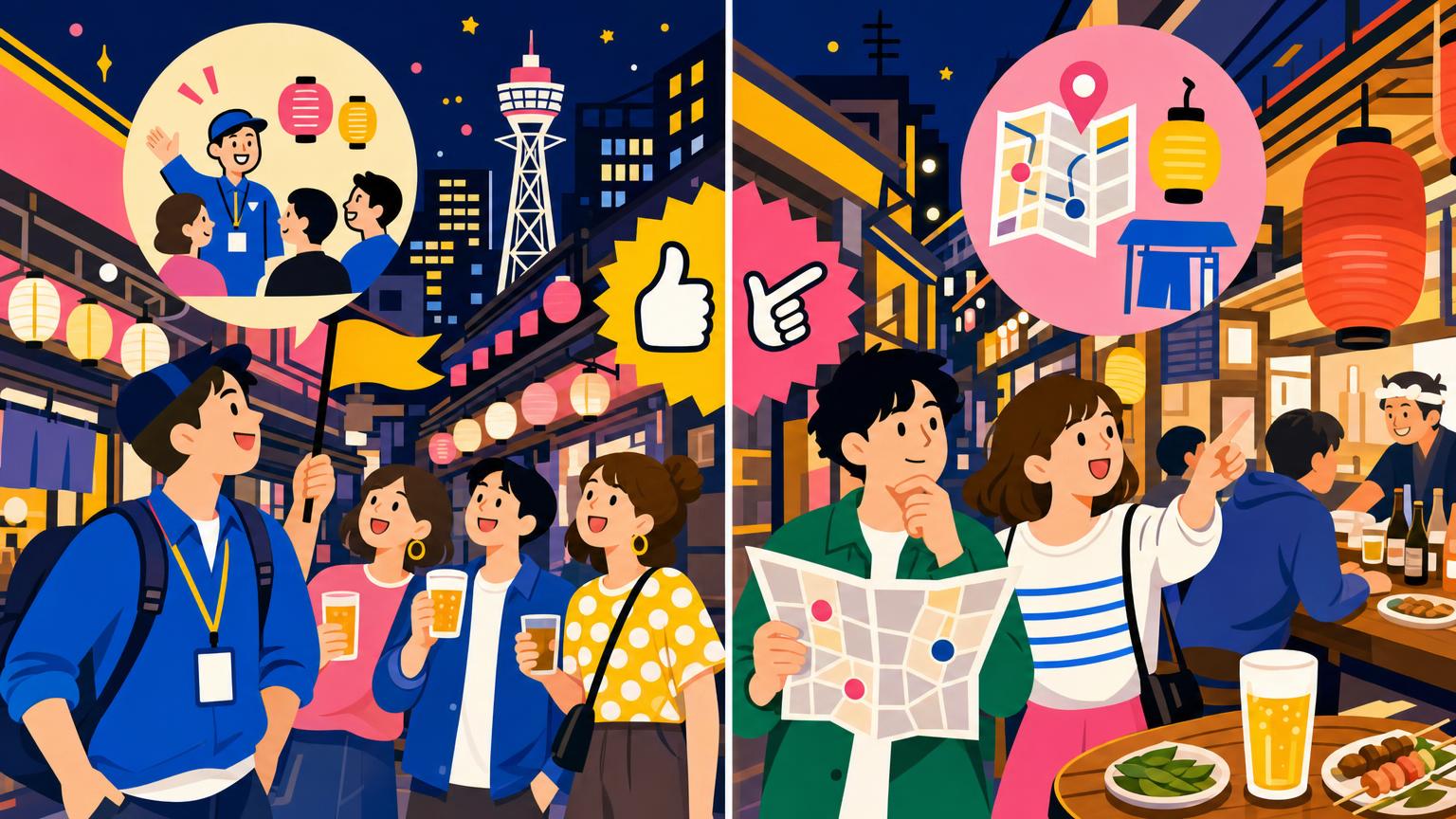
When experiencing Osaka’s nightlife, you’ll inevitably face a decision: should you join an organized pub crawl, or venture through the alleyways solo? Both options offer unique benefits depending on your personality, your plans for the evening, and your comfort with the local culture.
Organized pub crawls, which are commonly advertised on tourism websites and booking platforms, provide a seamless introduction to the nightlife. They follow a fixed itinerary, usually starting at a central spot in Namba or Shinsaibashi. For a flat fee, you receive a few included shots, and a bilingual guide leads a large group of international visitors from one popular venue to the next. If your main aim is to meet other travelers, gain assured entry to nightclubs, and avoid the stress of ordering in Japanese, an organized tour is an excellent option. It is safe, lively, and promises a guaranteed party.
From a local’s viewpoint, however, these tours barely touch on the true essence of Osaka. They seldom explore the long-standing bars in Tenma or the rough alleys of Kyobashi, as groups of forty tourists simply can’t fit into those small spaces. DIY bar hopping is where the real charm lies. It lets you follow your own timeline—you can slip into a tiny izakaya, enjoy a quiet chat with the owner, sample an unrecognizable but delicious dish, and leave when the mood strikes. DIY hashigozake demands more bravery, some cultural knowledge, and a readiness to make mistakes, but it offers an authentic connection to the city that no wristband or tour guide can ever deliver.
Essential Rules and Tips for Drinking in Osaka
To seamlessly integrate into the local scene, you need to grasp the unspoken rules of the night. Japanese nightlife operates under a set of social contracts that, though invisible to the untrained eye, guide the evening’s flow.
Understanding Cover Charges (Otooshi)
One of the most common sources of confusion and frustration for foreigners is the concept of otooshi, sometimes known as sekiryo or table charge. You enter an izakaya, take a seat, and before you even glance at the menu, a small dish is set before you. It might be a tiny bowl of stewed beef tendon, some pickled vegetables, or cold tofu. You didn’t order it, but when the bill comes, you’ll notice a charge of a few hundred yen for it.
This is not a scam. It is a deeply rooted cultural practice acting as a seating fee and signaling that your first drink order is being prepared. Think of it as a mandatory appetizer covering the overhead costs of giving you a seat in a densely packed city with scarce real estate. In Osaka, contesting the otooshi charge is considered extremely impolite. Embrace it as part of the cultural experience. Interestingly, standing bars seldom charge an otooshi, which partly explains their popularity among budget-conscious hashigozake enthusiasts.
Smoking Rules in Osaka Bars
Japan presents an intriguing paradox when it comes to smoking. You can stroll down a wide, well-ventilated outdoor street and face a steep fine for smoking a cigarette, yet step into a tiny, basement-sized bar and find half the patrons happily smoking away.
Although recent legislation has aimed to restrict indoor smoking nationwide, many small Osaka establishments are exempt due to their size. If you’re sensitive to smoke, you need to be especially vigilant. Look for small stickers on the door indicating if a place allows smoking or not. As a general guideline, traditional izakayas, snack bars, and standing bars in neighborhoods like Tenma and Kyobashi are almost guaranteed to be smoking venues. If you’re planning a deep hashigozake night, accept that you’ll probably go home smelling like an ashtray. It’s an unavoidable occupational hazard of enjoying the local nightlife.
How to Order and Local Etiquette
The pace of ordering in an Osaka bar is fast and loud. There’s no patiently waiting for the server to catch your eye. You must summon them with a confident, loud voice. Sumimasen is your best ally—call it out boldly. In standing bars, space is a precious commodity. When someone new arrives and the bar looks crowded, locals naturally shift sideways, pulling their drinks closer to create a few extra inches for the newcomer. Always be conscious of your physical presence. Keep your elbows tucked in, your bags near your feet or on hooks under the counter, and never stretch out across the bar.
Another key etiquette point is the pace. Hashigozake is not about settling down for hours at one place. The golden rule is to have a few drinks, a few small plates, then move on to make room for the next group of customers. Lingering too long at a standing bar, especially after you’ve stopped ordering, is strongly discouraged.
Safety Advice from a Woman’s Perspective
As a female traveler and writer who often observes street corners at night, I can’t stress enough how distinct the safety atmosphere of Japanese nightlife is. Compared to many major global cities, Osaka is remarkably safe. You can walk home alone at three in the morning without constantly looking over your shoulder.
That said, safe doesn’t mean entirely risk-free. In Osaka, your main irritations won’t be violent crime or aggressive pickpockets but rather overly intoxicated men lacking social boundaries. Osakan friendliness can sometimes turn into intrusive persistence after a few too many highballs. My approach is simple: project confidence. Don’t look lost, even if you are. If someone bothers you, a firm but polite refusal generally suffices. Also, be cautious of touts in major tourist areas. Never follow a man holding a laminated menu into an elevator to a bar you can’t see from the street. Stick to places with a visible presence and trust your instincts.
Regarding your belongings, although outright theft is rare, leaving a designer bag unzipped on a bar stool while you hit the restroom in a crowded Amemura club invites trouble. Keep your essentials in a stylish crossbody bag—it frees your hands for drinks and skewers, matches the practical aesthetic of local bars, and provides peace of mind.
Osaka Nightlife vs Tokyo: Which is Better?
If you ask an expat whether Tokyo or Osaka has better nightlife, you’re sure to ignite a debate that could go on for hours. Ultimately, it depends entirely on what you value in human interaction.
Tokyo’s nightlife is undeniably spectacular: vast, meticulously curated, and offering a level of refined specialization that’s hard to find elsewhere. If you want a bartender in a pristine white tuxedo to hand-carve a diamond of ice for your rare vintage whiskey while jazz plays softly in a soundproofed room, Tokyo is the place to be. However, Tokyo can also feel incredibly isolating. You go out with the friends you came with, sit at your private table, drink, and leave. The boundaries between groups are firm.
Osaka, by contrast, is the opposite of that isolation. Its nightlife is messy, loud, and deeply communal. The barrier to making human connections here is remarkably low. If Tokyo is a private VIP lounge, Osaka is like a massive neighborhood block party. In Tokyo, people drink to escape the pressures of their daily lives privately. In Osaka, people drink to loudly vent about those pressures to whoever happens to be nearby. For foreigners hoping to integrate, practice their Japanese, or simply feel part of the city rather than just observers, Osaka offers an infinitely warmer welcome.
Final Thoughts on Exploring Osaka After Dark
Living in or visiting Osaka without experiencing the culture of hashigozake is like going to the ocean and refusing to swim. The true spirit of this city doesn’t reveal itself during the busy daylight hours when everyone is rushing to work. It emerges under the warm glow of a red paper lantern, amid the sizzle of frying oil, and over a cheap glass of draft beer.
When you step out into Tenma or Kyobashi, you’re not simply looking for a spot to drink. You’re taking part in a daily ritual of unwinding, connecting, and surviving that has defined this merchant city for centuries. You will make mistakes. You might accidentally order something unfamiliar, mispronounce a greeting, and inevitably get lost in the winding alleys. Embrace it. The people of Osaka don’t expect perfection; they only ask for a willingness to try, a sense of humor, and an open heart. So grab your crossbody bag, put on comfortable shoes, leave your inhibitions at the hotel, and let the maze of Osaka’s nightlife lead you. You never know who you might end up standing beside or what kind of story you’ll take with you when the sun finally rises.