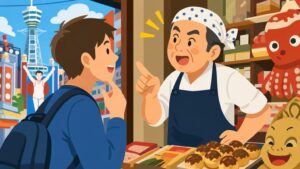
You’re standing in the aisle of a supermarket in Tennoji, staring intently at two bottles of soy sauce. One is the familiar Kikkoman logo you recognize from home. The other is a local brand with a label covered in kanji you can’t quite decipher. You weigh the options, a simple, mundane decision. Suddenly, a hand clutching a leek taps you gently on the shoulder. You turn to face a woman, probably in her late sixties, with a perm that defies gravity and a leopard-print blouse that seems to vibrate with its own energy. She points a determined finger at the local bottle. “Anata,こっちやで。こっちの方が断然うまい。それに百円も安いわ。” (Hey, you. That one. That one’s way better. And it’s a hundred yen cheaper.) She doesn’t wait for a reply. She simply nods, satisfied with her intervention, and continues down the aisle, her shopping basket rattling with the authority of a thousand such decisions. You’re left standing there, slightly stunned, holding a bottle of soy sauce you didn’t choose, feeling like you’ve just been audited by the Neighborhood Flavor Committee. Welcome to Osaka. You’ve just had your first taste of osekkai. This word, often translated as “meddling,” “nosy,” or “officious,” is one of the most misunderstood and essential keys to unlocking life in this city. It’s a social phenomenon that feels worlds away from the polite, invisible walls that govern interactions in Tokyo. In the capital, a stranger’s unsolicited advice might be considered a breach of an unspoken social contract. Here, it’s the opening line. This isn’t just about people being “friendly,” a tired cliché that barely scratches the surface. Osaka’s friendliness is an active, participatory sport. It’s a culture of proactive, sometimes intrusive, but almost always well-intentioned engagement. It can be jarring, confusing, and even a little annoying at first. But learning to navigate the currents of osekkai is the difference between living in Osaka as an outsider and truly becoming part of its vibrant, chaotic, and deeply human fabric. It’s about learning to see that a meddling comment about your groceries is actually an invitation to connect, a small thread offered to weave you into the community. Let’s decode this complex cultural dance and discover how to turn what feels like meddling into the most meaningful friendships you’ll find anywhere in Japan.
For those eager to explore every facet of Osaka’s unique rhythm, learning to work and caffeinate like a local can reveal yet another essential layer of this vibrant city’s charm.
What Exactly Is ‘Osekkai’? Beyond Nosy Neighbors
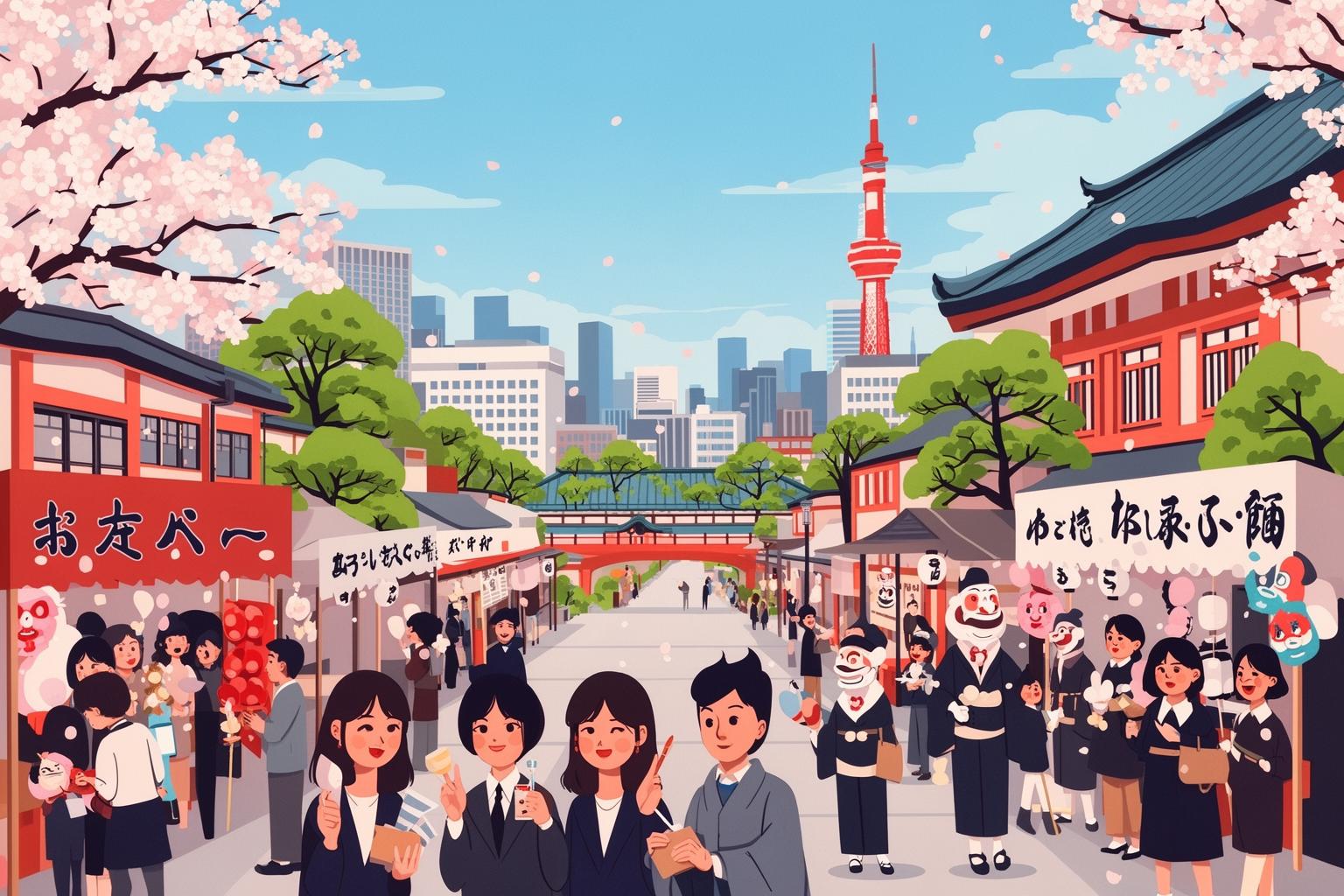
To truly understand Osaka, you need to adjust your perception of personal space. Osekkai doesn’t arise from a desire to pry or judge, as a Western perspective might initially assume. Instead, it originates from a fundamentally different view of an individual’s role within a community. It’s an expression of collectivism so deeply rooted that many Osakans feel that not stepping in when you notice a better, cheaper, or safer way for someone to do something is a neglect of social responsibility. At its heart, it is a proactive form of community care, a philosophy that assumes we all share the same space, challenges, and pursuit of a good deal.
A Proactive Form of Community Care
Picture yourself trying to parallel park on a tight side street in Namba. You’re struggling, inching back and forth, with your car’s sensors beeping loudly. In many places, people might pass by, perhaps with a sympathetic glance, but ultimately leave you to handle it alone. This is your problem. In Tokyo, someone might quietly look away to spare you the embarrassment of being watched—respecting your privacy by pretending you’re invisible. Osaka, however, is different. First, an elderly man smoking on his balcony might start shouting directions: “Motto hidari! Hidari! Soko de massugu!” (More left! Left! Straight from there!). Then, the takoyaki stand owner nearby will likely walk over, wipe his hands on his apron, and begin guiding you with elaborate hand gestures, as if directing a jumbo jet. Within minutes, you could find yourself surrounded by a small crowd of self-appointed traffic controllers, all offering conflicting but heartfelt advice. It feels like an intense performance you never signed up for. But here’s the key point: no one is doing this to ridicule you. They do it because your issue, occurring within their shared space, has become their issue. Your success in parking is seen as a collective win for the street. This is osekkai at its purest—it’s the belief that efficiency, safety, and well-being are community assets. It assumes that offering help isn’t an insult to your skill but a natural part of how society functions. It’s a social safety net made of countless daily interventions, where looking out for one another is the norm, not the exception.
The Language of ‘Osekkai’
Osaka’s dialect, Osaka-ben, perfectly embodies osekkai. It is more direct, melodic, and informal than the standard Japanese spoken in Tokyo. It drops many of the honorifics and polite softeners that create distance, enabling people to be straightforward. The language itself serves as a bridge between strangers. Take the common phrase, “Anata, soreなんぼやったん?” (Hey you, how much was that?). In Tokyo, asking a stranger about the price of their new coat would be a shocking breach of etiquette. In Osaka, especially among older generations, it’s a way to start a conversation. It’s not financial snooping but gathering market tips, celebrating a good deal (emon), and reinforcing a shared value of thrift. The reply is more than a number; it’s a story: “This? Got it on sale down at the Shinsaibashi arcade. They tried to charge 5,000 yen, but I bargained them down to 3,500!” This exchange instantly bonds people over the excitement of the hunt. Other typical osekkai phrases reveal its caring yet bossy spirit. “ちゃんとご飯食べてるんか?” (Are you eating properly?) might come from your landlord or the woman at the fruit stand. It’s the local version of “How are you?” but far more personal—an honest question about your well-being. If you look worn out, a stranger on the train might say, “はよ帰りや” (Hurry up and go home), a command wrapped in genuine concern. This directness can feel abrupt, but it’s softened by a warm, familiar tone. It’s the voice of a city that refuses to let you fade into anonymity.
The Historical Roots of Osaka’s Meddling Spirit
This culture didn’t simply emerge spontaneously. It was shaped through the rigors of commerce and refined over centuries of pragmatic, hands-on survival. Osaka’s identity is not that of the stoic samurai or the elegant courtier; it is the identity of the merchant, the artisan, and the deal-maker. To grasp osekkai, you must recognize that Osaka was built on a foundation of calculated risk, sharp negotiation, and, above all, interdependent relationships. Its spirit is rooted in the marketplace, not the castle.
The Merchant City Mentality
In the Edo period, while Tokyo (then Edo) was the political hub of the samurai government, Osaka proudly earned the nickname tenka no daidokoro—the nation’s kitchen. It served as Japan’s economic powerhouse, a vast center where rice, sake, and goods from across the country were gathered, stored, and traded. Feudal lords maintained kurayashiki, warehouse-residences that served as a blend of embassy, bank, and trading post. This system operated on credit, trust, and a constant flow of information. A merchant’s success relied not on a strict code of honor but on their reputation, network, and their knowledge of everyone’s status. You needed to know whose finances were unstable, who was dependable, and who was about to make a significant move. In this setting, privacy was a drawback. Your business was your neighbor’s business, and vice versa. This created a mindset where transparency and mutual involvement were crucial to survival. The merchant’s philosophy, known as shonindo, valued practicality (jitsuri), cleverness, and a good measure of skepticism. Unlike the samurai, who prized honor and appearance, Osaka merchants prioritized the bottom line and the strength of their community. This practical outlook fostered a culture where direct communication, even if blunt, was preferred over polite but empty formalities. The spirit of osekkai is the modern reflection of that merchant ethos: a pragmatic, results-driven approach to community life where everyone has a stake in each other’s success and well-being.
From Shotengai to Modern Neighborhoods
This historical legacy is most evident in Osaka’s numerous shotengai, or covered shopping arcades. These are more than just clusters of shops; they are the lifelines of neighborhood life, linear communities where the merchant spirit flourishes. Strolling through a place like Tenjinbashisuji, Japan’s longest shotengai, is like taking a full course in osekkai. The fishmonger doesn’t simply sell you fish; he asks what you’re cooking for dinner and advises exactly how to prepare the sea bream you just bought. The woman at the pickle stand offers you a taste, then another, while asking where you’re from and if you’re adjusting to the humidity. The pharmacist notices you buying cold medicine and suggests drinking hot ginger tea and getting some rest. This is commerce as conversation—a continuous, low-level buzz of human interaction. The design of the shotengai itself, a covered space sheltered from the weather, encourages lingering and socializing. It’s a semi-public, semi-private area where the lines between commercial and personal life blur. Even as modern supermarkets and impersonal online shopping grow, the shotengai culture still shapes how people interact throughout the city. Attitudes born in these arcades—the chattiness, the bargaining, the unsolicited advice—spill over into the subway, local parks, and apartment building lobbies. It’s a social software that keeps running even as the city’s hardware evolves.
‘Osekkai’ in Action: A Foreigner’s Field Guide
Understanding the theory of osekkai is one thing; applying it in real time is another. It can appear in many forms, ranging from warmly helpful to somewhat intrusive. Learning to identify the various nuances of osekkai and developing a strategy for how to respond is an essential skill for any non-Japanese resident. Your reactions will shape the tone of your relationships and determine whether these interactions become sources of stress or connection.
The Classic Oba-chan Encounter
The masters of osekkai are the Osaka oba-chan (a term for middle-aged or older women, used with a mix of affection and respect). They are the custodians of the city’s social code, and meeting one is a rite of passage. Picture this: You’re new to the city, sitting on a park bench in Ogimachi, feeling a bit lost and lonely. You’re wearing a thin jacket, despite a chilly autumn breeze picking up. An oba-chan, walking a tiny, shivering poodle, halts in front of you. She sizes you up—not critically, but with the discerning eye of someone experienced in human welfare. “Anata, samusou ya na. Sonna ussui no de kaze hiku de,” she says. (You look cold. You’ll catch a cold wearing something that thin.) Before you can reply, she’s digging into her oversized handbag. She pulls out a small, foil-wrapped candy and presses it into your hand. It’s an ame-chan. “Kore ageru wa. Genki dashiteや,” she says. (Here, have this. Cheer up.) Then she might fire off a rapid series of questions: Where are you from? Are you a student? Do you have a girlfriend or boyfriend? Are you eating your vegetables? This isn’t an interrogation—it’s a diagnostic check to ensure the well-being of a newcomer in her environment. The jacket comment is a practical remark. The candy offers universal comfort. The questions help her place you within her social map. The best response is engagement rather than withdrawal. Thank her for the candy, answer her questions with a smile, and you might gain a neighborhood grandmother who will always watch out for you.
Navigating Advice You Didn’t Ask For
This is perhaps the most frequent form of everyday osekkai. It usually arises in situations involving choices or processes, where there is a perceived “right” or “better” way to do something. You’re standing at the ticket machine in Umeda Station, studying the complex map, trying to figure out the fare to your destination. A salaryman on his way home might stop, ask where you’re headed, then proceed to buy the ticket for you, explaining the process as he goes. Or, as in our opening example, you’re selecting a product in a store. The advice you receive is a piece of community-sourced knowledge. That local soy sauce is recommended because the adviser has likely used it for thirty years. They know it pairs well with the local fish and know the family that makes it. By encouraging you to buy it, they are initiating you into a network of local knowledge. Responding brusquely to this advice is tantamount to rejecting both the knowledge and the connection it conveys. The key is to accept it graciously, even if you don’t intend to follow it. A simple, “Ah, sou nandesu ne! Jaa, kocchi ni shimasu. Arigatou gozaimasu!” (Oh, is that so! Well then, I’ll go with this one. Thank you very much!) acknowledges their effort and strengthens the social bond. You’ve learned something, they’ve been helpful, and the community fabric grows a bit stronger. Whether or not you actually use that soy sauce is up to you, but the interaction itself is what truly matters.
When Concern Feels Like an Interrogation
This is the toughest aspect of osekkai for foreigners, as it can seem like a blatant intrusion on privacy. Your next-door neighbor in your apartment might remark, “Kinou, kaeri osokatta ne. O-tomodachi to isshoやったん?” (You came home late last night, didn’t you? Were you with a friend?). From a Western viewpoint, this can come off as accusatory or invasive. Your internal voice might shout, “That’s none of your business!” But it’s important to understand the historical and cultural context. In Japan, especially in older neighborhoods with wooden houses, neighborhood safety was paramount. Historically, a fire in one house could engulf the entire block. This cultivated a culture of mutual vigilance born from mutual dependence. Knowing your neighbors’ routines wasn’t nosiness; it was vital for community security. This instinct persists. When your neighbor asks about your late night, their primary motivation is a mix of curiosity and genuine concern. Are you safe? Is there a stranger in the building? They are updating their mental map of the community ecosystem. The best approach is to offer a simple, friendly answer without too much detail. “Hai, chotto nomidai de.” (Yes, I was out at a drinking party.) This acknowledges their concern, answers the main question without revealing private information, and reassures them that all is well. Responding with silence or a defensive “Why do you ask?” can be seen as hostile and may label you as someone who doesn’t understand the community’s unwritten rules.
The Tokyo-Osaka Divide: Privacy vs. Proximity
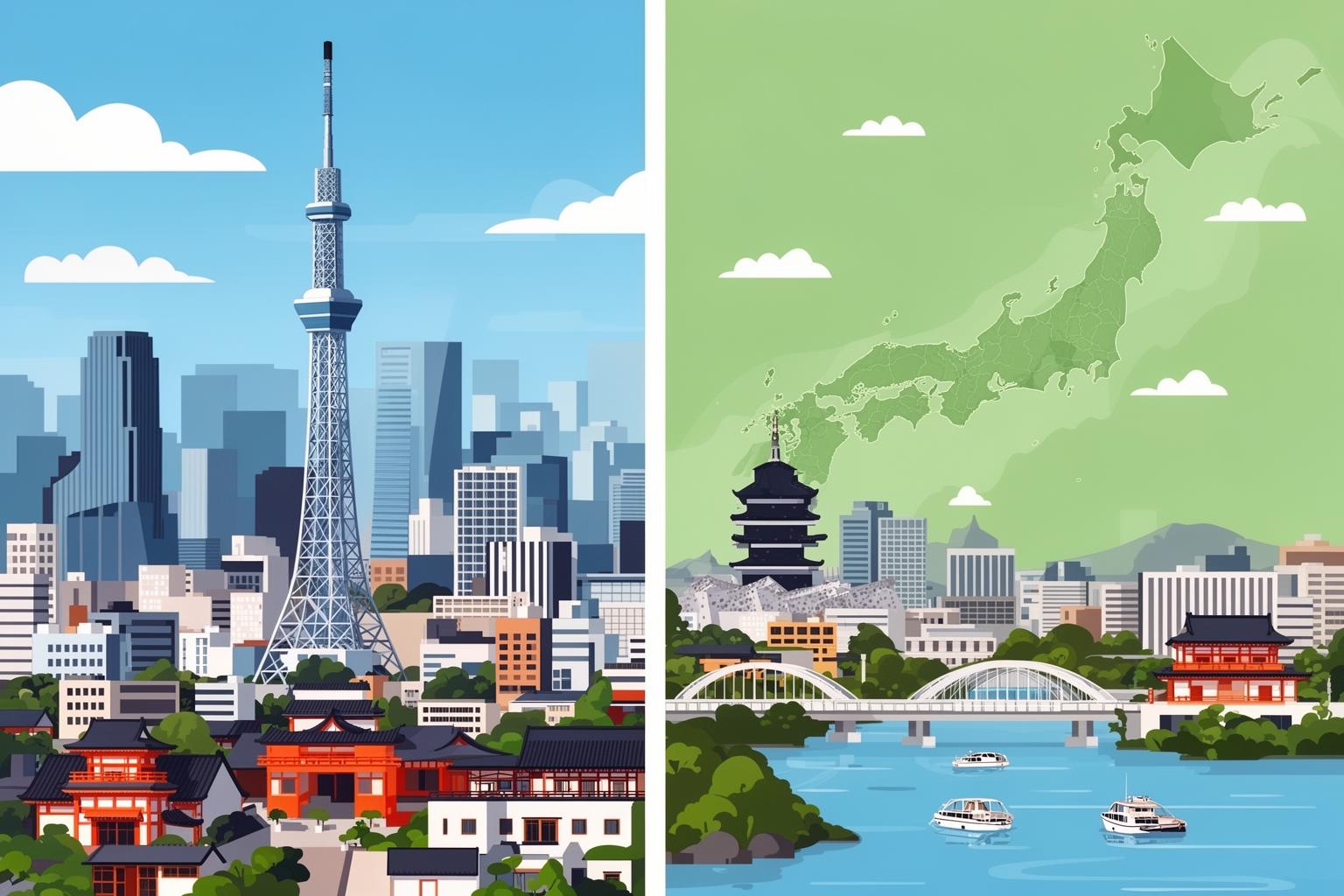
The contrast between Osaka and Tokyo represents one of Japan’s great rivalries, vividly reflected in their social interactions. The experience of walking down a street, riding a train, or shopping for groceries feels fundamentally different between the two. This isn’t a matter of one city being “better” than the other; rather, they operate on two distinct social frameworks. One values seamless anonymity, while the other emphasizes active community engagement.
Tokyo’s Invisible Walls
Life in Tokyo often revolves around minimizing your impact on others. The city is a marvel of efficiency and courteous coexistence, a delicate dance performed by millions who have mastered sharing space without genuine interaction. Social currency here is discretion and the ability to kuuki wo yomu (read the air), often meaning refraining from speech or actions that could impose on others. On a crowded Tokyo train, you’ll see a sea of people absorbed in their phones, books, or resting, each contained in their own bubble. Speaking loudly or engaging strangers is considered a serious social misstep. If help is needed, people typically turn to officials, such as station attendants, rather than random bystanders. This creates a comfortable, predictable, and for many, wonderfully private urban experience. You are free to remain anonymous. The city demands nothing but that you follow the rules and maintain the carefully balanced peace. For many foreigners, especially those from large Western cities, this feels familiar and comforting. It’s a city that respects your personal space to an almost sacred level.
Osaka’s Open-Door Policy
Osaka, on the other hand, assumes those personal bubbles are permeable. The social aim isn’t to avoid imposing but to actively engage. Anonymity is not the default condition. Step onto a train on the Osaka Loop Line, and the atmosphere shifts immediately. People talk more freely, laugh louder, and are far more likely to strike up conversations with strangers. The air isn’t so much read as actively filled. Osekkai is the means by which this happens—a way to break the ice and turn a group of strangers into a temporary community. This difference often leads to misunderstanding. To Tokyoites, Osakans’ behavior may seem loud, aggressive, and lacking refinement. To Osakans, Tokyoites’ reserved nature can feel cold, distant, and unfriendly. What a Tokyo resident perceives as polite discretion, an Osaka local might interpret as lonely indifference. When an Osaka oba-chan offers you candy, she is, in her own way, resisting the cold anonymity of modern life. She is making a statement: here, in this city, we talk to one another. We look out for each other. You are not invisible to me. This approach can be more demanding and sometimes more exhausting than life in Tokyo, but it offers a different kind of reward: the sense of being seen and included.
How to Turn ‘Osekkai’ into Genuine Connection
So, you’re living in Osaka, and osekkai is coming at you from every angle. Your landlord comments on how you handle recycling, the butcher questions your dinner plans, and a stranger points out that your shoelace is tied the wrong way. You have a choice: you can retreat into a shell of frustration, building walls to protect your privacy, or you can learn the art of a new kind of social jujitsu, using the energy of osekkai to draw you closer to the community instead of pushing you away. This requires a conscious shift in mindset and a few practical communication techniques.
Reframe Your Mindset: It’s Care, Not Criticism
This is the most important step. Before reacting, you must rethink the intent. For many Westerners, unsolicited advice is automatically heard as criticism, implying that their way was wrong. The woman who corrected your soy sauce use wasn’t saying, “Your taste is bad.” She was saying, “I have information that can improve your life, and as a member of this community, I feel obligated to share it with you.” The man who suggested a different train wasn’t saying, “You can’t navigate well.” He was saying, “I know a shortcut that will save you ten minutes, and I want to give you that small gift of time.” Viewing osekkai as a generous, if sometimes awkward, act changes everything. It reduces your defensiveness and opens you to the positive side of the interaction. Assume good intentions until proven otherwise. This mental shift is your passport to a smoother, happier life in Osaka. You start to see these interruptions not as annoyances but as daily small affirmations that you belong to a community that cares.
Engage, Don’t Evade
Once you’ve reframed the intent, change your behavior. A passive nod or a brief “thank you” might seem polite, but with osekkai, it can kill the conversation. It signals you want the interaction to end, leaving the Osakan feeling slightly dismissed. To build a genuine connection, match their energy. Engage. Ask a follow-up question. When the butcher questions your choice of meat for stir-fry, don’t just nod—ask, “本当?じゃあ、何が一番おすすめですか?” (Really? Then what do you recommend most?). His face will light up. By accepting and honoring his expertise, he’ll enthusiastically explain, and from then on, you’re no longer just a customer but his student in the art of meat. When your neighbor asks if you’re eating properly, don’t just reply “yes.” Share something: “昨日はカレーを作りました!” (I made curry yesterday!). This sharing turns an inquiry into a conversation, showing you understand the unspoken rule: an offer of connection requires a connection in return.
Master the Art of the Graceful Deflection
There will be times when advice is genuinely unhelpful, unwanted, or crosses a boundary. You’re not obliged to follow every unsolicited tip. The aim is to keep your boundaries without harming the social relationship, which takes a delicate approach. A blunt “No, thank you” or “I’ve got it” can seem cold or ungrateful. Instead, use soft deflections. A vague but appreciative reply works well: “なるほど、考えてみます。ありがとうございます!” (I see, I’ll think about it. Thank you!) is a great all-purpose phrase. It acknowledges their input without committing you to anything. Humor is also powerful. If someone comments on your chopstick technique after five years here, you can laugh and say, “まだまだ下手ですね!” (I’m still no good at it, am I!). This self-deprecating humor shows you’re not offended and gently ends the lesson. The key is always to acknowledge the kindness of their gesture, even as you sidestep the advice itself. You’re rejecting the advice, not the person. This way, you maintain your autonomy while respecting the local culture of care.
The Payoff: A City That Has Your Back
Living with osekkai can be a daily exercise in patience and cultural translation. It requires a certain level of social energy and openness that can be exhausting, especially for introverts. So, what is the ultimate reward for all this effort? Why should you choose to embrace the meddling and navigate the intrusions? The payoff is profound: you get to live in a city that never lets you be truly alone. You gain a support system you never had to formally request. Once you learn the dance of osekkai and show that you’re willing to participate, the community quietly and firmly closes ranks around you. The shopkeepers who once offered unsolicited advice will now save the freshest tofu for you because they know you’re coming. The neighbor who commented on your late nights will be the first to notice if your mail is piling up and will check in to make sure you’re okay. When you’re sick, the local pharmacist won’t just sell you medicine; they’ll ask a few days later if you’re feeling better. This network of informal, low-stakes interactions solidifies into a powerful safety net. In the sprawling, often lonely expanse of a foreign metropolis, this is an incredibly precious thing. The meddling spirit of Osaka is the price of admission to its strong, resilient, and deeply loyal community heart. It’s the assurance that in a city of millions, there are people who know your face, who care if you look cold, and who will always, always tell you which bottle of soy sauce is better. Learning to love osekkai is learning to love the very essence of Osaka—a city that cares, loudly and insistently, and will always have your back.