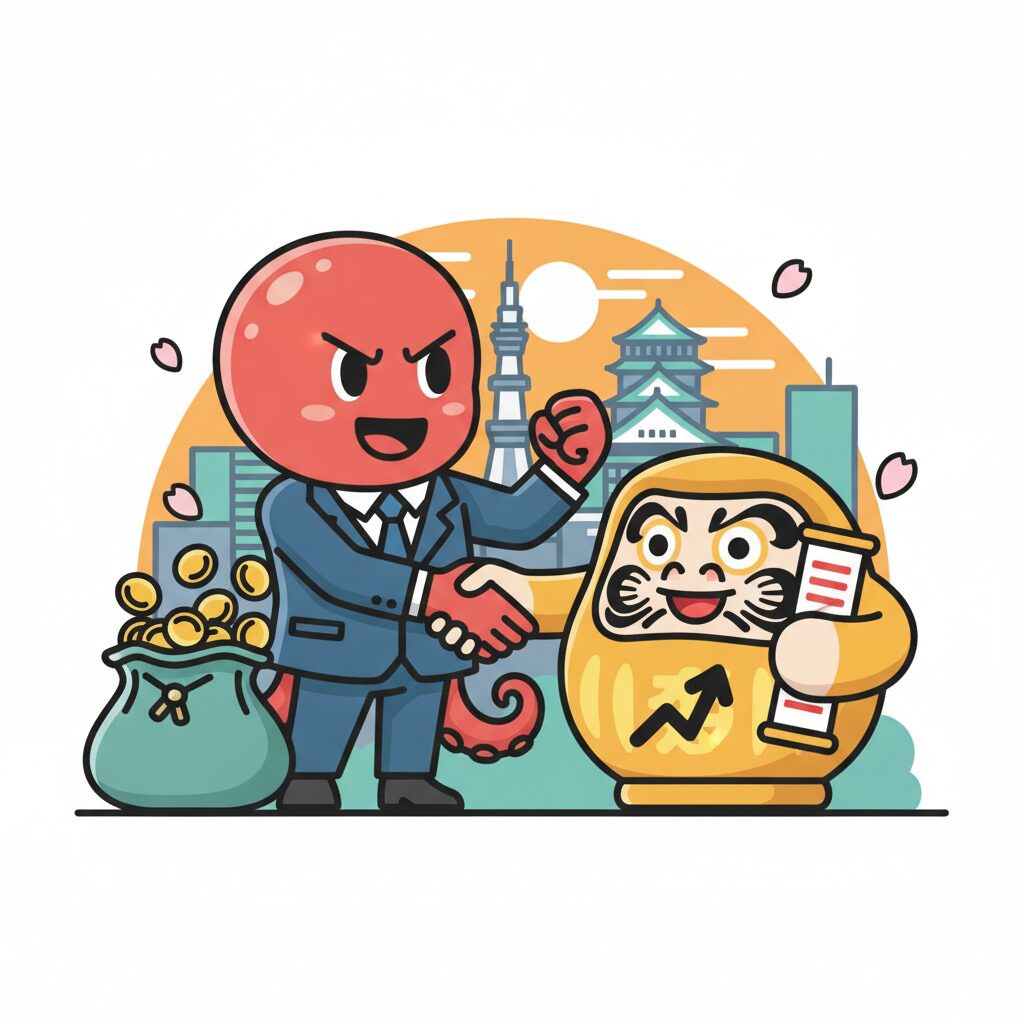
Step off the Shinkansen at Shin-Osaka Station, and you feel it instantly. It’s not just the humidity or the slightly different accent you overhear. It’s a vibration, a hustle, a certain electricity in the air. Tokyo feels like a perfectly choreographed performance, every movement precise and polite. Osaka feels like a city-wide jam session—a little louder, a bit more chaotic, but pulsing with a raw, undeniable energy. Many foreigners arrive here expecting a slightly different flavor of Japan and find themselves in a whole new country. The reason? It’s not in the castles or the neon signs. It’s in the people. It’s in the DNA of the city, a code written over centuries of commerce, a philosophy known as the ‘Akindo’ mindset.
This isn’t just about business. The ‘Akindo,’ or merchant spirit, is the operating system for daily life in Osaka. It dictates how people talk, how they shop, how they eat, and how they build relationships. It’s a worldview built on practicality, value, and a directness that can feel jarring if you’re used to the subtle dance of Tokyo etiquette. But once you understand it, you don’t just see Osaka—you begin to feel it. You learn to appreciate the art of the deal not as a battle to be won, but as a conversation to be had, a connection to be made. This guide is your key to decoding that conversation, to understanding the rhythm that makes this city tick.
Embracing the city’s vibrant pulse can also mean discovering how locals navigate its dynamic streets by exploring cycling in Osaka.
More Than a Price Tag: The Philosophy of ‘Mokkari-makka?’
In most parts of Japan, a typical greeting involves a polite nod to the weather or a formal “Otsukaresama desu.” In Osaka, however, you’re just as likely to hear a friendly “Mokkari-makka?” which literally means “Are you making a profit?” The usual response isn’t a detailed financial update, but a knowing smile and “Bochi-bochi denna,” meaning “So-so, can’t complain.”
This isn’t an intrusive inquiry about your finances. It’s a cultural handshake, an acknowledgment of a shared reality: everyone is hustling and trying to make a living, fostering a sense of camaraderie in that effort. The greeting swiftly moves beyond formalities and forges a connection grounded in the practicalities of life. It conveys, “I see you. I see your work. How’s it going?” This captures the Akindo spirit at its purest. It treats commerce not as a cold transaction, but as the very essence of social interaction.
In contrast, in Tokyo, discussions about money are often seen as rude or private. In the capital, value frequently hinges on brand names, presentation, and the flawless execution of service known as omotenashi. While beautiful, this experience is often passive. In Osaka, value is something you actively help create. Service, or so-bis as it’s commonly pronounced there, isn’t merely given; it’s part of the negotiation and a reward earned through building good rapport. An extra piece of tempura from the restaurant owner or a small discount from the shopkeeper—these gestures aren’t just freebies. They symbolize a successful relationship and a mutually beneficial deal.
The ‘Shotengai’ as a Classroom for the Akindo Spirit
Forget about sterile department stores and quiet convenience stores for a moment. To truly grasp the Akindo mindset, you need to stroll through a shotengai, one of Osaka’s famous covered shopping arcades. Places like Tenjinbashisuji, the longest in Japan, or the numerous smaller arcades winding through every neighborhood, represent the vibrant core of the city’s commercial culture. They serve as classrooms where the art of negotiation is practiced daily.
The Dance of the Discount
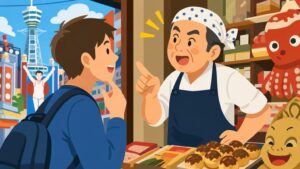
Step into a small, family-run shop in a shotengai, and you become more than just a customer; you become a participant. The concept of nebiki, or discounting, is central to the experience. While a foreigner might see a price tag as final, an Osakan treats it as an opening offer. This isn’t the aggressive, high-pressure bargaining you might find in a tourist market. It’s a subtle, often playful, dance.
Perhaps you’re buying three shirts instead of one. You might ask the owner, “Chotto makete kureru?” (“Can you give me a little discount?”). The owner may laugh, inhale sharply, and claim the price is already as low as it can go. But after a moment of thoughtful pretense, they might drop a couple hundred yen or offer a free pair of socks. This exchange isn’t about cheating anyone out of money. It’s about engagement. You demonstrate loyalty by purchasing more, and they show appreciation with a better deal. Both parties leave satisfied. The shop owner makes a larger sale, and you receive great value. It’s a win-win, the ultimate goal of the Akindo.
As the day ends, this dance intensifies. The shout of “Yasui de! Motteke!” (“It’s cheap! Take it all!”) resounds through the arcades as vendors try to sell off fresh produce or prepared foods before closing. Here, the Akindo spirit shines in full force—a practical effort to avoid waste and convert every last item into profit while offering customers unbeatable deals. It’s smart, efficient, and part of the daily rhythm.
‘Cos-pa’ is King: The Obsession with Value
If the Akindo mindset had a slogan, it would be “cos-pa.” This Japanese abbreviation for “cost performance” is almost a religion in Osaka. It’s the ultimate standard of value. Being cheap (kechi) is frowned upon. Being a savvy shopper who can find exceptional cos-pa is a badge of honor.
This idea guides nearly every buying choice. When selecting a teishoku (set meal) for lunch, an Osakan doesn’t merely check the price. They consider the details. Is the rice refillable? Does it come with a generous bowl of miso soup or just a tiny cup? Are the pickles homemade? A 700-yen lunch with large portions and free tea offers far better cos-pa than a prettier 650-yen lunch that leaves you hungry.
This obsession explains why supermarkets like Tamade, with their flashy neon lights and famous 1-yen sales, prosper here. It’s why people will travel across town for a butcher offering better cuts at slightly lower prices. It’s not about stinginess. It’s about respecting your hard-earned money and valuing the quality of goods. The joy lies not just in the purchase but in knowing you secured the absolute best deal. It’s a game, and Osakans are masters.
Deconstructing Osaka Communication: Direct, Practical, and to the Point
The Akindo spirit influences not only how people spend money but also how they communicate. In a merchant culture, time equates to money, making indirectness inefficient. This has cultivated a communication style that is notably direct, honest, and refreshingly straightforward compared to other parts of Japan.
From ‘Tatemae’ to ‘Honne’
Anyone who has spent time in Japan knows the concepts of tatemae (public face or official stance) and honne (true feelings). In Tokyo, the gap between these two is often wide, resulting in communication that is polite, poetic, and frequently frustratingly indirect. A Tokyoite might say, “That is a very challenging proposal,” when what they really mean is, “There is absolutely no way we can do that.”
In Osaka, however, that gap is much narrower. An Osakan is more likely to say plainly, “Sonnaん、無理やで” (“That’s impossible”). To outsiders, this may come across as abrupt, blunt, or even rude. But locally, it is a sign of respect. It honors your time by not wasting it on false hope and respects your intelligence by assuming you can handle the truth. It’s the marketplace’s efficiency applied to human interaction. The aim is clarity and quick resolution, rather than the extended maintenance of superficial harmony.
This directness is often misunderstood. A foreign resident might be surprised when a coworker immediately points out a mistake in their work, or when a neighbor plainly says the music from their apartment is too loud. But such frankness rarely stems from malice. It’s a practical, problem-solving approach: why hint at a problem when you can simply state it and address it? For those who come to appreciate this honesty, it can be deeply liberating.
Humor as a Lubricant for Business
So how does this directness avoid turning into constant conflict? The secret ingredient is humor. Osaka is famously Japan’s comedy capital, known for the manzai (stand-up comedy) tradition. The classic boke (the funny fool) and tsukkomi (the sharp straight man) routine operates not only on stage but also in everyday conversations.
A quick retort, a witty comeback, or a playful jab is used to soften the bluntness of direct communication. It’s a way to speak frankly while signaling that the relationship remains warm. A shopkeeper might say your price offer is ridiculous, but they’ll do so with a grin and an exaggerated sigh that makes both of you laugh. The negotiation becomes a performance, a shared moment of enjoyment. This blend of business and entertainment is uniquely Osaka’s style. The deal matters, but the human connection built through laughter is equally important.
What This Means for Your Daily Life in Osaka
Understanding the Akindo mindset is more than just an enjoyable cultural insight; it’s a practical strategy for thriving in this city. It reshapes your interactions and helps you form authentic connections.
Navigating Social and Professional Worlds
Whether you’re dealing with your landlord, your local grocer, or your colleagues, remember that relationships are transactional in the most positive sense. They are founded on mutual benefit and trust. Don’t hesitate to ask for what you want, but do so with respect and a touch of humor. If you’re a regular at a local izakaya, the owner may start to recognize you and perhaps offer an extra dish as so-bis. If you’re a dependable tenant who always pays rent on time, your landlord might be more willing to negotiate when it’s time to renew your lease. Reciprocity is essential.
Building these relationships takes time, but it yields great rewards. Unlike the more anonymous atmosphere of a megacity like Tokyo, life in Osaka often feels more like a community, precisely because these everyday, deal-like interactions encourage you to engage with the people around you. They aren’t just service providers; they are your partners in the daily business of living.
Redefining ‘Politeness’
One of the biggest challenges for foreigners is adjusting their idea of politeness. The formal, deferential politeness of standard Japanese (hyojungo) can sometimes seem cold and distant in Osaka. Adhering strictly to textbook expressions can create a barrier.
True politeness in Osaka means engaging sincerely. It’s about reading the atmosphere, sharing a laugh, and showing that you’re a reasonable person who appreciates value. It’s complimenting a shop owner on their excellent products before requesting a small discount. It’s thanking someone for their straightforward feedback because it helps you improve. Politeness here is less about perfect grammar and more about genuine human connection. Participating in the give-and-take, even imperfectly, is often more valued than standing aside in perfect, silent respect.
Beyond the Stereotype: The Modern Akindo
Certainly, it’s important to recognize that this is a cultural mindset rather than a strict set of rules that everyone follows. Osaka is a vast and diverse city. You will encounter quiet, reserved Osakans just as you will lively and outgoing Tokyoites. The Akindo spirit isn’t a stereotype; it’s a profound cultural current that has shaped the city’s identity throughout centuries.
In the 21st century, this spirit continues to evolve. The lively bartering of the past may be less frequent in an era dominated by chain stores and online shopping. However, the core values—the focus on cos-pa, the preference for straightforward communication, the use of humor, and the pursuit of win-win outcomes—remain stronger than ever. It represents a kind of urban wisdom, a practical approach to navigating a complex world.
Living in Osaka is an invitation to engage actively. It encourages you to be more than a passive consumer. It invites you to participate, to ask questions, to share a laugh, and to find value not only in the items you purchase but in the interactions you have along the way. The Akindo mindset is about more than just making a profit in yen. It’s about living a life rich in connection, laughter, and the satisfaction of a deal well executed. And that, you will soon realize, is the greatest value of all.