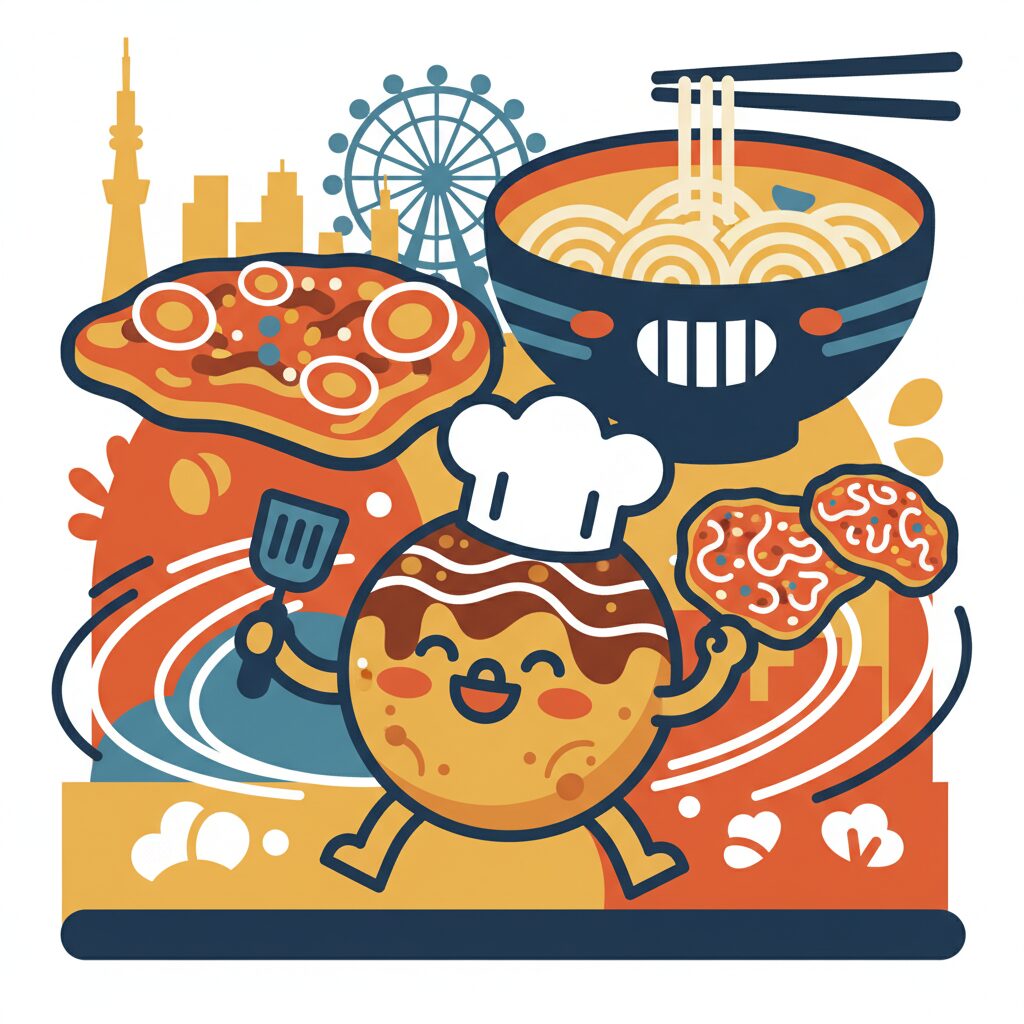
Walk through Dotonbori at night, and Osaka hits you like a tidal wave of sensory input. The Glico Running Man glows with relentless optimism, giant mechanical crabs wave their claws, and the air, thick and humid, carries a scent you’ll find nowhere else on earth. It’s the smell of grilling batter, savory dashi stock, and sweet, smoky barbecue sauce. It’s the smell of konamon—the flour-based soul food that defines this city. You see lines snaking from takoyaki stalls, the vendors a blur of motion as they expertly flick dozens of octopus-filled batter balls. You see couples and families crowded into tiny restaurants, scraping at sizzling okonomiyaki pancakes on table-side griddles. It’s loud, it’s vibrant, it’s exactly the image of Osaka as the “Kitchen of Japan” that’s sold to the world. But this dazzling public display, as iconic as it is, misses the entire point. It’s only half the story. The real secret to understanding Osaka isn’t found under the neon lights of Namba. It’s found in a cramped, sixth-floor apartment kitchen in a quiet neighborhood like Tenma or Fukushima, where a small, unassuming electric hot plate sits on the dining table. Because in Osaka, konamon isn’t just something you buy. It’s something you make. Together.
This is the fundamental misunderstanding many outsiders, even those living here, have about Osaka’s food culture. They see the street food and assume it’s a convenience. But for Osakans, making takoyaki or okonomiyaki at home is a deeply ingrained social ritual. Ask a friend in Tokyo what they do for a casual get-together, and they might suggest ordering pizza or making a communal nabe hot pot. Ask a friend in Osaka, and the answer will almost inevitably be a “takopa”—a takoyaki party. While the rest of Japan sees these dishes as a cheap and cheerful meal, Osaka sees them as the very architecture of friendship. This isn’t just about dinner. It’s about a specific style of communication, a unique approach to community, and a philosophy of life that is messy, collaborative, and unapologetically hands-on. To truly grasp the rhythm of daily life here, you have to look past the vendor stalls and get yourself invited to a takopa. It’s there, amidst the flying flour and the arguments over flipping technique, that you’ll find the warm, beating heart of Osaka.
Experience another layer of Osaka’s communal rhythm by checking out the vibrant guide to tachinomi bars that reveal the city’s true social heartbeat.
The ‘Takopa’ Phenomenon: Every Home is a Restaurant
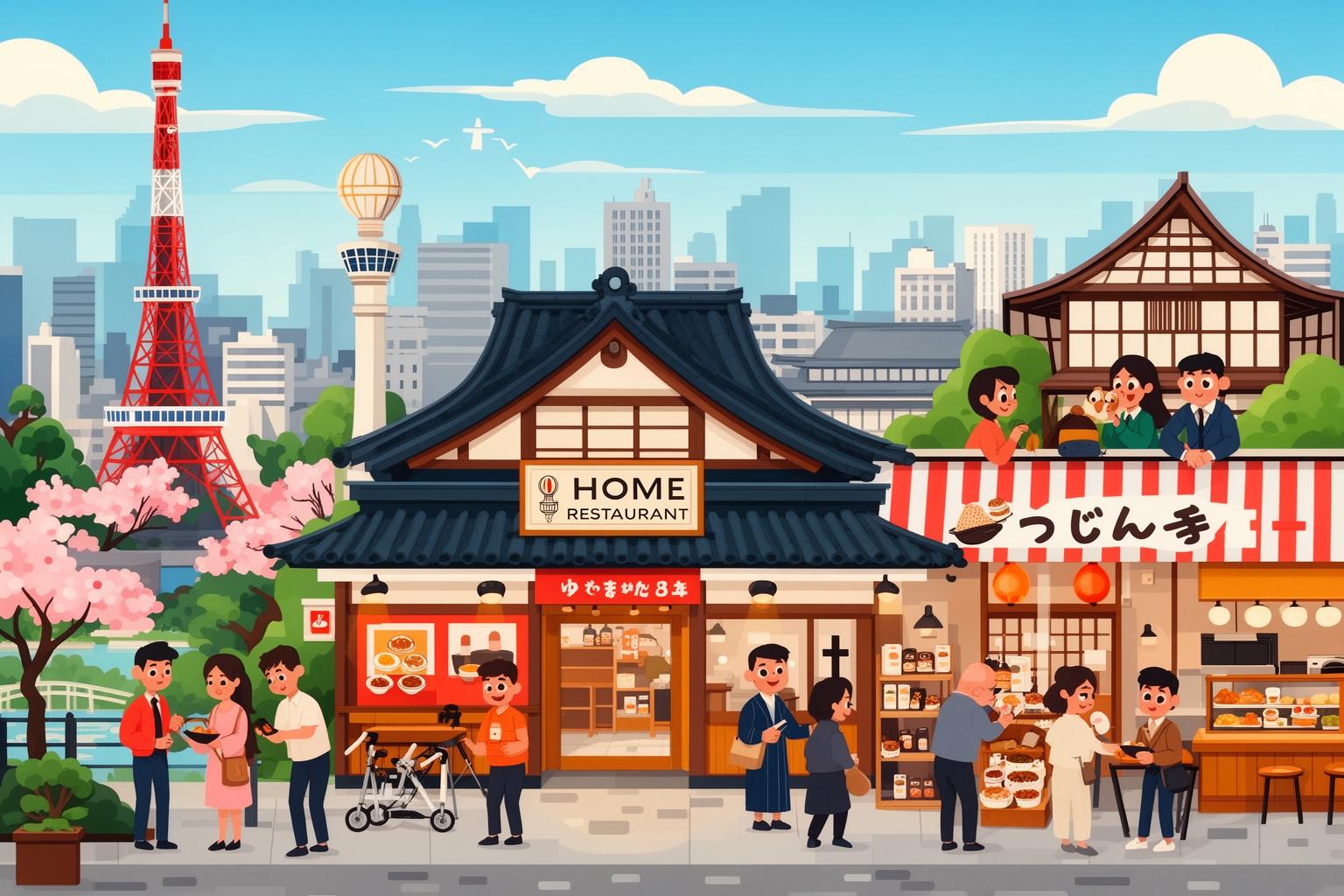
An invitation to a takoyaki party may appear to be just a casual dinner plan, but it serves as a gateway into the heart of Osakan social life. The experience starts the moment you enter. There’s none of the formal greetings typical elsewhere in Japan. Instead, you’re welcomed with a relaxed “Osu!” and directed to the kitchen. “Drinks are in the fridge, help yourself.” The apartment is already alive with energy. On the low kotatsu table, the treasured takoyaki maker is heating up, its cast-iron surface shimmering with a light layer of oil. The ingredients are spread out in a charmingly chaotic display: a large bowl of finely chopped cabbage, another filled with diced octopus tentacles, and smaller dishes containing bright red pickled ginger (beni shoga), crunchy tempura scraps (tenkasu), and a heap of chopped green onions.
More Than a Kitchen Gadget, It’s a Social Tool
What stands out most about a takopa is the absence of a designated chef. Cooking isn’t a performance by the host for the guests; it’s a shared, often clumsy group effort. Someone takes charge of mixing the batter—a simple blend of flour, egg, water, and the essential dashi powder—while another carefully pours it into the half-spherical molds on the hot plate. Then the fun truly begins. Everyone grabs a long, pointed pick, reminiscent of a dentist’s tool, and gathers around the griddle. This is where the magic—and the mayhem—happens.
The process of making takoyaki captures the essence of Osaka communication. It’s a nonstop flow of commentary, advice, and friendly teasing. “You’re pouring too much! It’s going to spill over!” someone shouts. “No, no, you have to break the edges first before turning them,” another instructs, demonstrating with a swift flick of the wrist. The air fills with the sizzle of batter, the clatter of metal picks on iron, and overlapping voices. Beginners inevitably struggle, producing misshapen blobs instead of perfect spheres. But rather than silence, this failure is met with hearty laughter and a dozen hands reaching in to help. The goal isn’t to create restaurant-quality takoyaki—it’s the shared act of making, the rhythm of flipping and chatting, the collective effort to transform simple batter into a hot, tasty meal. You’re not merely a guest; you’re a participant, a co-conspirator in the culinary chaos.
“My Way is the Best Way”: The Unspoken Konamon Competition
Beneath the spirit of collaboration lies a fierce undercurrent of personal pride. Every Osakan family guards their own secret for the best konamon. This isn’t about snobbery; it’s a deeply personal expression of identity. As the takopa goes on, the declarations begin. “Uchi wa na, nagaimo irerunnen,” someone announces. “In my family, we grate mountain yam. It makes them much fluffier.” Another adds, “The real secret is a splash of soy sauce in the batter—it gives it a better color.”
These “secrets” are passed down through generations and protected with playful seriousness. It might be a particular brand of dashi, a insistence on octopus from a certain region, or the controversial addition of cheese or corn. This isn’t just about flavor; it’s about heritage. It’s a way of saying, “This is who I am, and this is where I come from.” In a city that values individualism, your personal takoyaki recipe is a declaration. This sharply contrasts with the perceived pressure to conform in other parts of Japan. In Tokyo, there may be a “right” way to do things. In Osaka, the best way is my way, and I’m ready to prove it to you over a hot griddle and a cold beer. This friendly rivalry transforms a simple meal into a lively debate about identity, tradition, and the never-ending pursuit of the perfect crispy-outside, gooey-inside takoyaki ball.
Okonomiyaki Night: A Canvas for Creativity and Conversation
If takopa is a lesson in collaborative technique, then okonomiyaki night is a celebration of unbounded creativity. The word okonomiyaki literally means “grill what you like,” encapsulating the very essence of Osaka’s practical and inventive spirit. While Hiroshima-style okonomiyaki follows a more structured, layered method, the Osaka style is a joyful, free-form blend. It serves less as a strict recipe and more as a guideline, a launching point for culinary improvisation.
The ‘Anything Goes’ Philosophy
An okonomiyaki night at home starts with a large bowl of shredded cabbage, which forms the dish’s foundation. This is combined with a simple batter and eggs, and then… that’s where the “what you like” part truly shines. The possibilities are endless and usually hinge on whatever ingredients are tucked away in the fridge. The classic addition is thin slices of pork belly, placed on top to crisp up as it cooks. Beyond that, anything goes. Shrimp, squid, and other seafood are frequently included. Cubes of mochi melt into chewy, delightful pockets. Cheese is practically a must-have. Kimchi adds a bold, spicy tang. Corn and sliced sausages often make an appearance. I’ve even seen people toss in leftover fried chicken or bits of last night’s curry.
This “anything goes” mentality reflects the heart of the Osakan way of thinking. There’s an absence of pretension here. The emphasis isn’t on strict culinary tradition but on producing something tasty, satisfying, and economical. It’s about practicality and making the most of what’s available. This spirit of ingenious resourcefulness, born from a city founded on commerce and trade, permeates everyday life. The rule is simple: if it works and tastes good, then it’s the right way to do it. Okonomiyaki is far more than a pancake; it’s a canvas for personal creativity and a tribute to the city’s adaptable, straightforward approach to life.
Flipping and Failing Together
Much like at a takopa, the cooking process is a shared experience. Whether at home on an electric griddle or in a casual restaurant with a teppan built into the table, you become the chef. After mixing your chosen ingredients into the batter, you pour the mixture onto the hot surface, shaping it into a thick, round pancake. You layer the pork slices on top, then enter the waiting game. Conversation flows as the bottom sizzles and cooks, filling the air with the aroma of cabbage and grilling meat.
Then comes the moment of truth: the flip. Equipped with two large metal spatulas, or kote, one person takes on the challenging task of turning the entire pancake over in one smooth, decisive motion. It’s a moment of shared anticipation. Everyone leans in. Conversation hushes. The flipper takes a deep breath. Will it be a perfect flip or will it collapse into a messy heap of scrambled cabbage? The result hardly matters. A successful flip is met with cheers and applause, while a failed attempt inspires an even louder burst of laughter. That collective vulnerability—the gasp followed by either victory or hilarity—creates a strong bond. In a culture that can often be reserved, the act of cooking and failing together fosters easy intimacy. It breaks down formality and builds connections through a shared experience, one messy, delicious pancake at a time.
Beyond the Home: How Konamon Shapes Public Life
The central role of konamon in Osaka life extends far beyond private gatherings. Its presence is evident everywhere, deeply embedded in the commercial and cultural fabric of the city. You just need to know where to look. While tourists notice the street stalls, locals see a complex ecosystem supporting this home-cooking tradition.
The Supermarket Aisle Reveals the Truth
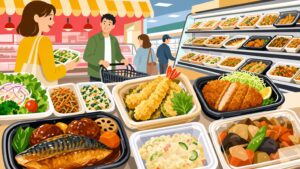
For the clearest evidence, skip the souvenir shops and head into any typical Osaka supermarket, such as Life, Mandai, or Gyomu Super. Locate the aisle for flour and dried goods, and you’ll find a genuine shrine to konamon. This isn’t a small section with a few options; it’s an entire universe. Dozens of different types of pre-mixed okonomiyaki and takoyaki flour await, each promising a slightly unique result. Some are blended with yam for a fuwa fuwa (fluffy) texture; others feature special dashi blends for richer, more savory flavors. The sauces alone can take up half an aisle. Numerous brands—Otafuku, Ikari, Doro—offer multiple variations: standard, spicy, extra sweet, low-sodium. You’ll find giant bags of katsuobushi (bonito flakes) and aonori (green seaweed powder), as well as various grades and textures of tenkasu. This extensive selection isn’t meant for restaurants or tourists—it’s for the average Osaka family doing their weekly shopping. The vast shelf space devoted to these ingredients makes a strong statement about their significance in the city’s daily diet and social life. A comparable supermarket in Tokyo might have a small, lonely corner with just one brand of sauce and a single type of flour mix. In Osaka, it’s a central attraction.
“One Takoyaki Maker Per Household” – The Unwritten Rule
Step into any electronics store like Yodobashi Camera or even a discount emporium such as Don Quijote, and you’ll encounter a dazzling variety of takoyaki makers. These range from inexpensive, basic electric models cooking a dozen balls at once to sophisticated, professional-grade gas-powered griddles that can be swapped for a flat okonomiyaki plate. The takoyaki maker isn’t a novelty item here; it’s a standard household appliance, as essential as a rice cooker or microwave. It’s assumed every home has one.
This seemingly minor fact carries significant cultural meaning. Owning a takoyaki maker signals social readiness. It’s an open invitation, a declaration that your home is ready for spontaneous social gatherings. For non-Japanese setting up home in Osaka, purchasing a takoyaki maker is a rite of passage. It’s a tangible step toward cultural integration. It signals to your Japanese friends and colleagues that you understand the culture and are eager to join in. Receiving one as a housewarming gift is the ultimate welcome— a symbolic key unlocking a deeper level of social connection and belonging in your new city.
What This Teaches You About Osaka People
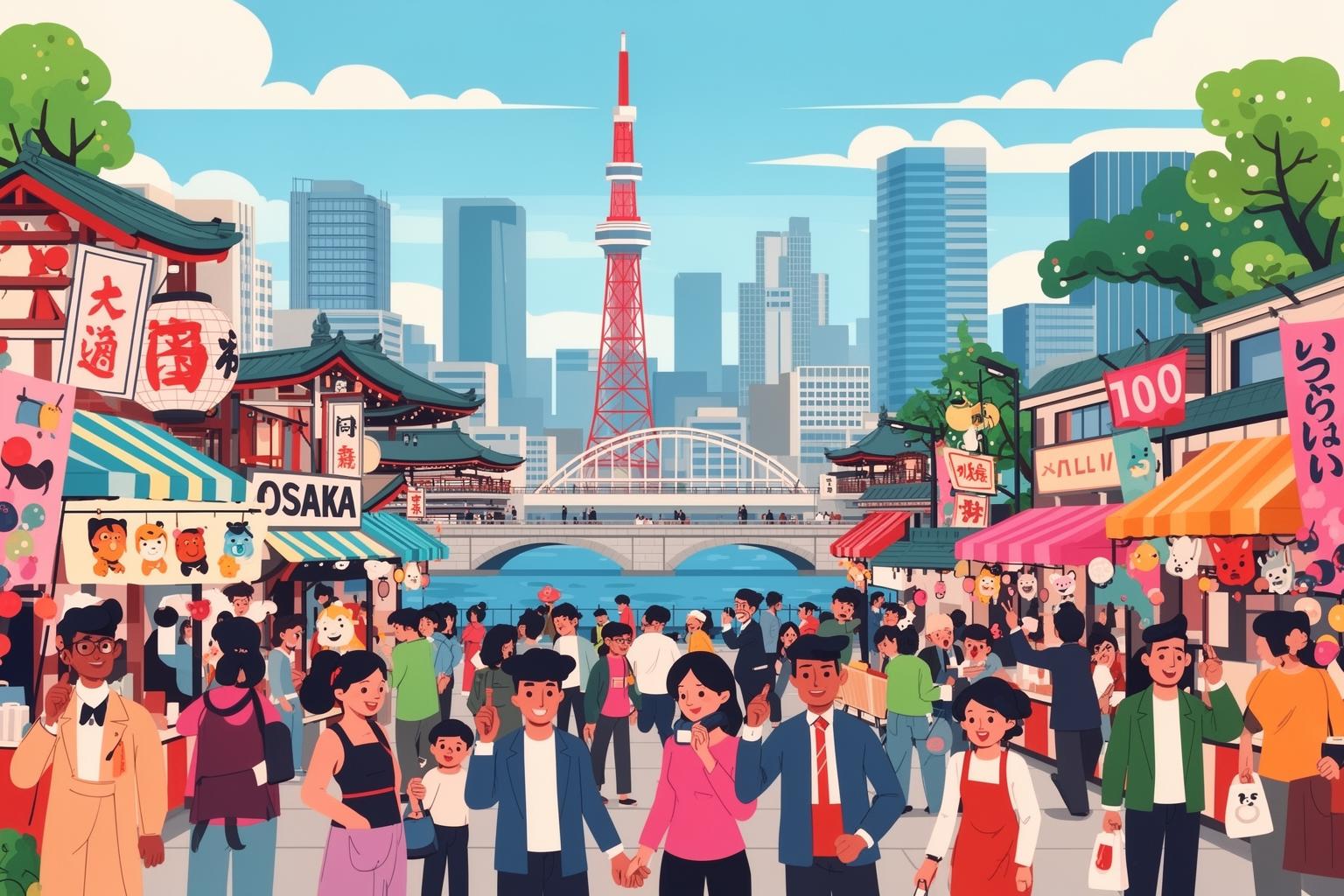
Understanding konamon culture means gaining a much deeper insight into the people of Osaka. The ingredients, cooking methods, and social setting all serve as metaphors for the local character, unveiling the core values and communication styles that distinguish this city from the rest of Japan.
Communication is Collaborative and Chaotic
Recall the scene of a takopa. People talk over one another, reach across the table, add ingredients, and collectively poke and prod the food. This is Osaka communication at its purest. It’s not a polite, orderly exchange where everyone waits their turn to speak. Instead, it’s a dynamic, collaborative, and often chaotic process where everyone chimes in simultaneously. Like adding tenkasu and ginger to the batter, people jump in with their opinions, jokes, and stories. Although it may appear messy from the outside, it creates something rich, layered, and deeply engaging. The aim is active participation, not passive listening. While this can feel intimidating for newcomers used to more reserved communication styles, embracing this lively overlap is essential for connecting with Osakans.
Value is Measured in ‘Cospa’ and Heart
At its core, konamon is incredibly affordable food. It’s flour, water, cabbage, and a few inexpensive extras. This perfectly captures the Osakan obsession with cospa, or cost performance. Rooted in a practical merchant-class history, Osakans take great pride in finding good value. They are savvy consumers who appreciate getting the most for their money. However, dismissing this as mere frugality overlooks the other half of the equation: heart. The worth of a home-cooked okonomiyaki isn’t measured by the cost of its ingredients but by the time, effort, and love poured into making it together. A shared, homemade meal, no matter how simple, is prized far more than an expensive, formal dinner at a fancy restaurant. This mixture of shrewd pragmatism and warm sentimentality is the essence of the Osaka spirit. They value a good bargain but cherish genuine human connection even more.
Overcoming the “Friendly but Distant” Misconception
Many foreigners living in Osaka encounter a common paradox. On the street, people are extremely friendly, chatty, and open. Strangers might start conversations at a bar or offer help if you seem lost. Yet turning these warm encounters into genuine, lasting friendships can be surprisingly challenging. There often seems to be an invisible barrier between this cheerful public persona and the private inner world. This reflects the classic Japanese distinction between soto (outside) and uchi (inside), and in Osaka, that barrier can feel especially high.
Konamon is the key that unlocks the door to uchi. Street stall takoyaki is a soto experience; home takopa is uchi. Being invited into someone’s home to cook together marks a meaningful social milestone. It’s the moment you move from friendly acquaintance to true friend. It’s a gesture of trust and inclusion. So, if you feel stuck in superficial friendships, here’s a practical guide: First, buy a takoyaki maker. Second, mention to your Osaka colleagues or friends that you’ve bought one and plan to try it out. This signals your interest. More often than not, it’ll be met with an enthusiastic invitation to come over and show you how it’s done. When that invitation arrives, accept without hesitation. Finally, once you’ve learned the ropes, take the plunge and host your own takopa. It will be messy. You will burn things. But opening your home and sharing this beloved ritual will build deeper, more meaningful connections than a hundred nights of polite bar conversation ever could. Embrace the chaos, share the food, and you’ll find your place in the heart of this incredible city.