Why do people in Osaka talk about food so casually, so often, and with such strong opinions? Why can a quick weekday lunch become a small debate about broth, rice texture, portion size, or whether a restaurant is “properly” serving a familiar dish? And why does the famous phrase kuidaore—食い倒れ—mean much more than simply eating a lot?
For foreigners living in Osaka, or considering a move here, kuidaore is easy to misunderstand. It is often translated as “eat until you drop” or “eat yourself into ruin.” That translation captures the drama, but not the everyday meaning. In ordinary Osaka life, kuidaore is less about luxury dining and more about treating food as part of the day’s emotional balance, social rhythm, and personal judgment.
An Osakan does not need to visit Dotonbori, stand under a giant restaurant sign, or order a famous local dish to participate in this culture. Kuidaore appears in the convenience store choice made after a long shift, the family argument about where to buy prepared food, the quiet pride in a neighborhood noodle shop, and the willingness to spend a little more on something that tastes noticeably better. It also appears in the opposite decision: saving money with a simple bowl of rice, miso soup, and leftovers because good food does not always need to be expensive.
This is not a guide to Osaka’s tourist food. It is an explanation of how food shapes daily life in Osaka: how people think about value, how they show care, how they compare the city with Tokyo, and why meals often reveal more about local personality than formal introductions do.
What Kuidaore Really Means in Osaka
More than “eat until you drop”
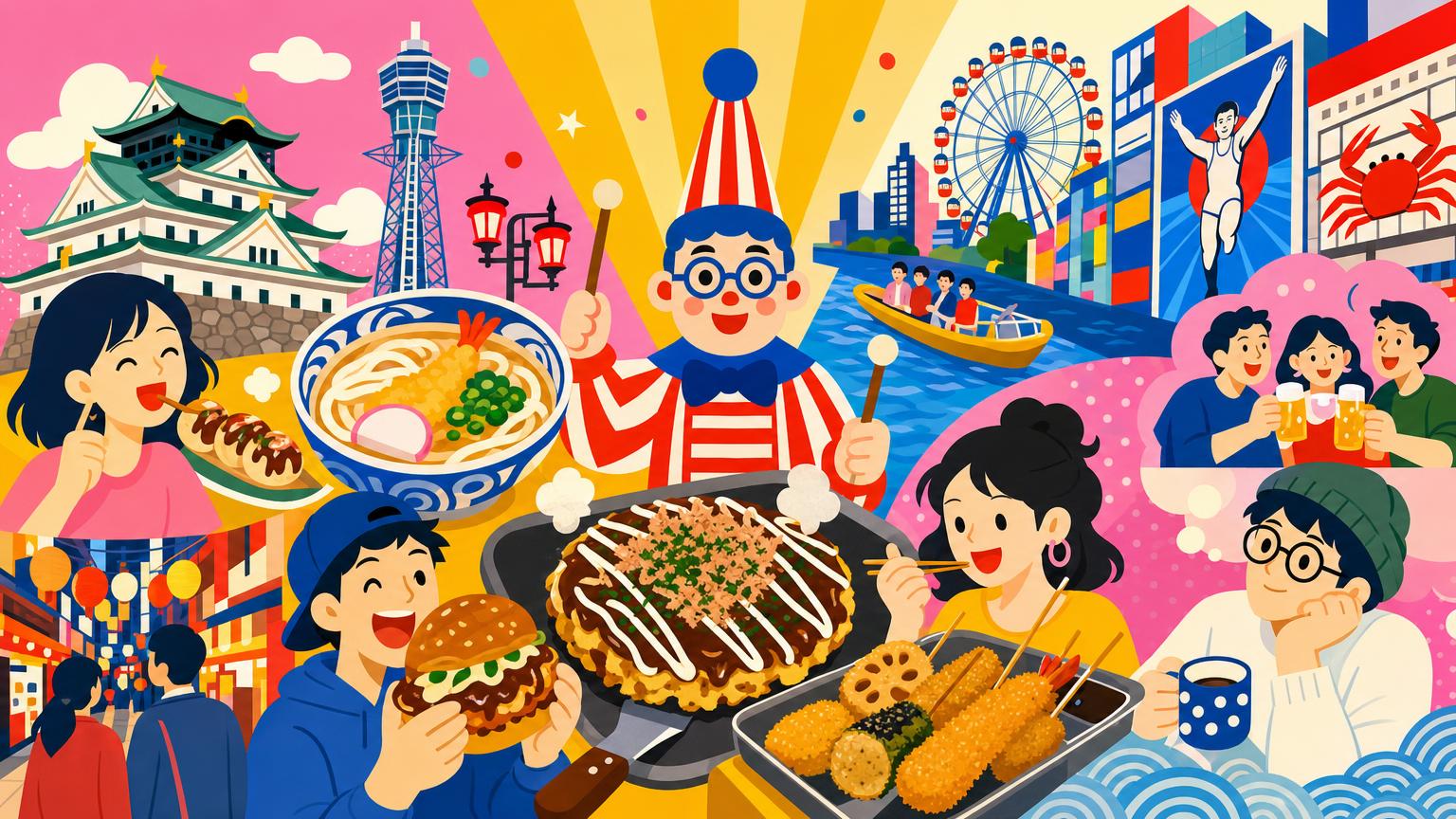
The Japanese expression kuidaore combines kui, from kuu, meaning to eat, and taore, meaning to collapse or ruin oneself. In popular explanations, it suggests eating until your finances or body give out. The phrase sounds excessive, but in Osaka, its everyday interpretation is usually more practical and playful.
It describes a willingness to take food seriously without making it feel solemn. Eating well is not limited to special occasions. A good meal can be a perfectly normal weekday event, while even a modest meal may still be judged carefully. A cheap restaurant can earn deep respect if its portions are generous, its seasoning is balanced, and its staff understand what regular customers want.
In Osaka, the question is often not “Is this expensive?” but “Is this worth it?” The two questions are not the same. A 500-yen meal that leaves you disappointed may be considered wasteful. A 1,500-yen meal that is satisfying, generous, and memorable may be described as good value. The local mindset is not simply about spending more; it is about receiving enough pleasure, nourishment, and social satisfaction for what you paid.
That is why an Osakan may complain about a restaurant and recommend it in the same conversation. The criticism may be specific: the takoyaki shell is too thick, the udon broth is too salty, the rice is too soft, or the serving has become smaller. The complaint is not necessarily hostile. It can signal that the person has a clear standard and wants the food to live up to its potential.
A daily attitude toward pleasure
Many foreign residents first notice that people in Osaka can be direct about food. Someone may ask what you ate for lunch before asking how your morning went. A coworker may inspect your convenience-store meal and say, with complete seriousness, “That one is not very good.” A neighbor may recommend a small restaurant without an English menu because they believe the taste is worth the inconvenience.
This directness is part of kuidaore. Food is a safe and familiar subject, but it is also a way to communicate personality. Through everyday food choices, people reveal whether they are economical, adventurous, traditional, health-conscious, nostalgic, or status-conscious.
A person who buys department-store food at the end of the workday may not be showing off. They may simply be marking the end of a difficult day. Someone who insists on a particular brand of tofu may be expressing a family habit rather than culinary snobbery. Someone who eats standing soba at a station may value speed and reliability over atmosphere. The food choice contains a small story about how that person wants the day to feel.
For foreigners, the important point is this: kuidaore is not a permanent festival. It is a habit of noticing. People in Osaka often notice whether food is satisfying, whether the price makes sense, and whether the meal suits the moment.
Why Food Became So Central to Osaka Identity
Osaka as Tenka no Daidokoro
Osaka’s reputation as Japan’s “kitchen” is closely connected to its historical role as a commercial and distribution center. During the Edo period, Osaka became a major hub for rice, regional products, merchants, warehouses, shipping routes, and financial transactions. The phrase Tenka no Daidokoro—天下の台所, often translated as “the nation’s kitchen”—describes this economic importance.
The phrase does not mean that every Osakan ate lavish meals. Rather, it means that Osaka was deeply connected to the movement, pricing, storage, and sale of food. Rice was not merely something to eat; it was also a political and economic foundation. Merchants needed to assess quality, calculate value, move goods efficiently, and build relationships through business and hospitality.
This history helps explain why Osaka’s food culture often feels practical rather than ceremonial. The city developed around commerce, and commerce depends on trust. A restaurant must give customers a reason to return. A shop must offer quality that feels appropriate for the price. A merchant must quickly understand what people want. These values continue to shape modern meals, even when nobody is consciously thinking about the Edo period.
In Tokyo, food can be closely associated with refinement, regional prestige, or specialist craftsmanship. Osaka certainly has refined cuisine as well, but everyday Osaka often emphasizes satisfaction, accessibility, and personality. A restaurant can be respected because it feeds people generously and consistently, not simply because it presents itself as elegant.
Merchant logic in the modern kitchen
The old merchant spirit can still be felt in small decisions. A lunch shop may offer a large serving at a reasonable price. A family-run restaurant may remember that a particular customer prefers less rice. A supermarket may compete by offering prepared foods that feel homemade. A restaurant may use a cheerful joke to soften a price increase or explain a change in ingredients.
This is not simply a story about Osaka being cheap. Osaka people can spend freely on food. The stronger idea is that spending should provide a clear return. Customers want taste, quantity, atmosphere, convenience, or emotional comfort. Ideally, a meal delivers several of these at once.
That logic also influences home cooking. A household may not prepare elaborate dishes every night, but it may combine simple foods thoughtfully: leftover vegetables in miso soup, grilled fish with rice, a purchased side dish alongside homemade pickles, or noodles prepared quickly after work. The goal is not to demonstrate culinary ambition. It is to make the meal feel complete.
For a foreign resident, this can be useful to keep in mind when sharing food with Osaka colleagues or neighbors. Complimenting a meal by saying only, “It is expensive,” may miss the point. Saying, “The flavor is good for the price,” “The portion is generous,” or “This feels comforting after work” often expresses deeper appreciation.
The Osakan Meal Routine: Ordinary Food, Strong Preferences
Breakfast Is Often Functional, but Not Meaningless
An Osakan’s breakfast may be quick: toast, coffee, yogurt, fruit, a convenience-store rice ball, or a bowl of rice with leftovers. Some households still prefer a traditional breakfast of rice, miso soup, grilled fish, and a small side dish, but work schedules have made weekday mornings more flexible.
The kuidaore mindset does not require every meal to be impressive. It allows food to serve different purposes. Breakfast may simply provide energy, lunch may be the day’s main pleasure, and dinner may be social. On another day, the pattern may reverse.
The important point is that people often know why they are choosing something. A quick breakfast is not automatically viewed as poor living. If it saves time before a long commute, it may be the sensible choice. However, eating the same unsatisfying food without thinking about it can feel like a small form of defeat. Even a simple breakfast is expected to do its job.
Foreign residents sometimes imagine that Japanese people cook elaborate meals every day. Daily life in Osaka is more varied. Supermarkets, convenience stores, bakeries, prepared-food counters, frozen foods, and neighborhood restaurants all support ordinary households. Buying food is not necessarily a failure to cook; it is part of the city’s food infrastructure.
Lunch Reveals the City’s Working Rhythm
Lunch in Osaka is often practical, fast, and closely connected to location. Office workers may choose a set meal, curry rice, ramen, udon, soba, a rice bowl, or a bento. Students may compare prices among several nearby shops. Factory workers, retail staff, hospital employees, and delivery workers may depend on places that serve food quickly and at predictable times.
The ideal lunch solves several problems at once. It should be affordable enough for regular use, filling enough to last through the afternoon, and tasty enough to improve one’s mood. A restaurant that achieves all three can become part of someone’s weekly routine.
This is where neighborhood familiarity matters. In Osaka, people often develop a personal map of dependable food: the shop near the station with good croquettes, the udon counter that serves quickly, the bakery with discounted bread after a certain hour, the supermarket whose prepared fish is better than its competitor’s, or the small Chinese restaurant where the lunch set is consistently generous.
These places may be invisible to visitors. They are not necessarily beautiful, famous, or photogenic. They are useful. They fit the timing and budget of everyday life. When foreigners ask how to understand Osaka, observing where people eat on an ordinary Tuesday may reveal more than visiting a famous restaurant district.
Dinner Balances Convenience and Care
Dinner is the meal most influenced by household structure, work schedules, age, and income. A single resident may eat at a restaurant, buy a bento, prepare noodles, or combine supermarket side dishes with rice at home. A family may cook one central dish and adjust portions for children, grandparents, or different work schedules.
In many homes, dinner is not a performance. It may be ordinary: curry, stir-fried vegetables, grilled meat, hot pot, fish, rice, miso soup, or prepared food reheated in the microwave. Yet ordinary does not mean careless. The choice may reflect the weather, the season, the family budget, and how much energy remains at the end of the day.
Hot pot, or nabe, is a good example of food as coordination. The ingredients can be simple, but everyone gathers around the same pot. The meal expands or contracts according to appetite. It can use vegetables before they spoil, stretch a modest amount of meat, and create leftovers for the following day. The pleasure comes from warmth and participation as much as from the ingredients.
An outsider may expect the “real” Osaka food experience to involve dramatic street dishes. For residents, the deeper experience may be deciding what to cook when it is raining, what to buy after working overtime, or how to use the last vegetables in the refrigerator. That is where kuidaore becomes a domestic skill rather than a tourist slogan.
Konamon and the Logic of Filling Food
Why flour-based dishes matter
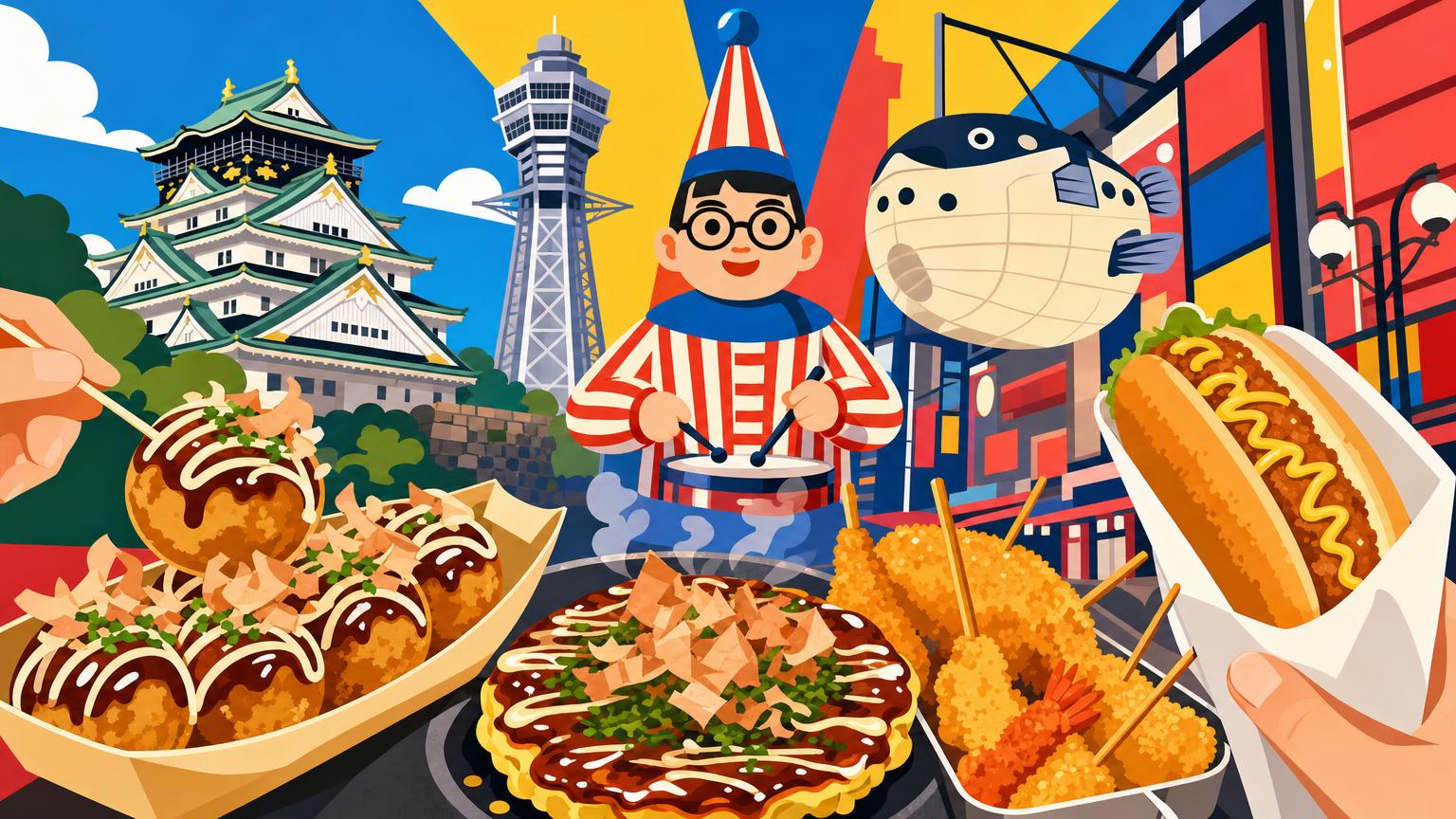
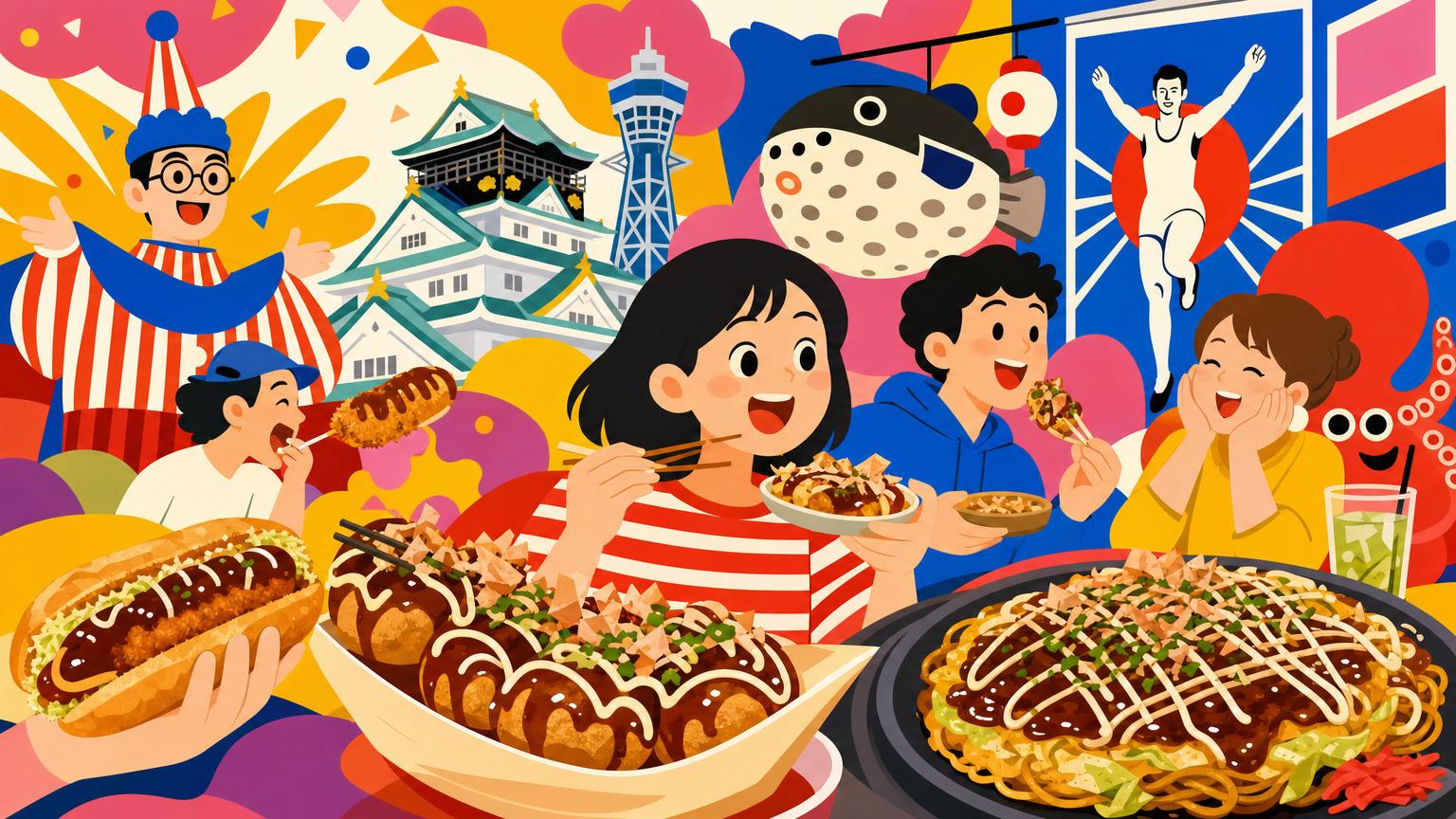
Osaka is closely associated with konamon—粉もん, meaning flour-based foods. Takoyaki, okonomiyaki, negiyaki, and other dishes made with batter or flour are often regarded as local soul food. Their importance lies not only in their taste. They also reflect Osaka’s history of practical cooking, merchant life, urban density, and adaptable household budgets.
Flour-based dishes can transform a small amount of protein or vegetables into a satisfying meal. They are flexible, social, and easy to adapt. They can be prepared at home, sold from a small shop, cooked quickly, and modified according to what is available. The food feels substantial without requiring expensive ingredients.
This is one reason it can be misleading to describe konamon as merely “junk food.” Some versions are rich and heavy, but the broader culture is centered on transformation. Batter creates volume and texture. Cabbage, green onion, seafood, pork, pickled ginger, or leftover ingredients can be turned into a complete meal. It is a style of cooking that respects appetite while remaining mindful of cost.
Takoyaki at home is different from takoyaki for visitors
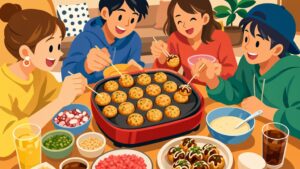
Takoyaki—たこ焼き, or octopus balls—is one of Osaka’s most recognizable foods, but the everyday experience is not limited to buying a serving in a busy entertainment district. Many Osaka households own a takoyaki pan. Families and friends may gather around the table, pour batter into the small molds, add octopus and other ingredients, turn the balls, and eat them as they cook.
The activity is messy, collaborative, and forgiving. Shape matters, but perfection is not always the goal. Someone may be more skilled at turning the balls, while someone else prepares the ingredients. Children may make irregular pieces that are still eaten immediately. The meal encourages conversation because everyone is working with their hands and waiting for the next batch.
This helps explain why takoyaki can feel different in everyday Osaka life than it does as a snack for visitors. The dish is not simply a finished product; it is also a way to spend time together.
Foreign residents should also recognize that preferences vary. Some people prefer a soft, almost creamy center, while others favor a firmer texture. Some want plenty of sauce and mayonnaise; others prefer green onion, salt, ponzu, or a lighter topping. Asking someone what kind of takoyaki they like can lead to a more revealing conversation than asking which famous restaurant they recommend.
Okonomiyaki and negotiated taste
Okonomiyaki—お好み焼き—literally suggests “grilled as you like it.” The name reflects its adaptable nature. Cabbage, batter, meat, seafood, green onion, cheese, mochi, noodles, and other ingredients can be combined in various ways. The dish is filling, customizable, and well suited to sharing.
Okonomiyaki also reveals a local comfort with negotiation. At some restaurants, customers cook the dish themselves, while at others, the staff prepare it. The table may include sauce, mayonnaise, dried seaweed, bonito flakes, and a spatula. People decide how much topping is appropriate, when the surface is ready, and whether to cut the pancake into small pieces or larger sections.
There is no single Osaka personality hidden within okonomiyaki, but the dish does reflect a common preference for food that feels approachable. It does not need to be precious. It can be adjusted, shared, discussed, and enjoyed without formal ceremony.
For foreigners living in Osaka, learning how to participate matters more than memorizing a recipe. Watch how others use the spatula. Ask before adding strong toppings to a shared dish. Notice whether the restaurant expects customers to cook or wait. Small acts of observation can make the meal smoother.
Dashi: The Quiet Foundation of Osaka Taste
Why broth matters in everyday meals
One of the most important ways to understand Osaka food is through dashi—だし, a stock or broth used to create depth of flavor. Osaka cuisine is strongly associated with kombu, or kelp, and a restrained use of seasoning that allows the umami to remain clear.
You may taste dashi in udon broth, simmered vegetables, tofu dishes, rolled omelets, miso soup, chawanmushi, and many home-cooked meals. It often does not announce itself. Instead, it makes a simple dish taste rounded, fragrant, and satisfying.
This matters to daily life because Osaka food is not only about strong flavors. A person may appreciate a bowl of noodles because the broth is clean and aromatic, rather than aggressively salty or spicy. The satisfaction can be subtle. It may take time for a foreign resident accustomed to stronger seasoning to notice what is absent: the heaviness, sharpness, or excessive sweetness that might otherwise cover the ingredients.
Of course, Osaka food is not uniformly delicate. There are rich ramen shops, intensely seasoned fried foods, spicy dishes, and powerful sauces. However, dashi culture creates a local reference point. People often judge whether the seasoning supports the main ingredient or overwhelms it.
Osaka and Tokyo: different expectations, not a simple winner
The question “Is Osaka food better than Tokyo food?” is common, but it is not especially useful if “better” means universally superior. Osaka and Tokyo developed distinct food identities because of differences in history, ingredients, regional networks, economic structures, and local tastes.
A simplified contrast is that Osaka is often associated with clear, umami-rich dashi, especially kombu-based flavors, while Tokyo is often associated with darker, more assertive soy sauce seasoning in dishes such as noodle broths. The contrast is noticeable enough to be meaningful, but it should not become a rigid rule. Tokyo has gentle and refined food, while Osaka also has bold and heavily seasoned dishes.
The difference is often a matter of balance and expectation. A visitor from Tokyo may find an Osaka noodle broth surprisingly pale. A visitor from Osaka may find a Tokyo broth too strong or salty. Neither reaction proves that one city cooks better. Rather, it shows that people carry a familiar idea of what a satisfying meal should taste like.
This is also why restaurant comparisons can become personal. When someone says, “Osaka food is better,” they may mean that it feels more relaxed, more filling, more affordable, or closer to their childhood memories. Another person may prefer Tokyo’s specialist restaurants, international variety, or formal presentation. Food opinions often contain a theory of what daily life should provide.
For someone considering living in Osaka, the useful question is not which city wins. Instead, ask what kind of eating rhythm you want. Osaka may suit you if you value neighborhood restaurants, practical portions, informal conversation, and strong local opinions about ordinary dishes. Tokyo may suit you if you prefer greater scale, a wide range of specialist options, and a more visibly competitive restaurant scene. Both cities contain every type of food, but their everyday atmospheres differ.
How Kuidaore Shapes Spending and Value
Cheap does not necessarily mean good
Foreign residents sometimes assume that Osaka’s reputation for inexpensive food means people always choose the cheapest option. That is not quite accurate. The local standard is closer to “good value,” which can include quality, quantity, speed, atmosphere, and reliability.
A cheap meal that causes discomfort or disappointment may not be considered economical. A slightly more expensive lunch that is satisfying and dependable can be the wiser choice. People may return to the same restaurant for years because it consistently provides an acceptable balance.
This mindset can be seen in discussions about rising prices. If a favorite shop raises its prices but maintains its portion size and taste, customers may accept the change. If the portion becomes smaller while the price increases, the reaction can be much stronger. The emotional issue is not only about money. It is also the feeling that the agreement between the shop and the customer has changed.
You may hear this expressed through humor rather than a formal complaint. Osaka communication often softens criticism with jokes, exaggeration, or a theatrical reaction. A customer may say that a small portion is “a sample” or that a disappointing dish is “a new diet plan.” The humor can be friendly, but the underlying judgment remains clear.
Food as a form of household economics
The kuidaore mindset does not mean ignoring household budgets. In fact, it often encourages careful food management. People compare supermarkets, use point cards, buy discounted products at the right time, freeze ingredients, and plan meals around what is already available.
A person may spend generously on one meal and save on the next. A family may buy premium fish for a weekend dinner but use inexpensive vegetables and eggs during the week. Someone living alone may choose a restaurant meal because cooking for one feels inefficient, while another resident may cook in batches to control costs.
These choices are not contradictory. They reflect a flexible approach to pleasure. Osaka’s food culture allows people to enjoy a special item without believing that every meal has to be special.
For foreigners, this can be reassuring. Living in Osaka does not require constant restaurant spending to participate in the local food culture. Learning which supermarket sells good prepared food, which bakery discounts bread, and which neighborhood restaurant welcomes solo customers may bring you closer to everyday Osaka than simply following a list of famous dishes.
Food as Social Language in Osaka
Asking what someone ate can reflect genuine interest
In some cultures, asking about food may feel intrusive or superficial. In Osaka, it often serves as an easy way to begin building a relationship. “What did you eat?” can lead to conversations about work, family, money, health, memories, and local knowledge.
A coworker might ask whether you have tried a particular restaurant. A neighbor may give you vegetables and explain how to cook them. A friend might send you home with leftovers. These gestures may seem informal, but they can express genuine care.
At the same time, Osaka people are not equally open with everyone. Their reputation for friendliness can cause confusion because warmth does not always indicate intimacy. Someone may joke with you, ask personal questions, or recommend a food while still maintaining a clear boundary. Conversation can be lively without developing into a close friendship.
The best response is to participate without making too many assumptions. Ask follow-up questions. Remember the recommendation. Try the food and report back honestly. If someone says, “You should eat this,” they may be inviting an exchange rather than issuing a command.
Sharing food is not always casual
Osaka’s informal atmosphere may lead foreign residents to assume that all food sharing is relaxed. In reality, context matters. At an izakaya, people may order dishes for the table to share. At a family home, the host may expect guests to accept another serving. In a workplace, someone may bring regional sweets or souvenirs for everyone.
However, some dishes are meant for individuals, and taking food from another person’s plate without asking is still considered poor manners. Use serving utensils when they are provided. If there are no serving utensils, observe what others do or ask politely. When sharing a dish, do not automatically take the most appealing piece first.
The principle is simple: Osaka informality does not eliminate consideration. Instead, it makes consideration less formal and more dependent on observation.
Humor can conceal a serious message
Osaka speech is often described as humorous, and many people do enjoy playful conversation. However, foreigners may mistake humor for permission to ignore criticism. A joke about your behavior may still be a request for you to change it.
If someone laughs and says that you are eating too slowly, standing in the wrong place, or using too much sauce, do not assume the comment is meaningless. The person may be trying to correct you without creating tension. Responding with a smile and adjusting your behavior is usually more effective than defending yourself at length.
Similarly, teasing does not always indicate dislike. But it is not a universal invitation, either. The relationship, age, workplace position, and setting all matter. The safest approach is to enjoy the humor while paying attention to whether the other person is also comfortable being teased.
What Foreigners Often Misunderstand About Osaka Food Culture
“Osaka people only eat cheap street food”
This is one of the most persistent misunderstandings. Osaka has a casual food culture, but casual does not mean limited. Residents eat home cooking, regional Japanese cuisine, sushi, French and Italian food, vegetarian and vegan dishes, international cuisine, bakery products, health-focused meals, and expensive celebratory dinners.
The difference is that prestige is not always displayed in the same way. A highly skilled restaurant may remain small and informal, making it difficult to recognize from the street. Someone may appreciate sophisticated technique while still preferring a friendly atmosphere and a generous serving.
Do not assume that choosing a casual restaurant means someone lacks culinary knowledge. In Osaka, people may be able to discuss ingredients and preparation in detail while eating at a very ordinary-looking place.
“Everyone in Osaka is outgoing”
Osaka can feel more verbally expressive than some other parts of Japan, but individual personalities vary. Many people are quiet, private, shy, or cautious around strangers. The city’s humor and directness can make public interactions feel lively without meaning that everyone wants an extended conversation.
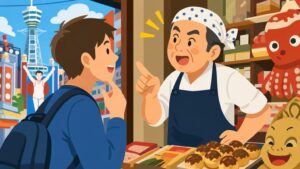
For foreigners, the difference may be most noticeable in service interactions. Staff may use a warmer tone, make light jokes, or respond with visible personality. This does not necessarily indicate special treatment or a personal relationship. It may simply be the local style of making a routine interaction pleasant.
At the same time, communication in Osaka can be more direct about practical matters. Someone may tell you that your Japanese pronunciation is difficult to understand or that your chosen restaurant is not very good. The comment may sound blunt, but it can be intended to help.
“Food should always be shared”
Sharing is common in some settings, but it is not a rule for every meal. Many people prefer individual bowls, set meals, or separate portions. Do not order a large dish for the table to share unless the group has agreed.
When eating with Japanese colleagues, observe whether they order individually or collectively. If you are unsure, ask, “Should we share this?” That small question demonstrates awareness and helps prevent awkwardness.
“A pale broth has less flavor”
Color is not a reliable measure of strength. Osaka-style broth may look light while containing deep umami. If you are accustomed to dark soy sauce-based broths, the first taste may seem understated. Give it time, and notice the aroma, aftertaste, and relationship between the broth and its ingredients.
This is a broader lesson about living in Osaka. Not everything important is visually dramatic. Many local habits operate quietly, and their value may emerge through repetition rather than immediate impact.
Everyday Etiquette Around Meals
Rice on the plate: is it rude not to finish?
The short answer is that leaving a small amount of rice is not automatically rude in every situation, but wasting food is generally viewed negatively. The Japanese concept of mottainai—もったいない—expresses regret when something useful has been wasted. It applies to food, objects, time, and effort.
At home, a host may feel disappointed if a guest leaves a large amount of food without explanation, especially after preparing the meal carefully. In a restaurant, leaving some food is usually tolerated, particularly if the portion was too large or the dish did not suit you. You do not need to force yourself to eat beyond your comfort level.
The most respectful approach is to order an amount you can reasonably finish, take smaller portions when possible, and avoid leaving a large quantity without explanation. If someone asks whether you disliked the food, answer honestly but kindly. You can say that you were full, that the portion was larger than expected, or that you are not accustomed to the seasoning.
Do not panic over a few grains of rice. Japanese etiquette is not a test intended to punish foreigners. The broader principle is awareness: food requires money, labor, ingredients, transport, preparation, and time. Treat it as something worthy of respect.
Chopsticks and shared dishes
Avoid leaving chopsticks standing upright in a bowl of rice. This resembles a funeral ritual and is considered inappropriate at the dining table. Do not pass food from chopsticks to chopsticks, as this also resembles a funeral practice.
When putting down your chopsticks, use the chopstick rest if one is provided. If there is no rest, place them neatly across the edge of your bowl or on the wrapper, depending on the setting. Do not wave them while speaking, point with them, or use them to pull dishes toward you.
These rules are not unique to Osaka, but the city’s relaxed dining atmosphere can make visitors forget them. Informality does not mean that there is no etiquette.
Slurping, noise, and conversation
Eating noodles with some sound is generally accepted in Japan, although exaggerated noise can still be unpleasant. You do not need to imitate the loudest person in the restaurant. Eat comfortably while paying attention to the setting.
In a small restaurant, keep your voice at a reasonable level. Osaka conversation may be energetic, but that does not mean every space is intended for loud group conversations. In a quiet café, refined restaurant, train, or shared waiting area, adjust your volume accordingly.
The restaurant bill and lingering
Many casual restaurants expect efficient turnover, especially during lunch. Finish your meal, pay, and make room for the next customer when the restaurant is busy. In cafés and less crowded places, lingering may be fine, but pay attention to whether other customers are waiting.
Some restaurants use ticket vending machines, accept cash only, or require you to pay at the counter. If you are unsure, watch the person ahead of you or ask a staff member. A simple “Where should I pay?” is perfectly acceptable.
Kushikatsu and the Meaning of Local Rules
The famous no-double-dipping rule
Kushikatsu—串カツ—consists of ingredients coated in batter, deep-fried, and served on skewers. It is closely associated with Osaka’s casual dining culture, especially in working-class entertainment districts, but its most famous rule is practical: nido-zuke kinshi, or no double-dipping.
When a shared container of sauce is provided, dip your skewer once before taking a bite. Do not bite into the skewer and then dip it again. The rule exists because the sauce is shared by many customers. It is a matter of hygiene and consideration, not a mysterious ritual.
Many restaurants now offer individual sauce containers, squeeze bottles, or a cabbage leaf that can be used to scoop up sauce. Follow the system used by that restaurant. If you are unsure, look for signs or observe the other customers.
Why one small rule matters
The no-double-dipping rule is a good example of how Osaka’s food culture combines informality with clear social boundaries. The setting may feel relaxed. People may joke, eat quickly, and order inexpensive food. Yet the shared resource creates a sense of responsibility.
Foreigners sometimes focus on the rule as a fun fact. Residents may see it as common sense. The deeper lesson is that Osaka’s casual atmosphere works because people understand when to cooperate. You can be noisy, humorous, and relaxed, but you still need to remain aware of those around you.
This principle extends far beyond kushikatsu. Do not block a narrow restaurant entrance while checking your phone. Do not take more shared food than you will eat. Do not occupy a seat longer than necessary during a rush. Informal cities still depend on timing and mutual awareness.
Neighborhood Food and the Reality of Living in Osaka
Your best meal may be near your station
When people move to Osaka, they often start by searching for famous neighborhoods. Over time, many grow more attached to the places near home. The small bakery along the walk from the station, the family restaurant where staff recognize regular customers, the supermarket with the best fish counter, and the convenience store that consistently stocks a favorite rice ball can become more important than major attractions.
This is how a city becomes livable. You develop food routines that reduce decision fatigue. You know where to go when you are sick, tired, celebrating, short on money, or hosting someone who has never been to Japan. You learn which places welcome solo diners and which are better suited to groups.
Neighborhood knowledge also changes your relationship with time. A ten-minute walk may reveal several different food economies: a standing noodle shop for commuters, a bakery for families, a small izakaya for regulars, a supermarket for households, and a restaurant serving older customers who have lived in the area for decades.
Different parts of Osaka have different dining rhythms
Osaka does not have one uniform food culture. Central business districts may revolve around quick lunches and after-work drinking. Residential neighborhoods may have stronger supermarket and family restaurant routines. Areas with universities may offer inexpensive meals, late-night food, and international options. Older shopping streets may feature long-established shops with loyal customers.
Even within the same ward, the atmosphere can change from one station to the next. A restaurant that feels welcoming in one neighborhood may seem too formal or crowded in another. The only way to learn is through repeated everyday use.
For someone considering living in Osaka, this means choosing a home also means choosing a food environment. Consider whether you want a quiet residential area, a lively station district, access to supermarkets, late-night options, or a short walk to inexpensive restaurants. These practical details affect quality of life more than a list of famous destinations.
Eating alone is normal
Solo dining is common in Osaka. People eat alone at noodle shops, curry restaurants, cafés, sushi counters, family restaurants, and standing bars. You do not need to apologize for taking a seat alone or feel that you are missing out on the social meaning of food.
At the same time, some small restaurants have limited seating and may seat customers together. Follow the staff’s instructions. If you need a particular accommodation, ask politely before sitting down.
Solo dining can become a valuable part of settling into the city. It allows you to experiment without negotiating with a group. You can try a dish, make mistakes, and return to places where you feel comfortable.
How Kuidaore Affects Work, Family, and Health
Food is pleasure, but pleasure has limits
The phrase kuidaore may sound as though eating is always excessive. Daily life, however, is more balanced. Many Osaka residents are mindful of health, portion sizes, blood sugar, salt, exercise, and medical advice. They may enjoy rich foods while also choosing vegetables, walking, preparing lighter meals, or limiting alcohol.
The culture is not an instruction to overeat. Rather, it is permission to value food. A person can practice kuidaore by enjoying one excellent pastry, a carefully prepared lunch, or a seasonal ingredient. Excess may sometimes be part of the joke, but appreciation is the more enduring principle.
This distinction matters for foreigners trying to build a sustainable life in Osaka. You do not need to accept every invitation to eat or drink. You can say that you are full, avoiding alcohol, or would prefer something lighter. Direct but polite communication is usually respected.
Family meals are shaped by schedules
Japanese family meals are often imagined as everyone sitting down together at the same time. Some families do eat this way, but modern Osaka households have varied schedules. Parents may work late, children may have club activities, and shift workers may eat at different times. Elderly family members may also prefer different foods.
Food is often prepared so it can be served in stages. A dish may be reheated, rice may remain warm in a rice cooker, and side dishes may be stored for later. The household meal is not always a single event; it can be a system that accommodates different schedules.
This practical flexibility has both cultural costs and benefits. It makes daily life more manageable, but it can reduce shared time. Families may deliberately preserve certain meals—weekend breakfasts, seasonal dishes, or occasional restaurant visits—as opportunities to reconnect.
Workplace food creates belonging
Food can also shape workplace relationships. Coworkers may go to lunch together, share sweets, bring back regional snacks, or discuss restaurants after work. Participating can help you build connections, but you do not have to attend everything.
If you are invited to lunch, accepting occasionally can be valuable, especially early in a job. You may learn informal communication patterns that are difficult to understand in meetings. You may also discover that the same people who seem reserved at their desks become highly expressive when discussing food.
However, do not assume that declining one invitation will damage your relationship. Give a clear, polite reason. Saying that you brought lunch, have an appointment, or need to manage your budget is usually enough. Osaka’s practical culture often responds well to practical explanations.
What Osaka Food Culture Says About Osaka People
Direct, but not necessarily aggressive
Food conversations can sound blunt because people often express clear evaluations. “Too expensive,” “not enough,” “too salty,” or “this shop is better” may be said without much softening. In many cases, this directness reflects familiarity with the subject rather than hostility toward you.
Foreigners may need time to distinguish between criticism of an object and criticism of a person. If someone says that your chosen restaurant is bad, they may be criticizing the restaurant, not your intelligence. If they correct the way you eat, they may simply be trying to help you avoid an awkward situation.
When responding, you do not need to be equally blunt. A light reply such as “Really? I liked the texture, but I will try your recommendation next time” can keep the exchange open.
Generous, but attentive to reciprocity
Osaka people may offer food, recommendations, directions, or practical help. However, generosity often involves reciprocity. If a neighbor gives you vegetables, you might later return a small gift or share something from your home country. If a colleague recommends a restaurant, telling them what you thought shows respect.
This does not mean that every kindness creates a debt. Rather, it means that relationships develop through repeated exchange. A one-time gift may be casual, while a pattern of giving and receiving becomes a form of social trust.
Foreigners sometimes wait for a formal invitation to participate. In Osaka, participation can begin with a small response: bring something to share, remember someone’s preference, ask about a local shop, or clearly offer to pay your share. These actions show that you are not treating local warmth as a service provided for your benefit.
Emotional honesty through food
An Osakan may express affection by feeding you, concern by asking whether you have eaten, or nostalgia by describing a childhood dish. Food can convey emotions that are difficult to express directly.
If someone tells you to eat more, it may mean that they want you to feel welcome. If they ask whether you have eaten properly, they may be checking on your health. If they criticize a dish from their hometown, they may be expressing pride rather than rejection.
You do not need to interpret every meal as a hidden message. However, noticing these patterns can help you understand why food conversations may feel more personal than they would in your home culture.
Practical Advice for Foreigners Living in Osaka
Build your own local food map
Start with places you can visit repeatedly, not just those that appear in online rankings. Find a breakfast spot, an inexpensive lunch option, a supermarket, a bakery, a restaurant where you can dine alone, and a place that stays open when you work late.
Learn which payment methods each place accepts. Keep some cash on hand, especially for small restaurants and older shops. Notice whether you order at a counter, use a ticket machine, or wait to be seated.
Pay attention to busy times. A restaurant that is comfortable at 2 p.m. may be crowded at noon. A small shop may close once its ingredients sell out. These details are part of local knowledge.
Ask questions without apologizing too much
If you do not understand the menu, ask. If you are unsure how to use a sauce container, watch someone first and then ask. If you have an allergy or dietary restriction, communicate it clearly before ordering.
A useful approach is to explain what you can and cannot eat rather than relying only on a label such as “vegetarian,” which different people may interpret differently. Say whether fish stock, meat broth, eggs, dairy, alcohol, or shellfish are acceptable for you.
Do not feel embarrassed about being unfamiliar with local customs. The more serious mistake is pretending to understand and then causing a problem with shared food or ingredients.
Accept recommendations, but keep your own taste
Local recommendations are valuable, but you do not have to like everything people praise. Osaka’s food culture welcomes strong opinions, including disagreement. You can say, “I understand why people like it, but I prefer a lighter flavor.” That is a genuine opinion about food, not an insult.
Try to explain your preference rather than dismissing the dish. Saying, “I am not used to the sauce,” invites conversation. Saying, “This food is strange,” may end it.
Over time, you will develop your own Osaka vocabulary: the kind of broth you prefer, the right amount of sauce, the restaurants worth waiting for, and the places you visit when you want comfort rather than excitement.
Understand that routine is the real culture
The most important shift is to stop searching for one perfect Osaka experience. Culture is not contained within a single dish. It is repeated through ordinary decisions: what people buy after work, how they divide a shared meal, how they compare price and quality, how they use humor, how they respect food, and how they make room for others in a crowded city.
A famous dish may introduce you to Osaka, but routine teaches you about Osaka. The supermarket receipt, the lunch queue, the family recipe, the station noodle shop, and the conversation about which restaurant has gotten worse all reveal how people live.
Why Osaka Can Feel Easier—or More Difficult—to Live In
The city can be socially accessible
Osaka may feel approachable because everyday interactions often show more visible personality. A shopkeeper might make a joke. A coworker may offer a straightforward recommendation. A stranger might help you figure out a ticket machine. These moments can lessen the distance that comes with living in a new city.
However, social accessibility does not eliminate cultural complexity. You still need to understand context, respect boundaries, and learn the appropriate timing. A lively conversation is not necessarily friendship, and a joke does not automatically mean it is appropriate to be informal in every situation.
The city may suit practical personalities
Osaka can be a comfortable place to live if you value convenience, neighborhood life, informal restaurants, reasonable prices, and people who express their opinions openly. It may be particularly appealing to foreigners who enjoy discovering daily routines rather than constantly seeking novelty.
It can be challenging if you expect every interaction to be indirect, quiet, or highly polished. Some comments may seem overly personal. Certain restaurant systems may be confusing. Some local humor may be difficult to understand. The same directness that feels warm one day may feel intrusive the next.
The answer is not to form an overly simple image of Osaka people. Instead, develop flexibility. Pay attention to the setting and the relationship, and consider whether the person is providing information, making a joke, or establishing a boundary.
A livable city is made of repeatable pleasures
Osaka’s lasting appeal is often found in repeatable pleasures: a dependable bowl of noodles, a welcoming shop, a convenient market, an affordable meal, or a colleague who remembers what you enjoy. These experiences may appear small, but they gradually build confidence.
That is the everyday meaning of kuidaore. It is not an instruction to consume endlessly, but an attitude that says life should be enjoyed through concrete, ordinary experiences. Eat something satisfying. Appreciate its quality. Share when appropriate. Avoid waste. Pay attention to value. Allow a little excess when the moment calls for it.
The Deeper Mindset Behind Kuidaore
Pleasure should be practical enough to repeat
Osaka’s food culture is often described in terms of excess, but its real strength lies in repeatability. A meal is most valuable when people can enjoy it again: next week, next month, or in a different form at home. The best local restaurant is not always the most spectacular one. It may be the place that remains dependable when money is tight, energy is low, and the weather is unpleasant.
This is why Osaka’s food culture can feel so grounded. Pleasure is not separated from ordinary responsibilities. You can enjoy lunch and return to work. You can laugh over dinner and still catch the last train. You can buy a special dessert without pretending that every day is a holiday.
Food expresses how people judge the world
An Osakan’s opinion about food often contains a broader judgment about life. Is it fair? Is it generous? Is it honest? Does it respect effort? Does it give people enough for what they paid? Does it feel human rather than artificial?
These questions are not unique to Osaka, but the city expresses them openly through food. A restaurant that is too expensive, a portion that has become smaller, or a dish that tastes as though it was made without care—these are not merely culinary problems. They touch on ideas of fairness and trust.
On the other hand, a modest meal prepared with care can earn lasting loyalty. A shop that remembers its customers, serves efficiently, and maintains its quality becomes part of the neighborhood’s emotional infrastructure.
The best way to understand Osaka is to eat normally
If you want to understand what Osaka people are like, do not only ask which dishes they recommend. Ask what they eat when they are tired. Ask where they go when they need comfort. Ask which foods remind them of childhood. Ask which restaurant they stopped visiting and why. Ask whether they prefer eating alone or with others.
Then listen to the details. The answers will reveal their priorities: convenience, family, nostalgia, price, quality, health, status, or simple pleasure.
Osaka’s kuidaore culture lives in those details. It shapes the daily meal routine not by requiring extravagance, but by encouraging people to notice whether a meal has done its job. Has it filled you up? Comforted you? Given you energy? Helped you connect with someone? Made a difficult day feel slightly better?
For a foreigner living in Osaka, that is the most useful understanding to carry forward. The city’s food culture is not a performance for visitors. It is a practical philosophy of living: enjoy what you can, judge value honestly, respect what has been prepared, and make ordinary meals worth remembering.