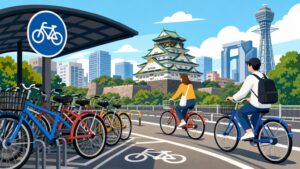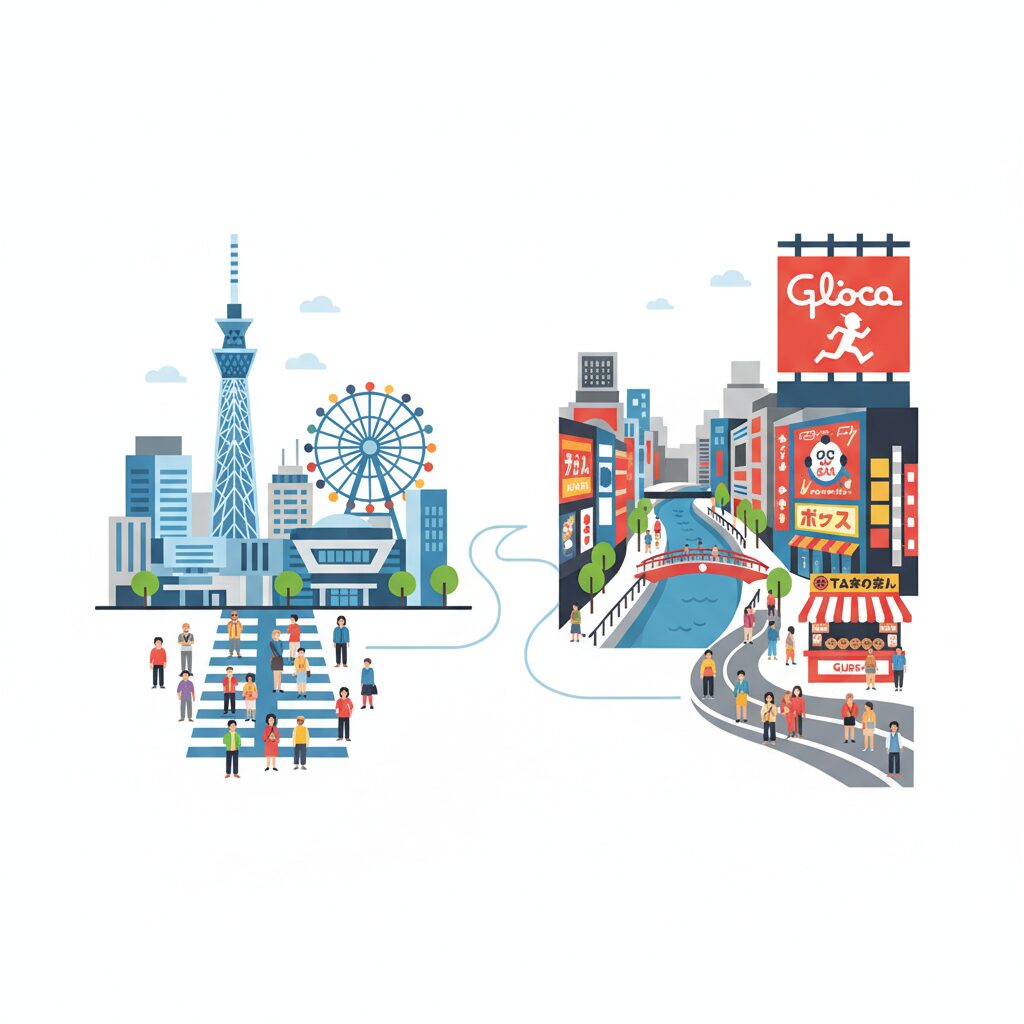
So, you’re moving to Osaka. You’ve heard the stories. It’s Japan’s rebellious second city, a merchant town with a soul forged in commerce and comedy. It’s louder, brasher, and friendlier than Tokyo. But once the plane lands and the moving boxes are unpacked, you face a choice that will define your entire experience here. A choice more fundamental than which train line to live on or where to find the best takoyaki. You have to decide: are you Kita, or are you Minami? North, or South? This isn’t just a geographical question on a map; it’s a declaration of identity. It’s choosing your tribe. Kita, centered on the gleaming towers of Umeda, is the city’s polished, professional face. Minami, the sprawling, neon-soaked carnival around Namba and Shinsaibashi, is its wild, beating heart. They are two halves of the same whole, connected by the rumbling artery of the Midosuji subway line, yet they operate on entirely different frequencies. To live in one is to set the default rhythm of your daily life, to choose the lens through which you see this magnificent, maddening city. Forget the tourist maps for a moment. This is a guide to where you’ll wake up, where you’ll buy your groceries, and where you’ll find your place in the grand, chaotic performance that is life in Osaka.
For those eager to unlock more of Osaka’s neighborhood nuances, our unofficial guide to the kairanban offers essential insights into the city’s layered community fabric.
The Vibe Check: Polished Professionalism vs. Raw Energy
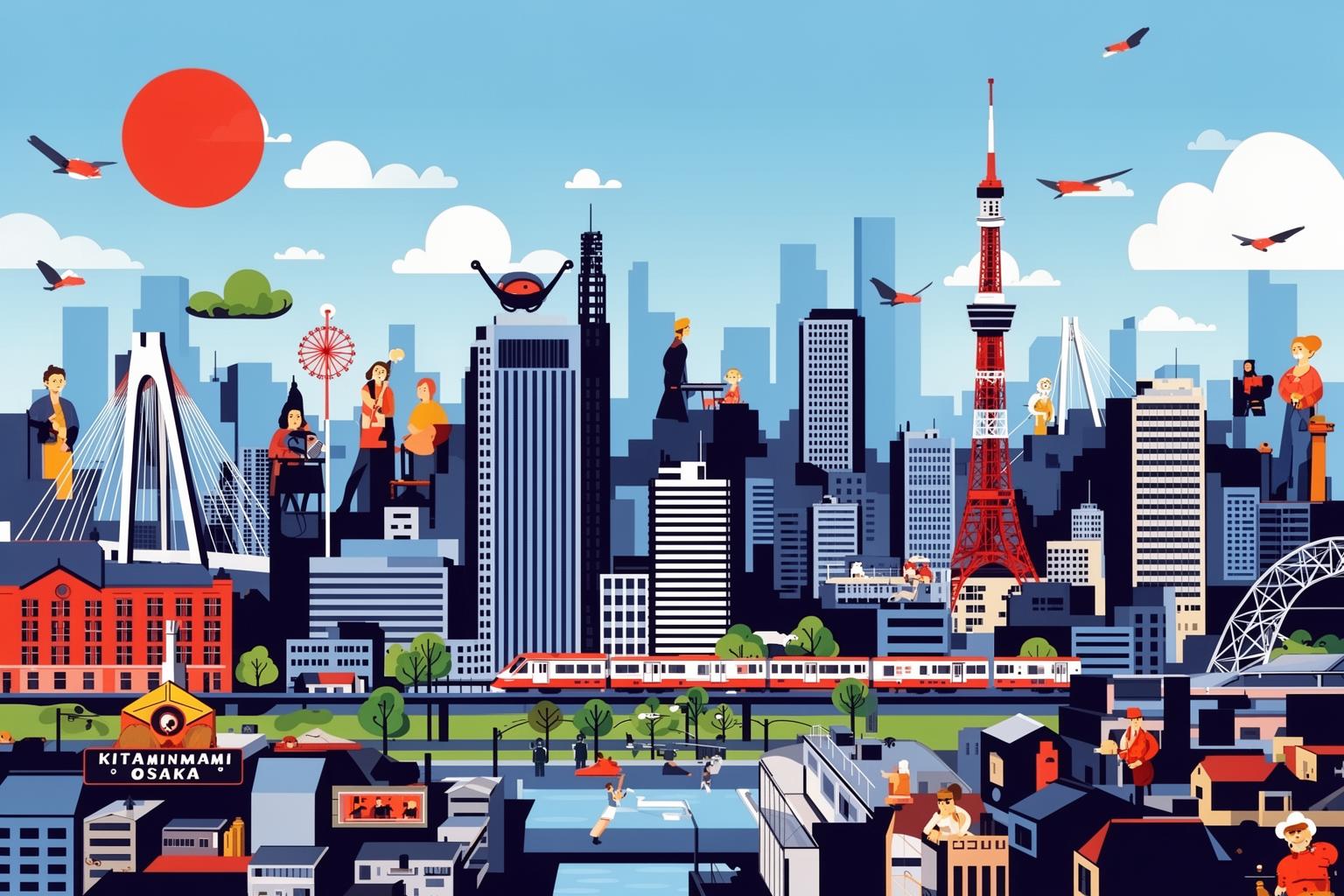
Your first walk through each district reveals everything. The difference is tangible, an immediate change in air pressure and sound. One district is a symphony of choreographed movement; the other, a free-jazz ensemble of human activity. Grasping this atmospheric contrast is the initial step toward understanding where you belong.
Kita (Umeda): The Face of Modern Osaka
Step out of the multi-layered maze of Osaka-Umeda Station and enter a realm of glass, steel, and curated elegance. This is Kita. The boulevards are broad, the sidewalks pristine, and the skyline a testament to corporate ambition. Grand Front Osaka, LUCUA, and the Umeda Sky Building pierce the clouds, reflecting a city that plays seriously on the global stage. The energy here is purposeful and forward-moving. People walk briskly. They are mostly office workers in sharp suits, shoppers carrying designer bags from the Hankyu and Daimaru department stores, and travelers intent on catching the next express train to Kyoto or Kobe. The background noise isn’t the chaotic shouting of street vendors but the gentle hum of escalators, the polite chime of department store elevators, and the quiet murmur of conversations in sophisticated cafes. This is Osaka’s “omote,” its public-facing, official self. It feels international, orderly, and remarkably efficient. Daily life here is structured. Your morning coffee comes from a sleek shop on the ground floor of an office tower. Grocery shopping is a civilized experience in a “depachika”—the immaculate food hall in a department store’s basement—where produce is perfectly arranged and every item a work of art. It’s a comfortable, predictable, and undeniably impressive vision of urban life.
Minami (Namba): The Unfiltered Soul
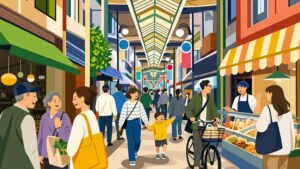
Take the subway eight minutes south to Namba, and the entire world shifts. The moment you emerge, you’re struck by a wall of sensory information. The air is thick with the aroma of grilled octopus and savory dashi broth. The roar of pachinko parlors crashes into J-pop blaring from storefronts. Crowds flow not along wide avenues but through covered “shotengai” shopping arcades—a chaotic jumble of discount stores, tiny eateries, and old-fashioned apothecaries. This is Minami. It’s a sprawling, organic beast, from the iconic Glico Running Man sign overlooking the Dotonbori canal to the impossibly narrow, lantern-lit alley of Hozenji Yokocho. The people form a vibrant, eclectic mix: teenagers in avant-garde street fashion in Amerikamura, clusters of tourists captivated by giant moving crab signs, sharp-suited hosts enticing patrons into clubs, and old-timers in tracksuits shuffling to favorite standing bars. The Osaka-ben dialect is thicker here, laughter louder, and personal space a mere concept. This is the city’s “ura,” its hidden or private self, laid bare for all to see. It’s unapologetically commercial, but on a human scale. Daily life here is improvised. Your local might be a grimy-but-beloved standing-room-only bar where the owner remembers your drink. Groceries come from the frenetic, shouting energy of Kuromon Market or, more likely, the legendary Super Tamade, a 24-hour supermarket known for retina-searing neon lights and incredibly cheap deals.
The Cost of Living: A Tale of Two Budgets
Your wallet will experience the north-south divide as sharply as your senses do. Where you decide to live affects not only your rent but also the entire economic environment you engage with, from the price of a beer to the expense of your weekly groceries.
Renting in Kita: The Price of Prestige
Residing in or near Umeda, in areas such as Nakazakicho, Fukushima, or Tenma, comes at a premium. You are paying for unmatched convenience, modern buildings, and the prestige of a central location. The housing market here is dominated by “tower mansions”—shiny high-rises with sleek lobbies, auto-lock security, and, if you’re fortunate, a view. These apartments tend to be newer, well-maintained, but compact. They are designed for single professionals or dual-income couples who work long hours in nearby offices and prioritize a short, simple commute above all else. A typical 1K (a studio with a separate kitchen area) in a new building close to Umeda Station will demand a significantly higher rent than a comparable or even larger apartment in the south. The trade-off is clear: you give up space for a prime location and amenities. Your lifestyle costs will also be higher—the restaurants are more upscale, the bars more stylish, and the allure of shopping in world-class department stores is constant.
Renting in Minami: Value, Variety, and Vintage
Head south, and your yen goes further. The neighborhoods around Namba, like Sakuragawa, Daikokucho, or stretching toward Tennoji, provide a much broader selection of housing at more affordable prices. Here, the scene is a blend of older, charming retro apartment buildings from the 70s and 80s, smaller walk-ups on quiet side streets, and the occasional new development. For the cost of that sleek Umeda studio, you might find a more spacious 1LDK (a one-bedroom with separate living, dining, and kitchen areas) in Minami. You gain space and character but might give up modern touches like brand-new air conditioners or advanced security systems. The local economy is geared toward value. You are surrounded by inexpensive, lively restaurants, standing bars where draft beer costs a few hundred yen, and those wonderfully chaotic Super Tamade supermarkets where a whole bento box is a bargain. The trade-off here is charm over polish. Your building might be older, and the streets might be noisier, but you live in a neighborhood with a strong sense of community and history, where your money simply stretches further.
The Social Fabric: Networking vs. Neighboring
The way you connect with others and the essence of your social life are shaped by the unseen cultural codes of Kita and Minami. One cultivates professional networks, while the other thrives on spontaneous street encounters.
Social Life in the North: Structured and Scheduled
In Kita, social life is often centered around work. The shining izakayas and upscale restaurants of the Kitashinchi entertainment district are filled with corporate groups dining on expense accounts. Connections form during business lunches, industry seminars, and after-work drinks that feel like an extension of the office. It’s a realm of exchanging business cards (“meishi”) and fostering professional relationships. The foreign community here often mirrors this, focused around the consulates and corporate headquarters in the area. Friendships tend to be more formal and planned, built around organized dinners and weekend gatherings. This social scene is comfortable and predictable for those used to a corporate lifestyle, but it lacks the spontaneity that characterizes the typical image of Osaka.
Social Life in the South: Spontaneous and Street-Level
Minami is where Osaka’s reputation for being outgoing and friendly comes alive. Social interaction isn’t scheduled; it simply unfolds. It’s the conversation you strike up with the stranger next to you at a crowded counter bar in Ura Namba. It’s the shopkeeper in the Doguyasuji kitchenware arcade who takes twenty minutes to explain the subtle variations between soy sauce dishes. It’s becoming a “jouren,” a regular, at a local spot where the staff greet you by name and know your usual order. Community here is built on these small, repeated, unplanned moments. People are nosy, direct, and genuinely curious. They’ll ask where you’re from, what you’re doing in Japan, and if you’ve tried okonomiyaki yet. For foreigners from more reserved cultures, this can feel intrusive at first. But this is the heart of Minami’s social life: an open, unabashed interest in those around you. It’s less about your profession and more about your ability to share a laugh and a drink.
The Daily Grind: Commuting and Convenience
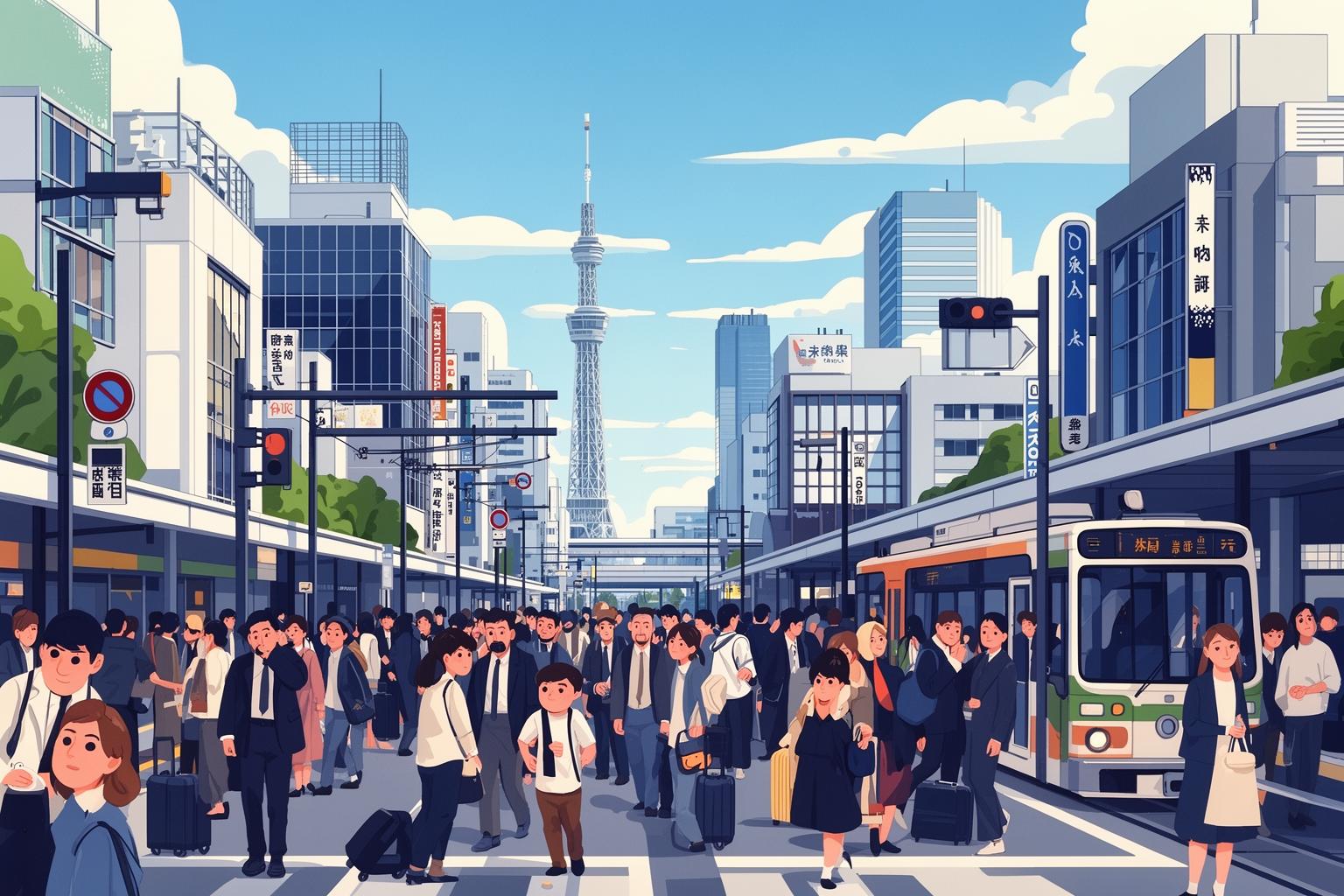
Both Kita and Minami serve as major transportation hubs, yet the experience of navigating them and the convenience they provide are vastly different. Your daily commute is a ritual, and the nature of that ritual differs greatly between the north and south.
Kita’s Unmatched Connectivity
The logistical dominance of the Osaka-Umeda station complex is undeniable. It stands as the core of the entire Kansai region’s transport network. With JR lines, private Hankyu and Hanshin railways, and three distinct subway lines all converging in one enormous, interconnected space, reaching virtually anywhere is effortless. A direct train to Kobe or Kyoto? It’s right there. A quick subway ride to your office in Yodoyabashi? Easy. The daily reality, however, involves navigating a sea of people. The crowds are enormous, especially during rush hour, yet they move with efficient, practiced order. Living in Kita means your life is tied to this hub. Your commute is likely straightforward and quick, a significant benefit for anyone working in northern Osaka or needing frequent access to other cities.
Minami’s Complex Network
Namba is another important transport hub, but it feels more like a collection of separate territories. There’s the Nankai station for Kansai Airport and Mount Koya, the Kintetsu and Hanshin lines heading to Nara and Kobe, the JR Namba station tucked away on the western side, and multiple subway stations. Though all bear the name “Namba,” walking between them can be a ten-minute underground journey. The stations have an older, grittier, and more chaotic atmosphere compared to Umeda’s sleek corridors. The convenience in Minami is different. While your train trip may require transfers, the area itself is highly walkable and bike-friendly. You can live a rich and varied lifestyle without ever needing a train, with endless dining, shopping, and entertainment options concentrated within just a few square kilometers.
A Historian’s Perspective: The Roots of the Divide
The stark contrast between Kita and Minami today is no coincidence. It directly stems from their completely distinct historical trajectories. One was a carefully planned corporate project; the other evolved like a wild, untamed garden.
Kita: The Merchant’s New Frontier
Interestingly, the area now known as Umeda was once undeveloped swampland located outside the traditional city center. Its name is believed to come from “Umeda-chi” or “buried land.” Its entire existence is a creation of the 20th century and the ambitions of Japan’s private railway magnates, especially Ichizo Kobayashi of Hankyu. In a brilliant business move, he constructed his railway terminal, then built a department store above it, and subsequently developed the residential lines that would bring customers to both. Umeda was a master-planned commercial venture from the start. This is why it feels so orderly, logical, and corporate. It didn’t arise from centuries of culture; it was designed for modern commerce.
Minami: The Theater District’s Lasting Legacy
Minami’s history is much older and more organic. Its core, Dotonbori, was a canal dug in the 17th century, with its banks quickly becoming the hub of Osaka’s lively entertainment scene. This was the home of Kabuki and Bunraku puppet theater, a district devoted to pleasure, performance, and food. It expanded without a grand design, forming a maze of narrow streets and alleys shaped by the movement of people seeking enjoyment. This legacy is embedded in its character. The chaotic layout, the emphasis on food and entertainment, and the slightly disreputable, carnival-like vibe all reflect its history as the city’s designated playground. Minami wasn’t constructed for business; it was created for people.
Making Your Choice: Which Osaka Is Your Osaka?
There is no single right answer, only the right answer for you. The Kita-Minami divide is a unique gift, presenting two distinct lifestyles within one city. Your decision depends on your priorities, personality, and the kind of life you want to create here.
Choose Kita If…
- You work in Umeda or need frequent, convenient access to Kyoto and Kobe.
- You value cleanliness, order, and modern comforts in your living environment.
- Your social life is more structured, and you enjoy a refined, upscale atmosphere.
- You prefer the familiar, cosmopolitan vibe of a global business district.
- The idea of a calm, organized daily routine gives you peace of mind.
Choose Minami If…
- You thrive on energy, spontaneity, and a touch of beautiful chaos.
- You’re on a budget and prioritize living space and value over sleek modernity.
- You want to fully immerse yourself in Osaka’s street culture, food, and nightlife.
- You appreciate grit and character, and don’t mind a bit of noise and crowds.
- You work from home or in the southern part of the city and want your neighborhood to feel like your playground.
Ultimately, the charm of Osaka is that these two worlds are always close. A quick ride on the Midosuji line transports you from one reality to the other in minutes. Choosing to live in Kita doesn’t exclude you from Minami’s excitement, and living in Minami doesn’t prevent you from enjoying Umeda’s conveniences. But your address sets your default environment. It shapes the view from your window, the sounds that greet you in the morning, and the faces you see on your way to get a coffee. It’s the choice between a life of polished efficiency and one filled with vibrant, chaotic soul. Which Osaka will you call home?