When I first moved to Osaka, I spent my weekends trying to crack the city’s code. I’d wander through the covered arcades of Shinsaibashi, get lost in the backstreets of Tenma, and eat my way through Kuromon Market. But I always felt like an observer, a tourist in my own town. The real rhythm of local life seemed to be happening just out of sight. Then, a friend asked me a question that changed everything: “Have you been to a Super Sento yet?” I pictured a slightly larger version of the old-school neighborhood bathhouse, maybe with an extra-hot tub and a vending machine for milk. I was completely, spectacularly wrong. My first visit wasn’t to a bathhouse; it was to a sprawling, multi-story palace of relaxation. I saw three generations of the same family—grandma, parents, and kids—all in matching lounge wear, spending the entire day there. They bathed, sure, but they also ate ramen, read mountains of manga, took naps in zero-gravity chairs, and got massages. It wasn’t an errand; it was an event. It was the Osaka weekend, distilled. It made me wonder: In a country known for its quiet, reserved public spaces, how did these loud, lively, all-in-one relaxation emporiums become the ultimate family getaway in Osaka? It’s because the Super Sento isn’t just a place to get clean. It’s a perfect reflection of Osaka’s soul: pragmatic, value-obsessed, and deeply communal.
Yet just as the super sento redefines community relaxation, the choice between the Midosuji and Hankyu lines can fundamentally shape your Osaka neighborhood experience, offering further insight into the city’s layered character.
The All-You-Can-Relax Buffet
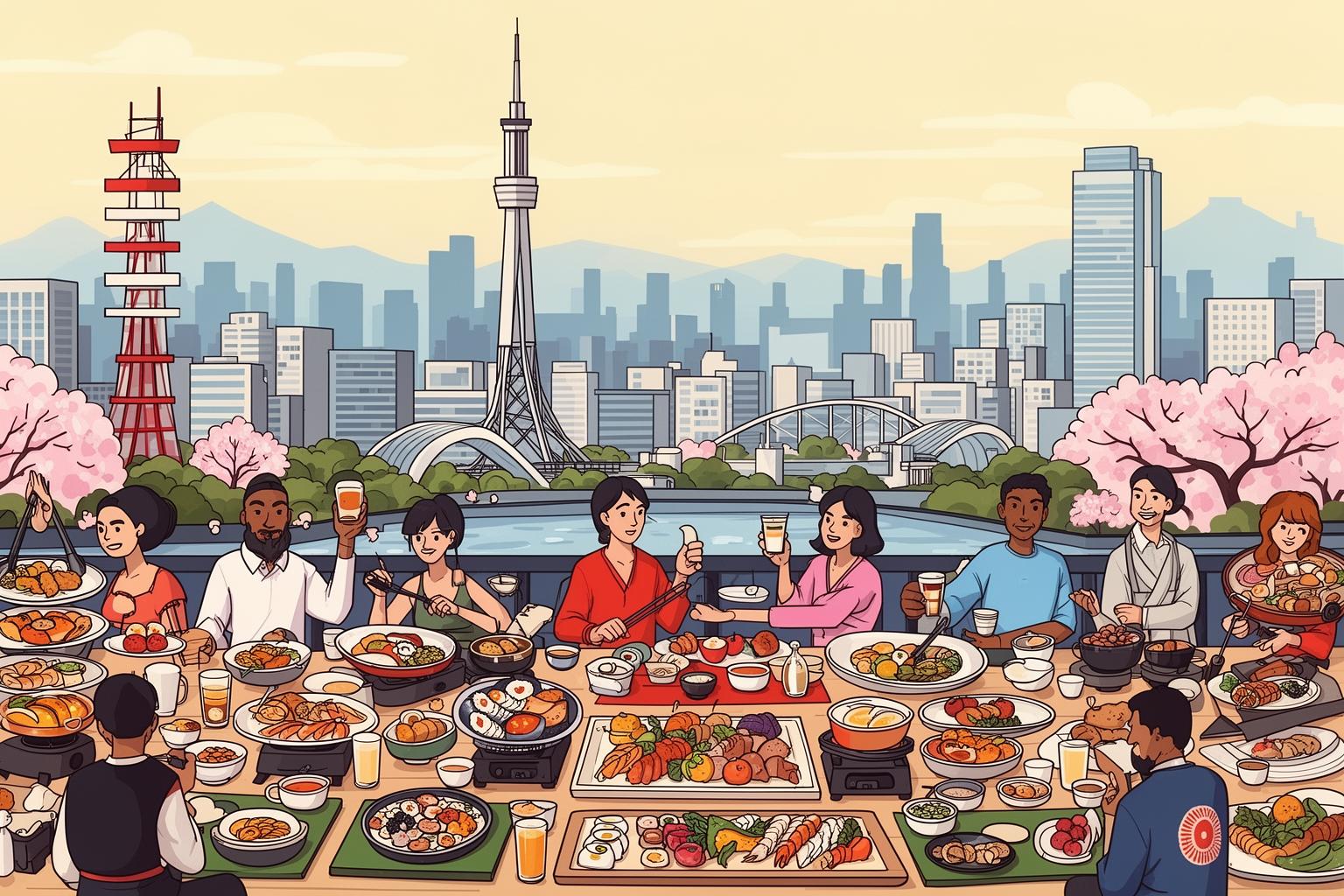
Forget any preconceived ideas you have about a Japanese bath. An Osaka Super Sento feels less like a spa and more like a cruise ship that never sets sail. The moment you enter, you swap your shoes and street clothes for a locker key wristband and a set of comfortable lounge wear, typically a samue or jinbei. This becomes your uniform for the day, leveling the playing field. Instantly, everyone from CEOs to students is on equal footing, wandering around in what are essentially pajamas. This quickly dissolves the formalities of the outside world. Your wristband acts as your wallet; every meal, drink, and massage is scanned and added up to be settled when you leave. This system is not just convenient—it’s a smart way to encourage you to stay, relax, and enjoy a full day.
More Than Just Water
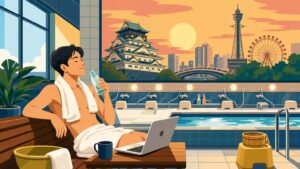
The bathing area itself is a marvel. You’ll encounter a dozen different pools. There are silky mineral-infused baths, tingling carbonated baths that envelop your skin in tiny bubbles, and powerful jet baths designed to massage the tension from your shoulders. The true highlight is often the rotenburo, the outdoor bath. Soaking in steaming water while a cool breeze brushes your face, gazing up at the sky—even if just a narrow sliver between skyscrapers—is a uniquely soothing experience. But the water is only the start. The sauna complex is frequently just as impressive. You might find a blazing dry Finnish sauna next to a fragrant herbal steam room. Many Osaka Super Sentos also feature ganbanyoku, or hot stone saunas. Here, you lie on heated stone slabs in a softly lit, tranquil room. You don’t just sweat; you feel the warmth penetrating deep into your bones. It’s a slow, profound relaxation that’s extremely popular, with visitors of all ages lying quietly in contemplation—a striking contrast to the lively chatter heard elsewhere.
The Dry Land Amenities
Once clean and thoroughly warmed, the real adventure begins. The rest of the facility is a leisure paradise. There’s almost always a full-service restaurant offering everything from sushi and ramen to filling curry bowls. The food is not an afterthought; it’s a vital part of the experience, usually delicious and reasonably priced. Nearby, you’ll find relaxation lounges—large rooms filled with reclining chairs, each equipped with its own personal TV screen. Close at hand is the manga library, with floor-to-ceiling shelves packed with tens of thousands of comics. It’s common to see a father and son side-by-side, fully absorbed in different manga series for hours. For deeper relaxation, massage parlors offer everything from quick chair massages to full-body Thai massages or oil treatments. And naturally, there are nap rooms—quiet areas where you can curl up under a blanket and truly unwind. This all-in-one concept epitomizes Osaka perfectly. It’s a city of merchants, where people know the value of efficiency. Why visit five separate places—a bathhouse, a restaurant, a library, a spa, and a café—when you can enjoy them all under one roof with a single admission? It’s the ultimate blend of convenience and enjoyment.
The Unspoken Rules of Togetherness
The first time you enter the main relaxation lounge of a Super Sento on a Saturday afternoon, the sheer number of people can be overwhelming. Families are spread out on tatami mats, children are weaving between recliners, and groups of friends are chatting over bowls of shaved ice. It feels less like a peaceful spa and more like a lively community center. A foreigner might see this as chaotic or noisy, a breach of the quiet respect one might expect in a Japanese relaxation space. But that’s a Tokyo-centric perspective. In Osaka, this isn’t chaos; it’s life. This is what communal relaxation truly looks like.
There’s an unspoken social contract in place. People are there to unwind, and there’s a shared, tacit understanding to let everyone do so in their own way. Kids are allowed to be energetic, but parents keep them from screaming or running wild in the quiet areas. Friends can laugh and converse, but they’re not shouting across the room. It’s a carefully balanced ecosystem of shared public space. This is a key part of Osaka’s character. The city blurs the line between public and private space more than many other places in Japan. People feel freer to express themselves, and there’s greater acceptance of the ambient noise of daily life. The Super Sento exemplifies this perfectly. It’s a place where you can be alone in a crowd, reading a book in a comfortable chair, while simultaneously being part of a larger, living community at leisure. It captures the concept of hadaka no tsukiai (naked communion), but extends it beyond the bath. In the lounge, fully clothed but stripped of social status by the uniform pajamas, a new kind of barrier dissolves. It’s a space for easy, unpretentious connection, mostly with your own family and friends.
The Gospel of “Kosupa”
To truly grasp the dominance of the Super Sento in Osaka, you need to understand the concept of kosupa. It’s a shortened form of “cost performance,” and it’s less a consumer metric and more a way of life in this city. Kosupa isn’t about being cheap; it’s about being smart. It’s the deep satisfaction that comes from getting the most value—in quality, quantity, and enjoyment—for the money you spend. An Osakan will proudly share a story about a fantastic lunch they got for 800 yen, not to flaunt their frugality, but to highlight their cleverness in finding such a great deal. The Super Sento is undisputedly the king of kosupa.
Let’s break it down. A family of four wants a fun, relaxing day out. A trip to a theme park? You’re faced with astronomical ticket prices, overpriced food, and endless lines. A weekend trip to a traditional onsen town in the mountains? That entails costly transportation, an expensive ryokan stay, and a significant time investment. Now consider the Super Sento. For an entry fee of around 2,000 yen per adult and half that for a child, you get access to a full day of entertainment. You can soak in ten different baths, sweat in three types of saunas, read unlimited manga, watch TV, and take a nap. The only extra expenses are food and optional services like massages, which are usually reasonably priced. You receive a resort-level experience without the resort-level price or travel hassle. For an Osaka family, the choice is obvious. This practical, economical approach to leisure defines the city. There’s less focus on prestige or brand names and much more on the tangible, enjoyable return on investment. The Super Sento delivers that abundantly, which is why thousands of families choose it as their favorite weekend escape.
The Sound of Real Osaka
To grasp the difference between Osaka and Tokyo, spend an afternoon at a Super Sento in each city. The Tokyo version is likely to be sleeker, more stylish, and noticeably quieter, with a focus on individual, peaceful escape. In contrast, the Osaka Super Sento is like a symphony of the city itself—louder, more boisterous, and decidedly more communal. You’ll catch the distinctive, musical rhythm of the Osaka dialect, Osaka-ben, everywhere. Mothers chide their children with a blend of sternness and affection. Old men debate the Hanshin Tigers baseball team’s performance in the hot tub. Teenagers laugh uproariously over a comic book.
This isn’t rudeness; it’s simply a different cultural wavelength. Osaka is a city rooted in face-to-face commerce and the lively chatter of the marketplace. Communication tends to be more direct, expressive, and open—an approach that spills over into how people unwind. Silence isn’t always golden; sometimes the comforting buzz of human interaction is what truly relaxes people. Foreigners, often thinking of Japan as a place of quiet conformity, might be surprised by this, possibly mistaking the noise for a lack of consideration. But that misses the point. In Osaka, this vibrant atmosphere is the true form of consideration. It creates a space where you can let your guard down, be less formal, and just be yourself. It’s the sound of a city that wears its heart on its sleeve, relaxing collectively. The Super Sento isn’t an escape from the city; it’s a concentrated expression of its most relaxed, unguarded, and genuine self.
More Than a Bath, It’s a Barometer
The rise of the Super Sento illustrates Osaka’s adaptability. The original neighborhood sento was a daily necessity, serving as a gathering place for communities whose homes lacked private baths. As Japan modernized and bathtubs became standard in every apartment, the traditional sento started to vanish. In many cities, they turned into nostalgic relics. But in Osaka, the entrepreneurial mindset took hold. Business owners didn’t just see decline; they saw opportunity. They recognized that while people no longer needed a place to bathe, they still needed a place to relax. They needed a “third place,” somewhere other than home or work, where they could unwind.
So, they didn’t just renovate; they reinvented. They expanded the core concept of the bath, adding every imaginable form of leisure. They transformed a necessity into an experience. This evolution embodies Osaka—it’s a city that has always thrived by being practical, innovative, and delivering what people want, often on a larger and better scale. It’s not a city fixated on preserving tradition for tradition’s sake, but one that honors the past by adapting its spirit to the present. The Super Sento stands as the modern successor to the old neighborhood bathhouse, continuing the tradition of community and relaxation in a way that fits the 21st century.
Your Invitation to the City’s Living Room
If you live in Osaka or are considering it, I highly recommend spending a day at a Super Sento. Don’t approach it as a tourist ticking off a checklist. Instead, participate fully. Bring a small towel (rentals are available, but bringing your own is a pro tip), clear at least five hours from your schedule, and simply relax. Don’t feel obligated to do everything. Maybe just soak, read, and eat. Watch the families around you. Listen to the flow of their conversations. Experience the collective sigh of a city enjoying a well-earned break.
Here, you’ll gain an understanding of Osaka that a visit to the castle or a stroll through Dotonbori simply can’t offer. You’ll witness the city’s true priorities: the deep value of family, the comfort of community, the brilliance of practicality, and the steadfast faith in a good bargain. This is where Osaka’s lively, warm, and down-to-earth spirit shines brightest. You’ll leave feeling not only physically refreshed but with a much clearer sense of what drives this vibrant, dynamic, and incredibly practical city. You’ll have spent a day in Osaka’s genuine living room.