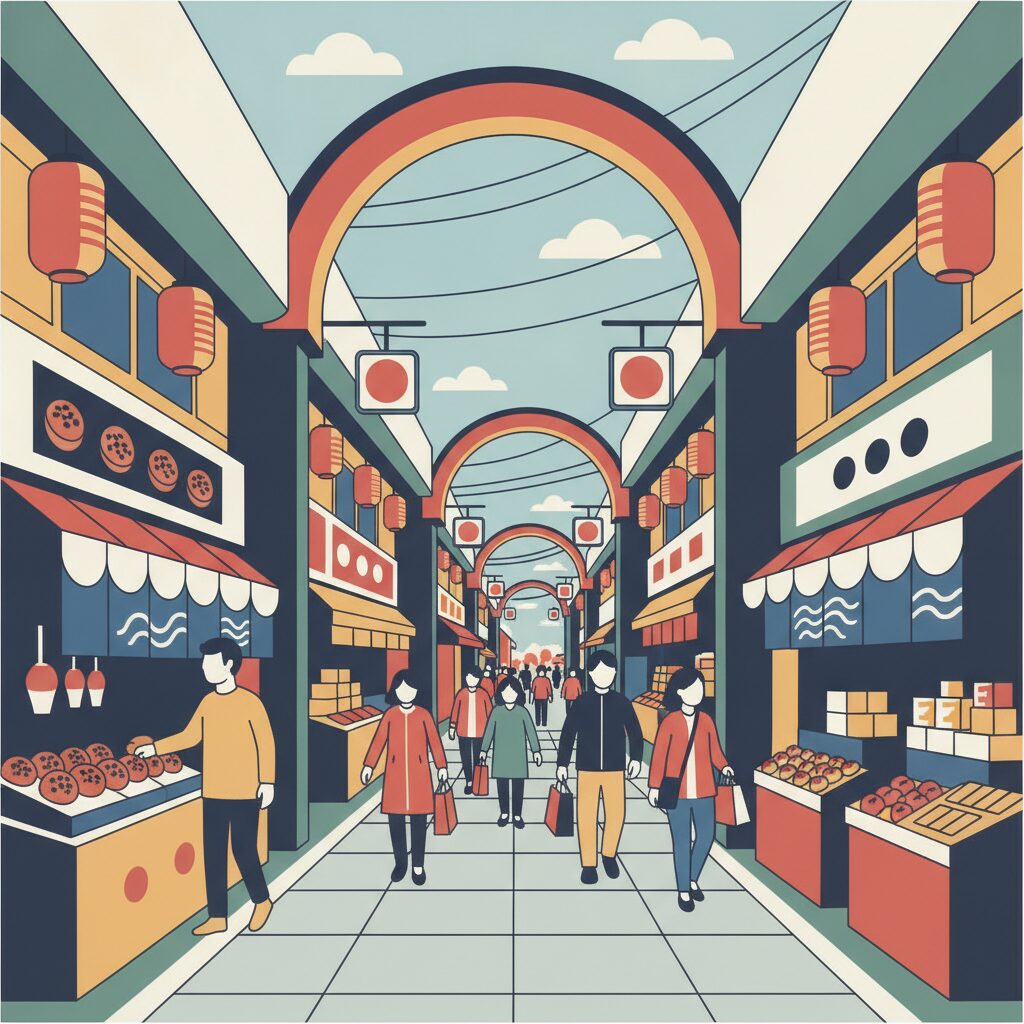
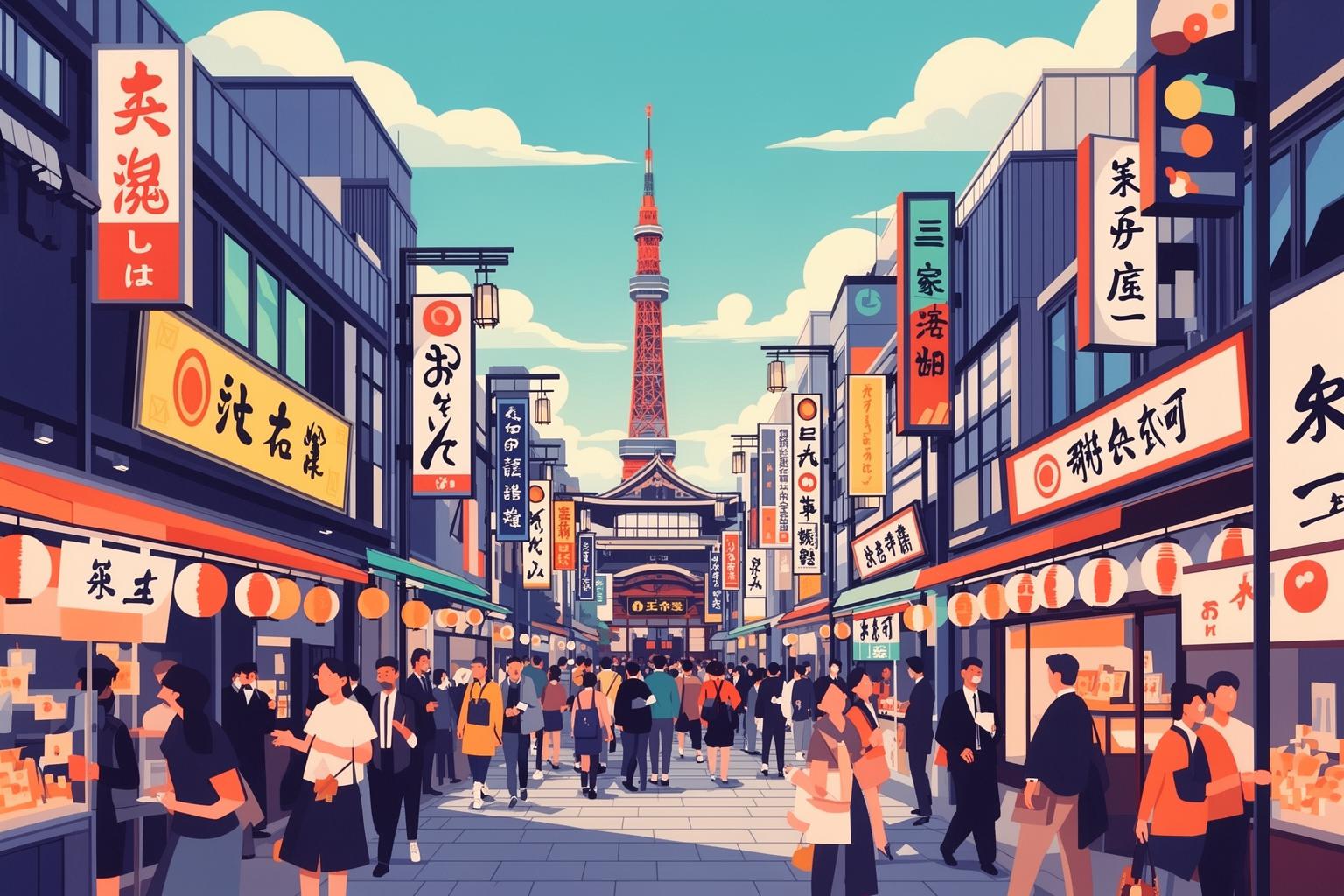
When you first arrive in Osaka, the shotengai—the covered shopping arcades that snake through the city like electric rivers—can feel like a tourist performance. You walk through Shinsaibashi or around Dotonbori, and what you see are takoyaki stands steaming under neon signs, souvenir shops hawking colorful socks and novelty keychains, and crowds of visitors snapping photos of the Glico Running Man. It’s a spectacle, a vibrant, chaotic carnival of consumption. And for many foreigners, that’s where the story ends. The shotengai becomes a place you visit once, a box to be ticked on a sightseeing list.
But that’s a profound misunderstanding of what these arcades truly are. To see only the tourist-facing facades is to miss the beating heart of daily life in this city. The real shotengai, the ones tucked away in residential neighborhoods just a few stops from Umeda or Namba, are not stages for tourism. They are the pantries, the living rooms, and the social centers of Osaka. This is where Osakans buy their groceries, get their shoes repaired, and catch up on neighborhood gossip. It’s where the city’s famous pragmatism, its obsession with value, and its deep-seated sense of community come alive. Forget the sleek, silent department stores of Tokyo; the soul of Osaka lives under the weathered plastic roofs of its shopping arcades, in the loud calls of a fishmonger and the crinkle of a paper bag filled with freshly fried croquettes. To understand the shotengai is to understand the operating system of Osaka itself—a system built on human connection, sharp-eyed bargain hunting, and the belief that daily life should be both affordable and deeply communal.
This seamless blend of budget-friendly living and close-knit community can also be seen in Osaka’s vibrant morning cafe culture, where daily rituals echo the spirit of local shotengai.
The Shotengai Ecosystem: More Than Just Shops

To someone unfamiliar, a shotengai might appear as a haphazard collection of storefronts. However, its layout is governed by a clear and ingenious logic. It represents an ecosystem honed over generations, crafted for optimal convenience and human connection. Step inside, and you enter a self-contained world that makes the sprawling, impersonal suburban supermarket seem notably inefficient.
The Anatomy of a Neighborhood Arcade
At the core of most residential shotengai, there is an anchor — typically a supermarket. It might be a modest, local co-op or, more famously, a branch of the brilliantly gaudy Supermarket Tamade, a beacon of neon lights and unbelievably low prices. Yet, this supermarket is not the main attraction; it serves as the gravitational center around which a cluster of smaller, highly specialized shops revolve. These are almost always family-operated businesses handed down through generations, each excelling in its specific niche.
There’s the yaoya, the greengrocer, with stacks of seasonal fruits and vegetables spilling onto the walkway. The produce is frequently fresher and less expensive than what you find in large chain stores, sourced from local markets just that morning. Nearby is the nikuya, the butcher, where the owner can recommend the best cut of pork for tonkatsu or freshly grind beef on request. Then comes the sakanaya, the fishmonger, with displays gleaming with the day’s catch. You don’t just purchase a salmon fillet; you receive tips on how to grill it to perfection. You’ll also encounter a tofu shop offering blocks of silky tofu still warm, a traditional drugstore providing remedies and friendly counsel, a shop dedicated exclusively to senbei rice crackers in a variety of flavors, and a dry cleaner who knows half the neighborhood by name. This concentration of specialized knowledge allows you to complete all your daily errands within a few hundred meters, sheltered from Osaka’s blazing summer heat and sudden rainstorms.
The Rhythm of Daily Life
The shotengai functions in a rhythm closely aligned with the flow of daily life at home. It is not a place for a once-a-week, bulk shopping trip. Instead, it serves as a stage for a more frequent, almost daily routine. Early in the morning, the arcade belongs to the elderly. They move deliberately, pulling their small carts and greeting shopkeepers they’ve known for decades. They are the experts, those who know which stall offers the sweetest tomatoes and which fishmonger has the freshest squid. They are not merely shopping; they are performing a vital social role, maintaining the community’s bonds with every conversation.
As the day progresses, the crowd changes. In the afternoon, mothers pushing strollers or holding their children’s hands arrive, stopping for an after-school treat — a warm, sweet imagawayaki or a savory croquette. This is when they pick up the final ingredients for dinner, deciding what to prepare based on the freshest vegetables available. Evening arrives, bringing the magic hour for bargain hunters. The sozaiya, shops selling prepared side dishes, and butchers start their famous “time sales.” Calls of “Han-gaku, han-gaku!” (Half price!) echo through the arcade. Office workers heading home from the station swoop in, grabbing discounted karaage or tempura. This is the essence of the Osakan spirit: nothing goes to waste, and scoring a good deal is a celebrated victory.
The Osaka Mindset on Display: Value, Communication, and Community
Shopping in a shotengai is far from a passive, anonymous transaction like scanning a barcode at a self-checkout. It’s an active, engaging, and deeply cultural experience. It’s where the common stereotypes about Osaka people—that they’re friendly, pragmatic, and money-conscious—turn into tangible, observable behavior.
“Kaimono Jozu”: The Art of Smart Shopping
In Osaka, there is a strong cultural appreciation for being a kaimono jozu—a skilled shopper. In Tokyo, this might mean staying on top of the latest fashion trends or booking a table at an exclusive restaurant. In Osaka, it means knowing that daikon radishes at Tanaka-san’s stall cost 10 yen less on Wednesdays. It means having keen eyes to spot the best deals and the confidence to celebrate them. An Osakan oba-chan will proudly show a friend the bag of onions she snagged for a bargain, exclaiming, “Kore, hyaku-en yatta de! Shinjirarenai!” (These were 100 yen! Unbelievable!). This is not viewed as being cheap or stingy; it’s admired as cleverness, resourcefulness, and being in control. You’ve outsmarted the system. You’ve won the daily game of commerce.
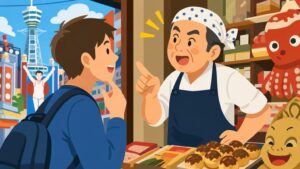
This attitude is woven into the very fabric of shotengai exchanges. It creates a buyer-seller relationship much more dynamic than elsewhere in Japan. The Tokyo shopping experience is often defined by polished, deferential, and distant customer service. In contrast, the shotengai is a lively, boisterous conversation. Shopkeepers don’t just wait passively; they are performers, engaging customers with an ongoing stream of patter, jokes, and commentary. They are unapologetically direct, their voices carrying the distinctive, melodic rhythm of the Kansai dialect.
The Language of the Deal
For foreigners used to the quiet hum of a modern supermarket, the cacophony of a shotengai can be initially overwhelming. But once you tune in, you realize it’s the sound of a community in conversation. The butcher calls out the daily special, the fruit vendor offers a slice of melon to taste, and the pickle seller asks about your day. The interaction is warm, informal, and refreshingly human.
A key part of this dialogue is the cherished custom of omake. An omake is a small free extra included with your purchase. It’s not something you ask for; it’s a gift, a gesture of goodwill from the seller to a loyal customer. Buy a few apples, and the owner might throw in an extra slightly bruised one. Buy potatoes, and you might get a free onion for your curry. The omake is more than just a freebie; it’s a tangible symbol of the relationship you’ve built. It’s the shopkeeper’s way of saying, “I see you. I appreciate you.” It’s a small, beautiful piece of social glue that no multinational corporation’s loyalty program can ever replicate.
Then there’s the delicate matter of bargaining. The stereotype of Osakans as relentless hagglers is mostly a myth when it comes to daily groceries. You wouldn’t haggle over a 100-yen cabbage. However, the spirit of negotiation lives on in other shops. At a small clothing store or household goods shop, a friendly “Chotto dake makete kureru?” (Can you give me a little discount?) said with a smile might work, especially if you’re buying several items. It’s not about forcefully demanding a lower price; it’s about opening a playful negotiation, another form of communication in the grand theater of Osaka commerce.
The Unspoken Social Contract
Underlying this entire system is an unspoken social contract based on loyalty. When you shop regularly at the same small stores, you stop being just another customer. You become a joren-san—a regular. This status carries privileges. The butcher might reserve a particularly good cut of meat for you. The baker might know you prefer crustier bread and set one aside. They remember your preferences, ask about your family, and make you feel a sense of belonging.
In return, you give them your business. Even if the supermarket 500 meters away sells eggs 5 yen cheaper, you buy them from your local shotengai grocer instead. You are consciously choosing to invest your money not only in a product but in a person, a family, and your community. This is why so many of these tiny, specialized shops survive in the era of Amazon and big-box retailers. They aren’t just selling goods; they are nurturing relationships. This loyalty creates a resilient local economy that feels fundamentally different from the transient, efficiency-driven consumer culture dominating much of modern urban life, especially in a city like Tokyo, where convenience and brand names often trump personal connection.
A Practical Guide for the Foreign Resident
Embracing the shotengai is one of the most fulfilling experiences you can have as a resident of Osaka. It will help you save money, enhance the quality of your food, and connect you with your neighborhood in a way that shopping only at large chain stores simply can’t offer.
Finding Your Local Shotengai
The first step is to look beyond the well-known tourist arcades. Kuromon Market is an excellent spot to see amazing seafood, but it’s not where most locals do their everyday shopping. The true treasures are the neighborhood shotengai. Almost every train station outside the city center has one or even several spreading out from it. Walk around your local area on foot, watch for the arched entrance and the long covered roof. Some of the best include Tenjinbashisuji, Japan’s longest shotengai at 2.6 kilometers, offering a universe of everything you could possibly need. Senbayashi Shotengai is famous for its rock-bottom prices, while Komagawa Nakano Shotengai in the south boasts a charming Showa-era retro vibe. Each has its own unique character, reflecting the community it serves.
Navigating the Shops: Tips and Etiquette
Stepping into this world for the first time may feel a bit intimidating, but a few simple tips can help make it a smooth and enjoyable experience. First, bring cash. Although more shops now accept electronic payments, many small family-run stalls remain cash-only. Second, always carry your own reusable shopping bag, known as an “eco-bag.” Third, and most importantly, don’t hesitate to communicate. You don’t need to be fluent in Japanese—a simple “Kore wo kudasai” (I’ll have this, please) and a heartfelt “Arigato gozaimasu” usually suffice. However, learning a few key phrases in the local Kansai-ben dialect will endear you to the shopkeepers. Try using “Okini” instead of “Arigato,” or ask “Kore,なんぼ?” (Kore, nanbo? – How much is this?). Your effort to speak their language, even if imperfect, will be warmly appreciated. Don’t hesitate to ask for recommendations: “Kyo no osusume wa nan desu ka?” (What do you recommend today?). This simple question can lead to wonderful conversations and introduce you to your new favorite food.
Decoding the Deals: Supermarket Tamade and the “1-Yen Sale”
No overview of Osaka’s thrifty shopping culture would be complete without mentioning Supermarket Tamade. This local chain is a cultural icon, a wild mix of pachinko-parlor aesthetics and unbelievably low prices. Its stores are unmistakable, with flashy yellow and red fronts and bright neon lights. Inside, the chaos continues with handwritten signs announcing daily deals and a PA system blaring out announcements. Tamade is legendary for its “1-Yen Sales,” where customers who spend over 1,000 yen can buy a selected item—like a carton of eggs, a block of tofu, or a packet of noodles—for just one yen. To outsiders, Tamade might seem strange or overwhelming, but to Osakans, it embodies the spirit of kaimono jozu (skillful shopping). It is a temple devoted to the pursuit of value, a place where style is gladly sacrificed for a great bargain. It perfectly captures the city’s straightforward, down-to-earth character.
Why the Shotengai is the Soul of Osaka
Ultimately, the shotengai is much more than just a convenient place to purchase your daily necessities. It serves as a living, breathing reflection of Osaka’s core values. It represents the city’s preference for practicality over pretension, the tangible over the abstract, and the human over the corporate. Living in Osaka while relying solely on chain supermarkets and convenience stores means missing the essence of the city entirely. It means observing it from behind glass, never fully engaging in its rich, chaotic, and deeply rewarding daily life.
The shotengai counters the anonymity of the modern metropolis. It is a place where transactions become conversations, where commerce fosters community, and where you are recognized not as a consumer, but as a neighbor. It’s where you’ll have your first truly spontaneous conversation in Japanese with someone other than a teacher or colleague. It’s where a shopkeeper might slip you your first omake and make you feel welcomed into the community. It is on these worn, tiled floors, beneath the humming fluorescent lights, that you cease being a temporary resident and begin to feel a sense of belonging. You come to understand that in Osaka, a good price is not just about saving money. It symbolizes a shared philosophy of resourcefulness, a gesture of mutual respect between buyer and seller, and sometimes, it even represents a form of love.