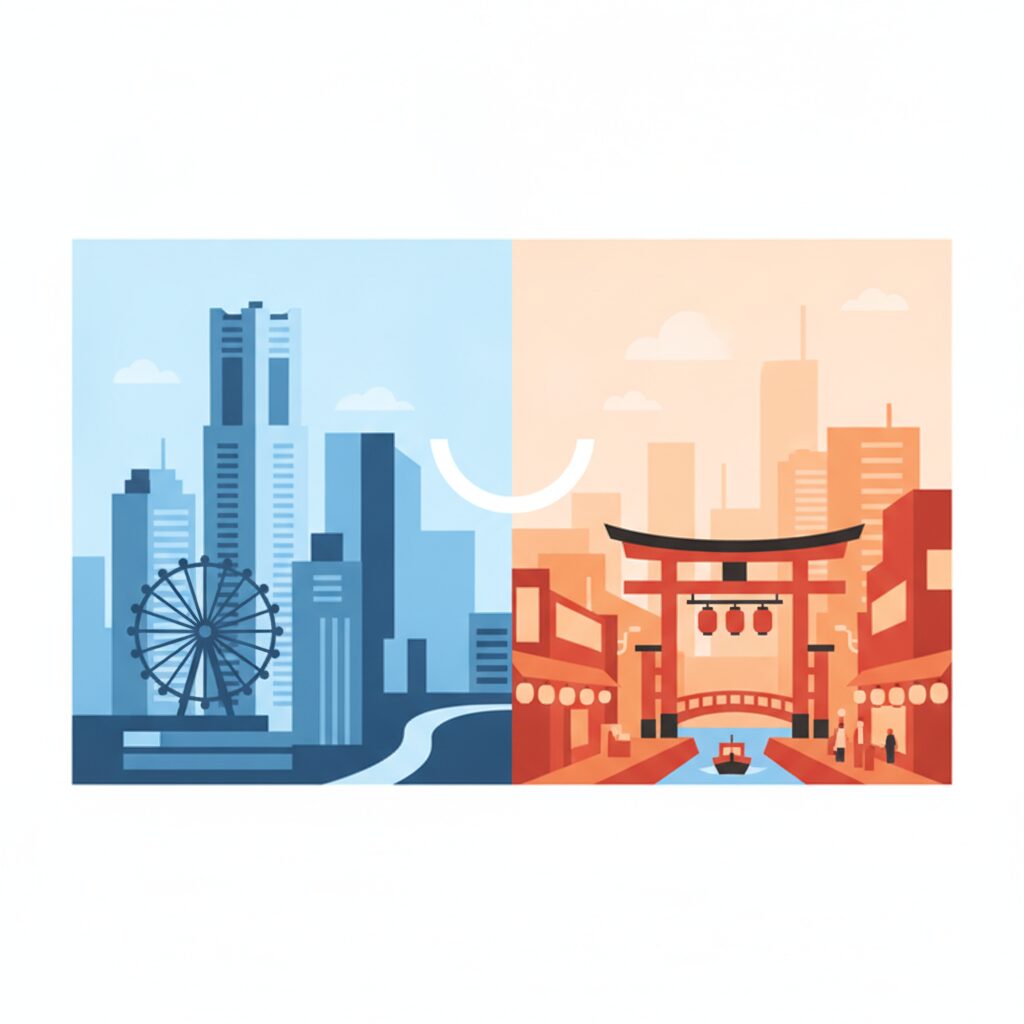
Ask anyone in Osaka for directions, and you won’t just get a simple street name. You’ll get a question back: “Are you going Kita or Minami?” North or South. To a newcomer, it sounds like a simple geographical query. Umeda is in the north, Namba is in the south. Easy enough. But stick around for a while, and you start to realize it’s the most important question in the city. This isn’t just about two different points on a map; it’s about two different states of mind, two distinct cultures, two opposing forces that define the city’s very soul. The Kita-Minami divide is the invisible line that dictates everything from fashion and food to business etiquette and the very rhythm of daily life. Choosing where you live in Osaka isn’t about picking a convenient station. It’s about choosing your tribe, your energy, and the version of Osaka you want to call home. This city doesn’t have one center; it has two magnetic poles, and understanding their pull is the first real step to understanding Osaka itself.
Moreover, as locals navigate the contrasting vibes of Kita and Minami, many embrace practical aspects of urban life by exploring budget-friendly daily shopping in local shotengai that offer authentic insights into Osaka’s everyday culture.
The Tale of Two Cities: Kita’s Polish vs. Minami’s Pulse
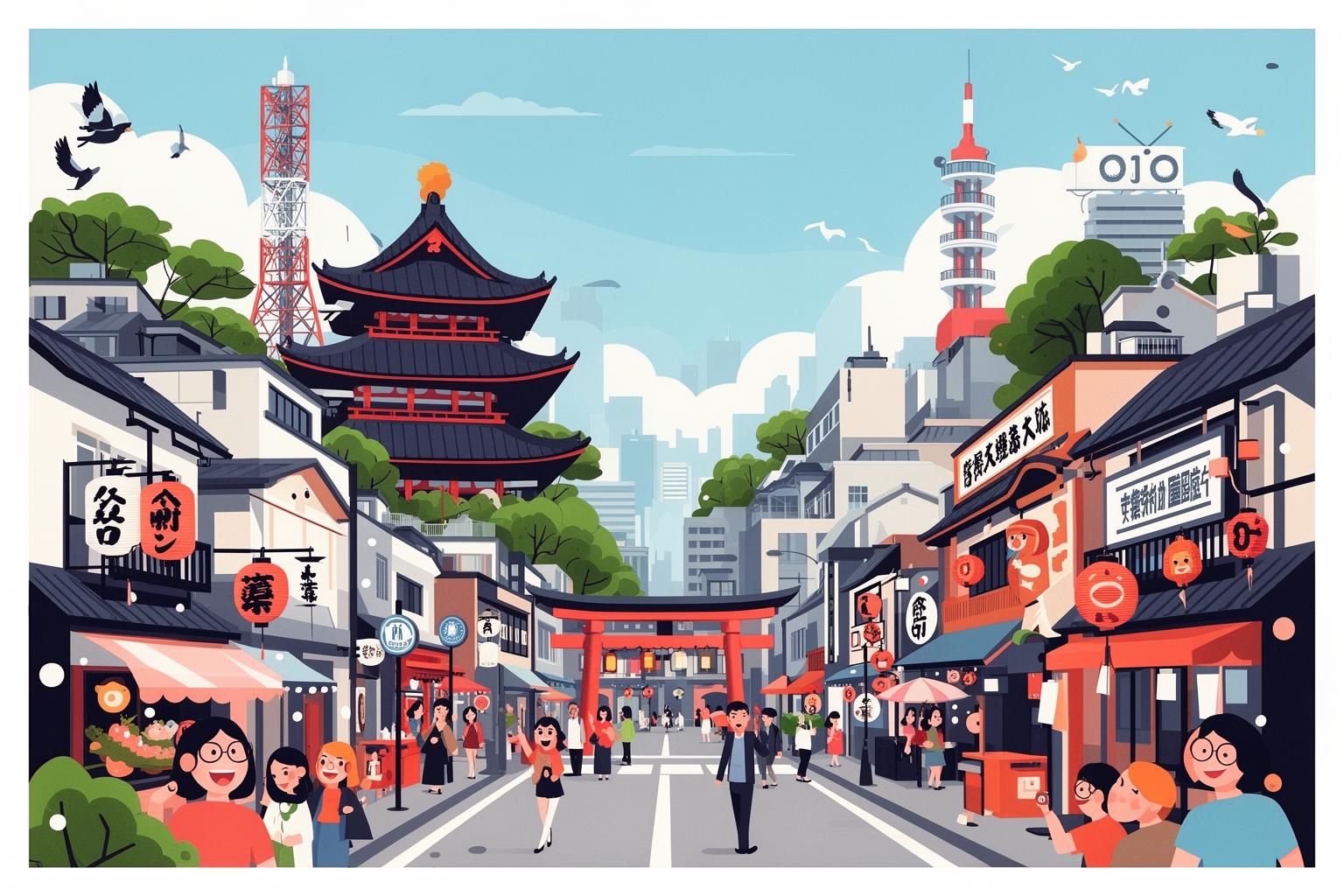
At its essence, the divide is between presentation and personality. Kita dons a tie for work; Minami rolls up its sleeves. One represents the city’s polished facade, facing the rest of Japan and the world. The other embodies its raw, pulsating heart, energizing the streets with unabashed vitality. You can sense the shift in atmosphere as you travel the few kilometers between them—a change in sound, pace, and style as distinct as day and night.
Kita: The Face of Modern Osaka
Step off the train at Osaka-Umeda Station and you’re instantly immersed in Kita’s realm. It’s a world of gleaming glass skyscrapers, vast underground malls, and the quiet sophistication of luxury department stores like Hankyu and Daimaru. The air feels different here—crisper, more controlled. The sounds are the steady click of heels on polished marble floors, the polite ding of elevators, and the soft murmur of commerce. This is Osaka’s corporate brain, its financial core, and its most elegant showroom. The atmosphere is aspirational, reflecting Tokyo’s refined business districts yet infused with a distinctly Kansai sharpness and drive.
Life in Kita follows a strict routine. The morning rush floods the office buildings that dominate the skyline with a flood of dark suits and leather briefcases. Lunch is a well-timed affair, often enjoyed in the pristine food halls—the depachika—in the basement of department stores, where bento boxes are crafted with artistry and every exchange is quick and efficient. After work, the energy moves to places like Kitashinchi, an area of exclusive restaurants and bars where crucial deals are made over meticulously prepared kaiseki meals. This world values order, efficiency, and an unspoken respect for hierarchy.
The fashion in Kita reflects this ethos. It’s sleek, tailored, and brand-aware. Think elegant trench coats, designer handbags, and high-quality fabrics that speak softly rather than loudly. It’s a style that signals competence and success. On weekends, the look relaxes somewhat, but the principle remains: appearance matters. Families stroll through Grand Front Osaka in coordinated, stylish outfits, presenting an image of tasteful, modern urban life.
Minami: The Heartbeat of “Real” Osaka
Travel three stops south on the Midosuji subway line to Namba, and you enter a completely different world. Welcome to Minami. The moment the doors open, the sensory volume cranks to the max. The air is thick with the aroma of sizzling takoyaki and grilled meats from countless stalls. The sounds form a glorious chaos of shouting vendors, the clang of pachinko parlors, competing J-pop blasts from storefronts, and the lively chatter of people enjoying themselves. This is the internationally celebrated Osaka—the neon-lit spectacle of Dotonbori, the anarchic fashion hotspot of Amerikamura, and the vibrant foodie haven of Kuromon Market.
Minami doesn’t operate on a schedule; it thrives on spontaneity. The streets are alive just as much on a Tuesday afternoon as on a Saturday night. Life is lived openly here. You’ll spot shopkeepers lounging in doorways, joking with passersby. You’ll see groups of friends sharing street food, laughing loudly without restraint. This is the city’s cultural playground, its creative melting pot—a place where rules feel more like guidelines. The vibe is raw and utterly authentic. No pretenses, no corporate masks—just genuine human energy.
Fashion in Minami is a natural outgrowth of this spirit. It’s a vibrant, eclectic mix of self-expression. In Amerikamura, or “Amemura,” you’ll discover vintage clothing, punk influences, and experimental styles found nowhere else. Around Shinsaibashi, brand culture still exists but is louder, flashier, and more about making a statement. Here, personal style is performance and the streets serve as the stage. Individuality isn’t merely accepted; it’s celebrated.
Beyond the Stereotypes: How the Divide Shapes Daily Choices
This isn’t merely about where you choose to shop or dine. The Kita-Minami divide permeates the practical, everyday choices that shape your life in Osaka. It affects your commute, your social circles, and even the way you interact. It’s a mental map that every resident learns to navigate, constantly calculating which “mode” they need to switch to.
Where You Work and Where You Play
For many Osakans, the typical pattern is to work in Kita and unwind in Minami. The Midosuji Line serves not just as a subway route but as the city’s main artery, ferrying people between these two worlds every day. A salaryman might spend his day in a quiet, high-rise office in Umeda, following polite business Japanese and strict corporate customs. But by Friday night, he’ll hop on the subway heading south, shed his tie and formal demeanor, and disappear into the lively, inviting chaos of a Namba izakaya.
The journey itself is a metamorphosis. Boarding at Umeda, the carriage is full of passengers quietly scrolling through their phones or reading business books. By the time the train reaches Namba, the mood shifts. The crowd becomes younger, their clothing more colorful, voices louder, and the air charged with excitement for the night ahead. Grasping this daily migration is key to understanding the city’s pulse. Osakans have perfected code-switching—not only in language but in their entire presence—adjusting instantly to their surroundings as they step off the train.
The Language and Attitude: A Subtle Shift
Though Osaka-ben, the local dialect, is spoken everywhere, its tone shifts between north and south. In the upscale shops and corporate offices of Kita, you’ll hear a more refined, reserved form. It’s still Osaka-ben, but wearing its best Sunday attire—polite, formal, and customer-oriented. The famed Osakan bluntness is softened with layers of professional courtesy.
In Minami, the dialect comes through in its rawest form. It’s loud, expressive, and filled with the sharp humor and rapid-fire exchanges the area is known for. This is where the stereotype of the funny, friendly Osakan truly shines. Shopkeepers tease customers, strangers strike up conversations at traffic lights, and the phrase “nande ya nen!” (what the heck!) echoes through the shopping streets. It’s a style of communication grounded in warmth, familiarity, and genuine openness.
Think of it like this: Kita is Osaka with its “kesho” (makeup) on—neatly put together, elegant, and ready for a formal event. Minami is Osaka sans “kesho”—bare-faced, relaxed, comfortable in its skin, and unafraid to reveal its true colors. Both are authentically Osaka, representing different facets of the city’s rich personality.
The Foreigner’s Misunderstanding
This is the most common stumbling block for newcomers. Many foreigners arrive in Osaka with an image shaped entirely by Minami. They’ve seen the iconic Glico Running Man, the giant crab billboards, and the vibrant energy of Dotonbori. They expect a city that’s perpetually loud, informal, and a bit wild. So when they first encounter Kita, the sleek towers, quiet efficiency, and reserved atmosphere can feel almost… Tokyo-like. They wonder, “Where is the ‘real’ Osaka I heard about?”
The truth is both are real. Osaka isn’t a monolith. The city’s identity is a dynamic balance between these two poles. To dismiss Kita as a sterile corporate district is to overlook the ambition and global sophistication fueling the Kansai economy. To see Minami as just a chaotic tourist zone is to ignore the deep-rooted, multi-generational culture of commerce and community that makes it so vibrant. The true Osaka experience lies in recognizing and appreciating this duality.
Choosing Your Home Base: A Practical Guide to Living
So, when it comes to settling down, which side of the line suits you best? This choice will significantly influence your daily routine, social life, and overall experience of the city. It’s a decision between two very distinct lifestyles, each offering unique benefits and challenges.
Living in the Kita Sphere: Order, Convenience, and Connection
Opting to live in or near Kita means valuing organization, accessibility, and a more controlled urban setting. Although Umeda is primarily commercial, the nearby neighborhoods provide excellent residential options. Fukushima is a culinary hotspot, famous for its dense concentration of top-quality restaurants within a clean, walkable grid. Nakazakicho offers a quieter, bohemian atmosphere, with preserved old-style houses now hosting trendy cafes and independent shops. Tenma strikes a perfect balance, centered around the Tenjinbashisuji Shotengai, Japan’s longest shopping street, blending traditional market charm with modern city life.
The main advantage of the Kita sphere is unbeatable connectivity. Umeda is a major transportation hub where JR, Hankyu, Hanshin, and multiple subway lines intersect. From here, you have direct, easy access to Kobe, Kyoto, and the Shinkansen for travel throughout Japan. This makes it ideal for frequent travelers or employees of nationally based companies. Life here feels efficient. The streets tend to be cleaner, services more streamlined, and there is a calm order that provides a welcome break from the city’s more hectic areas. However, this convenience comes at a price. Rent and daily costs are generally higher, and the area can feel somewhat impersonal or sterile if you’re seeking a gritty, local character.
Living in the Minami Sphere: Energy, Culture, and Spontaneity
Choosing to live in the Minami sphere means immersing yourself in Osaka’s cultural heart. It’s perfect for those who thrive on energy and want the city’s best food, entertainment, and subcultures right outside their door. Neighborhoods like Horie, just west of Shinsaibashi, are known for trendy furniture stores, stylish cafes, and a laid-back, creative vibe. Amerikamura remains a youth culture hub, while areas around Namba and Shinsaibashi offer countless apartments in the middle of the action.
The big draw of living in Minami is its vibrancy and spontaneity. Boredom is rare here. There’s always a new restaurant to try, a vintage shop to explore, or a festival happening at a local shrine. This lifestyle fosters discovery and community. You get to know shop owners, and a quick trip to the convenience store can turn into a lengthy chat. It often feels more affordable, with many cheap, delicious food options. The downside is the flip side of that energy: it can be noisy, crowded, and overwhelming. Peace and quiet are hard to find, and the constant stimulation can exhaust introverts. While Namba is well-served by subway, it doesn’t offer the same inter-city travel convenience as Umeda.
The In-Between: Finding Your Balance
For those who find choosing between the two extremes difficult, there’s a third option: the middle ground. The business districts of Yodoyabashi and Honmachi, located between Umeda and Namba on the Midosuji Line, offer a compelling compromise. Bustling with office workers during the week, these areas become surprisingly quiet and peaceful in the evenings and on weekends. Living here provides the best of both worlds: you can escape the noise of both hubs while maintaining easy access to them. A ten-minute bike ride or a two-stop subway trip takes you to Kita’s department stores or Minami’s nightlife. It’s a strategic choice for those who want to work in Kita, play in Minami, and rest peacefully in between.
It’s Not a Competition, It’s a Complement
It’s easy to view the Kita vs. Minami dynamic as a rivalry, but that misses the essence entirely. They aren’t opponents; rather, they are two vital halves of a whole, and their synergy creates the unique charm of Osaka. Kita delivers the economic strength, advanced infrastructure, and the global face of Osaka. Minami offers the cultural heart, the unyielding spirit, and the human connection that defines Osakan identity.
This duality is what truly distinguishes Osaka from Tokyo. While Tokyo has several urban hubs like Shinjuku, Shibuya, and Ginza, they often feel like variations on the theme of a vast, polished metropolis. Osaka’s division is deeper, more cultural. It’s a city with two distinct personalities constantly interacting. A true Osakan knows how to navigate both realms, appreciating the sleek efficiency of the north and the warm chaos of the south.
As a resident, learning to interpret this map of moods is key to unlocking the city. Where you choose to live, shop, and spend your time is not just about logistics. It’s about tuning into a certain frequency, a particular way of life. So when someone asks, “Kita or Minami?” understand that they’re asking something much more profound. They’re asking: which version of Osaka do you want to experience today?