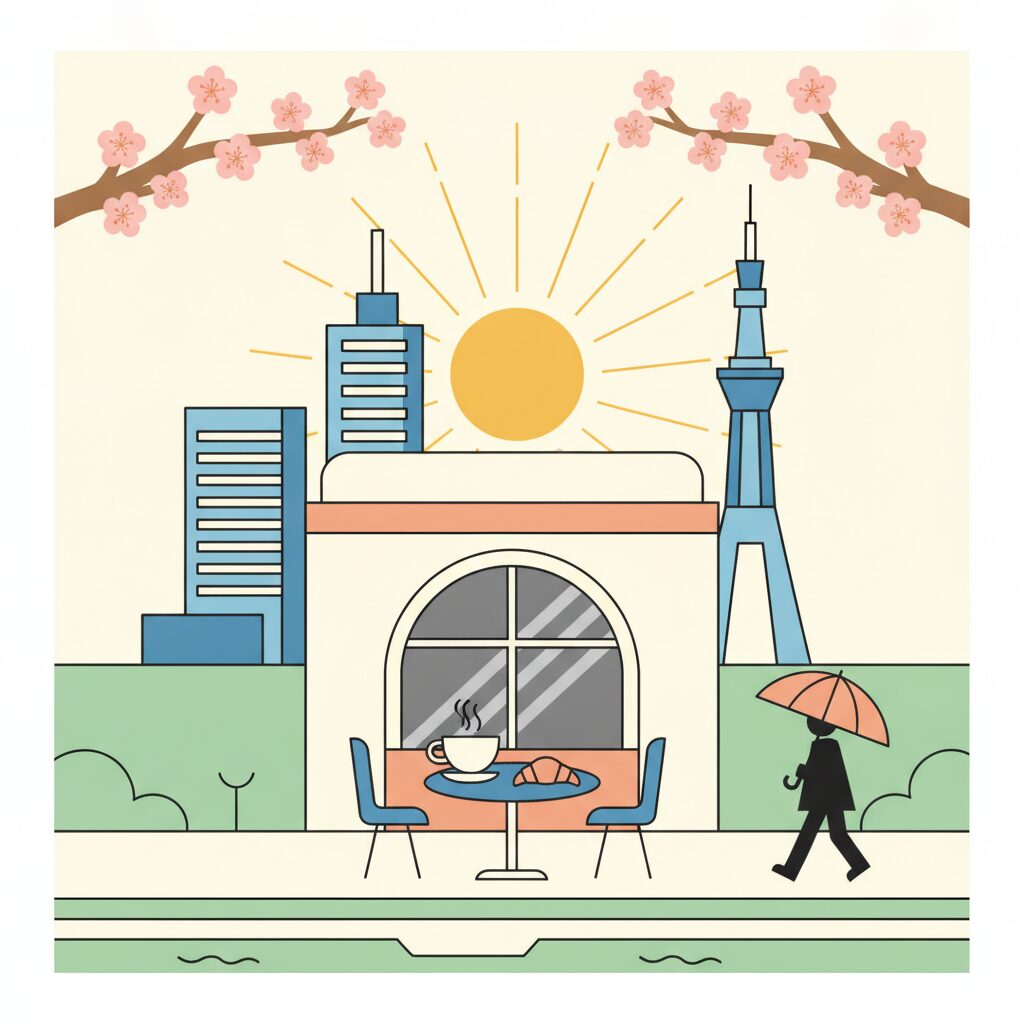
The air in Osaka hums differently in the morning. It’s not the silent, orderly march of Tokyo, a city that feels like it’s holding its breath. Here, the day starts with a clatter and a chat. The rumble of the Midosuji line, the metallic screech of shop shutters rolling up, the sing-song calls of “Ohayo gozaimasu!” bouncing between neighbors. When you first move here, this energy is intoxicating, but it also presents a fundamental question: how do you fuel up for a day in a city that never seems to stop moving, a city that runs on a different kind of social and economic engine? You might think the answer lies in a quick can of coffee from a vending machine or a sterile, efficient chain cafe. You would be wrong. The real answer, the key that unlocks a deep understanding of the Osakan psyche, is found on a small, often handwritten sign placed outside a neighborhood cafe: モーニングサービス, or “Morning Service.” This isn’t just breakfast. It’s a philosophy. It’s a daily ritual that explains more about Osaka’s value-conscious, pragmatic, and community-oriented mindset than any travel guide ever could. It’s the art of starting your day not just with caffeine, but with a win. A small, delicious, and incredibly savvy victory against the world. It’s how you learn to think, and live, like a local.
Embracing a culture where every ritual starts with a distinctive local flair, you can further delve into the art of breaking the ice in Osaka’s tachinomi bars to experience another side of the city’s vibrant community life.
What Exactly is ‘Morning Service’? It’s More Than Just Breakfast
For those unfamiliar, the concept may appear almost suspiciously generous. You enter a cafe—often a cozy, slightly old-fashioned spot known as a kissaten—between, say, 7 AM and 11 AM. You check the menu and find “Morning Set” or simply “Morning.” The cost usually falls between 450 and 600 yen. For that price, you receive your choice of drink—a freshly brewed coffee or a pot of tea. But that’s not everything. Alongside your drink arrives a small plate. On it, you’ll almost certainly find a slice of thick, fluffy Japanese toast, called shokupan, perfectly golden and already buttered. Next to it sits a hard-boiled egg, sometimes still warm. Often, there will be a tiny side salad with a bright orange dressing or a small pot of yogurt. All of this—the entire food platter—comes “free” with the price of your coffee.
The Unwritten Contract: Coffee as the Main Event
Here lies the first essential lesson in Osaka economics. The food isn’t truly free. You are paying for the coffee. The food is what locals call omake, a bonus, a lagniappe, a little something extra offered to show appreciation for your business. This subtle shift in perspective is crucial. You aren’t paying for a cheap breakfast; you are paying for a quality cup of coffee and being rewarded for it. This exchange creates a relationship based on value and respect. The cafe owner isn’t merely selling calories to get you through the morning; they’re providing a service, an experience. They invite you to sit, relax, and enjoy their main product—the coffee—and as a thank you, they ensure you don’t do so on an empty stomach. It’s a clever psychological and business tactic that transforms a simple purchase into a gesture of goodwill.
The Price is Right: Unbeatable Value
Let’s break down the numbers, because Osakans always crunch the numbers. A single cup of brewed coffee at a major international chain in Japan can easily cost 400 to 500 yen. A pastry or sandwich adds another 300 to 500 yen. You’re quickly approaching a 1,000-yen breakfast. With Morning Service, you get a full, satisfying start to your day for roughly half that price. This isn’t just a discount; it’s a fundamentally different way of doing business. It’s a statement that value matters more than brand prestige. This attitude is deeply ingrained in the city. People in Osaka don’t regard this as “cheap.” They see it as being smart. Why pay more for less? The question seems ridiculous to locals. Securing a good deal and getting a little something extra is a point of pride, a small win that sets a positive tone for the rest of the day.
The Osaka Mindset on Display: ‘Mottanai’ and the Pursuit of a Good Deal
This morning ritual directly reflects Osaka’s history as the nation’s kitchen and its most powerful merchant city. While Tokyo is home to politicians and the emperor, Osaka is known for its traders, dealmakers, and commerce experts. The city’s spirit was shaped in the marketplace, and that heritage continues in the practice of Morning Service.
Beyond ‘Friendly’: The Pragmatism of Osaka’s Merchants
The common stereotype is that Osaka people are “friendly” and “warm.” Though often accurate, this is an incomplete portrayal. Their friendliness often stems from deep-rooted pragmatism. It embodies the spirit of akinai, the art of commerce. A good merchant understands that cultivating loyal customers, the jōren-san, is essential for sustained success. Morning Service exemplifies this philosophy. It encourages repeat visits, transforming one-time customers into daily regulars. The owner might engage you in conversation, remember your usual order, and make you feel at home. This is not just for appearances; it’s a savvy business tactic that builds community and loyalty in ways that faceless corporate chains cannot. It’s about relationships, not just transactions.
The ‘Mottanai’ Spirit: Waste Not, Want Not
Looking deeper, you’ll discover the profound Japanese concept of mottanai at work. Mottanai conveys a strong sense of regret over waste. It emphasizes maximizing the use of resources. For a café owner, Morning Service embodies mottanai. It makes use of bread that might otherwise become stale and uses eggs, a staple ingredient, in a simple yet effective way. It attracts a steady flow of customers during the otherwise quiet morning hours, keeping the business running efficiently. This system benefits both the business and its patrons by minimizing waste and maximizing value. This practical, straightforward approach to solving problems is quintessentially Osaka.
The Tokyo Contrast: Efficiency vs. Value
To fully understand Osaka’s morning culture, one must compare it to Tokyo. Mornings in Tokyo are often a hectic rush focused solely on efficiency. People grab a nutrition bar and bottled tea from a convenience store or stand in long, quiet lines at sleek, minimalist coffee shops for an expensive latte to go. The emphasis is on speed, individual consumption, and brand image. In Osaka, the morning presents a different choice. It shows that efficiency and value can coexist. It invites you to pause, sit down, enjoy a real plate and cup, and start your day with a transaction that feels balanced, thoughtful, and rewarding. This cultural rhythm values well-being and savvy over mere appearances of sophistication.
Navigating the Morning Service Scene: From Kissaten to Modern Cafes
Once you know what to look for, you’ll start noticing Morning Service everywhere. It’s a lively and diverse scene, offering a window into different eras and styles of Japanese cafe culture.
The Classic ‘Kissaten’: Time Capsules with a Side of Toast
At the core of Morning Service culture lies the traditional kissaten. Entering one feels like stepping back in time. The air is filled with the rich aroma of siphon coffee and a faint hint of lingering tobacco smoke from a bygone era. The decor typically embodies the Showa period: dark wood paneling, plush velvet chairs in burgundy or forest green, and ornate light fixtures casting a warm, dim glow. These cafes are usually run by an elderly owner or a couple who have been behind the same counter for decades. A television in the corner often plays the morning news, and stacks of newspapers and manga are available for customers to browse. This is not a place for laptops or loud conference calls. It serves as a sanctuary for quiet contemplation, reading the paper, or exchanging pleasantries with the owner. The coffee is brewed with meticulous care, and the simple toast-and-egg set feels like a meal prepared just for you.
The Modern Interpretation: Chains Get in on the Act
The influence of the Morning Service concept is so strong that even large, modern cafe chains have adopted it to compete in the region. Chains like Komeda’s Coffee, which started in Nagoya—another city known for its morning culture—have built an entire empire on a standardized version of the deal. When you buy a coffee at Komeda’s before 11 AM, you receive your choice of toast set for free. The success of these chains shows that the desire for value is not merely a nostalgic trait of the older generation; it’s a significant market force. This sharply contrasts with many international coffee chains that rarely, if ever, offer such comprehensive deals, favoring a model based on upselling and add-on purchases.
How to Spot a ‘Morning’ Spot
For newcomers, discovering these gems is part of the fun. Watch for the magic words on signs and chalkboards outside cafes: 「モーニング」 or 「モーニングサービス」. Often, a plastic food model, a shokuhin sanpuru, in the window displays the exact contents of the morning set. Pay attention to the times, as the deal is almost always strictly limited, usually ending at 11:00 or 11:30 AM. Don’t hesitate to explore a quiet side street or the ground floor of an old office building. The best spots often don’t look like much from the outside but have been serving the same neighborhood for generations.
More Than a Meal: The Social Fabric of Osaka’s Mornings
After a few weeks of starting your mornings with Morning Service, you realize you’re gaining more than just a great deal on breakfast. You’re engaging in an essential part of the city’s social fabric.
The Third Place: Your Neighborhood Living Room
These cafes serve as a classic “third place”—a setting that is neither home nor work, where community connections are fostered. For many elderly residents, their daily visit to the local kissaten is the most significant social interaction of the day. It’s where they share gossip, discuss current events, and check on each other. For local business owners and salespeople, the cafe acts as a mobile office, a neutral venue to meet clients before the workday officially starts. For students and freelancers, it’s a quiet spot to study or work for the price of a single cup of coffee, without the pressure to constantly order more as you might feel in a busier, more corporate setting.
A Foreigner’s Experience: Cracking the Code
I remember the first time I stumbled into a genuine neighborhood kissaten. It was a small place in Tenma, with just a few counter seats and a couple of tiny tables. An elderly woman with a warm, wrinkled smile stood behind the counter. I nervously ordered a “hotto kohii,” and she simply nodded and asked, “Morning?” Unsure, I replied “Hai.” A few minutes later, she brought the coffee along with a perfectly arranged plate of toast and a boiled egg. When I went to pay, I was surprised by the low price. I asked if she might have made a mistake, but she just laughed and pointed to the small, faded sign on the wall. In that moment, I understood. I wasn’t merely a faceless customer; I was partaking in a local tradition. When I returned a few days later, she greeted me with a nod of recognition. It was a small gesture, but it was the first time I felt like I was truly living in Osaka, not just visiting. It was my first step toward becoming a jōren-san.
Final Thoughts: Your Morning Coffee as a Cultural Compass
In Osaka, your morning coffee is more than a mere caffeine fix. It serves as a daily reflection on value, community, and practicality. The culture of Morning Service perfectly encapsulates the city itself. It’s both shrewd and generous, traditional yet remarkably practical. It embodies a mindset that prioritizes substance over style and community over anonymity.
So, if you live here or are considering it, I encourage you to step away from convenience stores and global coffee chains. Seek out a local kissaten. Look for the sign. Order the “Morning.” Sit down, read the paper, and watch the neighborhood come to life. Not only will you enjoy a fantastic breakfast deal, but you’ll also gain a deeper, more nuanced appreciation of this remarkable city. You’ll discover that the true spirit of Osaka isn’t just in the dazzling neon chaos of Dotonbori or the soaring heights of the Umeda Sky Building. It’s in the quiet clink of a coffee cup, the aroma of fresh toast, and the simple, profound satisfaction of a good deal.