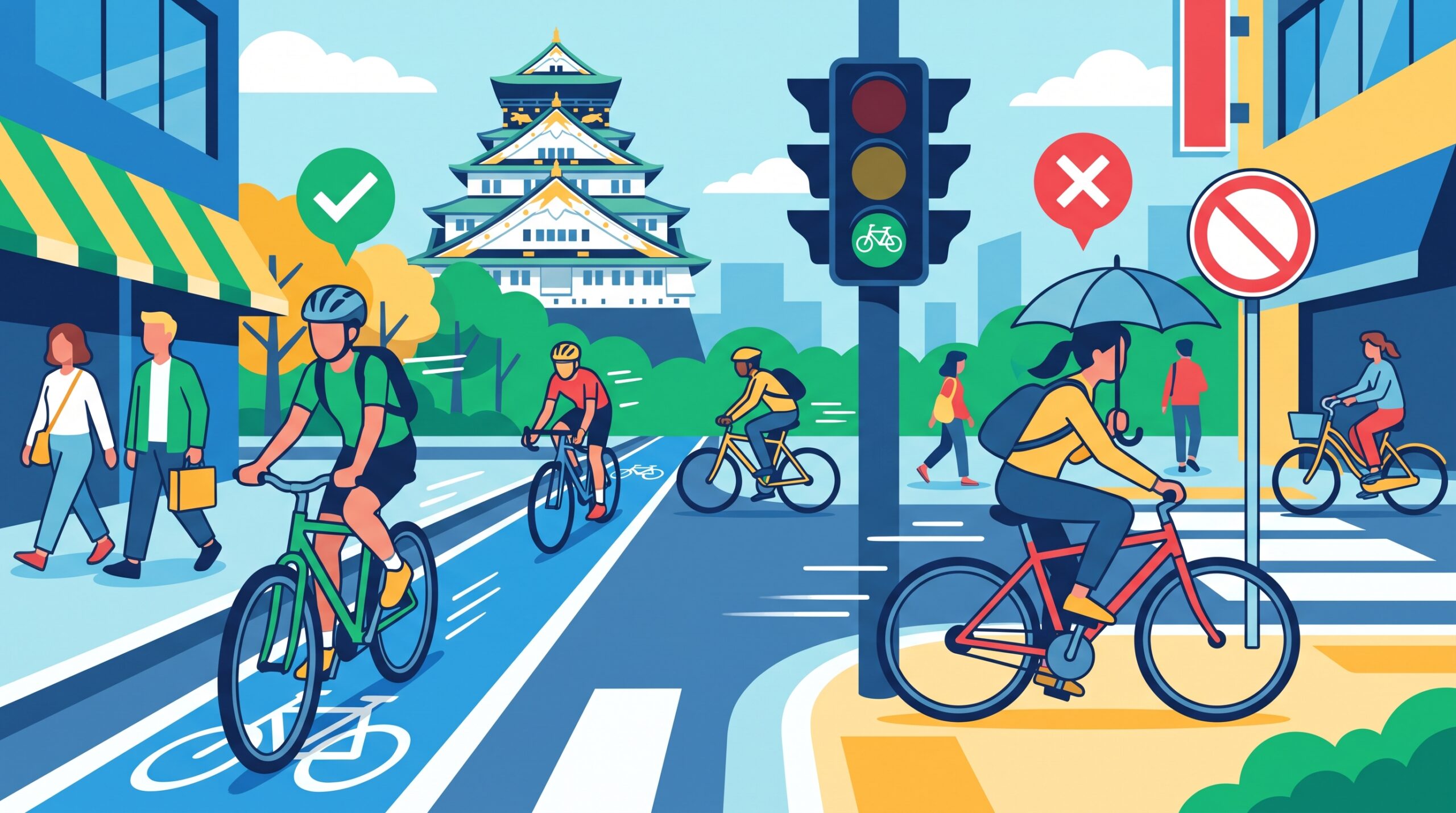
Step out of any major train station in Osaka, and the first thing you notice is not the towering concrete architecture or the neon glow of the street signs. It is the rhythmic, relentless hum of rubber tires on pavement. Bicycles are everywhere. They flow through narrow alleyways, glide past bustling storefronts, and weave seamlessly through seas of pedestrians. In Tokyo, the city moves by train and rigid pedestrian discipline. In Osaka, the city moves by the pedal. It is a metropolis built on commerce, trade, and pragmatism. For the local merchant, the rushing office worker, or the parent navigating the morning school run, the bicycle is not a piece of sporting equipment. It is an essential extension of the human body. To truly understand the mindset of the people who call this vibrant city home, you must understand their relationship with their streets. The perceived chaos of Osaka traffic is an illusion. Beneath the surface lies a deeply ingrained, unspoken social contract. It is a fluid dance of spatial awareness, non-verbal negotiation, and a uniquely local interpretation of the law. Understanding this delicate balance is the key to thriving in the city, rather than simply surviving it.
Navigating Osaka by Bicycle: What You Need to Know
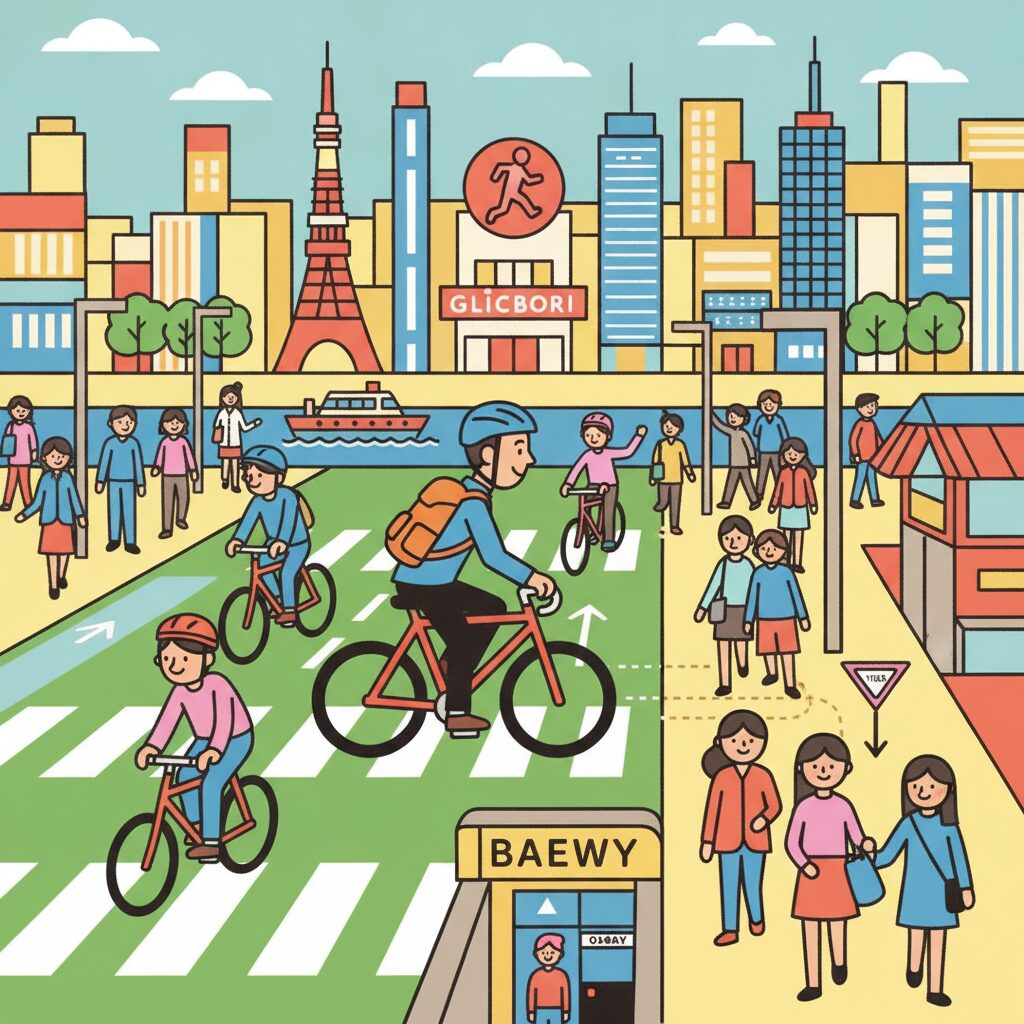
Foreigners arriving in Japan often bring preconceived notions of absolute order and strict rule-following. While this stereotype largely applies to the capital, Osaka operates on a slightly different wavelength. The culture here is deeply influenced by its history as a merchant city. Efficiency, practicality, and human connection often take priority over rigid, unquestioning compliance with bureaucracy. This attitude directly influences how people navigate the streets.
Renting a bicycle or purchasing your first city commuter bike is not merely acquiring transportation; it is engaging in a large, daily communal activity. The learning curve can be challenging. A common error among newcomers is trying to apply the traffic logic of their home countries to the complex, layered environment of the Kansai region. In many Western countries, roads are exclusively for cars, while sidewalks are sacred pedestrian spaces. Bicycles often end up in precarious, unprotected bike lanes or forced to contend with fast-moving traffic. Japan approaches this dynamic differently, and Osaka takes that difference to its fullest extent. Here, the lines between pedestrian areas, cycling routes, and vehicle lanes are fluid. Knowing when to assert your space and when to give way distinguishes an integrated resident from a confused tourist.
Official Cycling Laws in Japan (2026 Updates)
The organic flow of Osaka street culture operates within a strict national legal framework. In recent years, the Japanese government has significantly tightened regulations on bicycle use. The era of casual, unregulated cycling is coming to an end, replaced by rigorous enforcement efforts. The 2026 amendments to the Road Traffic Act have introduced severe penalties for actions previously largely overlooked by local police. As an international resident or visitor, ignorance of these laws is not an acceptable excuse. Local authorities have become increasingly vigilant, often setting up checkpoints at major intersections in wards such as Chuo and Kita to stop errant cyclists.
Keep to the Left on the Road
According to Japanese law, a bicycle is classified as a light vehicle. The fundamental traffic rule requires all vehicles to travel on the left side of the road. This historic custom dates back centuries, long before automobiles, governing the movement of pedestrians and horse-drawn carts along the old Tokaido road. When riding your bicycle on the street, you are legally required to stay in the far-left lane.
However, navigating Osaka streets presents immediate challenges. Delivery trucks often idle in the left lane. Taxis aggressively veer toward the curb to pick up passengers. When faced with an obstruction, you must carefully check your right shoulder before merging slightly into the main lane to pass. Osaka drivers are known to be faster and more assertive than those in other Japanese cities. Yet, because the city is densely populated with bicycles, drivers remain highly aware of your presence. The interaction between cars and bikes is a constant, tense negotiation. Maintain a steady line, avoid sudden swerves, and remember that riding against traffic on the right side of the road is both illegal and extremely dangerous. It reduces drivers’ reaction time when turning out of blind alleyways.
Sidewalk Rules: When and How to Use Them
This is perhaps the biggest source of confusion for visitors from North America or Europe. Can you ride a bicycle on the sidewalk? The answer is a conditional yes. Historically, Japan redirected bicycles onto sidewalks during the traffic boom of the late twentieth century to reduce fatal accidents. Today, you may ride on sidewalks only if a specific blue circular sign depicting a white pedestrian and a white bicycle is displayed. You are also allowed on the sidewalk if you are under thirteen, over seventy, or if road conditions make riding on the asphalt clearly unsafe.
When transitioning to the sidewalk, you enter pedestrian territory. The law is strict on this point. Cyclists must ride at a speed that allows for immediate stopping—generally considered walking pace. Additionally, you must stay on the side of the sidewalk closest to the road, leaving the area near storefronts and building entrances clear for pedestrians. In dense neighborhoods like Tennoji and Fukushima, where sidewalks are narrow and crowded, you will often find yourself slowly trailing behind groups of elderly pedestrians. You do not have the right of way. You are a guest in their space, and social etiquette demands extreme patience.
Strict Bans on Smartphones, Umbrellas, and Headphones
The 2026 legal revisions severely crack down on distracted riding. Holding a smartphone while cycling—even just to glance at a map app briefly—is a serious offense that can lead to fines and mandatory safety courses. Causing an accident while using a device carries severe legal and financial consequences. You must stop, place both feet on the ground, and move out of traffic before checking your screen.
Using umbrellas while riding has also come under scrutiny. For decades, Osaka was famous for a local invention called the sasubey—an adjustable metal clamp attached to handlebars to hold an open umbrella, allowing riders to keep both hands on the grips in heavy rain. Older local women praised this device as a practical innovation. However, authorities have increasingly targeted it, noting that large umbrellas catch the wind and widen the bicycle’s profile, creating hazards in crowded areas. While you may still see a few locals using their trusted umbrella clamps in quiet residential zones, attempting to ride with an open umbrella in busy districts like Umeda invites police citations. Invest in high-quality, breathable rain gear instead. Similarly, the use of noise-canceling headphones or earbuds is strictly prohibited. The city requires your full sensory awareness to hear approaching delivery scooters, pedestrian warnings, or ambulance sirens.
Helmet Regulations for Cyclists
The most noticeable change in the 2026 cycling regulations is the emphasis on helmets. Once primarily worn by dedicated road cyclists in lycra, helmets are now strongly encouraged for all riders. The government mandates that cyclists make an effort to wear helmets. Although there is no immediate fine for adults who ride helmet-free in all areas, insurance companies scrutinize accident claims based on helmet use, and local ordinances are gradually tightening enforcement.
This has created a subtle cultural tension in Osaka. Routine errands like grocery trips or visits to the post office have traditionally been casual affairs. For many locals, especially those hurrying to work or social gatherings, bulky foam helmets disrupt daily life and ruin carefully styled hair. To reconcile legal expectations with social preferences, a thriving market for hat-style helmets has emerged. These sleek protective shells are cleverly disguised as canvas bucket hats, straw sun hats, or modern urban caps. It represents a classic Japanese compromise, blending strict safety compliance with a desire to maintain social aesthetics.
The Unspoken Etiquette of Osaka’s Streets
Knowing the law will keep you out of trouble with the police, but understanding the unspoken etiquette will help you maintain harmony with the local residents. Osaka is a city that communicates continuously through subtle signals. Failing to pick up on these signals immediately marks you as an outsider and disturbs the carefully balanced rhythm of the street.
Riding Through Shotengai (Shopping Arcades)
Osaka is renowned for its shotengai, the extensive covered shopping arcades that stretch like spiderwebs throughout the city. Places such as Tenjinbashisuji, extending for kilometers with hundreds of small vendors, or the lively Kuromon market, serve as the historical veins of local commerce. These arcades overwhelm the senses with sizzling street food, shouting merchants, and crowds of shoppers.
Cycling through a shotengai demands heightened situational awareness. Many arcades strictly forbid riding during peak hours. You are expected to dismount and walk your bicycle through the crowds. Riding otherwise is seen as highly rude and reckless. In off-peak hours, when riding is permitted, it requires extreme restraint. You must keep pace with the pedestrians. You navigate slowly, using eye contact rather than sudden moves to communicate your intentions. If an elderly shopper abruptly stops to examine fresh vegetables, you pause behind them without objection. The shotengai functions as a shared living room for the neighborhood. Speeding through on a bicycle disrupts the communal atmosphere.
The Art of Passing: Why You Shouldn’t Overuse the Bell
In many Western cycling cultures, ringing the bell is considered a courteous warning, alerting pedestrians that a bicycle approaches from behind. In Japan, especially in the dense urban environment of Osaka, ringing your bell at a pedestrian is generally seen as an aggressive demand to move aside. It conveys superiority and impatience, which locals find very offensive.
So, how do you pass people in a crowded city without using the bell? You rely on the ambient sounds of your bike and your subtle physical presence. As you near a slow-moving pedestrian, you might lightly tap your brake levers, producing a soft, rhythmic squeak. You might stop pedaling, letting the mechanical clicking of the freewheel hub sound behind them. If they still don’t notice you, a quietly spoken “excuse me” in Japanese usually does the trick. Often, pedestrians sense your presence and naturally step aside. As you pass, a slight bow expresses your gratitude for their courtesy. This silent, frictionless passing is the mark of an experienced Osaka cyclist.
Understanding the Local “Mamachari” Culture
You cannot talk about cycling in Osaka without acknowledging the undisputed ruler of the pavement: the mamachari, roughly translated as the mother’s chariot, Japan’s ubiquitous utility bicycle. These bikes feature heavy steel step-through frames, internal gears, massive front baskets, and often large, sturdy child seats over the handlebars and rear wheel. Increasingly, they come equipped with electric assist motors to handle the added weight of groceries and children.
The people who ride these bikes, often mothers juggling frantic mornings between daycare drop-offs and grocery shopping, possess balancing skills and determination that verge on superhuman. They are the apex predators of Osaka’s bicycle ecosystem. A foreigner on a rented road bike or a sleek urban commuter should never challenge an oncoming mamachari. These riders operate on tight schedules, maneuvering with millimeter precision through the narrowest gaps. Watch them to understand the real flow of the city. They know perfectly which alleys connect to main roads, which traffic lights have the longest stops, and exactly how much space to leave to clear a parked delivery truck.
Bicycle Parking in Osaka: Avoiding the Impound Lot
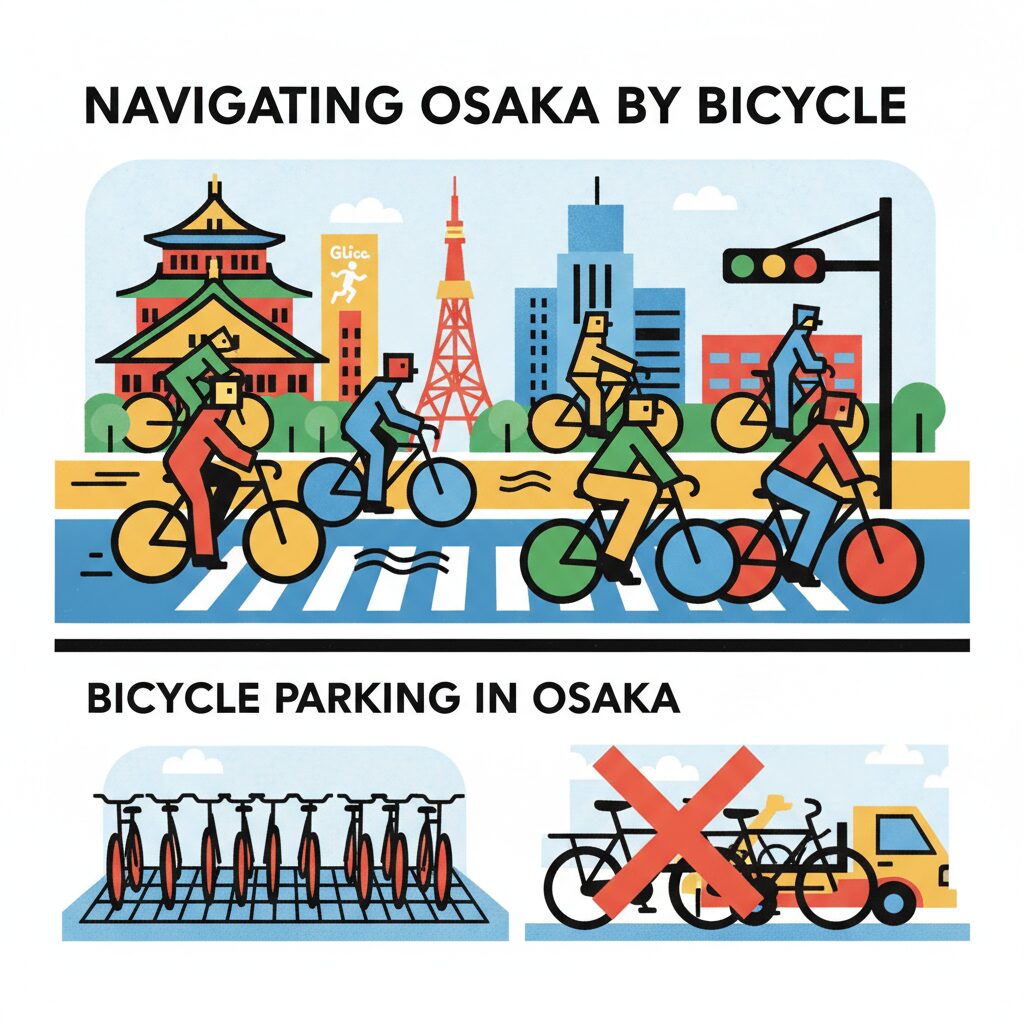
Space is a precious luxury in Japan. Unlike North America, where expansive, unregulated parking lots are common, such spaces are virtually nonexistent here. Every square meter of urban land is meticulously managed, posing a significant logistical challenge for a city with millions of active bicycles. In the past, people casually left their bikes leaning against any available guardrail or chained to streetlamps outside convenience stores. Those days have definitively passed. The municipal government has waged a highly effective campaign against illegal parking.
How to Find and Use Designated Bicycle Parking Lots
In major commercial areas like Umeda, Namba, and Shinsaibashi, you must use designated, paid parking facilities. These lots are often hidden in plain sight, frequently located underground beneath large department stores or public parks and accessed via sloping ramps or specialized elevators. Others are compact, mechanized facilities tucked between narrow spaces in buildings. You can easily spot them by looking for signs featuring a blue letter P with a bicycle icon.
The parking systems themselves are marvels of urban engineering. You will usually find sliding metal racks designed to maximize space efficiency. The lower racks are easier to use but tend to fill quickly. If only upper racks are available, you need to pull the rack out, tilt it downward, lift your bicycle onto the rail, and firmly push it back up until it locks into place. Once locked, the machine will indicate a stall number.
Payment is highly automated. When retrieving your bicycle, you go to a central kiosk, enter your stall number, and the machine calculates the fee. The cost is generally minimal, often free for the first sixty to ninety minutes, and only a few hundred yen for an entire day. Payments can be made with loose change or by tapping a transit IC card. Once the payment is confirmed, the rack releases the lock, allowing you to pull your bicycle free. This seamless, well-organized system helps keep the chaotic streets relatively uncluttered.
What Happens if Your Bicycle is Towed?
Disregarding the parking rules is a risk you will almost certainly lose. Major stations and busy commercial streets are heavily patrolled by municipal ward workers. These individuals, often retired men wearing distinctive green or blue uniforms, systematically scan sidewalks for illegally parked bicycles. They do not issue verbal warnings.
If you leave your bicycle in a clearly marked no-parking zone, distinguished by red signs or painted street markers, the patrol will attach a bright yellow warning tag to your handlebars, noting the exact time the bicycle was found. If the patrol returns about an hour later and the bicycle remains, it will be immediately loaded onto a flatbed truck and towed away.
Retrieving an impounded bicycle is a bureaucratic process designed to discourage repeat offenses. When you return to the spot where you left your bike, you’ll find only an empty stretch of pavement. Occasionally, a notice is posted on a nearby fence indicating the ward impound lot currently holding your bicycle. These lots are never conveniently located; they are typically far from the city center, often under isolated highway overpasses or in industrial areas requiring a long train ride and a considerable walk.
Once at the dusty municipal lot, you must prove ownership of the bicycle. This is why keeping your bicycle registration documents—mandatory when purchasing a bike in Japan—is essential. You will need to present identification, complete the necessary paperwork, and pay a steep retrieval fee in cash. It’s an embarrassing, time-consuming, and costly lesson in civic responsibility that every local strives to avoid at all costs.
Essential Tips for Renting a Bike in Osaka
For those not quite ready to commit to buying a bicycle, the city offers a highly developed sharing economy. Renting a bike provides an ideal way to test the waters and get a feel for the rhythm of the streets. The scene is dominated by two major companies. The bright red electric-assist bikes operated by the Docomo Bike Share network are everywhere, especially concentrated around central wards and major office areas. Their rival, Hello Cycling, offers yellow bicycles and frequently has stations extending further into residential and suburban neighborhoods.
Both services require you to download a smartphone app and register a credit card before use. The process is simple. You find an available bike on the app’s map, walk up to the terminal attached to the rear wheel, and scan a QR code to unlock the bike. The electric assist on these rental bikes transforms the city experience. While Osaka is mostly flat, the electric motor makes effortlessly crossing the long, arching bridges over the Yodo and Dojima rivers a breeze.
The most important rule when using these shared services is to respect the designated port system. You cannot just leave the bike wherever your ride ends. You must return it to an official designated parking port shown on the app and manually lock the rear wheel. If you fail to return the bike to a proper port, your rental timer will keep running, resulting in significant charges on your credit card.
Cycling through the heart of Osaka is one of the most genuine ways to experience the city. It removes the barrier of the train window and puts you directly into the flow of local life. You smell the exhaust of delivery trucks, hear the clatter of shotengai merchants, and feel the shared momentum of thousands moving with purpose. Learn the rules, respect the unwritten sidewalk etiquette, and pay the small fees for proper parking. Once you embrace the rhythm of the street and stop resisting the flow, you will truly understand how this magnificent, mercantile city breathes.