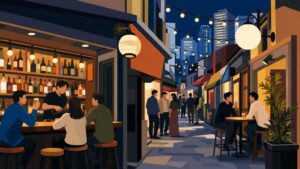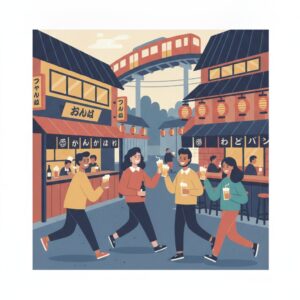
The neon hums. The trains scream. Umeda pulses with a frantic, metallic heartbeat. It is a city of glass and steel, reaching for the sky while digging relentlessly into the earth. When you first arrive in Osaka, Umeda feels like a futuristic labyrinth designed to test your survival instincts. The towering office buildings cast long, sharp shadows over the massive intersections. Millions of commuters flood the underground passageways every single day. They march with a furious, coordinated speed. They stand on the right side of the escalators, a stark defiance of Tokyo rules. They are merchants. They are salarymen. They are the engine of Western Japan. For a foreigner trying to build a life here, the sheer velocity of Umeda can feel utterly alienating. It is loud. It is relentless. It is unapologetically modern.
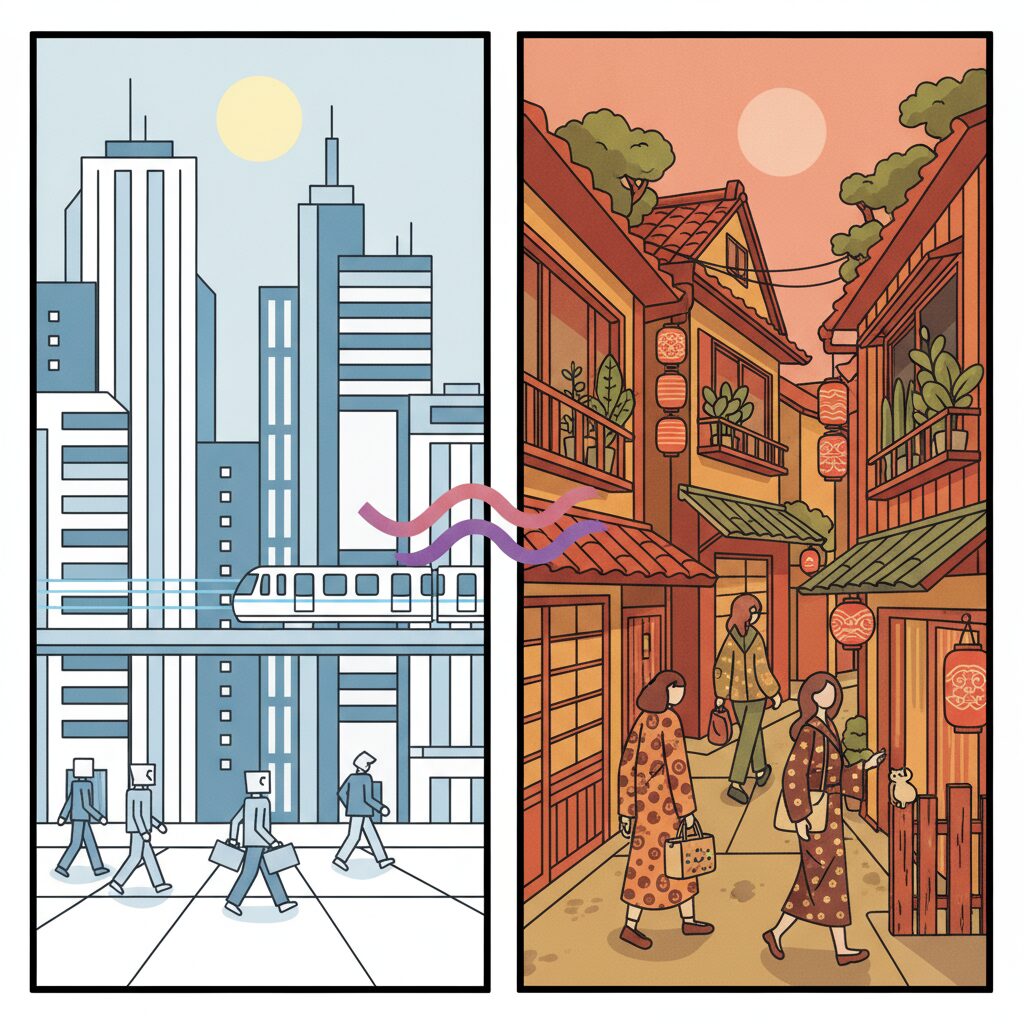
Yet, Osaka is a city of profound contradictions. It hides its softest secrets just out of sight. You do not need to board a train to escape the concrete jungle. You do not need to travel to the distant mountains. You only need to walk. Just a ten-minute stroll eastward from the dizzying lights of the HEP Five Ferris wheel, the city undergoes a miraculous transformation. The towering skyscrapers recede. The deafening roar of traffic fades into a gentle murmur. The glass facades are replaced by weathered wood and rusted tin roofs. You enter a world where time simply stopped ticking. This is Nakazakicho.
This neighborhood is not just a visual contrast. It is a psychological one. It represents the deeply rooted duality of the Osaka mindset. On one side, you have the relentless drive for commerce, efficiency, and modern success. On the other, you find an intense, stubborn appreciation for nostalgia, community, and slow living. Nakazakicho is a neighborhood of surviving Showa-era wooden houses, known as machiya and nagaya, stitched together by incredibly narrow alleys. It is a place where young, bohemian creatives brew artisanal coffee right next door to eighty-year-old grandmothers sweeping the cobblestones. To understand Osaka is to understand how these two worlds exist in such perfect, impossible proximity.
From Skyscrapers to Machiya: The Ultimate Walk from Umeda to Nakazakicho
The Sensory Shift of Leaving the Concrete Jungle
The journey starts in the shadow of towering giants. Standing outside Osaka Station, you are engulfed by the immense scale of the architecture. The Grand Front Osaka complexes rise like enormous glass monoliths. The air here carries the scent of sterile air conditioning, exhaust fumes, and the sweet grease from fast-food takoyaki stands. People here do not stroll; they follow precise paths. They check their watches and swipe their transit cards with ruthless efficiency. The Osaka work ethic is intensely practical. Time is money, and this merchant city does not tolerate dawdling. Foreign residents often find this pace intimidating. There is an unspoken pressure to keep moving, to match the relentless tempo of the corporate machine.
However, as you walk away from the station complex, heading east toward the Chayamachi district, the city’s rigid structure begins to relax. The suits give way to younger crowds. Massive department stores shrink to trendy boutiques. You pass beneath the elevated train tracks of the JR Loop Line. The rumble of trains overhead feels like a physical barrier between the modern world and what lies beyond. Crossing one final wide street, the traffic lights beep their familiar electronic bird songs. You step onto a narrower sidewalk. Suddenly, the sky opens up. The towering high-rises disappear, replaced by two-story wooden buildings. Sensory input drops sharply. Aggressive neon signs give way to subtle, hand-painted wooden boards. The smell of exhaust is replaced by roasted coffee beans and the damp earth of potted plants.
The Physical Transition Through Nu Chayamachi
The transition is not abrupt. There is a buffer zone. The area around Nu Chayamachi acts as a gentle decompression chamber for the weary commuter. Here, architecture remains relatively modern, but the scale feels human. Cafes spill out onto the sidewalks. People sit down, lingering over their drinks. This is the first hint of Osaka’s counter-culture. In a city that idolizes speed, sitting still becomes an act of rebellion. The young professionals who gather here are consciously choosing to step out of the current.
Pushing further east, beyond the trendy buffer zone, the streets grow tangled. The grid system breaks down. You must navigate by intuition rather than logic. This is where the real walk into Nakazakicho begins. Wide avenues narrow into alleys barely wide enough for a single bicycle. You brush past a maze of overhead power lines and intricate networks of rusted pipes clinging to aging buildings. The environment forces you to slow. You cannot march through these alleys. You must wander. You must yield to the elderly resident watering her bonsai trees. You must pause for a stray cat crossing your path.
Crossing the Threshold into Showa Nostalgia
Stepping fully into Nakazakicho feels like entering a film set. Yet the charm of this neighborhood lies in its deep authenticity. These are not replica buildings made for tourists but real homes with rich histories. The architecture is heavily defined by nagaya, or traditional row houses. They are built connected, sharing walls, and maximizing limited urban space. The wood is dark, stained by decades of rain and sun. Sliding doors feature frosted glass and delicate wooden lattice.
For foreign residents, this architecture teaches an important lesson in Japanese sociology. The nagaya fosters community. Sharing a thin wooden wall with your neighbor renders privacy an illusion. You hear their television, smell their cooking, know when they wake and sleep. In modern Umeda, residents live isolated in hermetically sealed high-rises, cut off from their neighbors. But in Nakazakicho, isolation is impossible. The architecture demands interaction, mutual respect, and embodies the essence of the traditional Japanese neighborhood association. This physical shift—from Umeda’s isolated towers to Nakazakicho’s interconnected row houses—mirrors the psychological transformation needed to truly grasp daily life in old Osaka.
The Psychological Decompression of the Commuter
Many foreign professionals living in Osaka eventually find this walk therapeutic. After eight hours under the fluorescent lights of an Umeda office, navigating the complex hierarchical rules of Japanese corporate culture, the mind longs for authenticity. The corporate world demands reading the air, carefully suppressing true feelings in favor of polite facades. It is draining.
The walk to Nakazakicho offers profound decompression. As the buildings shrink, so does the pressure. The neighborhood doesn’t care about your corporate title or quarterly reports. It cares whether you greet the shopkeeper or step aside for a bicycle. The psychological shift is tangible. The rigid posture of the salaryman melts into the relaxed slouch of the wanderer. It is a daily migration—from the relentless demands of global capitalism back to the fundamental, human scale of a village.
Why Nakazakicho is Osaka’s Best-Kept Secret
A Rare Glimpse into Showa-Era Japan
To truly grasp why Nakazakicho is so passionately cherished by locals, you need to understand what it has endured. Osaka is a city continuously rebuilt, defined by relentless progress. The merchant spirit demands that if a building becomes old and inefficient, it must be demolished and replaced with something larger and better. This pragmatic approach has shaped the striking skylines of Umeda and Namba, but it has also erased much of the city’s tangible history.
Nakazakicho stands as a miraculous anomaly. Walking through its narrow alleys means stepping into the Osaka that existed before the economic booms, the bubble era, and the relentless spread of concrete. The Showa era, spanning from the late 1920s to the late 1980s, is heavily romanticized in contemporary Japanese culture. It symbolizes community, shared hardship, and analog simplicity. For young people in Osaka, Nakazakicho offers a real connection to a past they never experienced, yet deeply long for.
Surviving the Flames of History
The neighborhood’s survival is sheer, terrifying luck. During the final months of World War II, Osaka was ravaged by relentless air raids. Firebombing reduced vast areas to ashes. The traditional wooden architecture, elegant yet highly flammable, stood no chance against the incendiary bombs. Central districts were effectively wiped from the map.
By a strange twist of fate, this particular area of Nakazakicho was mostly spared. The flames halted just before reaching its borders. The nagaya row houses survived. The narrow, winding alleys—never built to meet modern fire codes—remained untouched. Because the streets were too narrow for large construction vehicles during the postwar rebuilding surge, developers largely overlooked the area. It was left to age, endure, and become a living time capsule. Knowing this history changes your perspective; you stop seeing it as merely a trendy photo spot and begin to recognize it as a resilient survivor.
The Bohemian Vibe of Renovated Townhouses
Decades passed. Original residents aged, and many nagaya houses fell into disrepair as younger generations moved out to convenient suburbs. For a while, Nakazakicho was a quiet, slowly decaying residential enclave—but then, counterculture arrived.
About twenty years ago, young creatives noticed the empty wooden houses. They saw the affordable rent—and more importantly, the soul of the buildings. These artists, designers, and coffee lovers felt completely disconnected from the polished, commercial environment of Umeda just nearby. They didn’t want a sterile white box in a modern building; they sought character. They began renting the dilapidated machiya.
The Osaka Spirit of Pragmatism and Reinvention
What followed perfectly captures the Osaka mindset. In Tokyo, a historical building might be lavishly restored to pristine, museum-like condition. But Osaka people are pragmatic through and through. They are masters of making do with what they have. The young entrepreneurs in Nakazakicho skipped million-dollar renovations—they got their hands dirty and did the work themselves.
They left rusted tin roofs untouched. They kept crooked wooden beams. They patched walls, applied fresh paint, and furnished spaces with mismatched vintage furniture. They embraced imperfections. This aesthetic of beautiful flaws deeply resonates with the Osaka spirit. It is unpretentious and honest. Foreign visitors to cafes here often marvel at the rustic, cobbled-together interiors. It feels deeply authentic because it arises from necessity and total indifference to corporate polish. It is the ultimate middle finger to the gleaming glass towers of Umeda.
The People and Mindset: Umeda’s Hustle Versus Nakazakicho’s Flow
Decoding the Osaka Work Ethic in the Umeda Labyrinth
To fully appreciate the sanctuary of Nakazakicho, you first need to understand the culture of Umeda. Historically, Osaka has been Japan’s merchant capital. The locals are recognized for their straightforwardness, humor, and fierce commitment to commerce. In Umeda, this merchant spirit intensifies to an almost overwhelming level. The underground mall network, a vast labyrinth below ground that often confounds tourists, stands as a testament to this relentless hustle.
In this subterranean city, efficiency is paramount. Small talk during commutes is rare. People move with purposeful, calculated speed. Communication in the corporate offices above is notably direct, a stark contrast to Tokyo’s famously polite and indirect style. In Osaka, business is business. If a project is failing, an Osaka manager will likely be blunt with you, often cushioning the message with self-deprecating humor. This pragmatic, results-driven approach defines the Umeda atmosphere, creating a space that is vibrant yet deeply draining. You are perpetually on the clock, always part of the machine.
Speed, Efficiency, and the Underground City
Foreign residents working in Umeda quickly adapt to its unwritten rules. You never block traffic flow. Your transit card is ready before you reach the gate. You order lunch swiftly and eat even faster. Umeda’s entire infrastructure is crafted to enable mass movement and mass consumption. It’s a marvel of urban design, yet it leaves scant room for human vulnerability. The towering buildings dwarf the individual, while endless reflections in glass facades convey an unending, dizzying motion.
The Counter-Culture of Nakazakicho’s Creatives
Nakazakicho embodies a complete rejection of the high-speed merchant lifestyle. Those who open shops and cafes here make a conscious choice to step off the corporate treadmill. They prioritize passion over profit and community over scale.
When you talk to a shop owner in Nakazakicho, the contrast with Umeda is immediate. There’s no rush. Ask a barista about the beans they use, and they’ll happily spend ten minutes chatting, ignoring the queue forming behind you. In Umeda, this would be a business disaster. In Nakazakicho, it’s the very essence of their ethos. Locals here value human connection more than transaction speed. They want to know where you’re from and why you chose to live in Osaka. The famed Osaka friendliness, which can sometimes feel transactional in main tourist areas, comes across as truly genuine here.
Rejecting the Corporate Ladder for Coffee and Craft
For many young Japanese, the traditional route of graduating university, joining a vast corporation in Umeda, and working tirelessly until retirement has lost its appeal. Burnout rates are high. Nakazakicho fosters alternative lifestyles. Vintage clothing shop owners, independent illustrators, vegan bakers — they prove it’s possible to thrive in Japan without wearing a suit.
This dynamic fascinates foreign residents. Many expats arrive in Japan anticipating a rigid, conformist society—Umeda certainly reinforces that image. But Nakazakicho breaks the mold. It reveals a subculture of rebels, dreamers, and dropouts who are crafting a beautiful, slow-paced life right in the shadow of corporate giants. It shows foreign observers that Japanese culture is not a single entity. Individuality has a place—if you know which alley to turn down.
How to Get to Nakazakicho from Umeda
The Scenic Fifteen-Minute Walking Route
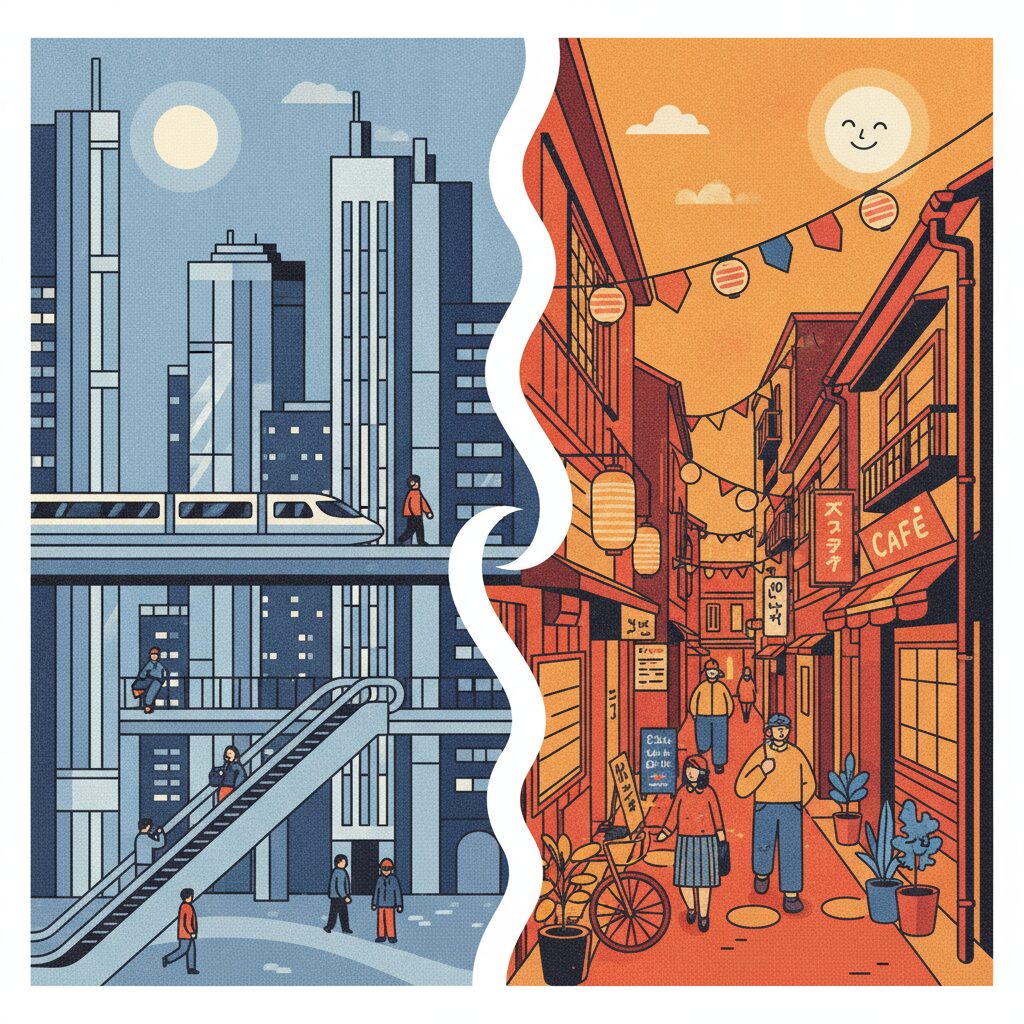
Moving physically between these two worlds is a quintessential Osaka experience. Although you can technically take the train, walking is the only way to genuinely sense the transition. The route itself is a brilliant example of urban geography. You begin at the vast, hectic hub of Osaka Station and make your way toward the HEP Five building, easily identified by the huge red Ferris wheel protruding from its roof.
From there, you head east. You cross the busy intersection near the EST shopping mall. The street noise creates a dividing line. Once you pass under the elevated JR line tracks, the atmosphere starts to change. You wander through the Chayamachi district, passing sleek fashion boutiques and the towering Loft building. As you continue east, the streets narrow. The modern pavement gives way to uneven asphalt. The giant digital billboards vanish, replaced by small, handwritten signs pointing toward hidden cafes.
Navigating the Overground Like a Local
Walking this route demands a shift in perspective. In Umeda, you look up to read the signs. In Nakazakicho, you look down. You follow the potted plants. You follow bicycles neatly parked against wooden walls. You follow subtle hints—the aroma of roasting coffee and baking bread.
Foreigners often get delightfully lost in these alleys. Google Maps struggles to pinpoint your location accurately beneath the tangled power lines and narrow passageways. But getting lost is precisely the point. It encourages you to observe your surroundings, to notice tiny details: the worn ceramic tiles on a public bathhouse, the intricate ironwork on an old street lamp, the way sunlight filters through the narrow roof gaps. It teaches you to relinquish control, an invaluable lesson for anyone adapting to life in a foreign country.
Taking the Tanimachi Subway Line
If the weather is unbearable—as Osaka summers often are—a subterranean alternative exists. The Tanimachi subway line links Higashi-Umeda station directly to Nakazakicho station, with the journey lasting about two minutes. It’s just a single stop.
Even this brief train ride emphasizes the contrast between the two areas. Higashi-Umeda is a noisy, cavernous space filled with rushing commuters. You board, the doors close, and you are plunged into darkness. Two minutes later, you arrive at Nakazakicho station, which feels older and quieter. The fluorescent lights seem dimmer. As you ascend the stairs, you don’t emerge into a plaza of skyscrapers but instead onto a quiet, narrow street corner, surrounded by old apartment buildings and a neighborhood grocery store.
The Subconscious Shift in Commuter Behavior
Watching local passengers on this short journey is revealing. When boarding at Higashi-Umeda, they carry the tense, armored posture of corporate warriors, bracing for impact. But as the train pulls into Nakazakicho, their shoulders visibly relax. The tension melts away. They step off the train not with a purposeful march but with a leisurely stroll.
The physical environment shapes behavior. The towering scale of Umeda demands submission and speed, while the intimate scale of Nakazakicho encourages relaxation and mindfulness. For expats living here, mastering this daily psychological shift is essential to thriving in Osaka. You learn to don your armor heading west and to shed it when heading east.
Top Things to Do in Nakazakicho (And What They Reveal About Osaka)
Cafe Hopping in Traditional Wooden Houses
Nakazakicho is undeniably renowned for its cafes. However, these are not your typical corporate coffee chains. The cafes here are intimate reflections of their owners’ personalities. Many are housed within extensively modified machiya. You enter through sliding wooden doors that stick slightly in their tracks. You remove your shoes and step onto creaky wooden floors. The ceilings are low, revealing dark, heavy wooden beams that have withstood earthquakes and air raids.
Cafe hopping in this area is about more than just drinking coffee. It is an exploration of interior design and personal philosophy. Some cafes embrace the retro Showa aesthetic, serving rich, dark-roasted coffee in delicate vintage porcelain cups. Others combine the old wooden elements with stark, modern minimalism, creating a striking visual contrast.
The Kissaten Revival and Osaka’s Coffee Passion
This cafe culture is deeply entrenched in Osaka’s history. Long before the advent of modern espresso bars, Osaka was the heart of the kissaten, the traditional Japanese coffee shop. Kissaten initially served practical purposes. They acted as neutral meeting places for merchants to negotiate deals away from their workplaces. They were dark, smoky, and serious environments.
The contemporary cafes of Nakazakicho are at the forefront of a kissaten revival, but with a bohemian flair. They maintain the slow, meticulous brewing techniques. Pour-over coffee is treated as an art form here, taking several minutes to prepare. This deliberate process encourages customers to pause, observe, and be present. It marks a stark contrast to the grab-and-go culture prevalent in Umeda. When a foreign visitor sits in a Nakazakicho cafe, watching the barista slowly pour hot water over fresh grounds, they participate in a quiet rebellion against the speed of modern life. They experience the Osaka belief that some things, no matter how inefficient, are worthwhile when done slowly.
Thrifting for Japanese Vintage Fashion
The fashion scene in Nakazakicho offers another glimpse into the local mindset. The narrow streets are packed with small, fiercely independent vintage clothing shops. You won’t find pristine, carefully curated high-end designer vintage here. Instead, you discover chaotic, eclectic assortments of American workwear, European military surplus, and vibrant, brightly colored pieces from the 1980s.
Shopping here requires patience. The stores are often cramped, with overflowing racks. The clothes carry a faint scent of mothballs and aged fabric. But the rewards are substantial. The shop owners are deeply knowledgeable about the history of the garments. They can tell you the exact year a denim jacket was made or share the story behind a particular band t-shirt.
Self-Expression Beyond Tokyo’s Perfectionism
This vintage culture illustrates an important contrast between Osaka and Tokyo fashion. Tokyo fashion often emphasizes perfection, sleekness, and adherence to current trends. It is polished and impeccable. Osaka fashion, on the other hand, is rooted in individuality, humor, and a hint of eccentricity. People here embrace standing out. They mix patterns, wear oversized and mismatched silhouettes, and celebrate the unusual.
The vintage shops of Nakazakicho are the source of this style. Young people flock here to find pieces that no one else will own. The culture prioritizes uniqueness over uniformity. For expats adjusting to life in Japan, this freedom can be incredibly refreshing. The pressure to fit in, which can feel stifling in more conservative parts of the country, is entirely absent in Nakazakicho’s alleys. Here, your quirky vintage sweater is not a misstep but a conversation starter.
Discovering Hidden Art Galleries and Handmade Crafts
Beyond coffee and clothing, Nakazakicho plays a vital role as a hub for local artists. Because rent in these traditional wooden houses is much lower than in commercial areas, young creatives can afford physical spaces. You will find tiny, single-room galleries exhibiting bizarre modern art, intricate ceramics, and handmade leather goods.
These galleries are almost invisible if you don’t know what to look for. They lack large signs, often just displaying a small, hand-painted wooden board outside a sliding door. You need the courage to slide the door open and step inside.
The Community Network of Local Artists
What makes this art scene unique is its strong sense of community. The artists in Nakazakicho all know one another. If you purchase a ceramic mug from one gallery, the owner will likely recommend a leatherworker a few alleys away. They cross-promote, collaborate, and function as a collective village.
This highlights a beautiful aspect of the Osaka mindset. Despite its size, Osaka operates as a network of tightly connected villages. Locals heavily rely on personal connections and word-of-mouth. Trust is cultivated through face-to-face interactions, rather than slick marketing campaigns. When a foreigner engages with this community, taking the time to converse with the artists instead of silently browsing, they tap into the city’s true social fabric. They stop being tourists and start becoming locals.
Essential Tips for Exploring the Neighborhood
Timing Your Visit: Why Afternoons are Best
A common mistake among newcomers is to treat Nakazakicho like a typical commercial district. They arrive at 10 a.m. on a Tuesday, expecting bustling streets and cafes serving breakfast, only to encounter closed shutters and empty alleys.
Nakazakicho follows its own unique and stubborn schedule. This is not Umeda. Locals here don’t rise at dawn to serve the commuting crowds. Most independent cafes, vintage shops, and galleries don’t open until noon or even 1 p.m. Many businesses remain closed on Tuesdays or Wednesdays.
The Local Artisan’s Slow Morning Philosophy
This late opening isn’t due to laziness but reflects a deliberate philosophy. Business owners prioritize their well-being over maximizing profits. They spend mornings sourcing ingredients, creating art, cleaning, or resting. They reject the grueling hours demanded by the mainstream corporate world.
To fully appreciate Nakazakicho, you need to tune into its rhythm. The neighborhood truly wakes up in the mid-afternoon. The golden hour sunlight perfectly illuminates the rusted tin roofs. The aroma of roasting coffee drifts through the alleys. Local cats rise from their naps. It’s a slow, unhurried awakening. By evening, the atmosphere shifts again. Many cafes turn into quiet, intimate bars. The streets darken, lit only by the soft glow of paper lanterns and occasional streetlamps. You must surrender your schedule and allow the neighborhood to set the pace.
Photography Etiquette and Respecting Local Residents
Nakazakicho’s visual charm is undeniable. The contrast of old wooden textures against a modern backdrop, the tangled power lines, retro bicycles leaning against vine-covered walls—it’s a highly photogenic scene. As a result, it draws many photographers, influencers, and tourists armed with smartphones.
However, this attraction creates tension. The most important thing for visitors and residents alike to understand is that Nakazakicho is not a theme park. It’s a living, breathing residential neighborhood. Behind those charming wooden lattices, real people live their lives—eating dinner, watching TV, and simply trying to be.
Balancing Aesthetic Appeal with Daily Residential Life
The influx of cameras has caused significant stress for elderly residents who have called this place home for decades. They step outside to sweep the street only to find strangers aiming large lenses at their faces. Visitors pose dramatically on their private doorsteps and engage in loud conversations near bedroom windows.
The unwritten rules for exploring Nakazakicho are straightforward but essential. Keep your voice low, as the narrow alleys amplify sound and normal speech can seem like shouting inside a wooden nagaya. Never block the path—step aside immediately if a resident or bicycle approaches. Avoid photographing inside someone’s home. When photographing storefronts, ensure you don’t block entrances.
More importantly, respect the cultural practice of “reading the air.” If a resident looks uneasy, put your camera away. Acknowledging them with a quiet greeting goes a long way. While the people of Osaka are famously tolerant and friendly, they deeply resent being treated as props in someone’s tourist fantasy.
When you honor the neighborhood’s boundaries, Nakazakicho opens up to you. You cease being a disruptive outsider and become a respectful guest. You begin to notice subtle details of daily life—the intricate way laundry is hung, tiny shrines tucked away in alley corners, the distant sound of a television broadcasting a baseball game.
You come to realize that Nakazakicho’s true magic isn’t just its retro charm. It lies in the fact that it still exists—a stubborn, beautiful pocket of humanity resisting the relentless corporate machinery of nearby Umeda. It perfectly embodies Osaka’s dual nature: always moving forward while never forgetting its roots.