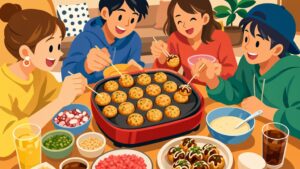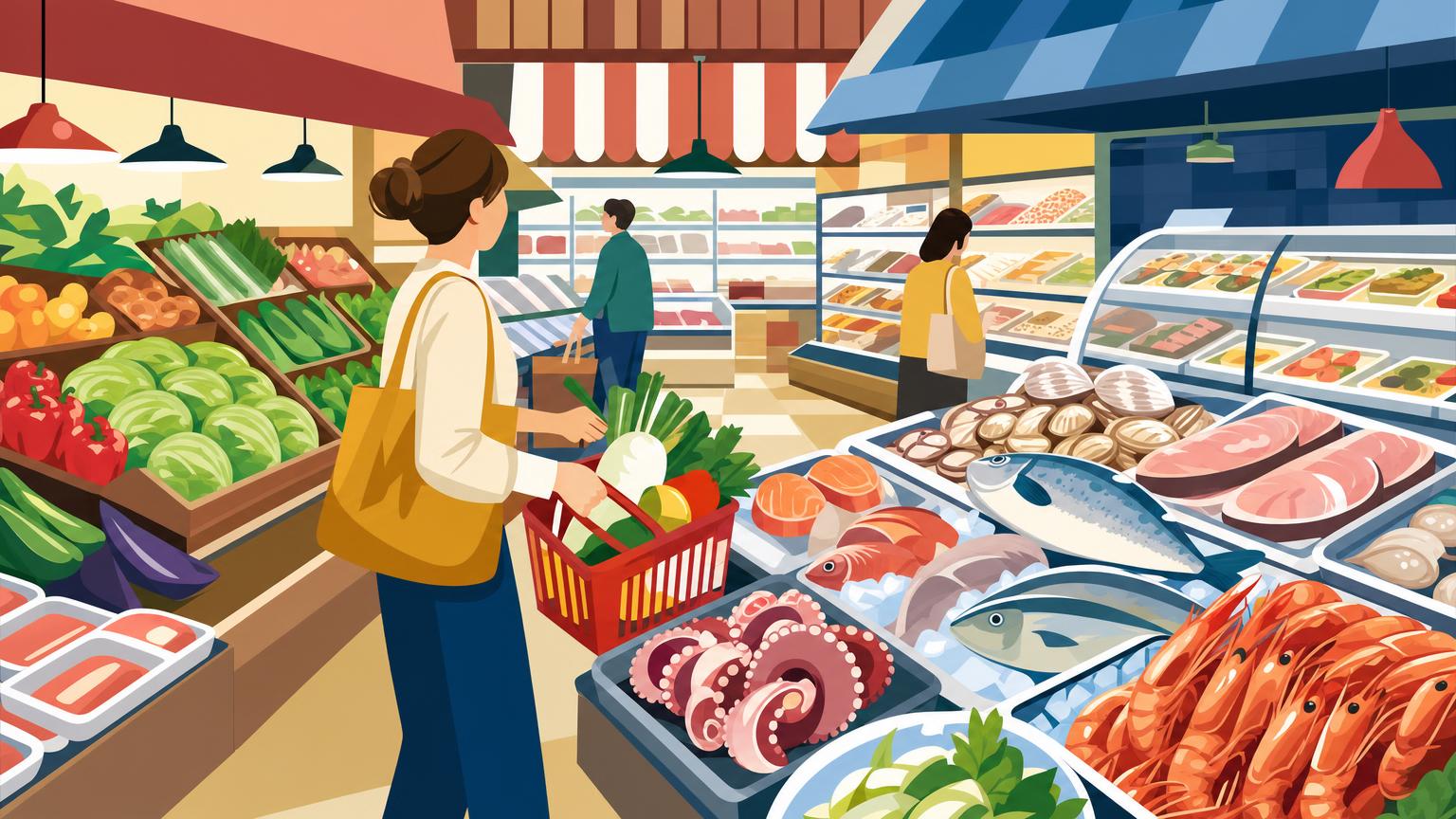
You think you know Osaka because you have seen the blazing neon lights reflecting off the dark waters of the Dotonbori canal. You think you understand the rhythm of this city because you have eaten molten takoyaki on a crowded street corner while avoiding the aggressive maneuvers of evening taxis. You believe you have grasped the local mindset because you have wandered through the sprawling, chaotic arcades of Shinsekai, sipping cold beer and eating deep-fried skewers until your stomach begged for mercy. But you do not truly know the soul of this city. You do not understand the heartbeat of Osaka, Japan, until you have stood under the glaring, unyielding fluorescent lights of a local supermarket at eight o’clock at night. You have not felt the true pulse of the Kansai region until you have watched a local grandmother fiercely, yet silently, calculate the exact moment a discount sticker will be slapped onto a pristine box of raw fish. That is where the real city lives. That is where the facade of tourism melts away, leaving only the raw, pragmatic, and beautifully messy reality of daily life in Osaka.
My name is Sofia, and I have spent the better part of my late thirties documenting the stylish, the photogenic, and the culturally rich corners of the world. But my true obsession lies in the mundane. I am fascinated by the spaces where normal people live out their normal days. When you move to Japan, or when you stay long enough to let the honeymoon phase fade, you realize that the temples and the shrines do not dictate your daily happiness. Your local grocery store does. The supermarket is the ultimate cultural mirror. It reflects how a society values its time, its money, and its health. In Tokyo, supermarkets are hushed, orderly, and meticulously curated. People move like ghosts through the aisles, speaking in whispers, avoiding eye contact, and placing perfectly shaped apples into their baskets with surgical precision. But Osaka is a different beast entirely. Osaka is loud. Osaka is unapologetic. The supermarkets here are vibrant battlegrounds of commerce and community, where the unspoken rules of engagement are written in the language of seasonal produce and half-price deli items. To understand the people of Osaka, you must understand how they shop. You must observe their pursuit of value, their deep and abiding love for robust flavors, and their willingness to break the quiet rules of Japanese society for the sake of a good conversation or a great bargain.
This is not a traditional travel guide pointing you to the most famous historical landmarks. This is an exploration of the domestic sphere. This is for the expatriate trying to figure out how to feed their family on a Tuesday night. This is for the digital nomad living in a tiny apartment in Namba, wondering why the grocery store feels like a chaotic festival. This is for the curious traveler who wants to step off the beaten path and into the aisles of domestic reality. We are going to tear apart the mechanics of the Osaka supermarket ecology. We are going to analyze the psychological profiles of the shoppers. We are going to uncover the hidden rules of the discount sticker dance, the regional differences in meat selection, and the overwhelming sensory experience of navigating these brightly lit temples of consumption. Welcome to the real Osaka. Welcome to the aisles where the city truly reveals itself.
Why You Should Visit a Supermarket in Osaka, Japan
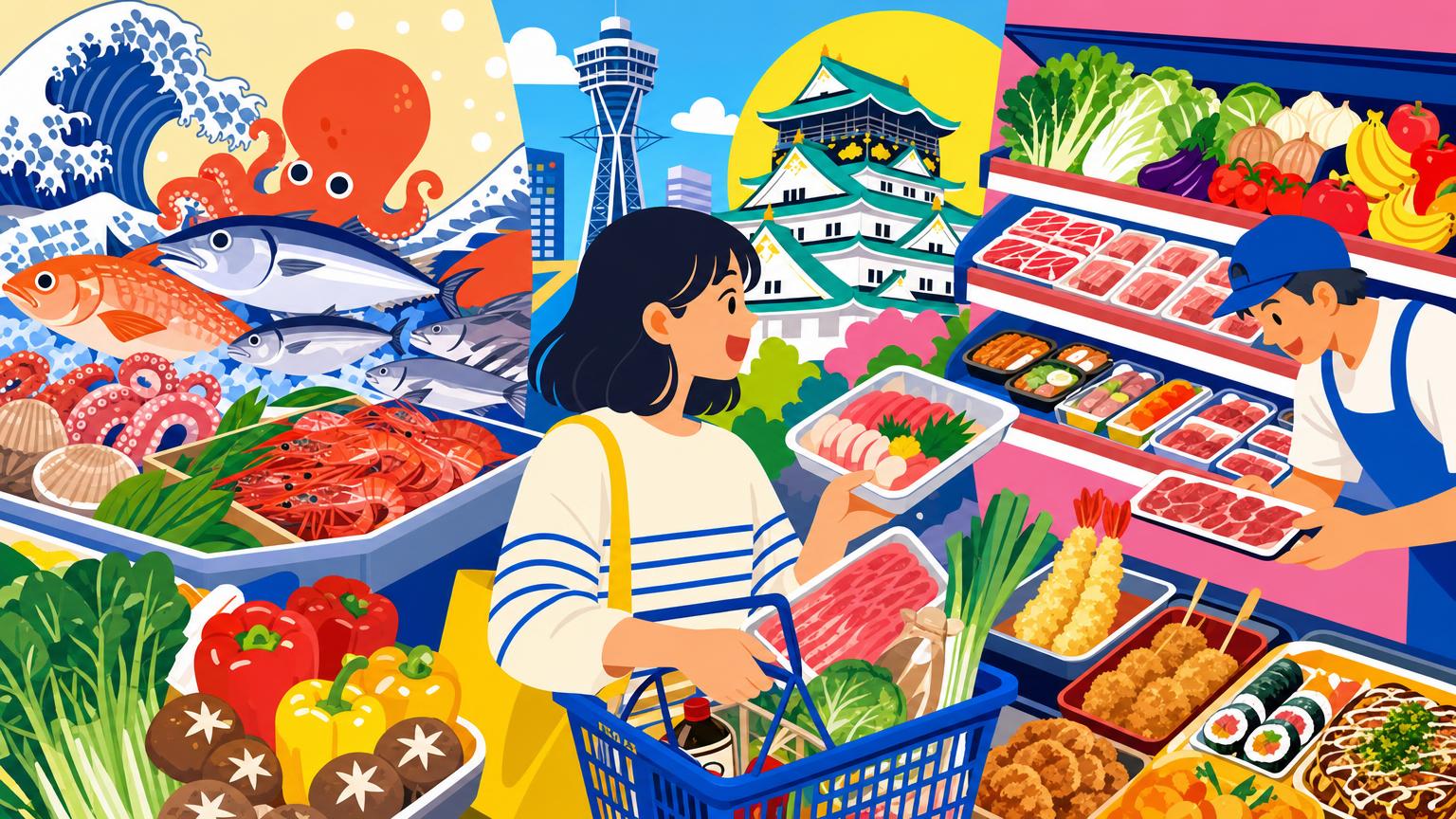
The word supermarket in the West often evokes images of soulless warehouses filled with endless aisles of identical boxed cereals and brightly colored sodas. It feels like a chore, an errand to be completed as quickly as possible. However, in Japan, particularly in Osaka, the supermarket is a vibrant ecosystem. It reflects the global supply chain localized through the highly specific tastes of the Kansai region. Anyone staying in the city for more than a few days would make a fundamental mistake by skipping the local grocery stores. Supermarkets in Osaka are more than just places to buy food for sustenance—they are cultural institutions and stages where the daily life of Osaka unfolds.
Osakans are known for a concept called kuidaore, roughly meaning to ruin oneself by indulgence in food. It signifies eating until collapse and spending every last yen on an exceptional meal. Yet, there is a pragmatic side to kuidaore that foreigners often overlook: while Osaka people love eating well, they despise being overcharged. They expect high quality but at reasonable prices. This paradox—the desire for gourmet food on a working-class budget—fuels fierce competition among Osaka supermarkets. Stores must offer outstanding food or face losing customers to competitors just down the street. Thus, walking into any supermarket here guarantees a front-row view of some of the best quality, most affordable, and most rigorously vetted food items available anywhere.
Affordable Bento Boxes and Fresh Deli Foods
To grasp the rhythm of a Japanese workday, you must explore the souzai section—pre-cooked deli foods, side dishes, fried treats, and complete bento boxes lining the edges of every major supermarket. In many countries, supermarket sushi or ready-made meals are met with suspicion, seen as last-resort fare in sad plastic containers consumed under fluorescent office lights. In Osaka, however, supermarket bentos are an art form and lifelines for busy families, tired office workers, and budget-conscious students.
The scale of the deli section in an Osaka supermarket is impressive. Massive tables overflow with freshly fried tempura, glistening with oil and still warm. Rows of tonkatsu—thick breaded pork cutlets that crunch satisfyingly—stand alongside delicate potato salads mixed with Japanese mayonnaise and tiny cucumber bits. There are simmered hijiki seaweed salads in sweet soy sauce and large slabs of grilled mackerel with perfectly blistered skin. The quality control is exceptional, and high turnover means food is constantly replenished, so you rarely pick up anything more than a few hours old.
For Osaka residents, the bento section is essential to daily survival. After finishing work at eight in the evening and facing a forty-minute train ride home to Suita or Sakai, the thought of chopping vegetables and cooking rice is exhausting. The bento offers a practical solution—a balanced meal with a hearty portion of rice, protein, and several carefully arranged side dishes, all priced comparably to a cheap coffee in a Western capital. This is how the city nourishes its workforce without breaking their budgets. By joining this ritual, you share a meal with millions of unseen neighbors making the same pragmatic choice simultaneously.
The Best Place for Cheap Japanese Souvenirs
When foreign residents have family visit or tourists need gifts for numerous coworkers, the usual reaction is to panic-buy at the airport gift shop, ending up with overpriced boxes of generic cookies wrapped in elaborate but wasteful packaging. The true Osaka local knows the supermarket is the ultimate hack for souvenir shopping—a secret weapon for those wanting to bring home a piece of Japan without spending a fortune.
Consider the snack aisles. Japanese supermarkets dedicate extensive shelf space to seasonal variations of favorite snacks: matcha-flavored chocolate biscuits, roasted sweet potato crisps, and highly refined instant ramen rivaling restaurant quality. These products target the domestic market—they aren’t dressed up for tourists. They’re authentic, inexpensive, and offer a far more genuine taste of everyday Japanese life than a generic box of airport mochi.
Moreover, purchasing souvenirs at a local supermarket lets you embrace the legendary Osaka pragmatism. Why spend 3,000 yen on one box of sweets when you can buy a large assortment of unique, regional ingredients for the same price? You can pick up elegant bottles of yuzu ponzu sauce, bags of premium roasted green tea, or packs of the exact curry roux Japanese mothers use at home. These items are artifacts of daily life. When you gift them to friends overseas, you’re not just giving a sweet treat—you’re sharing a tangible piece of an ordinary Tuesday afternoon in Osaka.
Top Supermarket Chains in Osaka for Tourists and Residents
Not all supermarkets are created equal. Osaka’s retail scene is dominated by several key players, each targeting a distinct demographic, budget range, and set of psychological preferences. When moving to a new neighborhood, one of the most important tasks is to identify your local store and get a feel for its unique atmosphere. Your neighborhood supermarket influences your diet, budget, and daily routine. Below is an overview of the major chains shaping Osaka’s urban grocery landscape.
Super Tamade: Osaka’s Brightest and Cheapest Icon
No conversation about Osaka supermarkets is complete without mentioning the neon giant in the room. Super Tamade is more than just a grocery store; it’s a cultural phenomenon. It overwhelms the senses. It’s a glowing, flashing, unapologetic symbol of affordable living. From afar, Super Tamade looks less like a place to buy carrots and more like a gigantic, illegal pachinko parlor. The exterior bristles with dazzling yellow, red, and blue neon lights. Huge illuminated signs showcase the store’s grinning, slightly manic sunflower mascot. Stepping through the automatic doors, the intensity only grows. The interior lighting is blinding, bouncing off mirrored ceilings and plastic banners. Japanese pop tunes punctuated by loud, urgent announcements about ongoing sales blast from the speakers.
Super Tamade is well-known throughout Japan but is uniquely Osaka-born. It epitomizes the city’s obsession with rock-bottom prices. One-yen sales—where select items sell for a single yen with a minimum purchase—are common here. Their bento boxes can cost less than two hundred yen. Are they gourmet quality? No. But they provide a vital lifeline. Tamade serves students, elderly on fixed incomes, late-night workers, and anyone needing calories without breaking the bank.
Beyond the cheap food, Super Tamade reveals something essential about Osaka’s character. In Tokyo, a store this loud, garish, and inexpensive might be shunned as tacky. But in Osaka, there’s a genuine lack of pretension. People don’t mind if a store is ugly as long as it’s practical and saves them money. Tamade is loved precisely because it’s honest. It doesn’t pretend to be a boutique. It fully embraces its identity with blinding, neon pride. Shopping here means shedding aesthetic expectations and embracing the city’s chaotic, working-class spirit.
Life Supermarket: High Quality and Wide Selection
If Super Tamade is the eccentric, wild uncle of Osaka’s retail family, Life is the reliable, responsible older sibling. Life arguably represents the middle-class Osaka lifestyle best. Look out for the distinctive two-leaf clover logo glowing softly in green and orange. Entering Life means stepping into a genuine representation of a normal, healthy, balanced Japanese daily life.
The contrast with Tamade is immediate. Life is bright, but not overwhelming. The aisles are wide, spotless, and thoughtfully arranged. The music is soft and unobtrusive, a gentle instrumental background. This is where families come for their serious weekly shopping. The produce section is vast, boasting flawless seasonal vegetables. The meat counters present heavily marbled domestic beef, neatly displayed on black trays designed to highlight the quality of the fat. The deli offers a broad range of healthier, slightly upscale choices like grilled fish collars, intricate seasonal salads, and sushi platters that could rival specialized sushi restaurants.
Life also showcases the “mamachari cavalry” phenomenon. Outside every Life store lies an extensive parking area for bicycles. The mamachari—a sturdy, multi-purpose city bike often fitted with child seats and large front baskets—is the staple vehicle for Osaka households. Watching a mother skillfully balance a squirming toddler, an umbrella, and several heavy bags on a single bike is urban survival mastery. Life symbolizes stability. It’s neither the cheapest nor the most luxurious, but it serves as a steady, dependable anchor for domestic life throughout the city’s neighborhoods.
Kohyo and MaxValu: Conveniently Located Near Major Stations
For young professionals, busy expatriates, and hurried travelers, location is key. Walking fifteen minutes to a sprawling suburban supermarket isn’t always an option. You need food quickly on your route from the train station to your home. This is where chains like Kohyo and MaxValu thrive. Often part of the Aeon retail empire, these stores dominate spaces around major transit hubs such as Umeda, Namba, and Tennoji.
Kohyo typically positions itself as a slightly upscale, ultra-convenient urban market. Its footprint is generally smaller than a suburban Life, but its product range is tightly curated, focusing on ready-to-eat items. The store understands its clientele well—the customer shopping at Kohyo around 7 p.m. is tired, carrying a heavy briefcase, and craving a quality dinner that requires no prep. Accordingly, their craft beer selection is excellent. Pre-cut fruit bowls are ideal. Their cheese and imported wine sections are surprisingly extensive, catering to both foreign residents and Japanese locals with international tastes.
MaxValu operates on a similar model but often extends into suburban areas with larger stores and crucially, 24-hour service. A 24-hour supermarket acts as a psychological comfort zone. Knowing you can buy fresh eggs, rice, and soy sauce at 3 a.m. provides reassurance in a vast city. These stores accommodate the erratic rhythms of urban life—serving nurses on night shifts, bartenders closing down Dotonbori, and insomniacs wandering the quiet, concrete streets before dawn.
Don Quijote in Dotonbori: More Than Just Groceries
Technically, Don Quijote is a discount retail store rather than a traditional supermarket. Ignoring it in a discussion about Osaka grocery shopping would be a huge omission. The massive store by the Dotonbori river, featuring its bizarre and intimidating elliptical Ferris wheel, is a city landmark. While tourists flock here for cosmetics, quirky electronics, and low-cost luggage, the basement and lower floors contain a wildly chaotic, intensely competitive grocery section.
Navigating Don Quijote is designed to disorient. The aisles are incredibly narrow, forming a maze that traps shoppers and forces them to encounter thousands of unrelated products. But if you can push through the crowds of tourists loading up on matcha Kit Kats, you’ll find remarkably low prices on staples, drinks, and snacks. The meat section is often bizarrely inexpensive, with huge bulk packs of frozen chicken and steeply discounted beef.
Don Quijote embodies the intersection between Osaka’s tourist fantasy and the gritty reality of everyday life here. You might see an influencer filming a TikTok in the candy aisle, oblivious to the exhausted local restaurant owner behind them, aggressively hoarding forty bottles of cheap cooking oil. It’s a place of friction and overlap; overwhelming and exhausting, yet an indispensable element of Osaka’s modern retail ecosystem.
What to Buy at an Osaka Supermarket to Understand the Culture
You are standing in the aisles with a basket in hand. But what should you actually put inside? To truly grasp the culinary essence of Osaka, simply buying bread and milk won’t suffice. You need to select the tools of the local trade—the ingredients that define the flavor profile of the Kansai region.
Regional Osaka Specialties and Snacks
Osaka is the city of flour. Konamono, or flour-based dishes, make up the sacred trio of Osaka street food: takoyaki, okonomiyaki, and udon. As a result, the flour and sauce aisle in an Osaka supermarket commands deep respect. In Tokyo, you might find one or two brands of okonomiyaki sauce, but in Osaka, an entire wall is devoted to the sticky, sweet, and savory brown sauces that coat the city’s beloved dishes. Otafuku sauce is the standard, yet locals endlessly debate the merits of smaller, regional sauce producers.
You should also seek out the specific ingredients that bring these dishes to life. Bags of tenkasu—crunchy bits of fried tempura batter used to add texture to okonomiyaki—will be plentiful. You’ll see countless varieties of beni shoga, the bright red pickled ginger that provides a sharp, acidic contrast to the rich, starchy flour dishes. Large bags of specialized takoyaki flour, pre-mixed with dashi powder and yam extract, ensure a creamy, molten center when cooked in the heavy iron pans found in nearly every Osaka home.
Then there is the dashi. Tokyo cuisine relies heavily on dark, robust broths made with strong soy sauce and bonito flakes. Osaka cuisine, by contrast, is founded on light, elegant dashi crafted from kombu kelp and mild soy sauce. The broth here is golden, delicate, and deeply savory. The soup stock aisle perfectly illustrates this difference. To cook like a local, you must forgo the dark soy sauce of the east and embrace the golden dashi of the west.
Drinks, Alcohol, and Japanese Sake
The beverage aisle offers a revealing glimpse into how Osaka residents relax. Japan boasts a vast drinking culture, but the way alcohol is enjoyed at home is particularly intriguing. Shelves are dominated by chu-hai—canned alcoholic drinks made from shochu or clear spirits mixed with carbonated water and fruit flavoring. The undisputed champion in this category is Strong Zero. With a hefty nine percent alcohol by volume, these affordable, intensely flavored, and aggressively carbonated cans fuel the working class. They’re consumed on the train ride home, in parks, and at the dinner table—quick, efficient, and inexpensive ways to soften the sharp edges of a stressful workday.
Yet beyond the quick buzz of canned cocktails, the sake selection in a good supermarket tells a story of local pride. The Kansai region, particularly the Nada district in nearby Hyogo prefecture, is one of the world’s most renowned sake-producing areas. Supermarkets here proudly stock massive glass bottles of local brews. You can purchase exceptional, nuanced, high-quality junmai sake for a fraction of the cost found in boutique liquor stores elsewhere. The presence of these large bottles in everyday grocery carts demonstrates that fine sake is not reserved for special occasions here; it is an integral part of the daily diet.
Essential Tips for Supermarket Shopping in Japan
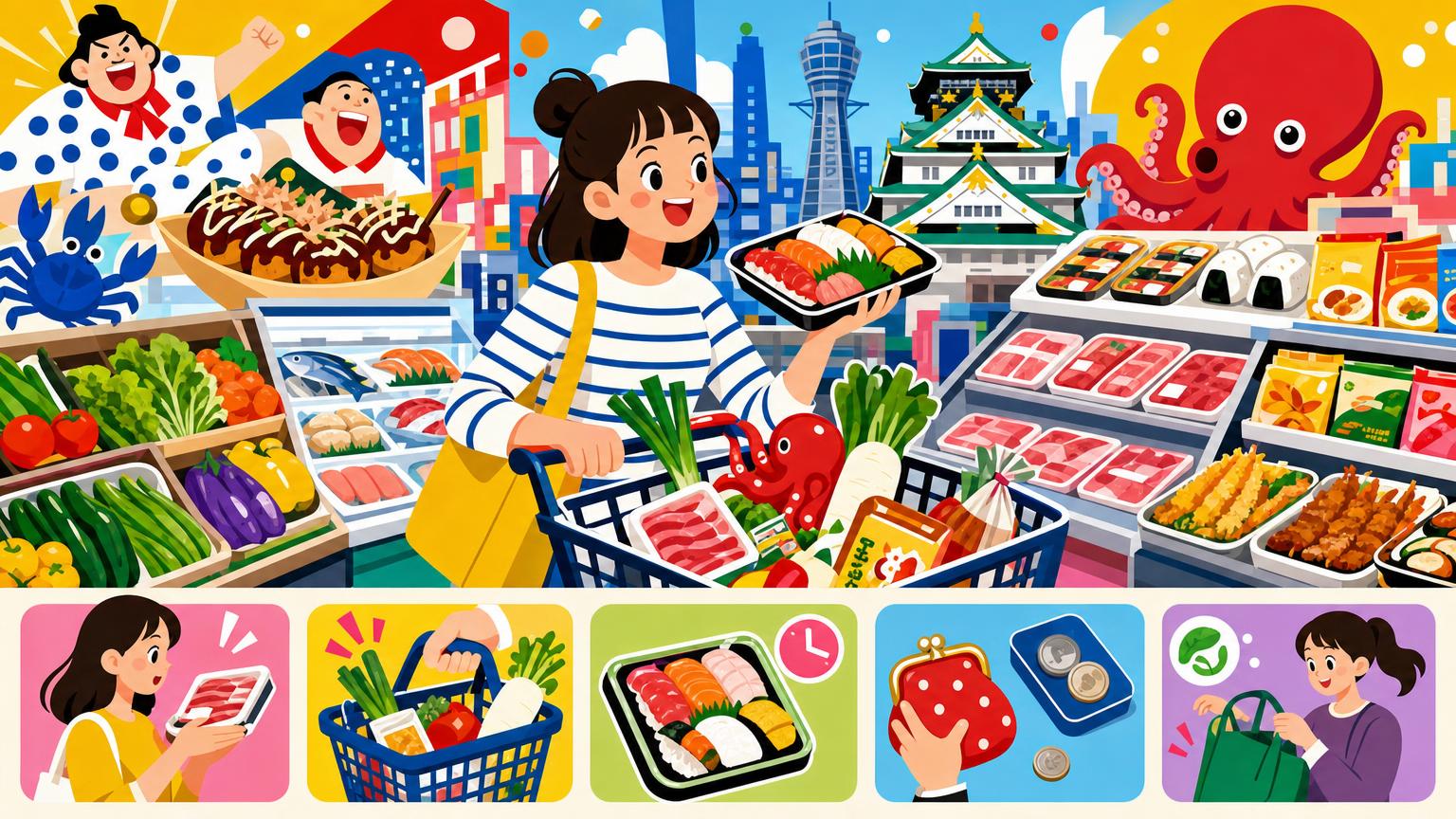
If you walk into a Japanese supermarket and try to navigate it using Western logic, you’ll quickly encounter problems. You’ll irritate the staff, hold up the line, and miss out on the best deals. Shopping here follows a choreography—a specific flow and set of unspoken rules that contain the chaos. You need to learn the dance.
Hunting for Evening Discount Stickers
This is the most essential survival skill for anyone living in Osaka. In Japan, fresh food is highly valued, but it comes with a strict expiration window. Stores won’t sell sushi from the previous day or bento boxes made yesterday. As evening approaches, they need to clear out inventory, which leads to the lively, chaotic ritual of the hangaku, or half-price, stickers.
The dance starts around seven in the evening. An employee will emerge from the back room with a handheld pricing gun, instantly becoming the most important person in the store. As they head to the deli or seafood section, a subtle tension fills the air. Experienced shoppers, neighborhood grandmothers, and hungry university students start to hover nearby. They don’t crowd the employee directly—that would be rude—but they follow closely, tracking every move with keen focus.
The employee begins by placing twenty percent off stickers. The less patient shoppers, motivated by hunger, grab these minor discounts immediately. But true Osaka locals wait patiently. They circle the aisles, pretending to browse tofu while keeping a steady eye on the prize. Finally, around eight or eight-thirty, the employee returns, this time armed with the yellow and red hangaku half-price stickers.
Once those stickers hit the plastic packaging, the items are up for grabs. Hands dart in, baskets fill. The best, fattiest cuts of sashimi, once unaffordable, suddenly become accessible. It is a moment of pure, egalitarian victory. Taking part in the hangaku hunt is a rite of passage that connects you to the city’s frugal, food-loving spirit.
Bring Your Own Bag and Understand the Checkout Process
The checkout process in Japan is a marvel of efficiency but often confuses first-timers. First, you must bring your own eco-bag. While plastic bags can be purchased for a small fee, bringing your own bag is both expected and environmentally mandated. However, you don’t hand your bag to the cashier—this is a crucial point to remember.
When you reach the register, you place your basket on the counter. The cashier scans your items with astonishing speed but doesn’t bag them. Instead, they place the scanned items into a second, differently colored basket. This basket is packed with careful precision—heavy root vegetables at the bottom and delicate eggs and bread on top.
After scanning, the payment process splits. In most modern Osaka supermarkets, you don’t pay the cashier directly. Instead, they tell you a register number, and you take your second basket to an automated payment machine. There, you insert cash, credit cards, or tap your transit IC card. This two-step process keeps the cashier free from handling money and allows for rapid scanning, preventing long lines.
Once you pay, you carry your basket to a designated bagging area near the front of the store. This area has rolls of thin plastic for items that might leak and damp cloths to wipe your hands. Here, you pack your own eco-bag at your own pace, taking full responsibility for your groceries. The system is based on individual accountability and collective efficiency.
Cash, Credit Cards, and IC Cards
For a long time, Japan was a cash-dominated society. Ten years ago, shopping in Osaka without a wallet full of ten-thousand-yen notes would have been problematic. But the pandemic and a government push for modernization have drastically changed this. Now, payment options are abundant.
Cash remains king, handled smoothly by automatic machines that give exact change quickly. Nearly all supermarkets now accept major international credit cards. More importantly for locals, they accept IC cards like ICOCA or Suica. These rechargeable transit cards are central to urban life in Japan. Using the same card to ride the subway and buy groceries creates a seamless experience. Additionally, domestic QR code payment systems such as PayPay or LinePay are widely used. Seeing an elderly Osaka woman—traditionally thought to shy away from technology—effortlessly scan a code on her smartphone for groceries is a clear sign that the city is modernizing rapidly without losing its practical edge.
The Psychology of the Osaka Shopper
To truly understand the supermarket, you must grasp the mindset of the people strolling its aisles. The people of Osaka are renowned across Japan for their distinctive personality traits. They are recognized as friendly, loud, commercially assertive, and deeply communal. These characteristics are more than mere stereotypes; they are tangible, observable realities expressed in everyday interactions.
Chatting with the Cashier and Breaking the Ice
In Tokyo, engaging a cashier beyond the customary, formal greetings is seen as a slight breach of social etiquette. It holds up the line and disrupts the barrier of polite anonymity. Tokyo relies on silence to preserve harmony in crowded spaces, whereas Osaka values communication.
At an Osaka supermarket, it is perfectly ordinary to see a customer chatting with the cashier. They might remark on the high price of cabbage this week, complain about the sudden summer heat, or share a quick joke about the weather. The famous Osaka obachan—the middle-aged or elderly woman often stereotypically shown wearing leopard print—is the queen of this interaction. She will talk to anyone, offer unsolicited advice to a young mother struggling with a crying child, and defend her place in line with a booming laugh and a joke.
This readiness to break the ice and recognize the humanity of the person scanning your groceries gives Osaka a warmer, more chaotic atmosphere compared to other Japanese cities. For a foreigner living here, it is both a challenge and a blessing. Learning just a few phrases of the local dialect, Kansai-ben, and using them at the register will instantly dissolve the barriers of feeling like an outsider. A simple ookini (thank you) in place of arigatou gozaimasu will earn surprised smiles and a level of warmth you simply cannot buy.
The Contrast with Tokyo Supermarkets
The contrast between the two cities is striking. If a Tokyo supermarket is a carefully choreographed ballet, an Osaka supermarket is a punk rock concert. In Tokyo, physical space is respected. People wait patiently, standing perfectly still until you move away from the milk cooler before reaching in. In Osaka, personal space is much more flexible. If an Osaka shopper needs milk, they will reach across you, usually muttering a quick, slurred sumimasen (excuse me) as they grab the carton. This is not done out of malice but from the understanding that everyone is busy, everyone needs milk, and there’s no time for unnecessary hesitation.
This straightforwardness extends to the appearance of the food. Tokyo prioritizes visual perfection—flawless packaging and symmetrical fruit. Osaka values substance over style. If a large, slightly misshapen tomato tastes better and costs less than a perfectly round one, Osaka shoppers will opt for the imperfect tomato every time. This creates a retail atmosphere that feels less intimidating, less like a food museum, and more like a working kitchen.
Kuidaore: Eat Until You Drop, But Do It on a Budget
We return to the concept of kuidaore. The passion for eating well defines Osaka’s population. But genuine kuidaore is not about dining at Michelin-starred restaurants nightly. It’s about elevating everyday meals. A cheap bowl of udon in Osaka invariably has a richer, more complex broth than a similar bowl elsewhere, simply because locals refuse to accept bad food.
This philosophy is reflected on supermarket shelves. Competition among stores to offer the best cuts of beef for weekend yakiniku (Korean barbecue), the freshest octopus for home takoyaki parties, and the crispiest tempura is intense. The supermarket is more than a place to buy groceries; it’s the supplier for the city’s favorite pastime. When you see a young couple agonizing over which specific cut of marbled wagyu beef to buy for their Friday night dinner, weighing the fat-to-meat ratio against the price per gram, you’re witnessing kuidaore in action. They are willing to spend, but demand absolute perfection in return for their hard-earned yen.
Navigating the Aisles Like a True Local
Let’s take a stroll through the physical space of the store. The layout of a Japanese supermarket is strikingly uniform, designed to lead shoppers along a specific narrative of seasonality, freshness, and convenience.
The Fresh Produce Section and Seasonal Rhythms
You almost always enter through the produce section, a deliberate psychological choice made by the store planners. The vibrant colors of the vegetables and the scent of fresh fruit immediately evoke health and vitality. More importantly, the produce section serves as a kind of calendar.
Japan is a country deeply enamored with seasonality, known as shun. Despite globalized supply chains allowing you to buy strawberries in December if you’re willing to pay, Japanese supermarkets proudly emphasize the changing seasons. In the depths of winter, the entrance features large, heavy daikon radishes, earth-covered sweet potatoes, and towering heaps of mikan (mandarin oranges). These ingredients evoke warmth, perfect for simmering in hot pots or enjoying under a heated kotatsu table.
As spring nears, the heavy roots disappear, replaced by tender bamboo shoots, bitter spring greens, and surprisingly expensive, jewel-like strawberries. Summer brings an abundance of watermelons, crisp cucumbers, and fragrant peaches. Autumn announces itself with matsutake mushrooms, sweet chestnuts, and perfectly round persimmons. By observing the front displays of an Osaka supermarket, you can track the year’s progress without ever consulting a calendar. For an expatriate seeking to feel grounded in a new land, embracing this seasonal rhythm through grocery shopping is a powerful way to connect with the natural world hidden beneath the city’s concrete and neon.
The Seafood Counter and the Importance of Freshness
Moving beyond the vegetables, you enter the cold, brightly lit domain of the seafood section. The Kansai region has a deep historical bond with the sea. The nearby Seto Inland Sea provides a wealth of specific fish that define the local cuisine. The seafood counter is not a small area; it’s an expansive, icy landscape of aquatic variety.
Freshness is paramount. You’ll find whole fish gazing back at you with clear, unclouded eyes. Massive boiled octopus tentacles are ready to be chopped up and mixed into takoyaki batter. Delicate, translucent slices of tai (sea bream), a fish considered highly auspicious and beloved in Osaka, are also on display.
The preparation of fish is equally impressive. If you don’t know how to clean a whole mackerel, don’t worry. The staff behind the counter, wielding terrifyingly sharp knives with casual precision, will descale, gut, and fillet the fish for you at no charge—you only have to ask. This level of service and dedication to making premium ingredients accessible for home cooks is a hallmark of the Japanese retail experience.
The Meat Section and the Love for Beef in Kansai
At the back of the store lies the meat section, where the cultural divide between eastern and western Japan becomes immediately apparent. In Tokyo and the surrounding Kanto region, pork is the traditional meat of choice and the default protein for everyday cooking. In Osaka and the Kansai region, however, beef is king.
This historical preference stems from complex agricultural and historical factors, but its impact is clearly visible on the shelves. An Osaka supermarket devotes vast amounts of prime space to beautifully marbled domestic beef. There are incredibly thin slices made specifically for sukiyaki or shabu-shabu, where the meat is cooked for mere seconds in boiling broth. You’ll also find thick steaks richly marbled with intricate webs of white fat.
Even the way dishes are prepared reflects this divide. Order a meat potato stew (nikujaga) in Tokyo, and it will likely be made with pork; in Osaka, it will invariably feature beef. Understanding this preference is key when navigating the recipes and flavor profiles of the region. The meat section is a testament to the region’s luxurious tastes, offering a daily indulgence that locals consider absolutely essential.
The Hidden Mechanics of the Osaka Supermarket Ecology
A supermarket is never a static environment. It is a living, breathing entity that shifts its character throughout the day. To truly master the art of shopping in Osaka, you need to understand the store’s daily rhythm.
Morning Routines and the Restocking Dance
If you arrive at a supermarket right at opening time, usually around nine or ten in the morning, you will encounter the store at its most immaculate. The aisles are quiet. The shelves are neatly faced, with every label perfectly aligned. The air feels fresh.
This is the realm of dedicated housewives, early-rising seniors, and professional chefs rushing out to grab a missing ingredient. Staff are clearly visible, pushing large carts piled high with cardboard boxes, efficiently unpacking and restocking the shelves with practiced, rhythmic motions. The energy is calm yet purposeful. It is the calm before the storm. The produce is at its freshest, having just arrived from the wholesale markets. If you want the best selection of fresh vegetables or the finest cuts of morning-prepared sashimi, this is the ideal time to shop.
Afternoon Lulls and the Elderly Shoppers
By two in the afternoon, the store enters a lull. The morning’s frantic energy has faded, and the evening rush has not yet started. The fluorescent lights seem less harsh. This period serves as the social hour. The aisles become populated by elderly shoppers, moving slowly and carefully scrutinizing price tags.
For many older Osaka residents, a trip to the supermarket is not merely a chore; it is a key social outing. It offers a reason to leave the house, a chance to stroll through an air-conditioned environment, and an opportunity to engage with the community. You’ll see them chatting with familiar staff, asking detailed questions about the origin of a particular plum, or debating the virtues of a new brand of green tea. The store’s pace slows to accommodate them. This is a gentle, quiet time that reveals the supermarket’s important role as a vital community hub in an aging society.
Evening Rushes and the Commuter Wave
Then, at six o’clock, the mood shifts instantly. The commuter wave arrives. The doors open constantly as hordes of office workers, weary from the day, flood into the store. They wear wrinkled suits, carry heavy bags, and move with urgent, determined purpose.
At this time, the store turns into a battleground. The deli section is swarmed. Lines form at the registers. The polite quiet of the afternoon gives way to the frantic rustling of plastic bags, urgent scanner beeps, and booming announcements promoting evening sales. Shoppers make snap decisions, grabbing a bento box, a can of beer, and a pre-packaged salad—executing a precise strike aimed at getting out quickly and heading home.
Navigating an Osaka supermarket during the evening rush demands focus. There is no time to linger. You must know your needs, plan your path, and move efficiently. Yet amid the chaos, there is a profound sense of shared humanity. Everyone is tired. Everyone is hungry. Everyone is simply trying to get through the day’s end. Standing in line, a basket filled with discounted sushi and a cold beer in hand, surrounded by hundreds doing the same, is to feel the true, pulsating heartbeat of urban survival in Japan.
Beyond Food: Household Goods and Daily Life
The supermarket is more than just a source of calories; it serves as the primary provider for the infrastructure of everyday domestic life. The non-food aisles offer a captivating insight into the practical realities of living in a Japanese household.
Cleaning Supplies and the Practical Approach
Japanese apartments are renowned for their extremely small size. When your living space is no bigger than a few hundred square feet, cleanliness becomes not a luxury but an essential requirement for mental well-being. The cleaning aisle in an Osaka supermarket reflects this dedication to hygiene and efficient space use.
You won’t find large, industrial-sized bleach containers here. Instead, you’ll see highly specialized, ultra-efficient cleaning tools made for very specific purposes. Tiny brushes are designed with precise angles to clean grout in Japanese modular bathrooms. There are wipes made exclusively for cleaning the rubber seals of rice cookers. Mold-prevention sprays are specifically formulated to combat the intense humidity of the Kansai summer.
The packaging is practical, often using eco-friendly refill pouches instead of bulky plastic bottles, saving both money and valuable cabinet space. A visit to this aisle reveals how locals manage to keep their homes exceptionally clean and organized despite the city’s overwhelming density.
Seasonal Goods and the Shifting Weather
Just as the produce section reflects the seasons, the household goods aisle mirrors the harsh realities of the Japanese climate. Living in Osaka means facing extreme weather changes. Winters are bitterly cold, penetrating the poorly insulated walls of older apartments, while summers are scorchingly hot and oppressively humid, almost like moving through a steaming bowl of soup.
The supermarket adjusts to shelter its customers. By late November, the end-caps fill with kairo, those miraculous disposable heat packs that you crack open and place in coat pockets or stick directly to your lower back. Shelves become stocked with heavy ceramic nabe pots and portable butane stoves, essential for winter hot-pot gatherings.
By June, with the rainy season underway, the selection shifts drastically. Shelves are filled with hanging dehumidifier packs designed to extract moisture from cramped closets to prevent mold on winter coats. Mosquito coils, cooling body wipes infused with menthol, and specialized laundry detergents formulated to keep clothes fresh when dried indoors during prolonged summer rains are all readily available. The supermarket not only nourishes you but equips you to withstand the demanding physical environment of the city.
Building a Life in Osaka Through Its Markets
When you first arrive in Osaka, the vastness and noise of the city can feel overwhelming. The language barrier acts like a physical wall. The unspoken social rules seem like a minefield. You become a stranger in a foreign place. Yet, the road to integration, the road to feeling at home, inevitably passes through the sliding glass doors of your neighborhood supermarket.
Finding Your Local Spot and Building Routine
The most reassuring moment for an expatriate is not when they finally memorize the subway map. It’s when they master the exact layout of their local Life or Kohyo. It’s the day you realize you no longer have to wander aimlessly searching for sesame oil because you know exactly which aisle it’s in. It’s the day you learn the precise time when evening discount stickers are applied.
Creating a routine around the local market grounds you in the neighborhood. You stop being a fleeting ghost passing through the city and become a resident. You start recognizing the cashiers. You start noticing the same elderly man who buys exactly one can of beer and one pack of dried squid every Tuesday night. You become a small, consistent character in the vast, interconnected story of the neighborhood.
Overcoming the Language Barrier in the Aisle
For those who don’t speak Japanese, the supermarket can initially appear intimidating. Thousands of items covered in kanji might as well be hieroglyphics. How do you tell salt from sugar? How do you know if you’re buying cooking oil or mirin?
But the supermarket is ultimately a visual and tactile environment. It’s a place for pointing, observing, and using context clues. You learn to rely on the pictures. You learn to use translation apps on your phone, scanning ingredient lists to understand what you’re about to eat. You discover that the cashiers, despite the language barrier, are remarkably gracious and professional. They guide you patiently through the automated payment machines with gestures. They forgive your awkwardness as long as you try to follow the line’s flow. The supermarket teaches you that you can survive, and even thrive, in a place where you don’t fully grasp the language, simply by paying attention to the physical actions of those around you.
Embracing the Chaos and Finding Comfort
Osaka is not a city that asks for quiet reverence. It demands your participation. It wants you to eat heartily, laugh loudly, and argue over the price of cabbage. It wants you to engage with the vibrant, messy reality of life in a densely packed metropolis.
The supermarkets of Osaka perfectly capture this spirit. They are bright, crowded, and fiercely competitive. They offer moments of incredible culinary beauty tucked inside inexpensive plastic containers. They provide a masterclass in logistics, efficiency, and community interaction.
So, the next time you find yourself in this incredible city, step away from the tourist traps for a while. Walk away from the castles and observation decks. Find a local Super Tamade or a suburban Life. Grab a plastic basket. Wander down the soy sauce aisle. Watch the intricate, silent dance of the discount sticker hunters. Buy a cheap bento box, a can of strong chu-hai, and an oddly charming piece of seasonal fruit. Pay at the automated machine, bag your own groceries, and step back out into the humid evening air. In that ordinary sequence of actions, you will experience something deeply real. You will taste the true soul of Osaka, Japan. And once you’ve encountered that chaotic, practical magic, you’ll understand why so many people choose to call this loud, brilliant city their home.