When most people picture Japan, they imagine quiet train carriages, orderly lines, serene temples, and a culture built on avoiding public disruption. They imagine a polite society where the nail that sticks up gets hammered down. But if you want to understand the true, unfiltered soul of Osaka, you have to throw that stereotype out the window. You have to travel south of the city center to a town called Kishiwada. Here, you will find a festival so loud, so aggressive, and so spectacularly dangerous that it completely shatters the illusion of a perpetually quiet Japan. This is the Kishiwada Danjiri Matsuri, and it is not just an event. It is a way of life, a display of intense neighborhood pride, and a lifetime commitment that defines the people who live here.
To understand Osaka is to understand the concept of community over conformity. While Tokyo often feels like a city of millions of individuals sharing a space, Osaka operates like a massive collection of tightly knit villages. The people here are louder, more direct, and fiercely loyal to their local roots. Nowhere is this fierce local loyalty more evident than in Kishiwada during the festival season. For the locals, the year does not begin in January or April. The year begins and ends with the festival. Men, women, and children pour their time, their money, and their bodies into ensuring their neighborhood’s wooden float dominates the streets. If you are an expatriate living in Osaka, or someone considering making this vibrant city your home, experiencing this festival is mandatory. It is the rawest expression of the local mindset you will ever witness.
What is the Kishiwada Danjiri Matsuri?
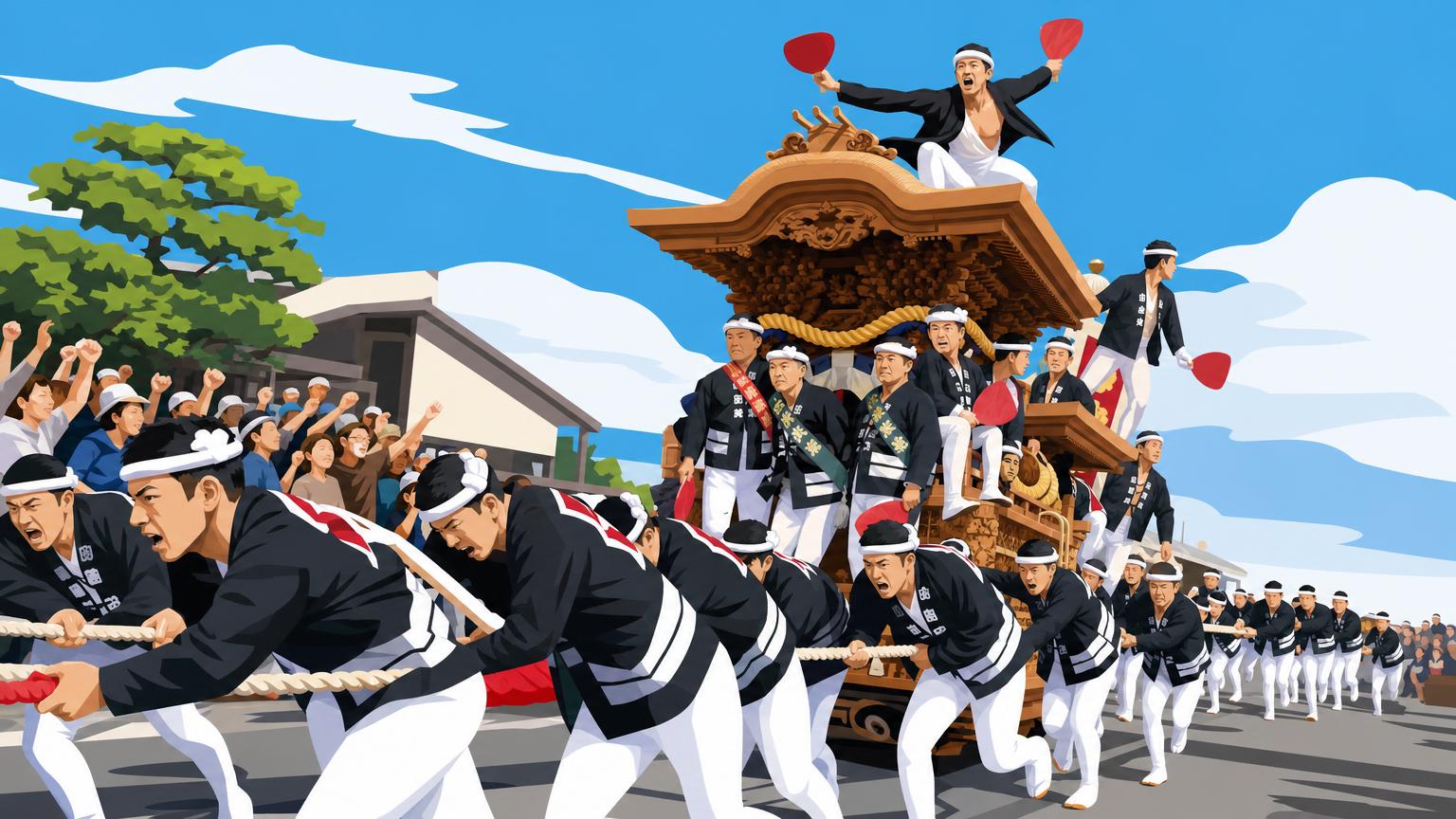
To an untrained observer, the festival might appear to be sheer chaos. Gigantic wooden structures are dragged through narrow streets at breakneck speeds by hundreds of shouting participants, while a man dances atop the roof. Yet beneath this seeming madness lies a deeply rooted tradition that has been carefully preserved for over three centuries. This is not a contemporary tourist spectacle designed to sell tickets. It is a sacred, adrenaline-filled ritual entirely funded, organized, and carried out by the local community.
History and Meaning Behind the Festival
The origins of the Kishiwada Danjiri Matsuri date back to 1703. Okabe Nagayasu, the lord of Kishiwada Castle, initiated a Shinto festival to pray to the deities of the Fushimi Inari shrine for a plentiful autumn harvest. Initially, it was a relatively modest agricultural prayer. However, as the Edo period advanced and the Kansai merchant class grew wealthier and more influential, local neighborhoods began competing with each other. They sought to demonstrate their prosperity, strength, and devotion.
This rivalry gave rise to the enormous floats we see today. The festival transformed from a simple crop prayer into an intense display of neighborhood pride. In Osaka, there is a cultural tendency to avoid being outdone by one’s neighbors, coupled with a strong appreciation for vibrant, energetic performances. The Danjiri Matsuri embodies this spirit historically. It stands as a tribute to a community that long ago decided the best way to honor the gods was through sweat, adrenaline, and collective effort.
The Anatomy of a Danjiri Float
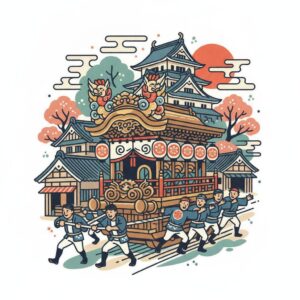
To fully appreciate the scale of this event, one must understand the vehicle at its core. A Danjiri is not just a parade float. It is a mobile Shinto shrine, a showcase of traditional Japanese carpentry, and a highly dangerous piece of heavy equipment. Each float is crafted entirely from solid Keyaki wood, or Japanese Zelkova. No nails are used in the main frame; instead, intricate joinery techniques allow the heavy timber to flex and absorb the tremendous shocks endured during the run.
Weighing around four tons and standing nearly four meters high, these floats are enormous. What truly distinguishes them, however, is the detailed carving covering nearly every inch of wood. Master artisans spend years creating elaborate scenes depicting ancient Japanese myths, legendary battles from the Genpei War, and local historical events. The cost of constructing a single float can exceed one hundred million yen, entirely funded by monthly contributions from neighborhood residents. When you see a Danjiri hurtle around a corner, you are witnessing a neighborhood’s savings, history, and shared identity racing down the street.
Highlights of the Festival: Feel the Speed
The vast majority of traditional Japanese festivals involve slowly carrying a portable shrine while chanting rhythmically. The Kishiwada festival, however, completely rejects that slow pace. The entire aim of this festival is speed, momentum, and showcasing absolute fearlessness in the face of physical danger. It represents the ultimate expression of the gritty, unyielding spirit that characterizes the working-class roots of southern Osaka.
The Thrill of Yarimawashi
The unquestioned highlight of the festival is a maneuver called Yarimawashi. Since the four-ton wooden float has solid pine wheels with no independent steering mechanism or brakes, logically, turning a ninety-degree corner on a narrow city street should require everyone to stop, lift the float, and pivot it slowly. But the people of Kishiwada do exactly the opposite.
They sprint towards the intersection at full speed. As the front of the float reaches the corner, the steering crew on the ground uses specialized wooden levers to forcibly lift and skid the massive front wheels. At that exact moment, the hundreds of people pulling the ropes attached to the front of the float sprint wildly in the new direction. The rear crew pushes with all their strength to swing the back end around. When performed perfectly, the four-ton wooden shrine drifts around the corner at high speed, utterly defying physics. The crowd roars, the drums strike harder, and the neighborhood earns its bragging rights for the year. When it goes wrong, the float crashes into buildings, breaks telephone poles, and often causes serious injuries. The Yarimawashi is beautiful, terrifying, and profoundly intoxicating to watch.
Key Roles: Daikugata and the Pullers
Operating a Danjiri demands absolute military precision and a strict hierarchy based on age and experience. The most visible and iconic figure is the Daikugata, the man who dances on the very top of the roof. He is the rockstar of Kishiwada. Armed only with a traditional uchiwa fan, he leaps and dances across the sloped wooden roof while the float speeds along. His role is not merely decorative; his movements signal the timing for the pullers and the steering crew below. He must possess flawless balance and nerves of steel.
Beneath him are the pullers, mainly composed of the younger men, women, and even children from the neighborhood. The front ropes can extend for a hundred meters, pulled by hundreds of shouting locals. Behind them are the Wakagashira, the older, more experienced men who control the braking levers and steering poles. The intense coordination required means these teams practice for months. This hierarchy reflects the traditional social fabric of Osaka, where younger generations respect the guidance of their elders, but everyone contributes equally to the collective good of the community.
Kishiwada Danjiri Schedule: September vs. October
One of the most common sources of confusion for foreigners trying to understand the festival is its schedule. When searching for the dates, you will often find two different weekends listed, a month apart. It is important to understand the distinction between the two, as they offer completely different atmospheres and logistical challenges for visitors.
September Festival (Coastal Area)
The September festival is the main event—the one featured on television and attracting hundreds of thousands of spectators from across the country. It takes place in the coastal areas of Kishiwada, specifically around Kishiwada Station and Haruki Station on the Nankai Main Line. This is where the most famous and fiercely competitive neighborhoods, such as the central district teams, face off.
The September event is marked by massive crowds, intense heat, and an electrifying, almost overwhelming energy. The streets near the stations are packed shoulder to shoulder. If you want the classic, high-energy experience of witnessing the most aggressive Yarimawashi drifts, this is the festival to attend. However, it demands significant stamina from spectators. You will be standing for hours, navigating through huge crowds, and enduring the lingering humidity of late Japanese summer.
October Festival (Mountain Area)
The October festival is held in the inland, mountainous regions of the Kishiwada municipality, mainly accessible via the JR Hanwa Line. While the core elements of the festival remain the same, the October event feels entirely different. The floats are slightly smaller to better navigate the steeper, narrower mountain roads.
The atmosphere here is much more intimate and locally centered. The overwhelming crowds of tourists are gone, replaced by local families sitting on their porches watching the floats pass by. The weather is noticeably cooler, making it a much more comfortable experience for spectators. For foreign residents seeking to observe the deep community ties and everyday reality of the festival without being overwhelmed by tourists, the October festival offers a much more authentic, relaxed glimpse into local culture.
Essential Safety Tips and Viewing Etiquette for Tourists
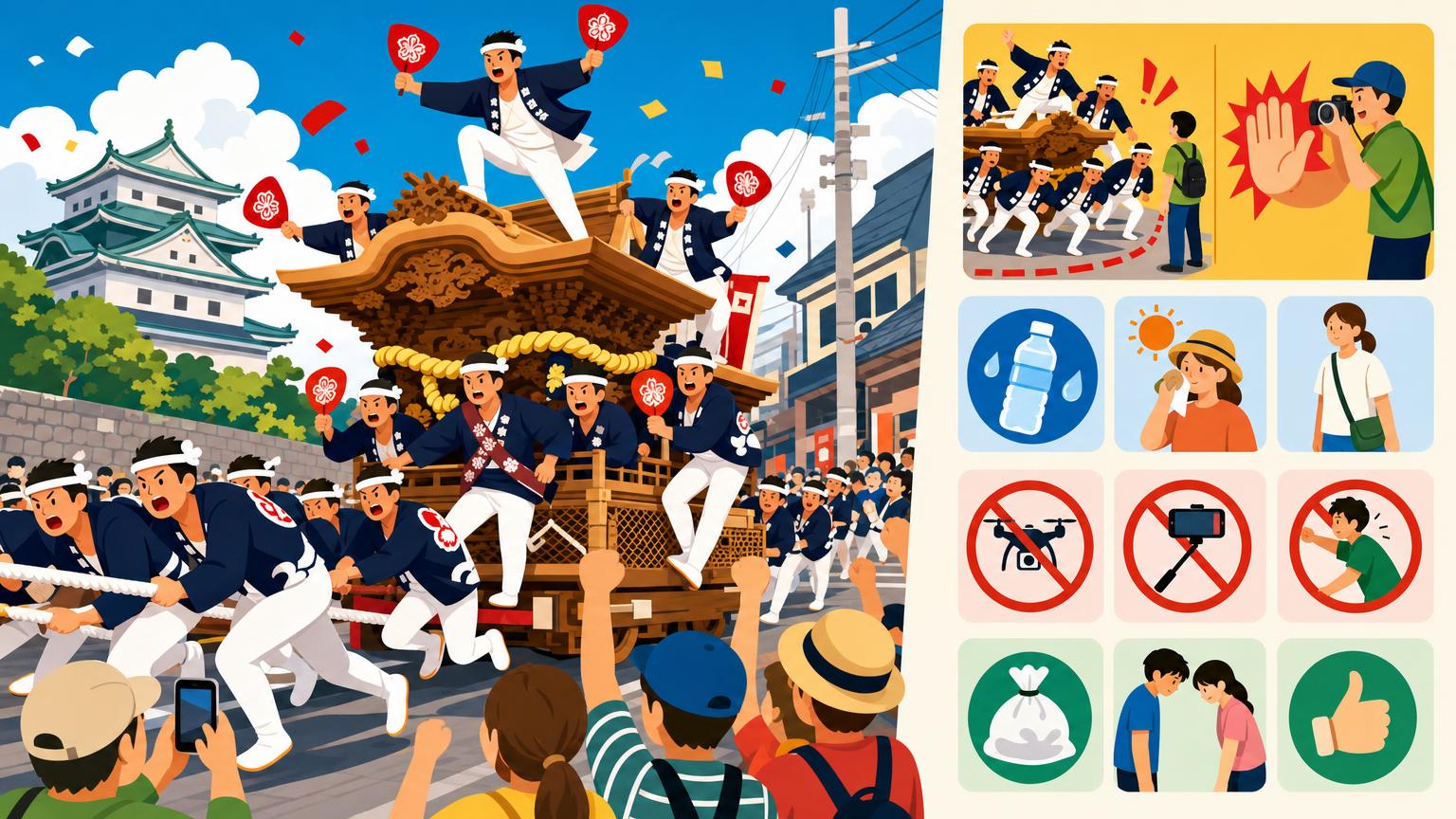
Known as Japan’s most dangerous festival, attending the Kishiwada Danjiri Matsuri demands a high level of situational awareness. This is not a theme park parade but a live, heavy-machinery operation taking place in tight urban spaces. While the locals are incredibly welcoming, they have zero tolerance for spectators who endanger themselves or the float teams.
The most important rule is to follow the instructions of the police and local festival officials immediately. You will notice men wearing special happi coats directing the crowds with strict authority. When they ask you to move back, do so without hesitation. The Yarimawashi corners are the most hazardous spots to stand, as the centrifugal force can cause the rear of the float to swing wider than expected. Always stay behind the designated barricades and never assume safety just because you are on the sidewalk.
Additionally, there are crucial unspoken etiquette rules. Never use an umbrella, even in heavy rain or strong sun. Umbrellas block the view of those behind you, and more importantly, their sharp points pose a hazard in the tightly packed, pushing crowd while also obstructing the float operators’ vision. Instead, bring a high-quality raincoat or a hat.
If you are a foreign resident bringing your family, reconsider using a stroller. The crowds are too dense, and in an emergency crowd surge to avoid a crashing float, a stroller can become a dangerous trap. Carry your children in a secure harness or stay on the wider, less crowded straightaways rather than intersections. Finally, wear sturdy, comfortable running shoes; sandals or heels are a liability. You will be on your feet all day and may need to move quickly out of harm’s way.
The Social Fabric of Kishiwada: A Reflection of Osaka
To truly understand the significance of the Kishiwada Danjiri Matsuri, you need to look beyond the spectacle and consider what it means to the local residents. In Tokyo, you might live in an apartment for a decade without ever knowing your neighbor’s name. In Kishiwada, the neighborhood association acts like an extended family, with the Danjiri serving as the bond that unites everyone.
The festival demands substantial financial commitment. Families contribute monthly neighborhood fees, called chokai-hi, much of which is dedicated to maintaining the float, purchasing uniforms, and funding the event. Prior to the festival, local businesses and affluent residents make generous donations known as Hana, and their names are proudly displayed on wooden boards throughout the neighborhood. This system fosters deep mutual support and communal pride.
This lifelong commitment influences the local economy and real estate significantly. Those born in Kishiwada rarely want to move away, as doing so would mean leaving their Danjiri team. Employers understand that employees will take time off during the festival, and local calendars highlight the festival dates as the year’s most important. This intense, close-knit, and fiercely proud community spirit lies at the core of Osaka’s culture, standing as a rejection of modern, sterile individualism in favor of blood, sweat, and shared identity.
How to Get to Kishiwada from Central Osaka
Getting to the festival is very simple, making it a convenient day trip for anyone living in central Osaka. The main access point for the September festival is the Nankai Electric Railway.
Start at Namba Station, the large southern transportation hub of Osaka. From there, take the Nankai Main Line. You’ll want to board an Airport Express or a Sub Express train heading south. The ride is about thirty minutes. You should get off at Kishiwada Station, or the previous stop, Haruki Station, depending on which neighborhoods you want to visit. During the festival weekend, you won’t need a map once you exit the train—you can just follow the booming sound of the taiko drums and the large crowds streaming out of the ticket gates. Make sure your IC card is fully charged before leaving Namba, as the ticket machines at Kishiwada Station will be very crowded when you return home.
What to Do Near the Festival
While the floats are the main highlight, Kishiwada boasts a rich history that reaches beyond the festival days. Gaining an understanding of the local geography and historical landmarks offers a much deeper insight into why the town functions as it does.
Kishiwada Danjiri Kaikan
If you live in Osaka but cannot attend the September or October festival dates, or if you simply prefer a safe, quiet place to study the intricate details of the floats, the Kishiwada Danjiri Kaikan is a must-visit. Situated just a short walk from the castle, this museum is entirely dedicated to the festival. It displays retired Danjiri floats, allowing visitors to approach them closely and examine the masterful wood carvings up close without the risk of being caught in the festival rush. The museum features large wrap-around video screens that replicate the sensory overload of the Yarimawashi, and it offers comprehensive historical exhibits on the festival’s evolution. It serves as the perfect educational introduction for foreign residents eager to learn the local lore.
Kishiwada Castle
A short distance from the bustling station area lies Kishiwada Castle. Originally constructed in the late sixteenth century, the current keep is a post-war reconstruction, but the surrounding moats and the beautiful Honjin no Niwa rock garden remain highly authentic and remarkably peaceful. During the festival, the floats parade past the castle grounds, creating one of the most iconic and photogenic scenes in the entire Kansai region. The contrast between the aggressive, shouting festival teams hauling their floats past the stoic, silent walls of the ancient castle perfectly captures the dual nature of Japanese history. Taking a quiet moment by the moat provides a brief respite from the roaring crowds, allowing you to reflect on the enduring, resilient spirit of the people of Osaka.