The question many foreign residents ask is simple: What do people in Osaka actually do when they want to rest?
The answer is not always a scenic day trip, a luxury hotel, or a quiet café. Sometimes it is a long, unhurried visit to a super sento: a large public bath complex where people wash, soak, eat, nap, read, sweat, and go home feeling as if the weekend has been properly used.
This matters because Osaka relaxation has its own rhythm. It is practical rather than ceremonious. You do not need to make a special event of it. You do not need a perfect outfit, a reservation at a famous restaurant, or a long journey into the countryside. You take the train, leave your shoes at the entrance, put your phone away, wash properly, sit in hot water, and allow the day to become slower.
For many people living in Osaka, that is the appeal. A super sento is not only a bathing facility. It is a place where the city’s everyday values become visible: comfort should be accessible, food should be available, nobody should be rushed, and a good day does not need to look impressive from the outside.
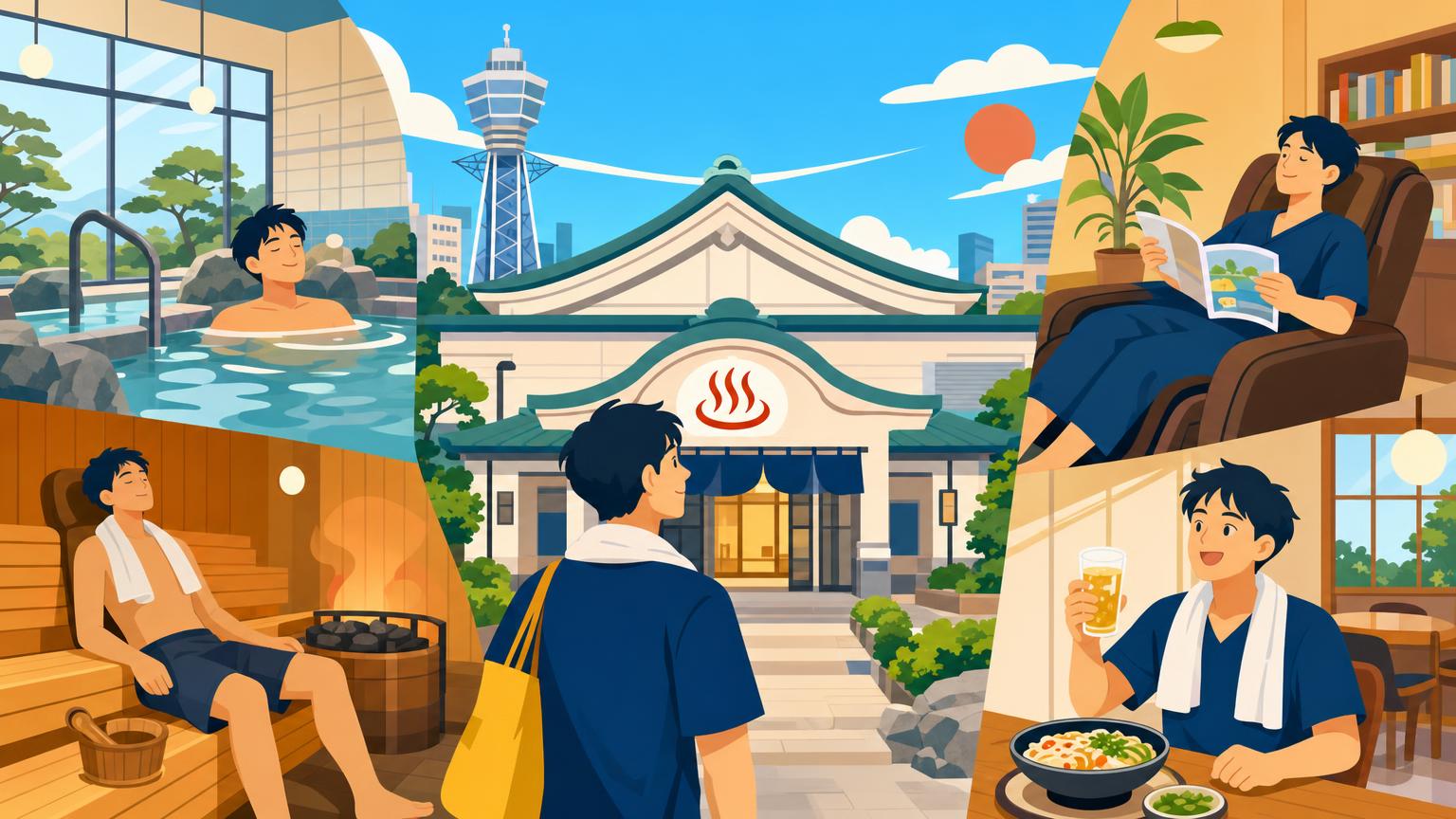
For a full weekend day, Solaniwa Onsen beside Bentencho Station is especially easy to understand as a local-style routine, even though its Edo-period design is more theatrical than a neighborhood bathhouse. It is directly connected to Bentencho Station, around ten minutes from Osaka Station by JR or Osaka Metro, and the complex includes baths, a rooftop garden, rest spaces, dining, a bedrock sauna, and other facilities.
Why a Super Sento Explains Everyday Osaka Better Than a Tourist Attraction
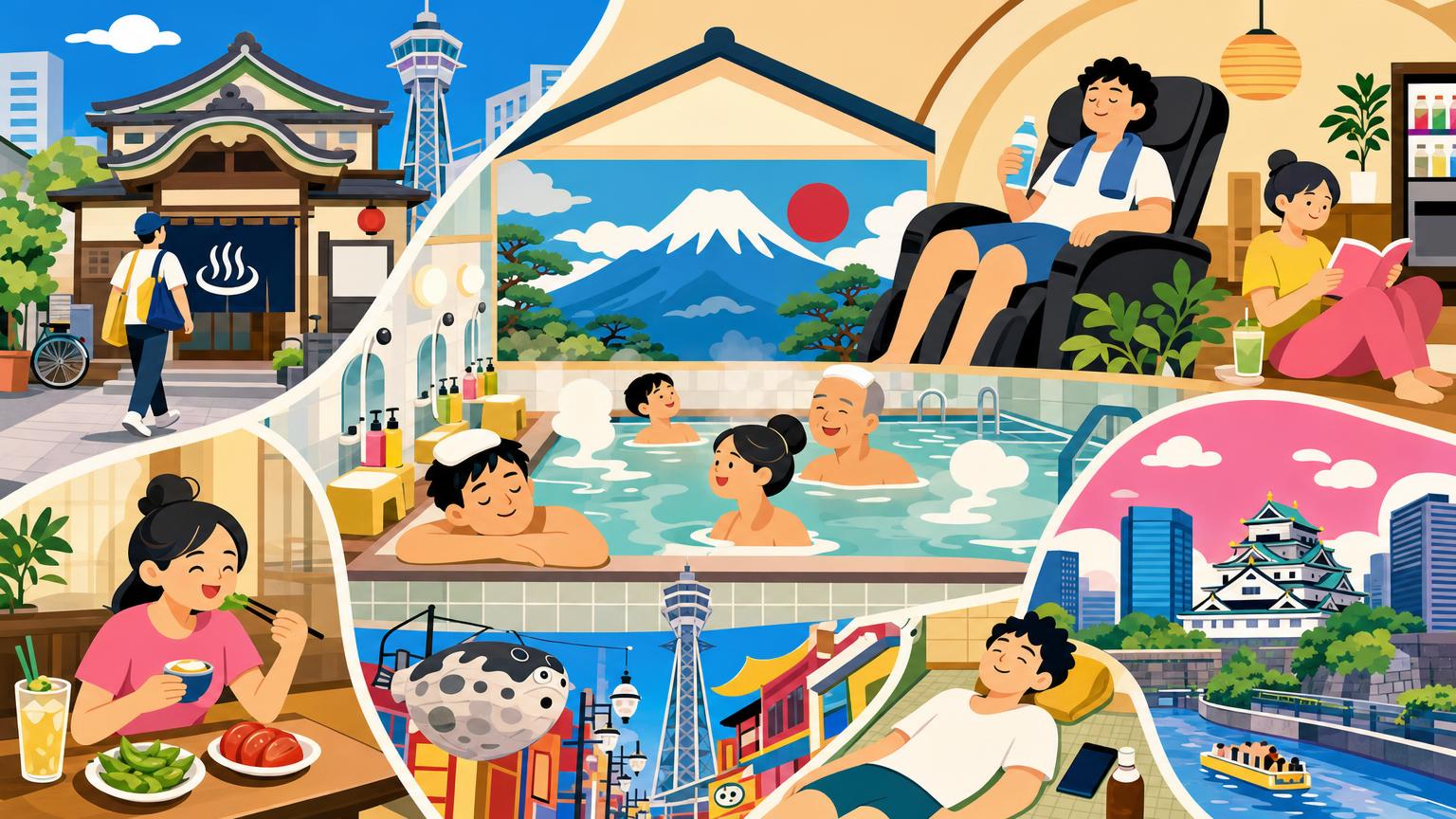
A tourist attraction highlights what a city wants visitors to notice, while a super sento reveals what people do when they are tired, busy, hot, cold, stressed, or simply ready to stop making decisions.
This distinction matters if you live in Osaka, are thinking about moving there, or want to understand what Osaka residents are like beyond the simple label of “friendly.” Osaka friendliness often takes a practical form. Someone might tell you which platform to use, warn you that a shop is about to close, suggest a cheaper lunch, or joke with you before even knowing your name. This practical approach is also evident in a bathhouse.
The facility is designed around small acts of convenience: shampoo is provided, lockers are available, you can buy a towel if you forgot one, you can eat without leaving the building, and you can rest without feeling pressured to keep ordering coffee. The entire experience conveys the message: you are allowed to be tired here.
This is one reason Osaka can feel different from Tokyo. Tokyo often emphasizes efficiency, privacy, and careful control of personal space. Osaka values efficiency too, but it is more open to mixing relaxation with noise, food, humor, and casual conversation. A bathhouse in Osaka might have a quiet relaxation room, but it may also include a lively restaurant, a standing bar, families, a loud television, and laughter from someone watching a variety show.
Neither city is better; they simply embody different ideas of what a satisfying ordinary day looks like. In Tokyo, people may protect their limited free time by setting precise appointments or visiting refined urban spas. In Osaka, a long bathhouse visit tends to feel less formal and more communal: come when you can, eat what appeals, take a nap, and don’t apologize for enjoying a simple pleasure.
Super Sento, Sento, and Onsen Are Not the Same Thing
A traditional sento is a public bathhouse primarily used for bathing. Historically, it served people without a bath at home, though today many visit sento for relaxation, connecting with the neighborhood, or a change of pace.
An onsen is defined by its water. Legally and culturally, an onsen uses naturally occurring hot spring water that meets Japan’s standards for temperature or mineral content. The term doesn’t simply mean “a nice Japanese bath.” A facility can appear luxurious without being an onsen, while a modest local bathhouse might use genuine hot spring water.
A super sento is generally a larger and more elaborate public bathing complex. It may include several indoor and outdoor baths, saunas, bedrock baths, massage services, restaurants, manga, reclining chairs, and spaces for long visits. Some super sentos use natural hot spring water, others use treated or heated water. The name refers to the scale and variety of the facility, not necessarily the geological origin of every bath.
This distinction helps when comparing facilities. Solaniwa Onsen and Naniwa no Yu use natural hot spring water, while SpaWorld Osaka is better described as a large bathing and leisure complex with themed baths, saunas, food, and entertainment. Naniwa no Yu notes its source is drawn from 659 meters underground and that its source bath uses natural hot spring water.
Why Osaka Residents Spend So Many Hours There
The key is that a super sento removes the pressure to choose just one activity.
At home, relaxation can become another chore: you have to cook, clean the bathroom, wash towels, decide what to watch, and perhaps answer messages. At a super sento, the environment makes resting easy. You can move from hot water to a cold drink, sauna to lounge chair, lunch to nap, and from a nap back to the bath.
This is especially appealing in Osaka because city life is compact yet active. You live close to busy shopping streets, crowded train stations, restaurants, offices, universities, and nightlife. The city isn’t always emotionally quiet. A super sento offers a controlled pause without needing to leave the urban area.
It also addresses a common foreigner misconception: Japanese relaxation is not always silent or solitary. Some prefer complete quiet; others relax by eating, chatting, laughing, watching sports, or reading manga in the same building. While the bath itself remains quiet and orderly, the broader facility can feel social.
Choose the Right Super Sento for Your Weekend Mood
You don’t need to visit every large bathhouse in Osaka. Instead, it’s better to choose one based on the kind of day you want to have.
Solaniwa Onsen: The Ideal Choice for a Relaxed, Full-Day Experience
Solaniwa Onsen, located in the Osaka Bay area and directly connected to Bentencho Station, is conveniently close enough to central Osaka to be accessible yet distant enough to feel like a mental break from your usual surroundings. The facility operates from 11:00 a.m. to 11:00 p.m., with public baths available until 10:30 p.m.; the official website also lists regular monthly closures, so it’s important to check the schedule before heading out.
This spot is perfect if you want to spend nearly the entire day in one place. You can arrive late in the morning, soak in the baths, change into the facility’s yukata, eat, relax, explore the rooftop garden and foot baths, try the bedrock sauna, and return to the baths later in the day.
Wearing a yukata transforms the experience. Instead of moving around in street clothes, you temporarily step outside your usual identity—whether employee, student, parent, or someone answering messages. Everyone wears the facility’s clothing, turning the indoor space from a typical shopping mall atmosphere into a shared leisure village.
This also offers a small lesson in Japanese social comfort: uniformity doesn’t always imply strictness. Sometimes, it makes relaxation easier because no one has to worry about appearance. You’re not expected to dress impressively; you simply choose a yukata, change, and join the flow.
According to Solaniwa Onsen’s official instructions, guests leave their shoes in a locker, use an IC key for purchases, select a yukata, and change before heading to the bathing floors. Payments for food and other purchases are settled upon leaving.
The bathing area includes natural hot spring water, multiple baths, open-air bathing, garden views, saunas, and washing areas. The main natural hot spring is described as slightly alkaline water sourced from about 1,000 meters underground.
For everyday understanding, the key point is not the Edo-period decor but the permission to stay. A foreign visitor might think, “I should see the whole city while I’m here.” A local regular might think, “I’ve paid to rest, so I’ll rest properly.”
SpaWorld Osaka: A Large, Vibrant Choice in Shinsekai
Located in Shinsekai near Dobutsuen-mae and Shin-Imamiya Stations, SpaWorld Osaka is at 3-4-24 Ebisuhigashi in Naniwa Ward, with public transportation recommended.
SpaWorld Osaka suits those seeking a lively atmosphere. It combines spacious bathing areas with themed interiors, stone saunas, swimming pools, dining, relaxation services, and other leisure amenities. It’s open from 10:00 a.m. to 3:00 a.m. the next day, though hours vary by area and service.
The vibe is less like a quiet neighborhood bathhouse and more like an indoor leisure district, making it a great place to see how Osaka blends comfort with spectacle. A large public facility here balances practical bathing with entertainment under one roof.
If you live in Osaka, you’ll notice that Shinsekai offers a distinct experience. The neighborhood has a strong local character but also draws visitors. Inside SpaWorld, you’ll find a mix of regular bathers, families, young people, hotel guests, and international travelers. It’s not ideal if you seek silent contemplation but perfect if you enjoy movement, variety, and the sense that a simple bath can fill an entire day.
SpaWorld Osaka prohibits tattoos—including ink and seals—according to its facility rules. Admission policies may change, so be sure to verify before visiting, as foreign-style tattoos aren’t necessarily accepted even if small or non-Japanese in design.
Naniwa no Yu: A Practical Weekend Destination Near Umeda
Naniwa no Yu is located in Kita Ward, about a ten-minute walk from Tenjinbashisuji 6-chome Station, within easy reach of Umeda. Situated on the eighth floor, it’s known for outdoor baths and natural hot spring water in the city center.
Choose this facility when you want a habitual urban feel rather than an all-day themed outing. It opens at 10:00 a.m. on weekdays and closes at 1:00 a.m.; on weekends and holidays, it opens at 8:00 a.m. and closes at 1:00 a.m., with the last admission at midnight. Adult admission is ¥900 on weekdays and ¥1,000 on weekends and holidays.
Naniwa no Yu is especially well-suited for a Sunday routine. You might visit in the morning for an hour’s bath, eat nearby, head home for chores or cooking, and still feel your weekend started right. Or use it midday before strolling Tenjinbashisuji and returning home before evening rush hour.
The natural hot spring water is drawn from underground, with baths including open-air, source, carbonated, jet baths, saunas, and resting areas.
The local lesson is about repetition; Osaka residents don’t need each weekend to be extraordinary. A place becomes valuable when it’s easy to return to. Naniwa no Yu feels like a spot that might become a monthly habit, not just a once-only photo opportunity.
Naniwa no Yu does not admit guests with tattoos, including temporary ones, and its English guide notes that covering stickers are also not allowed.
Rinku no Yu: A Convenient Option Near Kansai Airport
Rinku no Yu is near Rinku-Town and Kansai International Airport, making it useful if your weekend plans involve air travel, visiting friends, or an overnight before an early flight. Though not in central Osaka, and less suited for spontaneous local visits near Umeda or Namba, its location offers a different role: a final reset before travel or gentle recovery after arrival.
Culturally, Japanese bathhouse visits often fit between major activities. You don’t have to treat the bath as the main event; it can serve as a pause between work and home, a long train trip and a hotel, or a tiring airport day and a restful night.
Rinku no Yu also shows that “local” doesn’t always mean hidden or traditional. A facility can serve both travelers and residents alike, differing mainly in how it’s used. Visitors might stop briefly to refresh, while locals may linger, eat, read, and return home later.
Since hours, fees, and tattoo policies can change, check current details directly before planning a pre-flight visit. Avoid relying on outdated travel blogs, especially if your flight timing is critical.
Nobeha no Yu in Tsuruhashi: A Bathhouse with a Korean-Style Sauna Atmosphere
Nobeha no Yu in the Tsuruhashi area offers a sauna-focused, Korean-style leisure experience. Tsuruhashi is one of Osaka’s most vibrant everyday neighborhoods, shaped by Kintetsu, JR, Osaka Metro, Korean-Japanese communities, restaurants, markets, and residential streets.
The setting matters, as Osaka culture isn’t uniform. Different neighborhoods have distinct social textures. Tsuruhashi feels more layered and commercially lively than a quiet suburb, and a bathhouse there fits naturally into a day centered on food, conversation, and recovery.
Nobeha no Yu suits those whose rest involves heated rooms, sauna sessions, a larger leisure complex, and a neighborhood rich in food culture. It appeals to people who find soaking alone too passive and prefer to alternate between heat, cooling, rest, and meals.
For residents, the key question isn’t which facility is “the best,” but which matches the routine you want to repeat. A place near home can become a habit; a spot with a special atmosphere can be a monthly treat; a location near the airport can solve practical needs.
A Full Weekend Day at Solaniwa Onsen, Step by Step
The following schedule is not a strict itinerary. People in Osaka generally do not treat a relaxing day like a military operation. Use it more as a rhythm than a rigid timetable.
Late Morning: Arrive Before You Feel Completely Exhausted
Arrive around opening time or late morning if you want to enjoy a long day. Solaniwa Onsen opens at 11:00 a.m. and is directly connected to Bentencho Station. This station connection is convenient in Osaka’s weather, allowing you to avoid turning the start of your relaxation into a lengthy search for the entrance.
Avoid arriving dehydrated, hungry, or rushed. Have a light breakfast first, especially if you plan to use saunas or hot baths. Carry a small amount of cash as a backup, although Solaniwa Onsen’s FAQ mentions cash, credit cards, Alipay, and WeChat Pay as accepted payment methods.
At the entrance, remove your shoes and store them in the shoe locker. Keep the key. At Solaniwa, the IC key functions as a way to track purchases inside the facility, so treat it like a wallet rather than just a locker key. The official instructions caution guests not to lose it and note that a replacement fee applies if it is lost.
This small system may feel unfamiliar to foreigners. The easiest approach is to slow down and observe the person in front of you. If you’re unsure, say “Sumimasen” and ask the staff. In Osaka, a brief practical question is usually better than guessing silently for five minutes.
Midday: Change into the Yukata and Let the City Fade Away
After checking in, select a yukata and change in the changing room. Solaniwa requires guests to wear its yukata or similar traditional attire inside the facility, and the bathing floors are accessed after changing.
Wear the yukata with the left side over the right. The opposite arrangement is associated with dressing the deceased, so this is a detail worth remembering. Tie the belt securely but comfortably. You’re not aiming for a perfect costume, but preparing to move slowly.
Walk around before bathing to familiarize yourself with the building. Locate the dining areas, resting spaces, toilets, exits, and the way back to the changing room. This helps avoid the common mistake among foreigners of treating the first bath as the only important part and then feeling lost when hunger, fatigue, or phone battery issues arise later.
You may notice that people behave differently once they change into the facility clothing. They walk more slowly, carry drinks, sit on the floor or in relaxed chairs, and conversations become less formal. This reflects a change in social posture, not just a change of clothing.
Early Afternoon: Wash Thoroughly Before Soaking
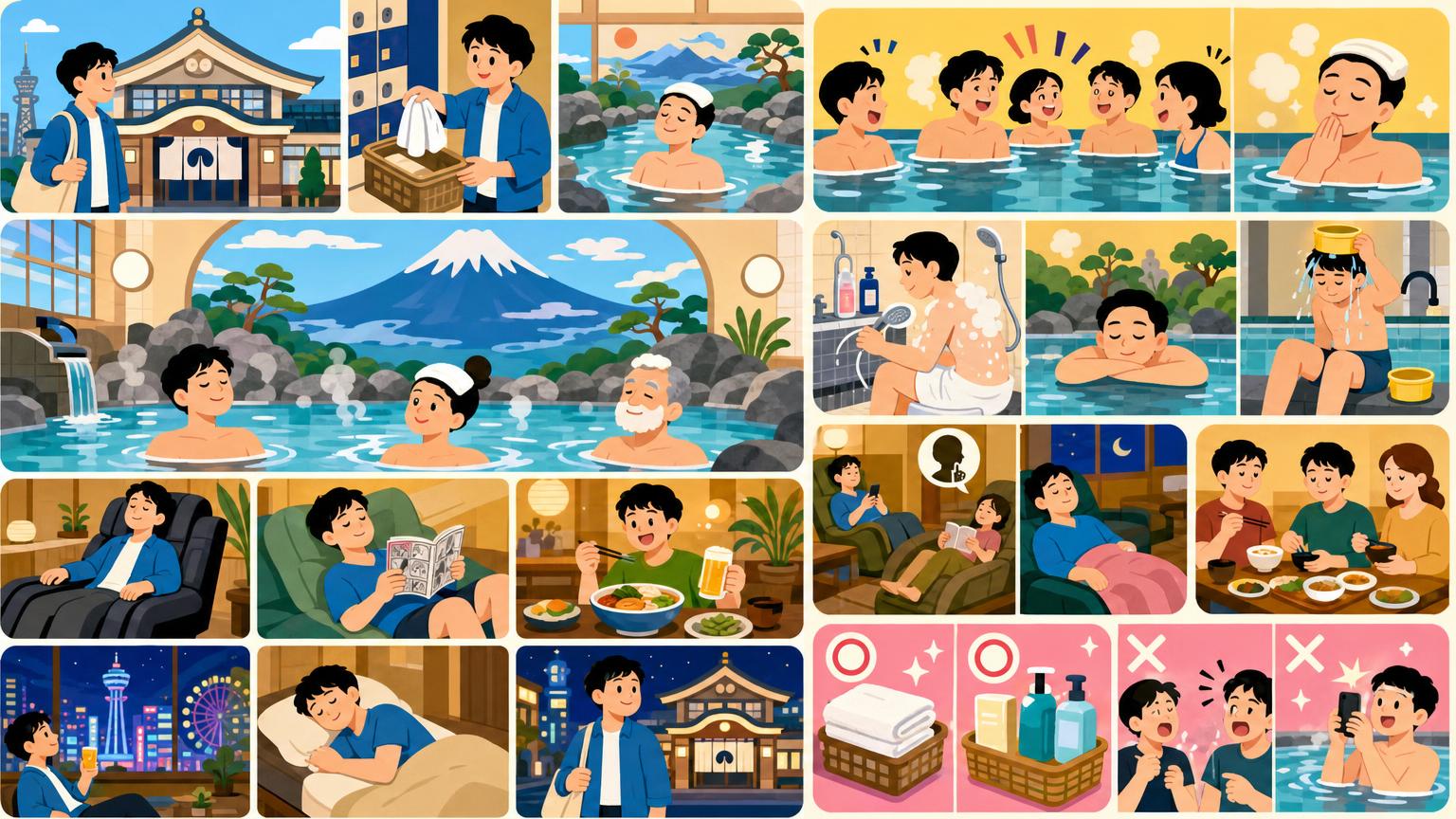
Before entering any bathtub, wash your body thoroughly at the shower station. This is the fundamental rule of Japanese public bathing.
Sit on the small stool and use the shower carefully. Wash your hair and body, rinsing away all soap and shampoo. If you have long hair, tie it up so it doesn’t enter the water. Do not put your towel in the bath; instead, place it on the edge or on your head while sitting outside the water.
This is not merely a matter of politeness. The bath involves shared water, and the washing ritual preserves the comfort of everyone using it. Japanese public baths are sanitary because people clean themselves before entering the soaking water. Naniwa no Yu’s first-visit guidelines explicitly ask guests to wash before entering the bathtub, keep hair out of the bath, and keep towels out of the water.
This can surprise foreigners who think of a bath primarily as a place to wash. In Japan, the shower is for washing, and the bath is for soaking.
No underwear or swimwear is worn in the bathing areas. You enter the changing room, remove all clothing, and use the bath nude. Do not wear underwear under a towel, and do not bring swimsuits into communal baths unless the facility specifically has a separate swimsuit-required area. Solaniwa Onsen states that swimsuits are prohibited in its baths for hygiene reasons.
The first few minutes may feel awkward, especially if you come from a culture where communal nudity is uncommon. In practice, people aren’t scrutinizing your body; they’re focused on the temperature of the water, their tired legs, their children, sauna timing, or whether they remembered their locker key.
Move calmly. Keep your gaze level. Avoid staring, taking photos, or using your phone. The bathhouse is not a place for performance. Quietly following the shared rhythm is sufficient.
Early Afternoon: Begin with a Short Soak
Don’t start with the hottest bath or the longest sauna session. Sit in a comfortable bath for a few minutes and let your body adjust. Move slowly between indoor and outdoor baths. If you feel dizzy, leave the water, sit down, and drink some water.
The local approach isn’t about enduring the highest temperature but knowing when to stop. Leaving the bath before feeling ill is not failure—it’s using the facility correctly.
Natural hot springs in Osaka can still feel like urban infrastructure. You might soak in mineral water while trains pass nearby, buildings rise around you, and people continue their Saturday errands. That contrast is part of the experience. Osaka often blends nature and city life, placing warm baths right in the heart of everyday urban activity.
Mid-Afternoon: Eat Before You Get Too Tired
After bathing, dry off and change back into your yukata before heading to the dining areas. Drink water first. Then choose food based on your actual appetite, not the notion that a relaxing day requires an elaborate meal.
This is where the Osaka mindset becomes especially apparent. The city is famous for its food, but everyday Osaka eating isn’t always about prestige. It often centers on satisfaction, affordability, and the enjoyment of a hot meal with others nearby.
At Solaniwa Onsen, dining options include the Kuidaore-Yokocho restaurant area and cafés. The facility’s restaurant information describes dishes inspired by Osaka-style cuisine and lists operating hours that may vary, so check the current details inside the facility.
You might opt for udon, curry, grilled dishes, a set meal, rice, or dessert. There’s no need to order a full course; a simple meal can be just right after soaking.
Avoid drinking large amounts of alcohol before returning to the baths or sauna. Both alcohol and hot water affect your body, and facilities may refuse entry to anyone visibly intoxicated. Naniwa no Yu’s English guidance specifically warns against entering after excessive drinking.
Late Afternoon: Use the Rest Area Properly
The key skill in a super sento is learning how to rest without feeling guilty.
Sit in a reclining chair, read manga, listen to a podcast with headphones, nap, or observe the surroundings without needing to engage. If the facility offers a quiet area, use it quietly. If the space is more social, accept a moderate level of conversation rather than expecting complete silence.
This is where daily life in Osaka can feel more generous than foreigners expect. You’re not obliged to keep consuming. You can stay after eating without ordering another drink. You can lie down in a designated rest area. The paid admission grants you access to time, not just water.
At Solaniwa Onsen, official facility information lists tatami resting spaces, reclining chairs, books, and other relaxation areas.
Napping in a public leisure space may feel unusual if you come from a culture where lying down outside home implies illness or homelessness. In Japan, a designated reclining area changes that meaning. You’re not sleeping randomly in a shop—you’re using a space designed for recovery.
Late Afternoon: Try the Bedrock Sauna or Sauna Area Cautiously
Ganbanyoku, often called bedrock bathing or bedrock sauna, typically involves lying or resting on heated stone surfaces while wrapped in facility clothing. It differs from the naked sauna area found in many bathhouses.
At Solaniwa Onsen, the bedrock sauna operates on a separate schedule from the public baths, with access from 11:00 a.m. to 10:00 p.m., last admission at 9:00 p.m.
Understanding the cultural difference is helpful. A sauna isn’t necessarily a competition. You don’t need to stay until you can barely breathe. People may sit quietly, sweat, leave, cool down, and return later. The goal is recovery, not demonstrating endurance.
Bring water. Remove metal accessories if requested. Do not enter if you feel unwell. Follow posted instructions, even if they differ from sauna customs in your home country.
If you’re new to sauna culture, one round is enough. A short session followed by rest can be more enjoyable than trying to imitate someone with years of experience.
Evening: Take One Last Bath, Then Leave Before You Feel Drained
A final bath near the end of the day can be delightful but isn’t mandatory. Wash again if needed, soak briefly, and allow enough time to cool down, dress, gather your belongings, and pay.
At Solaniwa, purchases are tracked through the IC key and settled upon leaving. Return the yukata and towels as directed, pay the final amount, pass through the exit, and retrieve your shoes.
The local rhythm encourages leaving feeling warm and slightly sleepy, not exhausted. If you have an early morning the next day, avoid turning your relaxation into a late-night endurance test just because the facility remains open.
What Osaka People Often Do Differently in a Super Sento
They Do Not Regard Every Restful Moment as a Luxury Experience
Foreigners sometimes assume that Japanese bathing culture is inherently expensive, ceremonial, or hard to access. While traditional ryokan stays and upscale spas can be pricey, public bathing is often quite ordinary.
For example, Naniwa no Yu charges adult admission at ¥900 on weekdays and ¥1,000 on weekends and holidays, though prices and conditions may vary. This isn’t the cost of an exclusive retreat; it’s more like paying for a meal and a few hours of relaxation.
The local value builds up over time. A bathhouse might help you skip cooking a meal, reduce stress, improve sleep, and provide a spot to visit on a rainy Sunday. Its worth is measured by how frequently it enhances everyday life.
They Use the Facility in Small Sessions
You don’t need to stay six hours for the visit to count.
A regular might spend an hour after work. Another person could come in the morning and stay until evening. Someone else might use the sauna but skip the restaurant. Families may come together while separating into men’s and women’s bathing areas. Older patrons might focus on baths and conversation, while younger visitors spend more time in the lounge.
This flexibility matters when living in Osaka. You don’t have to imitate the most intense version of an activity. Instead, shape the habit to fit your lifestyle.
They Recognize That Shared Spaces Demand Self-Control
Conversations in Osaka can be direct, expressive, and loud in everyday public settings. However, that doesn’t mean every place is treated informally.
Inside the bath, people generally lower their voices, keep towels out of the water, wash before soaking, and avoid disturbing others. The same person who jokes loudly with friends in a restaurant may act quietly in a sauna.
This corrects the stereotype that Osaka residents are simply “loud.” A more accurate view is that Osaka people often quickly gauge social settings. They may be open and chatty where conversation is welcome, but they also know when a shared space requires restraint.
Essential Rules Foreigners Should Know Before Going
Tattoos Remain a Serious Practical Concern
Tattoo policies differ at each facility, so you should assume tattoos may bar entry unless explicitly stated otherwise.
Solaniwa Onsen’s FAQ notes that guests with tattoos are generally not allowed, but permits entry and bathing when tattoos are fully covered with stickers sold on-site. From December 1, 2023, the FAQ says there is no longer a limit on the number of stickers. However, the facility’s terms of use issue strong warnings about tattoos and body art, so you should verify the current policy and follow staff instructions rather than relying on a single translated statement.
SpaWorld Osaka’s guide prohibits tattoos, including seal-type markings. Naniwa no Yu refuses entry to anyone with tattoos and does not accept covering stickers.
Avoid arguing that your tattoo is small, decorative, temporary, cultural, or unrelated to organized crime. Staff may respect cultural differences but still must enforce facility rules. If you have visible tattoos, check policies before arrival and consider private baths, tattoo-friendly venues, or alternative bathing options.
Nudity Is Mandatory in Communal Bathing Areas
Underwear or swimwear are not permitted in the standard communal baths. You must fully undress in the changing room, bring only a small towel into the bathing area, and wash thoroughly before entering the bath.
The towel is not meant to cover your body at all times. You may hold it modestly if it helps your comfort, but do not put the towel in the bath. Once in the water, place it on the edge or fold it on your head.
If personal, medical, religious, or comfort reasons require a swimsuit, ask whether the facility offers private baths or separate swimsuit-required zones. Do not improvise in the main bath.
Phones and Cameras Are Prohibited in the Bathing Area
Do not bring smartphones into the changing or bathing rooms unless the facility explicitly allows a secure, designated setup. Many bathhouses ban photography and video to protect privacy since patrons are unclothed. Naniwa no Yu’s rules forbid cameras, smartphones, and other electronics in both the changing and bathing areas.
This policy can feel unexpectedly strict to foreigners who use phones as translation aids. Take screenshots or prepare information beforehand. If you need translation assistance, ask staff at reception before undressing.
Keep Conversation Moderate
Complete silence is not expected, but avoid turning the bath into a lively social gathering. Speak quietly while in the water and do not shout across the room. In saunas, respect the atmosphere—if it is quiet, remain quiet.
Children may be lively, but parents should supervise them. Facilities may also set age limits for when children are required to use gender-separated bathing areas.
Avoid Entering While Intoxicated or Unwell
Hot water, sauna heat, and alcohol are a dangerous combination. Do not enter after heavy drinking. Avoid bathing if you have a fever, contagious skin conditions, open wounds, or any illness that might affect others. Facilities may deny entry for health and safety reasons.
How Osaka Differs from Tokyo in This Kind of Relaxation
The difference is not that Tokyo lacks public baths or Osaka lacks refined spas. Both cities offer every type of facility. The distinction often lies in the atmosphere surrounding the activity.
In Tokyo, leisure can feel scheduled. You might select a highly rated spot, make a reservation, plan transportation precisely, and fit the experience into a busy day. In Osaka, leisure often feels more expansive. You go to the bathhouse first, then decide to eat. After eating, you decide to rest. After resting, you see if you have enough energy for another bath.
This flexibility reflects a broader Osaka attitude toward daily life. Efficiency matters, but so does enjoyment. A person may complain about prices, joke about being tired, and still spend hours enjoying a low-cost activity. The pleasure isn’t cloaked in a serious wellness vocabulary.
Osaka residents may also be likelier to describe a facility in straightforward emotional terms: “You can really relax there,” “The food is good,” “It gets crowded after dinner,” or “Go in the morning.” These recommendations may sound less polished than online reviews, but they are often more helpful for everyday life.
If you’re considering whether Osaka is a good place to live, pay attention to this balance. The city is dense, noisy, and commercially vibrant, but it also offers many ways to recharge without leaving the metropolitan area. Baths, markets, restaurants, libraries, parks, shopping streets, and neighborhood cafés are all accessible by regular trains and bicycles.
A Realistic Budget for the Day
Your spending will depend on the facility and the extras you select. A basic day at a public-bath-style super sento might include admission, a towel, one meal, drinks, and perhaps an add-on like a massage or sauna. The total cost can remain reasonable if you avoid paid services and don’t feel obligated to use every available feature.
Solaniwa Onsen’s published adult entry prices vary by ticket type, ranging from ¥2,310 to ¥3,630, with night admission prices also noted; the fee covers several amenities such as towels and bath products. Since prices and categories may change, be sure to check the latest official price list before visiting.
Naniwa no Yu offers a more budget-friendly option for a simple bath visit, though towels are sold separately and re-entry is not allowed. Its English guide lists a hand towel at ¥150 and a large towel at ¥500.
SpaWorld Osaka may have different ticket options and additional charges depending on the facilities you use. Its hours and services run on separate schedules, so confirm what is included before assuming every feature is covered by the basic admission.
For a resident, the practical question is not “Is this cheaper than staying home?” but rather “Does this substitute for several activities and aid my recovery?” When a visit includes bathing, a meal, a quiet place to read, and a nap, the value often becomes clearer than the entrance fee alone might suggest.
How to Make the Experience Feel Local Rather Than Tourist-Like
Go at a Time You Could Actually Repeat
If you only visit during the most convenient holiday times, you might miss the facility’s true rhythm. Try going on a weekday evening, a Sunday morning, or a rainy afternoon instead. Observe who’s there and how the atmosphere shifts.
Weekends can get crowded, especially in the afternoon and evening. If you don’t like crowds, come early or later at night, but make sure to check the last admission and bath closing times. For example, Naniwa no Yu stays open late, whereas Solaniwa’s public bath access ends before the entire building closes.
Learn the Entrance Routine Once
The first visit can feel overwhelming because every step is unfamiliar: shoe locker, ticket, changing room, locker key, towel, shower area, bath, lounge, payment. The second time will be much smoother.
Keep a mental checklist instead of translating every sign: Shoes off. Key on hand. Clothes in locker. Body washed. Towel dry. Phone put away. Drink water afterward.
Do Not Compare Every Detail with Home
You might find the water hotter, the chairs smaller, the changing area more open, or the signs less detailed than you expected. Watch and learn first. Some differences reflect cultural habits, not service shortcomings.
At the same time, don’t overlook real issues. If the floor is dangerously slippery, you feel unwell, or you can’t understand an important safety instruction, ask staff. Being respectful doesn’t mean staying silent.
Accept That “Local” Does Not Mean Invisible
A super sento may welcome foreign visitors, provide English information, and appear in travel guides. That doesn’t make the experience less authentic. Many Osaka residents use the same facility alongside tourists.
The local aspect is your behavior: arrive unhurried, wash thoroughly, respect shared spaces, eat simply, rest quietly, and leave feeling refreshed for tomorrow.
Frequently Asked Questions
Is a super sento the same as an onsen?
No. A super sento is a large public bathing and leisure facility. An onsen uses qualifying natural hot spring water. While a super sento may include natural hot spring baths, the two terms refer to different concepts.
Can I wear underwear or a swimsuit?
No. In standard communal bathing areas, underwear or swimwear is not allowed. You bathe naked after thoroughly washing your body. Separate private areas or swimsuit-required zones may have different regulations.
How sanitary are Japanese public baths?
They adhere to a strict pre-bathing cleaning ritual. You shower and wash your body before entering the shared bath, keep your towel out of the water, tie up long hair, and avoid bringing phones or other unnecessary items into the bathing area. These rules help maintain clean water and a comfortable environment for everyone.
Do all Osaka super sentos allow tattoos?
No. Many do not. SpaWorld Osaka and Naniwa no Yu prohibit tattoos, while Solaniwa Onsen uses a sticker-covering system but also enforces strict policies. Check the current rules directly with the facility before your visit.
Should I bring my own towel?
It depends on the facility. Solaniwa Onsen provides towels as part of its amenities, whereas Naniwa no Yu sells towels separately and does not rent them according to its current information. Confirm in advance before your trip.
Can I stay all day?
Yes, at facilities designed for extended leisure, within opening hours and any time limits for specific services. Solaniwa Onsen offers baths, dining, resting areas, a rooftop garden, and bedrock sauna facilities ideal for a long stay. Naniwa no Yu is more suited for a shorter bathing-focused visit, though it remains open late.
Is this suitable if I do not speak Japanese?
Larger facilities offer some English information, but not all signs, announcements, or staff explanations will be in English. Learn the basic bathing etiquette before arriving, save the facility’s name and address, and ask brief questions as needed. A translation app can assist at reception but should remain outside the bathing area.
The Osaka Lesson: Rest Is Part of a Useful Life
The most important lesson you might learn in a super sento is not how to enter an onsen or how to fold a towel, but that rest doesn’t need to be earned through a remarkable accomplishment.
Life in Osaka can be hectic. Trains are crowded, work demanding, apartments small. Summers are hot, winters damp, and the city’s convenience often fills every free moment with errands, shopping, meals, or social engagements.
A super sento offers a different kind of weekend. You can spend the day doing almost nothing, yet it isn’t empty. You wash, warm yourself, eat, rest, and give your mind fewer decisions to make.
That’s why people keep coming back—not because every visit is extraordinary, but because the routine works.
If you live in Osaka, start with the facility that fits your usual transport route. Choose Solaniwa Onsen in Bentencho for a full indoor leisure day. Pick SpaWorld Osaka in Shinsekai for a lively, large-scale experience. Opt for Naniwa no Yu near Tenjinbashisuji 6-chome for a practical urban habit. Select Rinku no Yu when airport access is important. Consider Nobeha no Yu in Tsuruhashi when you want a sauna-focused day connected to one of Osaka’s most distinctive neighborhoods.
Then, return on an ordinary day—not just when you have visitors.
That’s when the place starts to reveal Osaka properly. A super sento isn’t merely something to see; it’s where people go when they want life to feel manageable again.