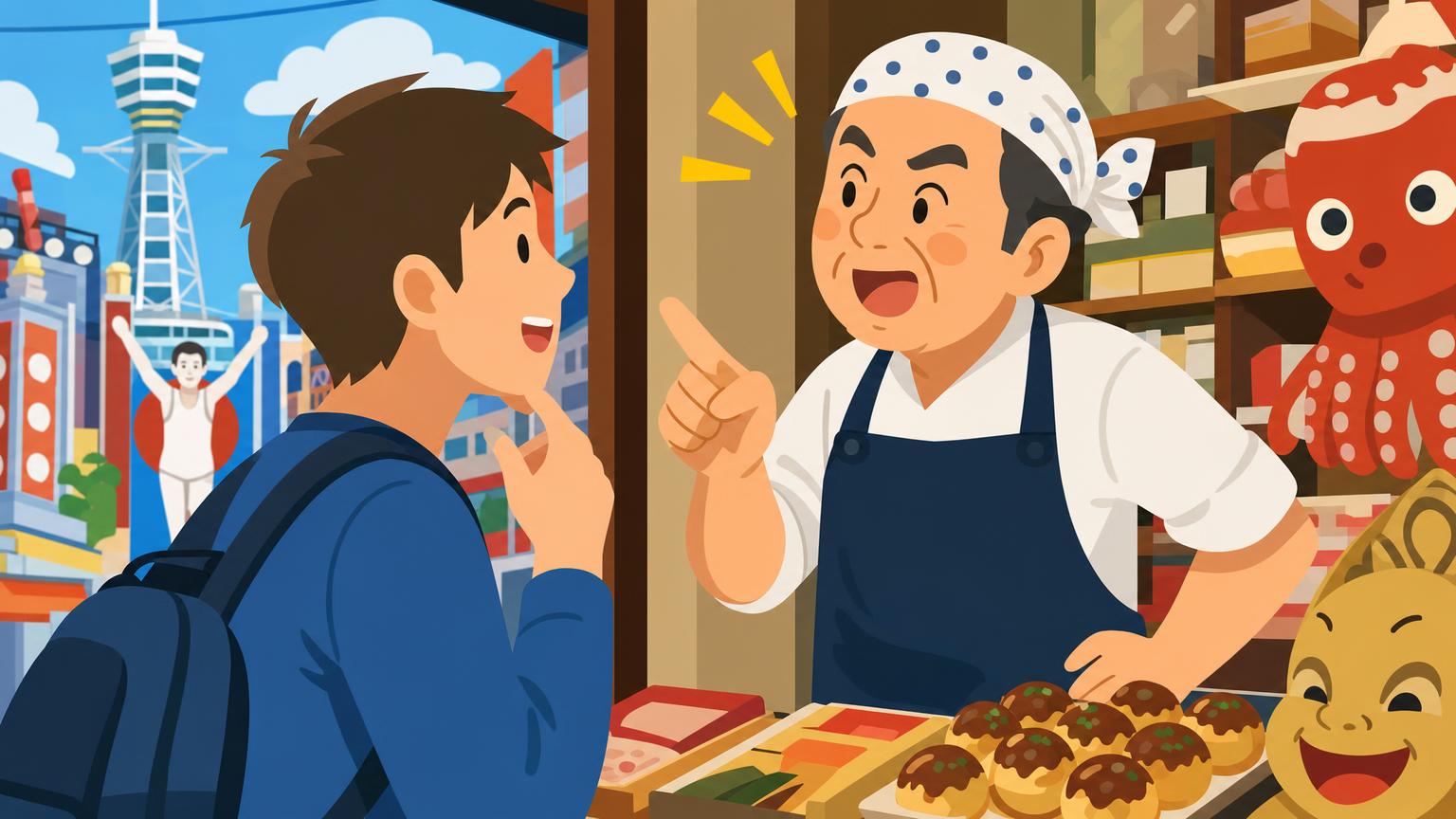
You enter a small shop in Osaka to buy something simple. Perhaps vegetables in Tennoji, household goods near Jūsō, or a replacement phone cable in a local shopping arcade. You ask the price in careful Japanese. The shopkeeper looks at you, looks at the item, and replies with a question of their own.
“え、そんなん買うん?”
“Eh, you’re buying that?”
The tone may sound surprised. The expression may look almost disapproving. Then the shopkeeper laughs, points out a better version, tells you where it is cheaper, and gives you a small discount that was never advertised.
For a foreign resident, this can be confusing. Was the shopkeeper being rude? Were they mocking your choice? Were they trying to start a conversation, or were they telling you to leave?
Usually, the answer depends less on the words than on the relationship being offered through those words. In Osaka, shopkeepers often communicate as if the customer is not a distant consumer but a person standing in front of them: someone with preferences, habits, mistakes, opinions, and perhaps a little time to talk. That familiarity can feel warm. It can also feel intrusive, especially if you come from a place where service is expected to remain politely professional.
This is the everyday reality behind many conversations in Osaka shops. The city is not simply “friendly,” and its shopkeepers are not all natural comedians. Rather, Osaka has a lower barrier between formal service and personal interaction. A question about price may become a comment about your choice. A request for help may become a short performance of advice, teasing, negotiation, and laughter.
For people living in Osaka, thinking about moving here, or comparing Osaka with Tokyo, the important point is this: the city’s frankness is a social method. It reveals how people test distance, create trust, express practical knowledge, and decide whether a stranger can become a familiar customer.
The First Reality Check: A Shop in Osaka Is Not Always a Neutral Service Space
Many foreigners arrive in Japan with clear expectations about customer service. Staff will bow, use polite language, answer questions carefully, and avoid making personal comments. These expectations are not unreasonable. Japanese service culture can be highly formal, and shops in Osaka follow many of the same rules as shops elsewhere in Japan.
Yet a small Osaka business often operates on two levels at once.
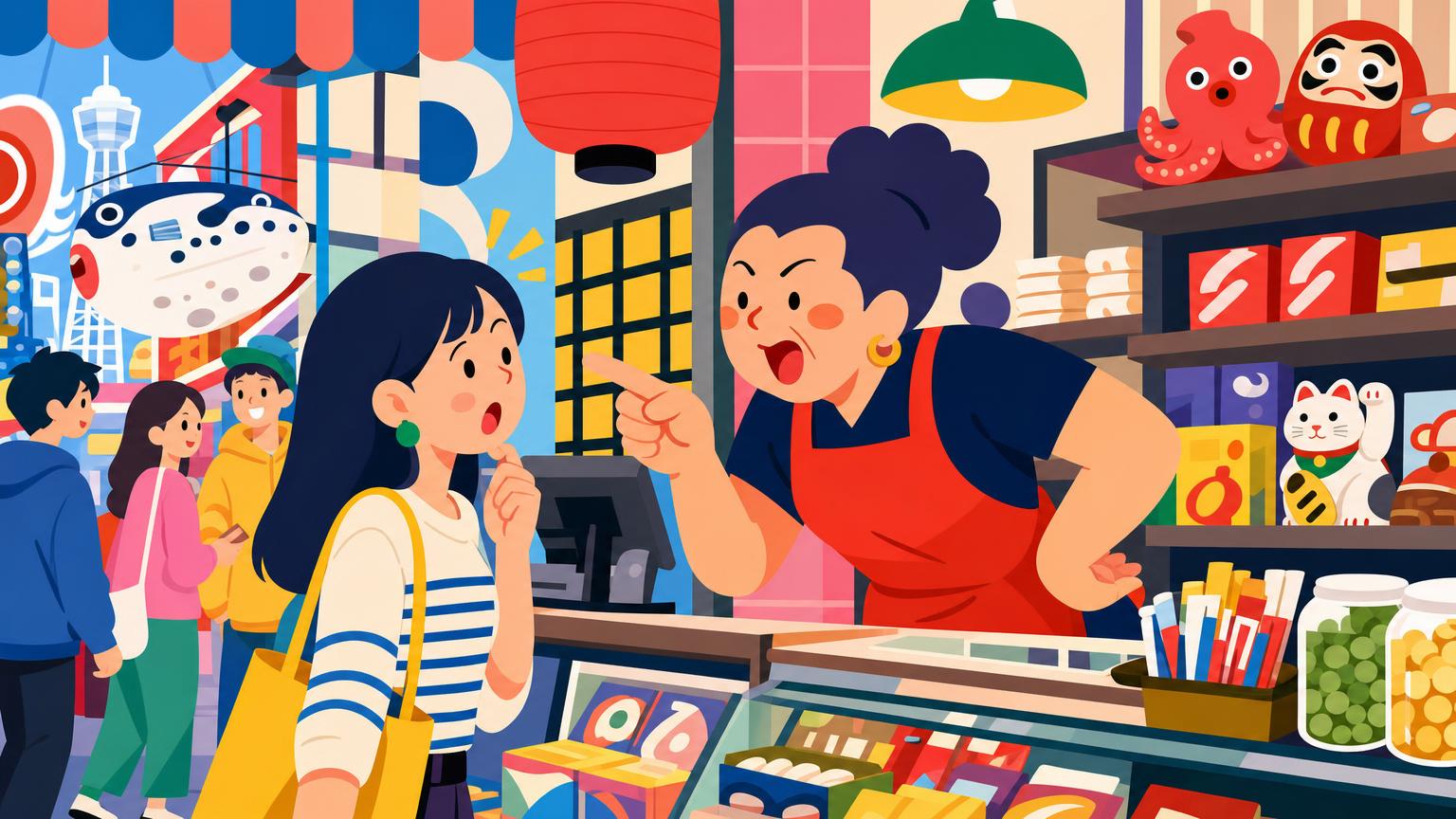
The first level is the official transaction. You choose an item, ask its price, pay, receive your change, and leave. The second level is the human interaction surrounding the transaction. The shopkeeper may notice that you are new to the neighbourhood. They may ask where you live, comment on your Japanese, or tell you that the product you selected is not worth the money. They may even say that the shop across the street sells the same thing more cheaply.
To a foreign customer, this can seem inefficient or unprofessional. Why would a seller direct business elsewhere? Why criticize a customer’s choice? Why offer an unsolicited opinion?
In Osaka, practical usefulness often matters more than maintaining a perfectly smooth sales script. A shopkeeper may feel that offering honest advice is better customer service than quietly allowing someone to buy the wrong item. The exchange is considered successful not only when money changes hands, but also when both sides feel that the conversation had some value.
This is especially visible in independent shops, family-run businesses, covered shopping arcades, markets, repair stores, and neighbourhood food shops. Large chains usually follow stricter service standards. A local owner, however, has more freedom to express their personality. Their shop is also part of their social world. Regular customers are not anonymous; they are neighbours, parents, office workers, students, landlords, acquaintances, and sources of local information.
The result is a style of service that can shift quickly from formal to familiar. The shopkeeper may still use polite Japanese, but the emotional temperature rises. Their voice becomes more expressive, their questions more direct, and their advice less cautious.
That change is not necessarily a breach of manners. It is often the moment when the shopkeeper is deciding whether to treat you as a passing customer or as someone who may return.
What Foreign Residents Often Misunderstand About Osaka Shopkeepers
The most common mistake is to mistake directness for hostility.
A shopkeeper who says, “That size is too small for you,” may not be insulting your body. They may simply be trying to prevent you from making an uncomfortable purchase. A woman in a vegetable shop who says, “You are paying too much for that,” may not be accusing you of ignorance. She may be offering the same kind of advice she gives everyone. A fishmonger who loudly tells you that you do not know how to prepare a particular fish may be exaggerating for effect while getting ready to explain exactly what to do.
Osaka communication often puts the practical point near the beginning of the sentence. The speaker may not spend several lines preparing the listener emotionally. They may say what they think and then soften it with their tone, laughter, a helpful action, or a follow-up explanation.
This does not mean that every blunt comment is harmless. Osaka people can be insensitive, and a familiar tone can cross a line. Comments about appearance, nationality, age, income, language ability, or family circumstances may genuinely upset you. Local culture does not require foreigners to accept behaviour that feels humiliating or discriminatory.
The useful distinction is between a direct comment that opens a relationship and one that closes it. The first usually comes with attention, assistance, humour, or continued conversation. The second leaves you feeling diminished, pressured, or unable to say no.
You can also pay attention to what happens after the remark.
If the shopkeeper says, “That curry is too spicy for you,” and then recommends a milder one, the comment is probably practical. If they say, “Your Japanese is terrible,” and then patiently help you complete the purchase, they may be teasing, although the remark can still be clumsy. If they continue laughing while refusing to explain the price or deliberately making you uncomfortable, the interaction is not made acceptable simply because it takes place in Osaka.
Osaka’s reputation for warmth can sometimes conceal this important truth: friendliness is not the same as unlimited permission. You can appreciate the city’s openness while still maintaining your own boundaries.
Honne, Tatemae, and the Osaka Preference for a More Open Exchange
Two Japanese words are often used to explain social communication: honne and tatemae.
Honne refers to a person’s genuine feelings, private opinions, or actual intentions. Tatemae refers to the public position or socially acceptable presentation used to maintain harmony. The two are not simply “truth” and “lies.” In everyday life, both serve a purpose. People use tatemae to protect relationships, avoid unnecessary conflict, and fulfil social responsibilities. They use honne when greater trust or informality allows for more personal honesty.
Osaka is often described as a place where honne appears more quickly. This description is useful, but it requires some care. Osaka is not a society without tatemae. Shopkeepers still use respectful language with older customers, follow business etiquette, and avoid certain subjects with strangers. The difference is that the distance between public politeness and personal opinion may be shorter.
A shopkeeper might say:
“お似合いです” — “It suits you.”
That is a conventional polite response. In Osaka, however, you may also hear:
“そっちより、こっちのほうがええで” — “This one is better than that one.”
The second sentence may sound less polished, but it provides useful information. It also invites a response. You can ask why, disagree, or laugh. The conversation becomes mutual rather than ceremonial.
This is one reason the Osaka shopping experience can feel more personal than a foreign resident expects. The shopkeeper is not necessarily revealing their deepest private feelings. They are simply sharing enough of their opinion to make the interaction more lively and useful.
A practical way to understand this is to think of Osaka communication as an adjustable distance. The speaker may move towards you quickly, while also watching how you respond. If you answer only with silence and a nervous smile, they may return to formal service. If you laugh, ask a question, or share a small opinion of your own, they may become more relaxed.
The exchange is not a demand that you become extroverted. It is an invitation to show a little of your personhood.
Why “How Much?” Can Become a Conversation
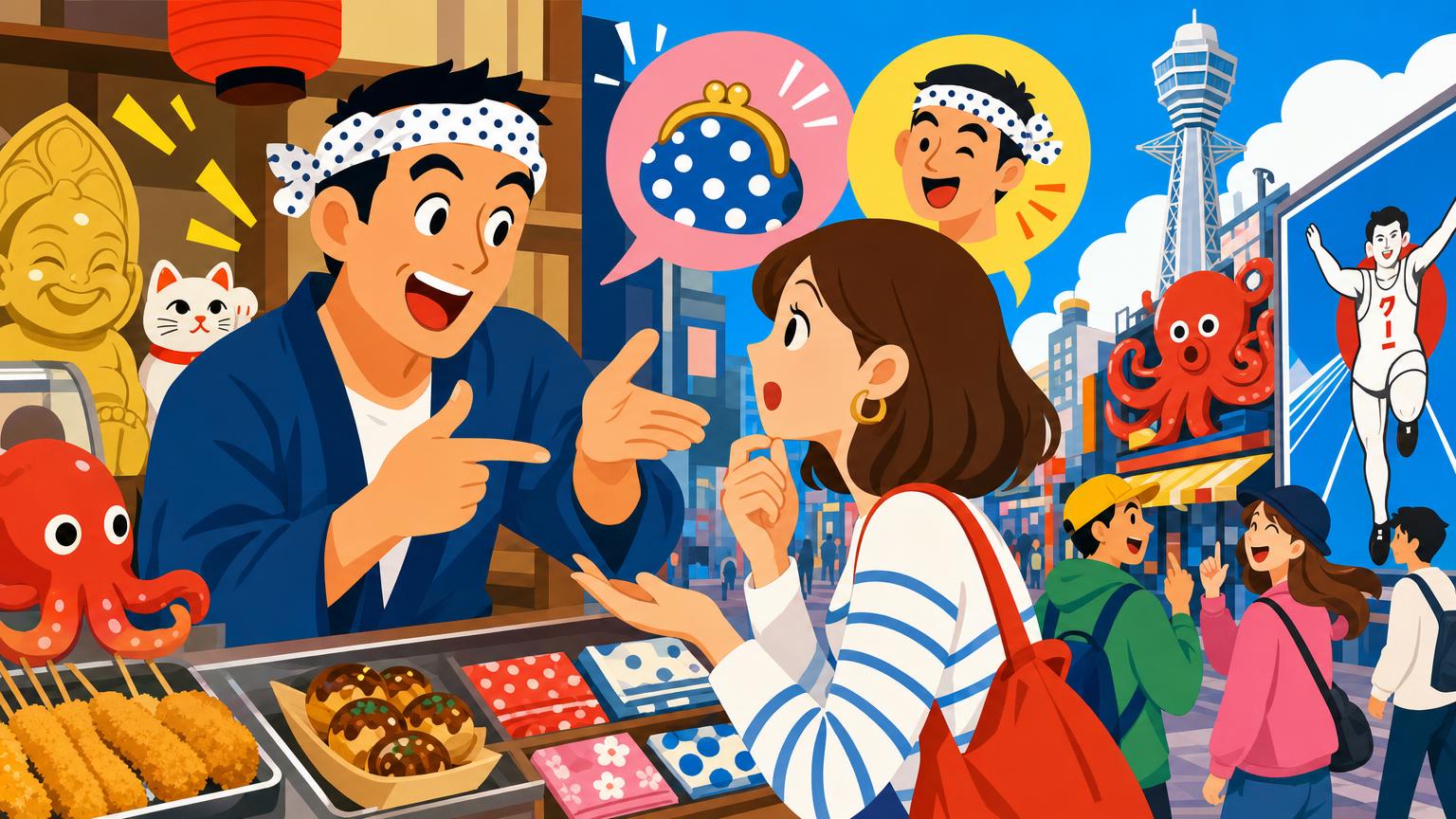
The Osaka expression nanbo means “how much?” or “what is the price?” In standard Japanese, a customer might ask, “これはいくらですか?” In Osaka speech, “これ、なんぼ?” may sound shorter, more local, and more familiar.
The important point is not that everyone in Osaka uses dialect all the time. Many residents speak standard Japanese, use mixed speech, or have a mild regional accent. Younger people may shift styles depending on their workplace, education, family background, and relationship with the listener. Rather, the point is that price and value are socially meaningful subjects in Osaka, and asking about them directly is not automatically embarrassing.
A customer may ask how much something costs. The shopkeeper may respond with the price and then add that the item is not worth buying today. In some situations, a customer may also ask whether a discount is available. This is not a universal right, and bargaining is not appropriate everywhere. Department stores, convenience stores, chain shops, pharmacies, and many ordinary retailers have fixed prices. However, in independent shops or certain market settings, a light question about price can become part of the relationship.
This is connected to Osaka’s reputation for practicality. The city historically developed as a major commercial centre, and commercial intelligence has long been associated with understanding the quality, price, timing, and usefulness of goods. The local expression “あがってなんぼ” conveys a practical concern with what something actually produces or achieves. The exact phrase may not appear in a modern shop conversation, but the attitude remains recognizable: value should be discussed openly rather than treated as an abstract matter of prestige.
For foreign residents, this can be liberating. You do not always need to pretend that price is irrelevant. You can ask what is good, what is seasonal, what will last, and whether there is a cheaper alternative. A shopkeeper may respect you more for asking sensible questions than for making a polite but uninformed purchase.
At the same time, do not assume that every Osaka shopkeeper wants to negotiate. A direct question is acceptable; applying pressure is not. Ask once, listen to the answer, and accept a refusal with a smile.
The Influence of Osaka Comedy on Ordinary Shop Talk
Osaka’s communication style cannot be fully understood without owarai, the broad Japanese term for comedy and comedic entertainment. The city is strongly associated with manzai, a two-person comedy style built around rapid dialogue, misunderstanding, correction, timing, and verbal contrast. Academic research on Osaka conversation has also explored the relationship between traditional comic storytelling and conversational patterns in the Osaka dialect.
Two words are especially important: boke and tsukkomi.
The boke is the person who says or does something foolish, unexpected, exaggerated, or apparently mistaken. The tsukkomi is the person who notices this and reacts, often by correcting it sharply. In professional comedy, these roles are performed. In everyday conversation, they can become temporary positions that friends, family members, colleagues, and even shopkeepers adopt for a few seconds.
Suppose you ask whether a shop is open on Sunday. The shopkeeper replies, “No, we close every day.” You pause, unsure whether you heard correctly. The shopkeeper laughs and adds, “I’m joking. Sunday is fine.”
They have created a small boke moment. Your confused expression gives them the opportunity to become the tsukkomi, correcting the absurd statement. No formal joke has been announced. The humour comes from the sudden shift in expectations.
Or imagine pointing to a large cabbage and asking whether it is a melon. The shopkeeper may stare at you theatrically and say, “Yes, a very green melon.” Someone nearby may laugh. The shopkeeper may then explain the price of the cabbage.
If your Japanese is limited, these moments can be challenging. You may not know whether the speaker is serious, and you may worry that you have made a cultural mistake. The safest response is not to force a laugh. Look at the speaker’s face, listen for a change in tone, and use a simple response such as:
“ほんま?” — “Really?”
“うそやん” — “No way.”
“なんでやねん” — “What are you talking about?” or “Come on!”
“わからへんかった” — “I didn’t understand that.”
You do not need perfect Osaka dialect. A smile and a clear request for clarification are enough. If the joke was harmless, the shopkeeper will usually explain it. If they become annoyed because you did not understand, the responsibility is not yours alone. Humour only works when both sides can participate.
The boke and tsukkomi pattern helps explain why Osaka conversation may sound more argumentative than it actually is. A sharp correction can signal involvement. Two people may appear to disagree while actually collaborating to create rhythm. The visible conflict is part of the enjoyment.
Still, do not imitate aggressive comic shouting with strangers. Osaka humour depends heavily on the relationship, timing, age, gender, setting, and tone. A phrase that sounds funny among close friends may seem rude when spoken by a foreign resident to an elderly shopkeeper. Begin gently, and let the other person establish the level of play.
The Shopkeeper’s Familiarity Is Often a Test of Distance
When an Osaka shopkeeper asks a personal question, it may serve several purposes at once.
They may genuinely want to know where you live, check whether you are a regular customer, or understand what kind of explanation you need. They may also be creating an opportunity for small talk because silence can feel unnecessarily stiff.
Common questions include:
“どこから来たん?” — “Where are you from?”
“大阪住んでるん?” — “Do you live in Osaka?”
“日本語うまいな” — “Your Japanese is good.”
“このへん長いん?” — “Have you been in this area long?”
These questions can feel different depending on the speaker’s tone. When asked with curiosity and followed by useful help, they are usually an attempt to reduce distance. However, if they are repeated after you have shown discomfort, they become intrusive.
A foreign resident may feel pressured to provide a complete life story, but you do not need to. Short answers are socially acceptable:
“I live near Tennoji.”
“I work in Osaka.”
“I have been here for two years.”
“I am still learning Japanese.”
You can then briefly return the question or redirect the conversation to the product. “Is this good for winter?” is an excellent way to redirect the conversation while keeping the exchange practical.
The shopkeeper may also comment on your Japanese even when your Japanese is only basic. This can be encouragement, surprise, habit, or simply a conversational opening. You are allowed to answer honestly: “A little, but I do not understand fast Osaka-ben.” Many people will slow down, repeat themselves, or replace a local phrase with standard Japanese.
If they continue speaking quickly, do not pretend to understand. In Osaka, pretending can create more difficulty because the speaker may assume you are ready for a more complex joke or explanation. A direct “ゆっくりお願いします” — “Please speak slowly” — is useful and polite.
Osaka Versus Tokyo: Why the Same Shop Interaction May Feel Different
Comparisons between Osaka and Tokyo are often exaggerated, but they can still help foreign residents recognise differing social expectations.
Tokyo’s public communication is frequently associated with restraint, standardised service, and careful management of personal boundaries. This does not mean that people in Tokyo are cold or dishonest. Rather, it means that many interactions, especially in offices and large commercial spaces, maintain a clear distinction between customer and worker. A shopkeeper may answer precisely what you ask and avoid adding further comments unless necessary.
Communication in Osaka is more likely to include an extra layer of personality. A shopkeeper may comment on your choice, make an observation about the weather, complain about a supplier, or tell you a short story. The interaction may take longer, but it may also offer more local knowledge.
To a Tokyo resident, Osaka can seem loud, informal, and somewhat intrusive. To an Osaka resident, Tokyo can seem polished, distant, and difficult to read. Neither impression represents the whole truth. Both cities include quiet people, outspoken people, formal businesses, casual businesses, wealthy districts, working-class districts, international communities, and highly varied neighbourhood cultures.
The difference often comes down to default settings. In Osaka, the default distance may be slightly closer. In Tokyo, it may remain slightly greater until a relationship has been established.
This becomes relevant when you move between the two cities. A Tokyo-style approach—brief question, brief answer, minimal personal reaction—will work in Osaka, but it may result in fewer conversations. An Osaka-style approach—comment, joke, practical opinion—may work in Osaka but feel overly familiar in Tokyo. Neither style is universally correct. The key is recognising which setting you are in.
Osaka Versus Kyoto: Indirectness, Refinement, and the Risk of Stereotypes
Foreign residents often repeat a simple formula: Tokyo is reserved, Kyoto is indirect, and Osaka is direct. The formula is memorable, but real life is more complex.
Kyoto’s communication is often associated with refinement, contextual meaning, and indirect expression. The word ikezu is sometimes used to describe a sharp, unpleasant, or deliberately difficult form of indirectness, but it should not be applied as a label to every Kyoto resident. Kyoto includes many communication styles, and outsiders often mistake politeness or ambiguity for concealed hostility.
Osaka’s frankness may seem easier to understand because the speaker’s reaction is more visible. A shopkeeper might say that your chosen item is expensive, while a Kyoto shopkeeper might express the same concern more indirectly. Yet neither city provides a magical system for reading minds. You must still consider context, relationships, and consequences.
For a foreign resident, the practical lesson is not to rank the cities, but to avoid assuming that one style is morally superior. Direct speech can save time, but it can also hurt feelings. Indirect speech can preserve dignity, but it can also cause confusion. Osaka’s communication offers more visible signals, but those signals still require interpretation.
The “Osaka Obachan” and the Politics of Everyday Familiarity
The Osaka obachan is a familiar cultural figure: an older or middle-aged woman from Osaka who is lively, practical, outspoken, humorous, and unafraid to speak directly. She may be imagined wearing colourful clothes, negotiating prices, offering unsolicited advice, and speaking to strangers as though they have known each other for years.
This image is partly a stereotype and partly a recognisable social type. It should not be used to describe every woman from Osaka, and it can become patronising when outsiders reduce older women to comic characters. However, the figure is useful because it shows how Osaka values certain forms of social confidence.
The obachan’s communication often brings together apparent contradictions. She may ask personal questions while also offering practical help. She may complain loudly but remember your preferences. She may criticise your purchase and then give you a better one. She may tease you in public while defending you against someone else.
Her power comes from refusing to treat social interaction as a fragile performance. She speaks as though ordinary life is already shared. Food, money, health, family, weather, work, and neighbourhood gossip are not sealed-off private subjects in the same way they may be elsewhere. Instead, they become material for advice, comparison, humour, and mutual recognition.
A foreign resident may experience this as either generosity or pressure. Both reactions are legitimate. You can accept the advice without accepting every assumption behind it. You can say, “Thank you, but I prefer this one.” You can laugh while still refusing. You can be grateful while maintaining your privacy.
The best response to an obachan-style interaction is calm confidence. Do not try to compete by becoming louder, and do not assume that every strong opinion requires an equally strong counterattack. Answer clearly, show appreciation, and state your preference.
How to Respond When a Shopkeeper Is Direct
The most effective approach is to remain open without becoming passive.
If a shopkeeper says your choice is bad, ask why. “Why is this one better?” turns criticism into useful information.
If they make a joke, pause before deciding how seriously to take it. A smile, raised eyebrows, and “ほんま?” can keep the exchange moving while giving you time to understand.
If they ask a personal question, answer only what you feel comfortable sharing. “I live nearby” is enough. You do not need to disclose your salary, relationship status, immigration situation, or family history.
If they speak too quickly, say so directly. “すみません、もう一回お願いします” means “Sorry, please say that again.” In Osaka, a clear request is usually more effective than an embarrassed nod.
If you disagree, do so without turning the conversation into a courtroom. “I understand, but I like this one” is perfectly adequate. In Japanese, “でも、これが好きです” — “But I like this one” — provides a firm but non-aggressive response.
If the shopkeeper refuses a discount, smile and accept it. A request can be part of the interaction, but the refusal is also part of the transaction. Continuing to push may turn a playful exchange into pressure.
If the shopkeeper provides useful help, acknowledge it. “助かりました” — “That helped me” — is warmer than a generic “thank you.” “おおきに,” a traditional Kansai expression meaning “thank you,” may be heard in some settings, especially from older speakers or in service contexts. You do not need to force it; a sincere “ありがとうございます” is always safe.
What to Say in Everyday Shop Situations
You do not need advanced Osaka-ben for everyday local interactions. A small set of expressions can convey respect while keeping the conversation practical.
“これ、なんぼですか?” means “How much is this?” The ending desu ka makes the phrase more standard and polite.
“これ、なんぼ?” is more casual and recognisably local. Use it only when the atmosphere is relaxed and the other person is speaking informally.
“おすすめはどれですか?” means “Which one do you recommend?” This invites the shopkeeper to share their knowledge, which many independent sellers enjoy.
“こっちのほうがええですか?” means “Is this one better?” The word ee, or ええ, is a common Kansai form associated with “good.”
“まけられますか?” means “Can you lower the price?” It is not appropriate in every shop. Ask lightly, accept the response, and do not treat the question as a demand.
“ほんまですか?” means “Really?” It can convey surprise, interest, or playful disbelief.
“なんでやねん” is the classic Osaka-style “What are you talking about?” or “Come on!” It is mainly used in humorous, familiar exchanges. Do not use it as a general-purpose phrase with every stranger.
“ゆっくりお願いします” means “Please speak slowly.” It is especially useful when the shopkeeper switches to fast dialect.
“日本語、まだ勉強中です” means “I am still studying Japanese.” This gives the other person helpful information without requiring an apology.
“また来ます” means “I will come again.” Say it only if you genuinely intend to return, but it is a warm way to end a positive exchange.
The goal is not to perform an Osaka identity, but to make the interaction easier. A few local expressions work best when supported by ordinary politeness, attentiveness, and a willingness to respond like a person rather than a language exercise.
Shops, Markets, and Izakayas Have Different Rules
The setting changes how directness is understood.
In a neighbourhood bakery, a comment about your choice of bread may be an invitation to try something new. In a busy supermarket, the same level of conversation may not be possible because staff are managing queues and restocking. In a specialist store, the shopkeeper may expect detailed questions and speak firmly because product knowledge is important. In a convenience store, the interaction will usually follow a standard script.
Markets leave more room for performance. Sellers may call out prices, compare their goods with those at neighbouring stalls, joke with regulars, or encourage you to taste something. This does not mean that you must buy anything. A polite “今日は見るだけです” — “I am only looking today” — can be useful. If the seller continues to pressure you, you can simply leave.
Izakayas are different again. Alcohol, shared food, and group conversation make people more expressive. A staff member may joke with customers, but this does not mean you are expected to drink more, order more, or tolerate unwanted touching. Foreign residents sometimes mistake hospitality for obligation. You remain entitled to refuse another drink, decline food, or leave whenever you wish.
In an izakaya, a loud voice may simply be part of the atmosphere. Do not assume that every raised voice signals anger. At the same time, if the atmosphere becomes aggressive or unsafe, trust your judgement rather than the cultural stereotype that “Osaka people are just loud.”
When Frankness Becomes a Problem
A useful way to assess the interaction is to ask whether it leaves room for your choice.
Healthy familiarity gives you options. The shopkeeper may offer advice, but you can refuse. They may make a joke, but they explain it if you do not understand. They may ask where you are from, but they accept a brief answer. They may point out a cheaper product, but they do not shame you for choosing the expensive one.
Unhealthy familiarity takes away your options. The shopkeeper insists that you buy something. They repeatedly touch you or your belongings. They make comments about your race, body, gender, or legal status. They use your limited Japanese to misrepresent the price. They laugh at you rather than with you. They treat your discomfort as evidence that you lack a sense of humour.
Do not excuse this behaviour as “just Osaka.” The city’s informal culture is not a licence for exploitation. If a transaction feels unclear, ask for the price again, check the receipt, or leave. If necessary, use translation support, ask a trusted Japanese-speaking friend for help, or choose another shop.
Living in Osaka requires cultural flexibility, not cultural surrender. You should learn how local warmth works, but you do not need to tolerate disrespect to prove that you understand it.
How to Build Trust with a Local Shopkeeper
Relationships with shopkeepers usually develop through repeated visits rather than one perfect conversation.
Visit at a quieter time if possible. A shopkeeper who is preparing orders or managing a queue may not have the capacity for conversation. A brief visit on a calm afternoon creates more room for interaction.
Remember small details. If the shopkeeper recommends a product, tell them next time whether you enjoyed it. If they mention a seasonal item, ask about it later. This shows that their advice was not simply background noise.
Share small pieces of information about yourself, but keep them manageable. Mentioning that you live nearby, work in the area, or are learning Japanese gives the shopkeeper a way to recognise you without turning the relationship into an interview.
Use humour carefully. Laugh at your own minor mistakes, not at another person’s appearance or accent. Osaka humour often relies on self-deprecation and quick reactions, but you do not need to imitate professional comedians. A modest joke about your poor sense of direction is safer than an aggressive attempt at teasing.
Accept that some shopkeepers will remain formal. Not every local business wants a personal relationship, and not every foreign resident wants one. Osaka’s familiar style is an available path, not a compulsory performance.
Over time, the signs of trust are usually practical. The shopkeeper remembers what you buy. They warn you when a product is not fresh. They tell you that another shop has a better price. They save something for you. They ask whether your work is going well. They may complain about the weather while handing you the item you came to buy.
This is not dramatic hospitality. It is everyday recognition.
Why Osaka Can Feel Easier—and More Demanding—for Foreign Residents
Osaka can feel easier to navigate than other Japanese cities because the rules of interaction are often more visible. People may express approval, surprise, disagreement, amusement, or impatience more openly. A foreign resident does not always have to interpret a completely neutral expression.
That same openness can also make Osaka more demanding. You may be expected to respond. A silent transaction is possible, but a shopkeeper may make a comment and wait for your answer. You may need to show whether you understood the joke, accepted the advice, or want the conversation to continue.
For people who prefer clear boundaries, this can be tiring. For those who feel isolated by highly formal interactions, it can be refreshing. Your experience may also change as your Japanese improves. At first, Osaka-ben may sound like fast, cheerful noise. Later, you may begin to notice the differences between teasing, warning, complaint, and genuine concern.
The city may also feel different depending on your neighbourhood. An international area, a traditional shopping street, a suburban station, and a business district each have their own rhythms. A foreign resident in central Osaka may encounter a more cosmopolitan service culture, while someone in an older residential area may build relationships with shopkeepers over many months.
This is why broad statements about what people in Osaka are like have limitations. Culture provides tendencies, not scripts. Individual personality, age, class, profession, family background, and location all matter.
The Real Meaning of “Friendly” in Osaka
Calling Osaka friendly is not enough. A more precise explanation is that many interactions allow people to show personal involvement earlier than a foreign resident might expect.
A shopkeeper does not simply process your request. They may assess what would suit you, tell you when you are making a poor choice, joke about the situation, and suggest an alternative. They may do this because they want your money, hope to gain a regular customer, enjoy conversation, take pride in their knowledge, or because all of these motives are operating at once.
Friendliness in Osaka can therefore be practical rather than sentimental. It may sound like a complaint, arrive as a correction, or appear as a discount, a warning, a recommendation, or a blunt refusal to sell you something unsuitable.
The warmth is often hidden behind the interference. The shopkeeper is showing that they have noticed you.
This is also why Osaka can be difficult for foreigners who expect kindness to be quiet and non-intrusive. The city’s version may involve more noise, more opinions, and more assumptions. You may need to say, “No, thank you,” more clearly. You may need to explain that a joke did not work for you. You may also need to distinguish between advice and pressure.
Once you do, the relationship often becomes easier. Osaka communication is not necessarily asking you to agree; it is asking you to participate.
A Practical Mindset for Living in Osaka
When entering a local shop, start with ordinary politeness. Greet the staff, wait your turn, and do not assume that regional informality replaces basic consideration.
Listen for the extra comment, as it may contain useful information about quality, timing, price, or local customs.
Do not translate every blunt phrase word for word. Consider the tone, facial expression, timing, and what the person does next.
Respond honestly when you do not understand. Directly asking for repetition is usually better than silently misunderstanding.
Let the shopkeeper decide how playful the conversation becomes. Gradually match their level rather than arriving with exaggerated Osaka slang.
Ask questions about value. “Which one lasts longer?” and “What do local people buy?” are often more effective than simply asking for the cheapest item.
Accept advice without automatically following it. You can say thank you and still choose a different product.
Protect your boundaries. Familiarity is not permission for harassment, pressure, or discrimination.
Return when you can. Repeated contact is how a transaction becomes a neighbourhood relationship.
Most importantly, do not treat every interaction as a test of your Japanese ability. The shopkeeper is also responsible for making the exchange understandable. Communication in Osaka is a shared activity, not an examination that you must pass alone.
The Reality of the Osaka Shop Counter
The shop counter is one of the clearest places to observe Osaka’s social logic. Money is involved, but the conversation is not solely about money. The shopkeeper offers expertise, personality, local knowledge, and sometimes a small challenge. The customer is expected to listen, respond, decide, and perhaps come back.
This can create moments that seem rude when viewed through a narrow service-culture lens. A shopkeeper may question you, correct you, tease you, or refuse to flatter your choice. Yet the same interaction may include the practical generosity that makes everyday life in Osaka feel less anonymous.
The key is to distinguish bluntness from bad intent, and warmth from unlimited access. Osaka’s people are not all alike. Osaka’s shops are not all casual. The city does not erase Japanese politeness, nor does it turn every transaction into a comedy routine. But compared with the more restrained public style often associated with Tokyo, Osaka more readily allows the customer and shopkeeper to become two recognisable people.
For a foreign resident, that is the central adjustment. Do not wait for friendliness to arrive in a perfectly polished form. It may come as a disagreement over vegetables, a warning about an overpriced product, a joke you understand three seconds late, or an elderly shopkeeper telling you that your Japanese is improving while pretending not to be impressed.
Answer clearly. Laugh when the moment is genuinely funny. Ask when you are confused. Say no when you mean no. Return when the advice proves useful.
That is how Osaka’s frankness becomes familiar—not because every conversation is easy, but because daily life leaves room for people to recognise one another.