You see them from the train, these long, covered arteries snaking away from the local stations. You’ve probably walked through the famous ones, dodging tourists in Kuromon Ichiba or marveling at the sheer, endless length of Tenjinbashisuji. It’s easy to file these places away as a kind of cultural theme park, a quaint relic of Showa-era Japan preserved for sightseeing. But that’s a fundamental misreading of Osaka. For the people who live here, the shotengai—the neighborhood shopping arcade—isn’t a tourist attraction. It’s the engine room of daily life. It’s the pantry, the living room, and the social safety net all rolled into one. While Tokyo’s daily life often revolves around the gleaming, efficient, and impersonal train station complexes with their chain supermarkets and department stores, Osaka’s heartbeat echoes under the corrugated roofs of these bustling, beautifully chaotic corridors of commerce. To understand the shotengai is to understand why Osaka feels so different, why people here seem more direct, and why your money just seems to go further. This isn’t about nostalgia; it’s about a deeply practical, human-scaled way of living that continues to define the city’s identity. Forget the guidebooks for a moment. Let’s talk about how Osaka really works, and it all starts here, in the arcade.
By exploring the vibrant pulse of Osaka’s shotengai, you can also gain insights into local identities by examining the cultural divide between Kita and Minami, which reveals even more about the city’s distinctive character.
More Than a Market: The Shotengai as a Social Organism

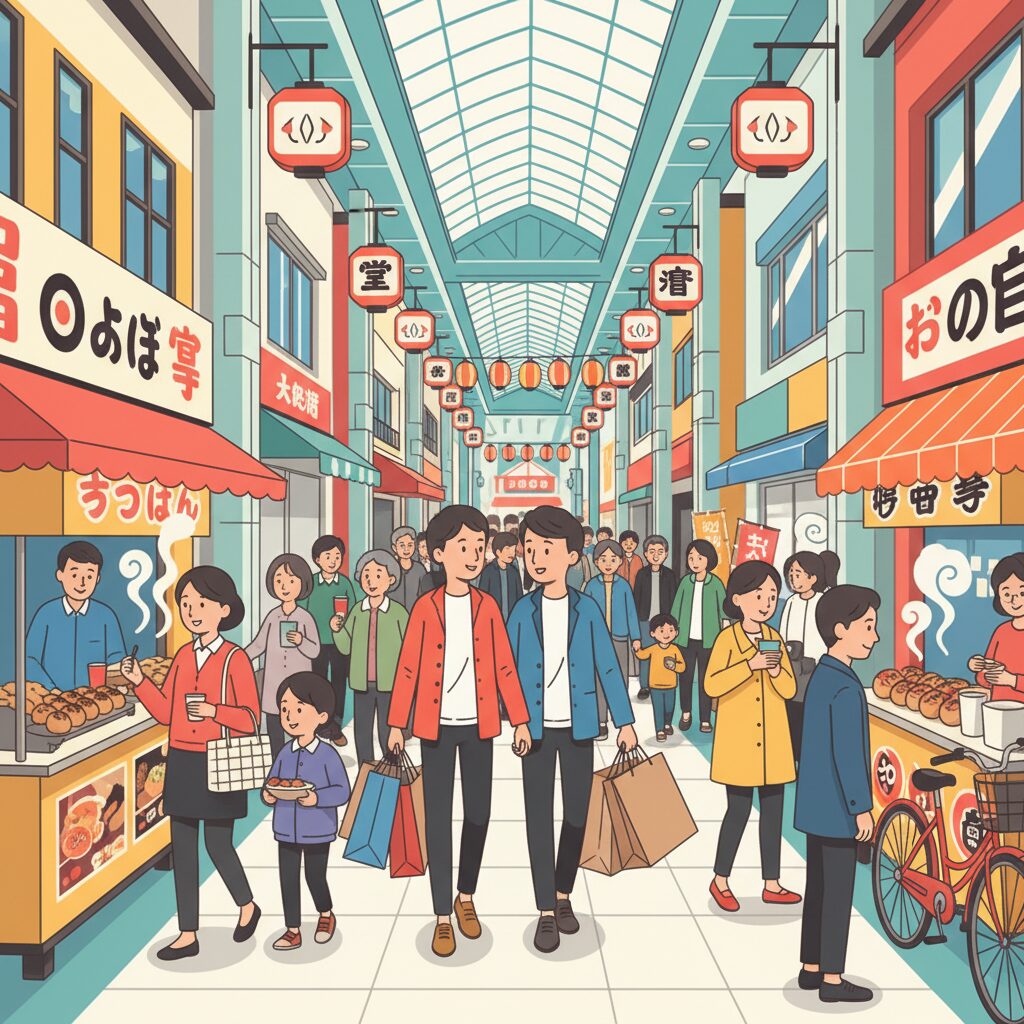
Step into a proper neighborhood shotengai on a weekday morning, and the first thing that strikes you is the sound. It’s not a soft murmur; it’s a vibrant symphony of commerce. The butcher, with a voice like a foghorn, calls out his specials on ground pork. The fruit stand owner shouts, “Amいで, oishii de!” (“Sweet and delicious!”) over a mound of seasonal strawberries. From a tiny storefront, the sizzle of frying croquettes and the sweet aroma of dashi broth spill into the walkway. This isn’t just background noise. It’s the language of akinai, the Osaka art of doing business. It’s direct, lively, and deeply personal—standing in sharp contrast to the quiet, sterile aisles of a Tokyo supermarket, where the only sounds are the beep of a scanner and a pre-recorded voice thanking you for your patronage. In Osaka, commerce is a conversation. The shopkeepers aren’t merely employees; they are proprietors, masters of their small realms, engaging you directly because their livelihood depends on it. This creates a fundamentally different shopping experience—one less about sterile transactions and more about human connection.
A Symphony of Shouts and Savings
To an outsider, the energy may seem chaotic. Mothers expertly bike through, children strapped to their backs, weaving through crowds of elderly shoppers pulling their wheeled carts. People stop mid-lane to greet neighbors, seemingly unaware of the human traffic jam they create. But it’s not chaos; it’s a self-regulating ecosystem built on mutual understanding. You learn the rhythm of the arcade: keep moving, stay aware, and anticipate the flow. The unspoken rules are straightforward. Don’t block the path. Acknowledge those whose way you step into with a slight nod. Recognize that the shopkeeper shouting about cheap daikon radishes isn’t being aggressive; he’s performing a public service, announcing the day’s best deals. This environment nurtures a form of street-level social intelligence. It’s the complete opposite of the orderly, single-file lines and rigid personal space common in Tokyo. In an Osaka shotengai, you’re part of a collective, a participant in the daily drama of neighborhood life—not just an anonymous consumer pushing a cart.
The Unspoken Rules of the Arcade
In many ways, this social function outweighs the commercial one. The shotengai is the neighborhood’s central nervous system. It’s where you find out about the new baby born to the family who runs the fish shop, or notice that the elderly woman from the third floor hasn’t bought her tofu in days, prompting someone to check on her. It’s a place of casual surveillance in the most positive sense. Vendors know their regulars. They know who prefers their fish filleted a certain way, whose children love the sweet tamagoyaki, and who is on a tight budget this week. This familiarity fosters a sense of security and belonging that a massive, faceless corporation can never replicate. A foreigner might feel intimidated by the sheer localness of it all, worried their imperfect Japanese is a barrier. In truth, most shotengai vendors are experts in non-verbal communication and genuinely happy to see a new face. The effort to shop there—to point, smile, and try out a few words—is seen as an act of integration, a sign that you’re not merely passing through, but trying to become part of the neighborhood fabric.
Deconstructing the Deal: Why Osaka is Cheaper, and How the Shotengai Makes it Possible
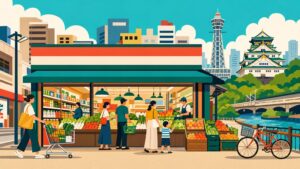
Life in Osaka is often said to be more affordable than in Tokyo, with the shotengai being the main reason. This goes beyond just lower rent for shops—it reflects a fundamentally different economic model centered on specialization, high volume, and low overhead. Unlike trendy cafes and souvenir shops, a typical residential shotengai is anchored by a holy trinity of daily life: the butcher (niku-ya), the greengrocer (yao-ya), and the tofu maker (tofu-ya), frequently joined by a fishmonger (sakana-ya). These vendors are specialists who have perfected their craft over generations. This specialization is crucial to achieving both quality and affordability.
The Holy Trinity: The Butcher, The Tofu Maker, and The Greengrocer
The greengrocer doesn’t aim to offer perfect, plastic-wrapped tomatoes year-round. Instead, their tables overflow with whatever’s in season, fresh from the central market that morning, often beautifully irregular in shape. Their goal is to sell everything, all on the same day. That’s why you might find bags of slightly bruised apples offered cheaply—ideal for making compote—or a heap of spinach priced at 100 yen due to a bumper crop. Osaka shoppers instinctively understand this. They don’t arrive with a rigid shopping list from an online recipe but instead look for what’s good and affordable today, then shape their meals accordingly. This practical, adaptable approach to cooking and shopping is quintessentially Osakan. Similarly, the butcher knows every cut of meat and can recommend the perfect slice for sukiyaki or an inexpensive, flavorful cut for stew. Regular customers might even receive a free chunk of beef fat for stir-frying, a small but meaningful gesture that fosters lasting loyalty. The tofu maker offers silky fresh tofu made just hours earlier, alongside deep-fried pouches (abura-age) for miso soup and thick fried blocks (atsu-age) for oden, all priced far below supermarket equivalents.
“Moukarimakka?” “Bochi-bochi denna”: The Language of Osaka Commerce
This entire system operates within a distinctive commercial dialect. The typical Osaka greeting, “Moukarimakka?” (“Making any money?”), and its usual reply, “Bochi-bochi denna” (“So-so”), would sound blunt, even rude, in Tokyo—but here, they express camaraderie. This exchange acknowledges that everyone is engaged in making a living, a verbal handshake that closes the gap between customer and vendor. This friendly attitude also affects pricing. While intense haggling isn’t typical, the concepts of nebiki (discounting) and omake (a little extra) remain very much alive. Near closing time, vendors often begin marking down items, loudly announcing the new prices. Regular customers purchasing a fair amount might have prices rounded down or receive an extra onion as a gift. This isn’t a calculated corporate loyalty scheme but a human gesture, a mutual appreciation of value. It’s a reciprocal dance that encourages repeat visits—not due to points or cards, but because customers feel genuinely part of the community.
The Shotengai Ecosystem: Beyond Groceries
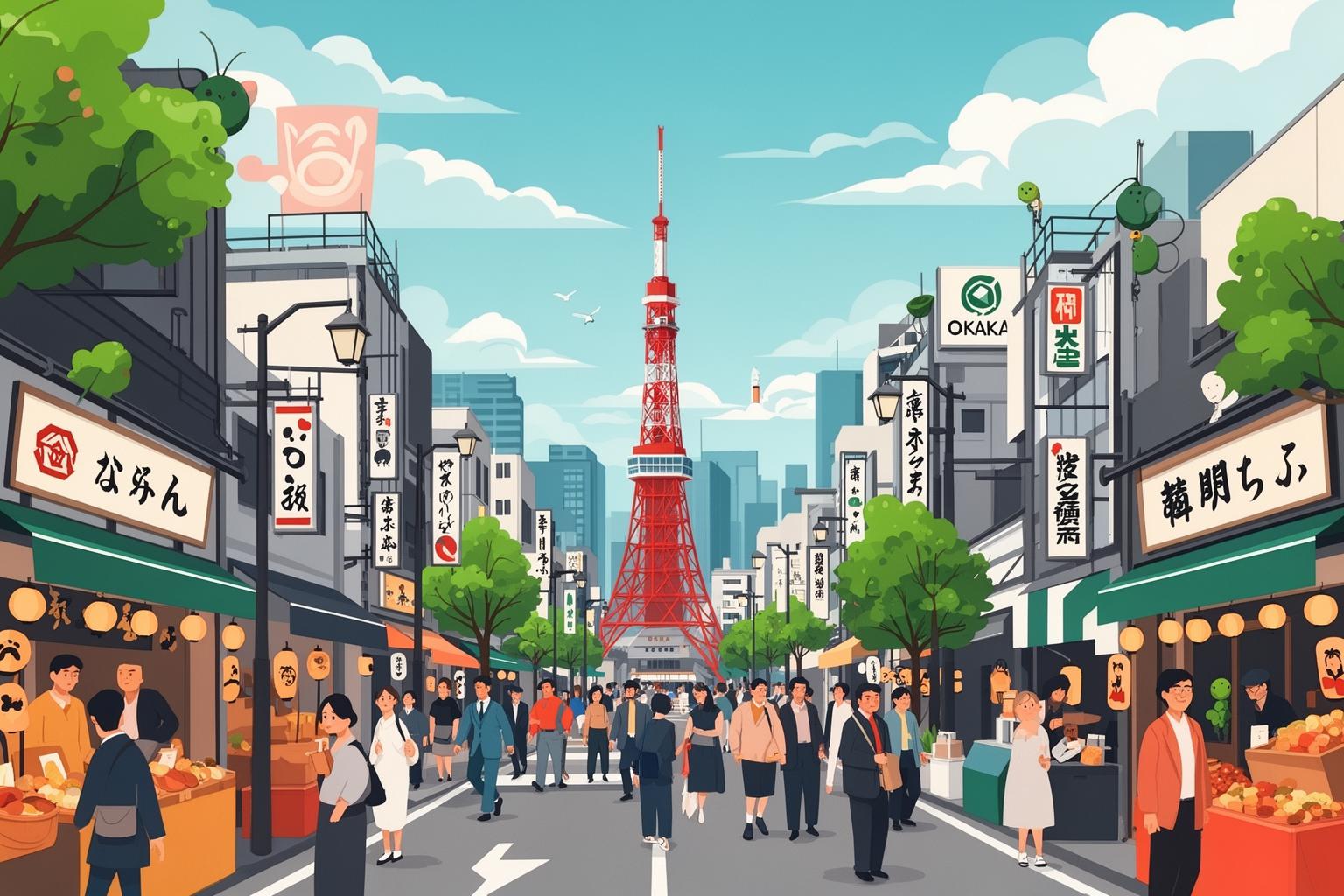
The brilliance of the shotengai lies in its role as a comprehensive life-support system, typically sheltered by a convenient rain-proof roof. It’s much more than just a place to buy ingredients for dinner. It functions as an integrated ecosystem designed for maximum daily convenience. Interspersed among the fresh food stalls are various essential neighborhood services. You’ll find a small clinic, a cluttered yet well-stocked pharmacy (yakkyoku) where the pharmacist knows your family, a dry cleaner, a watch repair shop, a bookstore dedicated to manga, and several incredibly affordable clothing stores (fukuya) offering practical attire for all ages.
From Dry Cleaners to Delicatessens
Arguably the most important component of this ecosystem is the sozai-ya, or delicatessen. These small shops are the unsung heroes of Osaka’s culinary scene, providing a glimpse into the genuine, unpretentious home cooking of the city. For just a few hundred yen, you can purchase perfectly fried potato croquettes (korokke), simmered pumpkin in dashi, grilled mackerel, and a variety of other side dishes. For working parents, single residents, and the elderly, these shops are not a luxury but an essential service, offering a cheap, healthy, and tasty alternative to cooking from scratch each night. The abundant presence of sozai-ya reflects another fundamental Osaka value: pure pragmatism. Why stress over preparing a perfectly balanced meal when someone down the street has already done it well for you? This network of specialized shops creates a lifestyle centered on convenience, which is often more affordable and more personal than the one-stop-shop model.
The Shotengai vs. The Supermarket: A Battle for the Soul of Shopping
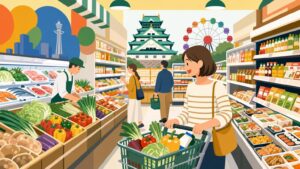
Naturally, supermarkets exist in Osaka, and they are flourishing. No one is a purist. The modern Osakan adopts a daily hybrid approach for survival and satisfaction. You visit the supermarket—the Life, the Gyomu Supa, the Mandai—for milk, eggs, cleaning products, toiletries, and items with long shelf lives. They provide predictable pricing, extended hours, and the convenience of one-stop shopping. But for what truly matters—the freshness of your vegetables, the quality of your fish, the flavor of your meat—you head to the shotengai. You make that extra stop because you know the quality is superior and the price often better. More importantly, you go for the social interaction. You go to be recognized, to exchange a few words, to feel the heartbeat of your neighborhood. The persistence of the shotengai in Osaka, at a time when they are vanishing across Japan, is a testament to the city’s determination not to fully succumb to the forces of anonymous, centralized corporate retail. People here still believe that shopping should be a human experience.
Finding Your Shotengai: A Practical Guide for Residents
For any newcomer to Osaka, one of the first and most essential tasks is to find your local shotengai. This will serve as your anchor, your key to living well and affordably in the city. The well-known ones are great to visit, but they won’t be where you do your everyday shopping. Kuromon Ichiba, for example, has largely turned into a tourist spot, with prices to match. The real treasures are the ones you won’t find in any English-language guidebook.
Look Beyond the Famous Names
Almost every local station on the lesser-known train lines (such as the Hankyu, Keihan, or Tanimachi subway line) has a shotengai extending from one of its exits. The names are familiar to locals but unknown to outsiders: Senbayashi, Komagawa Nakano, Juso Fureai, Miyakojima. To find yours, simply get off at your local station and explore. Look for the distinctive arched entrance. Walk its length. Check out what’s available. Note the prices. Feel the vibe. This is your new neighborhood. Get to know it. There’s no better way to understand the character of your area than by seeing what its central market offers. Is it lively and a bit rough around the edges, or quieter and more upscale? The shotengai will reveal everything you need to know.
How to Become a Regular
Becoming a regular is easy and rewarding. You don’t need to be fluent in Japanese—just consistent. Choose a vegetable stand and buy from it exclusively for a few weeks. Make eye contact when you pay. Greet them with a clear “Konnichiwa” when you arrive and a warm “Arigatou gozaimasu” when you leave. Try asking a simple question. Point at a mysterious vegetable and ask, “Kore, oishii?” (“Is this delicious?”). The vendor will likely brighten up, mime cooking instructions, and appreciate your interest. They interact with hundreds of people daily and excel at bridging language gaps. The aim is to shift from being a random face to a familiar one. The rewards are great. One day, you’ll arrive and the butcher will nod and say, “Ah, the usual?” The tofu lady will have saved you a block of your favorite kind. The greengrocer will tell you to skip the cucumbers today because the batch isn’t good. At that moment, you’re no longer just a customer. You’ve become part of the community. You’ve unlocked the real Osaka.
Conclusion: The Arcade as a Mirror
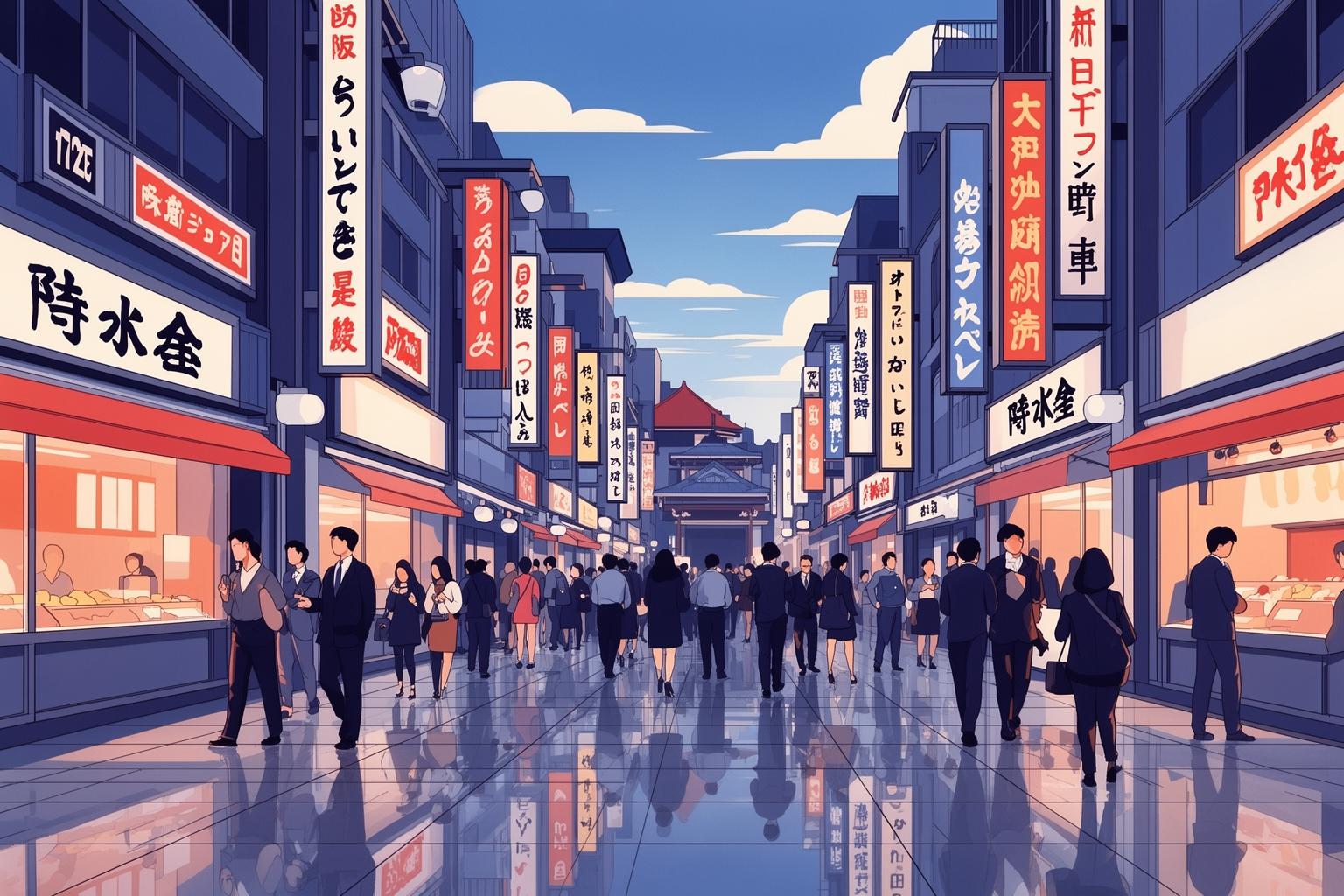
The shotengai is much more than just a collection of shops. It serves as a living museum of Osakan culture—one that remains vibrant and deeply relevant. It acts as a mirror reflecting the city’s most treasured values. Within its bustling aisles, you witness the city’s pragmatism, its relentless pursuit of a bargain, and its adaptable, make-it-work spirit. In the casual exchanges between vendors and shoppers, you hear the city’s appreciation for direct communication and human connection. Through the presence of these specialized, family-run stalls, you sense a profound respect for craftsmanship and a steadfast resistance to impersonal corporatization. For anyone seeking to understand what drives Osaka, what sets it apart so distinctly from other parts of Japan, the answer isn’t found in a castle or skyscraper. It lies here, beneath the arcade’s roof. To truly grasp the city’s rhythm, you must walk its shotengai, listen to its calls, and immerse yourself in its daily, vibrant, human chaos. This is the city’s authentic heartbeat.