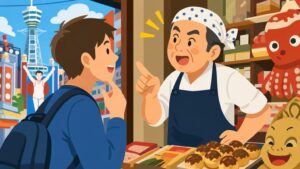
Hey there, I’m Sofia. When I first moved to Osaka from Spain, I thought I had a decent handle on Japan. I’d spent time in Tokyo, mastered the polite head-bow, and understood the importance of reading the air. Then, on my third day here, I went to buy some takoyaki from a street vendor in Tenjinbashisuji Shotengai. The old man running the stall, with a face as wonderfully wrinkled as a pickled plum, looked at my 1,000-yen note, looked back at me with dead-serious eyes, and said, “For you? One million yen.” I froze. Was this a scam? Was he serious? My brain short-circuited. Before I could respond, he burst out laughing, slapped his knee, and said, “Just kidding, onee-chan! 500 yen.” The woman next to me in line didn’t miss a beat. She turned to him and retorted, “If it was a million yen, they’d better be made of gold!” He shot back, “They are! The gold is invisible!” Everyone within earshot chuckled. In that single, bewildering moment, I realized Osaka operated on a completely different frequency. This wasn’t just a transaction; it was a performance. Humor wasn’t an occasional treat; it was the very fabric of daily conversation.
This city’s soul is intrinsically tied to comedy. It’s in the rhythm of the local dialect, the back-and-forth between shopkeepers and customers, and the way friends roast each other with a warmth that can feel, at first, like an attack. To truly live in Osaka, to understand its people beyond the stereotypes of being “loud” or “friendly,” you have to understand its comedic grammar. It’s a language of its own, built on a foundation of unspoken rules that prioritize connection over formality and a shared laugh over polite distance. This isn’t about watching stand-up comedy at a theater, though there are plenty of those. This is about the impromptu, unscripted, and often brilliant comedy that unfolds on every street corner, in every ramen shop, and across every office desk. It’s a culture where the straight line is boring and the punchline is the point. Forget what you learned in Tokyo; here, the fastest way to someone’s heart is through a perfectly timed comeback.
The spontaneous banter on every corner is mirrored in the lively atmosphere of Osaka’s shotengai living rooms, where community and commerce blend into an everyday performance of local charm.
The Holy Trinity of Osaka Banter: Boke, Tsukkomi, and Nori
To truly understand Osaka, you need to first grasp the three essential elements of its conversational DNA. This isn’t just jargon for comedy aficionados; it represents the living vocabulary of daily interaction. Mastering the ideas of boke, tsukkomi, and nori is like obtaining the keys to the city. It’s the difference between watching a foreign film without subtitles and finally comprehending the dialogue. It’s how you shift from being a passive observer to an active participant in the vibrant, chaotic performance that is life in Osaka. These three concepts harmonize perfectly—a kind of conversational dance everyone here naturally knows how to perform. One person sets up the joke, another delivers the punchline, and the group’s energy determines how long the dance lasts. It’s a beautiful, often hilarious spectacle to watch, and even more enjoyable to join in.
What Exactly is a ‘Boke’? The Art of Playing the Fool
The boke is the core of the joke, the starting gun for a comedic exchange. In traditional Manzai comedy duos, the boke plays the funny one, the airhead who says absurd, illogical, or just plain silly things. On the streets of Osaka, anyone can take on the role of boke temporarily. It’s not about true unintelligence; rather, it’s a deliberate, often clever act of performance. It involves intentionally misinterpreting something, making a ridiculous statement with a straight face, or pretending ignorance to open a comedic space. The takoyaki vendor who quoted me a million yen? A perfect boke. He knew it was absurd, I knew it was absurd, and that shared understanding created a moment of humor everyone could join.
You see it everywhere. At a café with a friend, when the server brings your perfectly steamed coffee, your friend might look at it and say, “Ah, my orange juice has arrived.” That’s a boke. They’re intentionally mislabeling the obvious to see your reaction. Or walking with a coworker in pouring rain, and they turn to you sincerely and say, “Great day for a picnic, isn’t it?” That’s a boke. The aim is to disrupt the mundane, to poke a small hole in reality and invite some fun in. It’s an invitation. By playing the fool, the boke is saying, “I don’t take myself too seriously, and neither should you. Let’s have fun.” It’s surprisingly vulnerable, a gesture of trust that the other person will respond correctly.
‘Tsukkomi’: The Straight Man’s Essential Comeback
If the boke sets up the joke, the tsukkomi delivers the punchline. A boke without a tsukkomi is just a strange comment hanging in the air. The tsukkomi is the reaction, the correcting retort that completes the joke. It’s the sharp, witty, and immediate response that points out the boke’s absurdity. The classic tsukkomi phrase, heard countless times daily, is “Nande ya nen!” which roughly means “Why the heck?!” or “What are you talking about?!” To the friend calling coffee orange juice, the tsukkomi is, “That’s coffee, you idiot!” To the coworker praising picnic weather in a downpour, it’s, “Are you blind? We’re soaking!”
This is where foreigners often stumble. The tsukkomi can sound harsh. It’s direct, fast, and sometimes physical—a light smack on the arm, shoulder, or even the back of the head can accompany it. In cultures where physical contact among acquaintances is rare and direct call-outs are impolite, this can be startling. But in Osaka, it’s a sign of affection, proof you’re paying attention. A good tsukkomi says, “I heard your joke, I understood it, and I care enough to play along.” The worst insult to a boke is silence—no reaction, no tsukkomi means either the joke was missed, or the listener is too dull to engage. It’s conversational teamwork: the boke throws the ball, and the tsukkomi hits it back. Both are vital for the game to work.
‘Nori’: Riding the Comedic Wave
Nori is the most abstract of the three but perhaps the most crucial. It’s the vibe, the flow, the shared rhythm of conversation. Someone with good nori (nori ga ii) is someone who “gets it.” They know when to be boke, when to be tsukkomi, and how to keep the energy alive. They jump into the banter effortlessly. Someone with bad nori (nori ga warui) is a conversational dead end. They take jokes literally, respond seriously to a boke, or fail to join the shared fun.
You can feel a group’s nori. Imagine you’re out for drinks: one friend makes a boke, another delivers a perfect tsukkomi, then a third, sensing the good nori, escalates the original boke with an even more absurd remark. A fourth adds another tsukkomi. That’s a group with great nori. They’re co-creating a comedic moment, building on each other like a jazz band improvising together. In Osaka, good nori is a highly prized social skill—arguably more important than traditional politeness. It signals flexibility, quick wit, and a fun spirit. It’s the invisible current that powers all social interaction, and learning to sense and flow with it is key to truly connecting with people here.
The Language of Laughter: How Comedy Shapes the Osaka Dialect (Osaka-ben)
It’s impossible to separate Osaka’s comedy culture from its language, Osaka-ben. The dialect itself seems tailor-made for comedic delivery. It’s more direct, more expressive, and possesses a musicality that standard Japanese often lacks. Unlike the flatter, more monotonous tones of Tokyo, Osaka-ben is rich with dramatic rises and falls, making it an ideal medium for conveying emotion and delivering punchlines. Speaking Osaka-ben isn’t just about choosing different words; it’s about performing the language with a distinct attitude and rhythm. The dialect is a tool that, in the hands of an Osakan, becomes a comedic instrument.
More Than Just an Accent: The Built-in Punchlines of Osaka-ben
Certain words and grammatical structures in Osaka-ben are naturally funny or lend themselves to humorous moments. Take the word “Akan!” It means “No good!” or “Don’t!” but its abrupt, forceful sound makes it a perfect tsukkomi on its own. When someone suggests a terrible idea, a simple, sharp “Akan!” is enough to get a laugh. Words for emphasis like “meccha” (super) and “honma” (really) are used so frequently and passionately that they amplify the drama of any statement. Saying “Honma ni akan!” (“That’s really no good!”) with the right intonation can turn a mere disagreement into a mini theatrical act.
But the undisputed king of Osaka-ben’s comedic phrases is “shiran kedo,” which means “…but I don’t really know, though.” This magical phrase often follows a statement delivered with absolute confidence. An Osakan might present a detailed, seemingly expert explanation of quantum physics, the best way to cook an egg, or the political situation in a foreign country, only to finish with a casual “…shiran kedo.” This completely undercuts everything previously said, acting as a get-out-of-jail-free card for any inaccuracies. It reflects the Osaka mindset: be confident, have an opinion, but don’t take yourself too seriously because, in the end, who really knows anything for sure? It’s both a pragmatic shield and a constant source of humor.
Intonation and Timing: The Musicality of Osaka Comedy
If you listen to people from Osaka and Tokyo saying the same sentence, you’ll hear a world of difference. The Tokyo version is often spoken in a relatively flat, measured tone. The Osaka version features peaks and valleys, a sing-song quality that rises at the end of questions and emphasizes key words with gusto. This natural intonation makes everyday speech more engaging and dramatic. It allows for a wider range of expression, which is essential for comedic timing.
Timing is everything in comedy, and Osakans are masters of it. It’s in the slight pause before delivering a boke that builds anticipation. It’s in the lightning-fast speed of a tsukkomi that leaves no room for awkward silence. This rhythm is learned from a young age, absorbed from family, friends, and constant exposure to local comedians on television. Watching a conversation between two Osakans is like watching a tennis match played by professionals. The ball flies back and forth with incredible speed and precision. The setup is served, and the punchline returned without a moment’s hesitation. This rapid-fire pace is what makes conversations here feel so lively and energetic, all powered by the unique melody of the Osaka dialect.
Where You’ll See It: Comedy in the Wild
This isn’t simply theory; the boke/tsukkomi dynamic functions as the operating system for a wide array of social interactions in Osaka. It serves as the default way people communicate. Grasping this concept will transform your everyday experiences, turning interactions that might otherwise be confusing or intimidating into moments of fun and connection. From shopping for groceries to navigating office life, comedy acts as the unofficial protocol. It’s your key to unlocking the city’s social code and genuinely feeling like a local. Let’s explore some common settings where this culture is guaranteed to be on full display.
At the Supermarket and Shotengai (Shopping Arcade)
Nowhere does the spirit of Osaka shine brighter than in its lively shotengai. These covered shopping arcades are the heart of the city, and the interactions you witness here are comedic gold. This is especially true when dealing with the formidable Osaka obachan (a term for middle-aged or older women, used with a blend of respect and warmth). They are the keepers of the city’s comedic essence. Haggling over the price of vegetables isn’t just about saving a few yen; it’s more about the performance—it’s a verbal dance.
Imagine this: You pick up a huge daikon radish, and the obachan running the stall looks at you and says, “Who are you planning to hit with that thing?” This is classic boke. A serious, literal answer would kill the mood. The right response is a tsukkomi—something like, “It’s for my oden, not a duel!”—which will earn you a big laugh. They often dispense unsolicited advice that’s half sincere, half joke. “You’re buying that fish? You better know how to cook it, or it’ll be a disaster!” This isn’t a critique of your cooking skills; it’s an invitation to banter back. A simple, “Don’t worry, I’m a pro!” keeps the playful exchange alive. This teasing communication fosters community. You’re not just another customer; you’ve become a new sparring partner.
In the Office: Breaking the Stereotype of Japanese Work Culture
The stereotypical Japanese office is often seen as a place of quiet diligence, rigid hierarchy, and unspoken rules. While professionalism remains important in Osaka, the atmosphere can be quite different. The city’s comedic culture often permeates the workplace, acting as social lubricant and stress relief. Meetings may begin with a boss making a self-deprecating joke to lighten the mood. Colleagues use the boke/tsukkomi dynamic to brainstorm or critique ideas in a less confrontational, more playful way.
For example, if you present a slide with a typo, a Tokyo colleague might point it out discreetly after the meeting or in an email. But in Osaka, a colleague is more likely to exclaim in a theatrical voice, “Wait, wait! Is that a new word you’ve invented?” It’s a public call-out, but the humor softens the blow. The goal isn’t to embarrass but to correct the error while keeping the atmosphere light and cooperative. Someone who takes things too seriously and avoids this kind of banter may be seen as cold, distant, or lacking nori (the sense of fun). Of course, there is a limit—humor is reserved for everyday matters and relieving tension. During a serious crisis or formal review, the jokes pause. Knowing when the comedic “on” switch is engaged is a vital workplace skill here.
With Friends and on Dates: The Ultimate Compatibility Test
In personal relationships, comedic chemistry is paramount. When making friends in Osaka, the ability to keep up with quick banter is essential. Friendships often form through mutual roasting. Teasing someone about their new haircut, odd fashion choice, or clumsy moment isn’t meant to be hurtful; it signals closeness and comfort in dropping formalities. The ideal response isn’t to take offense, but to laugh at yourself or, better yet, return the playful insult.
This dynamic is even more pronounced in dating. A first date in Osaka feels less like a formal interview and more like an audition for a comedy duo. Demonstrating good nori—the ability to laugh, banter, and play along with silly scenarios—is often far more appealing than being traditionally “cool” or reserved. When your date makes a boke, they’re testing you: Can you deliver a tsukkomi? Or will you just stare blankly? Your conversational agility and humor are viewed as reflections of your personality and intelligence. A relationship where the comedic timing is off, and one partner constantly has to explain jokes, is draining. In Osaka, finding someone who shares your sense of humor isn’t just a bonus; it’s the very foundation.
A Tale of Two Cities: Why Osaka and Tokyo Are a World Apart
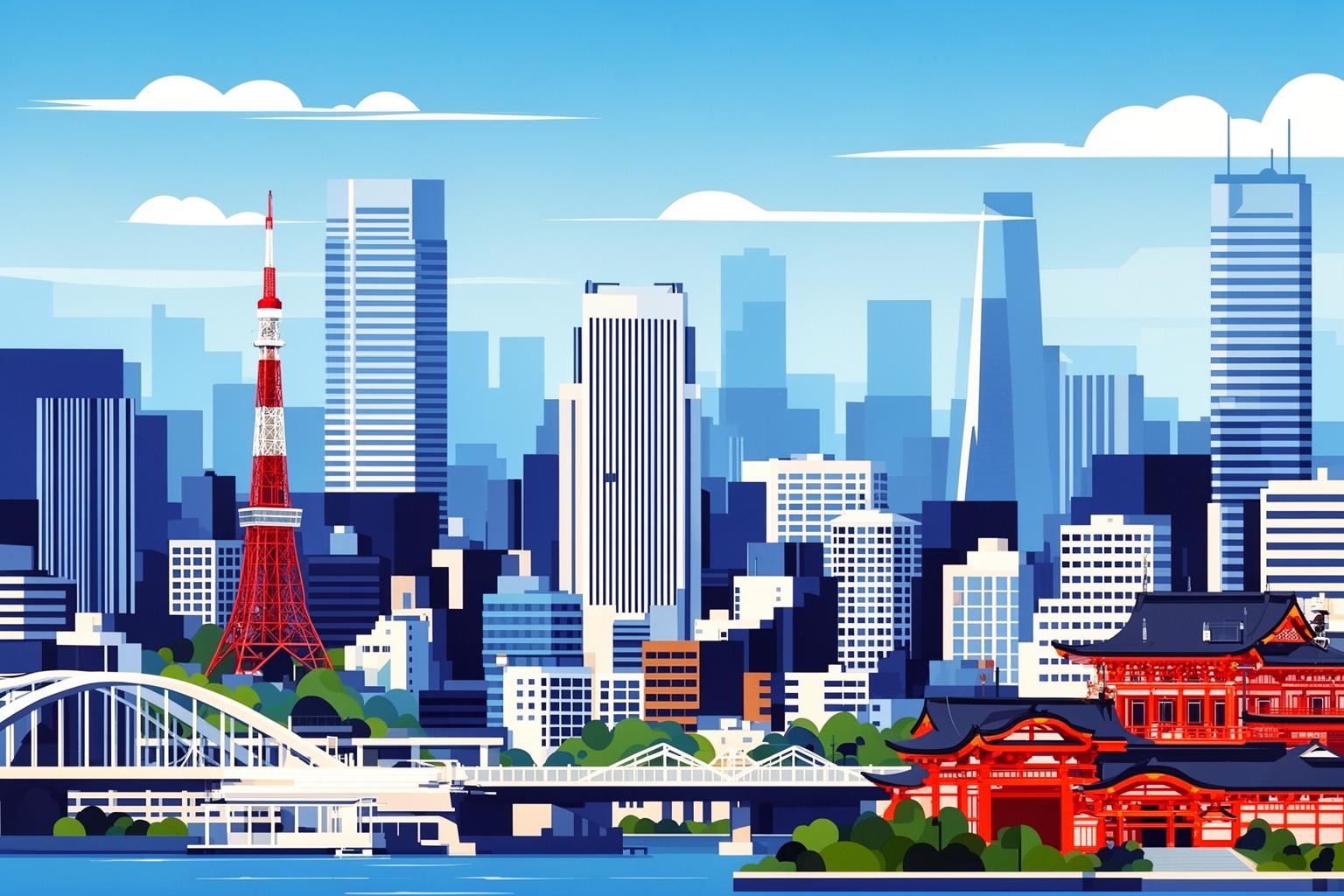
The striking contrast between Osaka and Tokyo is a perennial source of fascination and rivalry within Japan. Though they’re separated by just a bullet train ride, they can feel like entirely different countries. This difference goes beyond food or fashion; it’s deeply rooted in centuries of history that shaped two fundamentally distinct mindsets. To understand why an Osakan might engage in banter with a stranger while a Tokyoite tends to avoid eye contact on the subway, one must look back to the era of samurai and merchants.
The Historical Roots: Merchants vs. Samurai
Tokyo, formerly Edo, was Japan’s political center, home to the Shogun and his samurai-led government. Society there was rigid, hierarchical, and highly formal. Communication was indirect, placing great importance on politeness (teinei) and maintaining face. Within this context, a misplaced joke could be interpreted as disrespect or even insubordination. The samurai prized stoicism and self-control; witty banter was simply not part of their ethos.
In contrast, Osaka was the country’s commercial hub, known as the “nation’s kitchen” (tenka no daidokoro). It was a city of merchants, artisans, and entrepreneurs, where family name and social rank mattered less than the ability to close a deal. Success depended on being quick-witted, persuasive, and building rapport with customers and suppliers nationwide. Clear, efficient, and personable communication was vital for business. Humor became a key tool—breaking the ice in tense negotiations, fostering trust with new clients, and making one’s market stall the most popular. This merchant culture encouraged pragmatism, egalitarianism, and a healthy skepticism toward authority. People were unafraid to speak their minds, often using humor to do so. These deeply ingrained historical identities continue to influence the modern personalities of both cities.
The Media Landscape: Yoshimoto Kogyo vs. Tokyo’s Key Stations
Moving into the 20th and 21st centuries, this cultural divide is further accentuated by the media. Osaka stands as Japan’s undisputed comedy capital, largely due to one company: Yoshimoto Kogyo. Founded in Osaka over a century ago, this entertainment giant dominates the world of owarai (Japanese comedy). Most of Japan’s top comedians, who command national television audiences, come from the Kansai region and started their careers in Yoshimoto’s theaters in Osaka, such as the legendary Namba Grand Kagetsu.
In Osaka, these comedians are not just celebrities but local heroes and cultural icons. Comedy shows are a mainstay of local television programming throughout the day. Children grow up watching Manzai duos, mimicking their favorite punchlines, and internalizing the boke/tsukkomi comedic style as a natural form of communication. The media consistently reinforces and celebrates the city’s comedic identity. Meanwhile, Tokyo’s media landscape focuses more on polished dramas, pop idols, and formal news broadcasts. Although Tokyo has its own comedians, it primarily projects an image of style, sophistication, and seriousness. This media feedback loop ensures that the historical differences between the merchant city and the samurai city remain vibrant and influential today.
A Foreigner’s Survival Guide to Osaka Banter
Navigating this distinctive conversational landscape can be challenging. What’s intended as a friendly joke might come across as a personal attack. An effort to be polite could be misunderstood as coldness. However, with a few key insights, you can not only cope but flourish. The aim isn’t to become a professional comedian overnight, but to understand the basic rules so you can appreciate the social game around you and, eventually, join in confidently.
Common Misunderstandings and How to Avoid Them
First, let’s tackle the most frequent pitfalls. The biggest one is mistaking teasing for malice. If a coworker playfully jokes about your bright pink sweater, they aren’t bullying you—they are including you. In Osaka, teasing is reserved for those you like. It’s a sign of familiarity. The best reaction is to laugh along. If you respond defensively or get upset, you break the social code and cause awkwardness.
Next is the physical tsukkomi. If a friend lightly taps your shoulder while saying “Nande ya nen!,” don’t react with alarm. It’s the punchline’s punctuation, a gesture of camaraderie. It’s almost never meant with real force. Recognize it for what it is: a very Osakan way of saying, “Gotcha!”
Finally, there’s the reputation of Osakans as “loud” or “aggressive.” It’s true their volume is often higher than in other parts of Japan. But this loudness usually stems from energy and enthusiasm, not anger. Their communication is passionate, direct, and animated. Try to see what might initially sound aggressive as enthusiastic engagement. They aren’t yelling at you; they’re excited to be talking with you.
How to Participate (Even if You’re Not a Comedian)
You don’t have to be a natural performer to get by. Start small. The first step is simply to be a good listener. When someone delivers a boke, laugh! Show you understand. This alone will endear you to others. Once you feel more comfortable, you can try using some basic Osaka-ben phrases. A well-timed “Honma?” (“Really?”) or a simple “Akan!” shows you’re on the same wavelength. Foreigners attempting Osaka-ben are almost always met with delight.
A great strategy for any non-native speaker is self-deprecation. If you make a mistake in Japanese, make a joke about it before someone else does. For example, if you stumble over a word, laugh and say, “My Japanese is on vacation today!” This displays humility and a good sense of humor, both highly valued traits here. And if you really want to win over a local, use this cheat code: end a confident statement with a sly “…shiran kedo.” The reaction will be priceless.
When to Stay Silent: Reading the Room
This is perhaps the most advanced skill, but it’s essential. Osaka isn’t a 24/7 comedy club. There are, naturally, times for seriousness. The key is to develop your ability to read the atmosphere, or kuuki wo yomu. Context matters. The playful banter in an izakaya isn’t suitable during a somber discussion about a family illness. The jokes exchanged in a creative brainstorming session are paused when the company president enters for a formal address.
Pay attention to the cues. Are people smiling and making eye contact? Is their body language relaxed? Is the topic light? If so, the comedy mode is probably on. If voices are quieter, eye contact is avoided, and posture is tense, it’s time for sincerity and restraint. The brilliance of Osaka communication lies not only in being funny but in knowing when not to be. Mastering this distinction is the final step toward true cultural fluency.
Living in Osaka is an immersive experience in a culture that values humor, humanity, and connection. It can be disorienting at first—a whirlwind of loud voices, fast comebacks, and jokes you don’t quite get. But once you learn the rhythm, once you see the boke/tsukkomi exchange not as chaos but as a finely tuned dance, the whole city opens up to you. Don’t hesitate to laugh, to be laughed with, and to try a little “nande ya nen” yourself. In Osaka, the best way to fit in is to find the punchline in everyday life. It’s a city that doesn’t just ask you to live in it; it invites you to be part of the show.