You see it the moment you step out of the station. Not the neon signs, not the flurry of station attendants, but the bikes. Rivers of them, parked in dense, metallic forests. Oceans of them, flowing down sidewalks and through shopping arcades. In Tokyo, the train is king. The city is a series of nodes connected by steel rails. But Osaka? Osaka is flat. It’s compact. It’s a city built on a human scale, and the vehicle of choice isn’t a car or a train, but the humble, creaking, overloaded bicycle. From a distance, it looks like pure chaos. A free-for-all where riders glide within inches of pedestrians, weave through crowds with silent precision, and navigate a world with seemingly no rules. But that’s the first mistake foreigners make. It’s not chaos. It’s a highly complex, deeply ingrained system of unspoken agreements. It’s a ballet, and if you want to live here, you need to learn the steps. This isn’t about following the traffic laws you learned back home, or even the ones written in the official pamphlets. This is about understanding the real rhythm of the city, the give-and-take that makes Osaka tick. It’s about learning the language of the bicycle bell, the hierarchy of the parking rack, and the profound philosophy of the mamachari. Welcome to the real Osa-cycle culture.
Embracing the art of the bicycle ballet is only the beginning, as gaining insight into the city’s local supermarket culture can further enrich your understanding of Osaka’s daily life.
The First Rule: The Sidewalk Is The Main Road
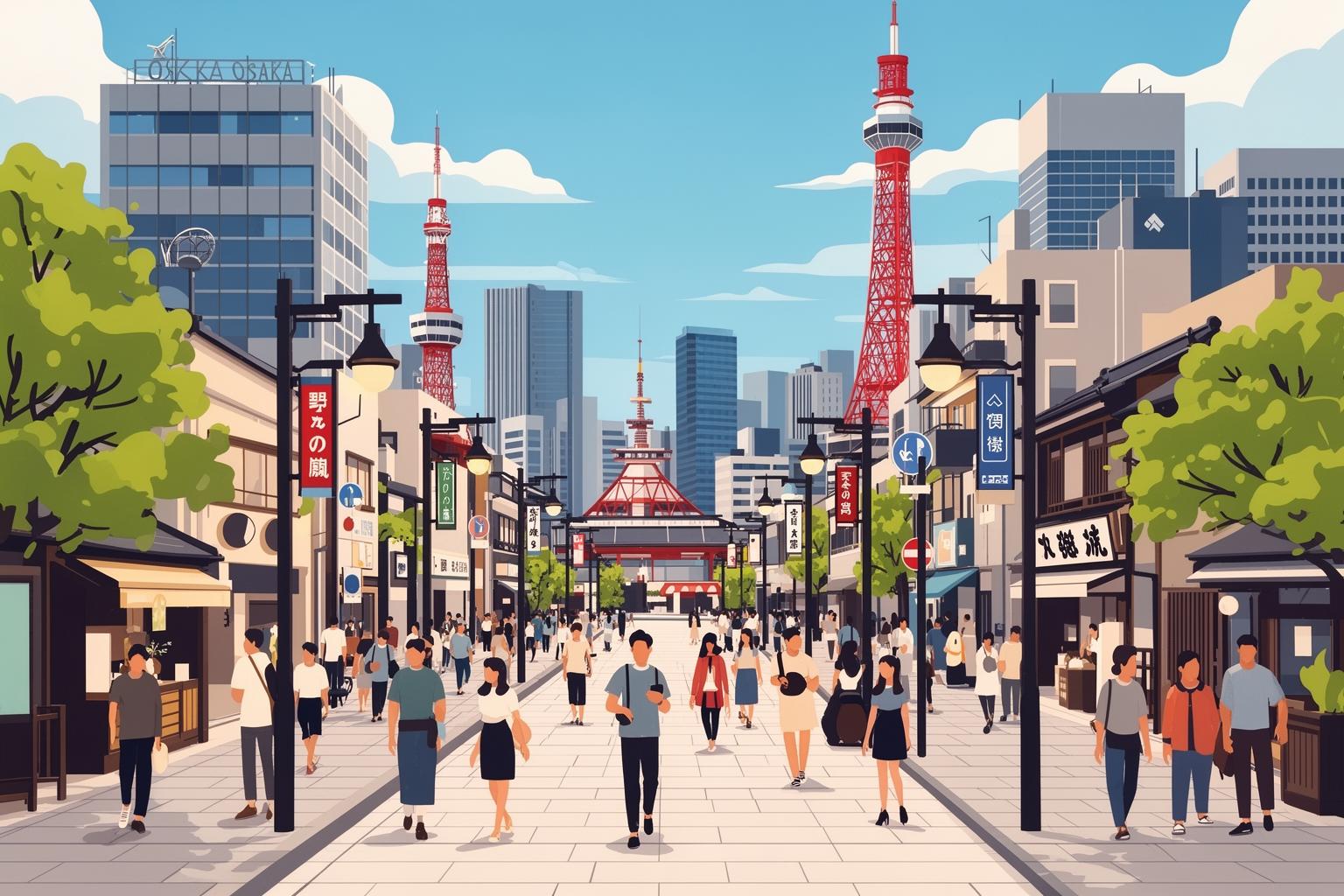
Let’s tackle the biggest point first. Officially, you’re meant to ride your bicycle on the street, alongside traffic. You’ll notice the signs—small blue circles with a bike icon—indicating shared road space. But look around: where is everyone actually riding? On the sidewalk. Grandmothers, students, mothers with two kids strapped into their seats, salarymen in full suits—they’re all on the sidewalk. This is the single largest source of confusion and the most crucial unwritten rule to grasp about daily life in Osaka. Riding on the street is viewed as impractical, dangerous, and frankly, somewhat odd for everyday commuting.
The Unspoken Sidewalk Agreement
This isn’t a hostile takeover of pedestrian space. It’s a deeply rooted social contract. As a cyclist, you are a guest in the pedestrian realm. You don’t have the right of way. Your role is to glide, anticipate, and be predictable. You ride at a pedestrian’s pace, or just a bit faster. You don’t speed past people. You give ample space to the elderly and children. The entire system depends on a shared understanding that everyone is trying to get somewhere, and the most efficient way to do so is to coexist. Pedestrians, in turn, are aware of this. They generally walk in a steady line, hear the soft whir of your tires, and avoid sudden, erratic moves. It’s a dance of mutual awareness. In Tokyo, you might face stern looks or even a reprimand for riding on a busy sidewalk. In Osaka, it’s the accepted norm. The shared space is wider, both physically and mentally.
Why Not the Street? Practical Reasons
This sidewalk preference isn’t about rebellion; it’s pure practicality. Many of Osaka’s streets, especially the narrower ones winding through neighborhoods, weren’t designed for a peaceful mix of cars, trucks, and bicycles. Cars speed by, delivery trucks double-park constantly, and often there’s no shoulder at all. For the average Osakan heading to the grocery store, getting on the road amid two tons of metal feels like inviting disaster. The sidewalk, with all its human obstacles, feels much safer. It’s a choice shaped by the city’s layout. Osaka is a dense network of shotengai (shopping arcades), residential alleys, and busy commercial streets. The bicycle is the perfect tool to navigate this network, and the sidewalk acts as its natural path.
The Mamachari Monarchy: More Than Just a Bike
Forget sleek, lightweight road bikes or rugged mountain bikes. The undisputed champion of Osaka’s streets is the mamachari—the “mommy’s chariot.” These are heavy, single-speed, utilitarian workhorses. They come equipped with a sturdy front basket, a rear rack, a built-in lock, a kickstand, and a dynamo-powered light that hums as you ride. They are the minivans of the bicycle world. And they reveal everything you need to know about Osaka’s mindset.
A Symbol of Pragmatism
The mamachari is not about athletic achievement. It’s a practical tool for daily life. The basket isn’t meant for a fashionable handbag; it’s for a week’s worth of groceries, piled high with daikon radishes and bags of rice. The rear rack isn’t decorative; it’s for a child seat, or even two. The emphasis is not on speed or performance, but on reliability and functionality. This perfectly reflects the Osaka character: down-to-earth, no-nonsense, and focused on accomplishing the task at hand. While a Tokyo cyclist might be dressed in performance gear for a weekend ride, the Osaka rider is wearing an apron, headed to the supermarket. It’s a culture that embraces using the bike for everyday errands, not sport. Owning a mamachari signals that you’re in tune with the local rhythm, understanding the city as a place to live in, not just pass through.
The Art of the Overload
Watching a skilled mamachari rider is a lesson in physics and determination. You’ll witness things that seem unbelievable. A mother carrying one child in the back, another in front, with grocery bags dangling from each handlebar. An elderly man with a stack of newspapers in his basket so tall it blocks his view, navigating purely by instinct. A student with a tuba case strapped to the rear rack. This isn’t carelessness; it’s a mastered skill. It’s the Osakan knack for making things work, being resourceful and efficient. The mamachari is essential to a car-free life in the city, providing mobility and cargo capacity that keep neighborhoods lively and local shops thriving.
The Art of the Weave: Navigating Human Traffic
So you’re on the sidewalk, riding your mamachari. Now what? Ahead lies the Shinsaibashi shopping arcade on a Saturday afternoon—a dense, slow-moving river of people. An outsider might hop off and walk. A local Osakan, however, weaves through. This is a subtle, highly skilled maneuver that underpins the city’s cycling etiquette.
Reading the Flow
The first step is to slow down—significantly. You match the crowd’s pace. You’re not trying to part the sea; you’re seeking the natural currents within it. You look ahead, not just at the person immediately before you, but ten or twenty feet further. You anticipate openings. You notice the slight shift as a group veers to glance at a shop window. You spot the gap forming between a family and a couple. It’s about observation and prediction. Aggression is your enemy. If you try to force your way through, the system collapses. The flow stops. You become the obstacle. The goal is to move like water, flowing around the rocks in a stream.
The Language of the Bell
The bell serves as your turn signal, your polite cough, your gentle “pardon me.” It is not a horn. Frantic, repeated ringing signals panic, or worse, marks you as a tourist. The proper Osakan approach is a single, soft ting moments before passing someone. It’s not a command—just a notice of your presence. It says, “Hello, I am quietly approaching behind you, and I will pass on your left as soon as there’s room. No sudden moves, please.” Usually, no reply is necessary. The pedestrian hears it, registers it, and keeps moving predictably, letting you slip past. A double-ting might be used for someone clearly distracted, perhaps on their phone. Anything more comes off as rude. Many weaving experts never use a bell at all. They depend on their presence, the soft hum of their tires, and their skill in reading the crowd so well that they never have to ask for passage.
Parking Purgatory: The Unspoken Hierarchy
Arriving is only half the challenge. Now you have to find a place to park. Bicycle parking in Osaka is a complicated social dilemma with high stakes. The city is caught in an ongoing conflict between the demand for parking and the need for clear sidewalks. On one side are the citizens with their millions of bikes. On the other are the “silver armies” of city contractors who patrol the streets, tagging illegally parked bikes with warning notices and, a few hours later, towing them away to distant impound lots.
Official Lots vs. The Gray Zone
Major train stations and department stores feature large, multi-story bicycle parking garages. They’re affordable, secure, and the responsible choice. For long-term parking, such as commuting to work, these are essential. You pay around a hundred yen and gain peace of mind. But what about a quick ten-minute stop at a convenience store? Or a visit to a friend’s apartment? This is where the gray zone enters. These are unofficial, socially tolerated parking spots—a certain stretch of sidewalk, the area under an overpass, or the side of a small park. How do you know if a spot is safe?
Reading the Signs
You learn to interpret the surroundings. First, look for other bikes. If there’s a long, orderly row of bikes, it’s probably an accepted spot. But look closer. Are they all dusty and abandoned, or actively used bikes? Second, watch for the dreaded warning tags. If you see some bikes with yellow or red paper wrapped around their frames, you’re in a high-enforcement zone. This is a clear sign to move on. Third, evaluate the level of obstruction. Are you blocking a store entrance? Forcing pedestrians to walk single-file? Are you parked on the textured yellow tiles meant for the visually impaired? If so, you’re in the wrong spot. The key principle is minimizing meiwaku, or public nuisance. If your bike isn’t causing inconvenience to anyone, you’re likely to be left alone.
The Fear of the Impound Truck
Having your bike “lifted” is a rite of passage you want to avoid. It means a trip to a remote impound lot, usually in an industrial area near the port, paying a fine of several thousand yen, and receiving a lecture. It’s a major hassle. This threat maintains the delicate balance, compelling riders to be mindful and self-regulating. It acts as the stick to the carrot of convenient transportation. Understanding this ever-present, low-level risk is crucial to grasping the daily decisions of an Osaka resident.
The Rainy Day Ronin and the Mysterious ‘Sasube’
It rains frequently in Osaka. A lot. Yet the city keeps moving, and so do the cyclists. Here, you’ll see some of the most impressive demonstrations of two-wheeled skill, often featuring a uniquely Osakan tool: the sasube. This clamp-like device attaches to your handlebars, holding a full-sized umbrella and creating a mobile, personal rain shelter. It looks odd, somewhat precarious, and clever all at once. It perfectly embodies Osaka’s practical determination not to let a little weather hinder daily life.
A Symphony of Multitasking
Riding in the rain requires advanced skill. One hand is on the handlebar, steering and braking, while the other might be holding a bag, a smartphone, or steadying the umbrella—even if it’s mounted on a sasube. You navigate slick sidewalks, avoid puddles, and cope with reduced visibility. It’s a testament to how much time Osakans spend on their bikes; the bike becomes an extension of their body. They develop a sixth sense for balance and traction and an intuitive understanding of the physics involved. To outsiders, it seems like a recipe for disaster. To locals, it’s just another Tuesday.
Cops, Rules, and the Osaka Mindset
So, with all this sidewalk riding, umbrella holding, and occasional phone checking, what do the police actually do? The official rules are strict: no phones, no headphones, no riding side-by-side, and lights must be on at night. Sometimes, these rules are enforced. You’ll see police officers at busy intersections stopping cyclists and issuing warnings or small fines. However, these crackdowns are the exception rather than the norm.
Law enforcement’s general attitude seems aligned with the public’s: as long as you’re not causing trouble, you’ll be left alone. If you ride safely, slowly, and courteously on the sidewalk, you probably won’t be stopped. But if you weave recklessly through traffic, blast music through your headphones, or ride without a light in total darkness, you’re marking yourself as a target. It’s less about strictly following the law and more about respecting its spirit. The ultimate offense in Osaka isn’t breaking specific traffic ordinances; it’s being a nuisance. It’s failing to read the atmosphere and disturbing the fragile social harmony. This pragmatic, results-focused approach is quintessentially Osaka. Don’t cause trouble for others, and you’ll be fine.
To live in Osaka is to be in constant motion, mostly powered by your own two feet on a pair of pedals. The city’s bicycle culture isn’t a chaotic free-for-all; it’s a living, breathing system governed by countless subtle, unwritten rules of awareness, courtesy, and practicality. It’s a culture that favors efficiency over rigid regulation and shared understanding over painted road lines. Mastering the mamachari, learning the subtle art of weaving, and understanding the unspoken map of parking spots is more than just learning to get around. It’s learning to think like an Osakan. It’s about embracing a life that is grounded, sensible, and always moving forward.