
Walk into a real estate office in Tokyo, point at a listing, and ask for a discount. You’ll be met with a polite, firm, and slightly confused smile that says, “This is not how things are done here.” The price is the price. The system is the system. To question it is to question the very fabric of an orderly society. Now, try that in Osaka. The agent might pause, tilt their head, suck in a little air through their teeth, and say, “Hmm, well, let’s see what we can do.” That tiny gap, that momentary hesitation, is where the real Osaka lives. It’s the space between the written rule and the unwritten understanding, a space that barely exists in Tokyo but defines daily life here. The question isn’t just about saving a few thousand yen. It’s about understanding the soul of Japan’s merchant city. People often arrive here thinking Japan is a monolith of fixed prices and rigid rules, but Osaka operates on a different, more fluid frequency. It’s a city built on the handshake, the inside joke, and the mutually beneficial bargain. Mastering the art of the rental negotiation isn’t just a practical skill for survival; it’s your first real lesson in becoming a local.
Embracing this uniquely local approach to negotiation opens the door to even more authentic experiences, such as exploring Osaka’s vibrant standing bars where tradition and modernity converge.
The Merchant’s Mindset: Why Osaka is Different
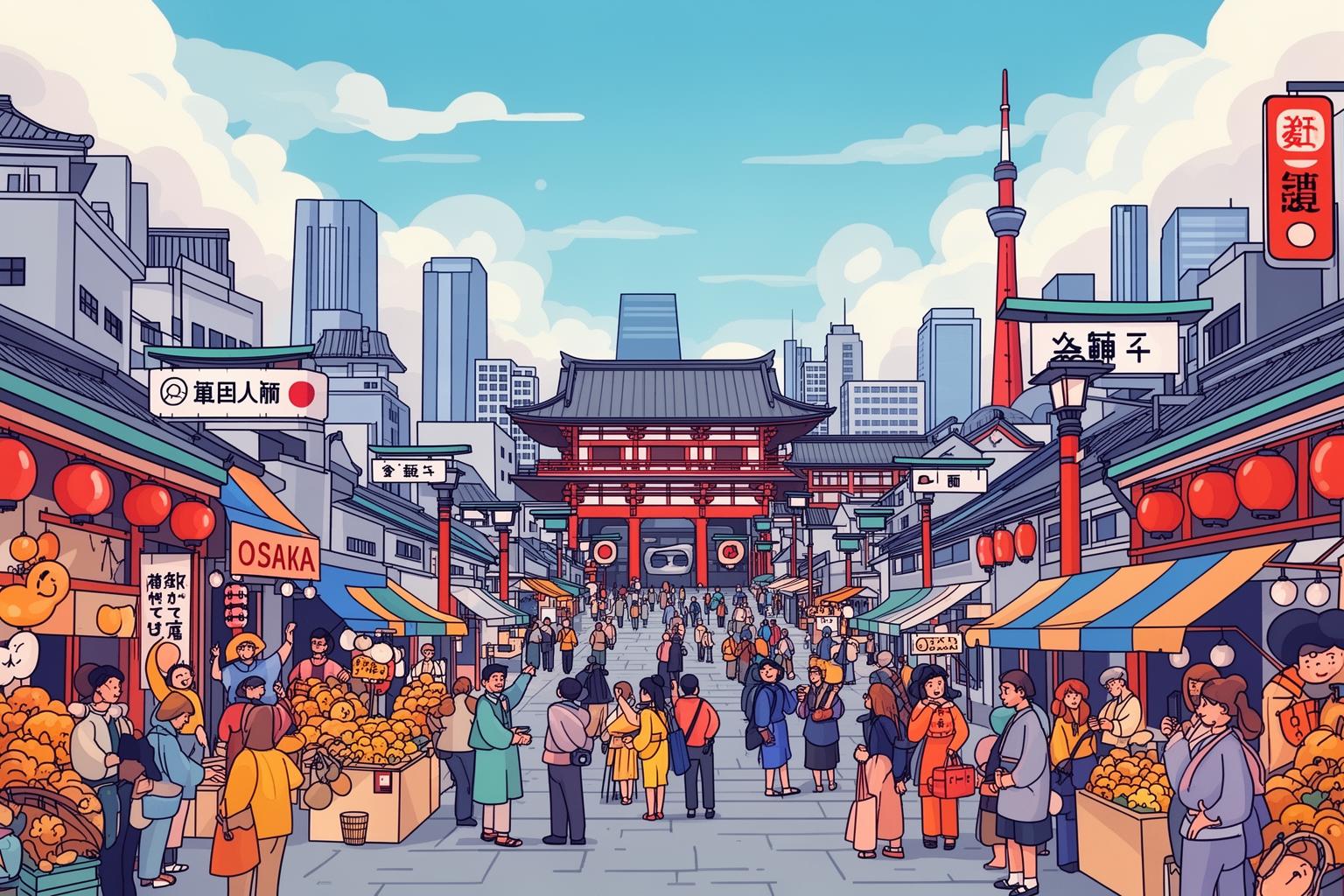
To understand why you can even try to negotiate here, you need to know Osaka’s history as the tenka no daidokoro, or the “nation’s kitchen.” For centuries, this city was Japan’s commercial center, where rice merchants, financiers, and entrepreneurs set the prices and pace for the whole country. While Tokyo was home to the samurai and the government—a culture marked by strict hierarchy and unyielding rules—Osaka belonged to the shōnin, the merchants. Their world focused not on honor and protocol but on pragmatism, relationships, and the bottom line. This mindset is deeply ingrained in the city. A good deal isn’t about being cheap; it’s about being smart. And a smart deal means both parties leave feeling they received fair value.
Tokyo’s “System” vs. Osaka’s “Relationship”
In Tokyo, the real estate market resembles its enormous, automated train system. It’s efficient, predictable, and highly impersonal. Many top apartment buildings are owned by giant corporations—railway companies, insurance firms, major developers. The managers are salaried workers following a strict corporate manual. For them, a price isn’t a suggestion; it’s a data point in a national database. There’s no room for personal discretion, as individuals are just cogs in a massive machine. The system aims to remove human variability, for better or worse.
By contrast, Osaka is a city of small and medium-sized enterprises. The rental market reflects this perfectly. While corporate-owned buildings exist, many apartments belong to local “Ōya-san” (landlords), perhaps families who’ve owned the property for generations, or small, local management companies handling a few neighborhood buildings. Here, transactions aren’t with faceless corporations but with people. And with people, relationships are possible. The agent doesn’t just follow a script; they mediate between you and the owner. Their goal is to find a good tenant who stays long, pays on time, and doesn’t cause trouble. If making a small concession ensures that, it’s often a wise business choice for the landlord. Tokyo sells you a product; Osaka seeks a partner, however temporary.
The Ghost of “Key Money” and the Logic of Negotiation
Grasping the unique structure of Japanese rental fees is key. There’s the security deposit (shikikin), which is refundable, and the notorious “key money” (reikin), a non-refundable gift to the landlord. From an outsider’s view, this seems like pure extortion. Why pay a mandatory gift? Historically, it was a genuine token of thanks during housing shortages. Today, it’s a relic—but one that persists.
In Tokyo, questioning the reikin is like questioning gravity: it simply is. But in Osaka, the merchant mindset prevails. A “gift” is inherently discretionary, its value subjective. So, it represents the most flexible part of the rental contract’s financial structure. This is where negotiation begins. Osaka sees reikin not as a sacred custom but as negotiable. A landlord would prefer a great tenant paying rent for two years without reikin over an empty apartment for three months holding out for the extra fee. It’s simple math. The initial “gift” matters less than steady, long-term income. This pragmatic logic is the heart of Osaka’s business spirit.
Reading the Room: When and Where to Haggle
Negotiation is not about force; it’s a delicate interplay of timing, observation, and intuition. Charging in with demands won’t get you anywhere. You need to grasp the market’s rhythm and the psychology of the participants. It’s less about what you say and more about when and where you say it.
The Right Time of Year: The Off-Season Advantage
The Japanese rental market follows the academic and corporate calendar. From late January to early April, it’s a frenzy. Students move for university, and new graduates relocate for their first jobs. Apartments are often rented without a viewing. Landlords hold all the leverage, with a line of applicants for every decent property. During this peak period, trying to negotiate is not just pointless; it’s practically laughable. You’ll be politely shown the door while the next person in line signs the contract at full price.
Your opportunity arises when the city quiets down. The best period is from June to August. It’s the rainy season, followed by the sweltering, humid summer. Fewer people are moving, and apartments vacant since spring begin to financially burden their owners. Each month an apartment sits empty, the landlord loses money. Suddenly, a responsible tenant offering a long-term lease—even with a small discount—becomes very appealing. Late autumn, from October to November, is another quiet stretch before the winter rush. Timing your search to coincide with these market lulls shifts the power dynamic in your favor.
The Right Kind of Property: Look for the Human Element
Equally important to when you search is what you search for. Your chances of negotiating with a major developer like Mitsui Fudosan or Sumitomo Realty for a brand-new, 40-story tower mansion in Umeda are nonexistent. Pricing is controlled by an algorithm at their Tokyo headquarters. Don’t even bother trying.
Instead, concentrate on properties with a human touch. Look for older buildings (chintai manshon rather than sleek tawa-man), apartments in residential neighborhoods just off main train lines, or listings managed by small, local real estate agencies—the kind with cluttered offices and faded posters in the window. Check the online listing date. Has the apartment been available for more than a month or two? Every additional week it remains empty weakens the landlord’s resolve. These are your prime opportunities. When you visit the property, ask your agent about the owner. Is it a corporation or an individual? An individual has emotions, financial pressures, and can make instinctive decisions. A corporation only follows policy.
The Unspoken Signals: What Your Agent is Really Telling You
Your real estate agent is the gatekeeper. Their reaction to your initial inquiry about negotiation will reveal everything. Build rapport first. Show that you are a serious, reliable, and desirable tenant. Present your documents neatly. Speak politely. Demonstrate genuine interest in the property. Only after establishing this foundation should you broach the subject gently.
Avoid a blunt, demanding question like, “Can you make it cheaper?” Instead, phrase it as a collaborative issue to solve. Try something like, “I really love this place, it’s perfect for me, but the initial costs are just a bit beyond my budget. Is there any room for discussion?” Then watch their response closely. If they respond with a swift, firm “No, that’s impossible,” the door is closed. They know the landlord or management company is inflexible. But if they pause, look thoughtful, and say the magic phrase, “Chotto dake, sōdan shite mimasu ne” (I’ll try to discuss it with them a little), you’re in the game. That hesitation is the signal. It means they perceive an opening and think it’s worth trying. They are now your ally, not just an agent.
The Osaka Negotiation Playbook: Words and Strategies
Once you’ve pinpointed the right timing, the appropriate property, and obtained approval from your agent, it’s time to carry out the negotiation itself. This demands a specific strategy and a culturally attuned approach. It’s not about winning a debate; it’s about creating a result that benefits both parties.
What to Ask For: A Menu of Possibilities
The biggest error is focusing only on the monthly rent. For a landlord, lowering the monthly rent is the hardest concession. It reduces the official value of their property and sets a precedent for future tenants and lease renewals. While it’s not impossible, it remains the toughest challenge.
A far more effective tactic is to aim at the initial one-time costs (shoki hiyō). This lets the landlord keep the official rent intact while still granting you a meaningful upfront discount. Here’s a list of negotiable elements, ranked by ease of negotiation:
The Reikin (Key Money): This should be your main focus. Because it’s considered a “gift,” it’s the most flexible part of the deal. Requesting a reduction by half or a full waiver of the reikin is very common and often successful, especially for apartments that have been vacant for some time.
The “Free Rent” Gambit (Furī Rento): Another favored option is to ask for a rent-free period, usually the first half-month or full month. This is popular with landlords since it gets a tenant in place generating income while keeping the official rent on the lease high. It’s a classic face-saving compromise, highly valued in Japanese culture. You save money, and the landlord protects the property’s long-term worth.
The Minor Fees: Examine the fine print. You’ll often come across fees for lock changes, professional cleaning when you move out, or mandatory insurance. Sometimes, you can request the landlord to cover one of these. While a smaller victory, it can add up.
The Art of the Ask: Framing it the Osaka Way
How you present your request is crucial. You aren’t a demanding customer but a humble, sincere prospective tenant seeking a little help to secure your dream apartment. Your language should be polite, indirect, and convey a spirit of compromise.
Begin by reaffirming your dedication. Phrases like “Kono heya o hontō ni ki ni itte imasu” (I truly like this apartment) or “Nagaku sumitai to kangaete imasu” (I’m thinking of living here long-term) are essential. You’re signaling you’re not likely to move out quickly.
Next, frame your request as a personal budget issue, not a complaint about the price. Use softening expressions like “Mōshiwake arimasen ga…” (I’m sorry to trouble you, but…) followed by your request. For instance: “Mōshiwake arimasen ga, reikin o sukoshi dake gokentō itadaku koto wa kanō deshō ka?” (I apologize for imposing, but would it be possible to reconsider the key money just a little?).
Play up your strengths as a tenant. If you have a stable job at a reputable company, ask your agent to highlight this. If you don’t smoke or have pets, ensure the landlord knows you’re a low-risk occupant. You’re making the case that you’re a tenant worth accommodating.
The Foreigner Advantage (and Disadvantage)
Being a non-Japanese resident can cut both ways. The downside is obvious: some smaller or older landlords may hesitate due to perceived language barriers, cultural differences, or worries about you leaving Japan abruptly. They might prefer a Japanese applicant they see as a “safer” choice.
Yet, you can turn this into a strong advantage. Many landlord fears stem from stereotypes. By being thoroughly prepared, extremely polite, and demonstrating your stability, you can break those stereotypes and stand out. Have all your documents perfectly organized: residence card, proof of employment, proof of income, and an emergency contact in Japan. If your Japanese isn’t fluent, show you’re making an effort. This professionalism and sincerity can make you appear an even more attractive candidate than a less-organized Japanese applicant. The landlord, relieved to find a serious and reliable foreign tenant, may be more inclined to negotiate to secure you as their tenant. You become the solution to their vacancy challenge.
What This Says About Osaka: The City of Pragmatic Deals
Ultimately, learning to negotiate rent in Osaka involves more than just economics; it’s an immersive experience into the city’s essence. You come to understand the difference between being kechi and shibui. Kechi means stingy or miserly, which is considered an unattractive trait. Shibui, by contrast, means savvy, astute, and possessing an understated sense of good taste. Achieving a fair price through smart, respectful negotiation embodies shibui. It reflects an appreciation for value and an understanding of the dynamics of business and relationships.
This mindset pervades Osaka. It’s evident in the lively yet fair bargaining at Kuromon Market. It’s felt in the straightforward, no-nonsense communication style of the locals, which may seem blunt to outsiders but stems from a desire for clarity and efficiency. It’s heard in the value placed on a good story and shared laughter—social currency that lubricates the workings of commerce and daily life.
Rental negotiation serves as a microcosm of this culture—a performance, a delicate exchange that tests your social awareness and sincerity. Successfully navigating this process means more than just saving money on an apartment; it means participating in a core ritual of Osaka life. It shows you understand that here, rules are a starting point for conversation, not the conclusion. And a fair, honest deal is not merely a transaction—it’s the groundwork of a strong relationship.