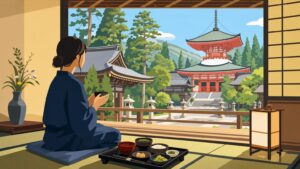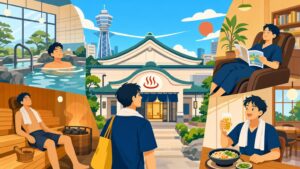
Let’s get one thing straight. You’ve seen the pictures, right? Serene cypress tubs, steam rising into a crisp mountain morning, a quiet moment of reflective bliss. That’s the onsen, the hot spring resort. It’s beautiful, it’s relaxing, and it’s mostly not what we’re talking about here. We’re talking about the sento. The neighborhood public bath. And in Osaka, the sento is a different beast altogether. It’s less like a spa and more like a city’s public living room, just with a lot more water and a lot less clothing. It’s loud, it’s utilitarian, and it’s one of the most unfiltered windows into the soul of this city you’ll ever find. But the real question isn’t what it is, but whether it’s for you. Because navigating the steam and chatter of an Osaka sento is a crash course in local culture, and it’s not for everyone. Your experience will depend entirely on who you are: the curious cultural explorer, ready to dive headfirst into the hot water, or the reserved private person, wondering if there’s any way to enjoy the soak without the social pressure. This isn’t just about getting clean. It’s about understanding where you fit, or want to fit, in the vibrant, chaotic, and deeply communal world of daily life in Osaka.
For those eager to immerse themselves further in Osaka’s rich communal tradition, trying a retro sento escape can be the perfect way to cap off your cultural journey.
The Sento as Osaka’s Living Room
In Tokyo, visiting a sento can be an anonymous, efficient routine for hygiene. You enter, wash, soak, and leave. The only sound breaking the silence is that of running water. In Osaka, however, the silence is interrupted by everything else. The sento isn’t a quiet refuge; it serves as a stage for the everyday drama of neighborhood life. It’s where news is exchanged, gossip confirmed, and the boundaries between strangers dissolve into a steamy, shared atmosphere.
More Than Just a Bath
Forget the notion of a minimalist, Zen-inspired washing space. A traditional Osaka sento is a display of functional chaos. In the changing room, a bulky cathode-ray tube TV is often fixed to the wall, always tuned to a baseball game or a lively comedy show. Elderly men in their underwear shout at the screen, debating questionable calls. A mother tries to get her toddler into pajamas while chatting with the woman at the next locker. The air is thick with the scent of soap and the hum of overlapping conversations. This is the city’s social center, free of any pretension. It embodies Osaka’s merchant culture, where communication is constant, direct, and vital. It’s a place designed for connection, not quiet reflection.
The Osaka “Atsukkonai?” Mentality
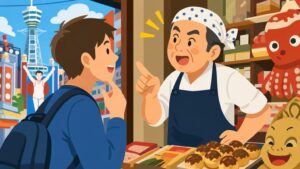
In most parts of Japan, striking up a conversation with a complete stranger, especially one who is naked, is a social mistake. In an Osaka sento, it’s nearly the purpose. Don’t be surprised if the person beside you in the tub turns and says, “Atsukkonai?” (Isn’t it hot?) or “Eeyu ya na” (This is a nice bath, huh?). This isn’t an invasion of privacy; it’s an invitation. It’s like a verbal handshake, acknowledging a shared experience. An older woman, an obachan, might see you and, without hesitation, ask where you’re from and what brings you to her neighborhood. In Tokyo, such forwardness might seem intrusive. In Osaka, it’s the norm. It comes from a mindset that treats everyone nearby as part of the same temporary village. You’re sharing the water, you’re sharing the heat, so why not share a few words? The social barrier is almost nonexistent.
A Guide for the Curious Explorer
If you’re the type of person who sees a crowd and wants to join in, who believes the best way to understand a place is to fully immerse yourself, then the Osaka sento is your playground. It’s a living museum of local traditions. But to join in, you need to know the basic flow. It’s like a dance, and here are the steps.
Decoding the Sento Flow
The Entrance
The first thing you’ll encounter is the getabako, a wall of small wooden lockers for your shoes. Find an empty one, slide your shoes inside, and take the wooden key. This key is your first piece of sento gear. Next, approach the bandai, a raised platform where the owner sits, collecting fees and overseeing both the men’s and women’s sides. Pay the entrance fee, usually a very reasonable 400 to 500 yen. You may be asked which side you prefer—otoko-yu for men, onna-yu for women. The person at the desk has seen thousands of visitors come and go. Don’t worry; a simple nod and smile are all you need.
The Datsuijo (Changing Room)
This is the command center. Find a locker or a plastic basket for your clothes. The key usually dangles on an elastic band worn around your wrist or ankle. As you undress, be mindful of your surroundings, as these spaces are often small and crowded. The key is to be efficient. There’s an unspoken rhythm here. Stow your belongings, grab your small wash towel, and head for the baths. This room also serves as a social lounge, where post-bath rituals like drinking milk and watching TV take place.
The Washing Area and Kakeyu
Before you even consider entering the main tubs, you must wash thoroughly—this is the cardinal rule of the sento. Find a vacant washing station—a low plastic stool in front of a faucet and showerhead. First, locate the kakeyu basin. Scoop several bucketfuls of hot water and pour them over your entire body. This isn’t just a quick rinse; it’s a symbolic act of cleansing yourself before entering the communal water. It’s a gesture of respect. After the kakeyu, sit on the stool and wash thoroughly with soap and shampoo. Be careful not to splash your neighbors. This is a shared space, and managing your splash zone is a crucial, unspoken skill.
The Yubune (The Tubs)
Now comes the main event. Your small towel should not go into the water. Most people place it on their head or at the edge of the tub. The tubs are for soaking, not swimming or playing. Ease yourself in slowly, as the water is often hotter than expected. An Osaka sento will typically offer a variety of tubs. There might be a jet bath (jetto-buro), a medicated bath with herbs (kusuri-yu), and, for the adventurous, the infamous denki-buro, or electric bath. This tub runs low-voltage electric currents between two plates, producing a strange, tingling pins-and-needles sensation. It’s a uniquely Osakan experience—somewhat strange, somewhat intense, and something you really have to try at least once.
Embracing “Hadaka no Tsukiai”
There’s a Japanese phrase, hadaka no tsukiai, which means “naked communion” or “naked friendship.” The idea is that once you remove your clothes, you also shed social status, job titles, and wealth. In the sento, a CEO and a day laborer are equals. This concept is especially strong in Osaka, a city built by merchants where social status was more fluid than in the samurai-centric world of Tokyo. In the bath, everyone is just a neighbor. So, if someone speaks to you, welcome it. You’re not expected to be fluent. A simple smile, a nod, and a few basic Japanese phrases will be warmly received. You are taking part in one of the city’s oldest social rituals.
A Guide for the Private Person
What if the thought of making small talk with strangers while naked fills you with dread? What if you highly value your personal space and privacy? Does that mean the sento is off-limits to you? Not necessarily. It simply means you need a different approach. You can still enjoy the soothing warmth of the bath, but you’ll need to be more intentional in how you experience it.
Managing Your Space and Gaze
First, let’s talk about the nudity. Yes, everyone is naked. But no one is staring. There’s a strong, unspoken rule in every sento: you don’t gaze. People come to relax, not to judge or examine others. The acceptable places to rest your eyes are the tiled walls, the water ahead, the ceiling, or your own knees. This creates a bubble of psychological privacy even in a crowded space. To reinforce this, use your small wash towel wisely. While you shouldn’t bring it into the tub, you can use it to cover yourself as you move between the washing area and the baths. This isn’t about shame; it’s a gesture of modesty and discretion that everyone knows and respects.
Choosing Your Sento and Your Timing
Not all sento are alike. A classic, Showa-era bathhouse in a working-class neighborhood tends to be lively, noisy, and social. If that’s not your preference, seek alternatives. Some newer, so-called “designer sento” have emerged, offering a more modern, stylish, and often quieter atmosphere. They may provide more private washing stalls with higher partitions. Timing also matters. Peak hours usually run from 5 PM to 8 PM, when people drop by after work. If you visit mid-afternoon on a weekday or late at night, about an hour before closing, you might have the place nearly to yourself. The boisterous community hub turns into a quiet, steamy sanctuary. For true beginners who feel very hesitant, consider starting at a “super sento.” These large, modern complexes resemble a water park and spa combined. They offer a much more anonymous experience and can be a great introduction before trying a more traditional neighborhood bath.
Common Misunderstandings and Unspoken Rules
Even with a basic guide, sento culture is unique, and a few key points can be confusing for foreigners. Understanding these can make the difference between an enjoyable experience and an awkward one.
The Tattoo Question
This is the major issue. In many parts of Japan, tattoos remain strongly linked to the yakuza (organized crime), and most onsen, fitness clubs, and swimming pools enforce strict “no tattoo” policies. Here, Osaka’s pragmatic and somewhat rebellious character stands out. While the official rule often remains on paper, many local neighborhood sento do not strictly enforce it. The owners know their regular customers and tend to care less about a foreigner’s tattoos than a high-end resort in Hakone might. This marks a significant contrast with Tokyo. The general attitude in Osaka is more relaxed and less judgmental. The best advice is to check for signs at the entrance. If you don’t see one, you’re probably okay. The worst-case scenario is being politely asked to leave, but in small, family-run sento in Osaka, that rarely happens.
It’s Not a Spa, It’s a Utility
Many foreigners expect a sento to be a spotless, quiet, spa-like environment. However, an Osaka sento is fundamentally a utility—a public good. For many decades, when not all homes had baths, the sento was a daily necessity. This history shapes its character. The tiles might be cracked, the paint peeling, and the plumbing noisy. This doesn’t indicate neglect; rather, it reflects a place that is well-loved and well-used. It serves a practical purpose first and aesthetic appeal second. Shifting your expectations from “luxury spa” to “communal washing facility” is the key step to truly enjoying the experience.
The Post-Bath Ritual
The sento experience doesn’t finish once you leave the water. The final part happens back in the changing room. After drying off, many linger. They sit on benches, watch TV, and enjoy a cold drink. The classic choice is milk—plain, coffee, or fruit-flavored—served in a nostalgic glass bottle. Sipping this ice-cold beverage while your body is still warm from the bath is a simple yet profound pleasure. It’s the perfect cooldown. This ritual is the final gentle phase of the social experience, a shared moment of relaxation before you put your clothes—and your public persona—back on and step out into the night.
Is the Sento for You? The Osaka Verdict
So, we return to the central question: Can you handle the Osaka sento? If you’re a curious explorer, the answer is a wholehearted yes. There’s no better or quicker way to immerse yourself in the city’s culture. It’s where you’ll experience Osaka’s famous directness, easy humor, lack of pretense, and a strong sense of community in its most natural form. It’s an experience that lingers long after the heat leaves your skin.
If you’re more reserved, the answer is a careful yes. You can still enjoy a quiet, personal experience, but it takes planning and a mindset shift. You’ll need to visit during off-peak hours, perhaps opt for a more modern facility, and accept that you’re an anonymous guest in a very public, communal setting. While you might miss the full social aspect, you can still enjoy the profound relaxation of a hot soak.
Ultimately, trying a sento in Osaka is more than just a checklist item. It’s a personal test. It challenges how comfortable you are with a different culture’s views on nudity, community, and the meaning of personal space. It invites you to find beauty in the utilitarian, warmth in the noise, and connection in the crowd. In a city proud of its openness, directness, and unapologetically human spirit, stepping into the sento means stepping into the heart of what makes Osaka, Osaka. And that’s a lesson worth learning, one steamy bath at a time.