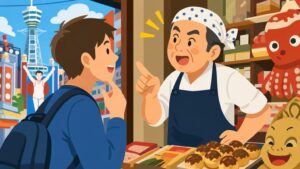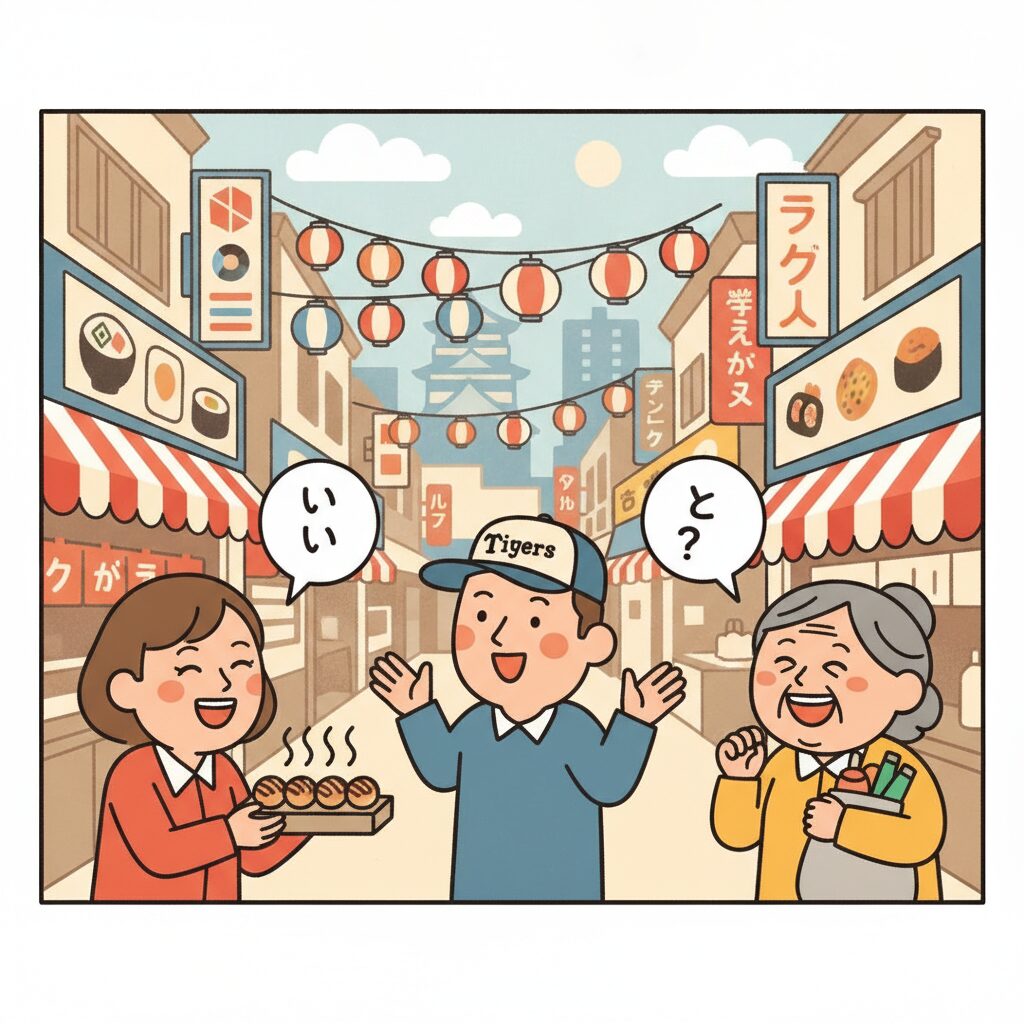
The air in the shotengai is thick. It’s a mix of fried croquettes, savory dashi broth, and the faint, sweet smell of fresh fruit. It’s loud. The clatter of a shop’s metal shutter, the sizzle of takoyaki on a hot griddle, the overlapping calls of vendors hawking their daily specials. You walk into this covered arcade, a river of people flowing in both directions, and it feels like the true, unfiltered pulse of the city. But the real energy, the thing that separates Osaka from anywhere else in Japan, isn’t just the food or the noise. It’s the talk. You came here from Tokyo, or maybe from another country entirely, armed with your textbook-polite Japanese. You know how to say “How much is this?” and “I’ll take it,” with perfect decorum. Then you step up to a vegetable stand, and the old woman running it looks at the single onion in your basket, then up at you, and says with a grin, “Just one? Are you lonely tonight?” Suddenly, the script is gone. This isn’t a simple transaction. It’s a performance, a challenge, a game. And if you want to truly live here, you have to learn the rules. This is the art of shotengai banter, a communication style that’s as fundamental to Osaka as the castle that overlooks it. It’s a world away from the reserved, formal customer service of Tokyo, and it’s often the biggest source of culture shock—and the greatest source of joy—for anyone trying to make a life in this city.
The riotous energy of Osaka’s shotengai finds a kindred spirit in the city’s cherished neighborhood Kumin centers, where spontaneous exchanges create a vibrant tapestry of community life.
The Unspoken Rhythm of the Back-and-Forth

In most parts of Japan, commercial exchanges are beautifully efficient, moving in a straight line from request to payment to gratitude. But in Osaka, it’s more like a circle, a dance, a rally. At the heart of this dance is something found in the city’s famous manzai comedy routines: the interaction between the boke and the tsukkomi. The boke is the funny one, the airhead who says something absurd, while the tsukkomi is the straight man who verbally or physically smacks them and points out the absurdity. This dynamic isn’t limited to the stage; it’s woven into everyday conversations.
That lady at the vegetable stand? She just served you a boke, tossing out a playful, slightly ridiculous remark. A typical Tokyo response might be a flustered, polite clarification: “Oh, no, I am cooking just for myself tonight.” That usually ends the conversation. In Osaka, however, the response is a tsukkomi. You play along and fire back with something like, “Yeah, it’s a lonely party for one. You should come!” or, “Don’t expose my secrets in public!” You don’t need to be a comedic genius—just recognize the serve and return the ball. A smile, a laugh, and a willingness to not take the comment literally—that’s ninety percent of the game.
This verbal tennis match transforms a mundane errand into a genuine human connection. It’s a quick test of your nori, your ability to get on the same wavelength and join the fun. Pass the test, and you’re no longer just a customer; you become part of the neighborhood.
It’s Not Rude, It’s Relational
For many non-Japanese, and even for Japanese from other regions, this level of directness can come across as jarring. Personal remarks about your shopping, appearance, or Japanese skills might feel intrusive or even rude. It’s a classic cultural misunderstanding. In the Osaka mindset, brushing you off with polite formulas is considered far ruder than engaging you with a playful tease. The teasing signals genuine interest. It’s a way of saying, “I see you. You’re a person, not just a walking wallet. Let’s connect.”
This communication style is all about fostering relationships through small, humorous interactions. It’s how you transform from a random face in the crowd into a familiar fixture of the neighborhood.
The Prized Status of the Jouren-san
Becoming a jouren-san, or regular customer, is the ultimate goal in the shotengai social game. It’s a status earned through repeated visits and successful banter. And the benefits are real. The butcher sets aside a prime cut of meat just for you because he remembers your preference. The fishmonger offers you a quick lesson on how to prepare a seasonal fish you’ve never tried before. The woman at the deli slips an extra piece of fried chicken into your bag—a little gift called omake, a bonus for being a good sport and loyal patron.
I get my coffee beans from a small roaster whose owner, a gruff man in his sixties, always asks about my recent hikes. He quizzes me about trail conditions, the weather, what I saw. It all started with a simple question about my hiking boots. Now, it’s a ritual. He’s not just selling coffee; he’s sharing in a small part of my life, and I in his. That connection is something you can’t find in a brightly lit, sterile supermarket.
Reading the Vibe: When to Play Along
Of course, you don’t need to be “on” all the time. Not every shopkeeper is a comedian, and sometimes you simply aren’t in the mood. Being able to read the atmosphere is essential. Is the shopkeeper making eye contact? Do they have a playful sparkle in their eye? Did they open with a comment instead of a standard “Welcome”? Those are your signs. If they’re strictly business, you can be too. A polite, routine interaction is never out of place.
But if the invitation is extended, don’t hesitate to join in. Fear of making a grammatical mistake or not having the perfect retort keeps many people from trying. Yet in Osaka, effort always beats perfection. A clumsy joke is far more appreciated than a flawless but cold transaction.
The Language of the Deal: A Performance in Pricing
The playful spirit extends even to the price itself. This is where Osaka’s reputation for being shrewd and money-conscious comes into focus, though it’s often misunderstood. What we’re referring to is the culture of ma-kete, which roughly means “Can you give me a discount?”
This isn’t the aggressive, high-stakes bargaining found in some other parts of the world. In the shotengai, it acts as another form of communication, a final playful exchange in the interaction. It seldom works in a supermarket or department store, but at a family-run stall, it can add to the fun.
The Art of the Ask
The wrong approach is to be demanding or suggest the price is unfair. The right approach frames it as a light-hearted request. You might point to a bunch of tomatoes and say with a hopeful smile, “Obachan, if I buy five of these, can you give me a little saabisu (service)?” The key is the tone—it’s cheeky, not cheap. You’re seeking a sign of goodwill, not just a lower price.
Often, the response will be a playful “No way, I’ll go broke!” followed by laughter as they knock a few yen off the total or throw an extra tomato into your bag. They get to play the role of the generous yet long-suffering merchant, you get to be the charming customer, and everyone leaves happy. It’s a win-win scenario that strengthens the community bond.
The Power of Omake
More common than an outright discount is the omake. It’s that little something extra—a physical token of the shopkeeper’s goodwill. It might be an extra potato, a sprinkle of seasoning for your fish, or a hard candy for your child. The omake is a gesture of thanks. It says, “Thanks for being a regular. Thanks for playing along. We’re in this together.” It turns a simple purchase into an act of mutual appreciation. This is the essence of Osaka’s merchant culture.
Echoes of the Merchant City
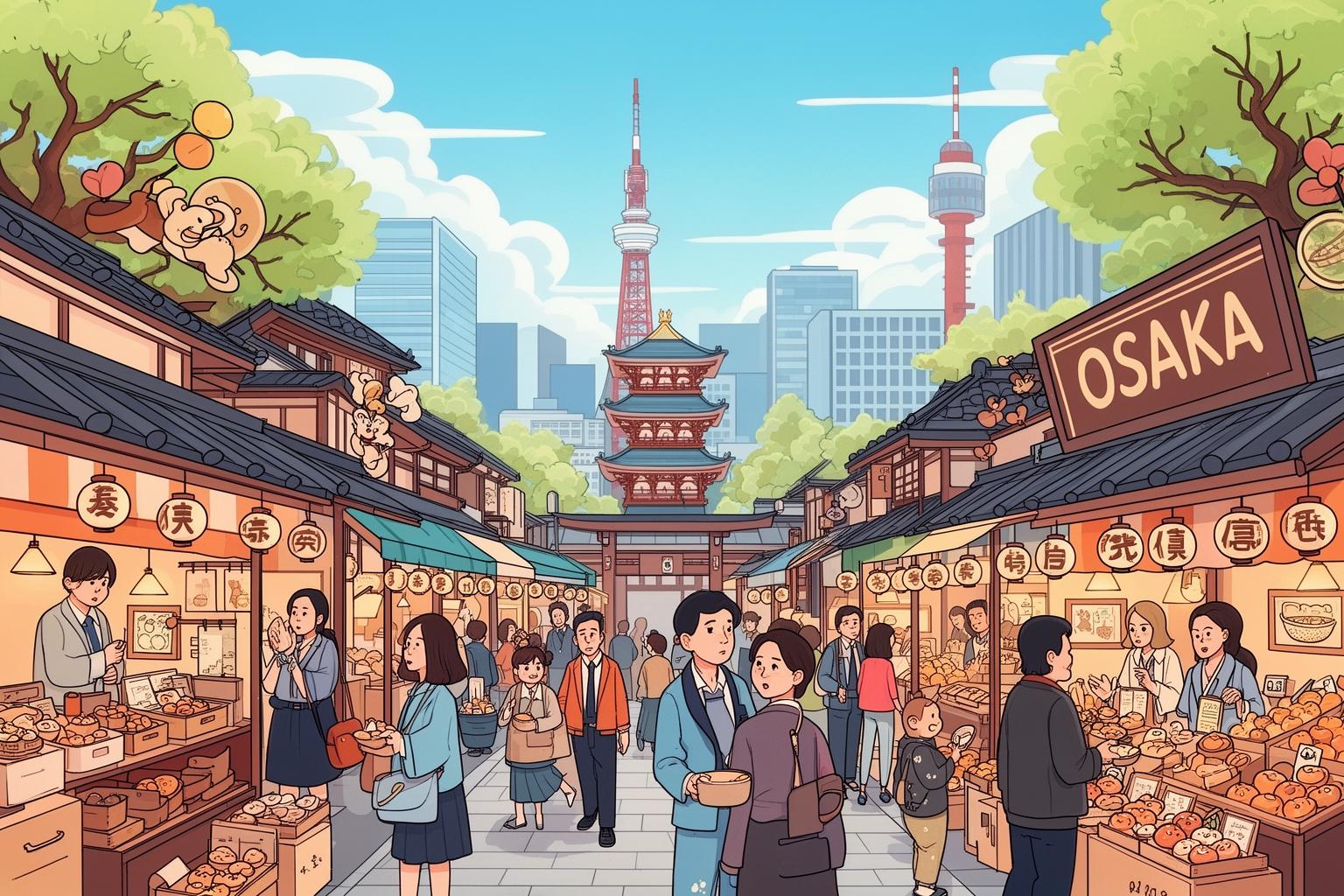
Why does Osaka have this character? Why does it contrast so sharply with the refined formality of Tokyo? The explanation lies in history. Tokyo, once Edo, was the city of samurai and shogunate, with a culture rooted in hierarchy, rules, and decorum. Osaka, meanwhile, was Japan’s kitchen, the major port and merchant hub, shaped by the shonin, the merchant class.
In the merchant world, success relied on different abilities. You had to be quick-witted, persuasive, and skilled at dealing with people. Building trust and maintaining relationships were essential for survival. A sharp wit and a good sense of humor were valuable business tools. The fast, direct, and pragmatic communication style you observe today is a direct inheritance of that merchant spirit. The shotengai serves as a living museum of this history, where the currency extends beyond yen to include banter and goodwill.
Your Shotengai Starter Kit: How to Jump In
Ready to give the game a try? It’s simpler than you might expect. You just need to let go of some of the reserve you may have picked up elsewhere.
Start with a Simple Serve
You don’t have to kick off with a knockout joke. Begin small. Compliment the produce: “These strawberries look amazing!” Ask for their recommendation: “Which of these fish is best for grilling today?” Comment on the obvious: “It’s really hot today, isn’t it!” These light serves invite a response. They create an opportunity for the shopkeeper to connect with you on a personal level.
Embrace the Nicknames
Don’t be surprised if a shopkeeper calls you nii-chan (big brother) or nee-chan (big sister), even if you’re a foreigner in your forties. It’s a casual, affectionate way of addressing you. It shows they’ve let go of the formal customer-vendor distance. Go along with it. It’s a compliment.
Rule Number One: Don’t Take It Personally
If a shopkeeper jokes about your Kansai dialect—or lack of it—they’re not making fun of you. They’re welcoming you in. They treat you like one of the locals, and locals tease each other. The best response is to laugh at yourself. A self-deprecating joke is a powerful tool in Osaka; it shows you’re easygoing and happy to join in.
Your Secret Weapon: The Comeback
Having a phrase or two from Osaka’s repertoire up your sleeve is like knowing a secret handshake. The most well-known exchange is: “Moukarimakka?” (Making money?). The classic reply is the dry, “Bochi bochi denna.” (So-so, getting by.) Using this instantly labels you as someone who understands the local vibe.
And for any teasing, any ridiculous remark, or playful jab, the universal all-purpose tsukkomi is “Nande ya nen!” (Why?! / What the heck!). Delivered with a laugh, it’s the perfect friendly way to return the serve and keep the conversation lively.
More Than a Market
At the end of the day, a visit to the shotengai is about far more than just filling your fridge. It’s an opportunity to engage with a living culture. It’s a chance to step outside the polite, predictable routine and experience genuine, spontaneous, and sometimes hilarious human interactions. It may feel intimidating at first. You might feel awkward or miss the joke. But keep showing up. Keep smiling. Keep trying.
Because when you finally deliver that perfect comeback and the shopkeeper throws their head back laughing, you’ll feel it. You’ll realize you’re not just a resident, an outsider living in the city. You’re becoming a part of it. And in Osaka, that feeling is priceless.