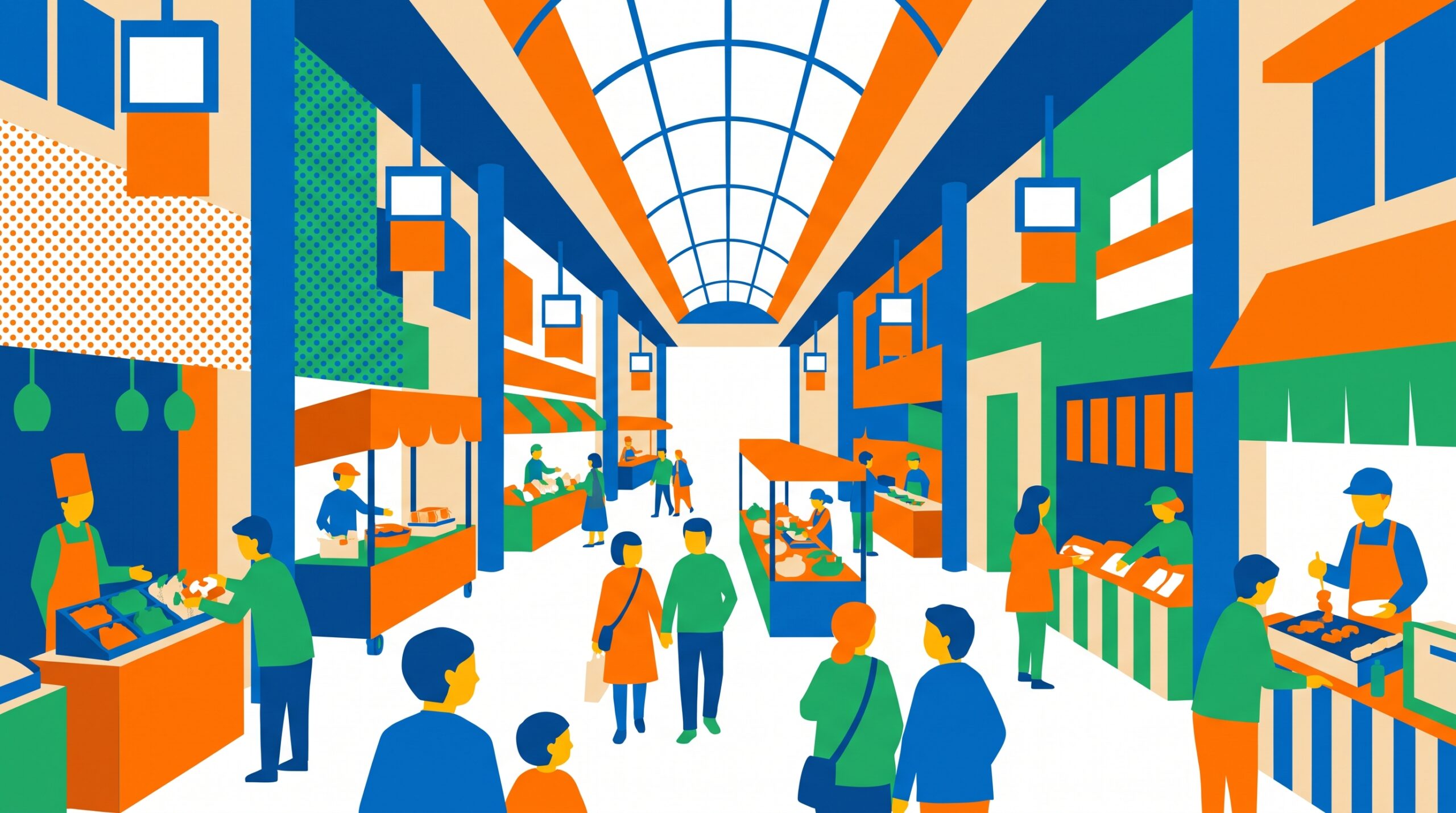
Tokyo feels like a carefully curated, heavily guarded art gallery. The streets are immaculate, the train cars are library-quiet, and the people navigate their daily routines with a polite, frictionless, and incredibly silent distance. Osaka, by stark contrast, feels like a live, unscripted rock concert. It is loud, it is deeply textured, and it absolutely demands your active participation. When foreigners consider moving to Japan, they often imagine the serene, neon-lit anonymity of Tokyo. But those who choose Osaka, or those who find themselves captivated by the Kansai region, usually do so for a very different reason: the undeniable, magnetic, and sometimes overwhelming pulse of genuine human connection. To truly understand what daily life in Osaka is actually like, you cannot just look at the soaring glass skyscrapers of Umeda or the flashy, tourist-heavy billboards of Dotonbori. You have to step away from the manicured main avenues and dive directly into the historical arteries of the city. You have to walk into a shotengai.
As someone who spends long vacations exploring hidden street corners around the world, and whose background in the apparel industry forces an obsessive attention to the physical fabric of a place, I have found no better representation of Osaka’s raw soul than its covered shopping arcades. They are the living, breathing rooms of the working class. They are where street fashion meets pure, unapologetic function, where centuries-old traditions collide with modern urban chaos, and where the unspoken, intricate rules of Osaka society are learned and enforced. This is not a superficial list of tourist traps to quickly snap photos of. This is a deep, psychological exploration of the spaces that shape the local mindset, the everyday behavior, and the unyielding, vibrant identity of the people who proudly call this city home.
What is a Shotengai? Discovering Osaka’s Covered Shopping Streets

To truly understand the cultural mindset of the city, you first need to appreciate its distinctive local architecture. A shotengai is, quite simply, a local commercial street. Yet, in the specific case of Osaka, the term is almost exclusively associated with a vast, continuous covered shopping arcade. These miles-long streets are topped with high, vaulted glass or opaque polycarbonate roofs. The architectural ingenuity and practical necessity of this design cannot be overstated when living daily life in the Kansai region. Japan endures a harsh, persistent rainy season called tsuyu in June and July, immediately followed by an oppressive, hyper-humid summer where the midday sun feels like a heavy weight on your shoulders. The arcade roof transforms the entire neighborhood’s atmosphere. It astonishingly converts an exposed, weather-beaten outdoor street into a climate-controlled, weather-proof refuge.
Because the streets are well protected from the elements, they rapidly become extensive extensions of the private home. People don’t merely pass through them to get from point A to point B; they tend to linger. Heavy mama-chari bicycles, outfitted with child seats and large baskets, weave skillfully and precariously through dense foot traffic. Shop owners boldly display their fresh goods out onto the central pavement. The physical barrier between the inside of the shop and the outside world is fully and intentionally removed. In Tokyo, you have to deliberately open a heavy glass door to enter a curated boutique, crossing a clear physical and psychological boundary. In an Osaka shotengai, shops have no front walls at all. The vibrant merchandise practically spills out into your walking path. By simply strolling down the street, you are already inside the store. This structural, architectural openness profoundly shapes the psychological openness of the people themselves. It is impossible to maintain a closed-off, isolated demeanor when your daily environment has no walls to hide behind.
Why Shotengai are the Heart of Osaka’s Local Culture
Foreigners arriving in Kansai often hear the familiar cliché that people from Osaka are incredibly friendly. But what does that really mean in practice? It definitely does not mean they are overly polite in a formal, stiff, and highly ritualized manner. Instead, it means they actively and loudly acknowledge your physical presence. In Tokyo, deliberately avoiding eye contact on trains or streets is seen as a necessary way to respect personal privacy. In Osaka, blatantly ignoring someone nearby is often considered plainly rude. The shotengai serves as the ultimate daily training ground for this intensely social behavior.
If you pause even briefly to look at a wooden box of giant strawberries at a local neighborhood greengrocer, the owner will almost certainly greet you with a booming, theatrical call. They might make a sarcastic joke about the high price of the fruit, playfully tease you about your outfit, or bluntly ask where you are traveling from. This rapid-fire interaction is the foundation of Osaka culture, deeply rooted in a centuries-old history of aggressive merchant trading. The city was traditionally Japan’s main commercial and logistical hub, historically known as the nation’s bustling kitchen. The merchant mindset inherently demands active, constant communication. You simply cannot make a profitable deal or build a loyal customer base in complete silence.
This daily, low-stakes social interaction creates a vast, invisible safety net across the city. From a woman’s perspective, navigating a dense, unfamiliar urban area can sometimes feel extremely intimidating. However, Osaka’s shotengai offer a profound, deeply comforting sense of personal security through constant, vigilant community watchfulness. Locals affectionately and warily call the older neighborhood women obachan. These women are fiercely protective of their shared public space. They sit outside their small coffee shops, gossip loudly at the local butcher stand, and observe absolutely everything happening on their street. An anonymous, quiet, perfectly manicured residential street might feel frighteningly unsafe late at night, but a slightly gritty, dimly lit shotengai—with its comforting echoes of footsteps and the lingering warmth of the day’s busy trade—always feels distinctly watched over. The community effectively polices itself not through police enforcement, but by the undeniable presence of constant, maternal vigilance.
The Famous Shotengai Every First-Time Visitor Must See
To begin to comprehend the vast, overwhelming scale at which these arcades operate within the sprawling urban expanse, you absolutely must experience the city’s legendary giants. These are the massive, pulsating arteries that vigorously pump life, money, and energy through the central commercial districts. While they certainly attract their share of wide-eyed tourists, they remain firmly embedded in the everyday survival routines of the local residents.
Tenjinbashisuji Shotengai: The Longest in Japan
Stretching an astonishing two point six kilometers across the northern part of the city, Tenjinbashisuji is a demanding, captivating marathon of pure local commerce. It spans several busy subway stops, making it easily reachable from Tenjimbashisuji 6-chome station, Minami-morimachi station, and Ogimachi station. Walking its entire, exhausting length is considered a vital rite of passage for anyone seeking to understand the stamina of this city.
What makes Tenjinbashisuji so crucial to grasping the Osaka mindset is its stubborn, defiant resistance to being gentrified into a sleek, uniform, high-end outdoor mall. Side by side in chaotic harmony, you will find a tranquil, centuries-old traditional tea shop selling premium matcha sweets, a loud discount pharmacy shouting its rock-bottom prices on fluorescent yellow cardboard signs, and a tiny, cramped boutique offering uniquely niche, colorful, mismatched clothing. As someone with a highly critical eye for global fashion trends, I am continually struck by the unapologetic, chaotic style here. Osaka fashion blatantly rejects Tokyo’s muted, minimalist, monochrome aesthetic. It boldly embraces leopard prints, clashing textures, and comfortable, highly practical cuts tailored for a fast-paced walking city. The women here dress for themselves, radiating a supreme, untouchable confidence.
Navigating this densely packed space requires learning a specific physical rhythm. The massive crowd moves like a rapid river. As a practical safety tip, although violent crime is virtually nonexistent in Japan, the sheer, overwhelming density of the late afternoon crowds means it’s wise to keep your leather tote bags or backpacks securely zipped. Pickpocketing is extremely rare, but maintaining basic situational awareness allows you to fully enjoy the massive sensory overload. You want to savor the rich aroma of roasting green tea leaves, the deafening, chaotic noise of neon pachinko parlors bleeding aggressively into the street, and the vibrant, overlapping chatter of daily life, all without a single moment of worry.
Kuromon Ichiba Market: Osaka’s Kitchen
Situated just a remarkably short walk from the bustling Nippombashi station, the legendary Kuromon Ichiba has long been the revered, intimidating spot where professional chefs source their high-end morning ingredients. Today, it serves as a compelling, somewhat controversial example of how modern Osaka strives to balance its deep-rooted historical identity between being a wildly popular global tourist hotspot and maintaining a functional, essential local neighborhood.
For a foreigner currently living in Osaka, Kuromon represents the undeniable pinnacle of culinary raw materials. The vast variety of seafood displayed is visually stunning. You’ll carefully pass cramped stalls grilling giant, buttery scallops in their thick shells, serious vendors silently slicing incredibly fatty tuna with terrifyingly long, razor-sharp blades, and proud merchants meticulously arranging massive, jewel-like, exorbitantly priced strawberries. The local attitude toward food here is intensely visceral. Food in Osaka is far more than mere sustenance; it is a cultural obsession. The famous local phrase kuidaore roughly translates to eat until you financially drop, or effectively spoil yourself through extravagant, unapologetic food indulgence. Kuromon is the very place where that hedonistic philosophy was born. While prices have undeniably soared due to explosive international popularity over the past decade, standing quietly to watch a determined local fiercely haggle with an exhausted fishmonger over the final price of a massive winter snow crab offers an absolute masterclass in mastering the Osaka dialect and understanding social maneuvering.
Best Shotengai for Retro Charm and Deep Local Vibes
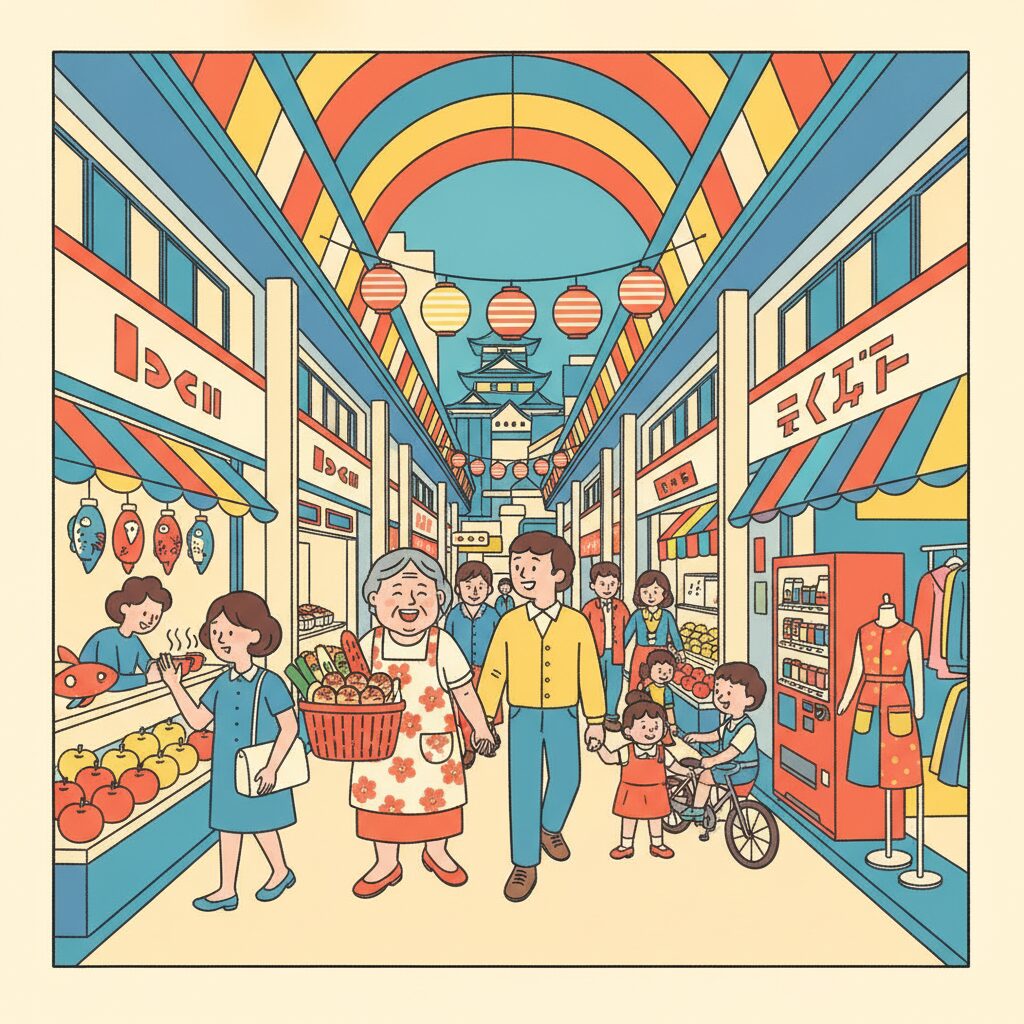
If the sprawling Tenjinbashisuji is the loud, aggressive, and constantly beating heart of the city, then the smaller, older, and slightly decaying arcades represent its quiet, artistic soul. These intimate spaces are where time truly seems to bend, offering a rare and authentic glimpse into the post-war Showa era. For those searching for the deep, artistic, and highly nostalgic layers of the city away from the noise, these slower neighborhoods are absolutely essential to understanding local life.
Karahori Shopping Street: A Nostalgic Journey
Easily accessible from the tranquil Matsuyamachi station or the primarily residential Tanimachi 6-chome station, Karahori Shopping Street pulses with a completely distinct emotional rhythm from the city center. The terrain is surprisingly hilly—a rarity in the famously flat Osaka basin—and the surrounding architecture miraculously survived the devastating wartime bombings. This fortunate preservation created a beautiful, intricate maze of pre-war wooden houses, narrow shadowed alleys, and steep stone staircases.
This area is a true sanctuary for the intellectual, artistic traveler and the trendy, creative local resident. It’s precisely where young fashion designers, independent architects, and passionate coffee artisans have intentionally settled in crumbling historic merchant houses to open carefully curated vintage clothing shops, small independent art galleries, and elegantly designed artisanal cafes. The rich, dark aroma of slow pour-over coffee blends perfectly with the sweet scent of traditional red bean wagashi and the dusty, comforting smell of old paper from second-hand bookstores. As you wander through Karahori, the deep respect modern Osaka holds for its fading history is clear. Rather than tearing down the old to cheaply replace it with the new, the city meticulously integrates fresh ideas into the decaying, beautiful fabric of the historic structures. It’s an incredibly stylish neighborhood with a raw, unpolished, and highly authentic aesthetic no sterile, modern shopping mall could ever replicate.
Janjan Yokocho (Shinsekai): Stepping Back in Time
To fully immerse yourself in the famously gritty, hard-working, and rough-around-the-edges origins of southern Osaka, a visit to Janjan Yokocho is a must. This iconic street lies deep within the Shinsekai district, just a short walk from Dobutsuen-mae and Ebisucho stations. The arcade itself is impossibly narrow and claustrophobic, with blazing neon lights casting a dramatic, almost futuristic cyberpunk glow onto the stained, cracked pavement below.
Through the smudged glass windows of the cramped, smoke-filled parlors, you can clearly see older local men hunched intently over wooden shogi boards, chain-smoking cheap cigarettes and aggressively drinking large bottles of beer at ten in the morning. This is the raw, unapologetic reality of the neighborhood—unpolished and unpretentious. Globally famous for its kushi-katsu—deep-fried skewers of inexpensive meat and seasonal vegetables—the golden, unbreakable rule here has always been strictly enforced: no double-dipping your bitten skewer into the shared communal stainless-steel sauce container. Though post-pandemic health regulations have led many shops to switch to dull plastic squeeze bottles, the fierce, protective communal respect for shared resources and public health remains a defining psychological trait of the area.
Historically, Shinsekai carried a reputation for being a rougher, seedier part of town. Yet, as a solo female traveler or a recent resident, you’ll quickly discover it feels overwhelmingly safe, highly policed, and energetically bustling during the day. At night, the atmosphere undeniably darkens and becomes heavier. Sticking to the main, well-lit arcades instead of venturing into shadowy back alleys is simply smart, everyday urban common sense. The visible grit is an integral part of the district’s charm, a constant reminder that beneath its modern prosperity, Osaka is ultimately a city rooted in hard labor, sweat, and working-class resilience.
Best Specialty Shotengai for Unique Finds
Osaka’s vast, historical industrial and mercantile dominance has led to entire, expansive streets often being devoted solely to one highly specialized manufacturing industry. These uniquely focused streets proudly highlight the obsessive, lifelong craftsmanship and dedicated practicality that truly define Japanese manufacturing culture.
Sennichimae Doguyasuji Shotengai: The Kitchenware Capital
Just a few steps from the bustling, neon-lit heart of Namba and Nippombashi stations lies the renowned Doguyasuji. This particular arcade doesn’t sell hot food; instead, it offers the exact, highly specialized tools needed to prepare it. It serves as the undeniable steel backbone of the city’s thriving restaurant industry.
Here, beneath the tall arcade roof, you’ll find tranquil shops entirely devoted to Japanese high-carbon chef knives, forged using the same ancient, highly esteemed techniques employed for traditional samurai swords. You’ll also encounter towering stacks of beautiful ceramic bowls, large, heavy industrial iron takoyaki griddles, giant custom-painted red paper lanterns, and incredibly realistic, expensive plastic food models meticulously crafted for restaurant window displays. The street’s overall aesthetic is purely, aggressively industrial. The rough-handed vendors cater exclusively to serious professionals, so the customer service is brisk, highly efficient, and deeply knowledgeable. A slow walk through Doguyasuji imparts an important lesson: beneath the loud, brightly colored, and often comedic exterior of Osaka residents lies a deeply serious, uncompromising commitment to supreme craftsmanship and intense professional pride.
Essential Tips for Exploring Osaka’s Shotengai Like a Pro
Actually living in or smoothly navigating these deeply traditional spaces requires quickly adapting to the particular local rhythm. You simply cannot treat a neighborhood shotengai like a large, impersonal Western shopping mall. There are strict, unwritten rules of engagement and highly specific cultural nuances that, once mastered, will instantly transform you from a confused outsider into a respected, welcomed participant in the neighborhood’s daily life.
Navigating Cash and Card Payments
While much of corporate Japan is rapidly and aggressively adopting modern digital payments, smart IC cards, and international credit cards, the local shotengai remain fiercely and stubbornly cash-based ecosystems. When buying a cheap three-hundred-yen paper bag of hot roasted sweet potatoes from a tiny street vendor, trying to tap a smartphone or hand over a premium credit card is often met with crossed arms forming an X—the universal and direct Japanese physical gesture for an absolute no.
Moreover, the exact denomination of your physical cash matters greatly. Handing a crisp, newly printed ten-thousand-yen note to a small vendor for a very cheap snack quickly drains their limited change supply and is considered extremely thoughtless and poor form. A truly adapted local always carries a heavy, dedicated coin purse. Smartly breaking large bills at major chain convenience stores before entering the arcade and keeping a deep pocket full of one-hundred-yen and five-hundred-yen coins instantly signals to locals that you understand and respect the harsh practical realities of running a small, tight-margin business.
The Etiquette of Eating and Walking
This point is perhaps the most widely misunderstood aspect of street food culture by foreigners visiting Japan. At vibrant, heavily photographed markets, you’ll see countless stalls selling incredible, highly portable, delicious foods. It’s deeply tempting to buy a hot skewer of grilled Wagyu beef or a steaming wooden boat of fresh takoyaki and casually stroll down the middle of the street, eating as you window-shop.
You must not do this under any circumstances. The Japanese concept of tabearuki literally translates to eating and walking but, culturally and practically, it means walking from one shop to another, stopping completely to eat at each place. It absolutely does not mean eating while physically moving down the street. Walking through a crowd with open food is widely considered messy, disrespectful to the expensive merchandise of nearby shops, and a serious safety hazard in dense, crowded spaces. When you buy hot food from a vendor, the unspoken rule is to immediately step a few feet to the side, stand completely still near their stall, quietly finish your food, and then—most importantly—politely hand the greasy trash directly back to the vendor. Public trash cans are virtually nonexistent in Japanese cities. Returning your empty packaging to the original seller solves the trash problem and shows you fully respect local etiquette.
Best Times to Visit for the Full Experience
A shotengai is not a static building; it is a highly reactive living organism, with mood, soundscape, and demographics shifting dramatically throughout the day. To truly experience the full complexity of local Osaka life, you must vary your visiting times systematically. Early mornings, around nine o’clock, are dominated by massive food markets like Kuromon. This is when the crisp morning air fills with trucks urgently delivering fresh seafood from the ports, and grumpy local chefs make their strict daily rounds. The loud metallic clatter of steel security shutters rolling up serves as the city’s official morning alarm.
Late afternoons, when sunlight turns golden, are ideal for strolling through the retro, artistic streets of Karahori. The fading light filters beautifully through dusty arcade roofs, artisanal cafes come alive with young creatives, and the older, slower generation takes their peaceful daily walks. Late evenings unapologetically belong to the neon-lit, beer-soaked alleys of Shinsekai and the long stretch of Tenjinbashisuji, where the strong smell of deep-fried food and the joyous clinking of beer glasses mark the well-earned end of the workday.
Conclusion: Dive into the Real Osaka
Osaka is fundamentally not a quiet city that quietly or passively reveals itself to an observer. It forcefully demands that you physically engage with it. It loudly invites you to laugh at the absurd jokes, to genuinely marvel at the incredibly heavy, rich food, and to tirelessly walk its extensive, vibrant, covered commercial corridors. The shotengai are the absolute, undeniable truest reflection of this dynamic, exhausting, and beautiful urban energy. They are messy, chaotic, fiercely colorful, and endlessly, brutally practical. They serve as rare, democratic spaces where highly refined, traditional art and extremely lowbrow, aggressive street comedy coexist peacefully side by side. They are precisely the places where elderly, fiery obachan proudly wearing bright tiger-print blouses efficiently shop for cheap vegetables alongside ultra-cool, tattooed young creatives hunting for rare vintage denim.
For a curious foreigner earnestly seeking to truly understand what daily life in Osaka means, the covered arcades provide the ultimate, uncompromising education. They brutally and beautifully teach you that despite the towering, highly sterile, hyper-modernization of corporate Japan, the true beating core of this city remains deeply, intensely human, stubbornly, aggressively local, and wonderfully, undeniably alive. When you finally learn to confidently walk these long streets not just as a silent, observant spectator with a camera, but as a loud, engaged, respectful participant, you immediately cease to be just a temporary visitor. You quickly begin, step by rhythmic step, to genuinely become a real, recognized part of the neighborhood.