The streets pulse. The neon hums. Osaka breathes a different air. You step off the bullet train from Tokyo and the atmosphere instantly shifts. The hushed, orderly whispers of the capital fade into the background, replaced by a symphony of commerce, laughter, and unabashed human connection. Here, the world is loud. The world is colorful. The world demands your attention and refuses to be ignored. For expatriates, foreign residents, and astute observers of Japanese daily life, navigating this metropolis requires a fundamental recalibration of everything you thought you knew about Japanese social etiquette. Japan is famously, and perhaps unfairly, described almost exclusively through the lens of harmony, silence, and rigid social boundaries. Osaka shatters that lens. Osaka sweeps the broken glass under the rug with a boisterous laugh and offers you a piece of hard candy to make up for the noise. At the very epicenter of this cultural divergence stands a figure of monumental sociological importance. She is the matriarch of the metropolis. She is the undisputed queen of the Kansai region. She is the Osaka Obachan.
To understand her is to understand the very soul of this merchant city. As a historian who has spent years peeling back the layers of Japan’s heritage, traversing the ruins of castles and the archives of ancient capitals, I find that the true essence of a living city is rarely found in its silent monuments. The essence of Osaka is found in the shopping arcades. It is found in the relentless banter of the morning markets. It is found in the fearless women who police the social fabric of their local neighborhoods armed with a leopard print blouse, a bicycle equipped with umbrella stands, and a pocket overflowing with sweets. Foreigners often arrive in Japan burdened by stereotypes of extreme politeness and impenetrable social walls. Then, they move to Osaka. They stand on a subway train, and suddenly an older woman in a tiger-striped sweater taps them on the arm, compliments their shoes, asks how much they pay in rent, and hands them a strawberry candy before disembarking at the next station. This profound culture shock is the initiation rite of Kansai living. It is the moment you realize that Osaka operates on a completely different social operating system than the rest of the archipelago. This article is not a mere travel guide pointing you to the nearest takoyaki stand. It is a comprehensive cultural decryption. It is an exploration of the mindset, the history, and the daily behavior of the Osaka Obachan, designed to help you not just survive your time in this vibrant city, but to profoundly connect with the people who make it beat.
Who is the Osaka Obachan? Understanding the Local Legend
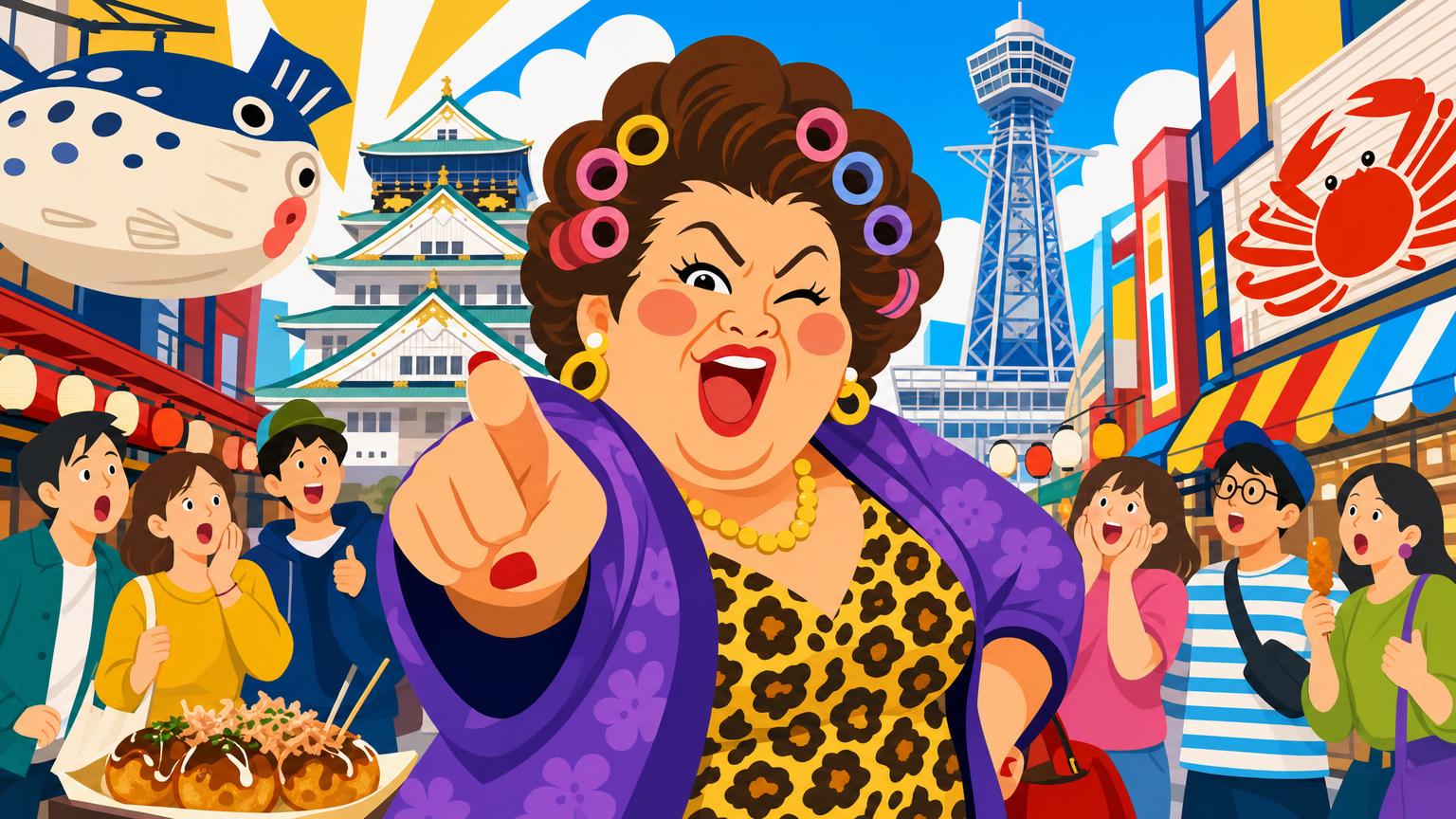
The term Obachan generally translates to middle-aged woman or auntie in Japanese. However, in the context of Osaka, the word goes beyond its literal meaning. It becomes a cultural archetype, a way of life, and a badge of pride. The Osaka Obachan is more than just a demographic label; she is a localized phenomenon. She embodies Osaka’s practical, humorous, and fiercely independent spirit. While other parts of Japan may prioritize conformity and blending in, the Osaka Obachan actively values standing out, saving money, and fostering human interaction in an increasingly isolated modern society. To fully understand her influence on the city’s daily life, we need to analyze the elements that create her legendary persona.
Signature Fashion: Leopard Print and Bold Colors
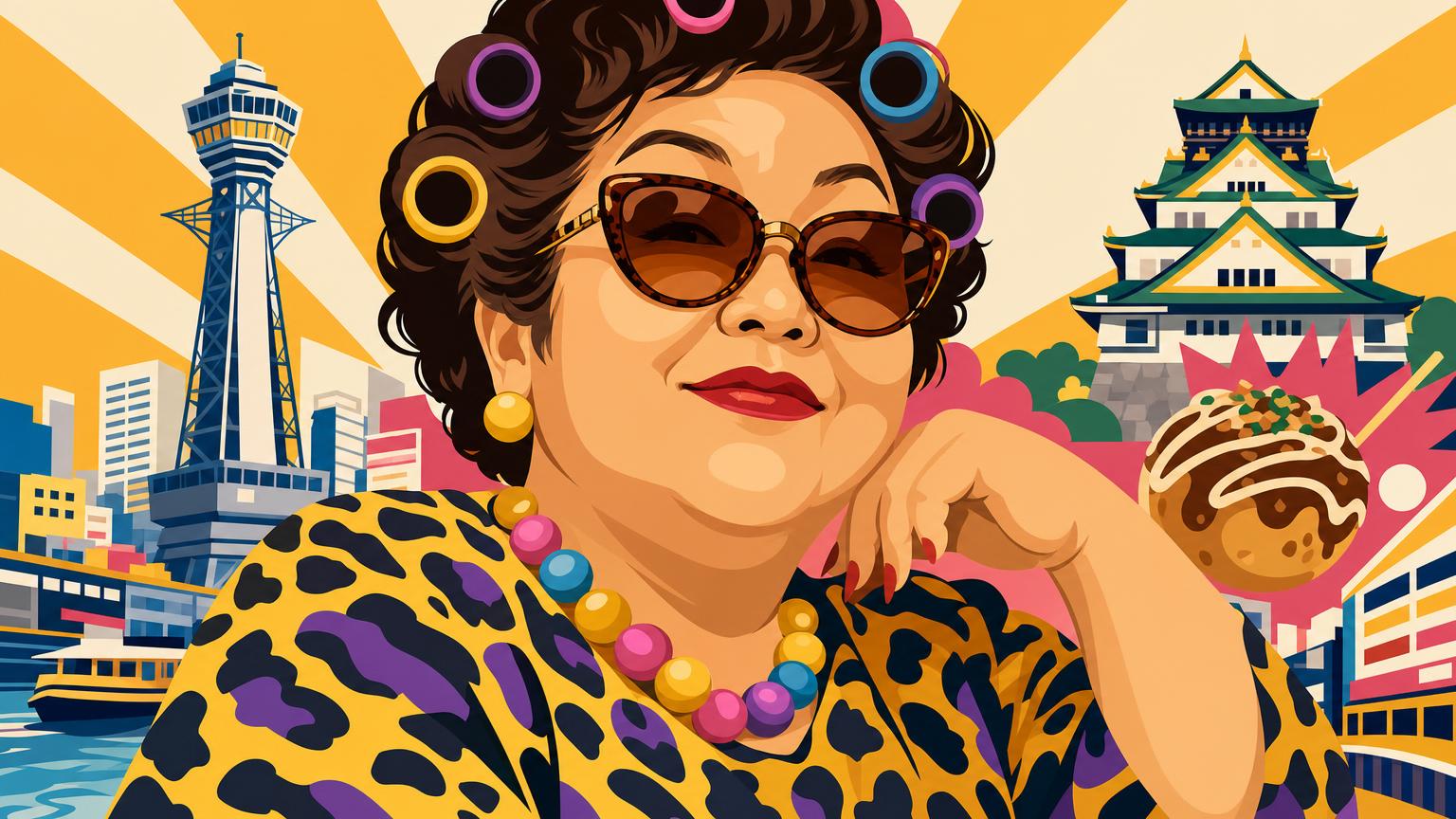
If you stroll through any residential area in Osaka, your eyes will inevitably catch glimpses of the savannah. Leopard print, tiger stripes, zebra patterns, and dazzling bright colors are the traditional attire of the Osaka Obachan. This is not a subtle detail; it is a full-on visual assault. You might see leopard print blouses paired with purple pants, topped with a faux-fur tiger coat. To an unaccustomed foreigner, this fashion may seem puzzling, even slightly humorous. But dismissing it as mere eccentricity overlooks a deep historical and psychological story.
Osaka has long been Japan’s textile capital. During the post-war economic boom, the city became a hub for fashion manufacturing and wholesale trading, especially in areas like Senba. Yet, the roots of this flamboyant style stretch back to the Edo period. Under the Tokugawa shogunate, strict sumptuary laws were enforced across Japan, dictating what people could wear based on their social rank. The samurai, at the top of the hierarchy in Edo (modern-day Tokyo), wore subdued, austere colors to project discipline. The wealthy merchants of Osaka, though affluent, occupied the lowest rung of the social ladder and were prohibited from outwardly displaying their wealth. In a clever act of subversive defiance, Osaka merchants began lining the insides of their plain kimonos with extravagant, brightly colored silks. They cultivated a culture of hidden luxury.
When the feudal system ended and the sumptuary laws were repealed, Osaka merchants were no longer required to conceal their wealth. The post-war period sparked an explosion of expressive freedom. The late twentieth-century adoption of animal prints by Osaka’s matriarchs was a continuation of this rebellious spirit. It rejected Tokyo’s enduring preference for muted, uniform appearances. Animal prints serve as armor—a visual proclamation of strength, energy, and refusal to fade quietly with age. When an Osaka Obachan sports a roaring tiger face on her shirt, she signals her command over her surroundings. She tells the world she is alive, fierce, and absolutely unwilling to be ignored at the supermarket checkout.
The Ame-chan Culture: Always Ready with a Candy
One of the most charming and widely recognized traits of the Osaka Obachan is her constant readiness to offer hard candies, known locally as ame-chan. This is no myth; it is an active social custom. If you live in Osaka long enough, you will inevitably receive an ame-chan. Whether you’re coughing on a train, looking lost at a bus stop, or simply exchanging brief eye contact in a waiting room, a hand will reach into a leopard print tote bag, pull out a brightly wrapped candy, and press it into your palm with a nod and a smile.
The linguistic nuance here is important. In standard Japanese, candy is simply ame. But in the Kansai dialect, it is almost always called ame-chan. The suffix chan is usually reserved for children, close friends, or cute animals as a term of affection. The fact that Osaka women personify a piece of sugar by adding this endearing suffix reveals much about its cultural importance.
Historically, Osaka was Japan’s trade center, known as the Kitchen of the Nation. Goods from across the archipelago passed through its ports. Sugar was a valuable commodity during the Edo and Meiji periods. Sharing sweets was a significant gesture of hospitality and affluence. Today, the ame-chan functions as the ultimate social lubricant. It is a harmless, universally appreciated icebreaker. In a megacity where millions pass by each other in anonymous silence, the ame-chan is a small, sweet rebellion against urban isolation. It requires no shared language. It bypasses intricate Japanese formalities. It is a simple, primal exchange of goodwill. For foreign residents, receiving their first ame-chan is a rite of passage, signifying that the city has acknowledged their presence and chosen to welcome them into its chaotic fold.
Unmatched Friendliness and Bargaining Skills
To live in Osaka is to embrace conversation. The barrier between strangers here is notably thinner than elsewhere in Japan. The Osaka Obachan is the chief architect of this hyper-social atmosphere. She ignores the invisible walls that usually separate commuters, shoppers, and neighbors. If she admires your jacket, she will say so. If she thinks you’re overpaying for daikon radishes, she won’t hesitate to tell you. If she wants to know why you’re living in Japan, she will ask outright, often skipping the customary small talk common in Western interactions.
This intense friendliness is closely linked to her famed bargaining skills. Osaka is, at its core, a merchant city. Commerce is embedded in its culture. While the standard Japanese greeting is Konnichiwa (Good day), the traditional Osaka merchant dialect opens with Mokarimakka? (Are you making a profit?), answered by Bochi-bochi denna (So-so, just getting by). Everything is a negotiation, and every encounter is an opportunity for a transaction, even if it is just a transaction of humor.
The Osaka Obachan thrives in local markets, where haggling is not only accepted but respected. She will negotiate fiercely over the price of fish, using her charm, her volume, and her relentless persistence. She might feign indignation, laugh heartily, and ultimately walk away with a discount and an extra apple tossed into her bag. This is not considered rude; it is valued as skilled communication. It is the art of engaging the vendor as a person rather than a faceless service provider. For expats used to the quiet, seamless, barcode-scanning efficiency of modern supermarkets, watching an Obachan masterfully conduct a lively negotiation over a cabbage’s price is a masterclass in local culture.
Obachan vs. Obaachan: What is the Difference in Japanese?
For anyone trying to navigate the social landscape of Osaka, grasping the linguistic nuances of the Japanese language is essential. One of the most challenging linguistic traps for newcomers involves the subtle difference in vowel length between two very similarly sounding words: Obachan and Obaachan. The distinction is simply one elongated vowel sound, but the social consequences of mixing them up are significant.
The word Obachan (short ‘a’) means middle-aged woman, or auntie. It conveys vitality, active community engagement, and a certain robust energy. The women discussed in this article—the fierce, candy-wielding, leopard-print-wearing matriarchs—clearly belong to the Obachan category. They are the driving force of the neighborhood.
The word Obaachan (long ‘aa’), in contrast, means grandmother or elderly woman. It suggests advanced age, frailty, and retirement from the active hustle of daily life.
In the Kansai region, where communication is straightforward and pride runs high, prematurely calling a lively, energetic, middle-aged woman an Obaachan is considered a serious social blunder. It directly insults her vitality. The pitch accent in the Kansai dialect makes this even more important. Kansai-ben has a distinctive melodic rhythm. When saying Obachan, the pitch remains fairly flat. When saying Obaachan, the pitch falls on the extended vowel. Mispronouncing this word can quickly turn a warm encounter into a chilly one.
Yet, the brilliance of the Osaka Obachan lies in her ability to wield humor as a defense. If a foreigner accidentally lengthens that vowel, the usual response is not silent offense, as might happen in Tokyo, but an exaggerated, theatrical scolding. She might clutch her pearls, gasp loudly, and exclaim, I am not an Obaachan yet! Do I look like a grandmother to you? before laughing and offering you an ame-chan. This interaction reveals a key element of Osaka’s communication style: the dynamic of tsukkomi (the straight man’s interjection) and boke (the funny man’s blunder). By making a linguistic slip, you take on the role of the boke, and she enthusiastically becomes the tsukkomi, playfully hitting your arm and correcting you. This turns an awkward mistake into a shared moment of comedic connection.
Meet Obachaaan: Japan’s Most Unique Elderly Idol Group
To truly understand how deeply the Obachan persona is woven into Osaka’s cultural psyche, one must examine how the city reflects on itself through pop culture. Osaka isn’t a city that merely accepts its stereotypes; it embraces, amplifies, and brilliantly monetizes them. No greater proof of this self-awareness exists than Obachaaan, a genuine, active, and hugely popular idol group made up entirely of elderly women from the Kansai region.
Established in 2012, Obachaaan (with three ‘a’s for dramatic flair) was intentionally created as a parody of the polished, precisely choreographed, youth-focused idol groups like AKB48 that dominate Tokyo’s entertainment scene. The idea was simple yet brilliant: take the loud, flashy, leopard-print-wearing grandmothers of Osaka and transform them into pop stars. Their debut track, Obachaaan no Theme, featured the women rapping in thick Kansai dialect about the value of bargain hunting, the need to carry candy, and their unwavering love for animal prints.
The group quickly became a viral phenomenon, not just as a novelty but as a genuine source of local pride. They perform at festivals, appear on regional TV, and even participate in public campaigns for the Osaka police, educating citizens about phone scams and traffic safety. What makes Obachaaan essential to understanding Osaka is what it reveals about the city’s sense of humor. Osaka boasts a deeply rooted owarai (comedy) culture. Unlike Tokyo, where humor often hinges on clever wordplay or subtle irony, Osaka’s comedy is physical, self-deprecating, and full of energy. The women of Obachaaan fully embrace the joke. They recognize they are loud. They know they are visually overwhelming. And they use that self-awareness to entertain, connect, and assert their presence in a society that often sidelines the elderly. For a foreign resident, watching a group of septuagenarians in tiger-striped tracksuits passionately rapping about the cost of toilet paper is a powerful reminder that in Osaka, age doesn’t mean fading away; it means turning up the volume.
The Historical Roots of the Osaka Matriarch
Viewing the Osaka Obachan merely as a modern pop-culture oddity does a disservice to her rich historical roots. As a historian, I am endlessly intrigued by how past social structures influence present behaviors. The loud, commanding presence of the Kansai matriarch traces back centuries, deeply intertwined with the city’s distinctive economic history.
During the Edo period, Japan was roughly divided into two major cultural and economic spheres. Edo (Tokyo) served as the political capital, centered around the Shogun and his expansive samurai army. It was a consumer city, defined by bureaucratic hierarchies, strict etiquette, and male-dominated power structures. In contrast, Osaka was the commercial capital, built by and for merchants. The samurai influence there was minimal. The city thrived on trade, pragmatism, and an unrelenting drive for profit.
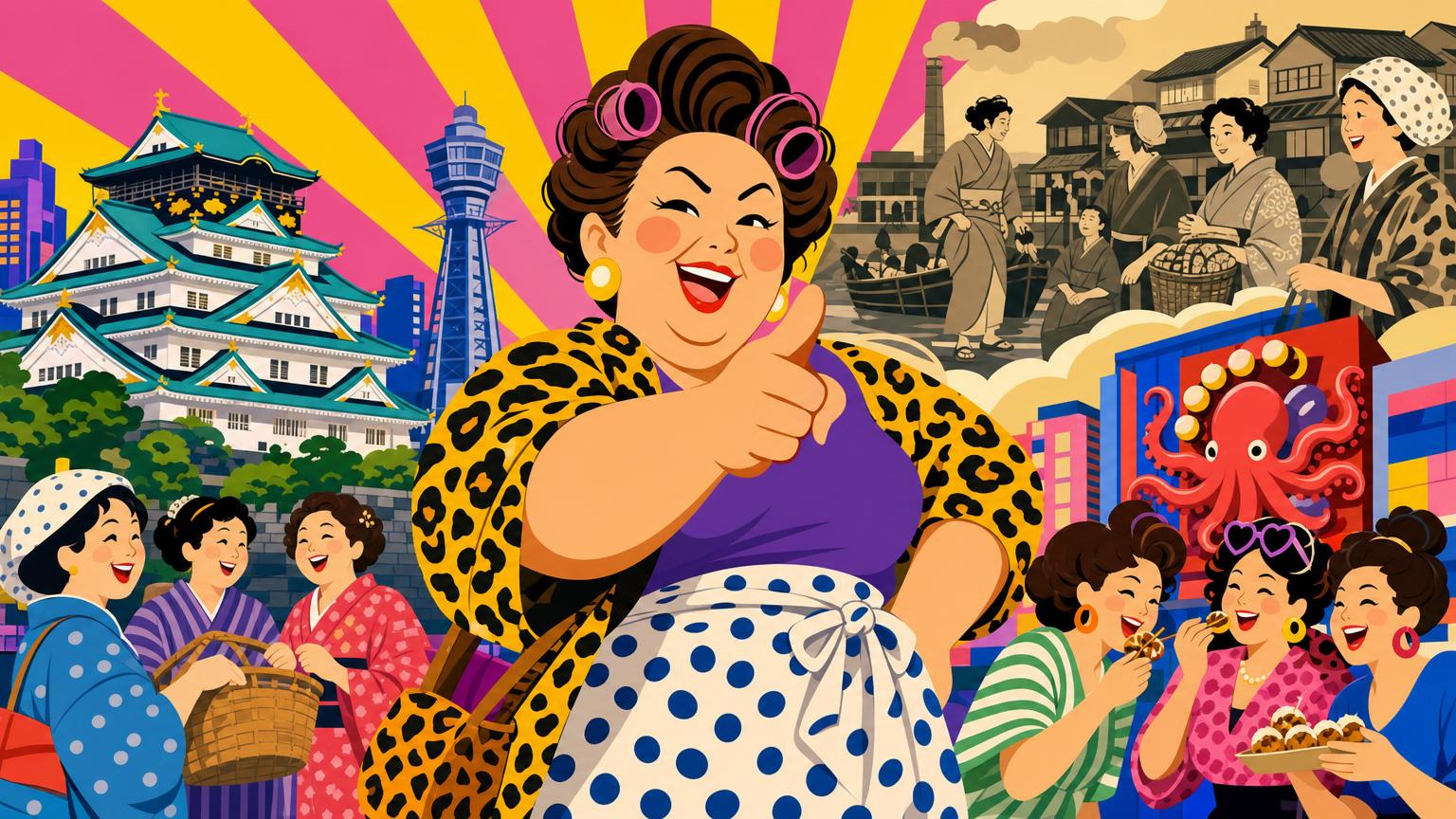
Within this merchant-driven society, gender and power dynamics differed significantly from the rest of Japan. Male merchants often traveled across the archipelago to secure goods, negotiate trade routes, and oversee logistics, frequently away from home for months. In their absence, women of Osaka managed the household, ran local shops, and—critically—kept financial records. These women had to be resilient, numerically savvy, and capable of holding their own in tough business dealings. They could not afford the delicate, submissive demeanor idealized by Edo’s samurai class. They had to be formidable.
This historical necessity forged a lineage of strong, independent, and vocal women. Merchant wives of the Edo and Meiji eras passed their pragmatic philosophies to their daughters. When post-war economic devastation struck Japan, it was again the women of Osaka who turned to black markets, fiercely bartering for food and supplies to sustain their families. The modern Osaka Obachan, with her booming voice and unmatched bargaining skills, directly descends from these historical merchant queens. She embodies centuries of women who knew that in a city built on trade, silence gets you nothing, but boldness gets you everything.
Where to Experience the Osaka Obachan Vibe in the City
For a resident eager to immerse themselves in the authentic rhythm of Osaka life, exploring the natural habitats of the local matriarchs is indispensable. The true Obachan spirit cannot be found in the polished, sterile corridors of Umeda’s luxury department stores, nor in the carefully curated tourist traps of Dotonbori. Instead, you must venture into the neighborhoods where daily life unfolds, where shotengai (covered shopping arcades) still act as the community’s vibrant heart.
Shinsekai District: The Soul of Retro Osaka
Shinsekai, which means New World, is a neighborhood that perfectly captures the grit, glory, and undying nostalgia of Osaka. Originally developed in 1912, its southern half was inspired by Coney Island in New York, featuring an amusement park called Luna Park, while the northern half was modeled on the streets of Paris. The centerpiece was the Tsutenkaku Tower, a symbol of the city’s pre-war optimism. After World War II, however, the area fell into severe decline, earning a reputation as a tough, working-class entertainment district.
Today, Shinsekai has enjoyed a major revival, walking a fine line between retro tourist attraction and authentic local neighborhood. Here, the Obachan culture thrives in its rawest form. Strolling down Janjan Yokocho alleyway, a narrow, cramped passage brimming with tiny standing bars, cheap sushi spots, and traditional shogi (Japanese chess) parlors, you will encounter the matriarchs in command. These women expertly fry kushikatsu (deep-fried skewers) behind the counters, shout orders over the noise of the crowd, and sternly scold patrons who dare to double-dip their cabbage in the communal sauce. They carry a rough, gravelly charm and treat everyone equally, regardless of origin—a comforting expression of equality. Sitting at a sticky counter in Shinsekai, receiving an ice-cold beer from an Obachan who simultaneously complains about her husband and praises your appetite, brings you as close as possible to the raw soul of Osaka.
Tenjinbashisuji Shopping Street: Conversations with Local Vendors
For a less gritty, more homey glimpse into the Obachan ecosystem, a visit to Tenjinbashisuji Shopping Street is essential. Stretching an impressive 2.6 kilometers, it is the longest covered shopping arcade in Japan. Walking its entire length is like trekking through the city’s daily domestic life. The arcade is flanked by around 600 shops, including traditional kimono sellers, high-end tea purveyors, discount pharmacies, bargain clothing racks, and tiny, family-run okonomiyaki grills.
This is the premier spot to observe Osaka’s Obachan in her everyday element. The arcade is her realm. Here, you’ll witness the intricate dance of local commerce. You’ll see women parking their bulky, heavily modified bicycles outside grocery stores, marching in, and engaging in lengthy, intense conversations with butchers about pork quality—all while ignoring the growing line behind them.
For foreign residents, Tenjinbashisuji is the ideal place to practice local interaction. Stop by a small fruit stall and try to buy a bundle of mandarins. The woman running the stand will likely ignore the price, gauge your Japanese proficiency, ask where you’re from, mention her nephew who once went to London, decide she likes you, toss three extra oranges into your bag, and charge you less than the listed price. The arcade is a living, breathing community center disguised as a shopping street. It is chaotic, densely packed, and entirely driven by the social energy of the women who traverse it every single day.
How to Interact with Local Osaka Women During Your Trip or Daily Life
Adapting to life in Osaka requires foreigners to let go of the concept of tatemae. In standard Japanese social dynamics, tatemae is the facade—the polite public face one shows to maintain harmony—while honne represents the true, hidden inner feelings. In Tokyo, you might live next to a neighbor for five years and never advance beyond a polite bow in the hallway. In Osaka, tatemae is seen as a waste of time. The Obachan operates almost entirely on honne. She speaks her mind and expects you to do the same.
If you become the focus of an Obachan’s attention, the key rule is not to freeze up. Foreigners often grow defensive or visibly confused when approached by a stranger in Japan, anticipating a formal, rigid exchange. Relax. If she offers you an ame-chan on the train, accept it with a loud, enthusiastic Ookini (the traditional Kansai word for thank you, strongly favored over the standard arigatou). Don’t overthink the interaction. Eat the candy.
Be ready for deeply personal questions asked without any malice. An Osaka Obachan might inquire how much you pay for your apartment, why you’re not married yet, or if you’ve gained weight since arriving in Japan. These questions, which would be considered highly intrusive and inappropriate in Western cultures and Tokyo, are simply her way of showing interest. She’s skipping small talk and going straight to the core of your being. The best approach is to embrace the humor in the situation. Answer honestly, or better yet, respond with a self-deprecating joke. If she says you’ve gained weight, pat your stomach and say the takoyaki is just too delicious. She’ll burst out laughing, slap you on the shoulder, and instantly count you as a friend.
Additionally, don’t hesitate to ask for help. If you’re lost in a subway station studying a map, a Tokyo commuter typically walks past you to avoid the awkwardness of a language barrier. An Osaka Obachan will stride up, grab your arm, loudly attempt to speak in rapid Kansai dialect mixed with imagined English, and physically guide you to the correct platform. She won’t let you fail. Surrender to the flow of her assistance. Let her lead you. The interaction will be chaotic, loud, and incredibly heartwarming.
Osaka Obachan Souvenirs to Bring Back Home
For residents wanting to share a bit of their new life with friends and family in their home countries, the usual souvenirs like Kyoto geisha dolls or Mt. Fuji keychains feel insufficient. They don’t capture the reality of your everyday life in Kansai. Instead, embrace the local culture and bring back keepsakes of the Obachan.
The city’s souvenir shops, especially in neighborhoods such as Namba and Shinsekai, have wholeheartedly adopted this aesthetic. You can buy small, leopard-print pouches made specifically for carrying hard candies—the perfect practical accessory for an aspiring matriarch. You’ll also find t-shirts featuring the fierce, scowling face of an animated Obachan with slogans in thick Kansai dialect, like Nandeyanen (What the hell are you talking about?, the classic tsukkomi phrase).
There are boxes of ame-chan wrapped in packaging resembling a leopard print purse, complete with witty instructions on how to properly share the candies with strangers on public transport. These gifts are ideal because they invite explanation. When you give a friend in London or New York a tiger-striped coin purse, you’re prompted to tell them the story of the women of Osaka. You get to share the history, humor, and warmth of the city. You’re not just giving an object; you’re sharing a piece of the city’s living sociological fabric.
The Psychological Divide: Osaka Versus Tokyo
The contrast between Tokyo and Osaka represents one of the most intriguing urban divides in the world, making it impossible to fully understand one without comparing it to the other. For foreign residents, choosing where to live often depends on which psychological profile aligns better with their personality. The presence and acceptance of the Obachan culture serve as the clearest sign of this divide.
Tokyo is a marvel of urban engineering. It is a city of over thirty million people that operates with astonishing, silent precision. The social contract in Tokyo revolves around the concept of meiwaku—the strict avoidance of causing inconvenience to others. You keep your voice low, keep your elbows close to your body, avoid making eye contact on the train, and respect the invisible bubble of privacy that surrounds each person. It is a city where you can feel perfectly comfortable being alone in a massive crowd. It is polite but often deeply isolating.
Osaka, in contrast, is disorderly. The social contract here does not focus on avoiding meiwaku; it centers on active interaction. The invisible bubbles do not exist. On escalators, people stand on the right side (unlike Tokyo’s left side), a small yet persistent geographical rebellion. Conversations in Osaka involve rapid overlaps, frequent interruptions, and loud volume. It is a city that thrives on friction. The Obachan is the ultimate enforcer of this engagement, ensuring that the city remains a community rather than a collection of lonely individuals.
For many expatriates, Tokyo can feel like a beautiful, flawless museum where touching the exhibits is forbidden. Osaka, meanwhile, feels like a crowded, noisy pub where someone just spilled a beer, but everyone is laughing about it. The pressure to conform to strict Japanese social norms is far lower in Kansai. If you make a mistake, speak too loudly, or wear the wrong clothes, Tokyo will silently judge you. Osaka will point it out, laugh at you, and invite you to join in. This is why many foreigners find life in Osaka fundamentally more relaxing, despite the apparent chaos. The warmth beneath the noise is real. The Obachan, with her bright clothes and nosy questions, is the guardian of that warmth.
Embracing the Chaos and Warmth of Osaka Life
Living in Osaka is an ongoing lesson in releasing your preconceived notions. You need to let go of the pristine, quiet image of Japan promoted by tourism boards and embrace the loud, sticky, intensely human reality of this merchant city. The Osaka Obachan embodies this reality. She is a living, breathing historical relic, carrying the legacy of Edo merchants, the resilience of post-war survivors, and the irrepressible humor of the Kansai region in her leopard print tote bag.
Once you stop resisting the chaos and start enjoying the banter, the city reveals itself to you in ways that are impossible to experience elsewhere in Japan. The next time you’re on the Midosuji subway line and a woman in a tiger sweater taps you on the arm, don’t look away. Don’t tense up. Meet her eyes, accept the strawberry ame-chan, and get ready for a conversation that may make no grammatical sense but will leave you smiling all day. This is the true privilege of living in Osaka. You are not merely a spectator in a foreign place; you are an active participant in a relentless, beautiful, and deeply human comedy. Embrace the matriarchs. Learn the dialect. And whatever you do, never, ever call them an Obaachan.