Step off the Shinkansen at Shin-Osaka station, and you can feel the shift in the atmosphere almost instantly. The air feels thicker, the voices echo a little louder, and the rhythm of the foot traffic snaps into a faster, more syncopated beat. You have left the hushed, orderly, and ever-polite confines of Tokyo. You have arrived in Osaka. This is a city that hums with a completely different kind of electricity. It is a sprawling, neon-soaked metropolis built not on imperial decrees or bureaucratic mandates, but on the back of trade, commerce, and the relentless hustle of everyday merchants. For a foreigner stepping into this environment, the initial sensory overload can be intoxicating. The smells of sizzling batter, sweet brown sauces, and rich pork broths waft through the dense alleyways. The glow of paper lanterns cuts through the concrete jungle. But beyond the food and the flashing lights of Dotonbori lies a deeper, unspoken philosophy that dictates every single interaction in this city. If you truly want to understand Osaka, if you want to crack the code of its people and figure out how daily life actually functions here, you have to understand one singular, all-important concept. You have to understand ‘neuchi’.
Neuchi translates roughly to value, worth, or merit. But in the local Kansai dialect, it represents something much more profound. It is the beating heart of the city’s collective psyche. It is the invisible scale upon which every meal, every garment, every apartment lease, and every weekend outing is ruthlessly weighed. For an outsider trying to navigate life in Osaka, the local obsession with neuchi can sometimes be confusing. Are the people here just relentless bargain hunters, scouring the earth for the cheapest possible option? Or are they hyper-savvy consumers, operating on a higher plane of economic enlightenment where quality and cost intersect in perfect harmony? As an American who moved here chasing the legendary culinary scene, I spent my first few years utterly bewildered by how locals talked about money. In the States, and even in Tokyo, talking about how little you paid for something can sometimes be seen as tacky. In Osaka, it is a competitive sport. It is a badge of honor. It is the ultimate icebreaker. Understanding this dynamic is not just about saving a few yen at the supermarket. It is about understanding the soul of a city that values authenticity, pragmatism, and honest living above all else. Before we dive into the deep end of Osaka’s vibrant street culture and explore how this relentless pursuit of value shapes everything from neighborhood dynamics to nighttime socializing, let us orient ourselves in the heart of this magnificent merchant capital.
What Does “Osaka Neuchi” Actually Mean? The Deep Culture of Great Value
To truly understand the essence of neuchi, you must let go of your preconceived ideas about cheapness. In many Western cultures, cheap suggests a compromise in quality. If something is cheap, we assume it will break, taste unpleasant, or disappoint us. The Osaka concept of neuchi completely rejects this misleading dichotomy. Neuchi isn’t about selecting the cheapest item on the shelf. Rather, it focuses on maximizing the satisfaction-to-cost ratio. It is the relentless quest for that sweet spot where excellent quality meets an unexpectedly reasonable price.
When a local tells you a certain izakaya has good neuchi, they’re offering the highest compliment possible. They’re saying the chef honors the ingredients, the portions are generous, the flavors are robust, and the final bill will leave your wallet surprisingly full. It’s a holistic judgment of the entire experience. The Osaka mindset insists that a business must truly earn its place. There is zero tolerance for pretension, inflated prices, or paying just for ambiance. You cannot serve mediocre food on a beautiful ceramic plate here and expect to thrive. The locals will see through the facade, mentally assess the neuchi, find it lacking, and never come back.
Beyond Just Cheap: The Philosophy of Worth
The philosophy of worth in Osaka is practiced daily. It permeates casual conversations and shapes social dynamics. If you compliment an Osaka native on their new jacket, their typical response won’t be a simple thank-you. Instead, their eyes will sparkle as they lean in and proudly ask, “Guess how much this cost?” They want you to guess high. When you say ten thousand yen, they’ll gleefully reveal they scored it for just two thousand yen at a local shotengai.
This is the ultimate victory of neuchi. Success doesn’t belong to the person with the deepest pockets for luxury brands, but to the one with the sharpest eye, best street smarts, and most refined sense of value. It’s a deeply democratic outlook on consumerism. Wealth alone won’t earn you respect in Osaka—savvy does. Knowing the secret spots, the right time to catch discounts, and the vendors with the best meat cuts—these are the hallmarks of a true local who has mastered living well.
The Linguistic Nuances of Neuchi in the Kansai Dialect
The language itself envelops this concept like a cozy blanket. Kansai dialect, or Kansai-ben, is known throughout Japan for being melodic, expressive, and inherently humorous. It’s a language made for haggling, storytelling, and rapid-fire banter. When evaluating an item’s worth, people don’t use sterile corporate jargon. They speak with visceral, emotional terms.
If something isn’t worth the price, it’s often dismissed with a brisk wave and the phrase “Neuchi nai wa,” meaning it lacks value. This expression is common, applied to overpriced lattes, disappointing tourist spots, and even fruitless relationships. Conversely, when something hits the mark, it’s celebrated. The language of value in Osaka reflects a city that doesn’t waste time beating around the bush. In Tokyo, polite indirectness prevails; if a Tokyoite finds a restaurant overpriced, they’ll smile politely, call it an interesting experience, and quietly decide not to return. In Osaka, someone will scan the menu, loudly declare the prices outrageous, and leave to find a better deal nearby. It’s refreshingly blunt, brutally honest, and wonderfully practical.
How Locals Express Value in Everyday Conversations
Listen carefully the next time you’re in line at a supermarket in Tennoji or waiting for a train on the Midosuji line. You’ll catch fragments of conversations centered entirely on value. You’ll hear older women, affectionately called obachan, debating daikon radish prices with the intensity of Wall Street traders analyzing blue-chip stocks. Salarymen will compare the cost-performance ratio of various lunch specials near their offices.
This vocalization of value acts as a social bond. Complaining about price increases or celebrating discounts brings people together and creates a shared understanding. When you join in—bragging to local friends about the amazing deal you found on a used bicycle or a crate of mikan—you cross an invisible threshold. You stop being just another foreigner passing through and start speaking the genuine emotional language of the city.
Kuidaore: Eat Until You Drop (Without Breaking the Bank)
You can’t talk about Osaka’s value culture without mentioning its most famous proverb: “Kyoto kidaore, Osaka kuidaore.” People in Kyoto ruin themselves by spending too much on clothes; people in Osaka ruin themselves by spending too much on food. Kuidaore is often simply translated as eating until you drop or eating yourself into bankruptcy. But through the lens of neuchi, kuidaore has a different meaning.
Osakans don’t want to go bankrupt—they are far too practical for that. Kuidaore really means that their passion for food is so great and their standards so high that they’re willing to invest their resources in culinary experiences. However, they demand absolute perfection in value. They’ll eat until they drop, but expect every bite to be worth the money spent. This fiercely competitive atmosphere pushes restaurants to operate at peak efficiency and quality, creating a culinary ecosystem where a three-dollar bowl of udon in a standing-only shop beneath the train tracks can deliver more complex, soul-satisfying flavors than a fifty-dollar dish elsewhere.
The Merchant City Roots: Why Osaka Worships the Bargain
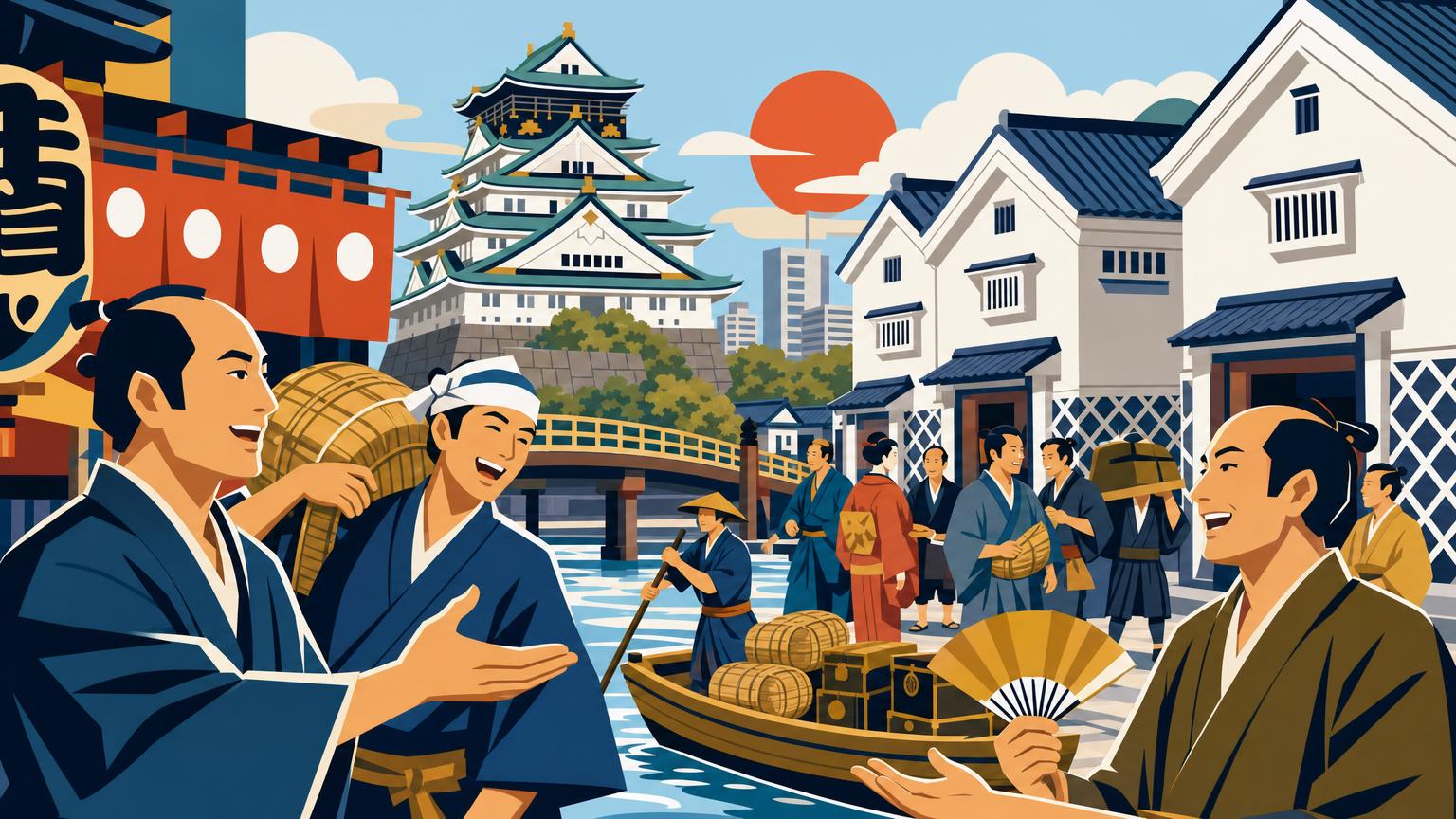
To understand why this city is so focused on value, you need to look back at its origins. Osaka has long been known as the “Kitchen of the Nation.” During the Edo period, while Tokyo served as the political capital dominated by samurai and strict social hierarchies, Osaka was the commercial center. It was a city governed by merchants, traders, and rice brokers.
In a merchant-driven society, your lineage mattered less than your bottom line. Success depended on your ability to negotiate, recognize good deals, and move goods effectively. The samurai in Kanto were bound by rigid codes of honor that often regarded handling money as dishonorable or beneath them. Conversely, Kansai merchants had no such reservations. They respected money and understood that each coin symbolized hard work, risk, and ingenuity. This historical divide laid the foundation for the pronounced cultural differences still evident between Japan’s two largest metropolitan areas today.
Historical Context: Edo Period Traders and the Birth of Pragmatism
The merchants of old Osaka cultivated a culture of strong pragmatism. They created a society where shrewdness, reliability, and keeping promises were the highest virtues. A merchant who tried to cheat customers would quickly be excluded from their close-knit trading networks. Trust served as the currency that enabled the city to prosper.
This meant that offering genuine neuchi was more than just a marketing strategy — it was essential for survival. Providing real value was crucial to building lasting relationships. This historical resonance remains loud in modern Osaka. When you enter a traditional mom-and-pop shop today, the owner greets you with “Maido!” roughly meaning “Thank you for your continued patronage.” It’s a merchant’s way of acknowledging the ongoing relationship between buyer and seller. They expect customers to demand value and take pride in delivering it.
Tokyo vs Osaka: The Great Divide in Financial Mindsets
The contrast between Kanto and Kansai is one of the most intriguing aspects of life in Japan. For foreigners, the differences may seem subtle at first, but once you tune in, they become strikingly clear. Tokyo is driven by a culture of refinement, appearances, and preserving harmony. If a highly publicized dessert shop opens in Harajuku charging twenty dollars for a slice of cake, Tokyoites will politely line up for hours, take photos, and accept the price as part of joining the trend.
Osaka, on the other hand, operates with skepticism, practicality, and outspoken critique. If that same twenty-dollar cake shop opened in Namba, locals would glance at the price tag, laugh aloud, and walk down the street to buy five freshly baked Rikuro Ojisan cheesecakes for the same cost. The Osaka mindset rejects paying a premium just for branding or hype. If the product itself doesn’t justify the price, the business is doomed to fail.
Face Saving in Kanto versus Pragmatic Pride in Kansai
In Tokyo, there is often an emphasis on saving face, known as tatemae. People may pretend that cost isn’t a concern to avoid appearing stingy. There is social pressure to conform to upscale norms, especially in business or dating situations. In Osaka, the idea of face is directly tied to financial common sense. Paying full price when a discount was available is seen as somewhat foolish.
This makes living in Osaka uniquely freeing. You don’t have to pretend to be wealthy or keep up with the Joneses. Instead, you are admired for your frugality—so long as it’s smart and not simply cheap. It’s perfectly acceptable to suggest a grungy, smoke-filled, plastic-stooled alleyway spot for Friday night dinner with friends, provided you can confidently vouch that the grilled chicken skewers are the best in the ward.
Top “Osaka Neuchi” Everyday Encounters: Authentic & Affordable Bites
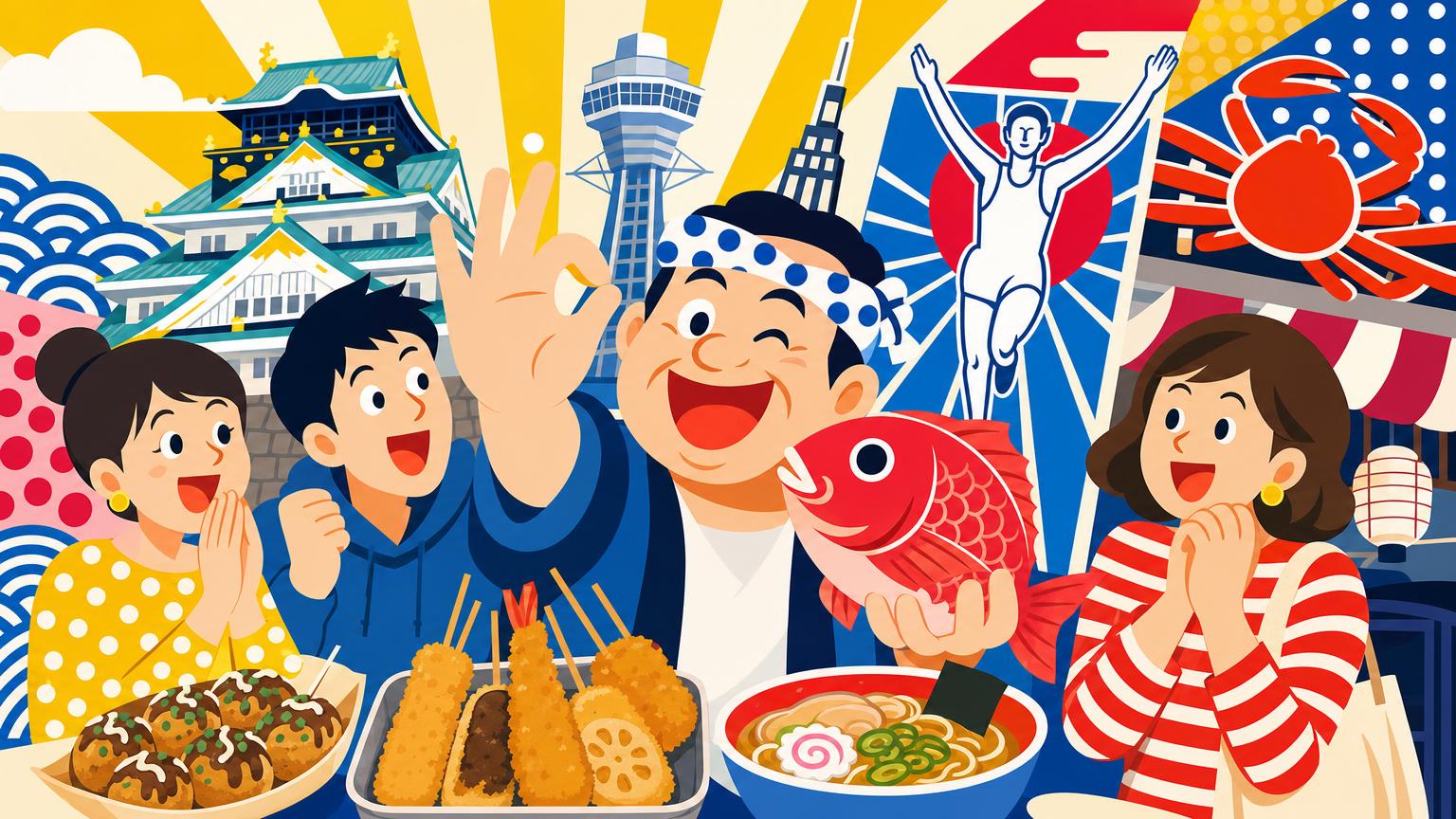
The true theater of neuchi unfolds on the streets, in the alleys, and over the hot iron griddles scattered throughout the cityscape. Food offers the most immediate and accessible way to immerse yourself in this culture. Osaka’s soul food—the trio of takoyaki, okonomiyaki, and kushikatsu—originated out of necessity, crafted to deliver maximum calories, flavor, and satisfaction at the absolute minimum cost. These are more than just snacks; they are cultural institutions grounded firmly in the essence of neuchi.
Savoring Takoyaki and Okonomiyaki in Dotonbori Like a Local
Dotonbori is undeniably touristy, with its giant mechanical crabs and the iconic Glico running man sign lighting up the canal. But look past the flashy exterior, and you’ll discover the mechanics of value still hard at work. Takoyaki, the beloved octopus dumplings, are the quintessential Osaka street food. A perfect batch of takoyaki is a masterpiece of culinary precision. The exterior must be delicately crisp, instantly yielding to a molten, savory core that will burn the roof of your mouth if you’re not careful, enveloping a perfectly chewy piece of octopus.
Locals fiercely debate which stand offers the best neuchi. Is it the one giving you eight large pieces for six hundred yen? Or the spot hidden down a side street with ten smaller, crispier pieces and a heavier drizzle of mayonnaise for five hundred yen? The dedication to analyzing this ratio is intense.
Okonomiyaki, the savory cabbage pancake, takes this idea even further. The name literally means “what you like, grilled.” Originally a dish to use up leftover ingredients, it has evolved into a hearty, comforting staple providing a generous portion at a very reasonable price. Sitting at the counter, watching the chef layer cabbage, pork belly, and batter on the teppan, you witness the physical embodiment of neuchi. You receive a hot, fresh, customized meal that fully satisfies you for less than the price of a coffee back home.
The Neighborhood Takoyaki Stand as a Community Hub
While Dotonbori has the flash, the true neuchi is found in residential neighborhoods. Nearly every local train station in Osaka has a small takoyaki stand nearby. These stands are more than food vendors; they are essential community hubs. The owner knows the neighborhood children, the gossiping grandmothers, and the weary salarymen heading home from work.
Here, the value extends beyond the food itself. For four hundred yen, you receive a hot snack and a conversation. You gain a sense of belonging. The neighborhood stand needs no flashy sign or viral social media presence. It thrives solely on the loyalty of locals who recognize the consistent, reliable value offered day after day.
Budget-Friendly Kushikatsu in Shinsekai and Tennoji
If Dotonbori is the glittering tourist facade, Shinsekai is the gritty, unapologetic, nostalgic underbelly. Near the Tennoji area, Shinsekai looks like a retro-futuristic vision from the 1960s, dominated by the Tsutenkaku tower. This is the birthplace of kushikatsu—deep-fried skewers of meat, vegetables, and seafood.
Kushikatsu is the ultimate working-class meal. Its concept is brilliantly simple. Take inexpensive ingredients—a slice of onion, a single quail egg, a small cube of beef—batter them, fry to a golden crisp, then dip them into a communal vat of sweet and savory Worcestershire-style sauce. The price per skewer usually ranges from one hundred to two hundred yen. It’s dangerously easy to lose count of how many you’ve eaten. The neuchi here lies in the communal atmosphere, quick service, and addictive crunch of the batter.
Unwritten Rules of the Kushikatsu Counter
Navigating a kushikatsu joint requires knowing a few unspoken rules. The most famous is “no double-dipping” in the communal sauce. Beyond that, there’s a rhythm to ordering. You don’t order twenty skewers at once; you order in waves to keep the food hot and the beer flowing. You sit shoulder-to-shoulder with strangers, maneuvering through the cramped space with nods and brief apologies.
There is deep respect for the operation’s efficiency. Staff move at breakneck speed, dropping baskets of skewers into the oil and tallying bills with a glance at the empty sticks left in your cup. Lingering is not allowed if there’s a line outside. You eat, drink, pay the surprisingly low bill, and go. It’s a high-turnover, low-margin business model that survives only because of the huge volume of customers who appreciate the unbeatable neuchi.
Supermarket Wars: The Evening Discount Rush
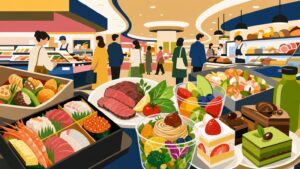
To truly witness the local consumer mindset in its purest form, visit an Osaka supermarket around 7:00 PM. This is the magic hour when staff emerge from the back with rolls of neon yellow stickers. These stickers are the currency of the savvy, marking daily discounts on perishable items—bento boxes, sashimi platters, fried croquettes, and baked goods.
What begins as a ten percent discount soon rises to twenty, then thirty, and finally the holy grail: half price. The store’s atmosphere shifts dramatically. Shoppers, who moments before were casually browsing, suddenly become laser-focused predators. They stalk the aisles, eyes on their desired items and the staff member wielding the sticker gun.
Each night, a strategic waiting game unfolds. Do you grab the sashimi now at thirty percent off to guarantee your dinner? Or risk circling the store for ten more minutes, hoping to snag the fifty percent sticker before the elderly woman with sharp elbows snatches it away? It’s an adrenaline-fueled exercise in cost-benefit analysis. Watching a wealthy-looking businessman in a tailored suit practically dive across the aisle to secure a half-price pack of discounted sushi is a beautifully democratic sight. It proves that in Osaka, the thrill of neuchi transcends social class.
Beyond Food: Best Value “Neuchi” Experiences in Osaka’s Daily Life
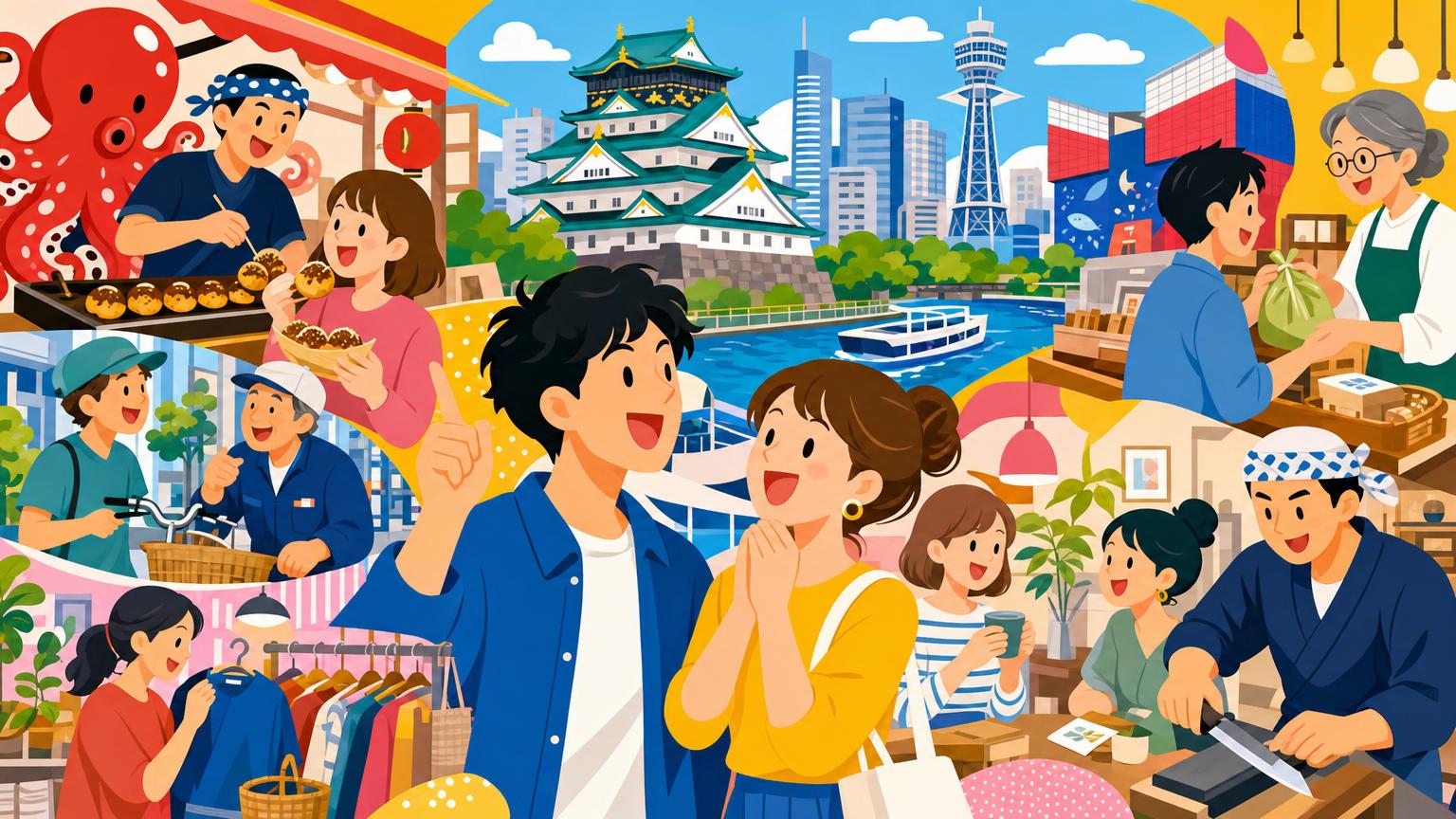
The obsession with value permeates every aspect of daily life, influencing the urban geography and social interactions within the city. Food is simply the starting point. Once you embrace this mindset, you begin to notice the principles of neuchi applied to housing, fashion, and even relationships.
Housing and Rent: Discovering Hidden Gems in Osaka Wards
For foreigners moving to Japan, the housing market can feel like a daunting and costly maze, full of key money, guarantor fees, and exorbitant deposits. In Tokyo, securing an affordable apartment often means settling for a tiny shoebox located an hour away from the city center, accompanied by a grueling daily commute on overcrowded trains.
Osaka presents a far more forgiving reality. While the housing market is competitive, it remains significantly more reasonable. Because locals refuse to overpay, landlords keep rents fair and avoid the outrageous hidden fees common in other cities. Spacious, modern apartments can be found within a twenty-minute bike ride of major entertainment districts for a fraction of Tokyo’s prices.
Kita versus Minami: The True Neuchi Territory
Osaka is broadly divided into two main hubs: Kita (North), centered around Umeda, and Minami (South), centered around Namba. Kita represents the polished, corporate image of the city, with high-rise offices, luxury department stores, and sophisticated underground malls. Minami pulses with vibrant nightlife, neon lights, and chaotic entertainment.
Though Kita commands higher rents due to its refined infrastructure, true neuchi seekers focus on neighborhoods just beyond the central rings. Areas like Fukushima to the west and the expansive residential zones of Tennoji and Abeno to the south offer an excellent balance between convenience and cost. Savvy locals know that living just two subway stops from the main hubs can reduce rent by thirty percent without sacrificing lifestyle perks. This is the epitome of real estate neuchi.
Fashion and Shopping: The Shotengai Ecosystem
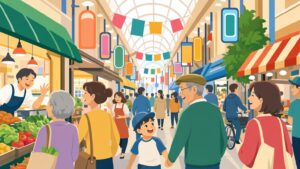
Osaka is famous for its covered shopping arcades, known as shotengai. These long, roofed pedestrian streets form the backbone of local commerce. While Tokyo is home to sleek, high-end boutiques in Ginza and Omotesando, Osaka prides itself on its sprawling, lively shotengai, where mom-and-pop shops offer everything from tea leaves and ceramic bowls to discounted sneakers and leopard-print blouses.
Tenjinbashisuji and the Culture of Haggling
The crown jewel of these arcades is the Tenjinbashisuji Shotengai. Stretching nearly three kilometers, it’s the longest shopping street in Japan. Walking its length offers a rich lesson in local culture. The air buzzes with shopkeepers’ calls broadcast from portable speakers, advertising their daily specials.
Here, fixed prices are sometimes seen as mere suggestions, especially in older, independent shops. While haggling is nearly taboo elsewhere in Japan, it’s perfectly acceptable here—if done with good humor and a smile. The exchange is playful: you jokingly complain about the price, the shopkeeper pretends offense at your stinginess, and finally, you agree on a price that satisfies both parties. The shopkeeper secures a sale, and you leave with a great story about the incredible neuchi you scored.
Dating and Socializing: Going Dutch with a Kansai Flavor
This pragmatic mindset extends even into the complex world of dating and socializing. In many cultures, one person—often the man—may be expected to cover the cost of a date to show generosity. In Osaka, while generosity is valued, practical considerations usually prevail.
Splitting the bill, or “warikan,” is very common and carries far less social stigma than elsewhere. However, there’s a unique Kansai nuance; it’s not about meticulously tracking who ate what down to the last yen. Instead, it’s an unspoken understanding that both parties are contributing to a shared, valuable experience. If a couple enjoys an amazing yakiniku dinner that turns out surprisingly affordable, they celebrate the neuchi together. Discovering a great, inexpensive, atmospheric hidden bar for a second date is seen as far more impressive and romantic than simply splurging at a renowned, overpriced hotel lounge.
The Foreigner’s Dilemma: Navigating the Culture of Neuchi
For a foreigner integrating into this society, adapting to the neuchi mindset demands a significant shift in perspective. It is easy to misread the signals and fall into cultural pitfalls. If you come from a background where displaying wealth is common, you might feel pressured to aggressively pick up tabs, buy rounds of drinks, and insist on the most expensive options to express your appreciation for your new local friends.
Common Misunderstandings About Osaka’s “Cheaper is Better” Stereotype
This well-meaning generosity can sometimes backfire. While your friends will gladly accept a free drink, continually insisting on overpaying or choosing overpriced venues can make you seem somewhat foolish in their eyes. They might begin to see you as someone lacking street smarts, someone who doesn’t grasp the value of a hard-earned yen.
The biggest misconception foreigners have is assuming that Osakans are simply cheap. The stereotype of the loud, stingy Kansai merchant is a tired trope used by television comedians, but it fundamentally misrepresents the truth. They are not against spending money; they are against wasting money. If you invite a local to a high-end sushi omakase that truly delivers world-class quality, they will gladly pay their share and praise the experience. But if you take them to a trendy, Instagram-famous cafe where the matcha costs three times the usual price just because it’s served in a fancy glass, they will relentlessly complain about the lack of neuchi.
Distinguishing Between Being Stingy and Being Savvy
The line between stingy (kechi) and savvy (neuchi ga aru) is very thin, but essential. Being stingy means refusing to spend money even when the value is there, or making others uncomfortable to save a few yen. Being savvy means maximizing the joy and usefulness of your spending. As a foreign resident, your aim should be to develop a reputation for the latter.
Learn to appreciate humble spots. Notice the effort behind a five-hundred-yen bowl of ramen. When you find a great deal, share that knowledge with your friends. Become part of the local information economy. When you can confidently lead a group to a tiny, obscure izakaya and reliably promise that the food is exceptional and the bill surprisingly low, you will have truly earned your stripes as an Osaka resident.
How to Adopt the Neuchi Mindset in Your Daily Routine
Embracing this mindset involves slowing down and paying attention. Stop relying solely on tourist guidebooks or internet top-ten lists. The places with the best neuchi don’t need to advertise, and often lack English menus or polished websites. They depend on word-of-mouth.
Begin exploring the alleys behind major train stations. Look for restaurants filled with older, local salarymen. If a place has plastic stools, faded menus on the walls, and a line out the door, join that line immediately. Shop at local greengrocers instead of huge chain supermarkets. Take the time to talk with the vendors, even if your Japanese is imperfect. Show them you care about quality and price, and they will respect you for it.
Love US-Based Osaka Restaurants? Try the Authentic “Neuchi” Experience!
Now, let us take a brief detour to explore something quite intriguing. For many living in the United States, the word “Osaka” does not immediately evoke images of neon lights, ancient castles, or bustling Japanese shotengai. Instead, it calls to mind a very specific, localized dining experience. Across America, the name has been adopted by countless strip-mall sushi spots, hibachi steakhouses, and family-run Asian fusion restaurants.
From Houma to Rhinebeck: Bringing the Taste of Japan Home
Whether you’re enjoying the huge, entertaining hibachi grills at Osaka Japanese Cuisine in Houma, Louisiana, or savoring a delicate specialty sushi roll in the charming town of Rhinebeck, New York, these establishments serve an important role. They act as culinary ambassadors. For many Americans, a birthday dinner at the local “Osaka” restaurant is their first introduction to soy sauce, ginger, wasabi, and the theatrical delight of Japanese dining.
These restaurants offer their own unique version of American neuchi. They provide generous portions, unlimited soup and salad, and a flaming onion volcano show that justifies the cost. They have successfully adapted the idea of value to suit a Western audience. However, their connection to the actual city of Osaka is usually only in name.
Finding Familiarity in Lafayette, Covington, and Tivoli
If you’re a regular at popular spots in Lafayette or Covington, or perhaps a cozy Asian bistro near Tivoli, you likely already have a deep appreciation for the flavors and aesthetics of Japanese cuisine. You admire the precision of the sushi chef, the comfort of a warm bowl of miso soup, and the savory tang of teriyaki.
But here’s the exciting part: if you enjoy the Americanized version, experiencing the real Osaka will utterly astonish you. It takes the concepts you love and amplifies them a thousandfold, immersing you in a culture that has spent centuries mastering the art of dining well on a budget.
Why Your Next Move Should Be to the Real Osaka
Imagine using the budget for a single weekend sushi dinner in the US to enjoy three days of non-stop, Michelin-quality street food eating in the real Osaka. The authentic neuchi experience means incredible, life-changing food is not reserved for special occasions or pricey nights out. It is available on every corner, every day, at prices that almost feel financially reckless.
If your local US-based Osaka restaurant has sparked an interest in Japanese culture, you owe it to yourself to experience the source. The real city is ready to show you what true value tastes like, wrapped in a chaotic, friendly, and relentlessly energetic package that no American strip mall can ever genuinely replicate.
The Psychological Comfort of a Good Deal in Kansai
Returning to the streets of Kansai, it’s essential to explore the deeper psychological dynamics involved. Why does securing a good deal feel so deeply satisfying here? In many respects, finding neuchi is a form of everyday rebellion. In a modern world dominated by giant corporations, inflation, and stagnant wages that leave the average consumer feeling powerless, discovering a genuine bargain offers a small but tangible victory.
It becomes a way of reclaiming control from the system. When a local stumbles upon a hole-in-the-wall bar offering draft beer for two hundred yen, they feel as though they’ve outsmarted the economy. They’ve uncovered a glitch in the matrix. This brings immense psychological comfort, creating a sense of security—a reassurance that no matter how hard life gets, the city will always provide avenues to eat well, drink well, and enjoy life without breaking the bank.
Bragging About the Discount: A Regional Badge of Honor
This sense of triumph compels sharing. That’s why bragging about a discount is deeply embedded in the culture. It’s not about flaunting wealth; it’s about celebrating cleverness. It’s a way to spread the joy of victory.
When a friend tells you about an unbelievably cheap and delicious yakitori spot they discovered in Juso, they’re offering you a gift. They share their hard-earned knowledge so that you, too, can beat the system. The appropriate response is never to dismiss or feign indifference. Instead, it’s one of genuine shock, followed by an immediate request for the location and a vow to visit together.
The Classic Conversation Starter: Guess How Much This Cost?
The phrase “Kore nanbo datta to omou?” (How much do you think this was?) is a classic Osaka icebreaker. It’s used at home, in offices, and over drinks. Mastering this exchange is vital for any foreigner aiming to fit in. When asked this question, you must engage in the game.
Inspect the item. Pretend to ponder deeply. Estimate a reasonable retail price, then guess a bit higher. If shown a nice pair of leather shoes, guess fifteen thousand yen. Watch their face light up joyfully as they dramatically reveal they bought them on clearance in Amagasaki for three thousand yen. Praise them enthusiastically. Recognize their superior shopping skills. You have just successfully taken part in a fundamental Kansai social ritual.
Neighborhoods that Define the Neuchi Lifestyle
To fully embrace this lifestyle, you need to know where to look. While neuchi can be found throughout the city, certain neighborhoods are renowned for their commitment to extreme value. These are the areas that resist gentrification, fiercely holding onto their working-class roots and rock-bottom prices.
Nishinari and Shinsekai: The Raw Edge of Value
Nishinari ward, located to the south, has historically been the city’s day-laborer district. It carries a rougher reputation compared to the polished streets of Kita, but it is now experiencing a slow, organic renaissance fueled almost entirely by the search for neuchi. Backpackers, artists, and budget-conscious locals flock here for the incredibly cheap accommodations and the raw, no-frills dining scene.
Here, you can find standing bars where a drink and a plate of grilled offal (horumon) cost less than a train ticket. It is raw, gritty, and undeniably authentic. It strips away all pretenses and delivers pure, unadulterated value. Adjacent to Nishinari is Shinsekai, which we discussed earlier. Together, these two neighborhoods create a powerful draw for anyone seeking the most extreme examples of Osaka’s bargain culture.
Tsuruhashi: Korean BBQ, Kimchi, and Unbeatable Bargains
Just a few stops along the JR Loop Line brings you to Tsuruhashi, the heart of Osaka’s vibrant Korean community. The moment you step off the train platform, the heavy, intoxicating aroma of roasting meat and sesame oil greets you. Tsuruhashi is a dizzying maze of narrow alleys filled with yakiniku (Korean barbecue) restaurants, kimchi stalls, and vendors selling traditional clothing.
The neuchi here comes from fierce competition. With dozens of yakiniku restaurants packed shoulder-to-shoulder, they must offer incredible quality and generous portions to survive. A lunch set often includes a mountain of high-grade beef, bottomless rice, soup, and an array of banchan (side dishes) for a price that would barely cover a sandwich in Tokyo. The shopping alleys beneath the tracks provide endless opportunities to haggle over massive jars of handmade kimchi, showing that the value mindset transcends cultural boundaries throughout the city.
Amagasaki: The Commuter’s Paradise Just Across the Border
Although technically located in neighboring Hyogo Prefecture, the city of Amagasaki functions as a massive, hyper-affordable extension of Osaka. Just a short train ride from Umeda, “Ama” is well-known among locals for having some of the cheapest shotengai and supermarkets in the entire Kansai region.
Many savvy residents choose to live in Amagasaki and commute into Osaka. They endure the slightly longer train ride to benefit from drastically lower rent and a famously cheap cost of living. It is a city defined by bicycles, bustling street markets, and a fiercely proud, down-to-earth population that considers paying full price for anything a personal failure.
Adapting Your Spending Habits for the Osaka Rhythm
Successfully living in this environment requires restructuring your daily routines. You can’t simply transplant a Western or Tokyo-centric spending rhythm here and expect it to work; you must adapt to the local commercial flow.
Transportation Hacks and Commuter Passes
This practicality extends to how people get around the city. Although the subway system is excellent, Osaka is essentially a bicycle city. The terrain is mostly flat, making it incredibly easy to navigate on a simple, single-speed “mamachari” (a durable, utilitarian bike with a basket).
Riding a bicycle is the ultimate transportation neuchi. It avoids train fares, keeps you active, and lets you discover hidden neighborhood gems you’d miss if confined underground. For those who need to take the train, the value-seeking mentality shows itself in the intricate world of discount ticket shops (kinken shoppu). These small stores buy and sell unused train tickets, event passes, and gift certificates. Locals often stop at a kinken shoppu to buy a discounted Shinkansen ticket before a business trip, saving a few hundred yen just on principle.
Izakaya Culture and the All-You-Can-Drink Phenomenon
When it comes to socializing, the nomihodai (all-you-can-drink) system reigns supreme as nighttime neuchi. While nomihodai exists throughout Japan, Osakans approach it with an intense efficiency. It becomes an exercise in mathematical calculation.
If a two-hour nomihodai costs fifteen hundred yen, and a single draft beer costs five hundred yen, the break-even point is exactly three beers. Every drink after the third is pure, unmitigated profit for the consumer. You’ll see groups of salarymen carefully tracking their consumption to surpass the break-even point within the first forty-five minutes. It’s a joyful, slightly chaotic celebration of outsmarting the house, powered by endless highballs and perfectly fried chicken.
Maximize Your Life with Osaka Neuchi
Ultimately, understanding this city isn’t about memorizing train maps or recalling the historical dates of the castle’s construction. It’s about understanding its people. It’s about realizing that beneath the loud voices, flashing neon lights, and bustling streets, there exists a deeply rational, beautifully pragmatic philosophy of living.
The focus on neuchi is not a sign of stinginess. It reflects a profound respect for the effort needed to make a living. It demands honesty in business and fosters a culture that rewards the clever, the observant, and the modest. For a foreigner, adopting this mindset is the key to discovering the true joy of life here.
When you stop throwing money at the obvious, costly tourist traps and begin seeking out the hidden, high-value treasures, the city reveals itself to you. You cease being an outsider looking in and become part of the ongoing negotiation that defines daily life. You learn to relish the thrill of the bargain, connect through shared discounts, and judge experiences not by their price tags but by their genuine, undeniable worth. You learn to live life with maximum flavor, maximum joy, and unwavering neuchi. Welcome to the real Osaka. It’s worth every single yen.