
The train doors slide open at Shin-Osaka Station, and the air immediately feels different. It is heavy, alive, and charged with a kinetic energy that Tokyo actively suppresses. You step onto the concrete platform, and the hushed, sterile murmurs of the eastern capital vanish, replaced instantly by the rhythmic, unapologetic cadence of the Kansai dialect. I am a curator by trade. My life is firmly anchored in Tokyo, where I navigate the modern Japanese art scene with a careful, quiet diplomacy. I orchestrate gallery exhibitions in Roppongi, sipping pour-over coffee in silent, minimalist rooms where deals are made with the faintest nods and legally binding whispers. But Osaka is a different beast entirely. When I come here to source contemporary pieces, to negotiate with the raw, brilliant artists hiding in the converted warehouses of Nakazakicho, or to sit down with the old-money corporate patrons of Kitahama, I have to change my entire operational playbook. You are reading this because you want to understand Osaka. You are thinking of moving here, or perhaps you already have, and you find yourself constantly bewildered by the unwritten rules governing this sprawling, neon-lit labyrinth of commerce. You have likely realized that the glossy tourist brochures explaining polite, silent Japan do not apply here. Osaka is not a city of temples and quiet contemplation. Osaka is, and always has been, the beating heart of Japanese commerce. It is a merchant city, built on the hustle, the deal, and the enduring power of human connection.
Foreign professionals arriving in Japan often bring a singular, monolithic view of Japanese business culture. They expect rigid hierarchies, endless bowing, silent boardrooms, and a frustrating lack of direct communication. While elements of this exist everywhere in the country, applying the Tokyo corporate template to an Osaka business meeting is a surefire way to stall your progress and alienate your potential partners. To understand Osaka, you must look beyond the surface-level stereotypes of loud street food vendors and flashy signs. You must dig deep into the psychological bedrock of the city. The people of Osaka do not just do business; they live it. The transaction is not merely a transfer of funds for goods or services; it is a social contract, a theatrical performance, and a mutual agreement of trust. This underlying philosophy dictates how colleagues speak to one another by the water cooler, how salespeople pitch to foreign clients, and how massive corporate mergers are negotiated behind closed doors in the high-rises of Umeda. If you are a foreign resident trying to build a career, secure a partnership, or simply navigate the daily commercial interactions of your life in the Kansai region, you need a fundamental paradigm shift. You must learn to recognize, respect, and eventually embody the local merchant philosophy.
This article is designed to be your practical, unvarnished guide to the realities of workplace negotiation and client relationships in Osaka. We are going to dismantle the academic theories and look at how business actually gets done on the ground. We will explore the historical weight of the merchant mindset and how it translates into modern boardroom tactics. We will dissect the subtle, unspoken cues that dictate the flow of a meeting, and we will examine concrete, real-world scenarios that highlight the stark contrast between Western directness and Osaka’s relational business dance. I will share insights from my own cross-country negotiations, bridging the gap between Tokyo’s rigid expectations and Osaka’s fluid, human-centric deal-making. Forget the dry corporate textbooks that treat Japanese business as a monolith. Prepare to understand the dynamic, deeply relational, and fascinatingly complex world of the Osaka merchant. By the time we are finished, you will no longer view your client meetings as mere transactions. You will see them as the intricate, relationship-building rituals they truly are, and you will understand exactly how to navigate them with grace, patience, and a genuine appreciation for the local culture.
Understanding the ‘Shōbai’ Spirit in Japanese Business Culture
The Core Philosophy: What Does Shobai Mean?
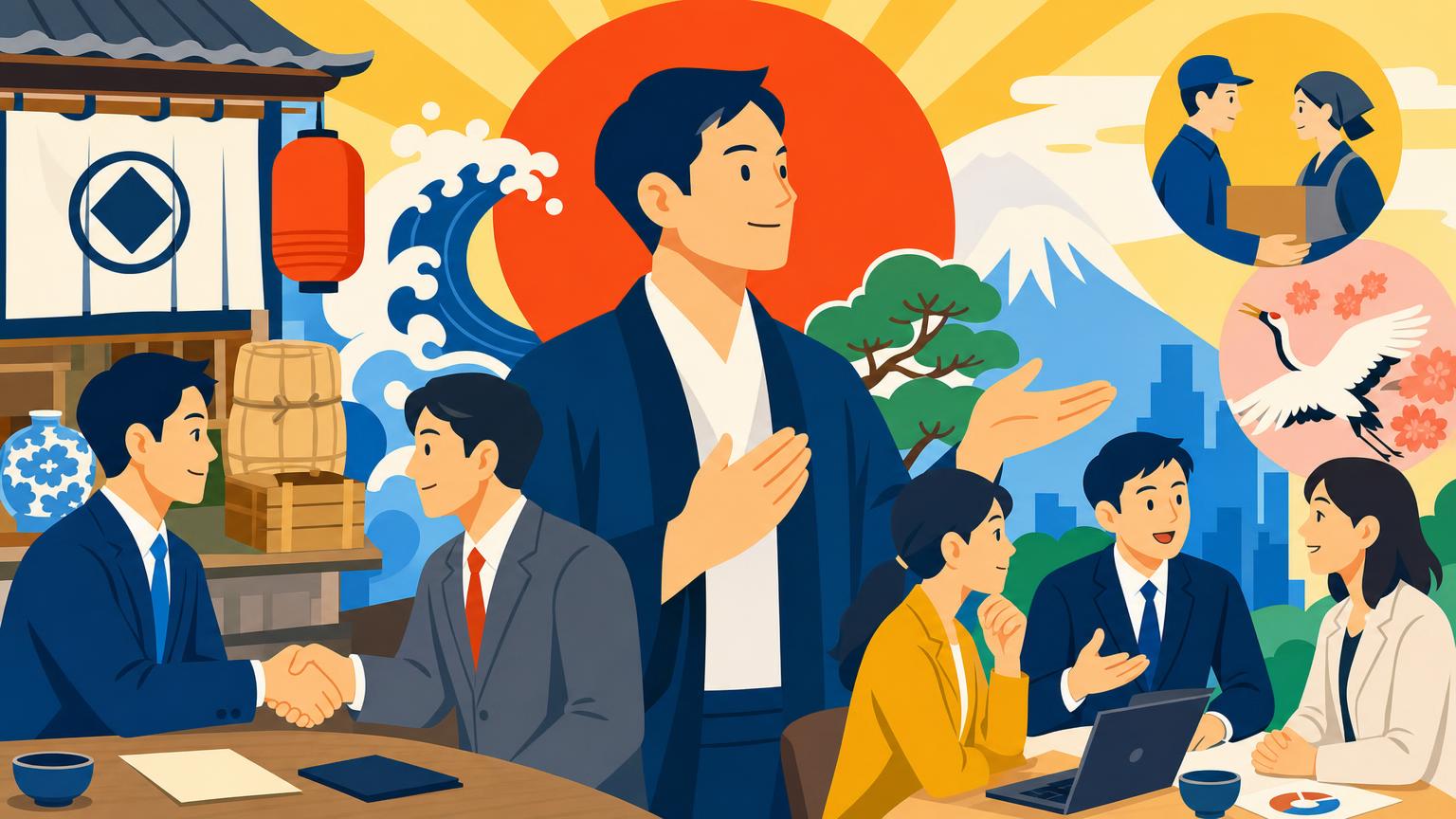
To truly understand Osaka’s business environment, we first need to clarify the terminology that shapes it. The Japanese term ‘Shobai’ translates directly to commerce, trade, or business. Yet, reducing it simply to ‘business’ overlooks its deep cultural significance and historical roots, especially in the Kansai region. In Western contexts, business is often seen as a detached, methodical activity—a process focused on generating profit through metrics, quarterly reports, and binding contracts. When Western professionals think of business, visions of spreadsheets, tough negotiations, and the pursuit of profits typically come to mind. In contrast, in Osaka, Shobai embodies something far richer. It is a vocation, a lifestyle, and a core philosophy governing human relations. The ‘Shobai Spirit’ signifies a deeply rooted respect for commerce not only as a means of wealth but as a crucial social function that sustains community, nurtures lifelong bonds, and fosters shared prosperity.
When a local entrepreneur refers to their Shobai, they mean their lifelong work, their family heritage, and their personal honor within the community. The Shobai spirit requires merchants to be astute, inventive, and ever vigilant for opportunity, while also remaining humble, grounded, and steadfastly loyal to their customers. It is an intricate balance between ambition and compassion. This duality is visible throughout Osaka—for instance, in how a street vendor at Kuromon Ichiba market vocally and cheerfully bargains with a buyer, transforming a simple transaction into a lively, entertaining exchange. The sale becomes a playful contest, a dance of intellect where both sides engage enthusiastically. Yet beneath the laughter and spirited chatter lies profound seriousness: the vendor ensures the customer feels appreciated, delighted, and content, securing their return. This is the true essence of the Shobai spirit—it recognizes that a single sale holds no value if it endangers the possibility of countless future ones.
For foreign professionals stepping into an Osaka boardroom, failing to grasp this spirit is often the first significant obstacle. Approaching meetings with a purely transactional mindset, keen to finalize contracts, set prices, and quickly return to Tokyo, will likely be met with polite but impenetrable resistance. Local counterparts will sense the absence of the Shobai spirit. Your efficiency may be read as coldness, your straightforwardness as confrontational, and your focus on immediate deals as a warning sign that you lack long-term trustworthiness. In the Shobai world, the figures on the contract matter less than the character of the person signing it. Early meetings rarely concentrate on products or services; instead, they serve as an elaborate vetting process to assess if you understand the philosophy of mutual benefit. They seek evidence of warmth, patience, and humanity essential to engage in authentic Shobai. As a curator, I faced this lesson firsthand early in my career. I once attempted to quickly negotiate a commission with a venerable sculptor in Sakai’s southern district, armed with contracts, deadlines, and strict budgets. He greeted me with green tea, smiled warmly, disregarded my paperwork, and spent two hours inquiring about my family’s history in Tokyo and my artistic philosophy. I left feeling like I had failed completely, but later realized he was testing my Shobai spirit—he needed to know who I was before entering into business.
Historical Roots and the Concept of ‘Sanpo-Yoshi’
To fully grasp why the Shobai spirit functions as it does, we must revisit the historical forces that shaped Kansai’s distinctive mindset. During the Edo period, spanning the early seventeenth to late nineteenth century, Japan was ruled under a rigid caste system called Shinokosho. At the pinnacle were the samurai, the warrior elite who valued honor, stoicism, and martial service above all else. Beneath them were farmers and artisans who produced tangible goods. Merchants occupied the lowest rung and were viewed with suspicion and subtle disdain by the ruling class, who considered those trading money and goods without producing anything real as parasitic. While Edo (modern Tokyo) was the samurai’s political stronghold, Osaka developed a very different identity. Free from the samurai’s heavy control, it flourished as the nation’s commercial and logistical hub, earning the nickname ‘Kitchen of Japan’—a bustling hub where rice, textiles, and goods from across the country were traded, stored, and sold.
Excluded from official status, Osaka’s merchants had to rely solely on their savvy, networks, and impeccable reputations to succeed. They could not depend on noble titles or military power; their credibility and business acumen were their currency. From this fiercely competitive yet highly interconnected environment arose a profound ethical framework that still dominates Japanese business philosophy today. This is the principle of ‘Sanpo-yoshi’, meaning ‘three-way satisfaction’ or ‘three-way good’. It asserts that for a business deal to be truly successful, ethical, and sustainable, it must meet three criteria. First, it must be ‘Urite-yoshi’, beneficial for the seller, ensuring profit and growth. Second, it must be ‘Kaite-yoshi’, good for the buyer, delivering genuine value, quality, and satisfaction. Lastly, and most crucially, it must be ‘Seken-yoshi’, good for society, meaning the business positively contributes to the community, local economy, and social fabric.
In a modern Osaka conference room, filled with executives in sharp suits checking smartphones, it can be easy to overlook this legacy. Yet the Sanpo-yoshi philosophy remains a guiding force behind every decision. When a foreign company proposes an aggressive, disruptive model designed to maximize profits by cutting out local distributors or undercutting neighborhood competitors, it often faces resistance. Where the West sees disruption as innovation, the Shobai mindset—rooted in Sanpo-yoshi—views reckless disruption that harms the local ecosystem as a violation of ‘Seken-yoshi’. It is harmful to society. A deal that benefits seller and buyer but destroys the wider community is inherently flawed, unethical, and destined to fail. Thus, when negotiating in Osaka, your pitch cannot revolve solely around ROI, margins, or market share; you must explicitly or implicitly demonstrate alignment with Sanpo-yoshi principles. Show how your partnership will benefit their company, enrich yours, and most importantly, uphold the stability and prosperity of the broader market and community. Understanding this historical concept is the key to earning trust in Kansai’s business world, transforming you from an outsider selling a product into a respected partner in their enduring commercial tradition.
How the Shobai Spirit Shapes Japanese Business Negotiations
Prioritizing Long-Term Partnerships Over Quick Wins
The central disconnect between Western business approaches and the Osaka Shobai spirit almost always comes down to differing perceptions of time. In major Western financial centers like New York, London, or even within Tokyo’s fast-moving tech industry, time is treated as a rapidly diminishing resource. The objective in negotiations is to arrive at a mutually acceptable conclusion as quickly and efficiently as possible. Contracts serve as tools of speed, designed to secure terms so both parties can immediately shift focus to implementation and revenue generation. The ‘quick win’ is praised. An executive who can fly into a city, close a large deal over a single power lunch, and leave that same afternoon is celebrated as a master negotiator. Attempting this method in Osaka will almost certainly lead to failure and likely damage future relations. The Shobai spirit does not perceive time as an enemy to be conquered; rather, it sees time as the fertile ground in which trust must be nurtured carefully.
In the Kansai region, the ultimate aim of a negotiation is not the contract signing itself. The contract is simply a formalized byproduct of the real goal: the development of a resilient, deeply rooted, and lasting human relationship. Osaka businesses do not seek vendors; they seek partners. They want assurance that if the market crashes, a global supply chain crisis arises, or a shared client goes bankrupt, you will stand with them and endure the difficulties side by side, rather than citing a contract clause and walking away. This profound emphasis on long-term stability fundamentally changes the rhythm of negotiations. When you introduce a proposal to an Osaka company, initial meetings will seem painfully slow to someone used to Western business norms. There will be multiple rounds of introductions, thorough inquiries into your company’s history, your personal background, and your long-term corporate vision. They will ask questions that appear unrelated to the specific product or service you offer. You may find yourself seated in a carefully decorated reception room, drinking endless cups of roasted green tea, discussing changes in the seasons, the local baseball team, or your company founder’s philosophy for an hour before any business matters are addressed.
This is not a sign of inefficiency; it is the Shobai spirit at work. They are conducting a deep character evaluation. They seek patience, consistency, and a willingness to invest time without immediate rewards. If you show visible irritation or constantly try to steer the discussion back to pricing and deadlines, you signal that you are only interested in a short-term deal. You present yourself as a mercenary, not a partner. As a Tokyo-based curator collaborating with traditional Osaka artisans, I have spent entire years building relationships before exchanging a single piece of art. I have attended exhibition openings, shared countless late-night dinners in cramped, smoke-filled izakayas in Tenma, and listened to hours of stories about struggles within the local art world. I did this not out of a desire to waste time, but because I understood that when I finally proposed a major gallery show, they needed to see me not as a Tokyo outsider exploiting their talent, but as a trusted friend genuinely invested in their long-term success. For foreign professionals, adapting to this timeline is essential. You must reset your expectations. Do not see initial meetings as the negotiation itself; regard them as the prologue to the negotiation. Your main goal early on is simply to be invited back. Demonstrate your willingness to play the long game. Show that you value the relationship above the immediate signing of the contract.
The Importance of Mutual Trust and Harmony (Wa)
If Sanpo-yoshi is the historic ethical foundation of Japanese business, then the notion of ‘Wa’ is the emotional and psychological bond that holds it all together. Wa is typically translated as ‘harmony,’ but like Shobai, this simple translation does not fully capture the immense significance the concept holds in everyday Japanese life, especially in professional settings. In Western cultures, healthy conflict is often seen as a necessary catalyst for progress. Debate is encouraged. Playing devil’s advocate is welcomed. Challenging a colleague’s idea in a meeting is regarded as a sign of critical thinking and active engagement. The best idea wins, even if feelings get slightly hurt in the process. In Japan—and especially in Osaka’s relational business culture—preserving Wa is the highest priority in any group interaction. Wa dictates that the group’s emotional balance must be maintained at all costs. Open confrontation, outright refusal, aggressive contradiction, and public displays of anger or frustration are seen not as strong leadership, but as serious failures of emotional control and a deep disrespect to the collective dynamic.
However, preserving Wa does not mean everyone agrees with everything. Osaka businesspeople are famously sharp, opinionated, and savvy negotiators. The distinction lies entirely in how disagreement is expressed. In Osaka, harmony is maintained through a highly refined system of indirect communication, subtle cues, and behind-the-scenes consensus-building known as Nemawashi. When an Osaka professional disagrees with your proposal, they almost never say “no” directly. A blunt “no” would sever the relationship, damage the Wa, and cause both sides to lose face. Instead, they employ numerous polite deflections. They might say, “That’s a very interesting idea, but it could be difficult given the current situation.” Or, “We will need to carefully study this proposal.” Or they might simply inhale sharply through their teeth, tilt their head, and say, “Let us think about it.” To Western ears, such phrases might sound like genuine consideration or even a preliminary “yes.” To anyone familiar with the Shobai spirit, these are polite, definitive “no” responses.
Understanding Wa also involves recognizing the particular flavor of harmony unique to Osaka. In Tokyo, Wa is often upheld through strict formality, silence, and adherence to protocol. Meetings can seem stiff, with participants cautious not to disrupt the calm, orderly surface of interactions. Osaka’s harmony is different—it is warmer, louder, and more human. Kansai merchants maintain Wa not through silence, but through humor, self-deprecation, and shared vulnerability. When a negotiation grows tense, or gaps in expectations threaten group harmony, an Osaka executive will often defuse the tension with a well-timed joke, a humorous admission of their own faults, or a sudden change to a lighter subject. They use warmth to ease the friction of business. Foreign professionals must learn to navigate this subtle environment. Avoid aggressive, confrontational tactics. Never force an Osaka counterpart to give an immediate “yes” or “no,” as this places them in an impossible position endangering Wa. Instead, present your ideas gently. Leave space for graceful retreat if they disagree. Pay close attention to their polite deflections, and most importantly, embrace the warmth. If they crack a joke to relieve tension, laugh along. Show that you, too, prioritize the emotional balance of the relationship over the immediate victory in argument.
Subtle Communication and Reading the Atmosphere (Kuuki wo Yomu)
Because direct confrontation is avoided and harmony must be maintained, Japanese business culture depends heavily on high-context, non-verbal communication. This is embodied in the important cultural concept of ‘Kuuki wo Yomu,’ which literally means ‘reading the air.’ In Western negotiations, communication tends to be low-context—what is said is exactly what is meant. Words carry the full message, and any ambiguity is the speaker’s responsibility to clarify. In Japan, communication is intensely high-context. The spoken words often represent only a fraction of the true meaning. The real message lies in pauses, body language, tone of voice, seating arrangements, and what is deliberately left unsaid. It is entirely up to the listener to read the air, interpret these subtleties, and discern the unspoken reality.
Failing to read the air in an Osaka boardroom is like navigating a minefield blindfolded. A foreign professional who takes the words at face value will miss the essence of the negotiation. For example, imagine you are presenting a new pricing model to a client in central Osaka. After your presentation, the lead executive nods slowly and says, “Your presentation was very thorough. The pricing model is certainly unique.” Without reading the air, you might treat this as praise and push for next steps. But if you notice subtle signals—the stillness of his subordinates, their averted eyes, his flat tone lacking the usual Kansai enthusiasm—you will realize that “unique” here politely means “unacceptable,” and “thorough” signals “overwhelmed by disagreeable details.” The atmosphere has grown heavy. Pushing the proposal further in that moment will damage the relationship.
Reading the air in Osaka also requires grasping the local variation of this skill. While Tokyo businesspeople may use Kuuki wo Yomu to enforce strict conformity and prevent anyone from speaking out of turn, Osaka professionals use it dynamically to assess the emotional climate of the deal. They are constantly reading you just as you read them. They observe how you treat junior staff, your reactions to delays, and whether your smile is genuine or a calculated sales tactic. To master Kuuki wo Yomu as a foreigner, cultivate keen observation. Shift focus from your pitch deck to the people in the room. Watch facial micro-expressions. Note the length of silence after difficult questions. Observe who looks at whom during critical decisions. Often, the senior-most person says the least, but the meeting’s entire atmosphere depends on their subtle shifts in posture. Perfecting this skill takes years of practice in a foreign culture, but simply recognizing that the atmosphere holds crucial information is the essential first step. When entering a meeting in Osaka, turn down your internal monologue and heighten your cultural sensitivity. Let the atmosphere shape your pacing, tone, and overall approach to negotiation.
Concrete Examples of the Shobai Spirit in Action
Example 1: Prioritizing Relationship Building Before Contracts
To fully grasp how the abstract concepts of Shobai, Sanpo-yoshi, and Kuuki wo Yomu come alive in practice, we need to explore concrete situations. Consider a detailed, highly realistic example of a complex negotiation in Osaka, emphasizing the critical importance of relationship building before any contract discussions begin. Picture a mid-sized European manufacturing company aiming to source high-precision, specialized industrial components from a multi-generational, family-owned engineering business in Higashi-Osaka. Known globally as a hub of specialized manufacturing, Higashi-Osaka is famed for its small, humble factories producing parts used in everything from deep-sea submersibles to satellite technologies. The European firm sends a senior procurement manager—let’s call him Thomas—to secure the contract. Thomas is highly capable, driven, and familiar with the fast-paced, legally binding negotiations typical of the German automotive industry.
Thomas arrives in Osaka carrying a briefcase filled with technical specifications, aggressive volume pricing matrices, and a standard, ironclad nondisclosure agreement. He arranges a meeting with the president of the engineering firm, Tanaka, who is the third generation running the company. Thomas expects to enter a boardroom, present his specs, negotiate unit costs, sign the NDA, and lock in the supply chain within a few days. However, the reality of the Shobai spirit immediately disrupts his schedule. At the factory, there is no boardroom. He is led into a small, cluttered reception room smelling faintly of machine oil and green tea. President Tanaka arrives dressed in a typical factory uniform, not a suit, accompanied by his chief engineer and head of sales. To Thomas’s surprise, no one opens the technical files. For the first ninety minutes, Tanaka asks about Thomas’s flight, his impressions of Osaka’s food, and the history of Thomas’s company in Europe. Tanaka shares stories about his grandfather founding the factory after the war, and their conversation shifts to the challenges of finding skilled young apprentices in contemporary Japan.
Growing increasingly anxious about time, Thomas repeatedly tries to steer the talk toward pricing. Each time, Tanaka smoothly deflects, complimenting the European company’s product quality, offering another cup of tea, and steering the discussion back to broader industry topics. The meeting ends with no talk of unit costs, no NDA signed, and a vague invitation from Tanaka to join dinner that evening in Dotonbori’s bustling entertainment district. Thomas is perplexed and frustrated, feeling his day was wasted. Yet, a local observer would recognize the negotiation is proceeding exactly as intended. Tanaka is perfectly embodying the Shobai spirit. He knows his factory can produce the parts; he knows the European firm has the funds. What he doesn’t yet know is whether Thomas and his company have the character for a long-term partnership. Can this large foreign company be trusted not to push his small factory out of business in three years? Will they respect his workers? Will they honor the principles of Sanpo-yoshi?
The real negotiation happens that evening, without any contracts present. Over plates of sizzling okonomiyaki and glasses of draft beer, formal barriers come down. Tanaka observes how Thomas interacts with waitstaff and listens to how he speaks about his junior colleagues back home. He is assessing the Wa. When Thomas finally relaxes, stops pushing his agenda, and shares a genuine story about an early career failure, the mood shifts. Tanaka laughs, recounts a similar youthful machine failure, and pours Thomas another beer. Trust is formed. The next morning, when they return to the factory, the dynamic has changed entirely. Technical files are opened. Pricing is discussed openly and constructively. Because Thomas showed patience in engaging this relational process—because he proved himself more than a mercenary chasing the cheapest deal—Tanaka is now willing to offer flexibility, dedication, and customized engineering support unattainable through aggressive bargaining. This is the true strength of the Shobai spirit: it compels the foreigner to slow down, invest emotionally, and build a human foundation so strong that the final contract becomes merely a formality confirming an existing alliance.
Example 2: Finding Mutual Concessions During a Deadlock
The Shobai spirit is not just about drinking tea and making friends; it’s a practical system for navigating conflict and securing mutual survival in a competitive market. To demonstrate this, consider a second scenario centered on the most challenging phase of any business interaction: the deadlock. Imagine a foreign technology startup based in Singapore that has developed an advanced logistics software platform. They are negotiating to sell it to a massive, deeply traditional Osaka-based shipping and logistics conglomerate. Initial relationship-building has gone well. Trust has been established, dinners shared, and the software’s technical merits proven to the Osaka firm’s IT department. However, they have hit a major impasse regarding licensing fees. The Singapore startup requires a high annual recurring revenue to satisfy venture capital investors, while the Osaka conglomerate, operating on razor-thin margins honed over decades, flatly refuses to pay the requested fee. They are stuck.
In a typical Western negotiation, such a deadlock often triggers a standoff. Each side retreats, calculates leverage, issues quiet ultimatums, and the deal either collapses or one side eventually concedes, often breeding long-term resentment. But in Osaka, the Shobai spirit demands a different approach to deadlock, rooted deeply in Sanpo-yoshi philosophy. If the deal falls apart entirely, neither seller nor buyer benefits—that is a failure of the merchant spirit. If the Osaka firm pays a ruinous fee, or the startup accepts a catastrophic loss, the principle of mutual prosperity is broken. The aim is not to win the standoff but to choreograph a graceful, face-saving dance of mutual concessions that preserves Wa and strengthens the long-term partnership.
The lead negotiator for the Osaka conglomerate, a veteran executive named Sato, knows he can’t simply demand a 50% discount—that would insult the startup, undermine their product’s value, and destroy the harmony they’ve built. Instead, Sato initiates a nuanced conversation. He invites the startup founders to a quiet coffee shop in Kitahama’s financial district, away from the formal boardroom. He begins by lavishly praising the software to ensure they feel respected. Then he shares the logistics industry’s struggles, rising fuel costs, and pressure to maintain employment for thousands of aging Kansai workers. He paints their reality, inviting the startup to read the air and understand the impossibility of the fee. He doesn’t say “we won’t pay this,” but rather, “We deeply want to implement your brilliant system to future-proof our company, but given our heavy responsibilities to our workforce, the current fee is burdensome.”
If perceptive, the Singapore founders understand they’re being invited to build a bridge. Sato offers them the chance to lower the price not as a defeat, but as a noble concession made to a respected partner. Still, the Shobai spirit demands balance. The Osaka merchant doesn’t accept a discount without offering something of equal or greater long-term value in return. As the startup tentatively proposes restructuring payment to extend contract length and lower annual costs, Sato reciprocates immediately. He offers to make his conglomerate the flagship case study for the software in Japan. He pledges to personally introduce the startup to three other major logistics firms in his extensive Kansai network. He offers to co-develop a special module for the software, granting shared intellectual property ownership.
This exemplifies masterful Shobai negotiation. The deadlock is broken not by aggression but by laterally expanding the deal’s value. The startup agrees to a lower upfront fee but gains unprecedented market access, a major anchor client, and powerful local endorsements money can’t buy. The Osaka conglomerate secures essential technology at a price respectful of their margins while maintaining a reputation as a tough but fair negotiator. Both parties leave feeling victorious, harmony intact, and their relationship strengthened. The foreign professional must learn to see a deadlock not as an impassable wall but as an opportunity to creatively broaden the partnership’s scope, ensuring every concession is balanced by a reciprocal gesture of mutual benefit, perfectly embodying the ancient wisdom of the three-way satisfaction.
Practical Negotiation Tips for Business Travelers in Japan
Adapting Your Pace and Patience
Having delved into the philosophical foundations and analyzed real-world examples of the Shobai spirit, we must now shift to practical, actionable advice for the foreign business traveler preparing to engage with the dynamic, intricate world of Osaka commerce. The most crucial adjustment you need to make, surpassing all other tactics and strategies, is a fundamental shift in your internal pacing and your reservoir of patience. As previously noted, the Osaka timeline for building trust is considerably longer than what is typical in the West. If you arrive in the Kansai region with a rigid schedule, expecting to finalize a deal by Thursday to fly out on Friday, you are setting yourself up for significant frustration and almost certain failure. Your impatience will manifest in your tone, body language, and email communications. Local executives will pick up on this tension, sense your eagerness to close the deal quickly, and immediately categorize you as an unreliable, short-term thinker lacking the essential Shobai spirit.
To adapt effectively, you must intentionally incorporate patience into your travel and business plans. When organizing a trip to Osaka for acquiring a new client or negotiating a major partnership, avoid booking a tight three-day window. Allow yourself a full week or, ideally, plan multiple shorter visits spread over a fiscal quarter. Reserve room in your itinerary for spontaneous dinners, extended coffee meetings, and seemingly tangential conversations—all vital to the process. Before you even pack, mentally separate the idea of ‘progress’ from that of ‘signed agreements.’ In Osaka negotiations, spending three hours discussing a client’s company history over tea without mentioning price is significant progress. You are establishing a foundation and passing the character test.
Moreover, this patience must extend to the communication rhythm between meetings. After submitting a proposal or responding to a request, long silences from the Osaka side are common. In a Western context, a week of silence after a pitch often signals a dead deal, prompting anxious follow-ups and desperate price cuts. In Japan, however, this silence means the Nemawashi process is in motion. The proposal is circulating through departments; junior staff review it, middle managers discuss it quietly, and consensus is slowly and harmoniously formed behind the scenes. If you panic and send an urgent, demanding follow-up, you disrupt this delicate balance and force a premature response, usually resulting in a polite but firm rejection. Your best strategy is calm, confident restraint. Send a polite, relationship-oriented note thanking them for their time, perhaps sharing a relevant industry article, and then allow the internal process of the Osaka firm to proceed at its own pace. Mastering this composed patience is the defining trait of a foreign professional who truly grasps how to operate in Kansai business.
Respecting Etiquette and Corporate Hierarchy
While Osaka’s business environment is noticeably warmer, louder, and more casual than the strict, silent boardrooms of Tokyo, it is a grave error for a foreign professional to mistake this casual warmth for a lack of hierarchy. Beneath the laughter, dialect, and relaxed atmosphere lies a firmly entrenched Japanese corporate structure that demands absolute respect. The Shobai spirit prizes human connection but also fundamentally honors order, seniority, and proper role alignment. Misreading this dynamic by treating a junior associate with the same deference as a senior executive—or ignoring junior staff entirely in favor of the boss—disrupts Wa and immediately reveals a serious lack of cultural understanding.
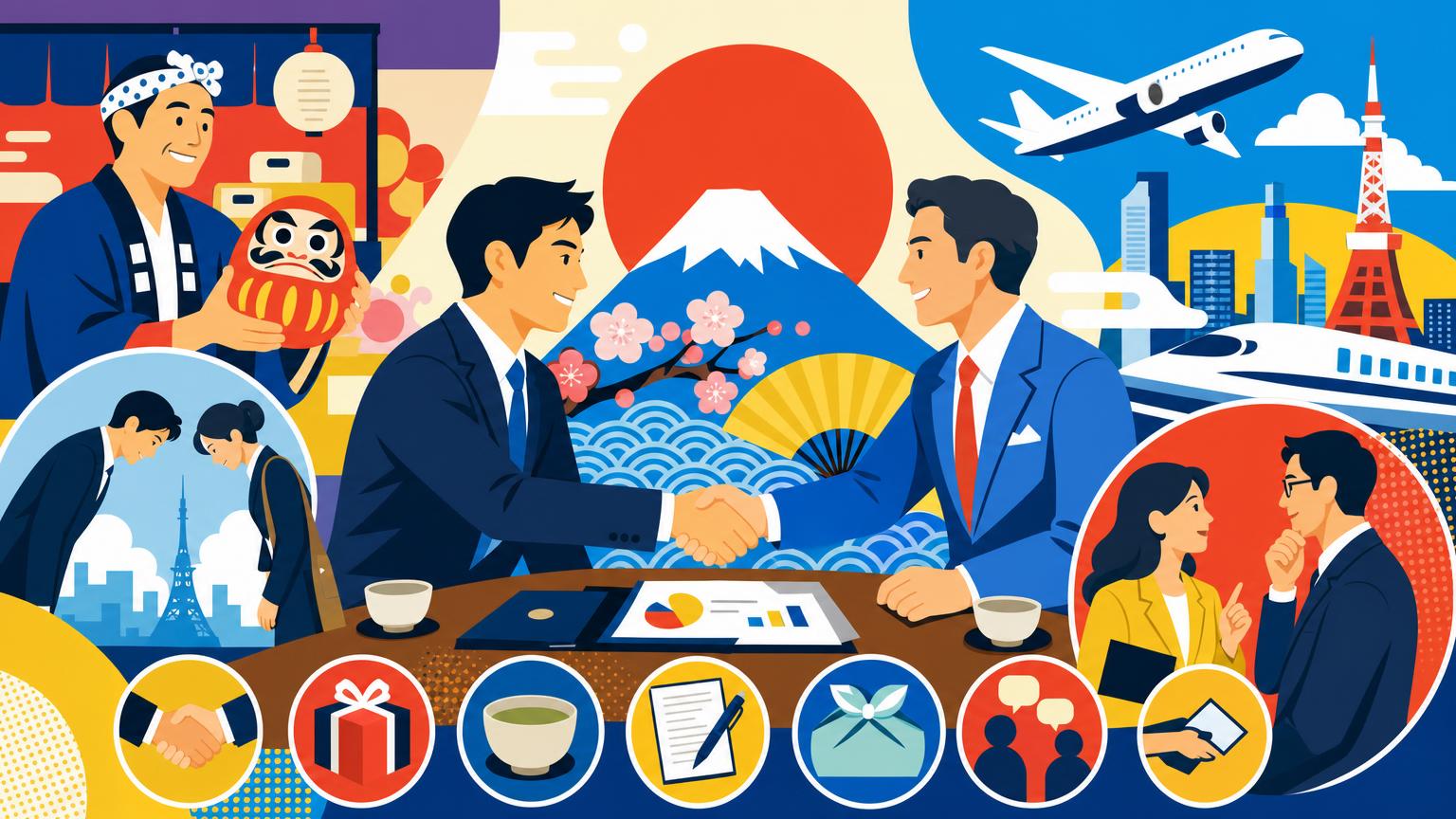
Navigating this hierarchy starts the moment you enter the meeting room. Seating arrangements are deliberate; they physically represent corporate status. The seat furthest from the door, the Kamiza, is reserved for the most senior guest, while the Shimoza, nearest the door, is for the junior host member expected to perform tasks like pouring tea or managing documents. As a guest, wait to be shown your seat rather than choosing one yourself. Once seated, the Meishi, or business card exchange, begins. This is not a casual swap but a formal introduction of rank and identity. Present your card with both hands, bow slightly, and ensure the text faces the recipient for easy reading. Receive their card with both hands, study it briefly, then place it respectfully on the table, arranging multiple cards to mirror the seating layout. Never stuff a Japanese business card into your back pocket or write on it in front of its owner—these acts are deeply disrespectful to both individual and company.
During negotiations, respecting hierarchy requires a subtle, layered approach. The most senior Osaka executive may speak little, often with eyes closed or downcast, letting department heads or junior managers ask detailed technical questions. A common Western mistake is to respond only to the junior questioner, ignoring the silent senior executive. To succeed, use a broad communication style: begin by making eye contact with the junior manager who asked the question, but as you deliver the key points, shift your gaze toward the senior executive. You simultaneously acknowledge the junior’s inquiry and formally present your core message to the ultimate decision-maker. Furthermore, never bypass the hierarchy to speed up the process. Contacting the CEO directly via LinkedIn because a middle manager is slow to reply is a disastrous breach of protocol. It publicly shames the middle manager and signals to the CEO that you are disorderly, disrespectful of internal processes, and untrustworthy. Respect the chain of command, honor introduction rituals, and navigate the invisible architecture of the room with grace. Only by meticulously observing this structural etiquette can you truly earn the right to experience the deep warmth, loyalty, and lasting success embodied in Osaka’s authentic Shobai spirit.