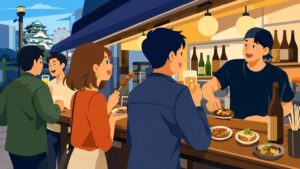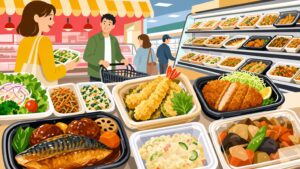
A foreign resident in Osaka once asked me a question that sounds simple but is actually very revealing: “Why will someone spend freely on dinner, complain about the price of a plastic bag, and then buy the most expensive kitchen knife in the shop?”
The short answer is that Osaka’s idea of saving money is not the same as simply spending less. It is closer to choosing carefully, avoiding waste, and making sure that money produces a visible result. People may search three supermarkets before buying vegetables, yet pay for a high-quality meal with friends. They may wear inexpensive clothes, repair a bicycle for years, and still give generously when a colleague leaves a workplace.
This is one reason Osaka can feel different from Tokyo. Tokyo often places more emphasis on convenience, presentation, brand image, and the cost of time. Osaka certainly has all of those things too, but daily conversations more often turn toward value: Is it worth it? Can I get the same thing somewhere else? Will this last? Is the shop treating me fairly? What do I get in return?
Before going further, one language point matters. “Ketai” is not the usual Japanese word for this idea. You may be thinking of kechi (ケチ), meaning stingy or overly tight with money, or ken’yaku (倹約), meaning frugality and thrift. Osaka also has the older expression shimatsu (始末), which suggests putting things in order, using resources carefully, and avoiding unnecessary waste. In everyday Osaka culture, the positive side is often closer to shimatsu or ken’yaku than to the insult kechi.
That distinction is important if you are living in Osaka, considering a move here, or trying to understand what Osaka people are really like. Calling someone “stingy” may describe the outside appearance of a behavior while missing the internal logic behind it. The Osaka question is usually not “How can I refuse to pay?” It is “What is the sensible price, and what should this money accomplish?”
The map below centers on Umeda Station, one of Osaka’s major working, shopping, and meeting areas. It is not included as a sightseeing recommendation. It is a useful place to observe the contrast between department stores, underground markets, office workers, discount shops, restaurants, and ordinary commuters—all sharing the same city and constantly making judgments about value.
What Does Osaka’s Frugality Actually Mean?
Kechi is not the whole story
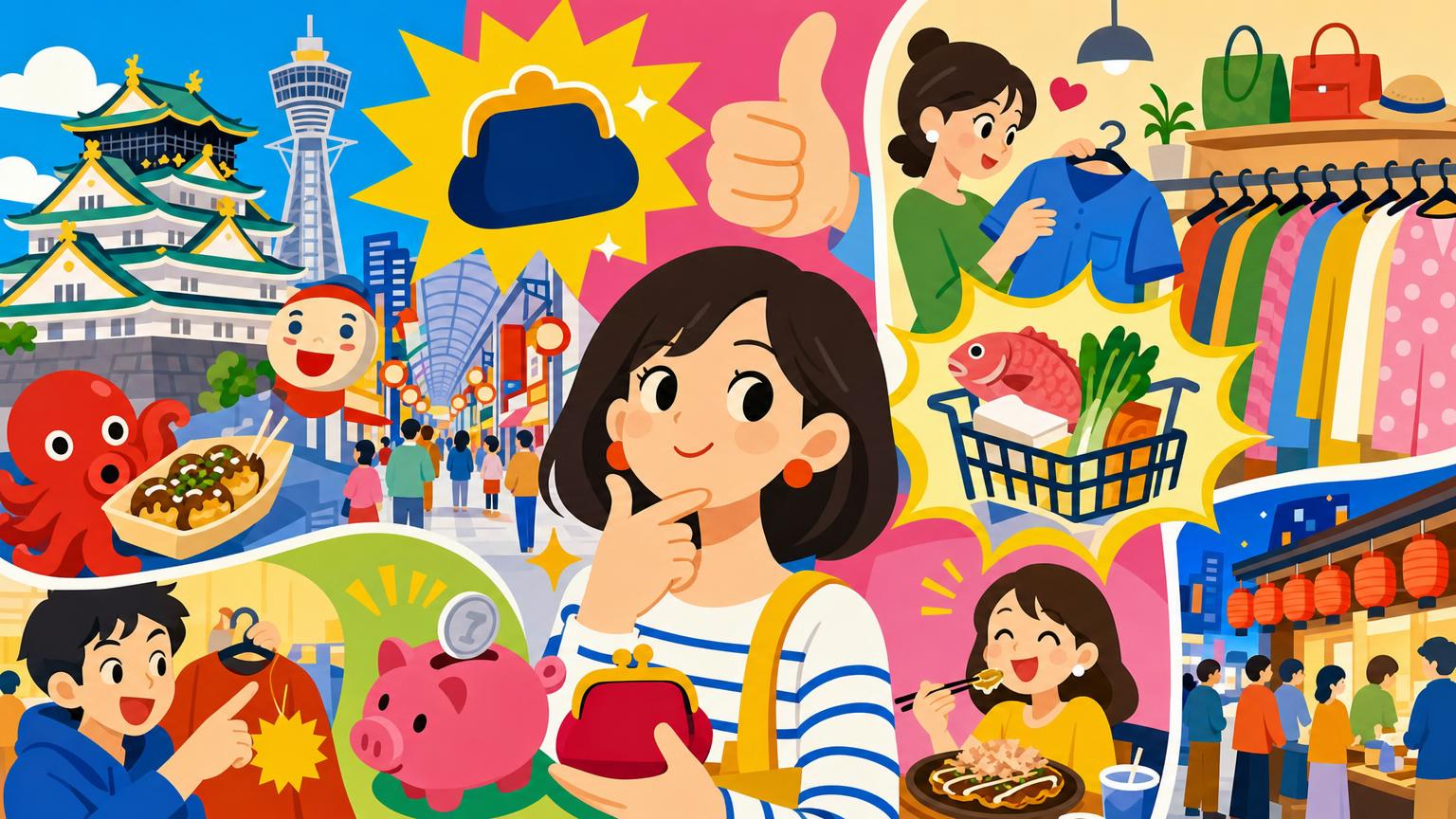
When looking for explanations about Osaka people, you often encounter the stereotype that they are kechi: tight-fisted, overly focused on money, or always hunting for bargains. Osaka residents themselves sometimes use this stereotype humorously. Someone might complain loudly about a small price, meticulously calculate a meal’s cost down to the yen, and then laugh, saying they are “very Osaka.”
However, this stereotype becomes misleading when taken as a full personality description. A kechi person, in a negative sense, avoids paying even when the payment is fair, refuses to contribute, or prioritizes the lowest price above everything else. Osaka’s more respected approach is different. It is selective, asking whether the price matches the quality, if the purchase will be used, and if the relationship involved in the transaction feels fair.
Thus, an Osaka resident might reject an expensive convenience-store drink but happily spend money at a trusted local restaurant. It is why someone might compare electricity plans, supermarket flyers, and mobile phone contracts but still buy a good pair of shoes because cheap shoes are a false economy. It is why someone might bring a reusable bag, reuse containers, and repair household items without feeling like they are living a poorer life.
Frugality here is often a form of competence. Knowing where to shop, when to buy, how to compare prices, and which quality differences matter can give a person a kind of status. The person who knows the best fish shop, the best weekday lunch, or the supermarket that discounts prepared food at the right time is not simply “cheap.” They are knowledgeable about the city.
Shimatsu: saving as a kind of order
The older term shimatsu helps explain this mindset more precisely. In historical Osaka merchant culture, the word came to imply managing things from beginning to end, controlling resources, and avoiding waste. Osaka’s official cultural explanations often differentiate this spirit from mere stinginess, describing it instead as frugality and thrift.
You can see shimatsu in everyday homes. A household may keep furniture for decades, use leftovers in new dishes, repair a bicycle rather than replace it, and bring home free condiments only if they will actually be used. This does not necessarily mean the household is poor; it can mean that discarding something useful feels irrational.
The same logic appears at work. An Osaka colleague might ask whether a meeting really needs printed handouts, if a taxi is necessary, or if a company should buy a premium service that employees will barely use. This question may sound blunt to a foreigner accustomed to softer workplace language. Usually, however, the person is not trying to block every expense—they are asking for justification.
This is an important distinction for foreigners. When an Osaka person questions your spending, it may not be a critique of your taste but an invitation to explain the value. If you say, “It will save me time,” “It will last ten years,” or “It matters for my health,” the conversation often becomes smoother. But if you say simply, “It is a famous brand,” you might receive a skeptical look.
Frugality can coexist with generosity
One of the most confusing aspects for newcomers is that Osaka’s careful money habits coexist with visible generosity. Someone who haggles over a restaurant bill may buy snacks for the whole office. A neighbor who watches household expenses closely may bring a large gift when visiting someone’s home. Friends may split a bill precisely yet still order extra food for the table.
This is not a contradiction when money is seen socially. Spending on shared enjoyment, hospitality, food, family, and close relationships can be meaningful. Spending on status, waste, or vague promises of prestige tends to invite more suspicion.
This distinction is not unique to Osaka nor does it apply to every individual. Osaka is a vast, diverse city, not a single personality type. Still, the contrast is common enough to be useful: money is not automatically admired, but money used wisely can earn respect.
Why Osaka Became So Focused on Value
A commercial city with a practical memory
Osaka’s reputation as a merchant city is not a modern marketing creation. For centuries, the city has grown as a center of trade, distribution, finance, food, and commercial networks. Japan’s government describes Osaka as a city that thrived as a major commercial hub for over four centuries.
That history doesn’t mean every modern Osaka resident thinks like an Edo-period merchant. It does mean that commerce has become part of the city’s cultural memory. Daily life was influenced by buying, selling, negotiating, storing, transporting, lending, and assessing risk. In such a setting, reputation was important. A seller who cheated customers might profit once but lose future business.
The merchant concept often linked to Osaka was not simply “make money by any means.” It also involved trust, repeat business, and mutual benefit. The well-known principle of sanpō yoshi, or “good for the seller, good for the buyer, good for society,” is connected to Japanese commercial ethics and commonly discussed in relation to Osaka’s merchant tradition. Materials from Osaka Prefecture link the city’s historic commercial character with thrift, education, ethical trade, and the belief that commerce should create broader value.
In everyday life, this heritage can appear in small ways. A shopkeeper may honestly explain that a cheaper item will suffice for your needs. A restaurant owner might recommend a less expensive dish because the premium option isn’t worth it for one person. A customer may return to the same shop for years because the owner remembers their preferences.
The value of a relationship is part of the price
In a purely anonymous transaction, price is usually the key point of comparison. In Osaka, the relationship with the seller can also influence the perception of value. This doesn’t mean every customer expects a discount or that every shop is informal. It means that conversation itself can be part of the transaction.
An older customer may chat with a fishmonger, ask what arrived that morning, and decide not to buy the most expensive item. A vegetable shop worker might tell a regular customer which produce is best for a certain recipe. A small restaurant may remember how someone prefers their coffee. These interactions create a feeling that the customer is not just moving through a price system.
Foreign residents sometimes misinterpret this directness. They might think a shopkeeper is pressuring them or that a customer is being rude by asking too many questions. Often, the exchange is a practical negotiation of trust. The customer wants to know what is worth buying. The seller wants the customer to return.
This is also why a bit of Osaka-style humor can be important. A joke, teasing comment, or exaggerated complaint can ease the formality of a transaction. The goal is not always to get a lower price. Sometimes it’s simply a way to show that both parties understand the situation.
The influence of “mōkarimakka?”
The old Osaka greeting mōkarimakka? is often translated as “Are you making money?” It is not usually used by strangers in everyday Osaka the way foreign visitors sometimes think. Still, the phrase remains useful as a cultural symbol because it frames life through practical results.
The traditional expected response could be bochi bochi denna, meaning something like “So-so,” “Getting by,” or “Little by little.” The tone matters more than the exact words. It reflects modesty, realism, and an awareness that life is never completely secure.
This attitude can be heard in workplace conversations. Someone may ask whether a business is doing well, whether a side job is worth continuing, or whether a new restaurant is actually making money. The question might sound too personal to a foreigner from a culture where income and profit are rarely discussed openly. In Osaka, the same question can be practical curiosity, humor, or a way of acknowledging the effort required to keep a business going.
However, don’t assume that Osaka residents always want to discuss their salary or savings. The culture is direct in some areas and private in others. A shop’s performance, food prices, or the value of a service may be open topics. Personal debt, family issues, and exact income often remain sensitive.
Osaka vs. Tokyo: The Different Feeling Around Money
Tokyo is not wasteful, and Osaka is not automatically cheap
It’s easy to create a misleading Osaka-versus-Tokyo narrative. Tokyo features many discount stores, affordable restaurants, neighborhood supermarkets, thrift shops, and pragmatic residents. Osaka offers luxury shopping districts, pricey restaurants, high-end apartments, and status-conscious consumers. Neither city fits neatly into a single economic stereotype.
The difference lies more in social style than fixed pricing. Tokyo often feels more segmented. Work, fashion, neighborhoods, professional identity, and lifestyle branding tend to be sharply divided. Osaka often feels more blended and conversational. A high-rise office district might be right next to an old shopping street. A luxury department store could be just a short walk from a discount pharmacy. The social gap between these worlds feels smaller.
This physical and social blend fosters Osaka’s value-conscious atmosphere. People see diverse types of consumption close by. They can compare and joke about it. Someone in designer clothes may eat at a standing noodle shop. A company employee might buy premium fruit for a parent but choose the cheapest detergent at home.
“Cheap” in Osaka often means “not wasteful”
Foreigners sometimes interpret Osaka’s bargain culture as lacking refinement. This outside view overlooks the pride many people take in finding a good deal. The best purchase isn’t always the most expensive or the cheapest, but the one that offers the most appropriate return.
Food serves as a good example. An Osaka resident might care deeply about lunch costs but not want poor-quality food. They may prefer a small local restaurant with a limited menu, quick service, and consistent quality over a stylish restaurant with high rent and elaborate presentation.
The same applies to clothing. Some choose inexpensive chains because clothes are functional and seasonal. Others invest in vintage items, tools, furniture, or specialty products for their character and durability. The key question is whether the item justifies its cost.
For someone living in Osaka, this can be liberating. Respect is not based on displaying wealth. You can live comfortably in a modest apartment, shop practically, and spend on what matters to you. At the same time, you might need to explain expensive choices more clearly than in cultures where brand prestige is automatically accepted.
Tokyo often values time; Osaka often discusses the trade-off
Tokyo’s size and commuting patterns make time a valuable form of currency. People may pay for convenience because a long trip or complicated errand carries a high opportunity cost. Osaka residents do this too, but everyday conversations more often reveal the trade-offs.
Is the faster train worth the extra fare? Is the convenience store worth the higher price? Is a taxi worth it in the rain? Is buying online better than visiting three shops? Osaka’s style is not always about picking the cheapest option; it’s about calculating the exchange.
That’s why Osaka can feel practical rather than merely frugal. Someone may spend extra to avoid hassle but wants the reason to be clear. “It saves me two hours” is a strong argument. “Everyone buys it” is less convincing.
How Value Appears in Everyday Osaka Life

Supermarkets as a Source of Local Knowledge
If you live in Osaka, one of the quickest ways to get to know the city is by visiting several supermarkets at different times throughout the day. Within the same neighborhood, you might find a large national chain, a smaller local store, a premium grocery market, and a discount-focused supermarket all within walking distance.
Residents learn which store excels at vegetables, which has the freshest fish, which offers discounts on prepared meals in the evening, and which stocks foreign ingredients. They may not label this knowledge as “culture”; it’s simply part of managing a household.
Observing the discounted food shelves can also offer insights into timing. Residents don’t always wait for discounts because they can’t afford the original prices; often, they wait because the food will be consumed that same evening, the quality remains good, and paying full price isn’t necessary.
Foreign residents might sometimes feel awkward about purchasing discounted food. In Osaka, this is usually unnecessary. The practice is common and practical. The important etiquette is to take only what you will actually use, avoid blocking other shoppers, and check the package date and condition.
Drugstores Offer More than Just Medicine
Japanese drugstores sell far more than medicines. Depending on the location, you may find skincare products, toiletries, household goods, snacks, drinks, baby items, and seasonal merchandise. Osaka residents often compare prices at drugstores rather than assuming a well-known discount chain is always the cheapest option.
A typical local shopping tip is that neighborhood drugstores can beat Don Quijote on certain snacks, skincare, and daily necessities, especially during weekly promotions or points campaigns. This is not a hard-and-fast rule—prices vary by product, location, and promotion. The broader lesson is more valuable: don’t assume the most famous discount store offers the best deal on everything.
This kind of comparison reflects Osaka’s shopping savvy. Residents might buy one product at Don Quijote, another at Matsumoto Kiyoshi, and household goods at a supermarket. The lowest overall cost often means making several stops.
Affordable Clothing Does Not Mean Poor Taste
For inexpensive clothing in Osaka, residents often turn to GU, Uniqlo, and Shimamura for different needs. GU is popular for low-cost, trendy basics. Uniqlo is favored for dependable everyday wear, innerwear, and seasonal functional items. Shimamura deserves special attention if you want to understand local budget shopping beyond the international visitor experience.
Shimamura is known for very affordable clothing, household textiles, shoes, bags, and practical seasonal goods. It may lack the polished appeal of major department stores, but that’s intentional. Many local shoppers focus on function, price, and unexpected finds rather than a carefully curated brand atmosphere.
Foreign residents may initially overlook Shimamura because it often isn’t located in the trendiest shopping districts. That would be a mistake if you want insight into how typical households stretch their budgets. The store exemplifies a very Osaka-style approach to consumption: buy what’s functional, avoid unnecessary status, and keep money available for other priorities.
Repairs, Reuse, and Secondhand Shopping
Secondhand shopping aligns with this value mindset, but not only because it’s affordable. Purchasing used items can mean better materials, unique designs, and access to products no longer produced. In neighborhoods with vintage shops, discussions often focus on condition, origin, and individuality as much as price.
A foreigner might see a repaired bicycle, a reused storage box, or a secondhand appliance and assume the owner is simply making do. Sometimes that’s true, but often it’s a deliberate choice. Replacing a functioning item just because a new version exists can feel wasteful.
This attitude is especially evident in older Osaka neighborhoods, where homes and shops might have limited space and long histories. People know which items can be repaired, which can be passed on to another family, and which should finally be discarded. The line between “old” and “valuable” doesn’t always match the line between “new” and “valuable.”
How Osaka People Talk About Prices
Direct questions are often practical, not aggressive
A new foreign resident might be surprised when someone asks, “How much was that?” or “Why did you buy that one?” In some cultures, these questions can seem intrusive. In Osaka, however, they are often a normal way to begin a conversation.
The meaning depends on the tone and relationship. A friend may be interested because they are considering the same purchase. A coworker might be joking. A shopkeeper could be explaining the difference between products. An older person may simply be curious about how prices are changing.
You don’t need to answer every question. A brief reply such as “It was on sale” or “I needed something durable” usually suffices. If you react strongly, the other person might not understand why the topic feels private.
Complaining can be a form of participation
Conversations in Osaka often include playful complaints about prices, service, weather, transport, or food portions. Someone might say, “That is too expensive,” even if they intend to buy the item. The complaint creates space for humor and shared understanding.
For foreigners, the safest approach is to gauge the emotional tone. Is the speaker genuinely upset, or are they expressing mild dissatisfaction as part of the interaction? In Osaka, exaggerated complaints can be invitations to respond playfully.
This doesn’t mean you should immediately imitate Osaka dialect or turn every exchange into a comedy act. Forced jokes can feel awkward. A simple response like “Really? That much?” or “I should compare prices next time” is enough.
Bargaining has limits
Osaka’s reputation for bargaining sometimes leads foreigners to think they should negotiate everywhere. In modern Japan, most chain stores, supermarkets, restaurants, and department stores have fixed prices. Bargaining in these places is generally inappropriate.
There might be some room for discussion in certain markets, independent shops, used-goods transactions, or when buying multiple items, but you should observe carefully first. Ask politely if the price is fixed. Don’t treat a small local shop as a bargaining stage just because Osaka is known for its bargain-loving culture.
A more widely accepted form of price negotiation is comparison. You can choose not to buy, ask about alternatives, or return later. A shopkeeper might explain that another product offers better value. This approach is often more comfortable than aggressively demanding a discount.
What Foreigners Commonly Misunderstand
“Friendly” does not always imply intimacy
People often describe Osaka as friendly, but the term is too broad to be precise. Osaka friendliness might mean people speak directly, joke briefly, offer practical advice, or show emotion openly. It does not necessarily indicate a desire for a close personal bond.
A shopkeeper might tease you while still expecting a typical customer relationship. A neighbor may help carry something but still value their privacy afterward. A colleague might invite you to dinner yet keep the connection professional.
The practical takeaway is to accept warmth without assuming immediate closeness. Respond naturally, express gratitude, and allow the relationship to grow gradually.
Directness is not synonymous with hostility
Osaka speech can sound stronger than standard Japanese to foreigners, especially when people speak Kansai dialect, raise their voice, or use an animated rhythm. The volume and tone may reflect local style rather than anger.
However, it’s important not to excuse every harsh interaction as “just Osaka.” Rudeness exists everywhere. If someone is threatening, discriminatory, or consistently disrespectful, you don’t have to accept it as cultural behavior.
A balanced approach is to consider the full context: facial expressions, relationships, situation, words, and what follows. Osaka’s direct style often carries more emotional nuance than foreigners expect, but genuine hostility still happens.
Asking about money is not the same as being materialistic
A culture that openly discusses prices might seem materialistic. In Osaka, talking about money can also address effort, fairness, household budgeting, and product quality.
Someone asking about your rent may be trying to understand the area. Asking about your lunch cost might be a way to compare restaurants. Complaining about a service charge could be upholding a principle about value.
Of course, some people are just curious. Osaka is no exception to normal human behavior. But it’s better to understand the intent behind the question before assuming the person is only interested in money.
Saving money does not mean living without enjoyment
Visitors and newcomers sometimes assume a frugal Osaka lifestyle is austere. In reality, many save precisely to enjoy selected pleasures. Food, hobbies, family events, music, sports, travel, and social gatherings are all worthy expenses.
The culture is less about avoiding pleasure and more about preventing waste. A household might cut daily expenses to afford a special meal. A worker may skip unnecessary subscriptions to spend on a favorite hobby. Friends might pick a casual restaurant to stay longer and order more together.
This is why “cheap” and “good” are not opposites in Osaka. A cheap choice can be smart if it preserves money for something more valuable.
What Daily Life Feels Like for a Foreign Resident
You might need to clarify your priorities
Living in Osaka can be comfortable for foreigners who value practical systems and casual communication. However, you may occasionally feel that people are more openly assessing your choices than you expected.
Why do you live in that pricey apartment? Why do you take taxis? Why do you buy imported food? Why do you throw away that chair instead of fixing it? These questions can feel judgmental, especially if you come from a culture where personal spending is considered private.
You don’t have to justify every decision. Still, a simple explanation helps. Saying “It’s close to work,” “I have allergies,” “I needed it today,” or “I plan to use it for years” gives others context. Communication in Osaka often becomes easier when the practical reason is clear.
Your neighborhood matters more than the city stereotype
Osaka is not a monolithic culture. The vibe in Tennoji, Nishinari, Sumiyoshi, Joto, Higashiyodogawa, Fukushima, Kita, and other neighborhoods can be very different. An apartment near a major office district results in a different daily rhythm than one near a traditional shopping street or a suburban station.
If you are deciding whether Osaka is a good place to live, don’t judge solely by its famous central areas. Explore the station area where you might actually live. Check out the supermarket, pharmacy, clinic, recycling points, bicycle parking, school routes, and local restaurants. Observe how people move around the neighborhood at various times.
The value mindset becomes clearest in these everyday places. You’ll see residents comparing vegetables, checking discount stickers, carrying repaired umbrellas, sharing shop information, and choosing how to spend their time. This is Osaka as a lived city, not just a postcard.
Foreign residents are expected to learn the local rhythm
Osaka is used to newcomers, including people from other parts of Japan and abroad. Still, international residents are not exempt from local expectations. You are expected to sort garbage properly, pay rent and bills on time, keep noise down, follow bicycle rules, and participate in the basic responsibilities of neighborhood life.
A frugal culture pays attention to shared costs. Waste collection, building maintenance, electricity use, and public spaces are practical concerns. If one resident leaves bulky trash in the wrong spot or neglects a shared area, others may see it as unfair because someone else must deal with it.
This is why practical respect matters more than perfectly performing Japanese manners. Learn the rules, ask if unsure, and show that you are making an effort not to create unnecessary work for others.
How to Practice Osaka-Style Smart Spending Without Becoming “Kechi”
Compare the total value, not just the sticker price
The cheapest option isn’t always the best value. Take into account durability, repairability, transport costs, time, and how often you’ll use the product. A low-cost appliance that breaks quickly might end up costing more than a reliable one. A supermarket discount isn’t a bargain if the food goes to waste.
Osaka-style value focuses on practicality rather than absolute cost. Consider what the purchase will provide for you over time.
Keep a local price map in your mind
Understand the roles of stores near your home. One shop might excel in produce, another in toiletries, another in household supplies, and yet another in late-night discounts. You don’t need to visit every store daily but should know where each type of purchase makes the most sense.
Ask neighbors or coworkers for recommendations, but pay attention to the reasons behind them. Comments like “the vegetables are fresh,” “the owner is honest,” “they offer discounts after seven,” and “the quality is consistent” are more useful than simply hearing a shop is cheap.
Spend openly on what matters to you
A common mistake among foreign residents is trying to mimic an imagined Osaka resident by rejecting every expensive option. This can unnecessarily limit your lifestyle. If good coffee, books, fitness, music, or a specific ingredient is important to you, spend on it without hesitation.
The cultural savvy is not pretending to prefer the cheapest choice, but understanding why your choice matters and avoiding unnecessary expenses.
Don’t confuse frugality with treating others poorly
Splitting a bill fairly is reasonable. Refusing to pay your share of a group meal, making others cover your convenience, or consistently taking advantage of a friend’s generosity isn’t smart frugality; it’s unfair.
Osaka’s commercial ethics traditionally link profit with trust and social responsibility. The everyday principle is simple: don’t impose hidden costs on others while claiming to be economical. Pay your share, return borrowed items, bring something when appropriate, and acknowledge the value of other people’s time.
Know when not to complain
Complaining can build connection, but constant complaining wears people out. If a shop worker has clearly followed the rules, arguing over minor issues might make you appear less like a savvy shopper and more like a difficult customer.
Good value includes valuing relationships, a worker’s time, and your own peace of mind. Sometimes, paying the listed price and moving on is the wisest choice.
Is Osaka a Good Place to Live If You Want a Practical Life?
For many people, yes—but not because every part of Osaka is inexpensive or because the city provides a magical answer to the cost of living. Osaka can be a good place to live if you appreciate access, variety, informal communication, neighborhood shopping, and the freedom to live well without constantly showcasing status.
You may find it easier to establish a comfortable routine with everyday stores, local restaurants, public transportation, bicycles, and mixed-use neighborhoods. However, you might also find the directness exhausting if you prefer more distance, quieter conversation, or a clear separation between personal and public life.
The city rewards those who pay attention. Observe where residents shop. Notice what they repair versus what they replace. Listen to how they discuss prices. Take note of which expenses bring satisfaction and which are regarded as waste. Over time, Osaka evolves from a city of “cheap shopping” into a city of practical judgment.
This is the deeper meaning behind the kechi stereotype. On the surface, it may seem like a complaint about a ten-yen increase, a hunt for the best supermarket discount, or a joke about an expensive menu. Beneath that lies a question about fairness and usefulness: What is this worth? Who benefits? Will it last? Is there a better way?
The Real Art of Value in Osaka
Osaka’s frugal-but-smart culture does not demand spending as little as possible. Instead, it encourages mindfulness.
Mindfulness about quality. Mindfulness about timing. Mindfulness about waste. Mindfulness about the people involved in a transaction. Mindfulness about the difference between something that appears expensive and something truly valuable.
This is why people in Osaka can be cautious with money yet generous with enjoyment. They might refuse a high price without compromising quality. They can appreciate a bargain without feeling inferior. They may critique a purchase while admiring the person who made a thoughtful decision.
If you are learning how to live in Osaka, begin by changing your question. Don’t just ask, “How can I spend less?” Instead, ask, “How can I use my money, time, food, space, and relationships wisely?”
That question will bring you much closer to the spirit of Osaka than any stereotype about stinginess. It will also help you understand why the city’s most practical wisdom often sounds like a joke, appears during shopping, and ends with a meal shared by people who were careful all day so they could fully enjoy the evening.