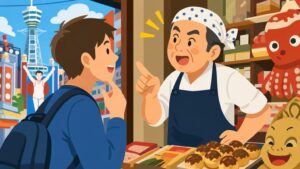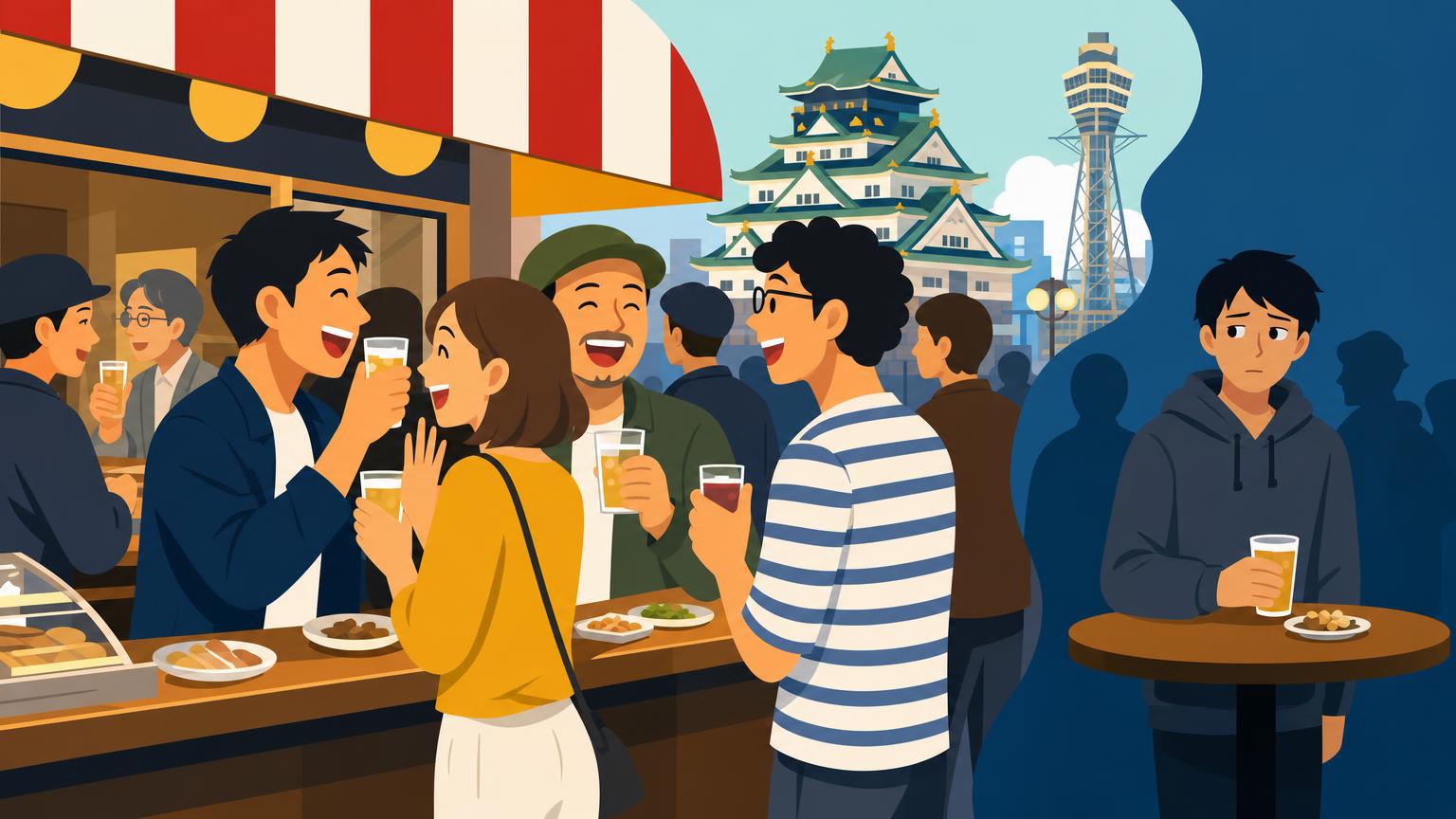
Dusk falls heavy and humid over the Kansai region. The neon begins to hum, painting the slick pavement in vibrant shades of magenta and electric blue. As a photographer originally from the sprawling, quiet plains of Canada, I used to find comfort in vast expanses and empty horizons. My camera naturally sought isolation. But then I moved to Osaka, a city that outright rejects empty space. Here, life is lived shoulder to shoulder. It is loud. It is unapologetic. And nowhere is the true, unfiltered pulse of this city more evident than inside its tachinomi, the legendary standing bars that anchor the corners of every lively neighborhood.
Foreigners arriving in Japan often carry a preconceived notion of the culture. They expect quiet reverence. They anticipate polite distance, bowed heads, and private dining booths where orders are placed via sleek digital tablets. Tokyo largely delivers on that expectation. Tokyo is polished glass, silent trains, and curated experiences. Osaka is something entirely different. Osaka is a late-night street food vendor yelling over the hiss of hot oil. Osaka is the stranger next to you pouring a beer into your glass simply because you made eye contact.
To understand daily life in this city, you have to understand where its people go to shed their corporate armor. You have to understand the tachinomi. A standing bar is not just a place to catch a cheap buzz before catching the last train home. It is a social equalizer. It is a microcosm of Kansai society. The way you navigate a tight, smoke-filled room, the way you manage your physical footprint, and the way you interact with the gruff but golden-hearted barkeep reveals exactly who belongs in Osaka and who is merely passing through. This guide is written to help you peel back the curtain. If you want to know how the people of this city think, speak, and survive, you have to learn how they drink.
What is Tachinomi? Japan’s Authentic Standing Bar Culture
The word itself is remarkably simple. Tachi means to stand, and Nomi means to drink. Put together, they form the most utilitarian method of consuming alcohol ever created. However, calling it merely a standing bar overlooks the concept’s rich and gritty history.
The origins of tachinomi trace back to the post-war period, emerging out of sheer necessity. In the rougher, working-class neighborhoods, liquor stores began allowing day laborers to drink their purchases on-site. They fashioned makeshift counters from stacked beer crates and wooden planks. There were no chairs because chairs suggested lingering, and lingering suggested luxury. These men required a quick, strong drink to wash away the factory dust before heading back to their cramped homes.
Decades on, the post-war toughness has softened, but the spirit of tachinomi remains deeply alive. Today, you’ll find these establishments nestled within the concrete veins radiating from major train stations. The clientele, however, has changed substantially. On a typical Tuesday night, a silver-haired grandfather in a tweed jacket might stand beside a young graphic designer in vintage denim, who in turn stands next to a weary salaryman with his tie loosened.
In a society known for its strict hierarchy concerning age, status, and corporate rank, the tachinomi serves as a remarkable leveler. Without chairs, there is no head of the table. When everyone stands on the same sticky floor, eating the same cheap skewers, the titles on business cards lose their significance. The tachinomi represents a rare breach in the fabric of Japanese social formality—a space where the unspoken rules of the outside world are temporarily lifted, replaced by a different, far more intimate set of communal guidelines.
Why Osaka is the Ultimate City for Tachinomi
While standing bars can be found in Tokyo, Fukuoka, and Sapporo, they differ fundamentally outside the Kansai region. Osaka doesn’t just have a tachinomi culture; it fully embodies it.
To understand why, one must grasp the city’s core philosophy: Kuidaore. Often translated as “eat until you drop” or “ruin yourself with food,” Kuidaore is more than a catchy tourism phrase. It represents a deeply rooted civic mindset. People in Osaka prioritize communal enjoyment, flavor, and sensory delight over pristine presentation. A Tokyo resident might willingly pay extra for quiet, ambient lighting, and perfect plating. Conversely, an Osaka resident will happily stand in a drafty alley, surrounded by loud laughter, if the food is excellent and the beer is cold.
The physical layout of a standing bar perfectly reflects the psychological nature of local people. Osaka locals are famously approachable. The Kansai dialect, Kansai-ben, is rhythmic, musical, and inherently informal—it invites loud conversation. Being packed into a space no larger than a typical bedroom with fifteen other people naturally fosters interaction.
In Tokyo, accidentally brushing against someone at a bar usually prompts a quick apology and immediate withdrawal, with invisible barriers quickly restored. In Osaka, such contact often serves as an icebreaker. It’s common for your neighbor to comment on your food, ask where you’re from, or jokingly tease your drink choice. This openness is exactly why foreigners either fall deeply in love with Osaka or find it overwhelmingly chaotic. The city demands your full participation.
A Beginner’s Guide: How to Order and Tachinomi Etiquette
For an outsider, entering a local standing bar can feel like crashing a private family dinner. The door slides open, a dozen heads turn, and the air is thick with cigarette smoke and rapid-fire Japanese. Panic sets in. Many expats freeze at the entrance, mumble an apology, and quickly retreat to the safety of a familiar chain restaurant. Yet overcoming this initial fear is the key to truly experiencing Osaka.
Securing Your Spot and Placing an Order
The first challenge at a tachinomi is the entrance shuffle. There is no hostess with a clipboard, and no one will guide you to a designated spot. You must claim your own space.
Step inside and scan the counter. If it appears completely full, don’t immediately turn away. Catch the eye of the proprietor or a patron and simply ask, ‘Aiteimasuka?’ meaning ‘Is there space?’ More often than not, a miraculous opening occurs. Patrons shuffle their feet, inhale sharply, and pull their plates closer, creating just enough room for you to slip in.
Once inside, you’re on the clock. Avoid pulling out your phone to translate the entire menu. Tachinomi menus are usually handwritten on paper strips taped to the wall, intentionally difficult for anyone without deep Japanese kanji knowledge. Accept that you won’t understand everything offered. Make immediate eye contact with the master behind the bar and confidently say, ‘Sumimasen!’ Don’t wait for them to ask what you want. Assertiveness here is highly valued. Order a draft beer to buy yourself some time.
Understanding Payment Systems: Cash on Delivery
This is where many newcomers falter. In most Western bars, you open a tab with a credit card. At traditional Japanese izakayas, the bill is tallied and paid at the register upon leaving. But many authentic Osaka tachinomi use a strict Cash on Delivery system, known locally as COD.
Once you find your spot, you’ll notice a small wooden or plastic bowl on the counter in front of you. This is not an ashtray—it’s your bank.
Right upon arrival, you are expected to take out several thousand-yen bills and some coins and place them into this bowl. When the barkeep brings your cold beer and plate of grilled meat, they reach into your bowl, take the exact amount owed, and leave the change.
To a foreigner, this feels alarmingly vulnerable. You leave your hard-earned cash exposed on a crowded counter while you turn away to talk to a friend. Yet, nothing is ever stolen. The barkeep never takes more than what they’re owed. This practice is a remarkable display of societal trust and operational efficiency. It speeds up transactions by eliminating the wait for a bill at night’s end. When your bowl is empty, it’s time to go home.
Essential Rules and Unwritten Manners
The golden rule of the standing bar is spatial awareness. You’re renting a tiny piece of real estate, so respect the boundaries. Keep your elbows tucked in. Avoid leaning aggressively over the counter. Keep your voice at a reasonable volume.
Importantly, do not bring heavy luggage. Carrying a massive travel backpack into a tachinomi is a cardinal sin. It acts like a wrecking ball whenever you turn around to grab a napkin. If you have large bags, store them in a station locker before you drink.
Additionally, a tachinomi thrives on turnover. Prices are low because the owner depends on volume. You’re not meant to nurse a single drink for two hours while debating philosophy. Drink, eat, chat, and when your glass empties, either order another round immediately or leave. Lingering with empty plates and glasses costs the owner money. Eat heartily, drink swiftly, and exit with grace.
Must-Try Food and Drinks at an Osaka Standing Bar
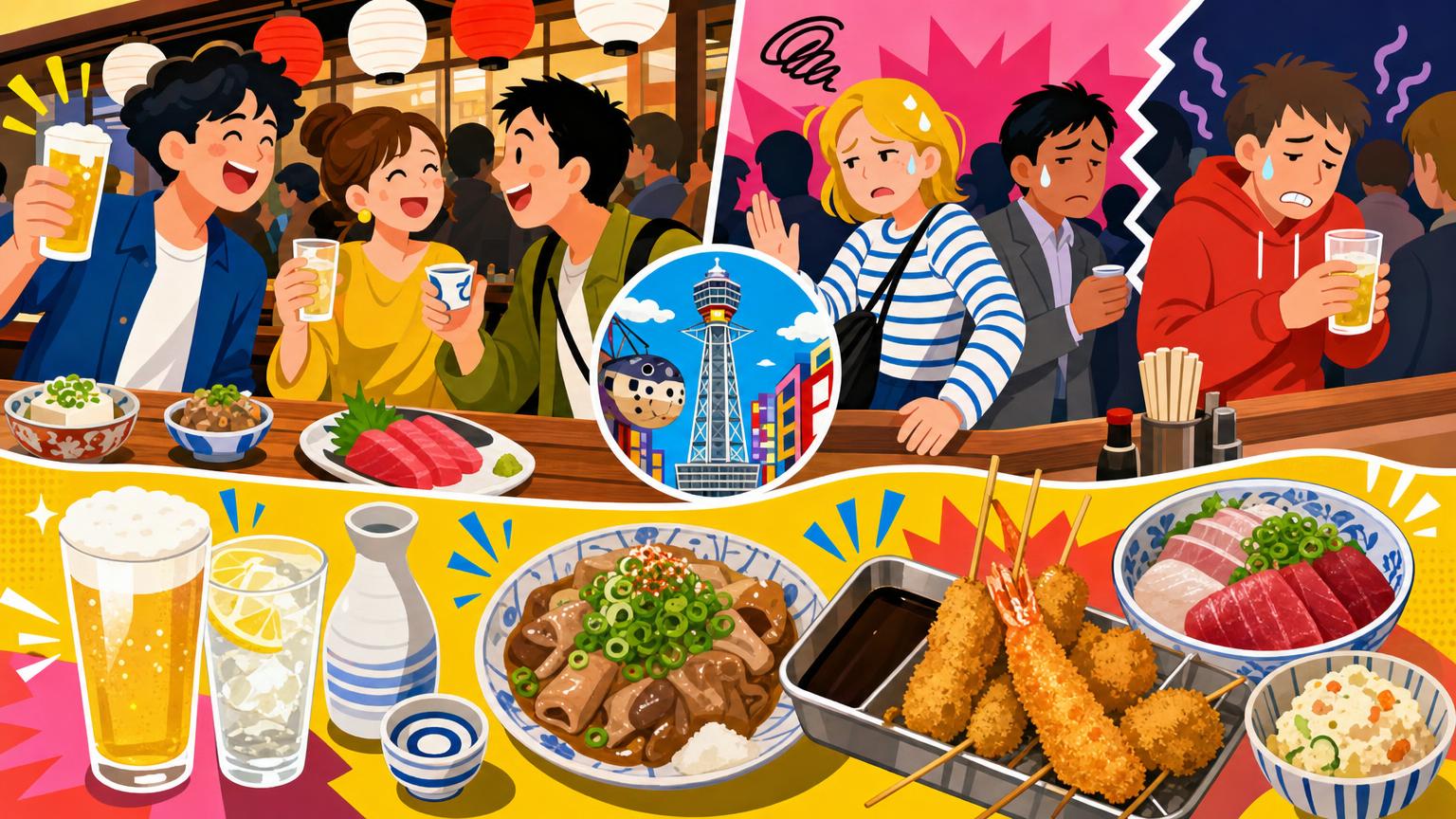
The charm of standing bar gastronomy lies in its speed and bold flavor profile. The food is crafted to cut through the alcohol, often heavily seasoned, fried, or slow-cooked to perfection. This isn’t the delicate, multi-course kaiseki cuisine typical of Kyoto; it’s hearty, working-class fuel.
Popular Local Drinks to Quench Your Thirst
Your first order should nearly always be a ‘Nama’, a frosty mug of draft beer that sets the baseline. From there, you can explore the local favorites.
In Osaka, the Highball reigns supreme. This simple mix of Japanese whisky and highly carbonated soda water, served over dense ice cubes, is crisp, unsweetened, and pairs perfectly with greasy food.
To drink like a seasoned local, dive into the world of Chuhai. A blend of shochu (a clear Japanese distilled spirit) and highball, it’s most often served with a sharp, acidic squeeze of lemon. You may also spot older patrons ordering a Hoppy set. Hoppy is a retro, non-alcoholic malt beverage that tastes surprisingly like cheap beer, served alongside a glass of pure shochu. You mix the two yourself, adjusting the ratio to your taste. It’s inexpensive, potent, and thoroughly nostalgic.
Classic Bar Snacks and Osaka Specialties
If you leave a tachinomi without trying Doteyaki, you’ve missed the point. Doteyaki is the undisputed soul food of Osaka’s standing bars. It features beef sinew and connective tissue simmered for hours in a thick, sweet, bubbling pot of red miso and mirin until it practically melts on your tongue. It’s typically garnished with green onions and spicy shichimi pepper. Rich, fatty, and utterly addictive.
Next, order Kushikatsu. While popular sit-down chain restaurants specialize in these deep-fried skewers, the authentic experience is eating them standing up. Lotus root, quail eggs, pork belly, and asparagus are battered, coated in fine panko breadcrumbs, fried until crispy, and served with a thin, tangy Worcestershire-style sauce.
Don’t overlook the cold dishes. A quality standing bar prides itself on speed, meaning dishes are ready the moment you order. Thick, fresh slices of yellowtail sashimi. Potato salad mashed with bold amounts of black pepper and hidden chunks of ham. Smashed cucumbers drenched in sesame oil and garlic. The culinary standards are surprisingly high for a place where you can’t even sit down.
Best Neighborhoods in Osaka for Tachinomi Hopping
Osaka is a vast concrete jungle, but its standing bar culture is concentrated primarily in specific districts. Each neighborhood has a unique character, catering to diverse crowds and varying moods.
Tenma: The Heart of Deep Local Culture
For the unfiltered, raw, and chaotic energy of Osaka, you head to Tenma. Just one stop from the sleek skyscrapers of Umeda, Tenma feels like stepping back in time. It’s a maze of incredibly narrow alleys adorned with glowing paper lanterns and tangled power lines. The sheer density of bars here is astounding. In Tenma, standing bars spill out onto the streets, using overturned beer crates as makeshift tables. The crowd is loud, prices are incredibly low, and the likelihood of a stranger buying you a drink is very high. This is the true beating heart of local nightlife.
Ura-Namba: Lively, Trendy, and Accessible
South Osaka is dominated by the Namba district, famous for the Dotonbori canal and the Glico running man. However, if you stray from the tourist hotspots and slip into the alleys behind the main station, you’ll find Ura-Namba (Hidden Namba).
This area has seen a huge revival in recent years. The standing bars here tend to attract a younger, more modern crowd. Traditional yakitori spots sit side by side with tachinomi bars specializing in craft beer and Italian-inspired bar snacks. It’s vibrant, slightly more approachable for newcomers, and ideal for a Friday night bar crawl.
Kyobashi: A Nostalgic Retro Vibe
Kyobashi is where Osaka’s old spirits still gather. Situated in the eastern part of the city, this neighborhood has resisted modernization. Entering a Kyobashi tachinomi feels like being frozen in amber from the Showa era.
The air is filled with the scent of cheap tobacco, spilled soy sauce, and nostalgia. You’ll find older men bent over horse racing forms, nursing a single glass of warm sake. It’s completely unpretentious. The barkeeps are often strong-willed women who have run their shops for forty years, combining sharp tongues with deep kindness. It’s a place that commands respect for tradition.
Fukushima: Gourmet Standing Bars
Not to be confused with the northern prefecture, Osaka’s Fukushima neighborhood is just a short distance from Umeda. Over the past decade, it has become a culinary hotspot.
The standing bars here have raised the tachinomi concept to a new level. Floors aren’t sticky, and menus feature natural wines, artisanal cheeses, and elegantly plated sashimi worthy of a high-end restaurant. It’s a gentrified take on the standing bar, proving that chairs aren’t necessary to serve world-class food. It’s perfect for a date night or for those seeking the energy of a tachinomi without the post-war grit.
The Verdict on Who Truly Belongs in These Tight Quarters
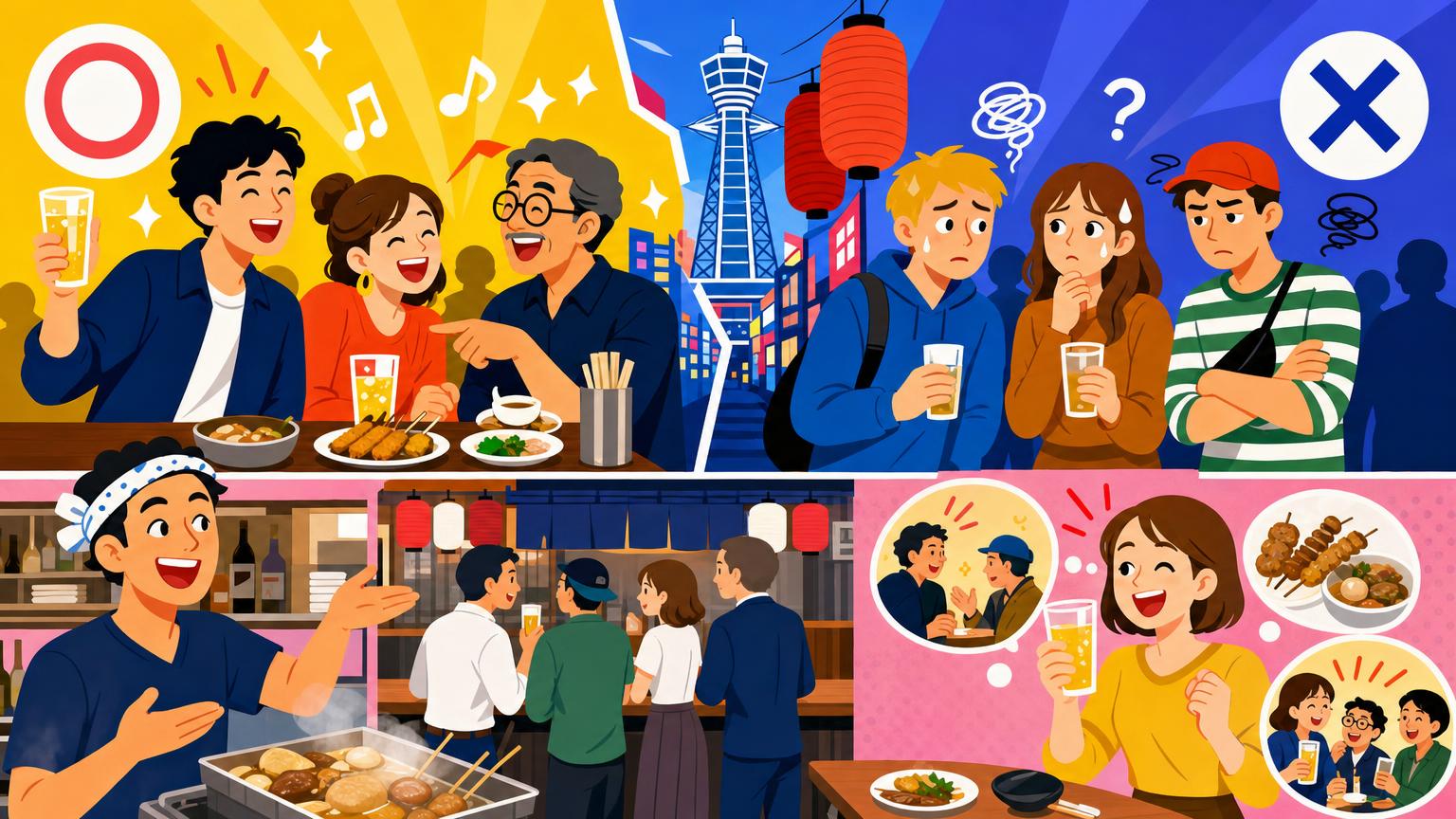
Living in Osaka is fundamentally unlike living anywhere else in Japan. The city strips away your protective layers, tests your patience, challenges your sense of personal space, and rewards you with a fierce, unwavering sense of community. The tachinomi stands as the ultimate proving ground for this way of life.
So, who thrives in this environment?
Those who flourish in an Osaka standing bar are the adaptable ones. They are extroverts, but also the keen introverts who can read the room’s rhythm. They are the foreigners willing to sound silly while attempting broken Kansai-ben. They don’t mind smelling like charcoal smoke on their train ride home. They understand that a meal is not a solitary, sterile event, but a chaotic, shared human experience. They lean into the noise. They trust the coin bowl.
And who struggles?
Those who crave control will always falter here. If you need a translated English menu with perfect photos, you will be deeply frustrated. If you are a germaphobe recoiling at a sticky countertop, you will be miserable. If you see a bartender merely as a servant rather than the conductor of the night, you will be met with cold indifference. The tachinomi does not indulge entitlement. It doesn’t care about your comfort zone.
Osaka is a city that loves you only if you are willing to get your hands dirty. It is rough around the edges, fiercely proud, and incredibly warm to those who play by its unwritten rules. Next time you find yourself wandering the alleys of Tenma or Kyobashi, don’t walk past the sliding glass doors out of fear. Slide them open. Step into the smoke. Find the gap. Drop your coins in the bowl and order a cold beer. You might just discover what makes this city tick.