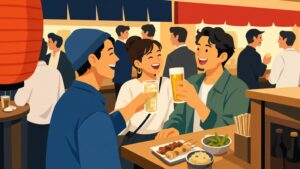
If you live in Osaka for long enough, you eventually notice a small contradiction. The city is famous for eating, but many of its best everyday meals do not look like meals at all. They look like a cold beer, a little plate of simmered beef, two skewers, and a person standing beside the counter for twenty minutes before returning to the station.
This is the world of tachinomi, Osaka’s standing bars. The word literally means “stand and drink,” but that translation misses the point. A tachinomi is not simply a bar without chairs. It is a practical social system built around speed, low prices, small portions, and the Osaka habit of making conversation without making a ceremony out of it.
For foreigners living in Osaka, tachinomi can be one of the clearest ways to understand how local people use the city after work. You see how people share a narrow space, how they decide what is fair, how they speak to staff, and how quickly a stranger can become part of a temporary group. You also discover that “friendly Osaka” does not mean everybody will immediately welcome you into a conversation. The friendliness is usually more indirect: a joke from the person beside you, a staff member pointing at the most popular dish, or someone shifting their bag so you can squeeze into an open patch of counter.
The first visit can feel confusing. There may be no obvious entrance rule, no English menu, no table service, and no comfortable place to sit and study the room. That is exactly why tachinomi is useful. It asks you to observe, copy the rhythm, and participate lightly. Once you understand that rhythm, you are not merely eating cheaply. You are seeing how Osaka works.
What Tachinomi Really Means in Osaka
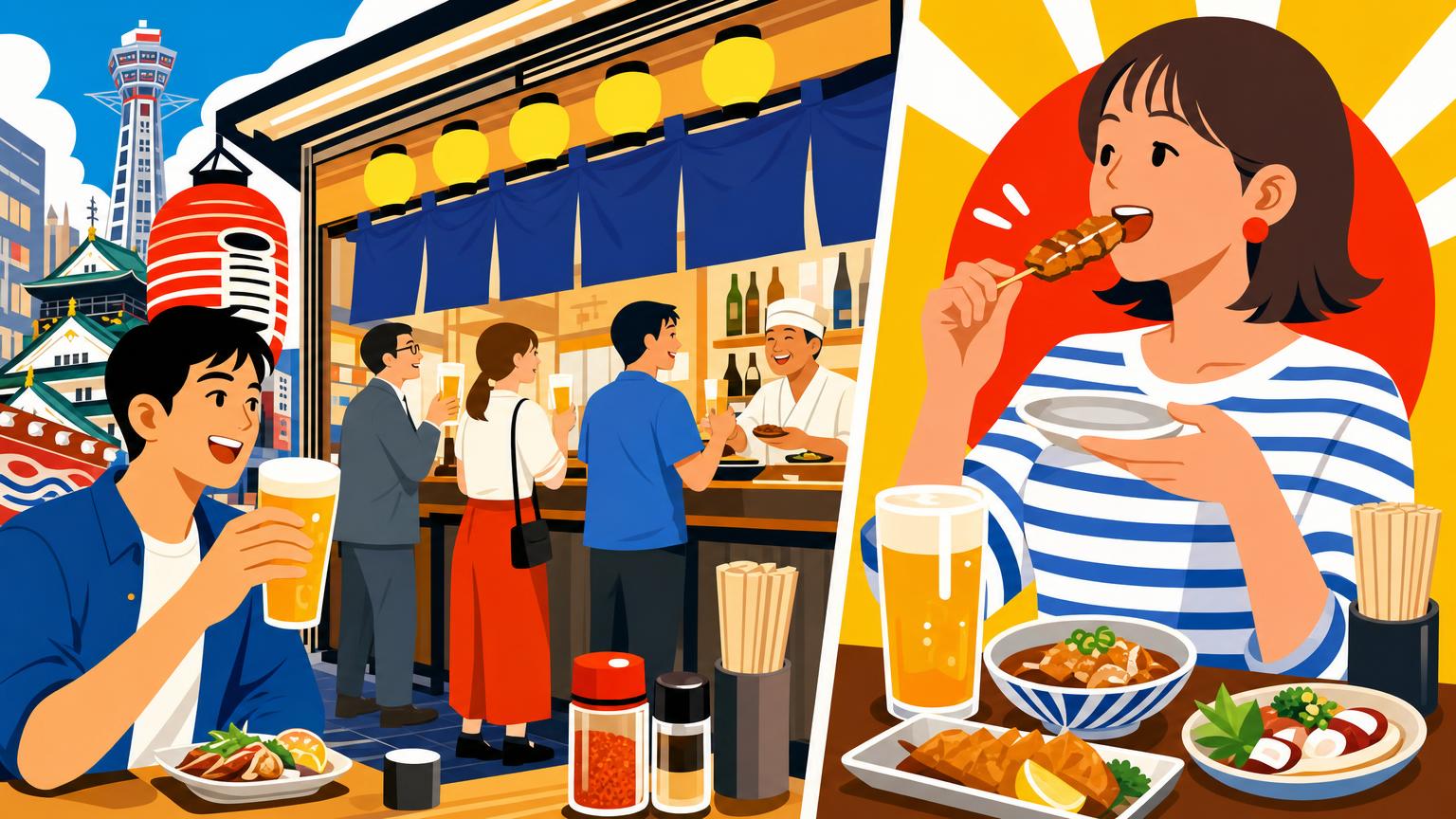
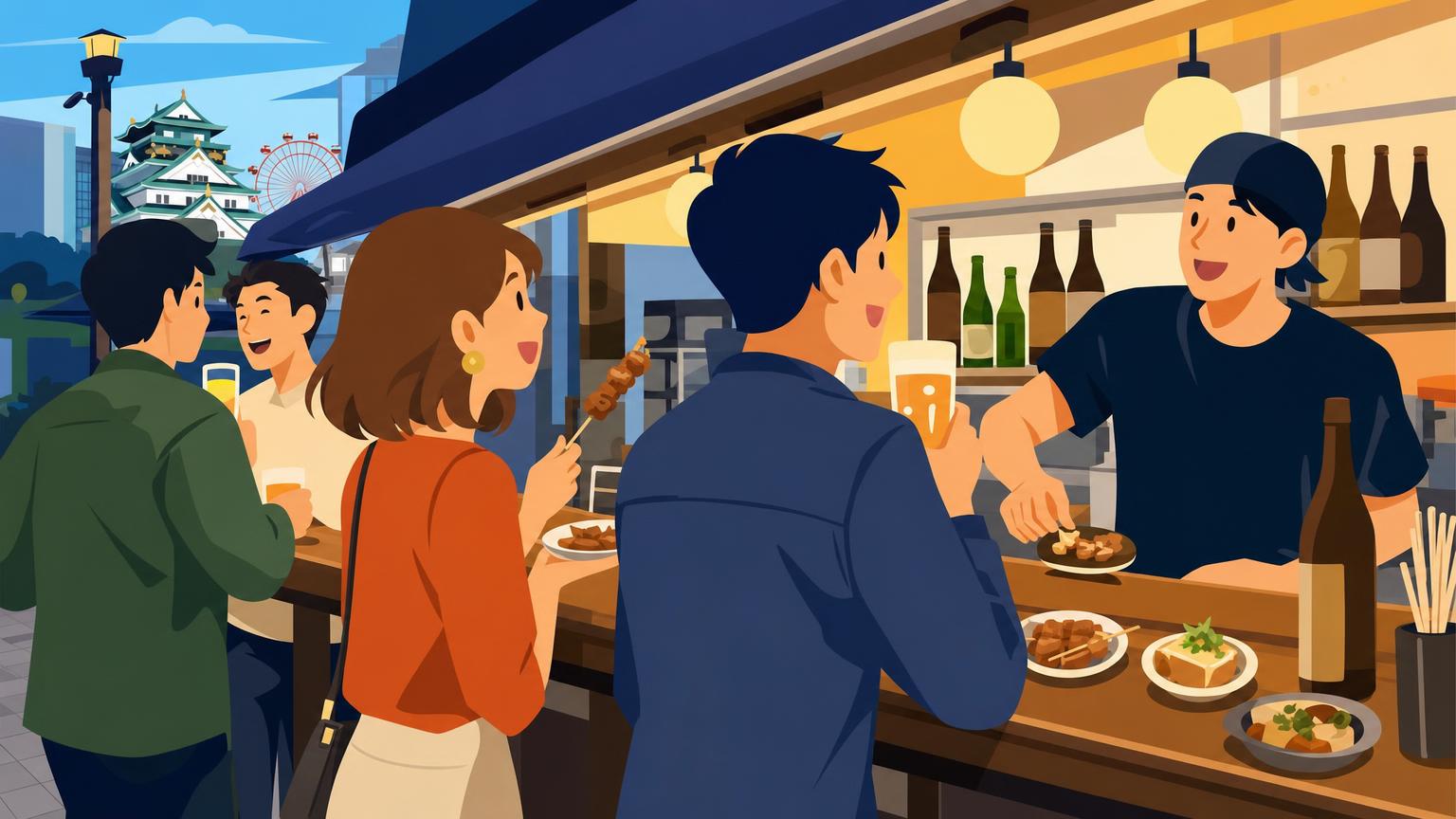
A standing bar typically features a narrow counter, a few high tables, or a small open space where customers eat and drink without chairs. Some are connected to liquor shops, some resemble traditional izakaya, while others appear as compact wine bars, seafood counters, yakitori shops, or modern restaurants with a standing area.
The key characteristic is not the decoration but the turnover.
A tachinomi is designed for quick visits. You might drop by after work for a beer and a plate of sashimi, eat a bite before meeting friends, wait for a train, take a break between errands, or spend an hour hopping between several small spots in Tenma. This setup makes it easy to enter and leave. There’s no need to reserve a table, order a full meal, or explain why you’re alone.
This quick-stay rhythm reflects a broader Osaka attitude toward food. Meals don’t always have to be formal, optimized, or carefully planned. A satisfying bite can be enough. Quality is often judged by whether the food is tasty, reasonably priced, and fulfilling at the moment—not whether it fits into a famous restaurant category.
This is one reason why the quick bite matters. In Tokyo, visitors often find drinking spaces more segmented: polished cocktail bars, salaryman districts, upscale counters, and carefully designed restaurant concepts. Osaka has those too, but its everyday drinking culture often feels more mixed. Office workers, shop staff, older regulars, students, and foreign residents might share the same narrow standing area because the format doesn’t demand a specific social identity.
That doesn’t mean everyone shares the same income or background. Rather, the setting temporarily minimizes the importance of those differences. You pay for your drink, eat what’s in front of you, and avoid taking up more space than necessary.
The Osaka difference is also noticeable in the sound. Conversations can be louder and more teasing than a first-time visitor expects. People might comment on what you ordered, ask where you’re from, or joke with the staff. This can feel more direct than in Tokyo, where people may be just as curious but more careful about expressing it. In Osaka, a small joke can serve as social interaction. It doesn’t necessarily mean the person wants a lengthy conversation.
Why the Food Comes in Small Portions
The small plates at tachinomi are more than just “bar snacks.” They are designed for ease of movement.
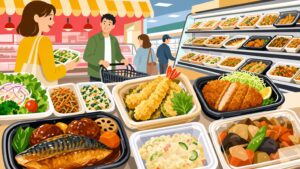
You might find dishes like simmered tendon, potato salad, grilled mackerel, pickled vegetables, sashimi, fried chicken, oden, tofu, kushikatsu, rolled omelet, beef offal, or a small portion of seasonal vegetables. The servings are typically modest, suitable for one person but easy to share between two standing customers.
This creates a different dining experience compared to a typical restaurant meal. There’s no expectation to order everything at once. You can start with one dish, observe what others are enjoying, and order another if something appeals to you. The menu may change daily, with the best options often handwritten on a board or displayed in a case near the counter.
For foreigners living in Japan, this offers a convenient way to sample Japanese cuisine without committing to a large portion of something unfamiliar. One small plate of grilled fish feels less daunting than an entire set meal. If you don’t like it, the loss is minimal. If you do, you’ve discovered something to order next time.
The food also naturally encourages conversation. Pointing to a dish and asking, “What is this?” is often easier than starting a general Japanese conversation. You can say, “Oishii?” while gesturing toward what another customer is eating. Even a brief answer makes the exchange socially meaningful.
Don’t expect every tachinomi to provide detailed explanations. Staff might be busy, especially during the after-work rush. Locals expect you to make a simple choice and accept some uncertainty. That’s part of the experience—and part of daily life in Osaka: not every interaction is translated, optimized, or fully explained before it begins.
The Basic Rhythm of a Tachinomi Visit
The first rule is to look before you enter.
If the doorway is crowded, stand to the side and observe whether people are waiting, ordering, or simply smoking outside. If there is an open spot at the counter, step inside quietly without drawing attention. A brief greeting like “Konbanwa” is sufficient in the evening. In a busy place, a nod might be all you can manage.
Once inside, move toward the counter or where other customers are gathered. Avoid standing directly in the doorway while reading the menu. Usually, you can find a small space along the wall or counter. If the staff directs you somewhere, follow their guidance even if it’s not where you expected to sit.
Order a drink first, unless the staff asks for your food order. Common choices include beer, highballs, lemon sours, shochu, sake, and soft drinks. If you’re not drinking alcohol, ordering tea or oolong tea is typically straightforward. You are still expected to order something, even if it’s non-alcoholic.
Next, select one food item. This is safer than pointing to six dishes at once. You can always order more later. In a cramped bar, starting with a small order helps the staff understand that you know how the system works.
The usual routine is simple: enter, order, eat, drink, pay, and leave when you’re done. You don’t need to wait for a formal closing signal. If the place is busy, a twenty-to-forty-minute visit is normal. If you want to stay longer, keep ordering and stay mindful of the space around you.
Payment: The Part That Confuses Newcomers
Many standing bars operate on a cash on delivery basis, known in Japan as cash-on or cash payment with each order. You order a beer, then pay for it. You order a plate, then pay for that as well. Sometimes a small tray is placed on the counter for coins and bills. In other establishments, staff keep a running total, and you settle the bill when you leave.
Never assume the payment system. Observe one customer’s transaction or ask:
“Genkin desu ka?” means “Is it cash?”
“Shiharai wa itsu desu ka?” means “When do I pay?”
If you hear “sono tabi,” it indicates payment each time or as you go. If the staff hands you a small paper ticket, follow the same routine as other customers. Some bars use tickets, small wooden tokens, or a handwritten running bill.
Keep small bills and coins handy. A few 1,000-yen notes are often more useful than a large bill. Prices vary by bar and menu, but a typical quick stop might involve a drink costing ¥300–¥600 and a small dish around ¥200–¥600. Modern or specialty bars can be pricier, and seafood or premium sake can quickly increase the total. The key point is not to assume every standing bar is always cheap. The format lowers costs for space and service, but ingredients and concept still matter.
Some spots accept credit cards, electronic payments, or QR payments, while others do not. Even where digital payment is available, cash remains the simplest option. For example, the official shop information for Stand Ajito in Ura-Namba lists PayPay support, but since payment details can change, it’s wise to check the current sign or ask before ordering.
The most embarrassing payment mistake usually isn’t running out of money. It’s leaving without confirming that you’ve paid. When you’re ready to leave, say “Okaikei onegaishimasu” or simply “Okaikei.” If you paid as you went, show the staff the tray, ticket, or receipt if needed.
Sharing Space Without Making It Awkward
A standing bar can be physically small, but the social rules are straightforward. They are grounded in awareness.
Keep your bag close to your body. A backpack worn on your back can accidentally hit people when you turn. Place it between your feet, under the counter if allowed, or in the provided storage space. Avoid spreading jackets, shopping bags, phones, and food across the counter.
Do not create a private island around yourself. If people are waiting, move closer together. In Osaka, standing shoulder-to-shoulder is common in this setting. You don’t need to apologize every time someone comes near you, but a small “sumimasen” is helpful when passing behind someone or making space.
Avoid blocking the menu, payment tray, or food pass. These are working surfaces. Once you finish your food, move the plate toward the edge of the counter so staff can collect it, but don’t stack dishes in a way that obstructs other customers.
Smoking rules vary. Some old-style bars allow smoking, while others are completely non-smoking. Do not light a cigarette just because someone else is smoking. Look for the sign or ask “Tabako daijobu desu ka?” If smoking is permitted, be mindful that the person next to you may not want smoke in their face. Good manners are practical rather than ceremonial.
The same applies to conversation. Tachinomi is social, but it’s not a forced networking event. A customer may talk to you for two minutes and then return to their drink. That’s normal. Do not interpret a short answer as rejection, and do not take one friendly exchange as an invitation to follow someone to another bar.
Japanese Phrases That Actually Help
You don’t need to be fluent in Japanese to get started. Just knowing a few practical phrases can show that you understand the context.
“Konbanwa” — good evening.
“Nama biiru onegaishimasu” — draft beer, please.
“Lemon sour onegaishimasu” — lemon sour, please.
“Kore wa nan desu ka?” — what is this?
“Kore onegaishimasu” — this one, please.
“Osusume wa nan desu ka?” — what do you recommend?
“Hitotsu” — one, useful when ordering a single item.
“Futatsu” — two.
“Daijobu desu” — I’m okay or no thank you, depending on the situation.
“Sumimasen” — excuse me, sorry, or a polite way to get someone’s attention.
“Okaikei onegaishimasu” — the bill, please.
“Arigato gozaimasu” — thank you.
Pointing is acceptable; in fact, it’s often the quickest way to order when the menu is handwritten. Foreigners sometimes worry that pointing is rude, but in a busy tachinomi, clearly pointing along with “kore onegaishimasu” usually works better than a lengthy explanation that holds up the line.
If you have dietary restrictions, prepare a short note in Japanese on your phone or paper. Don’t assume that “vegetarian” or “vegan” will be understood in a traditional standing bar. Dishes that look vegetarian might include seafood stock, meat-based sauces, bonito flakes, or lard. Staff may honestly tell you if they can’t accommodate your request. It’s more respectful to accept that answer than to pressure the kitchen to guess.
Tenma: Where the Quick Bite Feels Most Natural
Tenma is often the easiest place to grasp Osaka’s standing-bar culture because the food and drinking streets blend seamlessly with everyday local life, rather than being isolated in a nightlife district.
The area surrounding JR Tenma Station and the Tenjinbashisuji shopping arcade features a dense mix of small restaurants, liquor shops, izakaya, snack bars, and tachinomi. The streets quickly transition from daytime shopping to after-work drinking. Tenma is also notable for its wide range of prices, from very inexpensive counters to modern bars offering more elaborate menus.
The atmosphere is lively, straightforward, and somewhat spontaneous. People often come alone, order quickly, and leave once they’ve finished eating. Customers might be dressed in work clothes, carrying shopping bags, or pausing between errands. There’s no need to dress up for nightlife here.
For a first visit, look for a bar with visible food, an open entrance, and enough space to observe what’s happening inside. A crowded counter isn’t necessarily unfriendly, but it can be challenging if you’re still learning the customs. Arriving before the main after-work rush gives you the opportunity to watch and learn.
Tenma also highlights that Osaka residents aren’t all putting on a cheerful front. Some regulars are quiet, others are loud; some speak in strong Osaka dialect, while others prefer no conversation at all. The local culture emphasizes allowing people to be themselves in a shared space rather than constant friendliness.
The best approach is to stay relaxed without being careless. Order something, keep your belongings close, and don’t be intimidated by a menu you can’t fully understand. Given Tenma’s dense concentration of bars, a small mistake is easy to recover from: you can finish your drink and then try a different place nearby.
Ura-Namba: More Modern, Still Casual
Ura-Namba generally refers to the back streets around Namba and Sennichimae, away from the most heavily commercialized areas of the district. The neighborhood features a blend of long-established local shops, newer food businesses, standing bars, and venues catering to younger patrons.
Compared to Tenma, Ura-Namba might feel more refined or deliberately social. Some bars offer clearer menus, modern branding, craft beer, wine, or Western-style small plates. This can make the area more approachable for foreign residents who enjoy the standing-bar setting but might feel uneasy entering an old-fashioned counter with no visible explanations.
Stand Ajito is an example of a contemporary Ura-Namba standing bar. Its official local shopping-street listing gives the address as 15-4 Namba Sennichimae and notes hours starting in the late afternoon, while local maps mention dishes like steak, Napolitan, pickles, sangria, and wine. This reflects how the modern tachinomi style can expand beyond beer and oden while maintaining a quick, casual format.
Do not expect a flawless English service experience just because a bar appears modern. Some spots may offer partial English menus, photos, or staff who can handle basic phrases. Others depend solely on Japanese menus and pointing. Visual menus are often your best resource. If certain details matter to you, ask whether a dish is spicy, raw, or large before ordering.
Ura-Namba can be ideal for small groups of foreign residents, but keep in mind that standing space fills up quickly. If four people arrive together, you may occupy most of a small shop. One or two people usually fit more naturally into the flow.
Kyobashi: A Rougher, More Traditional Rhythm
Kyobashi is known for being more rugged and less polished than the refined areas around Osaka Station. While this reputation is not entirely unfounded, it can be misunderstood. Kyobashi is not merely “rough”; it is a place where the boundaries between the station district, neighborhood drinking spots, and old working-class life are still visible.
The standing bars near the station often feel compact, straightforward, and loyal to regulars. Some are hidden under railway tracks or inside older buildings. Their charm lies not in a carefully curated Osaka experience but in the practical reality of people stopping for a drink, food, and conversation before heading home.
Izakaya Toyo is one of the best-known names linked to Kyobashi. Its outdoor-style setting, energetic owner, seafood, grilled dishes, and informal service have made it particularly popular among international visitors. Local sources list a budget of around ¥2,000–¥3,000 and limited opening days, while other accounts mention the owner’s efforts to interact with foreign customers despite language barriers.
This last point is crucial. English friendliness doesn’t always mean a full English menu or staff fluent in English. It can mean that the owner is willing to gesture, joke, repeat words, or help you make choices. At a place like Toyo, expect an outdoor, crowded, fast-paced atmosphere rather than a quiet restaurant. Weather, crowds, opening days, and rules can influence your experience, so check for current information before you go.
Kyobashi might be less comfortable for those who prefer certainty. However, this is also why it reveals something about Osaka: local hospitality can be generous while staying unscripted. You may not receive a polished explanation of the culture; instead, you are expected to watch, respond, and accept a bit of noise.
What About Tachinomi Jinbe?
Tachinomi Jinbe is frequently mentioned in conversations about accessible standing bars in Osaka, especially for casual drinking centered around seafood and beer. Since names, branches, opening hours, and menus can change, treat online recommendations as a starting point rather than a guarantee.
When you find a Jinbe location, look for the usual practical signs you would rely on elsewhere: a visible menu, customers standing at the counter, clear pricing, and staff guiding where to place orders. A seafood-focused tachinomi can be a good option for foreign residents because the ingredients may be easy to identify visually, but seafood prices can fluctuate more than the basic drink menu.
Ask before ordering premium items. “Ikura desu ka?” means “How much is it?” You can also point to the menu price and ask “kono nedan desu ka?” This is not rude; it helps avoid misunderstandings, especially when a handwritten board lists market-price seafood or a large sashimi plate meant for sharing.
If there is no English menu, don’t assume the bar is unwelcoming. Many small Japanese businesses simply haven’t needed to provide one. A photo, a translation app, and a simple order are often enough. If the staff seems too busy to assist, choose something straightforward like beer and a displayed dish, then decide if the atmosphere suits you.
Why Tachinomi Works So Well for Solo Residents
For foreigners living in Osaka, the biggest benefit of tachinomi is not the low cost, but rather the freedom to come alone without any social stigma.
In a crowded restaurant, a solo diner might worry about taking up a table. At a standing bar, being alone is completely normal. You use a small space, order a small amount of food, and leave whenever you like. There’s no need to coordinate schedules with others.
This makes tachinomi especially helpful when you’re new to Osaka and still developing your social network. You can practice Japanese in brief sessions without committing to a full language exchange event. You can observe local customs without needing an introduction. You can return to the same bar and gradually become a familiar face.
However, having realistic expectations is important when meeting locals. Osaka residents are not public entertainers waiting to greet foreign newcomers. Some people may be curious but reserved. Others might be friendly after a couple of drinks but not interested in maintaining contact. Some may speak in a dialect that even intermediate Japanese learners find challenging.
The best way to start a conversation is by sharing something about the immediate situation. Comment on the food. Ask what a dish is. Mention that you are still learning the menu. If someone offers a recommendation, thank them and give it a try. These small exchanges feel more natural than diving into personal questions right away.
A helpful phrase is “Osaka ni sundeimasu” — “I live in Osaka.” This changes the dynamic. You are no longer presenting yourself solely as a tourist but showing that you have a connection to the city, even if you have only recently arrived.
You can also say “Nihongo wa mada benkyo-chu desu” — “I am still studying Japanese.” Say it casually, not with an apologetic tone. Many people will slow down their speech. Some will switch to simpler Japanese. Others may smile and continue in dialect anyway. That’s all part of the process.
What Foreigners Commonly Misunderstand
The first misconception is that a busy bar is automatically welcoming. A crowded venue may simply be at capacity. If there’s no room, don’t force your way in or stand in the doorway waiting for staff to rearrange the entire counter. Try another place and come back later.
The second misconception is that Osaka directness implies intimacy. A joke, loud greeting, or comment about your nationality doesn’t necessarily mean you’ve become close friends. Respond warmly but maintain usual boundaries.
The third misconception is that cheap means unlimited. Low prices are often associated with short visits, small portions, and efficient service. Lingering for a long time while ordering just one drink can cause tension in a tiny bar, especially during peak hours.
The fourth misconception is that pointing replaces all manners. Pointing works best with eye contact, a polite “onegaishimasu,” and patience. Avoid waving aggressively or snapping your fingers. If the staff is carrying hot food, be sure to wait.
The fifth misconception is that a lack of English means no interest in foreigners. It usually means the business operates in Japanese because most customers are Japanese. A bar can be foreigner-friendly without having an English menu, and conversely, having an English menu doesn’t guarantee you’ll be expected to understand basic space and payment etiquette.
A Practical Spending Pattern for a Quick Bite
A realistic tachinomi visit often works best as a controlled experiment rather than a full night out.
Start with one standard drink. Draft beer, a highball, or a lemon sour typically gives you an idea of the bar’s pricing and service. Add one small dish. If the food is good and the atmosphere feels welcoming, order a second dish or another drink.
For a traditional old-style bar, setting aside roughly ¥1,000–¥2,500 for a brief stop is usually reasonable, but prices vary. Specialty seafood, craft beer, premium sake, and modern menus may drive the total higher. A budget that seems affordable at one bar could be unrealistic at another.
Avoid constantly comparing prices to convenience-store food. You’re paying for prepared food, staff labor, refrigeration, cooking, and the social environment. The focus is on value and flexibility, not just the lowest possible yen amount.
If you’re tracking expenses while living in Osaka, tachinomi can be helpful because it lets you set a clear limit. Carry a fixed amount of cash for one stop. When it’s gone, either head home or switch to a cheaper option. This is easier than sitting through a lengthy restaurant meal with an unexpected fixed course price.
How to Choose a Bar When You Cannot Read the Menu
Look for clearly visible prices. A bar featuring a large menu board, food displayed in trays, or photographs is generally easier for a first visit than a place where everything is hidden behind a handwritten wall filled with unfamiliar abbreviations.
Pay attention to the ordering process. Do customers pay right away? Are they given numbered tickets? Is there a cashier near the entrance? A minute of observation can help you avoid most mistakes.
Take note of the physical space. If you dislike smoke, look for a no-smoking sign. If standing for a long time is difficult, opt for a bar with some seating or plan a brief visit. If you have mobility challenges, a cramped standing bar might not be practical even if the food looks appealing.
Check whether the menu includes photographs, English labels, or simple icons. A modern shop may be easier linguistically, but don’t judge based on appearance alone. Some traditional bars are very helpful with pointing, while some trendy bars expect customers to navigate a more complex menu.
Most importantly, choose a place where you can leave easily. For your first few visits, an open entrance and visible staff will reduce anxiety. Once you’re familiar with the rhythm, you can try smaller, deeper, more traditional places.
The Osaka Mindset Behind the Quick Bite
The standing bar reflects a wider Osaka preference for practical enjoyment. You don’t need a special occasion to eat well. You don’t require a large room for a meaningful conversation. You don’t have to turn every meal into a significant event.
There is also a strong sense of fairness in the setup. Everyone is allotted a limited space. Everyone waits for their food. Everyone pays their share. If the bar is crowded, your right to stay comfortably in one spot is balanced against someone else’s opportunity to enter. This can seem less individualistic compared to some Western drinking cultures, where lingering at a table for a long time is typical.
Osaka’s humor follows a similar pattern. It often reduces social distance, but it can also test if you grasp the tone. Teasing isn’t always meant as an insult. At the same time, you shouldn’t assume every joke grants you the license to tease about someone’s age, looks, or personal life. Start gently.
Tokyo and Osaka are not opposites, and both cities have every type of person. Still, many foreigners notice that Tokyo’s nightlife feels more segmented and self-contained, whereas Osaka’s small drinking spots encourage more visible casual interactions. In Tokyo, you might need a reservation, a recommendation, or a clearer reason to enter certain venues. In Osaka, a narrow counter and a simple menu can be enough. The trade-off is that Osaka can feel less polished and less predictable.
That unpredictability isn’t a flaw to be fixed. It is part of the city’s everyday character.
Final Tips for Eating and Drinking Like a Local
Enter with a modest plan rather than high expectations. One drink and one dish suffice for a first visit.
Keep 1,000-yen bills and coins ready. Confirm whether payment is immediate or at the end.
Use “kore onegaishimasu” while pointing at the menu. Being clear and polite is better than complicated.
Place your bag near your feet. Keep the counter available for food, drinks, and other customers.
Observe before copying. The regulars will demonstrate how the bar operates.
Avoid lingering during the busiest times without ordering more. Tachinomi relies on turnover.
Accept that many places may not offer fluent English service. A lack of English doesn’t necessarily mean a lack of welcome.
Try Tenma for a dense everyday energy, Ura-Namba for a more modern, mixed atmosphere, and Kyobashi for a rougher, older vibe. These districts are not interchangeable, and their differences help explain Osaka better than a list of famous restaurants.
Take recommendations as flexible. Opening hours, menus, payment methods, and even a shop’s atmosphere can change. Check up-to-date information before visiting, especially small businesses with irregular schedules.
Most importantly, remember that tachinomi isn’t a performance of “local Osaka.” It’s a place where people eat, drink, relax, and then go home. Approaching it as a visitor demanding an authentic experience may cause you to miss the point. Approached as a small part of daily life, the rules become easier to understand.
The art of the quick bite isn’t rushing. It’s knowing how much space to take, how much food to order, when to speak, and when to let the room flow around you. That balance is one of Osaka’s clearest lessons: enjoyment doesn’t need to be elaborate, but it must be shared fairly.