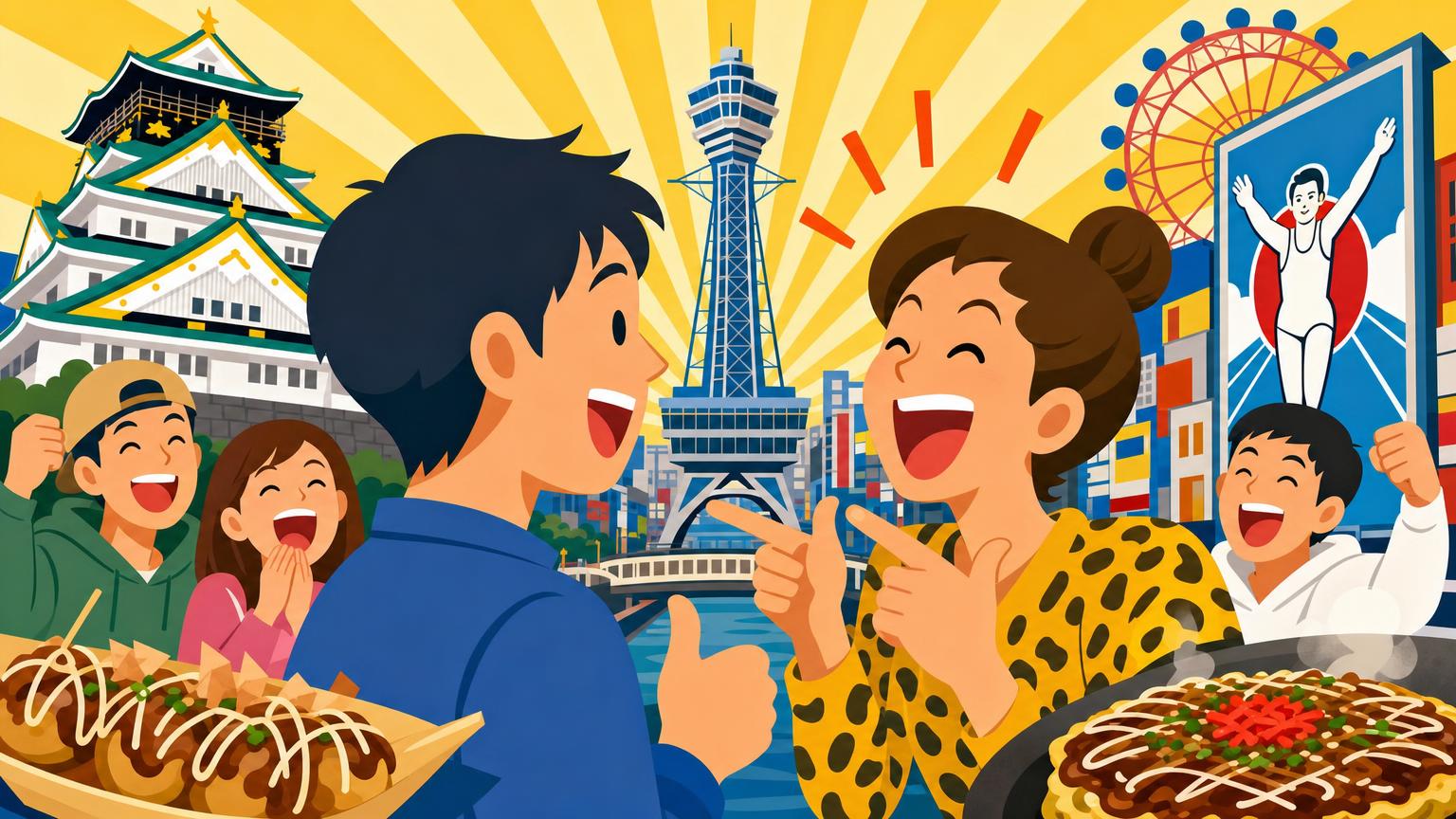
A foreign resident in Osaka may notice something puzzling within the first few weeks. You make a small mistake in Japanese, and instead of receiving only a polite correction, someone laughs. You complain about the weather, and the person beside you adds a joke. You tell a story at dinner, and somebody interrupts—not to be rude, but to improve the punchline.
Then you hear the word omoshiroi.
In standard Japanese, omoshiroi can mean funny, interesting, entertaining, fascinating, or unexpectedly engaging. In Osaka, however, it often carries an additional social meaning: You made the conversation enjoyable. You gave us something to react to. You made the room better.
That is why an Osaka person may praise a person, a meal, a story, a child, a business idea, or even an unusual way of solving a problem by calling it omoshiroi. The word does not always mean that something caused loud laughter. It can mean that something has life in it.
This helps explain why people in Osaka are often described as humorous, direct, or unusually comfortable with casual conversation. The difference is not simply that Osaka has more jokes than Tokyo. It is that Osaka tends to treat humor as a practical way of building relationships, reducing tension, testing compatibility, and showing intelligence without becoming overly formal.
For people living in Osaka, this distinction matters. If you understand only the stereotype that Osaka people are loud and funny, daily interactions can still feel confusing. You may mistake teasing for hostility, directness for aggression, or silence for disapproval. You may also assume that every local person wants to perform comedy for you. Usually, they do not.
The deeper point is more ordinary and more useful: Osaka often rewards people who make social situations feel open, lively, and human. Tokyo commonly places more value on being smart, polished, efficient, or socially controlled. Kyoto is often associated with elegance, subtlety, and sensitivity to atmosphere. These are broad cultural tendencies, not rules about every individual. Still, they offer a useful map for understanding how different cities may judge the same behavior.
What Does Omoshiroi Really Mean in Osaka?
More Than ‘Funny’
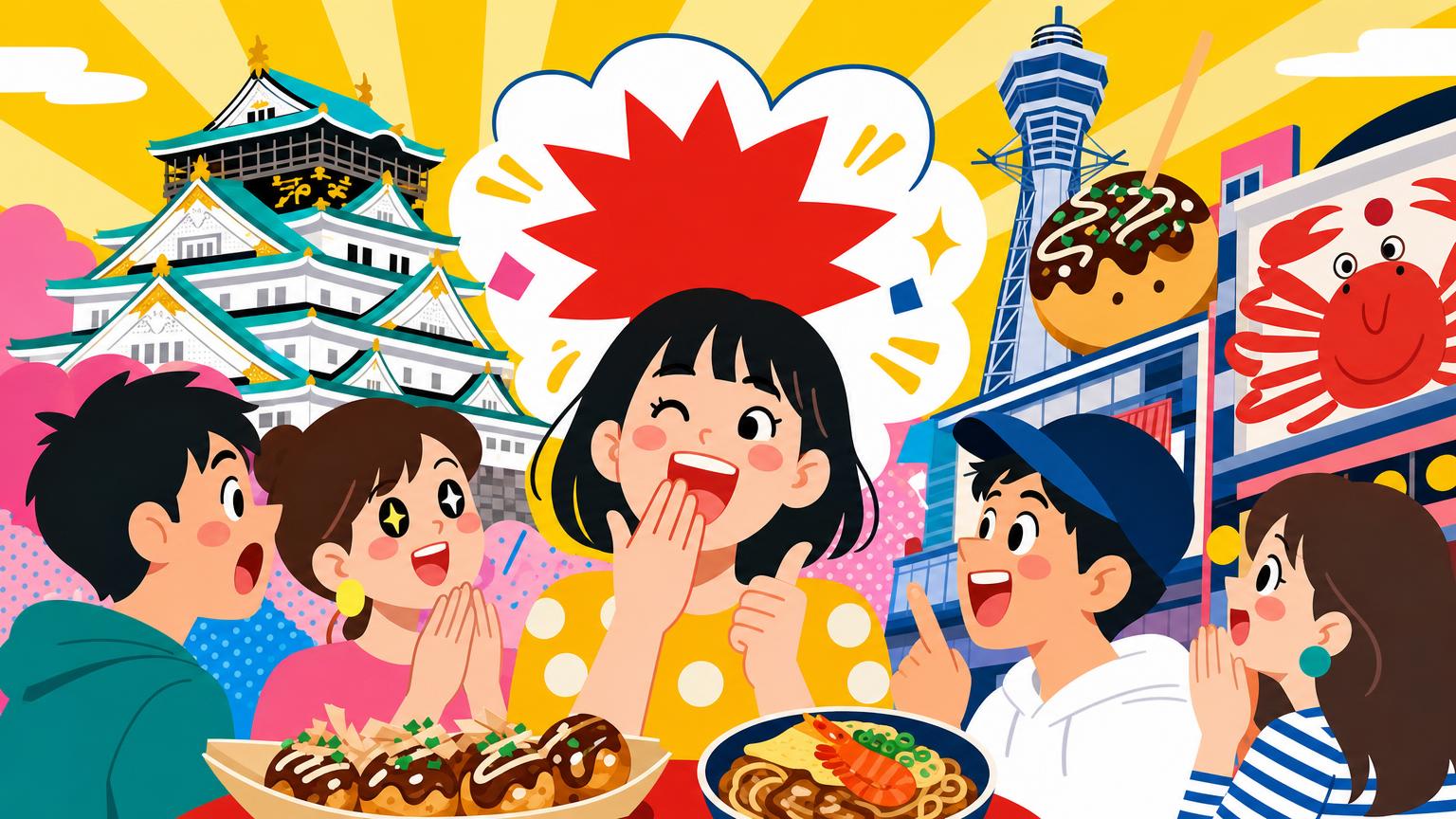
When English speakers learn that omoshiroi means “funny,” they might picture jokes, comedy shows, or people who are always trying to make others laugh. However, that interpretation is too limited.
In everyday conversation in Osaka, omoshiroi can describe someone with an unusual perspective. It might refer to a colleague who gives an unexpected answer during a meeting, a child who says something surprisingly sharp, a restaurant with a quirky but effective business model, or even a difficult situation that has become absurd enough to laugh about.
The word often praises a type of liveliness. A person doesn’t need to be a professional comedian; they simply need to bring something distinctive to the interaction.
A foreign resident might say, “I tried to explain Japanese bureaucracy in Japanese, but I mixed up three words and accidentally said that my residence card was hungry.” If an Osaka friend laughs and says, “Omoshiroi,” they may not be focusing on the language mistake itself. Instead, they might be appreciating the story, the self-awareness, and the fact that you helped make the conversation more relaxed.
This is significant because humor in Osaka is often collaborative. One person opens the conversation, another adds a detail, and a third exaggerates it. Together, the group finds the humorous shape of the situation.
A Compliment About Social Energy
Calling something omoshiroi can also mean, “I want to hear more.” The listener is expressing interest rather than ending the conversation.
In a more reserved setting, someone might respond with a polite nod, a short laugh, or a phrase like “sou desu ne,” meaning “that is so,” and then the conversation moves on. In Osaka, an omoshiroi response keeps the exchange flowing. It encourages a second story, a counterexample, or a playful disagreement.
This partly explains why foreigners sometimes feel that Osaka conversations are fast-paced. The rhythm doesn’t always follow the orderly exchange of complete turns. People overlap, react loudly, question details, and jump in with related experiences. The aim is often not to maintain each speaker’s uninterrupted turn, but to build momentum.
That momentum can feel welcoming once you understand it, but exhausting if you come from a culture where interrupting is considered very disrespectful.
Why Being Interesting Can Matter More Than Being Impressive
Osaka humor also shifts the meaning of intelligence. In many professional and social contexts, demonstrating competence is expected. But competence alone may not foster closeness. Someone who is highly capable but hard to talk to may earn respect without affection.
The Osaka ideal tends to be different. A capable person who can explain things clearly, laugh at themselves, notice the absurdities of a situation, and make others comfortable is often viewed more positively than someone who seems perfect but distant.
This doesn’t mean Osaka people dislike seriousness. They work hard, worry about money, care about their reputation, and can be strict about responsibility. The difference is that seriousness is not always conveyed solemnly. A serious point may be delivered through a joke, a sharp observation, or a dramatic complaint.
A local shop owner might complain about rising costs while making customers laugh. A manager might criticize a mistake using a humorous comparison. A grandmother on a shopping street might grumble about a young person walking too slowly, then quickly offer helpful directions. Emotional messages and comic surfaces can coexist.
Why Did Osaka Develop This Relationship With Humor?
The Merchant City Background
Osaka’s humor is frequently linked to its long-standing history as a commercial and merchant city. During the Edo period, Osaka grew into a significant hub for trade, finance, distribution, and merchant activity. Negotiation wasn’t an occasional task; it was an essential part of daily survival and business dealings.
The National Diet Library’s overview of research on Osaka’s culture of laughter ties this history to the growth of verbal skill, bargaining, humor, and social methods for easing tension. The claim is not that every Osaka resident is directly descended from a comedian, but that a city centered around trade created strong motivations for communication that is flexible, persuasive, quick-witted, and emotionally intelligent.
In a commercial setting, people must build trust without necessarily having deep personal ties. They have to negotiate prices, resolve misunderstandings, attract customers, and prevent competition from escalating into open conflict. A smile, a joke, a clever remark, or an exaggerated complaint can lighten the intensity of a challenging exchange.
Humor can also indicate whether someone grasps the situation. Recognizing a joke shows understanding of the shared context. Adding a better joke may indicate confidence, while knowing when to stop demonstrates social awareness.
These skills are valuable in a marketplace, but they are also important in a neighborhood, workplace, family, or a crowded train station.
The Culture of ‘The Mouth’
Osaka boasts a strong oral culture. This doesn’t imply a lack of written sophistication or formal education, but rather that spoken interaction often holds special significance.
The sound of a sentence matters. Timing matters. The choice between standard Japanese and Kansai Japanese matters. A technically accurate story can still fall flat. Another story, featuring ordinary facts, may become entertaining due to pacing, facial expressions, exaggeration, or sudden tonal shifts.
This nuance is easy for outsiders to miss because translated subtitles often strip away the mechanics of humor. A Kansai expression might sound casual in English, while the original tone conveys warmth, mock outrage, intimacy, or comic timing.
For instance, someone might say something like, “What are you doing?” in a tone that’s not a genuine inquiry but rather means, “That was ridiculous, but I know you well enough to tease you.” The literal words alone aren’t enough; you need to consider the relationship, the voice, facial expressions, and what happens next.
Laughter as Social Lubrication
Osaka humor frequently helps people navigate friction. A joke can soften a correction to prevent it from sounding too harsh. A playful complaint can express dissatisfaction without triggering formal confrontation. A teasing remark can signal acceptance into a group.
This might be uncomfortable for newcomers. A foreigner might prefer a straightforward statement like, “You made a mistake,” while an Osaka colleague might express it indirectly and humorously. Focusing solely on the words might cause you to miss the underlying seriousness. Focusing only on the joke might make you overlook that some action is expected.
The practical rule is simple: pay attention to the content, not just the laughter. Osaka humor can make criticism easier to deliver, but it doesn’t make criticism meaningless.
Osaka Compared With Tokyo: Smart Versus Omoshiroi
Tokyo’s Emphasis on Competence and Control
The common contrast between Osaka and Tokyo is often reduced to “funny Osaka versus serious Tokyo,” which is unfair to both cities. Tokyo boasts plenty of comedy, warmth, informality, and eccentricity, while Osaka is home to many reserved, polished, ambitious, and highly professional individuals.
A more meaningful contrast lies in the type of impression typically valued in public life.
In Tokyo, social credit can be earned by appearing smart, efficient, sophisticated, well-informed, and controlled. The ideal presentation may involve precise timing, careful wording, suitable attire, and a keen ability to understand institutional expectations. People tend to respect those who grasp the system and navigate it smoothly.
While these qualities still matter in Osaka, someone who is solely polished might not seem approachable. The key question is: Can you make the situation easier for others? Can you explain things in a way that keeps the atmosphere relaxed? Can you spot absurd details? Can you take a bit of teasing without getting defensive?
Tokyo’s version of “That is interesting” might emphasize intellectual depth, strategic insight, or refinement, whereas Osaka’s might emphasize energy and human connection.
Why Tokyo Directness and Osaka Directness Feel Different
Foreigners sometimes claim that people in Tokyo are indirect and those in Osaka are direct, but the reality is more nuanced.
Tokyo communication may seem indirect because people often guard their personal boundaries with formal language, silence, and carefully maintained distance. Refusals are softened to maintain smooth relationships. Individuals may avoid expressing their true thoughts in group settings to preserve the atmosphere.
Conversely, Osaka communication can seem direct, as people often ask about money, age, job, family, food preferences, or where you live sooner than expected. They may comment on your Japanese skills, shoes, lunch, or unusual pronunciation—not to belittle but as an invitation to engage.
However, Osaka directness doesn’t always mean clarity. A joke might mask a request, playful complaints may conceal real boundaries, and someone might say, “You are really something,” with a smile while genuinely asking you to change your behavior.
For foreigners, the best approach is neither to laugh at everything nor take offense too quickly. Observe whether the person helps you, includes you, repeats their point seriously, or changes their tone when they realize you’re uncomfortable.
The Same Person May Act Differently in Each City
An individual from Osaka may adopt a more formal demeanor in Tokyo, while someone from Tokyo may become more expressive after spending time in Osaka. Japanese people do not carry fixed city personalities with them.
Factors such as workplace, school, age, social class, family background, and neighborhood all influence behavior. For instance, a financial professional in Umeda may communicate differently from a small restaurant owner in Taisho. A university student in Suita might have a different sense of humor than a retired resident of Tennoji. Someone raised in Osaka may dislike comedy, while a person from Tokyo may enjoy Kansai manzai.
Comparisons between cities are useful only when they help highlight tendencies; they become harmful if they reduce individuals to stereotypes.
Osaka Compared With Kyoto: Omoshiroi Versus Elegant
Kyoto’s Focus on Atmosphere
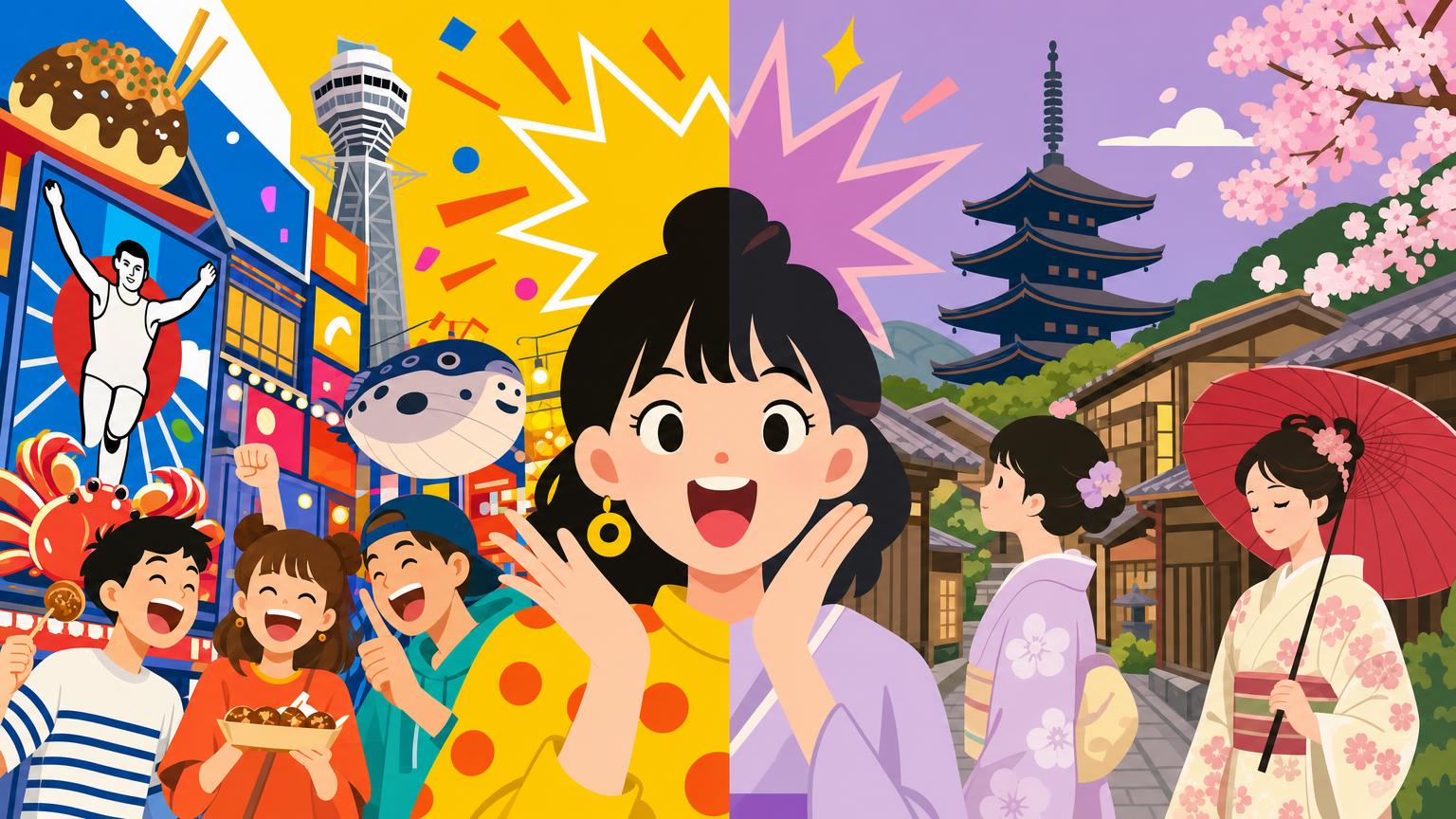
Kyoto is often characterized by terms such as elegant, refined, subtle, traditional, and tasteful. While these words may not describe every Kyoto resident, they reflect a social ideal: an ability to perceive context, maintain atmosphere, and communicate without overt display.
In Kyoto, a person may be admired for their restraint, aesthetic sensibility, graceful speech, and sensitivity to what remains unspoken. Value may be found in the finish, the implication, the seasonal awareness, or the quiet appropriateness of a gesture.
Osaka’s omoshiroi ideal is more outward-directed. It emphasizes what occurs between people in the moment. Is the conversation lively? Has someone made a memorable remark? Can a serious topic be approached with enough flexibility to keep everyone engaged?
Once again, this is not a contrast between honesty and politeness. Kyoto has humor, and Osaka has elegance. The difference often lies in emphasis.
Why Osaka Can Feel Less ‘Finished’ and More Immediate
Foreign residents may notice that interactions in Osaka sometimes feel unfinished, positively so. Plans are discussed while still evolving. Complaints may transform into jokes. Opinions are expressed, counterarguments heard, and directions changed without treating such shifts as a loss of face.
The aim is not to create a perfect statement but to keep the exchange flowing.
Kyoto’s social ideal may place greater value on the finished impression: the right phrase, the right setting, the right balance. Osaka’s ideal may emphasize the live exchange: the unexpected response, the shared laugh, the practical solution that emerges midway through the conversation.
For foreigners living in Kansai, understanding this difference can be helpful. When moving between Osaka and Kyoto, do not assume a quieter response signifies greater seriousness or a louder one signals greater intimacy. Each city has its own way of showing respect.
What Are Osaka People Like in Daily Life?
They May Talk to You Before They Know You Well
In Osaka, small talk often starts quickly. Someone might ask where you are from, whether you enjoy Japanese food, how long you have lived in Japan, or why you chose Osaka. These questions may seem personal compared to what you’re used to in your home country.
Usually, the goal isn’t to gather private information but to find a way to continue the conversation. If they know you work near Namba, they might ask about that area. If they hear you like football, they could mention a team. If they learn you’re studying Japanese, they may test your vocabulary with a joke.
You don’t have to answer every question. A light response is fine. Saying something like “I am still learning Japanese, so I might reply slowly” can establish a friendly boundary while keeping the interaction pleasant.
They May Tease You as a Form of Inclusion
Teasing can indicate acceptance, but it isn’t always harmless. The impact depends on the topic, the relationship, and whether the other person respects your reaction.
A local friend might tease your pronunciation because they want you to keep speaking. A coworker might joke about your love of convenience-store desserts. A neighbor might comment on the number of boxes outside your apartment during a move.
If you smile, respond, or joke about yourself, the conversation may become warmer. If you seem uncomfortable, a thoughtful person should ease off. When someone continues teasing after you clearly ask them to stop, that is not cultural etiquette—it’s simply poor behavior.
Foreigners sometimes feel pressured to tolerate everything because “Osaka people are joking.” You do not have to accept insults, unwanted remarks about your body, or discriminatory comments. Humor is not a license for disrespect.
They May Expect a Reaction
A conversation in Osaka can seem incomplete if you offer no response. This doesn’t mean you have to laugh out loud. A smile, a brief acknowledgment, a surprised expression, or a follow-up question can show you’re engaged.
In some situations, someone may make a joke and look directly at you afterward. They’re seeing if the joke landed and if you’re still following. A quiet “I see,” said without expression, might be taken as distance rather than politeness.
You can reply in simple Japanese without trying to be funny:
- “Omoshiroi.”
- “Hontou?”
- “Nande?”
- “Sore wa sugoi.”
- “Wakaranai kedo omoshiroi.”
The last phrase—“I don’t understand, but it’s interesting”—can be very useful. It shows openness without pretending to get a complicated pun.
They May Separate the Joke From the Decision
People in Osaka may joke during serious discussions but still expect punctuality, payment, responsibility, or proper work. A lighthearted conversation does not mean the standards are relaxed.
A landlord might chat warmly with you yet still enforce the contract. A coworker could laugh with you during lunch but expect a careful report later. A restaurant owner may joke about your order but get annoyed if you cancel last minute.
Foreign residents sometimes confuse an informal tone with informal rules. That misunderstanding can be costly. Osaka may make social interactions feel relaxed while keeping practical obligations firm.
Why Osaka Humor Can Be Difficult for Foreigners
Japanese Wordplay Is Often Lost in Translation
Many Osaka jokes rely on sound, dialect, or shared cultural references. A pun might vanish entirely when translated. A phrase may be funny because it resembles another word in Kansai Japanese. A comedian might produce humor through a slight pause that subtitles cannot capture.
Don’t gauge your understanding by how many jokes you get. Even Japanese people from other regions might miss local references, older comedy styles, or quick Kansai wordplay.
Instead, focus on the structure. Is the speaker exaggerating? Are they pretending not to understand? Are they repeating a word with a slightly different tone? Does the humor come from a contrast between a serious setup and a simple conclusion?
You can learn a lot by paying attention to what happens right before the laughter.
Loudness Is Not the Same as Anger
To those unfamiliar with Kansai intonation, Osaka speech can sound emotionally intense. The rhythm may fluctuate strongly. A disagreement might involve dramatic gestures. Two people may seem to argue while actually enjoying the exchange.
However, not every loud conversation is playful. Look for signs like relaxed posture, smiling eyes, ongoing cooperation, and openness to listen. If voices become harsh, bodies tense, or one person stops responding, the mood could have shifted.
The safest option is to avoid interpreting emotion based on volume alone. Understand the relationship first before deciding what the sound means.
Direct Questions Are Not Always Invitations to Intimacy
When someone asks personal questions, they may simply be trying to make conversation; you don’t have to become close friends. Osaka can be socially open without demanding deep emotional sharing.
You can answer broadly. Instead of stating your exact salary, say what kind of work you do. Rather than explaining your entire relationship history, say you’re seeing someone. Instead of discussing your rent, say your neighborhood is convenient.
The skill lies in offering enough information to keep the conversation going while maintaining your boundaries.
Silence Can Also Be Meaningful
The stereotype of Osaka suggests nonstop talking. Everyday life isn’t like that. On trains, in offices, at supermarkets, and in apartment buildings, people may be quiet. Many Osaka residents are tired, private, shy, or simply focused on their own tasks.
You don’t have to show friendliness every moment. The city’s humor appears in brief flashes: a comment at a counter, a remark between coworkers, a sign in a shop, an exaggerated complaint about a delayed train. It is part of the social fabric, not a constant performance.
The Viral ‘Osaka Bang’ Joke and the Reality of Street Humor
What the Joke Suggests
Online videos and forum discussions have helped popularize the idea that people from Osaka will instinctively respond to a strange hand gesture, a mock punch, or a “bang” joke with an instant comedic reaction. The joke relies on the stereotype of Osaka residents as individuals who are always game for a playful exchange.
There is some truth behind the stereotype: many interactions in Osaka allow more room for playful responses than a foreigner might expect. Someone might answer a silly question with an even sillier one. A shop worker might exaggerate a complaint. Friends might turn an ordinary action into a brief comedy sketch.
However, the viral version remains a performance of an idea about Osaka. It shouldn’t be considered a dependable street test.
Do Locals Really React That Way?
Sometimes, yes. But often, no. A stranger on the street may be busy, tired, cautious, working, or simply uninterested. Someone who responds playfully with friends may not want to engage with a foreign visitor holding a phone.
The most important rule is not to treat local people as unpaid entertainers. Avoid approaching strangers aggressively, touching people, blocking their way, or repeating viral pranks expecting a funny reaction. Osaka humor depends on relationship and timing. Without these, the same action can feel intrusive.
The joke works best when people already share a context. At a dinner table, among coworkers, or with friends, a playful “bit” can generate energy. On a crowded street, it can just be a nuisance.
The Real Osaka ‘Bang’ Is Usually Conversational
The most genuine form of Osaka humor isn’t a stunt. It’s the quick verbal exchange that happens when something goes slightly wrong.
You misunderstand the restaurant menu. Someone corrects you with exaggerated drama. You apologize. They act as if your mistake caused a national crisis. You laugh. Then they quietly help you order.
You arrive late because you took the wrong train. A friend says, “Ah, the train was waiting for you?” You apologize again. They tell you to sit down and eat before the food gets cold.
You buy an enormous amount of household goods. The cashier looks at your basket and jokes you’re opening a supermarket. You answer you’re preparing for a typhoon. The cashier laughs, and the exchange ends.
This is where omoshiroi truly becomes practical. The humor transforms an ordinary inconvenience into a shared moment, without pretending the inconvenience never happened.
How Humor Shapes Workplaces in Osaka
Meetings May Feel More Conversational
An Osaka workplace is not necessarily informal, but meetings might feature more visible reactions than a foreigner might expect. People may comment while someone is speaking, laugh at an overly complicated proposal, or challenge an idea with a joke.
Do not assume that laughter means the proposal has been rejected. It might indicate that people have spotted an issue and are making it easier to discuss. Listen for practical follow-ups like, “But can we do this by Friday?” or “Who will take care of that part?”
At the same time, don’t use humor to cover up a lack of preparation. Osaka colleagues might enjoy a witty presentation, but they will still notice missing data, unclear responsibilities, and delayed delivery.
A Good Idea May Need a Human Explanation
A technically solid proposal can feel weak if it’s hard to discuss. In Osaka, it helps to explain not only what will work, but also why people will understand, use, or appreciate it.
A product that saves time can be illustrated through a real customer scenario. A policy can be clarified by highlighting the frustration it alleviates. A complex process can be introduced with a small self-deprecating remark that shows awareness of everyone’s burden.
The humor isn’t just decoration. It can make complexity easier to approach.
Self-Deprecation Can Create Trust
Osaka-style humor often involves making yourself a bit smaller before asking others to accept an idea. You might admit that your first draft was confusing, that you misunderstood the schedule, or that your plan has an obvious flaw.
This can encourage people to respond honestly. They don’t feel the need to protect you from seeming perfect. Instead, they can focus on improving the proposal.
However, too much self-deprecation can backfire. If you constantly portray yourself as incompetent, people may start to believe it. The right balance is to acknowledge a mistake, show what you’ve learned, and move forward confidently.
How Humor Shapes Shops, Services, and Neighborhood Life
The Counter Can Turn Into a Conversation
In a small restaurant or local shop, the interaction might be more than just a transaction. A staff member could comment on the weather, the quantity of food you ordered, or the fact that you arrived earlier than usual.
This doesn’t imply that every shop expects conversation. Busy chain stores may operate efficiently and quietly. However, in independent businesses, chatting can be part of the service. The owner isn’t simply handing over a product; they’re building a sense of recognition.
If you visit regularly, the relationship might grow through small exchanges. You become the person who always orders the same lunch, buys too many snacks, or comes just before closing time. The joke may be repeated, and that repetition becomes a form of familiarity.
Shopping Streets Reward Recognition
Older shopping streets and neighborhood commercial districts often thrive on repeated encounters. Residents regularly see the same shopkeepers, delivery workers, schoolchildren, and elderly customers. Humor helps make these repetitions feel less mechanical.
A shopkeeper might complain that a regular hasn’t stopped by lately. The complaint might be playful, but the underlying message is genuine: people have noticed your absence.
For foreign residents, this can be one of the most meaningful aspects of living in Osaka. You may not master every dialect expression, but when people start recognizing you and joking with you, the neighborhood becomes socially legible.
Not Every Neighborhood Shares the Same Mood
Osaka doesn’t have just one personality. Umeda, Namba, Tennoji, Kyobashi, Nakazakicho, Taisho, Suita, Toyonaka, Sakai, and the northern and southern parts of the prefecture all offer different atmospheres.
A downtown entertainment district might produce louder public humor because people are moving between restaurants, theaters, bars, and shops. Residential areas may display warmth through greetings, practical help, and small comments rather than overt jokes. A university neighborhood could have its own blend of Kansai dialect, international residents, and youth culture.
When deciding where to live, don’t only ask if Osaka people are friendly. Consider what kind of social contact you want. Do you prefer a neighborhood where shopkeepers remember you, or one where people give you space? Would you rather have late-night energy, family routines, or a quieter area with convenient train access?
The city’s humor is easier to appreciate when your neighborhood matches your preferred level of interaction.
How to Respond Without Pretending to Be a Comedian
Start With Reaction, Not Performance
You don’t have to come up with clever jokes in Japanese to fit into Osaka culture. Simply start by responding naturally.
Smile when something genuinely amuses you. Ask what a phrase means. Admit if you missed the joke. Share a small comment about your own experience. If you get the tone, gently amplify your reply.
For instance, if someone says, “You bought a lot of bread,” you might reply, “I’m opening a bakery tonight.” The joke doesn’t have to be original; it just needs to show you caught the playful spirit.
Learn a Few Kansai Expressions Carefully
You’ll hear words like honma, meaning really or truly; akan, meaning no good or not allowed; meccha, meaning very; and nande yanen, a popular phrase associated with manzai-style comebacks. Use them with care.
Foreigners often repeat a famous phrase too much because it’s easy to remember. Locals may find that charming once but tiring by the tenth time. Tone is more important than vocabulary.
A simple, natural phrase at the right moment is better than a dramatic delivery of a dialect you haven’t yet mastered.
Use Self-Deprecation, Not Personal Attacks
When unsure what’s acceptable, target yourself with the joke. You can joke about getting lost, forgetting a word, misunderstanding a train platform, or becoming too fond of convenience-store coffee.
Avoid jokes about someone’s body, age, income, nationality, accent, disability, or family situation unless you know the person well and understand the relationship. Osaka humor can be blunt, but bluntness doesn’t remove social responsibility.
Notice When the Mood Changes
A joke might start out casual but turn uncomfortable. Learn to spot this shift. Someone may stop smiling, give shorter answers, avoid eye contact, or switch to formal language. If that happens, ease off the joke.
Similarly, if you make a joke and no one responds, don’t repeat it louder. Let the moment pass. Osaka values timing, and knowing when not to push further is part of being omoshiroi.
Is Osaka a Good Place to Live If You Prefer Quiet?
Yes, but it depends on what you mean by quiet.
Osaka is a large metropolitan area. Trains can be crowded, central districts can be noisy, and some neighborhoods have active nightlife. You might come across loud voices, bright signs, commercial announcements, and public conversations that feel more expressive than you anticipated.
However, Osaka is not socially loud all the time. Residential areas can be peaceful. People often respect privacy in apartments, on trains, and in workplaces. Many residents are not interested in constant conversation. The city offers both lively public spaces and ordinary domestic routines.
The more important question is whether you can handle occasional social directness. A neighbor might speak to you when you prefer anonymity. A coworker might joke when you need a clear answer. A shopkeeper might ask a personal question. If you can respond warmly while setting boundaries, Osaka can be comfortable even if you are introverted.
In fact, humor can make introverted life easier. A quick joke can replace a lengthy explanation. A playful greeting can create familiarity without requiring emotional disclosure. You can maintain distance while still being recognized.
What Osaka Residents May Expect From Foreigners
They Do Not Expect Perfect Japanese
Many residents of Osaka are curious about foreigners living in their community, but they don’t necessarily expect perfect Japanese. They may appreciate your effort and then switch to simpler Japanese, English, gestures, or a blend of all these methods.
Your mistakes might even become a topic of conversation. While this can feel embarrassing, it’s often preferable to being ignored. If you want corrections, let them know. If you prefer to continue without corrections, communicate that too.
They May Expect You to Participate in the Neighborhood
Living in Osaka involves more than just using services. Depending on your neighborhood, you might be expected to follow garbage disposal rules, greet neighbors, join building meetings, or take part in local customs.
Humor can ease these responsibilities, but it doesn’t replace them. A likable foreign resident who disregards sorting rules won’t gain popularity simply by making people laugh.
The best reputation comes from being reliable with a personal touch: paying bills on time, responding to messages, keeping shared spaces tidy, and being open to brief conversations.
They May Be Curious About Your Country Without Wanting a Lecture
When someone asks where you’re from, they usually want a simple connection, not a detailed political or historical lecture. Share a short story—mention a food, a local custom, or a humorous difference. Then ask about Osaka.
Conversation flows more naturally when it goes both ways. You don’t need to represent your entire country, and the same goes for the Osaka resident speaking with you. Neither of you has to act as a cultural ambassador during a quick chat.
The Most Important Misunderstandings to Avoid
‘Friendly’ Does Not Mean Available
Osaka’s openness can give a false impression that strangers are always open to interaction. People may be warm without seeking friendship. They may joke without wanting to exchange contact information. They may help you once without becoming your personal guide.
Respect the boundary between social ease and personal availability.
‘Funny’ Does Not Mean Careless
Someone can joke about a situation while still taking it very seriously. A landlord can laugh while enforcing a rule. A manager can tease while assessing your performance. A friend can make you laugh and still expect an apology.
Notice what happens after the joke.
‘Direct’ Does Not Mean Completely Honest
Communication in Osaka may seem direct, but people still protect relationships and avoid unnecessary conflict. Humor can soften, disguise, or delay a message. If the issue involves money, work, housing, health, or legal matters, be sure to confirm the details clearly.
Don’t rely on tone alone. Request written information when necessary.
‘Omoshiroi’ Does Not Mean You Must Entertain Everyone
This might be the most important point for foreigners. Osaka does not expect you to be a comedian. You can be quiet, serious, shy, or still learning Japanese and still participate fully.
Omoshiroi is not a demand for constant performance. It’s an appreciation for something that brings life, curiosity, or connection to a situation. A thoughtful question can be omoshiroi. A practical solution can be omoshiroi. An unusual but effective idea can be omoshiroi. A sincere effort to communicate can be omoshiroi.
Where the Comedy Tradition Fits Into Everyday Osaka
Osaka’s everyday humor coexists with formal comedy traditions such as manzai, rakugo, and theater. Manzai typically relies on the dynamic between a straight person who points out the absurdity and a comic person who creates it. This basic relationship often feels familiar in casual conversation: one person exaggerates something, and the other corrects it.
Rakugo relies on spoken performance, character changes, timing, and the audience’s imagination. Its influence helps explain why a person sitting at a counter can turn an ordinary story into an entertaining one using voice and detail.
The city’s comedy institutions are more than just tourist attractions. They are part of a broader cultural ecosystem that keeps spoken humor visible and socially valued. For example, Temma Tenjin Hanjo Tei features rakugo as its main program while also showcasing manzai, magic, and other traditional performing arts.
Young comedians also perform at venues linked to Osaka’s longstanding entertainment culture. The presence of these stages is important because it reinforces the idea that humor is a craft, a form of work, and a valid way of understanding society.
For residents, this tradition is evident not only in theaters but also in the ease people have with comic timing, dramatic reactions, character voices, and the belief that an ordinary story can become worth telling.
How to Understand Osaka After the First Impression Fades
At first, Osaka may seem friendly because people smile, talk easily, and appear willing to joke with strangers. But after living here longer, you might notice a more nuanced dynamic.
The city often values approachability over perfection. It rewards those who can bridge unnecessary distance, appreciate someone who can speak clearly without making the atmosphere cold, and forgive awkwardness when the awkward person remains open to the group.
However, Osaka is not a place free of hierarchy, exclusion, pressure, or conflict. Humor can bring people together, but it can also create insiders and outsiders. A joke can soften authority, yet it can also obscure it. A lively exchange can feel warm but become exhausting when you are constantly expected to respond.
The aim is not to romanticize Osaka nor to be suspicious of every joke. The goal is to understand the full interaction.
Ask yourself:
- Is this person trying to include me, correct me, or impress the group?
- Does the humor continue after I show discomfort?
- Is there a practical request beneath the joke?
- Does this relationship allow me to joke back?
- What does the person do after everyone laughs?
These questions will help you understand Osaka more accurately than any list of stereotypes.
Final Thoughts: Why Omoshiroi Matters
In Osaka, omoshiroi holds great power because it celebrates more than just comedy. It acknowledges movement, originality, resilience, and social usefulness.
Someone who makes others laugh might be omoshiroi. So might someone who discovers a clever solution to a tough problem. A conversation that shifts course and becomes surprisingly honest can be omoshiroi. A foreign resident struggling with Japanese yet persevering might be omoshiroi in the broadest sense: engaging, memorable, and full of life.
Tokyo may admire those who are smart, polished, efficient, or strategically impressive. Kyoto may value those who are elegant, balanced, refined, and attuned to atmosphere. Osaka often asks a different question: What do you bring into the space between us?
Can you make it easier to enter the situation? Can you respond warmly? Can you recognize the absurdity in a common problem? Can you be serious without rigidity? Can you laugh at yourself without losing dignity?
That is why Osaka humor is not just about loudness, and why its people are not simply “friendly.” The city’s social style is built on quick responses, practical warmth, direct observation, and the belief that relationships grow stronger when people can laugh together.
If you live in Osaka, there’s no need to master every joke. Begin by noticing when a conversation opens up. Answer honestly. React when you can. Set boundaries when necessary. Don’t mistake volume for anger or informality for a lack of rules.
And when someone calls your story, idea, or unexpected mistake omoshiroi, listen closely. They might mean you are funny. They might mean you are interesting. But they may also be offering one of Osaka’s warmest compliments: You made this moment more alive.